Feeds:
Posts
Comments

Archive for the ‘Foreign Books’ Category

lumpenSOUNDTRACK: WE ARRIVE ALIVE-“Walls” (2011).

wallsI discovered We Arrive Alive from the Girl Band bandcamp site (it says the bands are friends).  They are from County Wicklow and play very cool post rock instrumentals.  They have three EPs, all of which are available for free on their bandcamp site.

Their first is called Walls.  The opening song “Walls” has fast guitar with a slinky Sleater-Kinney kind of guitar progression. Unlike S-K, there is bass and no vocals. The middle section feels like any number of post-rock instrumentalists like Explosions in the Sky.  But it’s not derivative–it’s expansive and beautiful.  “Save Me from the Morning” is a much faster song with a more intricate bassline underneath the guitar riffs. The structure of the song makes it seem more like a conventional song (ie one with words). But there are no words, and the guitars fill in very nicely for where vocals might appear. But 90 seconds in, the songs switches gears and becomes a bit more jazzy.  Then around 3 minutes the bass takes over with big loud notes—it’s a great transition. There’s yet another part, a quiet section, that ends the song.  That’s a lot of music packed into 6 and a half minutes.

“This is a City” is the final song.  A seven minute slow building instrumental. It starts quietly and the intertwining guitars get louder as they echo more.  I love the way at around 5 minutes the song shifts gears entirely to a sort of electronic feel with pinging notes.  It ends with a  fantastic closing riff.

I’m glad to have discovered these guys, I love a good collection of instrumentals.

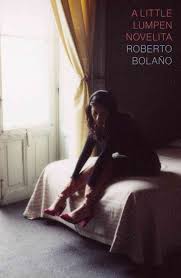
[READ: March 17, 2015] A Little Lumpen Novelita

This may be the final extant untranslated book by Roberto Bolaño.  Although I have yet to read The Secret of Evil (that fell right off my radar), as far as I can tell, the only things left untranslated are:

  • Diorama (this book is unpublished at all, so it’s unlikely to be translated anytime soon)  AND
  • Consejos de un discípulo de Morrisona un fanático de Joyce, 1984  [Advice from a Morrison Disciple to a Joyce Fanatic] which has yet to be translated and I don’t know why, so I assume it never will be.

I don’t fully understand the use of the word “Lumpen” in the title, but don’t let that odd word (which is in the Spanish title, so we can’t blame excellent translator Natasha Wimmer) keep you from reading this breezy and entertaining (if not a bit dark) book.

As with many books by Bolaño, there’s not a lot of plot, per se.  In this book, a young woman (Bianca) and her brother have been orphaned at a young age.  Their parents died in a car crash in Italy (which is where they live).  They try to cope as best they can, but they ultimately decide to drop out of school and do nothing except watch a movie a day.  Bianca tells her brother that they can’t afford that lifestyle (especially since he just seems to get X-Rated films), but he continues to do so anyway.

They realize that they will need money of course, so Bianca gets a job as a hair washer at a salon.  Her brother gets a job cleaning floors at a gym.  It seems to be enough for the time being. (more…)

Read Full Post »

sardineSOUNDTRACK: CENTENNIAL SECONDARY SCHOOL MUSICAL THEATRE-The Story of Harmelodia (2000).

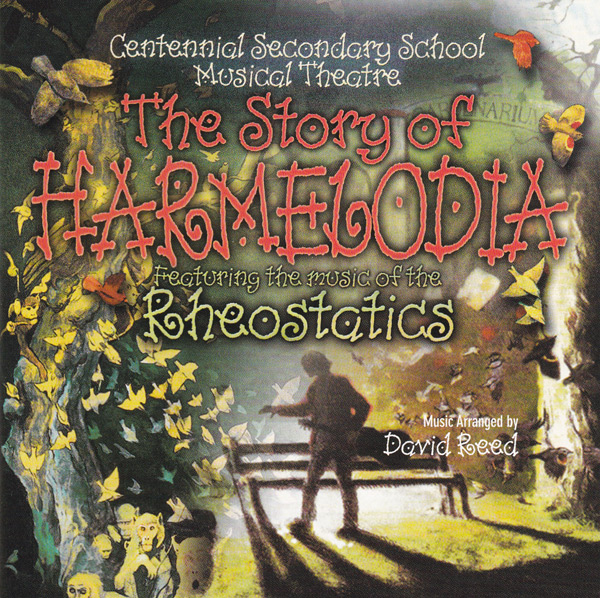
Cover-CSSMT-HarmelodiaAs mentioned in yesterday’s post.  The Centennial Secondary School and Choir released their version of The Story of Harmelodia. This CD (which to the best of my knowledge is no longer available for purchase anywhere) is newly available from the Rheostaticslive website.  While the (very cool) cover is there, there’s no information about the musicians.

The disc is about 35 minutes long and it recreates most of the music from the original CD.  For reasons which I’m sure have to do with rights, they do not include “Monkeybird” (everyone’s favorite song) and the songs about the Wingophone.  Those songs were all written by Kevin Hearn. I’d be very surprised if Hearn didn’t give them the rights to the songs, so there must be something else at play.

They also do not include the narration.  This of course makes the story a lot less clear–although at this point I feel like the songs are just fun and sweet, even if they story is lost.

The school’s version is quite good.  The band sounds great (with a whole host of instruments).  While the opening music on the first track sounds a bit high school bandish (perhaps because it so spare) as soon as the choir kicks in it really ratchets up the quality of the music.  And it stays high throughout.

The choir is outstanding, and the variety of instruments (I can hear all the brass, an autoharp, synths (there’s some fun spacey keyboard sounds on “I am Drummstein”) and some electric guitars) makes for a really compelling collection of songs.

One of the biggest difference is that many of the songs have horns playing the main melodies. “Invisible Stairs” has a flute as the lead instrument.  It’s very pretty and I like that it plays the “twinkle twinkle” melody as a counterpoint to the proper melody. It’s a very pretty version.  I also love the way “The Music Room” came out.  And the mostly instrumental “The Sky Dreamed” sounds really lovely.

I don’t know how many lead singers there are (or what their names are, although judging by the concert, I assume it is the same kids).  The female lead as featured on “Home Again” is great.  I like the male lead a little less.  He sounds a but too stiff to me.  Although I do like that on many songs he gives his own reading of the material.

The final song, “Song of the Garden,” sounds terrific.  I love the way the two singers harmonize and the way they place a cool horns section (which reminds me of The Beatles) as the song trails out.

I am of course curious why the couldn’t release those missing songs.  But I’m more impressed that the school (presumably with different people) performed a stage version of the show in 2004 which was played live in several places.

[READ: December 5, 2014] Sardine in Outer Space 2

Sardine is a children’s book published by First Second.  It was originally published in France (and in French) and was translated by Sasha Watson.  There are six Sardine books out.

This time the inner flap says “No Grownups Allowed (Unless they’re pirates or space adventurers),” and I found that I enjoyed book 2 quite a bit more than book 1. Perhaps the jokes just appealed to me a bit more–there were a number that I thought were very funny.

I enjoyed the double cross (well they pretty much all have a double cross) in The Brainwashing Machine.  But I really got a kick out of The Cha-Cha Fly.  When the fly bites you, you get stupid dance songs stuck in your head.  Nice premise–even funnier that the flies are named Britney, Christina, Justin and Clay. (more…)

Read Full Post »

01cover-articleLarge-v3SOUNDTRACK: DIANA GAMEROS-“Ligerita(Tiny Desk Contest Runner-Up 2015).

ligeritaLast week, a Tiny Desk Contest winner was announced. This week, All Songs Considered posted ten runners up that they especially liked.  And I want to draw extra attention to a couple of them.

Diana Gameros doesn’t do anything flashy or fancy in this video.  She simply plays the acoustic guitar (amazingly) and sings.  And man, does she have a beautiful voice.  Even more impressive is the way her guitar begins as delicate finger-picked melody in the verses and then transforms into a rollicking Spanish guitar style beauty for the chorus—the way she uses her right hand for the chord playing is great.

This is an absolutely beautiful song, and I was happy to read that she was recently featured on Alt.Latino.

I’m not sure what relaxing location she is in, but it’s nice little room. And even her cat—Lulu—seems to have enjoyed the song.

[READ: February 26, 2015] “My Saga Part One”

I didn’t know that Karl Ove had written this piece for the New Yorke Times magazine until someone brought it to my attention.  I was pretty excited to read it because Book Four of My Struggle isn’t due out until April and I think I’m going through Karl Ove withdrawal.

This first part of the story (because of course it would have to be in two parts) was, I have to admit, a little disappointing.  It features everything that I’ve come to expect from Karl Ove–minutiae, history, shock at people who are unlike him, and a general misanthropy.  But it almost feels like Karl Ove lite–like the Times asked him to write a piece like My Struggle, but, you know, more suitable for a newspaper.  Which may even be how they phrased it.  Of course, it may also be the translation.  Unlike the books, this was translated by Ingvild Burkey.  It’s not that the translation is bad, it seems perfectly fine to me, but the story isn’t as compelling in some way, and perhaps Don Bartlett knows how to capture Karl Ove’s voice better? (more…)

Read Full Post »

CV1_TNY_08_11_14Mattotti.indd SOUNDTRACK: PRIMUS-Sailing the Seas of Cheese (1991).

cheeseHere they come, here comes the bastards again.  Sailing the Seas of Cheese was the band’s major label debut, and they were given a lot of freedom to do whatever they wanted.  Which they did.

The first two songs sort of ease you into the chaos that is “Sgt Baker” a noisy stomp that mocks the military. It’s followed by “American life” a relatively quiet song that is rather sad.  Although I like Ler’s solo at the end (which is rather conventional for him).

But the album really takes of with “Jerry Was a Racecar Driver”, Primus’ first real hit.  Which is amazing in and of itself given how weird a song it is and how noisy (and moshy) the middle section is.  Fun drumming opens “Eleven,” a rocking song done in 11/4 time–count it, its crazy!  I just love the lunacy of “Is It Luck?”–the bass is fast and so bizarre while Ler’s guitars are playing one simple dissonant note for much of the song.  “You wanna get lucky little boy?”

“Grandad’s Little Ditty” is basically Les singing in the shower (and one of the few songs I know of which use the word “flatus”).  It leads into the new recording of “Tommy the Cat.”  This time the role of Tommy is played by Tom Waits, which make a slot of sense.  The Primus book has a funny story about Waits singing this (he sent them a version without having heard the song and he sang it through a megaphone).  The bass in the middle of the song is just incredible.

“Sathington Waltz” continues the adventure of Sathington Willoughby, although this is a scattered instrumental with banjos and loud drums (and lots of guests).  “Those Damn Blue Collar Tweekers” is a stomping song with a great riff.  I never knew exactly what it was about (not that its hard to figure out), but the book explains exactly who Les was talking about.

“Fish On” is a 7 minute song (most of the songs on this record are shorter than on Frizzle Fry) with a lengthy intro and outro.  The disc ends with “Los Bastardos” a reprise of the opening bastard music with some samples from The Young Ones and all kinds of friends playing along.  It’s a really fun record with some absolutely classic songs on it.

Shut up you bastards!

[READ: January 5, 2015] “Picasso”

The ever prolific César Aira had a new short story in The New Yorker (he usually writes novella length pieces, but this appears to be an actual short story (3 pages)) which is a little different.

In the story, the narrator says he was in the Picasso museum enjoying the artwork when a genie came out of his bottle of Miracle Milk and offered him a choice: Would he rather have a Picasso or be Picasso.  I enjoyed this twist on the typical three-wishes genie (he even mention how most people are prepared to ask for more wishes), and that this was totally unexpected.

To me, the answer was obvious from the start, Picasso was a pretty unhappy guy, why would I want to be him?  Of court, as the narrator goes through the options, he says that if you were Picasso you would automatically have all the Picassos.  Plus, he says that he himself has a pretty unhappy life, so Picasso would be a step up.

The narrator reviews Picasso’s life and output, but ultimately he decides that owning a Picasso would give him the financial security to allow himself to write his novels.

As soon as he thinks that, a painting appears on the table in front of him.  It is clearly a Picasso.  He spends the next few paragraphs describing the painting and then comes upon a “meaning” for it.  It’s an interesting look at a Spanish fable or joke.  The fable involves a queen who is lame and her servants who want to tell her without actually telling her.  The punchline of the joke comes down to “Su Majestad, escoja” which translates as “Your Majesty, choose” or if the last word is broken up (into es coja) “Your Majesty is lame.”  It’s a pretty elaborate painting or what amounts to a joke (and I have no idea if this is a real painting or not).

As the story comes to an end, the final paragraph introduces a whole new aspect of the story which was hilarious and unepxetced.  It was a great twist.  I do have to wonder if this is part of a bigger story because although it feels complete, I could easily see him following this character further.

This was translated by Chris Andrews.

For ease of searching I include: Cesar Aira

Read Full Post »

gogolSOUNDTRACK: ANDY WILLIAMS-Merry Christmas (1965).

awxmasMan, I love some Andy Williams at Christmastime.  I don’t really know much about him at other times of the year and I imagine that I would never listen to him, but he is one of the voices of Christmas. I like his voice so much even if I don’t love all the songs on this record.

His “Sleigh Ride” is the essential version–boppy and fun–you can imagine zipping along on a sleigh with jingle bells bouncing along.

“Have Yourself a Merry Little Christmas” is a bit slow, but “Winter Wonderland” sounds great.  His “Let It Snow! Let It Snow! Let It Snow!” is fun–he can really belt out those notes and “Silver Bells” is also a highlight.

The choice of “My Favorite Things” (from The Sound of Music) is unexpected, as it has nothing to do with Christmas, but his rendition is wonderful.  “Christmas Holiday” is a song I don’t know but Williams belts it out as well.  “Do You Hear What I Hear” is also great.

“Some Children See Him” is a fascinating song that I haven’t heard too much (although Rivers Cuomo does a cover of it(!)).  It’s all about how children from different countries see Jesus a different way (a rather progressive idea).

“Little Altar Boy” is a slow and somewhat ponderous song that I’m unfamiliar with.  The final two songs “Mary’s Little Boy Child” and “The Bells of St. Mary” are pretty but not fun (as you would assume from the titles).

So I love about half the disc and like most of the rest.  Williams has an earlier Christmas album as well.  I think I’d like to pick and choose between the two discs for a great Williams collection.

[READ: December 23, 2014] The Night Before Christmas

I had intended to read all Dickens stories this week.  And then my latest New Directions Pearl arrived and it was this one: The Night Before Christmas (also translated as Christmas Eve) by Nikolai Gogol.  Well, that put a change in my plans.

I don’t know much about Gogol, although apparently he wrote only short stories (no novels).  My book has a quote from Dostoevsky that says, “We all came out of Gogol’s overcoat.”  So imagine my surprise when this night before Christmas is actually about witches and the devil and affairs with beautiful women!

The story is set in Dikanka, Ukraine.  It is Christmas Eve and, according to legend, that is the night in which the devil is free to perform tricks and torment people.  Before the devil comes, we see a witch flying around the sky collecting stars.  The devil decides that he is going to steal the moon–this will make it very dark so he can create even more mischief.  The moon proves to be very hot, and he winds up juggling it a few times until he gets it into his pocket.

The devil decides to get back at Vakula, the village blacksmith.  In addition to being the blacksmith, he is also an artist and he has painted some really cruel pictures of the devil on the side of the church.  And the devil is pretty miffed about this.  So he sets an elaborate plan in motion. (more…)

Read Full Post »

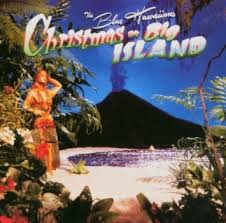
profSOUNDTRACK: THE BLUE HAWAIIANS-Christmas on Big Island (1995).

blue ha I was to get this disc used because I already knew one of their songs and I thought that a surfing Christmas album would be fun.

So I was pleased to add this to our collection.  But upon listening to it, I learned that while I enjoy surf guitar instrumentals, I do not enjoy the Hawaiian style of music popularized by Elvis.  This album features both of these types of songs.

The songs that I like include these instrumental surf guitar renditions: “Christmas Time is Here” (the Peanuts song); “White Christmas,” “Jingle Bells” (the guitar is a little too untamed for my liking in this version).  “Have Yourself a Merry Little Christmas” is a good instrumental, but there’s a very lengthy middle section that makes the song too long.  “We Four Kings (Little Drummer Boy)” is my favorite track on the album and the one that made me look into more from them.  It’s a great surf guitar rendition of “We Three Kings” with some excellent tribal drumming as a segue into a surf version of “Little Drummer Boy.”

The vocal songs are fine, they’re just not my style.  “Jingle Jangle” and “Blue Christmas” are just way too Elvis-y for my liking (we actually just watched some of Blue Hawaii so it’s in my head).  “Big Island” stars with Hawaiian style drums which I like, then it turns into a kind of blues song.  “Mele Kalikamak” is my favorite song with vocals, probably because of its nontraditional nature (to me).  It ends with about 20 seconds of waves breaking.

“Enchanted Xmas” ends the disc with some Western sounding guitars and some cool wordless backing vocals.  It gives the whole thing an eerier (or enchanted) feel.  Pretty cool.

So something of a mixed bag, but a great album to select tracks for a fun Christmas mix.

[READ: December 15, 2014] The Professor’s Daughter

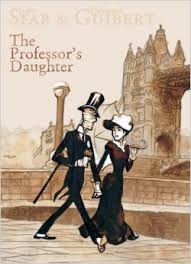
From the team who brought us Sardine comes this very different kind of story.  Interestingly, in this book, it is Sfar who wrote it and Guibert who drew it.  And I have to say I like it a lot more than the Sardine books (both in content and drawing style).

The story is quite unexpected.  As it opens, a young lady (in Victorian times) is seen stepping out with, well, with a mummy.  It turns out that he is Imhotep IV and she has taken him from his holding spot and is going about town with him.  (And no, it isn’t all a dream.  At least I don’t think it is).

They go out for tea (which makes him tipsy).  He causes all manner of mayhem, including offending someone who slaps his face and challenges him to a duel.  Later when the police come, the professor’s daughter takes matters into her own hands (which only makes the situation worse!).  A man is killed and the mummy is the suspect (which leads to a few very funny scenes). (more…)

Read Full Post »

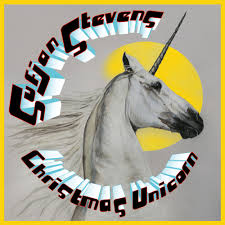
bolano SOUNDTRACK: SUFJAN STEVENS Christmas Unicorn: Songs for Christmas, Vol. X (2010).

sufjan 10This is the final disc in the second Sufjan Steven Christmas box set.  It is comprised of mostly shorter songs except for the final one which is 13 minutes long.

Interspersed in the disc are three short instrumentals (under a minute each).  “It Came Upon A Midnight Clear” “Angels We Have Heard On High” and “We Three Kings” are all pretty with flutes and minimal electronics.

The more traditional songs are “Have Yourself A Merry Little Christmas” which sounds very much like a Sufjan song with some fun electronic sounds and orchestration and some unusual vocals.  “Up on the Housetop” features lots of drums and layered vocals. It is the standard version but tinkered with with in fun ways.  “We Need a Little Christmas” is a fun and traditional version with choral vocals.

The other three tracks are originals from Sufjan.  “Happy Karma Christmas” a slow track of mostly drums and echoed vocals. It reminds me of Beck’s discoey electronic moments.  “Justice Delivers Its Death” is based on the lyrics of “Silver and Gold” (from Rudolph) but it is a much darker song (obviously, given the title) and sounds nothing like it.

The final track is “Christmas Unicorn.”  It’s a sweet song with funny/thoughtful lyrics.  After three minutes it turns into a nice instrumental.  At the four minute mark a new refrain begins. It sounds like the song is going to fade to end, but it doesn’t. At 6:30, drums come back in and the song takes off with more singers and a fugue style of interweaving vocals.  At 7:36 a new melody is introduced which is, Joy Divisions’ “Love will Tear Us Apart.” They incorporate that into the fugue vocals and it works very well.  It’s a strange song and very unChristmassey, but it’s very cool and quite catchy by the end.

I don’t enjoy this second box set as much as the first, since it is so unChristmassey, but it has some really interesting songs on it.

[READ: December 13, 2014] Bolaño: A Biography in Conversations

I don’t often read biographies about authors I like, but once in a while one will catch my eye.  I knew Maristain’s name from Bolaño’s last published interview, so I was curious what she would do with this collection.  It was translated by Kit Maude, and I am also curious about some of the words that Maude chose to use (the word savage/savages comes up an awful lot when not referring to The Savage Detectives).  But overall it was an easy, quick read.

As the subtitle suggests, Maristain has compiled a loose biography of Bolaño based on interviews with others.  Some are interviews that she has conducted and others are previously existing interviews that she has cobbled together.  The people interviewed are primarily his family and his fellow poets/novelists/friends.

Bolaño was born April 28 1953 in Santiago de Chile.  Soon after, they moved to Valparaiso, and then other smaller towns in Chile. In 1968 they moved to the Mexico City because of his mother’s asthma (although he never set foot in Sonora, the scene of the crimes in 2666). They lived close to the Olympic park and were within walking distance of the Olympic torch during the 1968 Olympics.

He had a difficult upbringing, with his parents splitting up and his mother moving out and taking his sister with her.  Roberto, meanwhile, stayed with his father.  They eventually had a falling out and Roberto went twenty years without seeing him.  His father was a boxer and an opinionated man, and there are lots of quotes from him in the book.

In 1977 Bolaño left Mexico for Spain (and never went back) and that’s when we start getting into his publishing history. (more…)

Read Full Post »

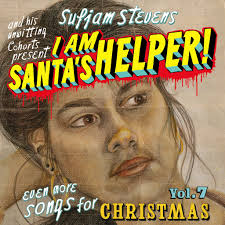
sardineSOUNDTRACK: SUFJAN STEVENS and HIS UNWITTING COHORTS present I am Santa’s Helper even more songs for Christmas Vol. 7 (2007).

sufjan 7This is the first of Sufjan’s Christmas albums to really deviate from the style of the first six.  First off, there are 24 songs on the disc and second, it is 42 minutes long.  Most of the songs are between 1 and 2 minutes, although there are a couple of longer ones too.  There are a large number of songs that are traditional sounding and which have a beautiful chorale of voices supporting it.  But interspersed with these are some nonsensical tracks that sound mostly like goofy kids songs–out of tune, hastily created, sloppy and a lot of fun (I imagine he recorded these songs with the adults’ children while they were in between takes).  It’s surprising that the songs are interspersed like they are since the serious one are so pretty and the weird ones are so weird.

 It’s a ramshackle collection with some real highlights.

“Christ The Lord Is Born” pretty piano instrumental under a minute long.
“Christmas Woman” a big song with lots of orchestration (and clocking in at over 5 minuets).  With lots of backing vocals and a crazy sloppy guitar solo. I love it.
“Break Forth O Beauteous Heavenly Light” 1 minute of piano and chorus: traditional and pretty (this is a Bach song).
“Happy Family Christmas” piano and slightly wonky guitar and after the first verse a bunch distorted chaotic nonsense (with someone “singing” a guitar solo).  The first really weirdo song on a Christmas release of his.
“Jingle Bells” Continuing with the weird style, the “dashing through the snow” part is done with a very off guitar melody and kids laughing during the “laughing all the way” part. It’s silly and funny.
“Mysteries Of The Christmas Mist” 2 minutes of piano and other noises (this is one of many short Sufjan originals).
“Lift Up Your Heads Ye Mighty Gates” another pretty choral piece with many voices.
“We Wish You A Merry Christmas” crazy nonsense of sloppy silly singing and crazy out of tune guitars.
“Ah Holy Jesus” a slow pretty piano song with chorus
“Behold! The Birth Of Man, The Face Of Glory” a slow piano number, also pretty.
“Ding-a-ling-a-ring-a-ling” raucous and wild, with crazy guitars.  It’s 2 minutes of silly nonsense. It ends with someone saying “let’s do a real song”
“How Shall I Fitly Meet Thee?” pretty piano instrumental with voices.
“Mr. Frosty Man” sloppy guitars and nonsense.
“Make Haste To See The Baby” accordion and piano in a slow sombre song.
“Ah Holy Jesus” (reed organ version) this is the second version of this song.
“Hark! The Herald Angels Sing” straightforward and pretty with some over-orchestration later in the song
“Morning” pipe organ and flute in a nice instrumental.
“Idumea” the vocal chorale comes back on this sad song.  It is over 3 minutes long and is rather disturbing.
“Eternal Happiness Or Woe” a creepy kind of song with ringing bells and sounds of, well, woe.
“Ah Holy Jesus” [a cappella] the prettiest version on the disc.
“I Am Santa’s Helper” this is a funny song in which the only words are “I am Santa’s helper, you are Santa’s slave.”
“‘Maoz Tzur’ (Rock Of Ages)” a 42 second traditional Jewish hymn done on piano.
“Even The Earth Will Perish And The Universe Give Way” a low bass organ opens this final track on this long and often times weird Christmas disc.

But this is not the weirdest of Sufjan’s Christmas EPs.

[READ: December 5, 2014] Sardine in Outer Space

Sardine is a children’s book published by First Second.  It was originally published in France (and in French) and was translated by Sasha Watson.  There are six Sardine books out.  And I fear that this is one series that I’m really not very interested in finishing.

The inner flap says No Grownups Allowed, so I imagined that the story would be funny and a little naughty.

But really it’s just kind of uninspired.  Sardine is a young girl who works with (or lives with anyhow) the pirate Yellow Shoulder (who is apparently her uncle?) on his outer space pirate ship.  They spend nearly every story (each story is about ten pages) battling the evil (and suitably stupid) Supermuscleman and his evil henchman Doc Krok (a weird orange creature who looks like a walking sweet potato).  There’s also Little Louise, a boy who is Yellow’s..henchman? and may not be all that bright and a cat creature who doesn’t really do much. (more…)

Read Full Post »

withoutSOUNDTRACK: GOJIRA-L’Enfant Sauvage (2012).
gojiraGojira is a French heavy heavy metal band, and this album was highly recommended back in 2012 (I didn’t realize it wasn’t their debut–they have quite a few records out already).  This album is quite heavy, but it has a lot of diverse elements to keep it interesting.

At the same time, they do rely on a couple of guitar effects which make the album weirdly samey (no idea if they do it on other albums too).  The two biggest offenders in this “repeated” scenario are the seeming over-reliance on the open high e string to add contrast to the heavy chugging chords.  It’s a cool effect once or twice but they do it a lot (especially in the song “The Axe” where it happens way too much and which is then followed by “Liquid Fire” where they do it again).  The other thing they do is this weird scraping sound.  It happens in the first few notes as the disc opens (in “Explosia”).  It’s a really cool sound and quite distinctive.  When you do a weird sound like that a lot in one song, it feels like maybe too much, but then to do it in several other songs, it feels like a crutch.

Which is a shame because the rest of the album is really interesting–the vocals are growly but audible and there’s occasionally really cool backing harmony vocals (“Liquid Fire”) and some really unusual different parts to songs.

So “Explosia” opens really heavy with a crazy riff and pounding drums (and that weird scraping sound).  I love that at 2:30 it switches from bludgeoning to slower (but still heavy) and that as the song fades out with another heavy section there are slow guitar notes that remind me of a Western.  It’s really cool. “L’Enfant Sauvage” uses that open high E string in an interesting riff (by doing more than just letting the string ring out).  (The scraping sound appears here too, but in limited quantity). I like the way the song’s volume just drops for the last thirty seconds or so.

“The Axe” opens with a pummeling drum and guitar sound.  “Liquid Fire” alternates between heavy guitars and that open high E sound.  “The Wild Healer” is a simple, pretty instrumental.  It is 2 minutes long and the main riff is simple one (again all on one string).  There’s an interesting solo that plays along behind the main riff which is quite pretty–but it all ends very abruptly.

“Planned Obsolescence” jumps right in with some pummeling guitars (an a scrape sound).  It slows down a bit, but towards the end the pummeling double bass drums resume until the really slow sweet guitar section that comes in around 3:45.  “Mouth of Kala” has a heavy riff which is a cool change (even if the riff is fairly simple).  But there’s some nice melodies that alternate with the heavy stuff.  I also really like the way the song ends with a very different riff and sound than the beginning.  (And the backing vocals are really cool too).

“The Gift of Guilt” has an interesting open E string riff (which is similar to Iron Maiden’s “The Trooper,” although they do something very different with it.  This song is just littered with odd effects, like a big heavy “bowh” sound and some high-pitched guitar pyrotechnics.  But I love the way it alternates parts (the growly vocals work really well here, too) and then ends so melodically.

“Pain is a Master” opens with a slow guitar riff and whispered voices, it’s a great change of pace for the disc.  Once the slow part ends, the guitars and drums pound furiously and we get some more odd effects–a siren sound (from the guitar) alternating with the ubiquitous scrape.  But the middle parts are really quite different, slower, slightly more menacing.  “Born in Winter” opens and closes with a slow and atmospheric section (delicate vocals even).  In the middle it gets heavier (and has some really fast drumming).

“The Fall” has an Alice in Chains vibe in one section and then a more cookie monster type vocal on another.  The scraping sound returns for a final showing. I really like the way the album just sort of disintegrated into random sounds as it ends.

So overall I really enjoyed this album. It’s probably nitpicky to complain about the overuse of certain sounds, especially since they are cool.  But they have so much creativity on the disc, that to hear the same things a few times just seems redundant.  Nevertheless the album rocks and is a really enjoyable metal album.  I was supposed to see them open for Mastadon earlier in the month but something came up and I had to eat the tickets (who knew you couldn’t even give away Mastadon/Gojira tickets, come on!).

[READ: November 21, 2014] Without Blood

I’ve been enjoying Baricco so much that I decided to grab this book while I was in the library too. I had already read this book a couple of years ago, or actually, I had read the version that appeared in the New Yorker.  The Wikipedia entry says that the New Yorker version is a”revised form” of the novel.  I didn’t know what that meant exactly.  But basically I gather it means that Ann Goldstein (who translated the New Yorker version) has re-translated the story (or that they edited it for the magazine the first time).

The New Yorker version is really long for a New Yorker story (it is practically the whole novel), so it’s understandable why things were a little shorter for the magazine.  But she hasn’t changed very much for the book.  There’s a lot of little modifications–tenses of verbs (in flashback situations), word phrases are altered, additional details seems to have been added and there is at least one small section in this novel that was not in the New Yorker version.

This “new” section is about a woman who is sitting in the cafe with them.  She asks the waiter about the two main characters and we learn a little about her past as well (it’s not relevant to the story and I can see why it was omitted, but it does flesh out the scene).  I am not willing to do a page by page comparison of the two (even though that is something I tend to do). But suffice it to say that the stories are virtually identical, although I found it more satisfying reading the novel version.

Since my original recap is basically how I would summarize it this time as well, I am including it here almost verbatim.  But in the spirit of the updated version of the novel, I am modifying this post from the original in small details–see if you can spot the differences. (more…)

Read Full Post »
whiteSOUNDTRACK: IMAGINE DRAGONS-Night Visions (2012).

nightvisImagine Dragons is a band that is hugely popular (popular enough for “Weird Al” to parody their song) and seemed to come out of nowhere.  I kind of sort of like them but also sort of don’t.  I didn’t know anything about them when I first heard “Radioactive” a big bombastic anthemic sing along with big drums and an amusing (or interesting at least) part in the beginning where the singer “breathes in chemicals.” And what’s great about the song is that it’s fun to sing along to and it doesn’t overstay its welcome.

But the thing about the album is that some of their songs veer right into the realm of cheesey pop.  “Tiptoe” has a synth sound that is so cheesy I can’t stand it.  It also has a chorus that a boy band could easily do.

So the album is full of songs I like and one or two I dislike a lot.  “It’s Time” stays on the good side of pop with a preposterously poppy song which never drifts into cheese (even if it flirts with the line). “Demons” is catchy and fun as is “On Top of the World” (with the “hey”s and handclaps).  Depending on my mood, I could easily hate these songs, but most days I find them happy and enjoyable.

“Amsterdam” and “Hear Me” are rocking anthems that sits pretty squarely in the not-too-poppy camp.  They have big choruses and are pretty easy to like.

As for songs I dislike–“Every Night” is the worst piece of pop crap drivel I’ve heard in a long time.  Everything about it is gawdawful ( I won’t even list them all).  I can see it being huge.  And “Underdog” goes over the line into cheese for me as well.  I don’t know if it’s the synth sounds or the lyrics or what but I can do without it.

“Bleeding Out” returns to that gritty vocals but still pretty polished sounding song that Dragons do quite well.  “Nothing Left to Say” is an interesting ender to the album (with cellos and all).  The tacked on coda “Rocks” is also kind of fun in a Mumford and Sons sorta way.

It was about half way through the disc that I realized the band sounds like Coldplay (the opening of “Demons,” jeez–I may have even heard this on the radio and assumed it was Coldplay)–but like an excessive version of Coldplay (both in anthemic quality (which is hard to do) and in pop potential).

I haven’t heard the band’s new single, but it should let me know which way the band is going–more rock anthems or into the pop pit of despair–and that will probably determine my final verdict of the band.

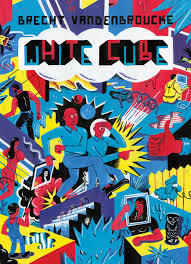
[READ: October 17, 2014] White Cube

I found this book at work and was quite intrigued by it.  Of course, I am intrigued by nearly everything Drawn & Quarterly puts out, even if I don’t love everything they release. And I didn’t love this one.

In fairness, there was a lot I liked about it.  The fact that it was originally published in Belgium is pretty cool.  And the fact that there are barely any words in it also made it intriguing.  I even enjoyed that there were two main characters, each one a virtually identical pink bald man who express his pleasure by giving a thumbs up.  And yes, I enjoyed that most of the stories were about art.  So, perhaps I did enjoy this more than I realized.

The book as a whole seems to be mocking the state of modern art.  When the two unnamed guys go into the “White Cube” they follow signs for Modern Art and then make adjustments to what they see, giving a thumbs up when they are done.

What confused me was trying to figure out whether each piece was an individual story or part of the whole. Several of them start with a “title panel” that says White Cube (while others seem to have different titles).  But since they all seem to be about art, they could all be rooms in the big White Cube. (more…)

Read Full Post »

« Newer Posts - Older Posts »