There’s been quite a few mellow bands on Tiny Desk as of late so this rocking quartet from Toronto are a fun change of pace
And boy do they stand out. Lead singer Jasmyn Burke is wearing a psychedelic dress and has a pretty wild afro. She sings in a way that seems like maybe she could be doing something else, but always with a wry smirk. And her voice is unusual–almost talking, but sometimes hitting slightly off-sounding notes (and at times seeming almost childish) but it all works really well within the songs. And then there’s the music. A bass, guitar and drum, and Morgan Waters, the guitarist, playing as if he’s doing several different songs at once.
“Coo Coo” features some picked guitar parts, some distorted chord parts, a part that mirrors her vocals (during the delightful chorus of “You’re so coo coo / I’m so coo coo / I’m so crazy.” And then there’s the part during the final chorus which features him playing something different after each time she says “I’m so coo coo” –trash metal guitar, simple guitar lines, then squeaky fractured notes. It’s hard to know who to watch more. And the bassist is no slouch either, as he keeps up pretty nicely with the wild playing.
As they start the next song, “Shithole,” the drummer starts the wrong one but they correct him and say that they are gong to play “Shithole” in this nice building. It opens with a delicate guitar riff and a pulsing bass line. The song is surprisingly mellow until the middle section when a noisy solo kicks in, but this song is primarily bass and vocals with a really abrupt ending
“One More” is a fast punky song which is again mostly bass and drums until the loud distorted guitars check in to accompany the vocals. I get a kick out of the odd way she sings “One more” (accompanied by a suitably squeaky guitar).
Mostly Jasmyn doesn’t seem to be singing all that hard until portions so this song when all four are going a little crazy.
They are fun band that I need to explore some more–I’ll bet they are a lot of fun live.
[READ: March 1, 2016] Zahra’s Paradise
This book is a fierce indictment of the Iranian Islamic revolution and the questionable election that took place in 2009 which brought Mahmoud Ahmadinejad to power.
It was written (by Amir) and drawn (by Khalil) pseudonymously so that they could avoid prosecution (or worse) in their home country of Iran. In fact, while the story was amazing and really powerful, it was the afterword that I found so important.
But the story first. And the part that will make no one want to read this book–a bag full of puppies is killed. Yup, getting that out of the way right from the start. And in fact, there doesn’t really seem to be a lot of justification for it. It gets referenced a few times in the story, but nothing else is quite as graphic as the prologue (so you can skip that if you don’t want to see an image that you won’t be able to get out of your head). (more…)
SOUNDTRACK: STEVE KIMOCK-Tiny Desk Concert #532 (May 16, 2016).
I’d never heard of Steve Kimock before. He is a guitar player, evidently known for his improvisational playing.
Based on that, I was doubly surprised that the first song not only had vocals, but that they were by someone else in the band (the unnamed female pianist). “Careless Love” sounds incredibly familiar. Even on the first listen, it sounded like I’d heard it before–the vocal melody and her voice, the bass riff, everything seemed familiar, although I’m still not sure if I actually know it.
Kimock’s guitar is metal (or aluminum). It’s quite unusual looking–all shiny and silver. It’s a hollow body but it sounds unlike an acoustic guitar. He’s joined by Bobby Vega on bass–and his bass is so smooth (even on this acoustic).
For the second song, he switches to a hollow bodied electric guitar. He says that “Tongue N’ Groove” is an oldie for himself and Vega (for whom it is also very early in the morning). The singer switches to piano for this instrumental that has a light jazzy feel. It’s quite a lovely song.
For the final song, “Surely This Day,” he switches to an acoustic guitar which he plays across his lap (and uses a slide). This is beautiful solo song with some wonderful moments.
[READ: February 15, 2016] Exquisite Corpse
I really enjoyed this First Second comic. It was translated by Alexis Siegel and it doesn’t feel translated at all.
This is the first book by Bagieu that I have read and I immediately loved her style which has simple lines but also subtle shading. It feels at time realistic and at times cartoony.
The story focuses on Zoe. She is working as a kind of model–a pretty girl who stands near things like cars or boats or whatever. She doesn’t love the job (who would) and on the second day we see a guy honks her ass. The other models are doing the work part-time to put their way through school, but Zoe is the only one with no other options. They tell her she should change jobs or stop complaining. (more…)
SOUNDTRACK: THEE SILVER MT. ZION MEMORIAL ORCHESTRA-Hang On to Each Other EP [CST105] (2014).
I try to go in sequence with a band’s records. But this release is, inexplicably, a dance remix Ep of a song from the album Horses in the Sky. The original is basically an a capella song with a harmonium. Efrim sings the main melody and the chorus sings the repeated refrains.
It’s pretty cool and the spareness of it really resonates. About four minutes (of 6 and a half), the refrain switches to “any fucking thing you love.” Then about 5 minutes in he switches to “birds toss precious flowers from the murky skies above” while the chorus starts singing, “Any fucking thing you love.”
This EP features vocals by Ariel Engle of AroarA, and virtually nothing of the original song except the words.
The first side “Any Fucking Thing You Love” is 11 minutes long and is as promised, a dance remix. And it is a serious, get your butt on the dance floor remix. No irony, no winking, just butt shaking.
It opens with roars and a boat (ocean liner) whistle and then some dance drums. Then there’s what sounds like lions roars, a middle-eastern-sounding instrument and screams. Then the female vocals come in singing “Hang On To Each Other.” The majority of the song is an instrumental dance section with washes of keyboards and drums. There’s roaring noises as the beat keeps up the pace. About 9 minutes in she starts chanting “Any fucking thing you love” and the song continues to dance on until the feedback sounds at the end.
Side two is “Birds Toss Precious Flowers” which opens with that same boat whistle. Some skittery keyboards come in and out and then a big bass drum starts keeping the beat. It doesn’t start getting dancey until after about 90 seconds. That’s when the vocals come in—echoey and very cool. About four minutes in the music cuts away and it’s just the thudding bass drum and vocals, then the song picks up again At around 7 minutes the “birds fly” part kicks in. The song turns really dancey with a vocal solo The last two minutes are more or less the keyboard winding going through a very slow reverb pedal.
Of the two, I like the second one better as there’s more interesting things going on, but I have to assume that the first is a better club song.
[READ: February 15, 2016] A.L.I.E.E.E.N.
Lewis Trondheim found this book while on vacation. It is the first collection of extraterrestrial comic strips every discovered. And Trondheim convinced First Second to publish it [#10yearsof01].
A.L.I.E.E.E.N. stands for Archives of Lost Issues and Earthly Editions of Extraterrestrial Novelties. (The book was originally published in France with the title A.L.I.E.E.N.)
The book is adorable, with cute and cuddly aliens creatures on a fascinating world. There’s a blue four-legged guy and a yellow two-legged guy with a long tail and they are frolicking amidst butterfly-looking creatures. The aliens only speak in alien tongue (I wonder if the characters can be translated or if it is just gibberish). Then on page two, the blue guy runs into a tree and has both his eyes poked out in pools of blood.
SOUNDTRACK: RAGA ROCKERS-“Slakt” [“Slaughter”] (1988), “Hun er Fri” [“She is Free”] (1988) and “Noen å hate” [“Someone to hate”] (1990).
Karl Ove mentions many bands in his books. Raga Rockers appeared twice in this one. I can’t find a ton about them online, because they never really made it beyond Norway, but the Google translated version of their website says:
Raga Rockers is an ingenious rock ‘n roll band that has existed since 1982.
Today the band consists of: Michael Krohn (vocals, lyrics), Hugo Alvar Stein (keyboards / guitar), Eivind Staxrud (guitar), Arne Sæther (keys), Livio Aiello (bass) and Jan Kristiansen (drums).
The band came out of the punk community in the early eighties, but became such a “poppy” large parts of the Norwegian people have founded acquaintance with them. Songs like “She is free” and “Someone to hate” is almost singalong classics! Their greatest triumph came perhaps in 1999 when they played for thousands of ecstatic Norwegians at the yellow stage at Roskilde Festival. (Reviews of the show by Dagbladet (which Karl Ove wrote for) and Dagsavisen–both are in English.
Despite their punk roots and the rather violent song titles, the songs are almost poppy–heavy guitars but simple chords and a singer who doesn’t sound angry at all. In fact, if I didn’t read about their punk roots, I’d swear these songs are kinda goofy.
“Slakt” is a simple song, opening with a 4/4 drum and splashes of guitar. The middle is a bluesy riff with a chorus of “ah ha ha” The lead singer’s voice is mostly kind of deep–not quite what I expected from the heavy guitars.
“Hun Er Fri” is quite different from the others songs. It’s only 90 seconds long and features a piano. The chords are still simple the piano may be playing single notes in fact). The lyrics are pretty much nonstop and kind of fast. It seems like a silly pop trifle and I can see why it’s popular among their fans. The first time I listened to it, I was surprised it ended when it did. This bootleg live version is certainly fun.
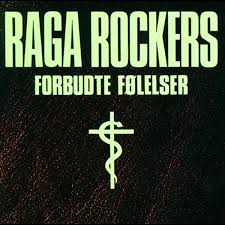
These two songs came from their 1988 album Forbudte følelser [Prohibited feelings]
“Noen å hate” has a bit more of a metal sound, but is essentially the same kind of heavy rock with simple chord progressions. There’s a good solo at the end. A black metal band called Vreid has done a cover of this song (which really only sounds different because the Vreid singer is more growly).
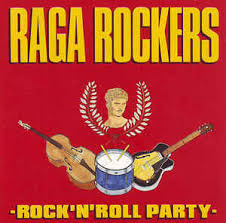
This song comes from their 1990 album Rock n’ Roll Party.
And yes, they are still around. They took a hiatus in the 2000s but came back with three albums 2007’s Übermensch, 2010’s Shit Happens and 2013’s Faktor X.
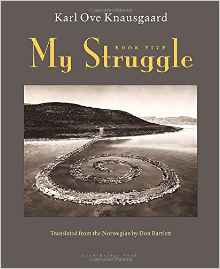
[READ: May 1, 2016] My Struggle Book Five
I realized as I read this fifth book that I should have been keeping a vague sense of the timeline of these books. Specifically, because he opens this book with this: “The fourteen years I lived in Bergen from 1988 to 2002 are long gone.” So if he was born in 1968, this book covers roughly ages 19-33.
So my general outline for the other volumes:
Book Five: 1988-2002 (19-33)
Book Four: 1987 (18)
Book Three: 1968-1981 (1-13)
Book Two: 2008 (40) (with flashbacks to meeting his second wife in 2003 or so)
Book One: 2008 (40) (with flashbacks to his father’s death in 1998 or so)
What era could Book Six possibly be about?
We’ll find out next year in what is said to be the 1,200 page final volume.
So as I mentioned above, Karl Ove talks about the fourteen years he lived in Bergen. And it made me laugh that he says:
The fourteen years I lived in Bergen, from 1988 to 2002, are long gone, no traces of them are left, other than as incidents a few people might remember, a flash of recollection here, a flash of recollection there, and of course whatever exists in my own memory of that time. But there is surprisingly little.
And then he proceeds to write 600+ pages about that time. (more…)
Last week, a Tiny Desk Contest winner was announced. This week, All Songs Considered posted ten runners up that they especially liked. I want to draw attention to a couple of them.
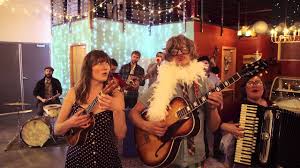
Cactus Tractor also have a lot of fun with the desk part of the tiny desk. There’s a small purple desk and from behind it comes the lead singer and guitarist. He is dressed crazily–this song and band are definitely a little goofy. He pulls out a cactus and a tractor and then starts whistling. It doesn’t seem like he’s whistling the song but he is. He starts playing along to the song a kind of old jazzy sound. And it reminds me of “Mister Sandman” at times.
There’s some fairly complicated lyrics, “like reading Chinese, like choosing wine based on the cheese.”
And then a ukulele player comes out from behind the desk. She is followed by a fisherman (it has to do with the lyrics). Then an accordionist sneaks out and she’s followed by an acoustic guitarist and an upright bassist. The drummer comes out (they wheel his drums over) And then finally a saxophonist and 2 trumpeters.
The song is funny and bouncy and catchy with several parts.
Eventually, the song switches to German (Berliner-jelly donut) and they sing many verses in Deutsch. There’s no explanation for the fisherman by the end of the song (expect that he holds the jelly donut). But that’s irrelevant because then some acrobats appear at the side of the stage and the camera pulls back as jugglers, stilt walkers and the like fill the screen. It’s pretty extraordinary and it was done in one take (I expect the music was prerecorded, although I’d love to be wrong).
The song has novelty written all over it (they do lots of visual jokes about the lyrics) and yet it is really catchy and…unexpectedly, it is nearly six minutes long!
[READ: February 20, 2016] “The Cornucopia”
This is a short story that is set in Australia (the author is Australian, so that makes sense).
It is about a woman, Julia Holt, who is never impressed. No matter what exciting things her friends tell her, she never shows appropriate excitement. She is happy for her friends’ successes, but nothing seems to make her excited.
Perhaps it is because she is powerful and rich and has everything she needs. Indeed, she even has her friends do a lot of her work for her–she is quite busy, after all. But her friends (carefully cultivated by Julia, it must be said) do benefit from her friendship. And honestly she was a little afraid of their successes because she didn’t want to lose any of them.
She and her husband are wealthy. They are one of Australia’s millionaire couples. Ralph, despite this wealth was never arrogant or showoffy. He also had no time for games or hobbies. He just did financial work all the time And Ralph will always acknowledge that Julia is the more powerful one of the two oft hem.
So far so good as stories go. But there has to be a crisis of some kind, right? (more…)
SOUNDTRACK: DO MAKE SAY THINK-You, You’re a History in Rust [CST045] (2007).
You, You’re a History in Rust feels very different from DMST’s previous album. That record felt kind of insular and tight. This one feels expansive and experimental. Like the first song which has multiple sections that feel completely unrelated and which are only connected by silence. Or the fact that there are lyrics in a song, or even a fairly conventional song.
“Bound to Be That Way” This song opens in a peculiar way. There’s a drum rhythm, that slowly builds and some piano chords are laid over the top. This goes on for about 45 seconds and then fades out. And then a new melody–completely different–with horns and guitar peeks its way out. And then it too fades. Then around 2 minutes a pretty guitar melody comes through followed by big crashing distorted drums. Eventually a new riff enters the song and it really starts grooving. It’s fantastic, but it too is just a portion of a song which ends at around 4:30. And then another new section comes in. Then acoustic guitar riff is counterpointed by some horns. The final melody is the catchiest one of the bunch and it ends this strange song on a high.
But if that was strange, “A with Living” offers the biggest shock to fans of the band. There are words in this song! And they are sung! Words were co-written and sung by Alex Lukashevsky and the Great Lake Swimmers’ Tony Dekker. Akron/Family also joins in doing “oohs” and “ahs.” It opens with rumbling drums and then the singing begins. The song has a conventional verse chorus verse structure with big horns. It’s catchy (the vocals are great). But it’s also a 9 minute song and at 4 and a half minutes the song moves way from the melody and enters a lengthy instrumental section with deep rumbling guitars. The chorus of voices returns briefly before the mellow guitars lead us to the end.
“The Universe!” is one of my favorite DMST songs. It rocks and rollicks. It has two notes and then five bashing chords. Repeated several times. It’s one of the most straightforward songs they’ve done. It has screaming guitar solos and a cool sliding bass. It’s also very raw sounding, with all kinds of noise floating around it. And just like that, it’s gone. Seguing into the quiet, “A Tender history in rust” which opens with processed guitars or keyboards, layered upon each other. There are voices fighting through (saying all kinds of sounds—including laughing), before it switches to a pretty acoustic guitar riff. It’s a delightfully conventional folk melody–another unusual addition for the band.
“Herstory of Glory” has another pretty acoustic guitar melody with some rattling drums (in the right ear). Then there’s a rumbling bass and distant voices before more and more instruments add to the beautiful song–pianos, trumpets, claps.
“You, You’re Awesome,” is the shortest song on the disc at under 4 minutes. It opens with slow electric guitars and a e-bowed solo. After a minute or so, the rest of the band comes in with a slide guitar and banjo making a kind of sloppy folky romp.
“Executioner Blues” is another favorite. Its 8 minutes long with some lovey guitar riffs and sounds. It opens with some big guitars and a repeating riff. A martial drums enters the song and keeps it moving until the next big section. Horns repeat a similar melody and then a romping bass guitar takes over. More instruments kick in making the song noisy and slightly distorted. There’s piano trills, glockenspiel, electric guitar, noises and more. and the instruments all go up the scale slowly for a few bars and then play a punch of staccato notes. It’s rather dramatic. After several permutations of this, they just keep going up and up the scale until the reach the top and then they gradually descend again. The last minute is a series of quiet bass notes, as if everyone has totally come down from that intensity.
“In Mind” is a quiet disc closer. A simple guitar melody, it is joined by banjo and trumpet. Then some bass lines come in followed by a very distorted chorus singing “When you die, you’ll have to leave them behind/You should keep that in mind/When you keep that in mind, you’ll find a love as big as the sky.” The disc ends with some quite banjo plucking.
This disc goes all over the place and really explores different avenues.
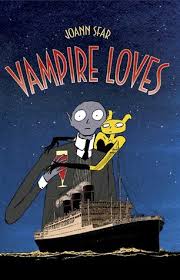
[READ: February 10, 2016] Vampire Loves
Joann Sfar created Little Vampire (and apparently about 100 other comics, some of which have been translated into English by Alexis Siegel and published by First Second). Of the things I’ve read by him, (and there have been a few) I enjoyed this the most. It seems like a lot of his books (like Little Vampire) are for kids, bu this one is absolutely for adults (there;’s curses in it and talk of sex and everything).
There are four stories in this book (I just learned that Sfar has written six in total, so maybe there will be more translated). After the third book in this collection, there’s a question as to whether or not Ferdinand, the vampire in this story is Little Vampire. There’s a little drawing of Little Vampire which says that Ferdinand is him. “But vampires don’t grow up! No, but they can grow little. Ferdinand was me before! You mean that before being little you were grownup? Yes.” So there’s that sorted.
“Could Cupid Care Less?” starts us off with Ferdinand the vampire’s woes. His girlfriend, Lana, (a kind of plant creature) has just come back. She cheated on him, but turns the conversation around to say that it is his fault–if he weren’t so jealous he never would have found out. He freaks about this and she storms off again. Furious, he sets off for his nightly feeding. Ferdinand is a nice vampire–he takes little sips and only with one fang so it looks like mosquito. While he is feeding on a woman, a red-haired vampire storms in and shows him how to do it right. She is a vixen with an ankh necklace and after feeding, she comes on to Ferdinand hard. She says she likes old, proper-looking vampires–not goth wannabes. She brings him back to her house but before they can do anything, her sister walks in. She’s also red-haired and has a shapely figure and actually has more in common with Ferdinand. And that’s when we learn that the first woman’s name was Aspirine and her sister’s name is Ritaline (ha!).
All of the stories cut back and forth to different sections. So we cut over the Lani who is staying with the Tree Man. He is trying to hit on her, but she’s having nothing to do with it.
We return to Ferdinand where he just can’t get rid of Aspirine, even when he wants some alone time. He can’t get a woman he wants and can’t get rid of the ones he doesn’t.
“Mortal Maidens on My Mind” opens with a Japanese woman meeting Ferdinand in Paris and falling for him. They do all kinds of things together and she even writes home about him. But Ferdinand had to return home and that was the end of that.
We cut back to the Tree Man who is still pining for Lani but is having no luck with her.
Back home, Ferdinand runs into the man who slept with Lani, Michael. He also argues that it was Ferdinand’s fault that things wound up as they did. He says that he was just looking for fun. He didn’t want to hurt anyone, so why did Ferdinand have to get involved? After a fight Ferdinand leaves to go to a bar where he tries to hook up with a woman but it all falls apart.
Then we cut to a man who has created a golem. He wanted the golem to do bad things, but the golem is so kind that he couldn’t possible have made the him do the evil things he planned.
The postscript of the story contains a few notes on the protagonists of this story which sort of retroactively tries to make sense of the seemingly disparate story lines and lets us know how these characters belong here.
“Lonely Hearts Crossing” shows Ferdinand on a cruise. But first we meet a woman named Alas, and her spiritual ghost-creature-friend named Sigh. Alas is looking to score with the captain of the ship (who is the invisible man).
Meanwhile Lani is going shopping with Tree Man. He has become her buddy and he can’t get out of it.
On the ship, Ferdinand runs into a werewolf who turns into a wolf when he sees a girl. He only transforms back if he can kiss a girl. But he is a such charming creature that he has no problems scoring–much to Ferdinand disgust and amazement.
The story turns very exciting as there are armed criminals on board and a shootout. And by the end of the story Ferdinand is making out with the spirit ghost creature (who teaches him how to go through walls which turns them both kind of ghostly for a time).
“Moonstruck Post Mortem” ends the book with Ferdinand trying to pick someone else up. His conscience is bothering him lately though so he manages to get rid of it. The woman is interested in him but already had two boyfriends so she kind of blows him off.
The scenes shifts to Ferdinand at the police station. He’s not n any trouble. in fact, the police would like him to help with their investigation of suspicious murders. Since he’s nocturnal they figure he can look at night. That’s how police work, right?
Ferdinand decides to go out drinking again. He meets a woman he likes, but she seems disinterested. So he quickly moves on and finds a creature who is into him. But he is quickly utterly disgusted by her. And the first woman just came back. Oh no!
Frustrated, he leaves and goes to see the dentist–because the dentist has some secret information about the investigation. But before he will give the information to Ferdinand, he needs to give him a compete check up. By the end, he tells Ferdinand not to get involved. And as the story progresses and the criminal is found… Ferdinand is shot and thrown into a hole! Can Ferdinand’s conscience come to the rescue?
The whole story concludes with Ferdinand going back to find Ritaline (but of course finding Aspirine instead). She offers to let him bite her–but when one vampire bites another it’s “catastrophe.”
It’s a totally nuts book but very funny. Another fun book in my #10yearsof01 February.
I think the reason I don’t enjoy the Sfar books as much as I might is because they are printed so small. I don’t know what the original size was, but the format makes everything feel really squished. This makes the dialogue hard to read and means you can’t see all of the details that well. I think if these books were bigger it would really help their appeal.
SOUNDTRACK: DO MAKE SAY THINK-Winter Hymn Country Hymn Secret Hymn [CST025] (2003).
This album, at least according to the liner notes, seems to be broken into three sections, as the title suggests. Although there is no explicit attachment of a particular hymn to the songs, there is a gap between the listings, giving each section three songs.
“Federica” is 9 minutes long and opens with a very lovely slow guitar melody. Then the drums crash in and the song doesn’t change so much as intensify. At around 3 minutes the song pauses before a loping bass adds to the mixture and the songs gets bigger and bigger, and even a little funkier. When the distorted guitar comes in at 5 minutes, it’s hard to believe it’s basically the same song all along. It builds to a cacophonous explosion and then settles down again. A new style emerges—slow and plaintive with mildly distorted guitars. But they can’t stay muted for long. The distorted guitar comes back and forces the song forward with some distorted bass and other noises until it resumes a reprise of the original guitar melody.
“War on Want” is only 2 minutes long. It is mostly strings that seemed to be looped in some way. There haven’t been a lot of strings in DMST records so far, so this is new. They drift slightly out of tune as they introduce the 3rd song “Auberge le Mouton Noir.” The song opens with some crackling noises and some pretty, slow chords. which resolve into a simple riff. The song builds, growing faster with a great propulsive beat. I like that it switches back and forth between the chords and the guitar riff. Is that a slightly out of tune bass guitar before the ringing guitar solo takes over?
The second section begins with “Outer Inner & Secret.” It’s ten minutes long and opens with an interesting bass line and guitar motif. It’s quiet and insistent, kind of dreamy. After exploring some quieter avenues some feedback squalls float in and out. About 4 minutes in the song builds, but it quickly recedes only to build again and recede once more. For the third build the drums kick in and the song launches in a louder direction for a few measures. But just as you think it’s going to take off for a while, it settles down and then comes back to a quitter style with martial beat and keyboards. The remainder of the song switches between loud building guitarists and quitter moments with just bass and drums. For the last-minute or so horns burst forth and then the music drops away except for the horns, which end the song with a plaintive melody.
The 4 minute “107 Reasons Why” is a slow horn & guitar melody song. There’s some interesting sounds that play over the top of the delicate melody, including a nice horn line.
“Ontario Plates” is 7 minutes long and opens with very jazzy drums and bass–it’s rather noir with a quiet saxophone. Once the sax plays over the top it just increases the jazziness. DMST has always had a jazz feel but this one really pushes it about as far as the band has gone. The drums start to come to the fore and I love the way about 3 minutes in the drums morph into something else and the song almost imperceptibly switches into a new song entirely. The bass takes over and a new riff enters the piece. About 5 minutes in, the song switches to a very bright and uplifting motif–big horns, bright guitars and a catchy riff. It’s quite lovely.
The third section opens with “Horns of a Rabbit.” This song introduces big drums and kind of electronic bass sound. About two minutes in the noise beaks through—bashing guitars and intense drums. It even includes a pretty wild guitar solo. I like how the song (which is only 4 minutes (kind of disintegrates on itself before merging into the two-minute “It’s Gonna Rain,” which may indeed be simply the sound of rain on a tin roof.
The final track, the 7 minute “Hooray! Hooray! Hooray!” opens with some synths sounds—unlike anything else on the record. And then a pretty guitar intro mixes with some lovely horns. It’s probably the most delicate thing they have created. After 3 minutes the occasional guitar swirls grow louder and it grinds it way to a happy and uplifting keyboard riff. Then a bunch of surprises for DMST: A slide guitar plays a little solo and then, most surprisingly, a chorus of voices sings the melody. The ending slide guitar sounds like it could come from Mercury Rev or The Flaming Lips. If you listen closely, you can hear people shouting Hooray! in the background.
This album feels a bit more claustrophobic than their others, and while I like pretty much all of the songs, I really like their other albums more.
[READ: December 20, 2015] Little Vampire
Joann Sfar is responsible for the Sardine comics which I kind of liked but mostly didn’t (I think that may have been because of the uglyish drawing style). But here Sfar has another series called Little Vampire. (I also just learned that Joann Sfar is a man, so apologies earlier, but I think that’s an understandable mistake).
This book collects three stories into one volume, all translated by Alexis Siegel. Each story is about 30 pages. And they follow the “life” of little vampire. He is a sweet boy with a bald head, big eyes and pointy ears. He lives in a castle with call all kinds of undead people including his dog Phantomato (he is bright red and rather devious) and several other monsters.
“Little Vampire Goes to School” introduces us to the home where the monsters live. As the undead are partying, Little Vampire comes down and says he wants to go to school. The others are horrified, but he won’t give up the idea. He says he’s bored and wants to meet other children (most of the undead are adults).
Little Vampire’s mother (who is strangely pretty in her weird design) and the other elders allow him to go to school, but he can only go at night when it is closed. So the undead come and all attend school with him. The class is taught by The Captain of the Dead who is an old dead pirate. (more…)
Not too many performers mention the actual day that they are performing their Tiny Desk Concert. But Ritter mentions Valentine’s Day twice during his set so I thought I’d post it on Valentine’s Day even if the actual date of the posting is much later.
I don’t really know Ritter, I’ve heard of him, but I’m not too familiar with him. Nevertheless, I was quickly won over by him. He is charming and polite and is certainly having a good time (he even laughs at some lines in his songs).
His first song “The Temptation Of Adam”sounds vaguely familiar. The melody is very catchy and his voice is strong and excellent. Lyrically the song is quite interesting. I especially loved this section: “We passed the time with crosswords that she thought to bring inside/ ‘What five letters spell apocalypse?’ she asked me/ I won her over saying, W.W.I.I.I.’/ She smiled and we both knew that she misjudged me.”
“Lark” is a faster song, but still very folksy and clever. I love that although the melody is fairly simple, the way he plays it (with very fast fingerpicking) makes the song sound more complicated. “Rattling Locks” is a dark minor chord song, louder and heavier than the other two.
The site says there is an audio only track called “Pale Blue Eyes,” but I can’t find it. For the last track, his 2003 song “Kathleen,” he introduces the song by saying, “I think Valentine’s Day is the most awkward self-imposed holiday — even worse than New Year’s — so this is an awkward song.” It’s a louder song, with Ritter’s voice reaching great intensity. It’s a great way to end the set.
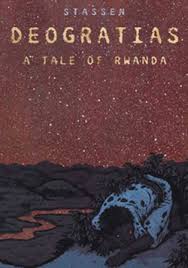
[READ: February 14, 2016] Deogratias
Here’s another story that I would never have read if it were not for First Second’s #10yearsof01 challenge. The thought of reading a story about the genocide in Rwanda just seems to depressing to undertake. And yet in the spirit of reading things outside of your comfort area, I decided to read this this weekend.
And I am incredibly glad that I did.
I feared that this story would be one of rampant genocide–struggle and death and mutilation and everything else that I could imagine. But rather, what Stassen has done is created a story about how the toll of genocide can impact one person. Yes, it affects him directly and the story is incredibly sad, but it was a very different story than I expected, and it was so personal that it made it more tragic without having the oppressive unreality of millions of dead people in the plot.
The introduction alone is worth reading, as translator Alexis Siegel gives a brief summary of the Rwandan tragedy. I’ve always found the conflict to be really hard to grasp. Hutus and Tutsi, a privileged minority, a brutal majority. The back and forth was so hard to grasp, and the names of the tribes were similar as well. It is hard for a lazy person to keep straight.
But I found Siegel’s explanation to be succinct and very effective. (more…)
I didn’t know who Esperanza Spalding was before this show. But she defied my expectations by being a fairly tiny woman who sings while playing an upright bass (not a very common combination for anyone).
For the first song, “Little Fly,” she plays a kind of jazzy bass, but has a string accompaniment–violins, guitars etc. But it’s clear that the bass is the star. And while her playing is very good (she has some great vibrato), it’s her voice that is mesmerizing–she’s hunched over playing the bass and still manages to sound strong and powerful. “Little Fly”‘s lyrics come from a poem by William Blake.
“Midnight Sun” is a solo performance–just her voice and bass. I loved the beginning where she sang notes along with what she played. Then when the lyrics come in she sings in a very jazz voice (with eyes closed the whole time). Turns out this is a Lionel Hampton song that only appears on the Japanese release of her album which make explain her singing style.
Because on the final song she sounds very different. “Apple Blossom” is her own composition. It’s her singing with the string section playing along (there’s no bass). The song is lovely, but I prefer it when she plays bass in the song, too.
I enjoyed this performance and how delightful Spalding was.
[READ: January 9, 2016] “My Saga: Part Two”
Speaking of not finishing multi part essays, I ended my post about Part One of this essay by saying I couldn’t wait for part two. And then apparently I forgot all about it because here it is almost a year later before I read part two (which was published two weeks later).
In this second half of Karl Ove’s journey he spends most of his time realizing that he hasn’t really learned very much for his assignment. I can’t imagine anyone else being able to write endlessly about how he has nothing to write about (and still make it strangely compelling–his stress produces good sentences).
He does make some interesting connections though. (more…)
Karl Ove mentions many bands in this book, but the deLillos are the only Norwegian band that he plays. They sing in Norwegian and play sprightly, jangly guitar pop–they would fit in very well with some of the lighter alt bands from the late 80s and early 90s.
I have no idea what they’re singing about (well, the title translates to “love” so I guess I know what they are singing about.
The singer has a high, delicate voice and there’s some interesting harmonies. I really like the way the song transitions from verse to chorus with the picked guitar notes–very catchy.
It comes from their second album, Før var det morsomt med sne (Beforeit was funin the snow), which along with their first was quite popular and was reissued with a bonus disc in the 90s. Having said that I see that Amazon has one copy of the disc and no album cover listed. Worse yet, I can’t find many other songs online (Spotify lists the album, but I can’t get it to play).
Sorry, deLillos (even searching for you gives us more Don DeLillo than you guys).
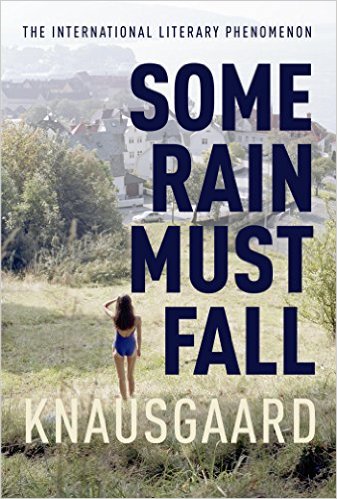
[READ: June 24, 2014] My Struggle Book Four
I started including the British edition page numbers because at my work we received both editions of the book, and I received the British one first so I grabbed it and started reading. I noticed the page numbers were quite different (the British book is taller and the print is quite bigger, although this doesn’t explain why the previous books have fewer pages).
I had been interested in the differences between editions from the get go. I had enjoyed the American editions, but I enjoyed reading this British edition more (bigger print?). But when I noticed on one of the pages that the word “realise” was spelled as I typed it, it made me wonder if the American edition changed that to the American spelling. [Actually, I see that Don Bartlett lives in Virginia, so perhaps he translates it into American first]. While I wasn’t about to go into a deep inspection of the topic, when I saw the American edition on a shelf at work, I had to do a little comparison.
And what I found out was that even though Don Bartlett is the (amazing) translator for both editions, someone (perhaps Bartlett himself?) is translating the American into British (or vice versa). I looked at a couple of pages and noticed these changes from British to American:
BRITISH EDITION = AMERICAN EDITION
Pack it in, now = Give it up, now
roll-up = rollie [about hand rolled cigarettes]
looked daggers at = gave her a dirty look
a complete prat = completely useless
is that possible? = really?
to cook and wash up = cooking and doing the dishes
I had got = I’d gotten
had penned = had written
and yes, realised = realized.
Other than select phrases, every word is exactly the same. So somebody goes through the books and changes them to British english idioms and spellings. That’s fascinating.
I also see that this is the first book I had not read an excerpt from first. Not that it would have made any difference as to whether I read the fourth one. I couldn’t wait to get my hands on it.
So book four is set in Håfjord, a town in Northern Norway near Finnsnes (a five hour flight away–okay I had no idea Norway was so big!). Karl Ove is 18 and has decided to become a grade school teacher there for one year. The tax breaks are great if you teach, and he plans to teach and write his masterpieces and then get out. He has no interest in teaching, but the town is small (most grades are 3-7 students), so he figures it can’t be too hard.
As in most of Karl Ove’s books, the stories jump around and flash back and do not stay all in this one time, but it is largely set in this locale.
My first thought was that I have never read a story with as much semen (both nocturnal emission and premature ejaculation) in my life. It is a strange take away from the book, but there it is. Karl Ove is 18 and really wants to have sex for the first time. About 3/4 of the way through the book he reveals that he never masturbated (it just never occurred to him, apparently, and at 18 he’s too old to start–what!?). As such, he seems to have wet dreams every night. And every time he gets near a woman, he has an orgasm too soon. He is horny all the time–it’s a bit disconcerting.
And since I mentioned that, I don’t know if Karl Ove’s life is typical of Norway, but I am shocked by the number of women who take their clothes off around him (he may have never had sex, but he was about to on at least a half-dozen occasions). And he says that all through school (from around age 13 and up) it was common place for the boys to lift up the girls’ shirts and kiss and or fondle their breasts. It is mind-boggling to me. And the 16 year olds all seem to be having sex all the time–this may be skewed from Karl Ove’s perspective, but that’s what I now believe happens in Norway.
But while sex is the main theme of the book–sex, sex sex, there is more to it.
Karl Ove’s parents have split up and his father has started drinking in earnest. The dad has remarried and has just had a baby. Incidentally, I was also shocked to read that Karl Ove’s father, who is an abusive stodgy old man who is cranky and mean and abusive and all the stuff that we read about in the other volumes was only 43 at the time that Karl Ove was 18. So the old man who I pictured as a gray-haired curmudgeon in this book is actually younger than me. Great.
In Håfjord, Karl Ove is teaching kids who range from age 13 to 16. It’s disconcerting to read about him thinking lustful thoughts about his students, until he reminds us that for most of the students, he is only 2 years older than them. I am pleased to say that he behaves himself (except in his mind) with all of the students. There’s even a really interesting flash forward to eleven years later when he runs into two of them again.
He proves to be a pretty decent teacher it seems. The kids mostly like him (the girls all think he is hot) and he is young and tries to make it fun (he himself hated school and everything about it). He even seems to help out an awkward boy (although that is never resolved). We see him teaching, trying to interact with the kids and generally being a pretty good guy.
Until the booze comes out.
For in addition to semen, this book is chock full of alcohol. Before graduating from gymnas (high school), Karl Ove basically stopped caring about anything. He spent most of his time drunk. It is astonishing the amount of drinking he does–it’s practically like an Amish Rumspringa how crazy he goes. But even in this retrospective look, he talks about how much he likes it, how it loosens him up and makes him less nervous.
But really he just spends most of his time drunk, hungover or sick. He even got into the hash scene for a while. He was living with his mom at the time and she was appalled at the way he acted–especially when he threw a party which trashed their house. She even kicked him out for a time.
He seemed to be over the drink in Håfjord, but it turns out that there’s precious little else to do except drink up there, especially when it grows dark for most of the day. So there is much drinking–he only misses class once or twice because of it but he comes very close a lot.
The irony that he is appalled at his father’s drinking, while drinking so much himself, is apparently lost on him.
The other main preoccupation with Karl Ove is music. He talks a lot about his great taste in music (he reminds me of me–a little insufferable). Back when he was in gymnas, he spent a lot of time discussing his favorite bands and favorite songs. He got a job (at 16) writing reviews for a local paper (holy crap, jealous!) and then later gets a job writing a column for another paper. For the previous book I listed a lot of the bands he mentioned, and I wish I had written them down for this one. U2 features prominently (this is 1987, so I’m guessing Joshua Tree), but also Talking Heads, a Scottish post-punk/new wave band The Associates and their album Sulk which he describes as “an utterly insane LP.” he and his brother really like The Church and Simple Minds (before they got so commercial). He also has a whole thread in which he makes connections with albums:
Briano Eno, for example, started in Roxy Music, released solo records, produced U2 and worked with Jon Hassell, David Byrne, David Bowie, and Robert Fripp; Robert Fripp played on Bowie’s Scary Monsters; Bowie produced Lou Reed, who came from Velvet Underground, and Iggy Pop, who came from the Stooges, while David Byrne was in Talking Heads, who on their best record, Remain in Light, used the guitarist Adrian Belew, who in turn played on several of Bowie’s records and was his favorite live guitarist for years. (64).
He also specifically raves about “The Great Curve” from the Talking Heads album, and of course, he raves about the first Led Zeppelin album as well.
Music is a huge part of his life (and he dresses accordingly too). It’s unclear whether the kids think this is awesome or not, but he may be a bit too much for some of the locals. The locals are mostly fishermen (which makes sense), and Karl Ove is a bit intimidated that he is so wimpy compared to them–one of the women even teases him about his tiny arms.
But his main focus is writing. He writes a few shorts stories (to my knowledge he has never published any of them). We see some excerpts and they seem fine–he fancies himself Hemingway. But he also mentions a bunch of Norwegian authors (I love when he does that). Sadly again, not too many of them have been translated into English. [I really hope that some mega fan creates a database of all of the bands and authors he mentions]. He also talks briefly about his first novel which alludes to his time teaching here. I happened to read a small summary of said novel (Out of the World) and feared that it spoiled what was going to happen. But, in fact there does appear to be a difference between his fiction and non-fiction.
The book moves very quickly–from party to party, from failed sexual attempt to the next, even from his staying up all night long trying to write. And most of the time he comes off as kind of a dick–he is also very self-critical, which somehow tempers that dickishness.
As with the other books I cannot figure out exactly why I am so addicted to his writing. I brought the book home on Thursday night and finished it (all 548 pages of it) Monday night. This really completes the picture of himself as he moved from childhood to adulthood and really lays the foundation for whatever is to come next. Early in the book he talks about the books that he loved at that age, books that talk about the move from childhood to adulthood. And thus, this book becomes something of a bildungsroman as well. Although whether or not Karl Ove actually grew up at the end of this book will have to wait until volume 5 (which I have to assume is still another year away as there is no information about it online at all!).
For ease of searching, I include: Hafjord, For var det morsomt med sne.
 SOUNDTRACK: WEAVES-Tiny Desk Concert #539 (June 10, 2016).
 There’s been quite a few mellow bands on Tiny Desk as of late so this rocking quartet from Toronto are a fun change of pace











 I Just Read About That...