
Okay, now that I’ve had time to digest the book (and to cope with the ending) I wanted to give some final thoughts on the book. I also wanted to tie up some loose ends by posting my original response to the Salon.com questions as well as my letter to the posted article (keeping all my IJ stuff in one place). I also found a map of Enfield that places things nicely in context. I’ve included that at the bottom of the page.
But on to the book:
My previous post ended with what feels like a somewhat bitter taste in my mouth. And yet I the disappointment I felt at the end of the book was not so much at what was said, but was actually a sort of disappointment that the book is over.
The book, the world, these characters became a part of my life. I know for a fact that I have never spent this much time and effort on a book before (I didn’t even spend as much time on Ulysses, which I’ve read twice for a class). And I think having the book left so open keeps the characters floating around in my head without actually letting them rest. (Wraith-like if you will).
When I finished the book, the first thing I did was to go back to the beginning and re-read the Year of Glad section (now, for the third time!) [And I now I’m not the only person to have done so….just how many posts will say that that’s what they did?]. And I know that’s sort of the set-up of the book, like Finnegans Wake or even Pink Floyd’s The Wall. And, in re-reading, even more gaps were filled in. And that is, of course, why people read it multiple times. And yet, do any of the multiple-times readers come any close to filing in the gaps of that lost year, or do they just find more and more awesome details to obsess over (or both)?
But before I get wrapped up in trying to “figure out what happened” I have to mention just how much I enjoyed the book. I’ve never read anything like it. The details, the quotes, the laughs, the pain. It all sounds so trite (“It was better than Cats!”) And yet, whether it’s the work itself or the amount of time spent on it, these characters are now with me.
So, I had read IJ when it came out. And sometime in 1997 or 1998 after DFW published A Supposedly Fun Thing… he did a promotional tour stop in Boston. And I recall getting up there and getting his autograph and saying how much I loved IJ and how it has stayed with me two years later. And that was true then (of course, if you’ve read me fumbling around and not remembering anything, you’ll know the details didn’t stay with me for 13 years, but that’s okay…the writing and the imagery stayed there somewhere.)
I think also, given the amount of time I spent on the book, and the amount of effort I expended keeping track of things, having this vacancy (both in the fact that the book is over and in the gap of one year) is really weird. I’ve since read a bunch of reviews of IJ and the one thing I cannot imagine is how anyone with an advanced readers copy of this book could hope to read it in a few days (typical reviewer turnover time) and actually have something useful to say about it in time for a slated book review date? I would think that if you weren’t following quite so closely you wouldn’t feel the sense of loss at the end of the book.
But enough pontificating.
Let’s think about what happened from 11/20 YDAU to Whataburger in late November, Year of Glad. (more…)

 SOUNDTRACK: SONIC YOUTH-“Rather Ripped” (2006).
 When Rather Ripped came out, I was really excited by it. It rocked heavy, it was catchy and it featured a lot of Kim. I listened to it all the time, and would have said it was my favorite SY disc of this era. However, listening to Sonic Nurse reminded me how much I liked that one too, so I’m unclear now which one I like better.
 SOUNDTRACK: REGINA SPEKTOR-Far (2009).
 Regina Spektor has reaffirmed my faith in female singers. Back in the 1990s, during the height of Lilith Fair craze, there was an embarrassment of cool, hip, interesting women singers releasing discs. Since then some have sold out (Liz Phair), some have gone away (Shirley Manson), and some have just, well, matured (Tori Amos). Maturation is a fine thing, but when you are known for doing interesting things, by the time you get to doing standard piano ballads, well, yes, we all mature, but we don’t all lose our quirkiness, right?
 I’m not sure how I first learned about
 SOUNDTRACK: THE MIGHTY MIGHTY BOSSTONES-Don’t Know How to Party (1993).
 I’ve always had a thing for ska (although even I got sick of it when No Doubt took over the airwaves, thanks Gwen). When ska gets added to blistering metal, well, it’s hard to resist. And so we get Boston’s own Mighty Mighty Bosstones.
 I’ve also decided that, since the story is steamrolling to an end, and since so many of the end days are coming along, I’m going to update my own calendar (but just the November info). I’m putting it at the end of the post to include this week’s information.
 This week’s reading is almost entirely focused on Gately in St Elizabeth’s Trauma Wing. He is stuck staring at the ceiling which is breathing at him. It reminds him of a holiday in Beverly, Ma in which the beach house that they rented had a hole in the roof. The hole was covered by a plastic sheet which flapped and pulsed with the wind. His crib was placed under the hole and it freaked him out (although what is a 4 year old doing in a crib? Well, Gately’s mom is clearly not the best parent.)
 SOUNDTRACK: GREAT NORTHERN-Trading Twilight for Daylight (2007).
 A patron donated this disc to our library. I had never heard of Great Northern, but I gave it a listen, in part because I hoped that the band name came from Twin Peaks (no idea if it does). And wow, I was blown away by this disc.
 SOUNDTRACK: SONIC YOUTH-SYR 6 Koncertas Stan Brakhage Prisiminimui (2005).
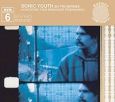 This CD sees Sonic Youth playing an instrumental background to three silent films from
 SOUNDTRACK: SONIC YOUTH-NYC Ghosts & Flowers (2000).
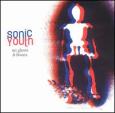 In the midst of all of the experimentation with the SYR discs. Sonic Youth released this “proper” release.
 of 1996, when the book was published, she had barely played any pro tournaments.


 SOUNDTRACK: UI-Sidelong (1996).
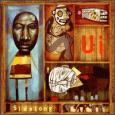 I mentioned this band in my review of The New Yorker because Sasha Frere-Jones writes the music column for the magazine and he’s also the main guy here.
 Mental Floss
 Next comes the ubiquitous letters. This also contains the occasional feature of Readers and Their Famous Friends, which shows pictures of readers celebrities (pretty much the only celebrities they ever talk about). This is followed by the letter from the editor. Neely Harris (I have yet to determine if Neely is a boy or a girl and I’m not going to look it up either, somehow it’s more fun trying to imagine) is very funny and always sets a good tone for the magazine.
 I Just Read About That...