Feeds:
Posts
Comments

Archive for the ‘Fears’ Category

SOUNDTRACKСУБИТО (Subito)-“Du Hast” (2011).

Субито (pronounced Subito) is from the Ukraine.  They’re a bunch of miners and they play music.  In addition to this cover, which is generating some meme buzz on the internet, they have a few other songs (and videos) of note.

This cover is notable in that the only real difference between this song and the original is the prominence of the button accordion.  The vocals are nearly identical (he’s got his German goth down perfectly), and the rest of the band plays quiet heavily (I love the triangle instruments!).  But the accordion changes the entire texture and tone of the song.   It’s still ominous (I mean, those vocals!) but the accordion adds an air of whimsy that undermines the menace and yet also somehow makes the rest of the song seem even more menacing.

Of course the video is quite silly which leads one to assume that they’re not taking their version too seriously and yet their playing is impeccable and their backing vocals are right on.

So, yes, I rather like this song, and I like being able to include the word Субито in my post.

[READ: November 10, 2011] “The Good Samaritan”

Joyce Carol Oates has a wonderful way of turning her stories into something dark.  Even if it starts out in a rather innocent light.

This story is set in 1981 on a train coming from Utica, NY.  The narrator, Sonia, finds a woman’s wallet stuffed into the seat of the car.  The story begins with Sonia thinking about the woman, wondering what she’s like, looking at the photos of herself and her family and sort of daydreaming what it would be like to be older and married.  It’s only after a brief reverie that she, a poor college student, checks the money to see what’s there.  (About $25).  She hopes that the woman is old enough to give her a reward, but assumes she is not.

Sonia is to be heading home to help her mother with her ailing grandmother, something she’s not looking forward to.  So she decides that she will return the wallet to the woman who, after all, lives only a few blocks from the station.

What is wonderful about this story is that this innocent setup masks the real story, which is never fully explored, but is hinted at enough to keep us all guessing.  When Sonia arrives at the house, the woman’s husband is home and he seems….surprised that Sonia has brought this wallet home.  She feels sympathy for him when he begins to explain that his wife ran off and must have dropped this wallet on this train while she was fleeing.  Sonia wants to help the man in some way.  He invites her inside and she thinks of all the things she could do for him–stupid things like make dinner or maybe even look at her things to see is she can help figure out where her wife went.  She suggests this last idea and he accepts. (more…)

Read Full Post »

SOUNDTRACK: SUFJAN STEVENS-The Age of Adz (2010).

Sufjan Stevens has released a bunch of albums of beautiful orchestral rock.  It is multi-layered and complex with classical elements and all kinds of cool instruments.

And this album starts out with a beautiful acoustic guitar melody and Sufjan’s delicate vocals.  Although it is a far more stripped down song than usual, “Futile Devices” seems like it is heading in the standard direction.  But anyone who heard Sufjan’s Christmas album number VIII knows that he has been having some fun with electronics.  And they show up with a vengeance on track two, “Too Much.”

All of the multilayered noise that was once orchestral and (some might say) precious has been replaced by a cacophony of gorgeous electronic noises.  The beginning of the song reminds me of the sounds in Skinny Puppy’s “Stairs and Flowers” (how many Sufjan Stevens reviews mention Skinny Puppy?).  The song is nothing like Skinny Puppy once the vocals kick in–it’s catchy and delicate–but those electronics underpin the whole thing, bringing his pastoralia into the twenty-first century.  When I first reviewed this song I didn’t like it but once you get absorbed by Sufjan’s world, it’s an enticing place to be,

“Age of Adz” takes this electronic nonsense even further with an 8 minute brew of strange sounds and choral voices.  But he always manages to throw in some catchy parts, no matter how strange the song gets.

For me one of the highlights of the disc is “I Walked” it features one of my favorite Sufjan things–falsetto vocals in a beautiful but unexpected melody.  And this song has them in spades.  “Now That I’m Older” has a very disconcerting sound–his voice is slowly warbled and mournful.  It’s a beautiful melody that is alienating at the same time.

“Get Real Get Right” returns to his earlier style somewhat (there’s more layers of music, although the electronica is still in place).   “Vesuvius” is a beautiful song and “All for Myself” is another of those great falsetto tracks that I like so much.

“I Want to Be Well” eventually turns into a manic electronic workout in which he repeats the chorus “I’m not fucking around.”

But nothing compares  to “Impossible Soul” a twenty-five minute (!) multi-part suite of electronic chaos.  It’s a fantastic song complete with autotune (used to very cool effect), repeated swelling choruses (it’s like a Polyphonic Spree tribute), electronic freakouts, and acoustic comedowns.  All in a positive, happy message.  I can’t stop listening to it.  “It’s not so impossible!”

Sufjan continues to impress me.

[READ: November 10, 2011] McSweeney’s #9

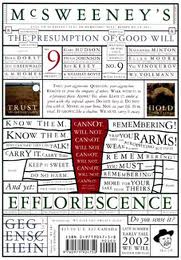
After the excesses of McSweeney’s #8, I was excited to get to the brevity (and urgency) of McSweeney’s #9.  This one is a paperback and looks like the first couple of issues.  The cover is mostly text with a hodgepodge of phrases and pleas.  You get things like: Thankful, Emboldened, The (Hot-Blooded/Life-Saving) Presumption of (Perpetual/Irrational (or More Likely, Irreducibly Rational) Good Will, Efflorescence, Our motto this time: We Give You Sweaty Hugs,” Alternative motto: ” We Are Out Looking,” GEGENSCHEIN (no more), and the promise: “We will Do Four This Year.”

This is the kind of issue that makes me love McSweeney’s.  There are some wonderful short stories, there are some nice essays and there are some dark moments all centered vaguely and tangentially around a theme.  There are some great authors here, too.

The back cover image is called Garden Variety by Scott Greene and it’s a fantastic painting.  You can see it here (navigate through the 2000-2004 paintings, but I have to say I really like the style of all of his work.

There are no letters and no nonsense in this issue.  So let’s get to it. (more…)

Read Full Post »

SOUNDTRACK: SEMISONIC-The Great Divide (1996).

Before Semisonic took over the world (and irritated everyone) with “Closing Time,” they were a band that formed out of the ashes of Trip Shakespeare.  Dan Wilson created Semisonic evidently because he wanted to be more poppy (which he perfected in “Closing Time,” obviously).

This album came out two years before “Closing Time” and it is a wonderful collection of alternapop.  There’s nothing terribly aggressive or weird in this collection, but neither is there anything so commercial that you want to scream.

The highlight for me is “Down in Flames.”  It goes in a few unexpected directions (especially with that screechy solo).  It’s a little dark, but it’s really catchy without ever pandering to Top 40 sensibilities.  It’s a really great song.

Some other highlights are the first three songs on the disc: “F.N.T.” is a poppy delight, “If I Run” has some great hooks and “Delicious” is a slinky sexy song with some unexpected moments.

Even a song like “Across the Great Divide” which isn’t the best on the disc has some nice surprises-when the vocals suddenly go falsetto.

There’s a couple of clunkers in the middle.  “Temptation” is a little too pop ballady for my liking and “No One Else” is a little bland.  I think their more uptempo songs are their strongest.

But “The Prize” is a satisfying pop rocker.  And “Brand New Baby” has some surprising pop vocals and a wonderful third part that is worth getting to the end of the album for.  While “Falling” is a surprisingly dark but catchy number (a Semisonic trait it seems).

The end of the album is rather unremarkable, but it’s still a solid collection of songs with nothing overplayable.  Sometimes one hit wonders are unfairly labelled as such.

[READ: November 8, 2011] “Sun City”

This was a fascinating story because it went in directions that I never anticipated.

I found the opening a little confusing as there were several women mentioned and no real relationship is given among them.  But it turns out that Vera and Bev are “roommates” and Rose is Vera’s granddaughter.  Vera just died (unexpectedly at 87) and Rose has travelled out to Arizona to go through her things.  Rose’s mom (Vera’s daughter) had a falling out with Vera years ago and won’t be going to the house.

Vera loved Rose but was somewhat disappointed in her–she was single and a bartender.  But Vera was not disappointed that Rose is a lesbian.  And Vera’s acceptance of that led Rose to believe that Vera and Bev were more than “roommates” as well. (more…)

Read Full Post »

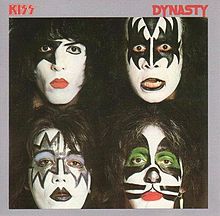
SOUNDTRACK: KISS-Dynasty (1979).

I was pretty excited to buy this album when it came out–a new Kiss album that wasn’t solo albums!  Woo hoo!  And the fact that it was disco?  Well, even though I said I “hated disco,” I didn’t really know what disco sounded like then (and really, aside from the middle “I Was Made for Lovin’ You” it’s not really a disco record) and plus my other favorite band was the Village People (and really, that makes a lot of sense–tw0 bands in over-the-top costumes talking about sexuality that I totally didn’t understand).

So, this album is hard for me to be critical about because it was such an essential part of my childhood, especially “I Was Made for Lovin’ You.”  I love it, and yet I can listen critically and appreciate that it’s really not that good.

But I’ll move on to the other songs.  “Sure Know Something” and “Magic Touch” really don’t seem that out of place chronologically with, say, the Kiss solo albums–they sound an awful lot like something off of Paul’s album.  So, despite the sort of slinky 70’s bass on “Sure Know Something”, they can’t have been that much of a surprise.  The guitar solos are short but have some interesting Ace sounds (I like the harmonics on “Magic Touch”).  It seems that while the other guys were embracing disco, Paul was keeping the Kiss sound alive.

Then there’s the Ace songs.  “2,000 Man” made total sense as an Ace song. I had no idea it was a Rolling Stones cover until fairly recently (and I like Ace’s version much better).  “Hard Times” feels like the sequel to “New York Groove.”  Not the music so much although maybe a little, but the lyrics–now that he’s in the city here’s what happened–the gritty reality. It’s one of Ace’s great, lost songs.  And check it out, Ace sings on three songs here!  (Guess having a #1 hit wasn’t lost on the Kiss powers).  “Save Your Love” has a cool descending chorus and a nice bass feel to it.  Ace certainly wins on this record.

Peter got only one song, “Dirty Livin'”.  In fact, this is the only song that Peter had anything to do with (his drums were re-recorded by Anton Fig).  It reminds me (in retrospect) of the Rolling Stones disco era even more than “2,000 Man,” the backing vocals remind me of something like “Shattered.”  I always liked this guitar solos on this (cool feedback).  Although I liked the song (along with the rest of the album), I don’t think it holds up very well.

Gene only gets two songs.  It amuses me how little he has to do with these late 70s albums even though he is always the leader of the band.  I always liked “Charisma” (I had to look the word up back then) even though it is, admittedly, rather discoey and really not very good.  It is fun to ask “What is my…charisma?”  But “X-Ray Eyes is the better Gene song on this record.  It harkens back to earlier Kiss songs and even has a bit of menace in it.

So, Dynasty was a huge hit for the band.  And they even got to mock it in Detroit Rock City the movie.  Cynical marketing ploy or genuine fondness for disco?  Who would ever know.

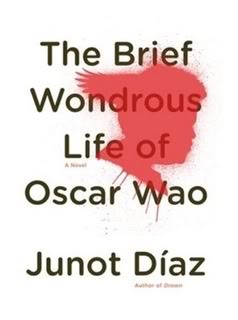
[READ: November 1, 2011] “The Brief Wondrous Life of Oscar Wao”

Readers of this blog know that after finding an author I like, I will try to read everything that he or she has written.  Close readers will know that if a writer is reasonably young and reasonably unpublished, I will try to read his or her uncollected work as well.  Well, I really enjoyed Oscar Wao the novel, so I decided to see what else Díaz had written. There’s really not a lot, to be perfectly frank.  There’s his short story collection Drown and a few fiction pieces published here and there (mostly in the New Yorker) and a few non-fiction pieces as well.

So this “short story” from the New Yorker (with the same title as the novel) is in fact an early, mostly the same, version of the Oscar story in the novel.  The thing here is to note the date: 2000(!).  The novel came out in 2007.  So, Junot had been working with this character for easily five years (giving time for the publishing industry to get a book out and all). The remarkable thing the is just how accomplished and polished this piece is and how much of it was used in the novel.

I’m curious to know whether this was written as a short story (it’s quite a long short story) or if it was always intended as a part of a novel.  Interestingly, when you read this story by itself and you realize that it is pretty much all of Oscar’s story in the novel, you realize just how little of Oscar is actually in the novel.  The novel is about Oscar, obviously, but it is really about his family and the fukú that was placed on them by the Trujillo clan.  Oscar is sort of the touchstone for the fukú, and the person whom the narrator knows most intimately but his story is also brief. (more…)

Read Full Post »

SOUNDTRACK: COLIN STETSON-Live at All Tomorrow’s Parties, October 4, 2011 (2011).

In addition to playing SXSW, Colin Stetson also played All Tomorrow’s Parties, and NPR was there.  Unlike with SXSW, this set appears to be full length (about 50 minutes–which is a pretty amazing amount of time for him to blow that horn).  Like SXSW (and the album) Stetston starts with “Awake on Foreign Shores” and “Judges.”  What I love about this recording is that after Stetson finishes “Judges” a guy in the audience shouts (in a voice of total amazement) “That shit was off the hook!”  And he is right.  It’s not even worth me going into how amazing Steston is once again (check previous posts for  that), but man, just look at the size of that horn he’s playing (seriously, click on the link to see it bigger).

Stetson plays a few more songs from New History Warfare, Vol. 2: Judges like “The Righteous Wrath of an Honorable Man” (which is outstanding) and “A Dream of Water” (which works without Laurie Anderson, although he does say he’s sorry she’s not there).  He also introduces two news songs “Hunted 1” and “Hunted 2” which show new levels and new styles that Stetson employs.

This is a remarkable set, and Steston is clearly in his element (and the crowd is rapt).  The only problem I have is the recording level.  It must be very difficult to maintain recording levels for Stetson’s brand of noise–his louds are really loud–but you can’t hear him talk at all.  And most of the time, the introductions to his songs are worth hearing.  I’m sure if they tried to get the speaking level a little louder the music would have sacrificed though, so I think they made the right choice–I only wish there was a transcript available.

[READ: October 31, 2011] The Brief Wondrous Life of Oscar Wao

Apparently it’s pronounced, “Wow”, by the way.

Because of my new job, I don’t have a  full hour of lunch-time reading like I used to.  And so this book took considerably longer than I intended.  However, once I set aside some time to read it, I flew through the book.

I’m going to get this part out of the way because I was thinking about it throughout the book and I want to mention it without having it bog down the post.  This story reminded me a lot of Roberto Bolaño.  On the surface, sure this is because they are both writers from “Central America” (Diaz is originally from the Dominican Republic but moved to the US, while Bolaño is originally from Chile but moved to Mexico and then Spain).   But I’m not really talking about their origins so much as the style of storytelling.

Without going into a lot of Bolaño here, I’ll just say that Bolaño tends to write very detailed character studies–stories that follow one person throughout his whole life on something of a fruitless quest.  And the details of that person’s life include information about family members and distant relatives.  Further, Bolaño has written about the brutalities of both Chile and Mexico and how a person can survive in such a place.  Similarly, Díaz follows the life of Oscar and his extended family and he talks about the brutalities of the Dominican Republic.

This is in no way to suggest that there is any connection between the two writers. I mean, The Savage Detectives came out in the States in 2007 (same years as Oscar Wao) and while he certainly could have read it in Spanish, I have no evidence that he did (and as I recently found out, the first draft of the Oscar story was written in 2000).  Again, the parallels are only from my reading and have nothing to do with Díaz himself.

Okay, now that that’s out of my system…

This is the story of Oscar de Leon.  But more than that, this is the story of a fukú–a curse that befalls the de Leon family and follows them through several generations.  Oscar is the youngest member of the family and the person whom the narrator knows best.  So we see this fukú as it impacts Oscar.  And although the book is ostensibly about Oscar, it is about much more.

Oscar was born in Paterson, NJ (the town next to where I grew up!) and went to Don Bosco Tech High School (where many of my friends went).  Oscar is Dominican (his mother is from the DR, but he and his sister were born in NJ), but unlike every other Dominican male, Oscar is totally uncool, into geeky sci-fi and D&D and is clearly destined to be a virgin because he is fat with terrible hair and no social skills.

And, (no spoiler), as the title states, his life will be short. (more…)

Read Full Post »

SOUNDTRACK: QUEENSRŸCHE-Queensrÿche EP (1983).

Back in high school, I spent many a night listening to M-m-m-m-metal Shop on the radio.  When I first heard “Queen of the Reich” I was blown away.  It was heavy, with blistering guitars and, amazingly, that Voice.  Many is the argument that my friends had about just how great Geoff (Jee-oph) Tate’s voice was. 

But this EP came out before most people had heard of them.  At this state they were a speed metal band from Seattle.  And, yet, despite all of the accolades they would later receive and the huge hits they would have and the prog-metal sound they would develop, for me this EP is the purest Queensrÿche.

I am particularly in love with the wild soloing that happens at the end of “Blinded.”  The guitars are sailing and wailing way.  Then the voices begin chanting and Tate’s voice is screaming (then hitting a minor note) and then screaming again until it just–

Opens the awesome “Lady Wore Black.”  Queensrÿche (yup umlaut on the y, thank you much) have done ballads throughout their career and this is where it started (true, nothing original about a song that starts slow and builds to heavy, but man how heavy this song gets).  The solos are also stellar.

My version of the vinyl has only 4 songs.  The CD added an extra track and the remastered version added like ten more songs.  But to me, these 4 songs are quintessential heavy metal.

[READ: October 27, 2011] “Tenth of December”

This was a surprisingly moving and reasonably dark story from “humorist” Saunders.  I really enjoyed it quite a lot and was very engaged with the whole thing.  And, yes there was a funny line or two in it, but it can hardly be called a funny story.

There are two main characters in the story: Robin, an overweight boy who spends most of his time playing with imaginary friends and Eber, an old man who is slowly losing his faculties.  While they have nothing to connect each other, it soon becomes apparent that their stories will intertwine.

Robin is playing a game in the woods–it’s the kind of game that I think is wonderful for kids to play, and I have to say that I didn’t think it was sad that he had such a creative imagination and played with imaginary friends–of course, since he doesn’t seem to have any friends in real life, I guess it is pretty sad.  (more…)

Read Full Post »

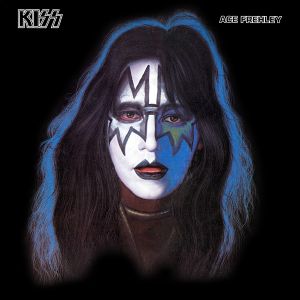
SOUNDTRACK: KISS-Ace Frehley (1978).

Unlike Peter’s album, Ace’s solo album is probably the most Kiss-like of the four, and I think that most of the songs on here are better than Ace’s Kiss songs.  I also liked that his had his cool autograph on the back.

“Rip It Out” opens with some great rough guitars and a supremely catchy chorus.  His voice also sounds much more assured than it had on the Kiss records.  “Speeding Back to My Baby” is a bit too “rock n roll” for me as well (I don’t like all the backing vocals on the choruses) but the guitar is absolutely on fire in this song–the solo is noisy and insane.  In fact, he really highlights his melodic soloing skills on this disc.  This song always bothered me because he clearly says “maybe I should turn around maybe I should stop” and then second later proceeds to sing “speeding back to my baby and I don’t mean maybe.”  Very confusing. 

The guitars on “Snowblind” are jagged and very cool (and the drums are really techno and a little silly but they sound cool and spacey).  And of course, there’s another great solo.  “Ozone” is a wonderful guitar workout, showing off what Ace does best.  Lyrically it’s a bit of a nonentity, but it is fun to say “O-zone” over and over again.  “What’s On Your Mind” is a poppy little number with a super catchy bridge (although again, a lot of “maybes” in this song).

“New York Groove” is such an anomaly.  A top-40 hit, and I’m not sure why exactly.  It’s so simple, with kind of a funky guitar.  But I guess that super catchy simple chorus could win anyone over.  The spoken word part in the middle cracks me up, his accent is so strong: “Here I am.  In the city.”  “In Need of Love” has an odd feel to it, kind of sinister, but that guitar solo–wow.   “Wiped Out” is wonderful from start to finish.  The crazy cackle in the beginning, the wonderful slippery bass, the cool guitar solo that precedes each chorus and the fast, fun-to-sing verses.  It’s just a great song (it’s probably the most successful flirtation with disco of all four solo albums).

The album ends with the magnificent “Fractured Mirror.”  It starts off as a simple enough guitar picking song.  But it keeps building.  And building.  And then a solo comes in.  And it builds more…until it ends like it began.  It’s a masterpiece of guitar overdubbing.

This album is pretty darn awesome.

[READ: October 8, 2011] “Off the Shelf”

There were four one-page pieces in this week’s New Yorker under the heading “Sticky Fingers.”  Each one was about theft in some way (this being the money issue, that ‘s a nice connection).

When the New Yorker groups four essays under the same heading, the first one really sets the tone for the others.  So it came as no surprise to me that Patti Smith was going to write about shoplifting too (frankly, she was punk goddess, how could she not have shoplifted?).  But her story is quite different and it was one that I found incredibly moving.

Her story concerns the time she stole an encyclopedia.  Not the whole thing (she still weighs less than a whole set), but the first volume, from the grocery store. (more…)

Read Full Post »

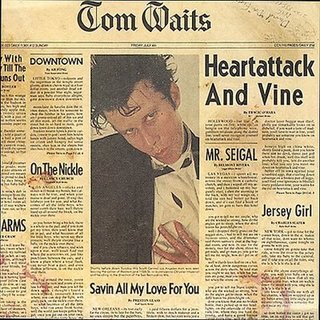
SOUNDTRACK: TOM WAITS-Heartattack and Vine (1980).

This is the final album Waits made before switching labels and starting over as a new, far more artsy artist.  The album cover is crazy, it looks like a newspaper (with all the lyrics to printed like articles on the cover).  And there’s a picture of Waits in a tux, hair askew, looking like the most stricken man alive.  It’s not a pretty cover, but it sure conveys a lot.

“Heartattack and Vine” is agreat noisy bluesy song.  It’s very simple and focuses on Wait’s lyrics and delivery: “I bet she’s still a virgin, but its only 20 after nine”).  Oddly, after that great vocal delivery song, we get the instrumental “In Shades.”  This has a lot of organ (which is a fairly new instrument in his repertoire) that he shows off his skills on, but it’s nothing that spectacular (and it’s recorded live apparently).

“Saving All My Love for You” is a sloppy kind of ballad (not as nice as most of his ballads), but then judging by the cover image, this is not going to be a sweet album.  See also “Downtown,” another rough track like the title song.

Of course, all of the talk of gruff nastiness is rendered false by the beauty of “Jersey Girl.”  Most people know the Springsteen version of this song, but (aside from the strings, which may be a bit much) I think this version exudes more real emotion.   “Jersey Girl” is a really wonderful song (especially if you’re married to a Jersey girl).  But what’s really great about it is that despite all of the sappy emotion (“My little girl gives me everything, I know that some day she’ll wear my ring,” there’s some great reality as well: “I see you on the street and you look so tired, I know that job you got leaves you so uninspired, When I come by to take you out to eat, You’re lyin’ all dressed up on the bed baby fast asleep, Go in the bathroom and put your makeup on, We’re gonna take that little brat of yours and drop her off at your mom’s.”

Sonically the shift from the guitar based blues noise of “‘Til the Money Runs Out” to the string laden ballad “On the Nickel” is pretty jarring. “On the Nickel” is one of Waits’ lullabies that’s not quite a lullaby.  But it’s got that mournful permanence that is hard to beat from Waits (he even performed it in the 2009 concert from NPR).  “Mr Siegel” is a barsy blues song (although it doesn’t sound like his earlier albums at all) and the album ends with the mournful ballad “Ruby’s Arms,”  which Waits sings in his best downtrodden voice. 

This album really showcases the breadth of his talents at this stage of his career.

[READ: September 24, 2o11] “The Ring Bin”

Who could even imagine what the title of this story means?  It’s weird, and it has so many possibilities.  By the time the answer is revealed, the story has gone in so many directions, you almost forget that you cared what the title meant in the first place.

First off, the tone of the story is bizarrely cool.  After a brief, confusing introduction (we’re at a celebrity gala of some sort), the story gives us this: “That’s when our heroine’s cellphone rings.”  It’s a kind of jarring intrusion by the narrator.  But before we can muse on this, the crowd is appalled at her break in etiquette.  And the story continues, “If these people knew the whole truth, they’d be more than annoyed.”  What is going on here?

And then the narrator gives up any pretense of disinterestedness: “I should step back a moment and describe for you the big picture.”  By now, as a reader you are reeling from all oft he broken rules.  

And then we find that this wonderful setting, this gala, is attended only by white people (which makes them all a little uncomfortable) but that the people onstage are a veritable United Nations and that the topic of the gala is tolerance.  Well, who knows what to think. (more…)

Read Full Post »

SOUNDTRACK: PEPPER RABBIT-“Alison” (2011).

Pepper Rabbit had NPR’s Song of the Day on September 19th.  “Alison” opens with a kind of circus organ pumping out a steady, thumping beat.  The beat continues until the quieter stated chorus: “You will know my name.”  The song is, as circuses are, light and bouncy with an air of the sinister floating all around it.  By the second chorus, we learn that “it’s all a game to get you to learn my name.”

The vocals are done in a kind of 70’s piano pop style–a bit high-pitched, a bit echoey– and they help to obscure exactly what’s going on.  But it’s the music that is so charming. 

Even if it’s unclear to me what the intention of the song is (stalker or just lost love) it’s a poppy ditty that will keep your toe tapping.  I’m looking forward to hearing more from them. 

[READ: September 14, 2011] Into the Gauntlet

And so the series ends. 

Or, actually, it doesn’t.  This isn’t really a spoiler because there are more books out in the series.  And I’m not going to say what happens at the end of this book, but for those of you wondering just what the heck is going on here with a Book Eleven coming out eight months after Book Ten, I’ll summarize (with no spoilers).  Book Ten ends the hunt for the clues–the goal is reached.  But at the end of the book, it is revealed that there’s another group, another family, who is also hunting for the Answer.  They hadn’t been hunting alongside the Cahill families, they were apparently watching alongside them waiting to see what would happen before setting their plan into action.  And thus….  Series Two.  

Book 11 is a kind of transitional book that fills in some back story on each of the families and shows Grace’s life.  I’m intrigued to read it, especially since most of the writers from the series contribute to it.

So Book Ten was written by the excellent author Margaret Peterson Haddix.  And this book comes in at 326 pages (over 100 pages longer than any other book in the series).  But Haddix earns her extra pages.  She totally breaks with the set-up of the series so far by following not just Dan and Amy but all of the branches of the family.  We actually get into the heads of all of the competitors (including Eisenhower Holt–who has feelings after all, Natalie Kabra–who is not quite as dim as she appears, and Ian Kabra–who might just be as evil as his mom).  Haddix also introduces a huge surprise in the beginning of the book–a surprise that may not have been such a surprise if I’d been reading the books close together but with this much remove from the early books, I was shocked!  And later on, when she doubles up on the surprise, it’s even more shocking! (more…)

Read Full Post »

SOUNDTRACK: JUNE TABOR & OYSTERBAND-“Bonnie Bunch of Roses” (2011).

Two artists that I have heard of for years but who I have never really listened to. This was described in the NPR music review as something The Decemberists might sing.  And indeed, it has a very Decemberists feel to it (which makes sense as this is a traditional song and, evidently, Tabor has been a master of this style for years.  ( I had no idea her voice was so deep–it adds a nice level of malice to this song about Napoleon.

The band is tight as they play this rollicking, dark shanty and Tabor’s voice is haunting (do I detect a similar style to Linda Thompson?) as she sings these lyrics of loss.  The music builds and builds as the song reaches its climax, but what’s neat is that Tabor never really changes her tone.  She is matter of fact, despite how sinister the music becomes.  It’s a very cool song.

I did some research and found out that tabor and the Oysterband got together in 1990 for the album Freedom and Rain, which was a collection of traditional songs as well as covers of Richard Thompson, The Velvet Underground, The Pogues, and Jefferson Airplane (I can’t believe that album is pretty well out of print–it sounds amazing).  This collaboration is more or less a follow-up, with more traditional songs and covers of PJ Harvey, Joy Division and others.

I’m really looking forward to listening to this disc and to what will certainly be the triumphant re-release of their first disc collaboration quite soon.

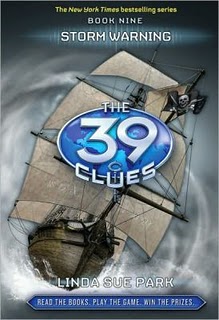
[READ: September 14, 2011] Storm Warning

Book Nine in the 39 Clues series made me feel like a kid again.  I started reading it when I got home from work and I stayed up till way late in the night to finish it.  Unlike when I was a kid, though, I am really suffering for staying up so late last night.

Storm Warning was written by Linda Sue Park, the first woman to write in the series.  And, appropriately, this is a very female-centered book.  We learn a lot about Nellie (finally, her story is explained!), the story focuses somewhat more on Amy than on Dan, there’s more evilness from Isabel Kabra, but most importantly, the clues lead them to two important women in history. 

They head down to the Caribbean–although they are undecided about whether to go to the Bahamas or Jamaica (Dan wants to go to the Bahamas to go to the greatest water park in the world: Oceanus–which is really the Atlantis Water Park) but Amy believes the answer is in Jamaica.  Dan convinces her and they decide to go to the Bahamas and the water park for a few hours of fun.  But the crazy thing is that before they even bought their tickets to the Bahamas, Nellie went into the bathroom and Dan received a message that the Holts were on their way to the Bahamas too.  Could Nellie be ratting them out?

On the flight down, they grill her about what’s going on.  But what happens is that for the first time in the series, we get into Nellie’s head.  Not completely, but we get to hear her thoughts.  So we know that she’s still hiding some truths, but she reveals that she has been working for Mr McIntyre and reporting to him about all of the family’s moves.  She was well paid for her services and she knew that there would be danger, but she had no idea exactly what the kids would be getting up to.  Dan and Amy are stunned.  They are betrayed and furious.  [I have to say I think they totally overreacted–Nellie saved their asses many many times along the way].  They agree to let Nellie come along with them but they’re not going to share any plans with her. (more…)

Read Full Post »

« Newer Posts - Older Posts »