Feeds:
Posts
Comments

Archive for the ‘Fears’ Category

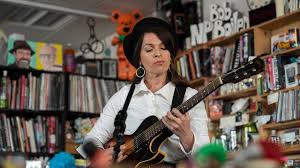
download (92)SOUNDTRACK: VÍKINGUR ÓLAFSSON-Tiny Desk (Home) Concert #63 (August 12, 2020).

download (91)Víkingur Ólafsson has a fantastic name.  But even better is his way of talking about the music he plays.  He adds so much detail and information about these songs that they really come to life.  I don’t often buy classical music anymore, but I absolutely want to get his new record of Rameau and Debussy pieces).

Ólafsson  has moved from strength to strength, releasing three terrific albums in a row (Philip Glass, J.S. Bach, Debussy-Rameau). And now that he has a young son, he wants to spend as much time with the family as possible these days.

So he tells us that he is leaving Berlin after living there for eight years, to return to Iceland with his wife and son.

He opens with a beautiful slow and stately piece from J.S. Bach (arr. Stradal): “Andante” (from Organ Sonata No. 4).  The piece runs about five minutes and after four slow lines, he throws in some amazing speed near the end.  he says that Bach is a good idea whether you are happy or sad–whatever it is, Bach makes things better.

Then Ólafsson offers a crash course in the fascinating music of Jean-Philippe Rameau and Claude Debussy, two French composers who lived nearly 200 years apart. Ólafsson connects the dots between the two seemingly strange bedfellows, illustrating his points with demonstrations on his Steinway.

Introducing Jean-Philippe Rameau, he says the music will go in a very different direction (than Bach).  Rameau was two years older than Bach and was dubbed the Newton of harmony.  He defined harmony and opened musical doors.

For Rameau: “Le rappel des oiseaux” (“The Recall of the Birds”) he says that he is playing two birds: one in his right hand and one in his left.  They are calling to each other–one imitating the other with perfect recall.  Then they take flight and we see the landscape under their wings.  When he plays it, it absolutely comes to life.

He says that was first piece of Rameau that he had ever heard.  The version he heard was by a Russian pianist who played it “more sad, more Russian.”  He plays it like that original version and you can hear the remarkable difference and how both versions work so well–although I like Ólafsson’s better.

Introducing Claude Debussy, he says it’a unusual pairing since they lived 200 years apart.  But Debussy’s idol was Rameau.  They were both musical outsiders, reinventing music, bringing life to a tired scene.

He plays a simple Debussy melody–harmony in space, a timeless beauty.  But Debussy did not like being considered an Impressionistic.  He was interested in the baroque, and there is a baroque structure to his music.

For Debussy’s: “The Snow is Dancing” (from Children’s Corner), he describes the driving rhythm that never stops as he explores harmonic inventions.  This song wa written for his four-year-old daughter as he was exploring the snow with her. You can absolutely hear the textures of the snow in the song.

Ólafsson has a penchant for making transcriptions, taking pieces written for other instruments and making them his own. He closes with “The Arts and the Hours,” his mesmerizing arrangement of a scene from Rameau’s final opera, which he plays as a farewell to his Berlin apartment.

Ólafsson says that he wrote his last masterpiece (an opera) a year before he died and he never heard it performed.  Indeed, it didn’t get a world premiere until 200 years after he died in 1960.  This is a transcription he made because he was jealous of all the conductors and orchestra players who got to play this music.   Rameau (arr. Ólafsson): “The Arts and the Hours” (from Les Boréades) is more loveliness from a composer who I feel may be quite under appreciated.

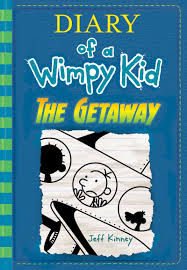
[READ: 2017 and August 15, 2020] Diary of a Wimpy Kid: The Getaway

I read this book when it came out in 2017 but never posted about it.  Then I recently realized that Kinney had written two more Wimpy Kid books that I hadn’t read (and two books written by Rowley, that I don’t know at all).  So it was time to get Wimpy again.

This book is a Christmas book and yet it’s not a typical Christmas story–no annoying relatives, no bad gifts, not even snow.  For The Heffleys have decided to go on holiday for Christmas.    Their Christmas planning was going very badly (a funny picture of the tree on its side with Manny playing with tinsel), so when they saw an ad for Isla de Corales, where Greg’s parents went on their honeymoon, they decided to get out of town for Christmas and celebrate in the warmth of the holidays.

Now, unlike shows where the place is far worse than the advertisement shows, Isla de Corales proves to be a wonderful paradise.  However, the place has now been divided into the mild side for families and the wild side for couples.  Obviously, the wild side is better but the Heffleys have no way to get there.

But before they arrive, they have to get there.  Their entire trip to the airport is one terrible moment after another–bad traffic, lost luggage, late shuttle.  Not to mention terrible lines and a hilarious pile of confusion at the security line–I love that it’s not Greg’s fault that things went so badly but the Heffleys had to pay for it anyway.  And of course Manny is a nightmare. (more…)

Read Full Post »

SOUNDTRACK: RunHideFight-“He’s a Jerk”/”Because I Love You” (2018).

RunHideFight is (was?) a Philly band which features author Christine Weiser on bass.  This is their only available single and I love that the cover features lead singer Geeta Dalal Simons holding her double neck 12-string guitar (which is in fact a custom 12 electric neck / 12 electric sitar neck).

“He’s a Jerk” is a two minute blast of garage rock fun. The song has lots of fuzz and a simple riff that sounds like “All Day and All of the Night” but isn’t.  Lead singer Geeta Dalal Simons has a great rough, unpolished scream of a voice.  And the chorus is really catchy.  There’s even time for a guitar solo from John Terlesky.

“Because I Love You” slows things down with a nifty sitar line.  I really like the start-stop nature of the main riff.  The intertwining backing vocals really flesh this song out.  It clocks in at 2 and a half minutes, but really fits in a lot of different musical moments.

This seems to be the band’s only release and it was from two years ago, so maybe they are no longer.  Which is a shame, these two songs are pretty great and although I listened because if Weiser, I want to hear more from Geeta Dalal Simons.

[READ: July 25, 2020] Broad Street

I saw Christine Weiser play bass in Suffacox a few months ago.  When she was introduced, it was mentioned that she was a writer.  I found this book, her first novel, and decided to check it out.

Weiser has been in a number of bands.  One in particular was Mae Pang (if you don’t know the origins of that name, do look it up–I had no idea).  Mae Pang was an all-girl garage rock band based in Philly.  As far as I can tell, they didn’t release any music.

However, Weiser has mined her experiences with Mae Pang for the basis of this book.  She has chosen the far superior band name of Broad Street for the book.

Kit Greene is a proofreader for a medical publishing house.  It’s the kind of job where an errant decimal point can be deadly (literally–it could effect the dosage of medicine).  It’s high stress and her boss doesn’t make it any easier. (more…)

Read Full Post »

SOUNDTRACK: JACOB COLLIER-Tiny Desk Concert #48 (July 9, 2020).

collierI had never heard of Jacob Collier until his recent Tiny Desk Concert.  He was an impressive fellow to be sure.  He has an amazing vocal range and he can play just about any instrument you can think of.

So it should come as no surprise that Collier’s Tiny Desk (Home) Concert is over the top as well.

But even knowing all of that, it is a still mind-blowing.  Because he has seamlessly spliced four videos of himself together.  So you have four Jacobs in four outfits playing everything in a room that is full of instruments.

The set starts with “All I Need.”  Lead singer Jacob is sitting on the floor in front of a steel drum.  This Jacob also plays the melodica solo.  On the left is keyboardist Jacob who plays the organ and, of course, mid song switches to piano and back again.  On the right is bassist Jacob who plays some excellent bass–including a nice solo at the end.  Way in back is Jacob on drums.  You can’t see him all that well, but you can hear his contribution perfectly.

Polymath musician Jacob Collier has been championing this style of one-man-band music videos since 2012, singing every note and playing every instrument. His cover of Stevie Wonder’s “Don’t You Worry ‘Bout a Thing”earned him a devout YouTube following at the age of 19, and he hasn’t slowed down since. The London wunderkind owns four Grammy Awards already, including two at the age of 22 in 2017…. Now 25, and with nearly a decade of experience producing every aspect of his own music from his home, Collier is uniquely positioned to crank out his best work from quarantine. In this video, each of the four parts was recorded in a single take. Pay close attention ; it’s easy to get tripped up inside Jacob’s head as he arranges this Rubik’s Cube of a video production, which feels both like a magic trick and a no-strings-attached bedroom session.

Introducing the next song, one of the Jacobs (they fight over who is the actual Jacob), says that “Time Alone With You” is a little funky–hope you don’t mind.  It’s groovy bass line and smart snapping drums.   The end of this song is a wonderful musical freakout with a vocal section that leads to a series of four fast drum hits (including Jacob banging on the piano and some bass rumblings as well).  There’s even a jazzy breakdown (real jazzy bass lines) which allows one of them to whisper “jazz.”  Because even though he is super talented and a very serious musician, he’s also goofy (look at his clothes).

He’s in the middle of releasing his ambitious four-volume record, Djesse. The last song in this video is the premiere of his new single “He Won’t Hold You,” which will appear on Vol. 3, due out later this year.

When piano Jacob changes the mutes in the piano bassist Jacob talks about the record.  “He Won’t Hold You” song starts a cappella in four part harmony (with himself). He can ht some really deep notes and the harmonies are super.

The only problem for me is I don’t really like his style of music.  Which is a shame because he’s so talented, I want to watch him all day.  It’s just not my musical scene.

[READ: July 10, 2020] “Immortal Heart”

This is a lengthy, somewhat complicated and ultimately devastating story.

The story is quite long and it revolves around a woman and her Precious Auntie living in the Western Hills south of Peking.  Their village is called Immortal Heart and The Liu clan (her family) has lived there for six centuries.  They were ink stick makers. They had expanded to a shop in Peking–a sign of great success.

Precious Auntie was born across the ravine in a town called Mouth of the Mountains.  The village was known for dragon bones, which poor men collected from the Monkey’s Jaw cave.  Precious Auntie’s father was a renowned bonesetter and he used these dragon bones as part of his work.

Precious Auntie could not speak.  She communicated with the narrator. Lu Ling, through sign language which only the two of them knew.  Precious Auntie was rather naughty and their silent language allowed her to speak her mind freely (she disapproved of bound feet for instance). (more…)

Read Full Post »

SOUNDTRACK: LOS BITCHOS-“Tripping Party/FFF” (2018).

fff

 Los Bitchos are a London-based quintet who play “tequila cumbia instrumentals.”

Although they reside in London the band has an international base, with members hailing from Perth, Montevideo, Stockholm and Croydon.  The band is made up of Serra Petale on lead guitar, Carolina Faruolo (guitar), Augustina Ruiz (keytar), Josefine Jonsson (bass), and Nic Crawshaw (drums/percussion).

The band has been around for two years but only have eight songs on bandcamp (spread over five releases).  This is their first single.  Both songs are terrific evocative instrumentals.

“Tripping Party” has a great Western swing sound, but with a rock foundation.  After about a minute the guitars take on a kind of ska vibe with a slinky lead guitar solo.  A lower guitar solo comes in after the first one–adding a new dimension to the sound.  By the end of the song, the swinging sound returns and ends with a great vibe.

“FFF” is a slower, some what more Middle Eastern sounding song.  There’s some great percussion throughout as the Middle Eastern soloing vibe runs throughout.

This is a great introduction to the band whose newer songs are even better.

[READ: July 14, 2020] “The Book of My Life”

This issue of the New Yorker has a series of essays called Influences.  Since I have read most of these authors and since I like to hear the story behind the story, I figured I’d read these pieces as well.

This essay is surprisingly dark.

Hemon grew up in Sarajevo and studied under Professor Nikola Koljevic.  The course was in Poetry and Criticism and Hemon learned the New Critical method.  When he graduated he phoned his professor to thank him.  This was unusual, but Koljevic was flattered and invited him for a walk to discuss literature.

Soon after, Hemon began working for an independent Sarajevo magazine and Koljevic gained a high position in the Serbian Democratic Party run by Radovan Karadzic, “a psychiatrist and talentless poet.”  He would soon become the most wanted war criminal in the world.

Whenever Karadzic gave a speech on TV, Koljevic was there beside him. (more…)

Read Full Post »

SOUNDTRACK: DARLINGSIDE-“Ocean Bed” (2020).

oceanToday, Darlingside announced the release of a new song–a wonderful surprise–and an upcoming new album.

The basic sound of Darlingside doesn’t change (thank goodness), but on their last album, they mixed things up by throwing in some electronic sounds.

There’s no electronic sounds on this song (which doesn’t mean there are non on the album) but there is a lot more percussion than usual.

It opens up with some thumping drums.  Is there a drummer?  It’s more than the kick drum they usually use.  Then comes the mandolin and some clapping.  A smooth grooving bass slides in and then, as the voices come in, everything settles down into pure Darlingside.

The verses are individual voice but the bridges are gorgeous harmonies.  The song moves swiftly with a percussion backing as the lead voices sing.

Then the surprise–the middle is practically a drum solo–with rumbling percussion and some kind of low pulsing note (is that secret electronics after all) that adds almost a sinister feel. But that segue leads right back to the mandolin.

I love that this song can sound so much like Darlingside and yet also shows them changing things up. In some ways it’s a step back since their first album had a drummer and their later ones did not.  But this drumming and percussion is a very different sound.  very exciting–how will they do it live?

[READ: July 10, 2020] “Black Mountain, 1977”

This issue of the New Yorker has a series of essays called Influences.  Since I have read most of these authors and since I like to hear the story behind the story, I figured I’d read these pieces as well.

Donald Antrim’s essay is considerably shorter and much more harrowing than the previous one.

Antrim tells of the horrible situation that his mother grew up in.  His mother’s mother was a cruel parent, carrying out “an aggressive campaign against her daughter’s body, even going so far as to advocate unnecessary surgeries for her only child,”

His mother’s father was a meek and cowed alcoholic who never stood up to his wife. (more…)

Read Full Post »

SOUNDTRACK: KING GIZZARD AND THE LIZARD WIZARD-“Honey” (2020).

honeyA new King Gizzard and the Lizard Wizard song is never a surprise (few bands are as prolific) but it is always a delight.

After the seriously heavy metal of their last album and accompanying live records (I do wish they’d release a live show that’s not so heavy metal-dominated since they have such a wonderfully diverse catalog), this song drifts back to their more psychedelic sound.

Stu Mackenzie says he wrote it a few years ago.  It starts out with a middle eastern microtonal acoustic guitar (I’ve never seen an acoustic microtonal guitar).  It’s lovely melody, fluid and open.  After about a minute, the bass comes in and rumbles the song along adding a complex texture to this mostly mellow song.

Stu’s guitar is simple but has some tasty bending notes.  But since nothing is simple, there some wild drum fills and unexpected falsetto vocals.

The third part shifts gears a little with what I think is a (processed?) flute solo.  and because no KGATLW can be traditional, there’s another part in the middle that’s almost  a bass solo with a few sitar-like strummings.

It’s always exciting to get more music from KGATLW and this promises some great new stuff in the near future.

[READ: July 10, 2020] “The Constant Muse”

This issue of the New Yorker has a series of essays called Influences.  Since I have read most of these authors and since I like to hear the story behind the story, I figured I’d read these pieces as well.

Although I have never read anything by John Le Carré.  I don’t even really know what he writes–spy novels?

Anyhow, as I started this I recognized the name of his novel The Constant Gardener, although as I say I don’t know anything about it.  He says the novel follows a British diplomat as he searches for the people who killed his wife, Tessa.  The story opens with Tessa dying on the shores of Lake Tukana in northern Kenya.

When he finishes a novel, John asks where the ideas came from–a stupid question, but one he likes to ask himself.  He says he got the initial idea for this story twenty years earlier when he saw a man come into the restaurant where he was eating and begin handing out flowers to everyone–refusing to accept any money.  The proprietress gave him a glass of wine and a kiss. She told John that they call him the mad gardener.  He had suffered a great loss and he felt better handing out the flowers from his large garden. (more…)

Read Full Post »

SOUNDTRACK: ICE NINE KILLS-“Jason’s Mom” (2020).

I heard about this song from Metal Sucks who hilariously showed the three ways this song is perfectly timely:

  1. Paid tribute to one of the song’s writers, Adam Schlesinger, who died of COVID-19 last month.
  2. Paid tribute to the original Friday the 13th film, which turned 40 years old this weekend.
  3. Paid tribute to all of the world’s moms in time for Mother’s Day.

Ice Nine Kills’ songs are usually pretty heavy, so this acoustic number is quite a change (The video even shows the drummer using a hand drum rather than a kit).

It’s also an opportunity to hear how well they can sing (and harmonize).

But really, the fun of this song is in the lyrics

Jason, do you remember Camp wasn’t so great?
The counsellors had lots of sex while you drowned in the lake
But one woman stood by you when your life was taken
Yeah, she slaughtered them all and even killed Kevin Bacon
I’m making sure that she’s appreciated
She did it all for you and was decapitated

And of course, the twist on the chorus:

Jason, can’t you see the love behind her killing spree?
Whether her Head’s off or not
I’m in love with Jason’s Mom

Sometimes violence can bring people together with humor.

[READ: May 10, 2020] “I Incriminate Myself So No One Else Can”

This is a weird little story.

The sum total of the action is that a six year old girl is on the top of a slide in a playground. She is crying, getting more and more frightened.

Her mother is standing nearby desperately wanting the girl to get over her fear–to demonstrate internal fortitude.  She is getting angry as the girl screams louder and louder and other parents move in to see what’s wrong.

The story is, of course, the background of the mother. (more…)

Read Full Post »

SOUNDTRACK: JESCA HOOP-Tiny Desk Concert #965 (April 3, 2020).

I really liked the Tiny Desk Concert that features Sam Beam and Jesca Hoop.  So much so that I bought the CD and it made me want to see both of them live.

Jesca Hoop last appeared at the Tiny Desk as a duet with Sam Beam (Iron & Wine) in the spring of 2016. They sang songs from their collaborative record Love Letters For Fire.

This time it is just Jesca and I have realized that I liked her more as an accompanist rather than a lead singer.  Actually, that’s not exactly right.  Her voice is lovely.  I just find the songs a little meandering.

This time around, Jesca Hoop came to the Tiny Desk with just her guitars, her lovely voice, and brilliant poetic songs. She has a magical way with words, and she opened her set with “Pegasi,” a beautiful song about the wild ride that is love, from her 2017 album Memories Are Now.

“Pegasi” is nice to watch her play the fairly complex guitar melodies–she uses all of the neck.  The utterly amazing thing about “Pegasi” though comes at the end of the song when she sings an amazing note (high and long) that represents a dying star.

She wanted to sing it today so it could live on Tiny Desk.

The two songs that follow are from her latest album, Stonechild, the album that captured my heart in 2019, and the reason I reached out to invite her to perform at my desk.

“All Time Low” is a song, she says, for the “existential underdog.”  She switches guitars (to an electric) and once again, most of the melody takes place on the high notes of the guitar.  Her melodies are fascinating.  And the lyrics are interesting too:

“Michael on the outside, always looking in
A dog in the fight but his dog never wins
If he works that much harder, his ship might come in
He gives it the old heave-ho.”

After the song, she says, I’m going to tune my guitar, but I’m not going to talk so it doesn’t take as long. If you were at my show, I’d be talking the whole time and it would take a long time.

And for her final tune, she plays “Shoulder Charge.” It’s a song that features a word that Jesca stumbled upon online: “sonder,” which you won’t find in the dictionary. She tells the NPR crowd “sonder” is the realization “that every person that you come across is living a life as rich and complex as your own.” And that realization takes you out of the center of things, something that is at the heart of “Shoulder Charge” and quite a potent moment in this deeply reflective and personal Tiny Desk concert.

This word, sonder, came to my attention back in 2016 when Kishi Bashi first discovered it and named his album Sonderlust for it.

The song is like the others, slow and quite with a pretty melody that doesn’t really go anywhere.

I found that after three listens, I started to enjoy the songs more, so maybe she just writes songs that you need to hear a few times to really appreciate.

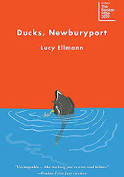
[READ: March 2020] Ducks, Newburyport

I heard about this book because the folks on the David Foster Wallace newsgroup were discussing it.  I knew nothing about it but when I read someone describe the book like this:

1 Woman’s internal monologue.  8 Sentences. 1040 pages

I was instantly intrigued.

Then my friend Daryl said that he was really enjoying it, so I knew I had to check it out.

That one line  is technically (almost) accurate but not really accurate.

The story (well, 95% of it) is told through one woman’s stream of consciousness interior monologue.  She is a mother living in Ohio.  She has four children and she is overwhelmed by them.  Actually she is overwhelmed by a lot and she can’t stop thinking about these things.

She used to teach at a small college but felt that the job was terrible and that she was not cut out for it.  So now she bakes at home and sells her goods locally.  She specializes in tarte tatin.  This is why she spends so much time with her thoughts–she works alone at home.  Her husband travels for work.  Whether she is actually making money for the family is a valid but moot question.

So for most of the book not much happens, exactly.  We just see her mind as she thinks of all the things going on around her.  I assume she’s reading the internet (news items come and go in a flash).  She is quite funny in her assessment of the world (how much she hates trump).  While I was reading this and more and more stupid things happened in the real world, I couldn’t help but imagine her reaction to them).  She’s not a total liberal (she didn’t trust Hillary), but she is no conservative either (having lived in Massachusetts and New York).  In fact, she feels she does not fit in locally at all. (more…)

Read Full Post »

SOUNDTRACK: KIRILL GERSTEIN-Tiny Desk Concert #958 (March 11, 2020).

I can’t really keep track of classical pianists. There are so many who are truly amazing.  But I love hearing them.  I also like it when they have a good sense of humor, which most of them seem to have.

The last time pianist Kirill Gerstein was at NPR we gave him a full-size, grand piano to play in a big recording studio. But for this Tiny Desk performance, we scaled him down to our trusty upright. “What will you ask me to play the next time,” he quipped, “a toy piano?”

Even if we had handed him a pint-sized instrument, I’m sure Gerstein could make it sing. Just listen to how Chopin’s lyrical melodies, built from rippling notes and flamboyant runs, flow like a song without words in Gerstein’s agile hands.

What sets Gerstein apart?  Perhaps its his connection to jazz.

The 40-year-old pianist, born in Voronezh, Russia, taught himself to play jazz by listening to his parents’ record collection. A chance meeting with vibraphonist Gary Burton landed him a scholarship to study jazz at Boston’s Berklee College of Music. At age 14, Gerstein was the youngest to enroll at the institution.

He opens the set with Chopin: “Waltz in A-flat, Op. 42.”  It is fast and amazing with some slow, jaunty parts.  Near the end, wow, doe he pound out those bass chords.

Before the second piece he says that it hasn’t been heard on a recording yet–it’s a newly written piece by Thomas Adès.  Two lovers want to hide in the closet and … sleep with each other.  They emerge dead in the morning, so its lascivious and morbid and a very beautiful piece.

The Berceuse for solo piano was written for Gerstein by Thomas Adès, adapted from his 2016 opera The Exterminating Angel. The work, both brooding and beautiful, receives its premiere recording at the Tiny Desk.

It is slow and beautiful, full of sadness and longing.  Until the end when the bass comes pounding and rumbling, full of ominous threat and dread.  And listen to how long he lets those last bass notes ring out!

Up next is a piece by Liszt who I am particularity fond of (even if I only know a few of his pieces).  Gerstein says that Liszt is perhaps the greatest composer that ever touched the instrument.  There are several hundred not famous pieces.  This is a late piece called “A quick Hungarian march.”  Technically it’s called “Ungarischer Geschwindsmarsch”

Gerstein follows by dusting off a truly neglected – and quirky – Hungarian March by Franz Liszt. To my knowledge it’s been recorded only once.

It is jaunty and spirited until the middle where it goes back and forth between fast runs and bouncy melodies.

Since I hadn’t read about his jazz background the first time I listened to this concert I was really surprised when he said he’d be playing the Gershwin-Earl Wild standard “Embraceable You” which he says is for dessert at this lunchtime concert.

Gerstein’s jazz background is still close to his heart. Which brings us to his lovely-rendered closer: Gershwin’s “Embraceable You,” arranged by the American pianist Earl Wild.

Like all master performers, Gerstein gives you the illusion that he’s making it all up as he goes along, even though the virtuosic transcription is intricately mapped out. And somehow, he makes that upright piano sound nine feet long.

It really does sound like he is working on the fly–playing beautiful runs. It’s hard to imagine transcribing and learning all of those notes instead of just improvising them, but that’s what make a great pianist, I guess.

[READ: November 2019] The Abyss

I saw this book at work and thought, a turn of the 20th century Russian author writing about the Abyss?  What’s not to like?

I had not heard of Leonid Andreyev, perhaps because much of his work has not been translated into English.  He died in 1919 and is considered “the leading exponent of the Silver Age of Russian literature.”

This book was translated by Hugh Aplin and it is remarkable how contemporary these stories sound (aside from obviously nineteenth and twentieth century details).

Bargamot and Garaska (1898)
Bargamot was a policeman–a big, thick-headed policeman.  His superiors called him numskull.  But the people on the streets he looked after were quite fond of him because he knew the area and what he knew he knew very well.  This story is set on Easter Saturday night.  People would soon be going to church.  But he was on duty until three o’ clock and he wouldn’t be able to eat until then. The day was going smoothly and he would soon be home until he saw Garaksa, clearly drunk, heading his way: “Where he had managed to get sozzled before daylight constituted his secret, but that he had got sozzled was beyond all doubt.”  Bargamot threatened to send Garaska to the station, but Garaska talked to him about the festivities of the day and was about to present to him an egg (a Russian custom).  But Bargamot’s rough handling smashed the egg.  This story turns surprisingly tender and sad, with a rather touching final line.

A Grand Slam (1899)
This has nothing to do with baseball.  It is about a card game called Vint, which is similar to bridge.  For six years these four people have been playing it: fat hot-tempered Maslennikov (whose name is Nikolai Dmitriyevich, we find out about five pages in) paired with old man Yakov Ivanovich and Yevpraksia Vasilyevna paired with her gloomy brother Prokopy Vailyevich.  Dmitriyevich desperately wanted a grand slam but he had been paired with Yakov Ivanovich who never took risks. Ivanovich was very conservative and never bet more than four–even when he ran an entire trick, he never bet more than four–you never know what might happen. They speak of news and local happenings (like the Dreyfus Affair), but Dmitriyevich stays focused on the game because his cards are lining up for a Grand Slam.  As he goes for that last card, he falls out of his chair, presumably dead.

Silence (1900)
This story is divided into sections.  Fr. Ignaty and his wife need to speak with their daughter Vera. They have a fight and Fr. Ignaty refuses to speak to her any more.  Soon enough she goes out and throws herself under a train [I would hate to be a train conductor in Russia].  In Part II silence has fallen over the house.  In Part III he tries to talk to his wife about his feelings and his sadness over their daughter, but she remains silent.  In the final part, Fr Ignaty finally breaks down.  But is it the silence that has gotten to him?

Once Upon a Time There Lived (1901)
Laventy Petrovich was a large man. He went to Moscow for someone in the city to look at his unusual illness.  He was a silent and morose man and he specifically asked for no visitors.  The hospital assigned Fr. Deacon to him.  Fr. Deacon was another patient, unfailingly positive.  He and Petrovich were at opposite sides of the spectrum.  But even as it became clear that Fr. Deacon was deathly ill, he remained positive.  Until Petrovich told him that the doctors said that Fr. Deacon has a week to live.  There was also a young student who was daily visited by the girl he loved.  They liked Fr deacon and did not like Petrovich. I’m not sure if the ending is a surprise, but it is certainly sudden with happiness doled out in very specific ways.

A Robbery in the Offing (1902)
That night there was to be a robbery and maybe a murder.  A man, alone with his thought is scared by nearly everything–he is very jumpy because he is the one about to do the robbery.  The man was frightened by a noise until he saw it was a little puppy.  The puppy was shivering and the man tried to frighten him to get him to go home. But the puppy seemed too ignore him.  So began the battle of wits between a big strong man and a tiny freezing puppy.  Imagine a man with a robbery in the offing worrying about a little puppy.

The Abyss (1902)
Two young lovers went for a walk.  Zinochka was 17 and very much in love.  Nemovetsky was 21 and similarly in love.  They wandered into an area they didn’t recognize and happened upon three men.  The men punched Nemovetsky and knocked him out then they chased Zinochka . When he came to, he found her body, naked but still alive.  This was a hard story to read.

Ben Tobit (1903)
This was one of the first stories in the book that I really really liked.  It is set on the day of Jesus Christ’s crucifixion.  On that day, Jerusalem merchant Ben Tobit had a terrible toothache.  Ben was a kind man and did not like injustice, but it was hard to be kind with this much pain.  His wife tried to help by giving him various medicines (like purified rat droppings). She then tried to distract him when the thieves came trudging past on their way to the crucifixion site.  It distracted him somewhat but mostly didn’t interest him.  She said, “They say he healed the blind.”  He replied, “If only he’d cure this toothache of mine!.”  The next day he felt better and they walked to the site to see what they missed.

Phantoms (1904)
Yegor Timofeyevich had gone mad so his relatives collected money to send him to a clinic.  He knew he was in a madhouse but also knew that he could make himself incorporeal and walk wherever he wanted.  He was exceedingly happy. There was a patient who would continually knock on any locked door.  He would walk through all the unlocked doors but when he got to a locked one he would knock and knock and knock.

There was a doctor’s assistant the hospital named Maria Astafeevna, whom Yegor was certain liked him.  He thought very highly of her.  But another man Petrov could say nothing nice about her.  He felt that she was like all women: debauched deceitful and mocking. This attitude upset Yegor tremendously.  Maria was actually in love with Dr Shevyrov. But she hated that he went to Babylon–where he drank three bottles of champagne each night until 5 AM.  She imagined that one day she would ask to be his wife bit only if he stopped going there.

The man Petrov was also terrified of his mother, believing that she had bribed officials to lock him up. He would become hysterical when she would visit.  It was only Yegor’s assurances to her that her son was a decent man that made her feel okay.

Most days things went on exactly the same, the same faces, the same conversation and the same knocking.

The Thief (1904)
Fyodor Yurasov was a thrice-convicted thief.  While on the train, even though he had plenty of money, he stole a gentleman;s purse.  As he tried to blend in, he imagined everyone thought he was an honest, young German (he came up with the name Heinrich Walter).  But when he tried to be civil, everyone ignored him.  Some were downright rude to him.  Later when he hears that the gendarme are looking for someone, he assumed it is he.

Lazarus (1906)
This story looks at what Lazarus’ life was like after he came back–appearing a few days dead and with a shorter temper.  People understood and forgave him, but still.  Soon, however, people began to avoid him and claimed that all of the madmen in the village were people whom Lazarus had looked upon.   It’s such an interesting (if exceeding dark) tale that no one bothered to investigate before.

A Son of Man (1909)
As Fr. Ivan Bogoyavlensky grew older he grew more disatisfied with his role in life.  He wanted to remove his surname and replace it with a five-digit number (The church elders assumed he’d gone mad).  He then bought a gramophone and listened only to stories of Jewish and Armenian life.  His wife hated it and it drove their puppy mad (?!).  Indeed he kept trying to get the puppies to listen to the gramophone and they consistently went crazy and eventually died.  The church sent a deacon to help Fr Ivan through this but he the deacon and Fr Ivan butted heads immediately.  Fr Ivan began mocked everything about their religion.

Incaution (1910)
A priest arrived at a railway station and saw a steam engine for the first time. There was no one around, so he climbed aboard.  It wouldn’t be dangerous to flick some switches and pull some levers.  Would it?

Peace (1911)
A dignitary was dying and an devil–an ordinary devil–came to his bedside offering him eternal life in hell.  The man didn’t want to suffer but the devil said that suffering was terrible until you got used to it and then it was nothing.  The devil makes a stronger and stronger case if only the man would take this pen and sign.

Ipatov (1911)
Nikolai Ipatov was a rich merchant who went bankrupt. Soon he became silent and despondent.  The local priest chastised him saying that the house of god was a house of joy.  He refused to let the merchant back in until he grew happy again.  Which he didn’t.  Eventually his children took over the situation and and put his house up for sale.  But when someone came to look at the house, they heard Ipatov’s moaning and grew existential realizing that a man without guilt could still be afflicted this way.

The Return (1913)
The narrator had been in a cell n St Peterburg for three years because of a political incident.  His wife, who was supposed to be waiting for him in a hotel room had stepped out with another man.  He hired a cab to follow them.  They kept driving around and around, some streets seeming to stretch on endlessly.  Then the cab driver told him that they had been at the same intersection many times.  He finally arrived at the gate and when he banged on it, who should open the gate but his prison guard.

The Flight (1914)
Yury Mikhailovich was an experienced pilot.  Twenty eight flights and no troubles.   He always felt, “If I crash, I crash, nothing to be done about it.”  Despite everything he had on earth, he longed to be up ion the sky…possibly forever.  It’s incredible that Andreyev wrote a story like this in 1914!


Read Full Post »
81HkprYowjLSOUNDTRACK: SNOH AALEGRA-Tiny Desk Concert #947 (February 18, 2020).

maxresdefault (2)In what seems to be a new trend at the Tiny Desk, here’s another artist whom I’ve never heard of somehow and who manages to cram five songs into 16 minutes.  (I won’t complain about the length of this show because it’s not that long, but everyone knows you get three songs).

The most fascinating things about Snoh is that she is Iranian-Swedish.  And that her band is enormous.  And that they all have great names like: O’Neil “Doctor O” Palmer on keys, George “Spanky” McCurdy on drums and Thaddaeus Tribbett on bass.  There’s also Jef Villaluna on guitar whose name isn’t that crazy,

Unfortunately her songs and albums have terrible names.

Her new album is called Ugh, those feels again and her previous album is called Feels. (and she’s not even millennial).  And then the third song is called “Whoa.”  Good grief,

“Whoa” is a sweet love song that is detailed but not explicit.  Except the chorus which is “you make me feel like, whoa.”

The rest of her songs have a very delicate soft-rock vibe.  Especially with the string section of Ashley Parham on violin, Johnny Walker, Jr. on cello, Asali McIntyre on violin and Brandon Lewis on viola.

But apparently that’s not what her music typically sounds like.

On this day in particular, Aalegra’s tracks were stripped of their punchier, album-version kick drums and trap echoes. In their absence, it’s Aalegra’s delicate vocal runs and chemistry with her supporting singers that resonated most. “I Want You Around” and “Whoa,” which usually rest on a bed of glitchy, spiraling production, felt lighter thanks to the dreamy string section.

All of the songs featured her backing vocalists Ron Poindexter and Porsha Clay,  but they were especially prominent on “Fool For You” which ran all of two minutes.

Snoh seemed a little too cool up there, which did not endear me to her.  Her voice is certainly pretty though, even if I didn’t like her songs.

[READ: March 15, 2020] Best Friends

This book is a sequel of sorts to Real Friends.

It continues the story of young Shannon in sixth grade and how she deals with the minefields that middle school can present.

The same cast is back–the good and bad friends, the girls and boys and all of the insecurities that are practically a character in themselves.

As the book opens, Shannon realizes that she and her friends are not really in sync. She can’t keep up with the pop songs that they like–how do they always know the newest cool song (her family doesn’t listen to pop music so she is way out of the loop).

But aside form that, things seem good.  Shannon is best friends with Jen, the most popular girl in their class.  And since they are the oldest grade in school, Jen is therefore the most popular girl in school.

But the girls are always sniping at each other or trying to get Shannon so say nasty things about one of the other girls behind her back (while the girl was listening).  Shannon never did, though, because she is really a good person.  Something the other girls could use some help with, (more…)

Read Full Post »

« Newer Posts - Older Posts »