Feeds:
Posts
Comments

Archive for the ‘Drugs’ Category

SOUNDTRACK: MY MORNING JACKET-It Still Moves (2003).

I discovered My Morning Jacket through their awesome live album Okonokos.  Most of that album comprised songs from their previous disc, Z.  But there were a number of tracks from this record as well.  So I was thrilled to put this in for the first time and recognize a number of these epic tracks (4 songs are over 6 minutes).

It Still Moves is a soaring, gorgeous record of folk rock plus.  Some of their tracks are rooted in Americana, but they have wonderful touches of psychedelia and soaring sounds (choruses, guitars, voices).  It’s a great combination that never settles into one style of sound, and as much as it stays out of the reach of commercialism, it embraces catchiness.

And for an album that seems like it might resist the average listener, there’ some amazing stuff here.  The opening three songs are absolute stunners–catchy and interesting.  “Magheeta” is a slowish opener; “Dancefloors'” has a great riff and ends with a cool boogie of horns and pianos; and “Golden” is a shuffle song with terrific harmonies.

“Masterplan” is the first really slow song, but it has a dramatic buildup that is wonderful.  It’s followed by the first of the soaring guitar songs on the disc.  “One Big Holiday” opens with a cool tight guitar riff which turns into a soaring guitar riff of joy.  The second one is “Run Thru” which is one of my favorite songs of the past few years.  It opens with a slow soaring guitar riff that is totally catchy.  By midway it turns into a dancey discoey song for a few measures and then returns with the great riff.  It’s excellent.

“I Will Sing You Songs” is a 9 minute slow boiler of a track.  It’s very slow, almost lazily paced, but it’s never dull (credit Jim James’  amazing voice for keeping the whole proceeding interesting).  “Rollin’ Back” opens a bit like “Waiting for the Worms” from Pink Floyd the Wall (soaring oooh ooohs), but quickly settles into a slow roots song.

The end of the disc is a bit slow and meandering (the last song especially is practically a sleepytime ballad) but it works for the overall feel of the disc.  The whole enterprise is a bit long–it’s hard to listen all at one setting.  But nevertheless, it’s a great record with some amazing songs ion it.

[READ: May 9, 2011] “He Knew”

I rather enjoyed the last story by Antrim that I read, but I didn’t care for this one at all.  And that was pretty much because I didn’t care about the characters at all.

The story is about an out of work actor, Stephen (who is on antidepressants) and his very tall wife Alice (who is on Valium).  They’re sort of pathetic and it’s not even entirely clear if the like each other (or is that the anxiety speaking?).  She accuses him of wanting to sleep with every woman he talks to, and he looks longingly at most other women he sees. (more…)

Read Full Post »

SOUNDTRACKFLAMING LIPS-“Two Blobs Fucking” (2011).

As I understand it, the Flaming Lips will be releasing an EP a month for the next twelve months–all in an unusual manner.  The first track, “Two Blobs Fucking” comes as a 12-part free video download.  Like with their album Zaireeka (which had 4 discs that you were supposed to play simultaneously to get the full effect), this song  comes as 12 separate audio tracks.  According to the online instructions, you’re supposed to get 12 friends with iPhones to each download a section and to play them at exactly the same time.  I don’t have an iPhone (or 12 friends that I could get in the same place at the same time to listen to a song), so I did the next best thing: I used YouTube Downloader, converted the tracks to WAV and then mixed them with Audacity.

I have received many CDs over the years that have mixing technology where you can play certain tracks and not others, but it’s very rare that I play around with them.  This whole process was easy enough that I made 20 different mixes of the song.

The “full” version is a fascinating amalgam of noises with a very cool riff that opens the track.  About midway through, the whole song is taken over by noise–a distorted squealing noise–for a few seconds.  And then the song continues as it was with gentle washes of sound.

The twelve tracks include the main riff, the riff as done by “voices” (doh doh doh), there’s a few noise (guitar) tracks and some noise (animal sound) tracks.  There’s a drum and percussion track as well as the vocal track.

The lyrics are a brief story about Wayne finding a dumpster from a factory which makes and discards manikin body parts.

It’s a weird track.  It’s not their best by any means, and the lyrics are hard to hear for the most part (unless you isolate them, of course).  But having now listened to it so many different ways, I’ve rally grown fond of it.  The riff itself is as I said, simple, but very cool.

It’s a neat experiment and nice that it was free (unlike their second release–a USB drive that is buried inside a candy skull which costs $150).

[READ: May 23, 2011] “Deniers”

This is, as far as I can tell, the first short fiction piece that Lipsyte has had published (please correct if I’m wrong), aside from that really short piece in The Revolution Will be Accessorized.  I enjoyed The Ask quite a lot, and I was excited to read more from him.

This piece, as the title implies, plays around with types of denial.  But it is self-denial that they experience.  The main character is Mandy, an adult whose father, Jacob,  is still alive but who has recently been put into a nursing home.  The opening of the story is more about Jacob.  More specifically, it’s about how Jacob relates (or doesn’t) to Mandy.  Jacob is a holocaust survivor, but he has barely said one word about it (or, really, anything) to Mandy.

Through a series of flashbacks, we see Mandy’s childhood with this distant father.  We also see what happened between Jacob and his wife–a fascinating story of duplicity on almost everyone’s part (and which is wonderfully encapsulated by the picture that accompanies the story (a Shell station lit up at night with the light from the letter “S” unlit). (more…)

Read Full Post »

SOUNDTRACK: BEN FOLDS/NICK HORNBY-Lonely Avenue (2010).

As the cover of this album notes: “Ben Folds adds music and melody to Nick Hornby’s words.”  And that is true. The only surprising thing about this combination is that Folds is quite a good lyricist himself, so it’s surprising that he would sacrifice his words.  But regardless, the fit is a good one.

Sometimes it seems like Hornby is challenging Folds to come up with melodies for some of his more difficult lyrics which Folds lives up to).  But they have such similar sensibilities that (aside from occasional references to British things) the words could have come from Folds himself (although, Hornby’s a better writer, so Folds wouldn’t have written exactly the same things).

The big surprise is the diversity of musical styles on the disc.  Folds of course does play lots of different types of music on his previous discs, but I guess since the cohesion is Hornby’s words so Folds can really let loose.

The opener, “A Working Day” is a keyboard pop confection, a surprisingly 80s sounding synth song with some wry lyrics about being a writer/performer (“some guy on the net thinks I suck and he should know, he’s got his own blog”).  “Picture Window” is a beautiful downer, a string-filled song that seems like a companion to Folds’ “Brick” (“You know what hope is, hope is a bastard”).  It’s just as sad but the melody is gorgeous.

“Levi Johnson’s Blues” is a strangely topical song (in fact, it took me a minute to remember who he was when I first listened to the song.  Anyhow, it’s a silly song about what happened to the father of Sarah Palin’s grandchild.  And yet, despite the novelty of it, it’s actually a somewhat sympathetic portrait of the guy (sure he’s a redneck, but he’s just a normal guy thrust into a ridiculous spotlight–the liner notes say the chorus came from Levis (redacted) Facebook page).

“Doc Pomus” feels like a classic piano song.  While “Young Dogs: is a fast romper (with great vocals) and more keyboards.  “Practical Amanda” is a slow ballad (and Hornby says it’s not autobiographical at all).  While “Claire’s Ninth” is a story about a young girl of divorced parents who hates having two birthdays.  (With sweeping choruses!) Hornby states that this was his first accepted short story (modified for the song, of course) but the magazine that accepted it stopped publishing before his appeared.  D’oh!

“Password” is a wonderful song which only makes sense when you know the name of it (which I didn’t at first, as I usually don’t look at titles right away).  Throughout the song Ben spells words which leads to a cool conclusion–it’s wonderfully clever writing and it’s done in a fascinating R&B-lite style.

“From Above” is a jaunty rocker about people who never meet, although their paths cross quite often.  “Saskia Hamilton” is the “single” from the record.  It’s another great 80’s keyboard fueled romp.  Since I have a friend named Saskia (hi, Saskia) I’m fond of this song–her name is fun to say.  They have a bunch of fun in the recording too.

The final track, “Belinda” is designed like a classic 70s piano ballad (there’s a lengthy email printed in the notes that explains the construction of the song–reading that makes the song even more impressive).

It’s a great Ben Folds album.  It’s not as tidy as some of his other ones–but all of that experimentation leads to some new avenues of melody. It’s a risk that paid off.

[READ: May 10, 2011] Five Dials Number 7

This issue of Five Dials was primarily about Memoir.  Typically, I don’t like memoirs, but I’m finding (and this coincides with what one of the memoirs below states), that I just don’t like celebrity memoirs.  Or perhaps I just like three page accounts of an incident in someone’s life (which these are).

Each of the writers below is given an introduction in which they summarize WHY they write memoirs.  It’s interesting to see that many of them do, in fact, take other people’s feeling into consideration (not as seriously as Mark Twain who waited 100 years for the publication of his), but they try to do something or other to spare people’s feelings.  I was intrigued also that several of the writers also talk about finding themselves through writing.  One or two of them make the exercise of writing memoir sound obnoxiously solipsistic (which of course it is), but it’s nice to read ones that are interesting and not too self-centered.

CRAIG TAYLOR-A Letter from the Editor: “On Audio Detective Work and Memoir”
This letter explains the extent of the audio detective work that went into the interview (presented later) between Raymond Chandler and Ian Fleming.  Since I love playing with audio software, this was of especial interest to me.  And it made me really look forward to the interview. (more…)

Read Full Post »

SOUNDTRACK: SURFER BLOOD-Astro Coast (2009).

Surfer Blood is a confusing band.  Their music sounds like a whole bunch of different late-80’s alterna-rock bands that I love.  But their vocalist (and the music of the verses) doesn’t really fit that style–I’m not sure what those sound like) and some of it is drenched in a kind of Beach Boys-reverb that befits the Surfer part of their name.

It’s a fascinating amalgam of styles that works very well and which is chock full of catchy choruses.  “Floating Vibes” opens with a big loud guitar note, that quickly morphs into a catchy verse line.  Conversely, “Swim” opens with a strange shouty kind of introduction and then morphs into a crazily catchy chorus (also shouted).

“Harmonix” opens with a “rock n roll” 50s style riff, then jumps to cool guitar harmonics and then turns into a song that sounds unmistakably late 80s to me (although maybe it sounds like a song my friend Garry wrote back in the late 80s).

“Neighbor Riffs” is a rocking 2 minute instrumental, which is followed by “Twin Peaks,” a song that sounds unmistakably late 80s but I can’t decide why (it’s also great because it’s about, you know, Twin Peaks).  I’m confused by the next pair of songs: “Fast Jabroni” and “Slow Jabroni” as they do not seem related and the Fast song is much better.  In fact the combination of “Slow Jabroni” and the next song, “Anchorage” really drag the disc as those two songs are over 12 minutes in total (whereas most of the songs are in the 3-4 minute range).   Neither of the songs is bad (in fact “Anchorage” is pretty cool), they just both last too long.

As I try to process who this band sounds like, I’m going to let Carrie Brownstein provide the best description of them:

Sometimes an album comes from people who you can tell love some of the same music as you. And when they interpret the bands you both love, when they run it through their own brains and hearts and hands and amps, instead of sounding like a watered-down version of the progenitors, it sounds fresh and heartfelt and energized. That’s Surfer Blood for me.

And me too.

[READ: May 16, 2011] “We Come in Peace”

This is one of my favorite short stories that I’ve read in a long time.  It appeals to me for a number of reasons (I love the conceit of angels tinkering with humans), but it’s also very well written and thoroughly engaging.  I think the only disappointment about it is that it’s a short story and not a novel (although the intro to the story says that this is merely an excerpt from the short story which appears in full length in Gartner’s new collection of short stories, Better Living Through Plastic Explosives).

I feared that the story would be daunting at first because it includes a dramatis personae (which can be intimidating for a short story).  But the dramatis personae just tells us which angels are matched to which humans.  For yes, this is a story about five angels who are sent to earth to learn about the five senses.   Amusingly, this is spurred on because humans have discovered the extra taste sensation known as umami.

So, the five angels are sent to a Canadian suburb to inhabit the bodies of 5 students: Bashaar, an athlete and dancer who is beset by local radical muslims to get him to join; Stephan a good student (ie., dork) who is turned cool by his angel, much to his family’s dismay; Leo, a nice dude; Jason, the school bully, who is inhabited by a happy angel; and Jessica, an anorexic girl who suddenly eats, develops a nice body and becomes romantically involved with 16-year-old Cullen.  Each of the angels subsumes the personality of the kids (whose families are, needless to say, freaked out by the changes). (more…)

Read Full Post »

SOUNDTRACK: SONIC YOUTH on World Cafe, August 21, 2006 (2006).

Travelling back even further on the NPR timeline, Sonic Youth appeared on World Cafe in 2006 to promote Rather Ripped.

This is a brief session (only three songs) but as with the interview with Thurston Moore, David Dye does another great interviewing the band here.  Although it must be said that saying the band is once again a four piece (when clearly there are five people in the picture and in the studio and when he later says two guitars, two basses and drums–which I also think is incorrect, as I’m pretty sure Kim switched to guitars at this point, although I don’t know if she did during this set) is not a great way to start the interview.

Facts aside, the interview is informative and interesting and provides a glimpse into the band’s psyche all these years into their career.

The set is also good (although Thurston’s voice sounds a little off on the opener “Incinerate”).  The surprising thing about the set is that even with the five of them, the feeling is one of restraint. True, the songs on Rather Ripped are not as noisy as previous records, but this feels like they are trying not to wake anybody up the NPR folks.  It’s a weird feeling for a Sonic Youth set, but the plus side to it is that you can really hear everything clearly.

The other two songs are sung by Kim: “Jams Run Free” and “What a Waste” (why do they never promote any of Lee’s songs??).  And there’s the very amusing comment that the first time they played “What a Waste” Thurston and Kim’s daughter said it sounded like the theme from Friends.  Ha!

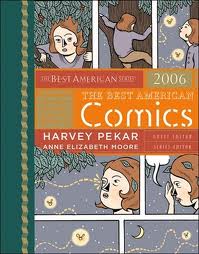
[READ: April 15, 2011] The Best American Comics 2006

I just recently learned about this series from The Best American line of books.  I had known about the Best American Short Stories and Essays and even Non-Required Reading (which I have not yet read).  But once I found out about the best comics, I knew I had to check it out.

The first issue came out in 2006.  The series editor is Anne Elizabeth Moore and the Guest Editor for this volume was Harvey Pekar.  Each of them has an introductory essay in the book.  To me the amazing thing about Pekar”s essay is how aggressively defensive he sounds (a sort of, “you may not like this one, but try this one” attitude) about these comics and comics in general.  I don’t know much about Pekar’s work.  I know he’s a kind of underground icon, but I seem to have missed him.  My impression of him is that this sort of antagonistic/defensive attitude seems to go along quite well with his comics, so I guess that makes sense, but I didn’t find it very welcoming.

But that’s okay, because I really enjoyed the comics.  And quite a few were by artists that I had never read before, which is even better! (more…)

Read Full Post »

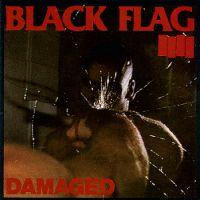
SOUNDTRACK: BLACK FLAG-Damaged (1981).

I’ve liked Black Flag since I bought Loose Nut on vinyl way back when (1985, the year punk broke for me).  And those four bars were iconic to me even before I had heard a note (although I just learned they are supposed to represent a flag waving).

And this is where their legend really took off.  So a few things I never knew about this album until I looked them up recently.  1) That’s Rollins on the cover punching the mirror.  2) He didn’t really punch the mirror (it was smashed prior and the blood is fake).  3) I knew that Black Flag existed for a while before Rollins’ arrival and that they’d had a series of singers before him.  But I didn’t realize what a their first EP (Nervous Breakdown–Keith Morris on vocals) came out in 1978, their second EP (Jealous Again–Ron Reyes on vocals–credited as Chavo Pederast (he left the band in the middle of a live show, so they changed his name to that rather offensive one)) came out in 1980.  Their third EP (Six Pack –Dez Cadena on vocals) came out in 1981.  Rollins joined a few months after that and Damaged–their first full length–came out in December 1981.

“Rise Above” is a wonderfully angry song.  The gang vocals of pure empowerment work so well with the chords.  It’s still effective thirty years later.  “Spray Paint” goes in the other direction: rather than an uplifting, catchy chorus, it’s a deliberately angular chorus that’s hard to sing along to (even for Rollins).

“Six Pack” represents the more “popular” side of the band.  And it is a wonderfully funny single.  I just can’t decide if it’s serious or ironic (see also “TV Party”).  These two dopey songs are great to sing along to and are simply awesome.  (Fridays!)

The rest of the album turns away from the lighthearted tracks.  “What I See” is a really dark moment on this album.  And the negativity is unusual especially given Rollins’ later penchant for lyrics about fighting back.  True, Rollins didn’t write these lyrics.

“Thirsty and Miserable” is a blast of noise with some of Ginn’s first real guitar solos (which Guitar World says is as one of the worst guitar solos in history…and I say really? that’s the solo they pick?  Ginn has done some pretty outlandishly bad solos over the years…of course the whole list is questionable at best).  “Police Story” is a simple but effective description of the punks vs cops scene at the time.

“Gimme Gimme Gimme” seems childish, but that’s clearly the point.  “Depression” is a super fast track.  (Trouser Press considered Black Flag America’s first hardcore band).  “Room 13” is an odd musical track, with pretty much no bass.  It’s just some roaring guitars and drums and Rollins’s screams.  This track stands out because Chuck Dukowski’s bass propels most of the songs here.

“No More” sounds “typically” hardcore: very fast with the chanted chorus of “No More No More No More No More.”  “Padded Cell” is also fast (and is pretty hard to understand) except for the “Manic” chant, but the following track “Life of Pain” features what would become a signature Greg Ginn sound…angular guitars playing a riff that seems slightly off somehow.  Compelling in a way that’s hard to explain.

It’s funny that a band that plays as fast as they did also released some pretty long songs. “Damaged II” is almost 3 and a half minutes long.  It has several different parts (and a pretty catchy chorus).  And the final song “Damaged I” is a kind of crazed rant from Rollins;  It’s one of his scariest vocal performances; he sounds really deranged.  Especially when it sounds like he just cant think of anything else to say so he just screams maniacally.  But his vocals are mixed behind the music as if he’s trying really hard to get heard.  There’s very little else on record like it.

It’s a wonderful end to an intense disc, and the beginning of a brief but powerful career.

[READ: March 25, 2011] The Life of Polycrates

I’ve been reading Connell for a few years now.  In fact, the first time I posted about his work came with a blistering dismissal of his story “The Life of Captain Gareth Caernarvon” in McSweeney’s 19.  That story is included here, and upon rereading it, I learned two things:

  • One: context is everything.
  • Two: I was totally and completely wrong in that original review, and I take it back.

But before I explain further, some background about this book.  This is a collection of eleven stories, eight of which have appeared elsewhere.  Unfortunately there’s no dates of publication included so I don’t know how old any of these stories are.

The other thing I’m fascinated about is Connell himself.  I’m not the kind of reader who wants to know a ton of details about the author, but I like a little bit of bio (or a photo) when I read someone.  The only bio that is consistently presented about Connell is that he was born in Santa Fe, New Mexico.  I’m fascinated by this because so many of his stories are set in Europe.  So I have concocted a master biography about Connell’s life and how he has lived and toured extensively in Europe, studied theology (and found it wanting) and investigated all of the world’s darker corners.

It’s this latter aspect that really altered my perception of Connell’s writing.  I’ve liked the last few things that he’s written, but I fear that I was not looking at him through the proper lens.  And this relates back to bullet point one above.

Connell writes in a world not unlike H.P. Lovecraft–a world that is unconventional, dark and more than a little twisted.  And yet, unlike Lovecraft, there is very little of the fantastical in his stories.  Rather, his characters reside in our own world (with a little chymical help from time to time), but they are all real.  They’re just not characters most of us choose to associate with.  So, reading that first story in McSweeney’s, where it was so different from all those others, I found it really distasteful.  In retrospect, I’m not going to say that it is meant to be distasteful, although some of his stories are, but it was certainly not a pleasant story by any means.

The other fascinating thing to note about this book is that all of the stories are written in short, Roman Numeraled segments.  So the title story has 35 segments.  But even some of the shorter ones has twelve or thirteen segments (sometimes a segment is just a few lines long).    I actually enjoy this style (especially when the segments introduce something totally new into the story–which many of these do). (more…)

Read Full Post »

SOUNDTRACK: MOGWAI-Kicking a Dead Pig + Mogwai Fear Satan Remixes (1998).

This release came out soon after Young Team, when it seemed like Mogwai was just flooding the market.  It’s a remix album of a number of tracks from Young Team. And, when it was re-released it contained several mixes of the track “Fear Satan” as a bonus disc.

In general, I’m not a fan of remixes.  There, I’ve said it. Back in the flush 90s, when I used to buy a lot of import singles, I enjoyed the B-sides, but was always disappointed when there was a remix rack.  Some are fine.  Indeed, some are pretty good.  But for the most part you get a very long song that is mostly drum machine and sounds and noises.  And I know that they are designed for dancing, but I’m not a dancer, so despite how much techno I own, I’m very rarely thrilled to ge a remix.

Which is  as good a way as any to say that this is a pretty inessential disc, even for Mogwai fans. Even though Mogwai themselves throw a couple of remixes on there.  And for the most part, what we get are washes of sound.  Since Mogwai don’t really do lyrics, it’s not always very obvious what song the remixers are remixing.

  • Hood: “Like Herod” has some interesting staccato, which Mogawi typically doesn’t have.
  • Max Tundra: “Helicon 2” is primarily ride cymbal although a guitar motif does come in (with some pretty harmonics) eventually.
  • Klute: “Summer” (Weird Winter Remix). There’s nothing distinctive about this.
  • Arab Strap: “Gwai on 45.”  I actually expected a lot from this mix because Arab Strap are a weirdly wonderful band and the guys have worked with Mogwai.  But then, they’re not an exciting band–they’re very good, just understated.  And as a result, this remix is okay but nothing too exciting.
  • Third Eye Foundation: “A Cheery Wave from Stranded Youngsters” (Tet Offensive Remix) is also okay.
  • Alec Empire: “Like Herod” (Face the Future Remix).  Alec Empire usually turns all of his remixes into super fast like 500 bpm noise explosions (just like Atari Teenage Riot). He doesn’t do that here, and the song just kind of melds in with the rest.
  • DJ Q: “R U Still In 2 It” has a vocal, but it is mostly one word repeated over and over.
  • Kid Loco: “Tracy.”  I liked this track more than many others.
  • Mogwai: “Fear Satan.”  It’s weird to me that you would remix one of your own songs, although I guess it’s fun.  I still like the original better.  And I’m fairly certain this one is different from the one on the next disc.

The four “Fear Satan” remixes are by:

  • Mogwai: delicate, the washes of sound are quiet and warm, and it really features the flute quite a lot. Although by the end, the feedback does come in.
  • μ-Ziq: remix is much more staccato. The washes have been removed.  There’s very little connection to the original.
  • Surgeon: remix begins electronically and builds as a slow wave.  It’s pretty much one note getting louder and louder until about a minute left when it changes tone.  It’s hard to imagine even calling this a remix.
  • My Bloody Valentine: at 16 minutes,  the MBV remix stands out for length. After about five minutes of interesting feedback squalls it shifts to a high-pitched noise, almost like a drill. After a few minutes of this it shifts into a very pretty electronic song.  By the end it’s a pounding heavy drum fill rocker.  Any resemblance to “Fear Satan” seems purely coincidental, but it’s a wild ride.

[READ: March 11, 2011] The Revolution Will Be Accessorized

I only heard about this anthology when I read the Sam Lipsyte piece from it.  I didn’t really like his piece, but the rest of the anthology sounded intriguing.  It was put out by BlackBook magazine, which I have a sort of vague awareness of, but couldn’t really say anything about (it’s some kind of counter-cultural fashion magazine or something).  But it seems like the counter-cultural aspect really lends sway here.

This anthology is a collection of short stories, essays and interviews.  There’s also an introduction by Jay McInerney

JAY McINERNEY-Introduction
He talks about BlackBook and the essays contained here. (more…)

Read Full Post »

SOUNDTRACK: WAVVES-“Post Acid” (2010).

Wavves’ King of the Beach CD made many Top Ten of 2010 lists.  I listened to a track somewhere and wasn’t all that impressed.  Right now there’s a live show on NPR, which I listened to a bit (and which made me investigate them further).

They have a few songs on their My Space page and I really like this one.  It is short and fuzzy and catchy and cool.  It’s a fast blast of punk nonsense.  I have no idea what it’s about (and I rather like the weird break in the song where the singer can barely get words out).

I’m not sure if I’d listen to a whole record of them (although I love their hair).  But this was sure a fun track.

[READ: February 17, 2011] Arkansas

John Brandon did a pretty amazing thing with this book.  He took two rather unlikable characters and made them sympathetic and, eventually, compelling.  The unlikability may have come from the detached style of their introduction.  Each of the main characters is introduced separately with a brief anecdote that seems to end abruptly.  In fact, I wondered if it was going to be a series of brief character sketches and nothing more.  I’m thankful that that wasn’t the case since, each character’s “section” could have been a complete (but very unsatisfying) story.  When I saw more of Swin, I was pleased, even though I didn’t really “like” him.

First we meet Swin Ruiz, a very intelligent guy who makes it to college.  While in college a foolish mistake (resubmitting an essay to a teacher) costs him his scholarship, which essentially means he’s out of school.  He scams some money from the rich students and then takes off, leaving his family and his beloved younger sisters with their jerk of a stepfather.  From there, he drifts aimlessly until he meets a bartender who sets him up with someone to help “break the laws of the land.”

Kyle Ribb is the other main character. He’s a harder man, something of a bastard.  He tries to go legit by working in a bike store.  When that doesn’t pan out (the story of that is pretty funny) he reverts back to his “no boss” ways.  He eventually meets a guy who introduces him to Colin, a man with criminal connections.

The third character we meet differs from these two.  First, a date is given as an introduction (1974).  Second, the whole section is written in second person (“You are Ken Hovan”).  We learn about his life and his background and how, eventually, he took the nickname Frog and became a shop owner, a dealer of unusual merchandise (which begins with bootleg tapes and, naturally, transforms into drugs).

The story of Frog’s life from 1974 to the present intersperses the main story (which is really about Swin and Kyle).  And each time frame jump ties together some of the mysteries of the book (Frog, being the boss, ties the thread together).  And there are many mysteries.

Kyle and Swin move up the ranks of the ne’er-do-well scale, until they land a job in an underused state park in Little Rock, Ark.  They get a “legit” job manning the booth, checking visitors in and out, and cleaning up the brush, but their “real” job is to deliver packages to random locations in different states.  They drive a car to a parking lot, wait for a person to get in and then drive off in a different car with a package for the other end.  And that’s pretty much it. It’s obvious they’re doing illegal work, but they don’t ask questions and don’t know too many details.

Their boss at the park is Bright, a man who seems to really enjoy the park and genuinely likes to take care of it.  He is a middleman for Frog, but a rather benevolent one.  There are some other characters as well.  The first is Her, (that’s the only name she gives out), she gives Bright the details about the packages.  Bright’s boss at the park is Wendy, she knows what they do and receives a cut.  She only wears pink and wishes to be a painter.  She recites a quotes from a different painter before she leaves. (more…)

Read Full Post »

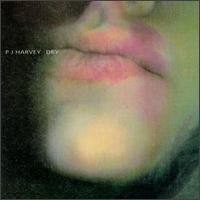
SOUNDTRACK: PJ HARVEY-Dry (1992).

This first PJ Harvey album was a revelation in 1992.  It was angry and loud and awfully disconcerting. And, perhaps most importantly, it showed a strong woman, unafraid to point fingers at foolishness around her. (Yes, I miss the 90s).

It was also raw and abrasive and, at times, scary.  The opening track featured discordant music and vocals that were more than a little uncomfortable.  “O Stella” has more uncomfortable vocals with super cool and slightly off harmonies.  The guitar is a great distorted mass and the bass is low and heavy.  A great track.

“Dress” is one of the least abrasive tracks musically, which really lets the lyrics come to the fore. And her lyrics are wonderful throughout the disc–she attacks conventions of femininity and flips expectations.  And although “Dress” has a very simple chorus–just the line “If you put it on”–it is catchy as anything.

But it’s not all loud songs, either.  The wonderfully titled “Happy and Bleeding” features some intriguing quiet guitar work and whispered verses.  It grows in strength but never wails like the other songs.  For real wailing, “Sheela-na-Gig” is your song. Terrifically rocking and obscene, it’s a funny, clever awesome alt rock song.

Harvey experiments with falsetto (although nothing like she will on Let England Shake) on “Hair,” a cool twist on the Samson and Delilah story.  “Plants and Rags” makes exquisite use of a creepy violin to bring some extra sounds to an already cool song.

It’s a stunning debut and showed that Harvey was a fearless singer.

[READ: February 27, 2011] Misadventure

This is Millard Kaufman’s final novel (after the very cool Bowl of Cherries).  The Afterword (written by Kaufman’s son) seems to suggest that Millard actually wrote this back in the 60s.  There are elements of this book that make me thing that he did write it in the sixties (and then obviously updated particulars to make it contemporary).  It just feels circa the 60s and it feels like the book of a younger man (Kaufman was 92 when he died).

The story opens with a dead body and a real estate agent.  And it quickly develops into a tidy noir fiction with double-crossing and undermining and all kinds of interesting twists.  I don’t read noir or “mysteries” as a rule, so this is kind of a novel novel to me.  Accordingly, I can’t compare it to the genre. (more…)

Read Full Post »

SOUNDTRACK: THE COCKSURE LADS-The Greatest Hits of The Cocksure Lads 1963-1968 (2010).

At last, The Cocksure Lads have released a greatest hits collection on CD.  These songs have been unavailable to anyone since the late sixties and it’s wonderful to be able to enjoy them again or for the first time.

Dusty Fosterboard, Reg Topping, Derek Millwood and Blake Manning wrote some charming rock back in the late 60s.   Their music was certainly forward looking.  Check out the rocking song (with keyboards–perhaps a Beach Boys influence?) “You’re a Cocksure Lad’ coming out in 1963 (while The Beatles were still doing fairly standard rock n roll songs and covers).  “You Gotta Stay Cocksure” (1964) sounds a bit more Beatlesesque, although perhaps a little more adventurous than Beatles songs at the time.

“A Case of the Dropsies” (1965) was a silly, almost novelty song (with a siren in the background), although it features a cool low-end guitar solo (and great harmonies). “Mushy Peas” seems like it would be a novelty, but it is a really a sadly passionate song of loss when the protagonist stops of for the titular dinner before heading for America.

“Ship’s Ahoy” (1968) comes from their concept album of the same name and while not as musically adventurous as any of The Beatles records, was certainly a fun (and different) song for the band–was that “oregano” joke a sly drug reference?  “Admiral Trafalgar” comes from this album too (and even mentions Hitler!–a political song in 1968?)

The charming and trippy “Umbrella Girl” also has some cutesy asides (I think a lobster bit my ‘and) and a cool autoharp as a major instrument.  “Ticky Boo” is a cute little romp: “Mrs Eng-a-land, a pack of crisps and me.”  They were even forward thinking on “That’s Any Good” in which one of the things that’s good is “when your country wins the arms race.”

There’s definitely some novelties here.  “A Car Boot Light That Never Quite Shuts Off” is an organ and voice song (with a crazily long note held at the end).  “I’ve Already Been Loved” opens with a very randy sounding “Wellllllll” but turns into a delightful, poppy number.  Of course, the final song, “Wellies in the Bath” is the obligatory goofball song (the “Ringo” song if you will).  And it is cute (especially at only 43 seconds).

The songs are charming and nostalgic, and even if you don’t remember them.  It’s a nice trip down memory lane[1]

[READ: February 20, 2011] “April Foolery”

I found this story because after reading The Ask, I looked up Lipsyte and Wikipedia said he has two short stories in collections (and no other short fiction pieces published–although I know The Dungeon master was in The New Yorker). Indeed, this was one of two.  I looked up The Revolution Will Be Accessorized up on Google books, and his entire story was available!  (It’s only two pages).

Looking at the rest of the authors, I do wonder if I’d like to read the whole thing. I’ll have to see if it’s in our library.  (It isn’t, but I’m going to interlibrary loan it).

Anyhow, this absurdly brief story is a sort of history of April Fool’s Day with modern suggestions for making it more fun).  It begins with the generally accepted premise that April Fool’s Day is tied to the adoption of the Gregorian calendar.  People were punished who did not know that this new calendar had updated the new year.  And this spirit of prankishness lives on.

Given that bit of background, Lipsyte offers six pranks for April Fool’s. (more…)

Read Full Post »

« Newer Posts - Older Posts »