Feeds:
Posts
Comments

Archive for the ‘Drinking’ Category

vamplove SOUNDTRACK: DO MAKE SAY THINK-You, You’re a History in Rust [CST045] (2007).

rustYou, You’re a History in Rust feels very different from DMST’s previous album.  That record felt kind of insular and tight.  This one feels expansive and experimental.  Like the first song which has multiple sections that feel completely unrelated and which are only connected by silence.  Or the fact that there are lyrics in a song, or even a fairly conventional song.

“Bound to Be That Way” This song opens in a peculiar way.  There’s a drum rhythm, that slowly builds and some piano chords are laid over the top. This goes on for about 45 seconds and then fades out.  And then a new melody–completely different–with horns and guitar peeks its way out. And then it too fades.  Then around 2 minutes a pretty guitar melody comes through followed by big crashing distorted drums. Eventually a new riff enters the song and it really starts grooving.  It’s fantastic, but it too is just a portion of a song which ends at around 4:30.  And then another new section comes in. Then acoustic guitar riff is counterpointed by some horns.  The final melody is the catchiest one of the bunch and it ends this strange song on a high.

But if that was strange, “A with Living” offers the biggest shock to fans of the band.  There are words in this song!  And they are sung! Words were co-written and sung by Alex Lukashevsky and the Great Lake Swimmers’ Tony Dekker.  Akron/Family also joins in doing “oohs” and “ahs.”  It opens with rumbling drums and then the singing begins.  The song has a conventional verse chorus verse structure with big horns.  It’s catchy (the vocals are great).   But it’s also a 9 minute song and at 4 and a half minutes the song moves way from the melody and enters a lengthy instrumental section with deep rumbling guitars.  The chorus of voices returns briefly before the mellow guitars lead us to the end.

“The Universe!” is one of my favorite DMST songs.  It rocks and rollicks.  It has two notes and then five bashing chords.  Repeated several times.  It’s one of the most straightforward songs they’ve done.  It has screaming guitar solos and a cool sliding bass. It’s also very raw sounding, with all kinds of noise floating around it.  And just like that, it’s gone.  Seguing into the quiet, “A Tender history in rust” which opens with processed guitars or keyboards, layered upon each other.   There are voices fighting through (saying all kinds of sounds—including laughing), before it switches to a pretty acoustic guitar riff.  It’s a delightfully conventional folk melody–another unusual addition for the band.

“Herstory of Glory” has another pretty acoustic guitar melody with some rattling drums (in the right ear).   Then there’s a rumbling bass and distant voices before more and more instruments add to the beautiful song–pianos, trumpets, claps.

“You, You’re Awesome,” is the shortest song on the disc at under 4 minutes.  It opens with slow electric guitars and a e-bowed solo.  After a minute or so, the rest of the band comes in with a slide guitar and banjo making a kind of sloppy folky romp.

“Executioner Blues” is another favorite.  Its 8 minutes long with some lovey guitar riffs and sounds.  It opens with some big guitars and a repeating riff.  A martial drums enters the song and keeps it moving until the next big section.  Horns repeat a similar melody and then a romping bass guitar takes over.  More instruments kick in making the song noisy and slightly distorted.  There’s piano trills, glockenspiel, electric guitar, noises and more.   and the instruments all go up the scale slowly for a few bars and then play a punch of staccato notes.  It’s rather dramatic.  After several permutations of this, they just keep going up and up the scale until the reach the top and then they gradually descend again.  The last minute is a series of quiet bass notes, as if everyone has totally come down from that intensity.

“In Mind” is a quiet disc closer.  A simple guitar melody, it is joined by banjo and trumpet.  Then some bass lines come in followed by a very distorted chorus singing “When you die, you’ll have to leave them behind/You should keep that in mind/When you keep that in mind, you’ll find a love as big as the sky.”  The disc ends with some quite banjo plucking.

This disc goes all over the place and really explores different avenues.

[READ: February 10, 2016] Vampire Loves

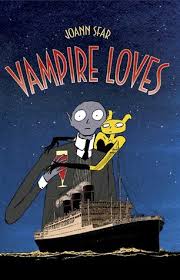
Joann Sfar created Little Vampire (and apparently about 100 other comics, some of which have been translated into English by Alexis Siegel and published by First Second).  Of the things I’ve read by him, (and there have been a few) I enjoyed this the most.  It seems like a lot of his books (like Little Vampire) are for kids, bu this one is absolutely for adults (there;’s curses in it and talk of sex and everything).

There are four stories in this book (I just learned that Sfar has written six in total, so maybe there will be more translated). After the third book in this collection, there’s a question as to whether or not Ferdinand, the vampire in this story is Little Vampire.  There’s a little drawing of Little Vampire which says that Ferdinand is him.  “But vampires don’t grow up!  No, but they can grow little.  Ferdinand was me before!  You mean that before being little you were grownup? Yes.”  So there’s that sorted.

“Could Cupid Care Less?” starts us off with Ferdinand the vampire’s woes.  His girlfriend, Lana, (a kind of plant creature) has just come back.  She cheated on him, but turns the conversation around to say that it is his fault–if he weren’t so jealous he never would have found out.  He freaks about this and she storms off again.  Furious, he sets off for his nightly feeding.  Ferdinand is a nice vampire–he takes little sips and only with one fang so it looks like mosquito.  While he is feeding on a woman, a red-haired vampire storms in and shows him how to do it right.  She is a vixen with an ankh necklace and after feeding, she comes on to Ferdinand hard.  She says she likes old, proper-looking vampires–not goth wannabes.  She brings him back to her house but before they can do anything, her sister walks in.  She’s also red-haired and has a shapely figure and actually has more in common with Ferdinand.  And that’s when we learn that the first woman’s name was Aspirine and her sister’s name is Ritaline (ha!).

All of the stories cut back and forth to different sections.  So we cut over the Lani who is staying with the Tree Man.  He is trying to hit on her, but she’s having nothing to do with it.

We return to Ferdinand where he just can’t get rid of Aspirine, even when he wants some alone time.  He can’t get a woman he wants and can’t get rid of the ones he doesn’t.

“Mortal Maidens on My Mind” opens with a Japanese woman meeting Ferdinand in Paris and falling for him.  They do all kinds of things together and she even writes home about him.  But Ferdinand had to return home and that was the end of that.

We cut back to the Tree Man who is still pining for Lani but is having no luck with her.

Back home, Ferdinand runs into the man who slept with Lani, Michael.  He also argues that it was Ferdinand’s fault that things wound up as they did.  He says that he was just looking for fun.  He didn’t want to hurt anyone, so why did Ferdinand have to get involved?  After a fight Ferdinand leaves to go to a bar where he tries to hook up with a woman but it all falls apart.

Then we cut to a man who has created a golem.  He wanted the golem to do bad things, but the golem is so kind that he couldn’t possible have made the him do the evil things he planned.

The postscript of the story contains a few notes on the protagonists of this story which sort of retroactively tries to make sense of the seemingly disparate story lines and lets us know how these characters belong here.

“Lonely Hearts Crossing” shows Ferdinand on a cruise.  But first we meet a woman named Alas, and her spiritual ghost-creature-friend named Sigh.  Alas is looking to score with the captain of the ship (who is the invisible man).

Meanwhile Lani is going shopping with Tree Man.  He has become her buddy and he can’t get out of it.

On the ship, Ferdinand runs into a werewolf who turns into a wolf when he sees a girl.  He only transforms back if he can kiss a girl.  But he is a such charming creature that he has no problems scoring–much to Ferdinand disgust and amazement.

The story turns very exciting as there are armed criminals on board and a shootout.  And by the end of the story Ferdinand is making out with the spirit ghost creature (who teaches him how to go through walls which turns them both kind of ghostly for a time).

“Moonstruck Post Mortem” ends the book with Ferdinand trying to pick someone else up.  His conscience is bothering him lately though so he manages to get rid of it.  The woman is interested in him but already had two boyfriends so she kind of blows him off.

The scenes shifts to Ferdinand at the police station.  He’s not n any trouble.  in fact, the police would like him to help with their investigation of suspicious murders.  Since he’s nocturnal they figure he can look at night.  That’s how police work, right?

Ferdinand decides to go out drinking again. He meets a woman he likes, but she seems disinterested. So he quickly moves on and finds a  creature who is into him.  But he is quickly utterly disgusted by her.  And the first woman just came back. Oh no!

Frustrated, he leaves and goes to see the dentist–because the dentist has some secret information about the investigation. But before he will give the information to Ferdinand, he needs to give him a compete check up.  By the end, he tells Ferdinand not to get involved. And as the story progresses and the criminal is found…  Ferdinand is shot and thrown into a hole!  Can Ferdinand’s conscience come to the rescue?

The whole story concludes with Ferdinand going back to find Ritaline (but of course finding Aspirine instead).  She offers to let him bite her–but when one vampire bites another it’s “catastrophe.”

It’s a totally nuts book but very funny.  Another fun book in my #10yearsof01 February.

I think the reason I don’t enjoy the Sfar books as much as I might is because they are printed so small.  I don’t know what the original size was, but the format makes everything feel really squished.  This makes the dialogue hard to read and means you can’t see all of the details that well.  I think if these books were bigger it would really help their appeal.

Read Full Post »

deogrataisSOUNDTRACK: JOSH RITTER-Tiny Desk Concert #119 (April 11, 2011).

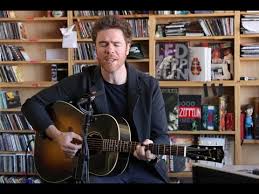
ritterNot too many performers mention the actual day that they are performing their Tiny Desk Concert.  But Ritter mentions Valentine’s Day twice during his set so I thought I’d post it on Valentine’s Day even if the actual date of the posting is much later.

I don’t really know Ritter, I’ve heard of him, but I’m not too familiar with him.  Nevertheless, I was quickly won over by him.  He is charming and polite and is certainly having a good time (he even laughs at some lines in his songs).

His first song “The Temptation Of Adam”sounds vaguely familiar.  The melody is very catchy and his voice is strong and excellent.  Lyrically the song is quite interesting.  I especially loved this section: “We passed the time with crosswords that she thought to bring inside/ ‘What five letters spell apocalypse?’ she asked me/ I won her over saying, W.W.I.I.I.’/ She smiled and we both knew that she misjudged me.”

“Lark” is a faster song, but still very folksy and clever.  I love that although the melody is fairly simple, the way he plays it (with very fast fingerpicking) makes the song sound more complicated.  “Rattling Locks” is a dark minor chord song, louder and heavier than the other two.

The site says there is an audio only track called “Pale Blue Eyes,” but I can’t find it.  For the last track, his 2003 song “Kathleen,” he introduces the song by saying, “I think Valentine’s Day is the most awkward self-imposed holiday — even worse than New Year’s — so this is an awkward song.”  It’s a louder song, with Ritter’s voice reaching great intensity.  It’s a great way to end the set.

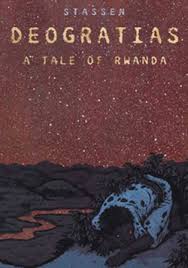
[READ: February 14, 2016] Deogratias

Here’s another story that I would never have read if it were not for First Second’s #10yearsof01 challenge.  The thought of reading a story about the genocide in Rwanda just seems to depressing to undertake.  And yet in the spirit of reading things outside of your comfort area, I decided to read this this weekend.

And I am incredibly glad that I did.

I feared that this story would be one of rampant genocide–struggle and death and mutilation and everything else that I could imagine.  But rather, what Stassen has done is created a story about how the toll of genocide can impact one person.  Yes, it affects him directly and the story is incredibly sad, but it was a very different story than I expected, and it was so personal that it made it more tragic without having the oppressive unreality of millions of dead people in the plot.

The introduction alone is worth reading, as translator Alexis Siegel gives a brief summary of the Rwandan tragedy.  I’ve always found the conflict to be really hard to grasp.  Hutus and Tutsi, a privileged minority, a brutal majority.  The back and forth was so hard to grasp, and the names of the tribes were similar as well.  It is hard for a lazy person to keep straight.

But I found Siegel’s explanation to be succinct and very effective. (more…)

Read Full Post »

may2015SOUNDTRACKTHE CLAYPOOL LENNON DELIRIUM-“Cricket and the Genie” (2016).

claypoollennonLes Claypool and Sean Lennon (who has recently come back on my radar as being much more fun than I realized) have joined forces to create this unlikely (but perfectly suited) band.  Lennon’s band Ghost of a Sabre Tooth Tiger opened for Primus and Dinosaur Jr this summer (and I am still bummed that I missed that tour).

What surprised me most about this collaboration is that it (well this song anyway, which is the only one I’ve heard) doesn’t sound like so many other collaborations with Claypool–meaning it’s not all Les.  Les plays bass and provides some backing vocals and that’s about it.  All the rest–the whole psychedelic craziness–is all Lennon.

The song has a totally retro psychedelic vibe (one that Lennon has been working with very well over the last few year) and Les’ bass is thumping and heavy without doing a lot of his Claypoolisms.  Not to say that the bass is shabby–it’s not–it’s just not as Aggressively Claypool as it might be (for the better of the song).

Having said that, the opening notes are pretty distinctly Claypool, but once the music (fuzzy guitars and hummable vocals) come in, the bass sounds more like a big 70s Jon Entwistle bass than a funky Claypool bass.

The song has many many parts and changes.  There’s a brief psychedelic interlude, there’s interesting organs sounds, there’s some heavy dissonant chords sprinkled throughout and there’s some great harmony vocal.  There’s even a pretty lenghty sea-shanty feeling instrumental section (the song is 8 minutes long after all).

But lest you think there is no Claypool, he gets plenty of places to show off his stuff, too.

I really dig this song a lot and I can’t wait to hear the whole album.

[READ: January 8, 2015] “For Something to Do”

As part of my 2016 plan, I intend to catch up on all of the magazines that I blew off during the latter half of 2015.   Basically, that means Harper’s, The Walrus and the New Yorker.  And I’ll write about the stories that I ignored.  Interestingly I was also planning on reading several large books in 2016.  Wonder how that will play out.

So here begins a slew of Harper’s pieces

This is the kind of story that, were it a novel, I would probably give up after a chapter.  But, because it was a short story, I read it all the way through, and I was glad I did.

The reason I’d have given up is because the story is dark and unpleasant, about men getting drunk and beating up other men to try to impress a woman.  I don’t know a lot about Leonard’s writing, so i don’t know how his stories tend to resolve, but I was worried about just how dark this would go before any resolution was present. (more…)

Read Full Post »

karlove SOUNDTRACK: ESPERANZA SPALDING-Tiny Desk Concert #110 (February 12, 2011).

esperanzaI didn’t know who Esperanza Spalding was before this show.  But she defied my expectations by being a fairly tiny woman who sings while playing an upright bass (not a very common combination for anyone).

For the first song, “Little Fly,” she plays a kind of jazzy bass, but has a string accompaniment–violins, guitars etc.  But it’s clear that the bass is the star.   And while her playing is very good (she has some great vibrato), it’s her voice that is mesmerizing–she’s hunched over playing the bass and still manages to sound strong and powerful.  “Little Fly”‘s lyrics come from a poem by William Blake.

“Midnight Sun” is a solo performance–just her voice and bass.  I loved the beginning where she sang notes along with what she played.  Then when the lyrics come in she sings in a very jazz voice (with eyes closed the whole time).  Turns out this is a Lionel Hampton song that only appears on the Japanese release of her album which make explain her singing style.

Because on the final song she sounds very different.  “Apple Blossom” is her own composition.  It’s her singing with the string section playing along (there’s no bass).  The song is lovely, but I prefer it when she plays bass in the song, too.

I enjoyed this performance and how delightful Spalding was.

[READ: January 9, 2016] “My Saga: Part Two”

Speaking of not finishing multi part essays, I ended my post about Part One of this essay by saying I couldn’t wait for part two.  And then apparently I forgot all about it because here it is almost a year later before I read part two (which was published two weeks later).

In this second half of Karl Ove’s journey he spends most of his time realizing that he hasn’t really learned very much for his assignment.  I can’t imagine anyone else being able to write endlessly about how he has nothing to write about (and still make it strangely compelling–his stress produces good sentences).

He does make some interesting connections though. (more…)

Read Full Post »

feschukSOUNDTRACK: THE ART OF TIME ENSEMBLE with MARTIN TIELLI–Korngold: Source & Inspiration (Enwave Theatre, Harbourfront Centre, Toronto, ON, January 30, 2009).

aotimeAfter seeing The Art of Time Ensemble yesterday, it was quite serendipitous that I would have a show from them (featuring Martin Tielli) to post about on the following day.

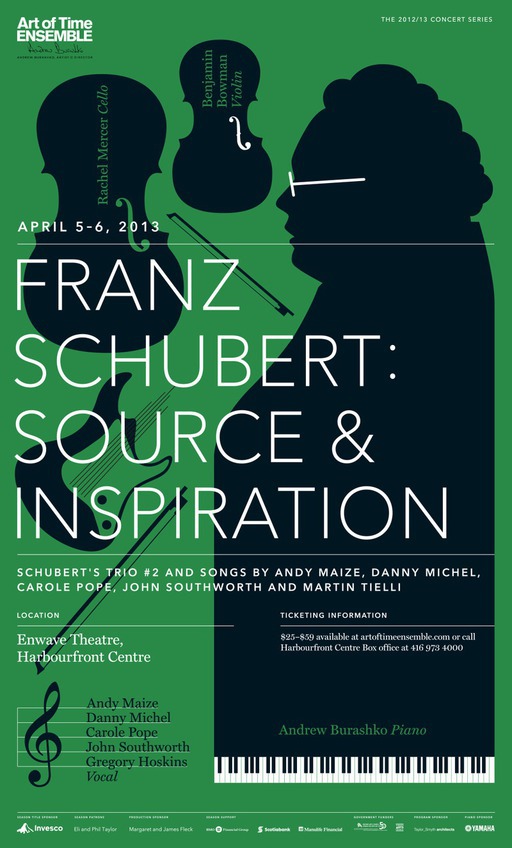
This concert is the third in the Art of Time’s “Source & Inspiration” series. Two years earlier the first concert focused on composer Franz Schubert.  The previous year’s concert focused on Robert Schumann. This time the spotlight was on the 20th century Jewish composer Erich Korngold–a composer of European pedigree who became well known for his wonderful Hollywood film scores.

This concert featured Korngold’s Suite for Two Violins, Cello and Piano as the ‘source’ as well as new songs inspired by this work from Martin Tielli, Danny Michel and John Southworth.

This recording is only 8 minutes long because there’s only two Martin Tielli songs. “Lied Two” (the German word for song is lied (pronounced leed) so Martin called his “Lied Two.” And “Moglich” which translates into “possible.”  Both pieces are played with by the orchestra.  Martins sings.

The more dramatic of the two would be “Moglich” with his loud whispered “Relaxxxxx at the end.”  For more information about the show, you can click on this link.

Full Program & Repertoire:
Suite Op. 23 for 2 Violins, Cello and Piano Left-hand
Erich Korngold
i.Praeludium und Fuge
ii.Walzer
iii.Groteske
iv.Lied
v.Rondo-Finale

INTERMISSION
Athabasca
Adventures of Erich Korngold
—John Southworth
The Sailor Song
Island

—Danny Michel
Lied 2
Moglich
—Martin Tielli

Performers
Andrew Burashko, piano
Danny Michel, singer
Erika Raum, violin
Stephen Sitarski, violin
John Southworth, singer
Martin Tielli, singer
Winona Zelenka, cello

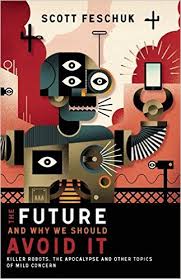
[READ: November 22, 2015] The Future and Why We Should Avoid It

The title of this book made me laugh so I set it aside to read it.  Little did I know that it would be so very funny that I put aside other things so I could finish it.

I hadn’t heard of Feschuk before.  He has written two previous books (How Not to Completely Suck as a New Parent sounds pretty good) and writes mostly for MacLean’s magazine.

As you might guess from the title, this book looks at the future, and Feschuk’s predictions are uncanny.  For instance, I brought the book home and decided to look at it in the bathroom.  And the introduction states quite clearly:

By now, life should be awesome and leisurely and you should be wearing a spacesuit and high-fiving your wisecracking robot sidekick.  Except instead your dishwasher is broken, your god-damn iTunes won’t sync up and right now you’re reading this book on a toilet in your bathroom instead of where you should be reading it–on a toilet in your hover car.

Too right, too right. (more…)

Read Full Post »

[ATTENDED: November 19, 2015] Zoyka’s Apartment

zoykaI was offered free tickets to this show.  I read a brief review, saw the word “farce” and decided it would be fun to go to it.

This play was written by Mikhail Bulgakov, an author I’ve heard of but know little about.  Turns out that all of his plays were banned by the Soviet government.  Including this one, even though it was not an anti-Soviet play.  After the banishment, he wrote to Stalin requesting permission to emigrate, but was denied.

As this play opens, there is a lectern at which an announcer reads a 1990 review of the play by Frank Rich in the New York Times (which you can read here).  Perhaps the most fascinating thing that I heard from the review was this:

Boris A. Morozov’s production of Mikhail Bulgakov’s ”Zoya’s Apartment” at the Circle in the Square. Mr. Morozov is resident director of the Maly Theater in Moscow. His New York cast is headed by such actors as Bronson Pinchot.

Since Pinchot is my new favorite audio book reader, I immediately paid attention. (more…)

Read Full Post »

moonfoolsSOUNDTRACK: MARTIN TIELLI-Ottawa Bluesfest Ottawa, ON (July 5, 2008).

bluesfestThis brief set at the Ottawa Bluesfest was for a Six Shooter Records showcase. As such it is short (about 30 minutes).  By the end there are tons of guests playing with him, which is fun.

He opens with three solo acoustic songs: “I’ll Never Tear You Apart” which sounds great and “Something in Those Woods” which would appear on his third album The Ghost of Danny Gross the following year. When the song ends, he says he is still  “working on it.” The third song “The Underbrush” will also appear on Danny.

Then the band comes in: Ford Pier, Greg Smith and Doots (Steven Pitkin) on drums.   Someone in the band says that Martin looks great, the treatments really paid off to which Martin replies “What?” incredulously.

The rocking “My Sweet Relief” segues nicely into the rocking “That’s What You Get for Having Fun.”  Interestingly, Martin seems to forget the words, so they play an entirely instrumental verse (complete with a solo) before resuming the song.

The final song is a great version of “Shaved Head,” with a full cast of Six Shooter Records players in the guest list: Luke Doucet, Paul LaPlante, Christine Fellows, Justin Rutledge, NQ Arbuckle, Casey Laforet and  Mark Sasso as well as a few others whose names I missed.

It’s a great fun show and a great quality recording.

[READ: July 1, 2015] A Bright Moon for Fools

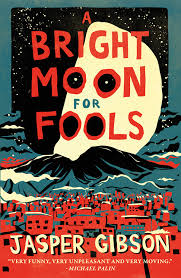
I found this book at work and was intrigued by it.  Not by its title or cover, which is dreadful, but because on the edge of the pages was printed Up on two legs, man!  I love a book that plays with convention so I decided to check it out.  Then on the front is a blurb from Michael Palin(!) which says “Very funny, very unpleasant and very moving.”  And this is a very apt blurb for this book.  It is quite funny, it is very unpleasant and it is also rather moving.

The story is about a man named Harry Christmas.  Christmas is a scoundrel.  He is mid-fifties but appears much older–fat, drunk and be-mustached.  He fancies that he looks fantastic, but no one is fooled.

Christmas suffers no fools. He expounds vociferously about any slight (especially slights against common courtesy–for although he is belligerent, he does believe in common courtesy).  He hates all of the vulgar inanities of modern life, which he calls, “The Rot.”  He hates people who use air quotes, he hates people who listen to walkmen (or whatever other technological marvel is out there), he hates people who want to sit and talk to him while he is eating, and worst yet he hates those who assume that because he is British, he loves football.  None of these hatreds seems that unreasonable to me, but since Harry is a big drunken man, his belligerence moves past justifiable and into the realm of scary.

And yet, he is a funny and enjoyable protagonist to be sure.  Well, except that he has stolen the life savings from his previous girlfriend and has fled London for Venezuela. (more…)

Read Full Post »

 ganeSOUNDTRACK: DAVE BIDINI-The President of Mount Allison’s House, Sackville (July 28, 2007).

allisonUntil I looked it up, I didn’t know what Mount Allison was, nor why he would be playing at the President’s house.  I’m still not sure why he was playing there, but as part of his solo mini tour, Dave graced the beautiful house.

For this show he read for 17 minutes and played 5 songs.  He plays “My First Rock Show” as the only Rheos song.  And then plays the same four “new” songs as in yesterday’s post: “Song Ain’t Good,” “The List” “The Land is Wild” and “The Ballad of Zeke Roberts.”

He explains the Zeke Roberts song a bit more.   He spent a few days in Ghana and went to a Liberian refugee camp (all documented in the book Around the World in 57 1/2 Gigs) which is how he learned about Zeke Roberts.

He talks about staying locally in the Marshland Inn and the scary doll in his room (and also how he hopes to have his picture among the famous people who have stayed there).

For the reading portion he talks about the guys he played with in China: Alun Piggins, drummer Jay Santiago and guitarist Dwayne Gale.  He talks about the scene where they get massages (very funny).  There’s another excerpt in which they meet some people on the street where a baby is playing with a lighter.  The band starts taking pictures and then—eventually one of the adults puts an unlit cigarette in the baby’s mouth, and much hilarity ensues.

Overall though, this reading gets pretty dark as he gets into fight with Jay about Rush, and he feels bad that the Rheos had broken up especially when he sees the up and coming band The Wombats loving their set.

As for the music in this set, it is too loud and peaks a lot in the recording.  There also seems to be a hornet pestering him.  It’s probably the least interesting of the three shows.

[READ: November 7, 2015] The Best Game You Can Name.

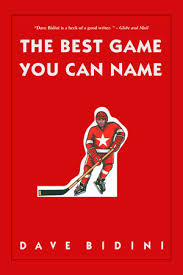
This book is about hockey.  Specifically it is about Bidini’s rec team the Morningstars and their quest for another championship (and how after winning two years in a row, they were the main target for all the other teams).  Much like how his book On a Cold Road included quotes and stories from musicians, this book includes quotes and stories from former NHL players (I didn’t really recognize any of their names, but then I wasn’t a hockey fan in the 70s and 80s).

So each chapter talks a bit about his team and then has several stories about a specific topic from the hockey guys.

He begins by talking about his athletic renaissance in his 40s (after having given up on professional hockey).  I enjoyed the stories from the hockey players who loved playing so much as kids that they would spend hours and hours and hours on the ice.  I also liked them saying that you could still become a pro if you only started playing at 15 unlike today when kids are starting at age 5. (more…)

Read Full Post »

2015-07 SOUNDTRACK: RHEOSTATICS-Stan Rogers Folk Festival Canso NS (July 2, 2005).

stanBack in 2005, the Rheostatics played two days at the Stan Rogers Folk Festival. The first day’s show was a kind of mash up of the Rheostatics and other bands.  Indeed, the recording includes some other artists along with the Rheos.

The sound quality of the recording is okay, but there are some really loud gusts of wind that seem to mar the sound.

They talk about how they are there to represent the excellence that is Toronto.

The second song is by The Chucky Danger Band (who later changed their name to Paper Lions). It is called “Hola” and is pretty fun (there’s a story about them being in a foreign country and writing a song with these simple words in Spanish.

Then the Rheos come back and they are joined by Suzie Vinick and Jill Barber.

Suzie sings a folky, unusual cover of Led Zeppelin’s “Rock n Roll.”  Then Jill sings her own “Nothing on Me” a nice folk song.  Then they do a super fun version of “Red Dog Ray” by Hank Fisher.

It’s back to Suzie with her cool song “A 7 minor.”  Then a folky rendition of “Bad Time to Be Poor” with great backing vocals

Suzie gets one more song, this time, her own “Happy Here.”  The last track is a fun rendition of “Claire” with a kazoo solo!  It seems like a perfect folk festival setting.

[READ: September 7, 2015] “Working Clean”

This is the first story I’ve read by Ruthnum.  It went in a direction I totally did not expect.

I enjoyed the way it opened: “I got my break and found my wife on the same day.  The wife part happened by coincidence, but the break–getting in with Jeev–that was a coincidence I made happen.”

So this story is about stand up comics on the comedy set.  The narrator, Ed Brooks, and his friend Richie Hagen are struggling as standups.  In fact, they both got in trouble at work for calling in sick when his boss heard them on the radio.  But Jeev is doing great.  And they agree that they hate him.

Jeev was in town because he needed clean material for his upcoming appearance on The tonight Show.  So he was working in small clubs to prefect his act.   The audience didn’t know who he was, but he still killed.  He was on the same bill as Richie and the narrator, but he seemed oblivious to them. (more…)

Read Full Post »

dotaSOUNDTRACK: ASIA-Asia (1982).

asiaI’ll finish off this run through Yes with one final offshoot project–Asia.  Geoff Downes (who had only been on Drama) and Steve Howe joined forces for this pop outfit with a hint of prog.  Indeed, this is an album that is just chock full of poppiness–despite all of the trappings of prog rock–synths, connections to Yes, a cover by Roger Dean and Carl Palmer from Emerson Lake & Palmer on the drums.

This album was huge in 1982 & 1983.  They had so many hits from it (okay well, only 3 singles, but surely everyone knows this entire album, right?).

“Heat of the Moment” opens with nice big ringing guitars.  And while the drums aren’t fancy, they are quite distinctive.  The synth isn’t too dated sounding, and the middle part with the guitar slide still sounds cool.  And of course, the chorus is practically irresistible.  “Only Time Will Tell” has a totally recognizable keyboard riff.  While the riff itself hasn’t been copied, the sound has and yet at the time, Asia made it seem fresh.  This song is so simple as it starts with just keys and drums and John Wetton’s voice.  There’s great harmonies in the chorus and dramatic keyboard splashes.  And once again, Carl Palmer’s drums are big and loud yet understated.

“Sole Survivor” opens with some darker chords nut some interesting noodling going on, too. (I always thought t was interesting that Blue Oyster Cult released a song called “Sole Survivor” the year before).  Despite the darkness of the lyrics and the music the chorus is also very catchy (I also like how nearly every verse ends with a different keyboard sound or riff).  This song also has an interesting break where things get quiet and feel very wasteland like.

“One Step Closer” has a some interesting riffs and another catchy chorus.  This is probably my least favorite track on the disc even if it’s got a good chorus.  “Time Again” has a cool dramatic opening and then a nice speedy bassline to start off with.  I like the way the chorus leads to some quieter moments of unusual guitar and keyboard sounds.

Side two has some slightly longer, sightly less poppy songs. And yet to me all the songs on this side are really good as well.  “Wildest Dreams” is a song that is a bit over the top (as all prog should be).  I remember loving the dramatic “We fight” section.  It seems a but silly but it was still fun to sing along to.

“Without You” is a slower darker song but with another big chorus.  It also has the most prog rock sounding keyboard solos of the 1980s.  There’s some time changes and even a big bell!  “Cutting It Fine” opens with some mellow guitar and then a really interesting guitar sequence.   It moves along quickly and dramatically and then stops for a quiet piano solo section (with a build up of strings, martial drums and horns–the drama seems like it is leading to something big but it just kind of fades out, which is a bummer.

“Here Comes the Feeling” ends the disc in more dramatic fashion.   I love the way the bridge builds and builds (with the “now i can…” section that leads to the long held sung notes.).   The solo section has some very yes-like moments from Howe and over all ends the disc with some wonderful prog moments.

As with apparently every progressive rock band of the era, this one was full of lineup changes too (don’t even get me started on King Crimson).  The four stayed together for the next album, Alpha, but Steve Howe left after that and then various other incarnations have toured in one form or another to this day (in fact they’ve released about 20 albums over the years.  Who knew?).

[READ: May 29, 2015] Death of the Artist

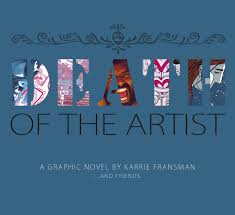
I grabbed this book from work because it looked interesting.  And it was.  I was more than a little confused as to how much is true.  And that was clearly the point.  Fransman totally pulled the wool over my eyes and I love her for that.

The premise of this book is that five artists are getting together for a weekend of debauchery.  They were friends in art school in Leeds when they were in their 20s.  Now, ten years later, they are reuniting in hopes of sparking creativity again.  Of the five only one is still doing anything “creative,” and they are all looking to reignite that spark.

And this book is the result of their week.

All five artists draw (or something) a story inspired by that weekend.  And in what turns out to be a pretty cool twist, Fransman has shaped the stories into a narrative. (more…)

Read Full Post »

« Newer Posts - Older Posts »