Feeds:
Posts
Comments

Archive for the ‘Dreams’ Category

SOUNDTRACK: THE DEAD MILKMEN-Soul Rotation (1992).

And lo, the Milkmen grow up.

This disc is not funny (well maybe, a little funny); mostly it is  “thoughtful” (and sometimes absurd).  But what is most striking about it is how mature (mellow) it is.  For this is the first album by The Dead Milkmen on Hollywood Records (a subsidiary of Disney).  This combination raises far more questions than is worth looking at.  But suffice it to say that even though this disc is the Milkmen, its a very different Milkmen.

The most obvious difference is that the majority (10 out of 13) of the songs are sung by the artist formerly known as Joe Jack Talcum, now known as Butterfly Fairweather (perhaps Hollywood knew that “”Punk Rock Girl” was their big hit?).  Past DM records were mostly sung by Rodney Anonymous (who goes by H.P. Lovecraft on this disc).  And his were the heavier, weirder, funnier, absurdist tracks, for the most part.  So, when the first four songs here are sung by Butterfly, you know something different is afoot.  Oh, there’s horns on the disc as well!

The disc feels like a pretty typical alt-rock band from the 90s.  But it’s missing the sass, it’s missing the vulgarity.  Basically, it’s kind of dull.

That’s not to say there aren’t good songs on here, because there are.  “If I Had a Gun” is a great screamy Butterfly song, and “Wonderfully Colored Plastic War Toys” is full of Lovecraft’s snark. As is “The Conspiracy Song” a lengthy rant of absurdity.

The rest of the songs drift between mellow and alt-rock rockers.  And it works as a product of the alt rock 90s.  It’s just not much of a DM album.

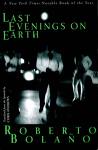
[READ: April 8, 2010] Last Evenings on Earth

I have been reading Bolaño’s short stories for a while now.  And so I have read a couple of the stories in this collection already. The stories in this collection were taken from his two Spanish collections of short stories: Llamadas telefônicas (1997) and Putas aseinas (2001).  And I have looked at about a dozen sources but I can’t find which stories came from which original collection (I like  to know these hings).  I can’t even find a table of contents for the original books.  Anyone want to help out?

I enjoyed these stories more than I expected to.  I have read some of his stories in The New Yorker and elsewhere, and I’ve been okay with them, but this collection blew me away.  Whether it’s being immersed in his writings or just having them all in one place, I was thrilled by this book.

There so many delightful little things that he does in his stories that I find charming or funny or something.  Like that his narrators are usually two or three people removed from the details.  Or if they’re not, they act like its been so long they doesn’t need to get all the details right:  “U insults and challenges him, hits the table (or maybe the wall) with his fist” (“Days of 1978”).

I also get a kick out of all the stories with the protagonist named B.  Which seems a not so subtle way of saying he’s the narrator (even though I ‘m sure these things never happened to him quite like it says (despite all the biographical consistencies with his own life).

The opening story “Sensini” has the narrator working as a night watchman at a campground (much like Enric in The Skating Rink…a bit of biography perhaps?).  A number of his stories are simply biographies of interesting characters (something he went to extremes with in Nazi Litearture in the Americas): “Henri Simon LePrince” a failed writer in Post-WWII France.  “Enrique Martin” a delightfully twisted story about jealousy (aren’t they all, though?) and acting impulsively and foolishly (aren’t they all though?).  This one featured  a riddle that I’m not even sure we’re meant to get:

3860+429777-469993?+51179-588904+966-39146+498207853

which the narrator thinks is a word puzzle. (more…)

Read Full Post »

SOUNDTRACK: VIC CHESNUTT-At the Cut [CST060] (2009).
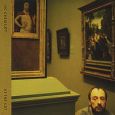
Vic Chesnutt died in December.  I have limited exposure to him, although I really enjoyed his previous Constellation release North Star Deserter.

This release (his second to last) shows him playing with much the same line up as North Star.  And it is just as harrowing and passionate as the other.

It opens with the fantastic “Coward” in which, stating how courageous it can be to be a coward her proudly sings “I am a Coward!”.  This track is one of the rocking ones on the disc, which is split pretty evenly between cacophonous rockers and slow moody acoustic pieces.  Another great rocker is “Chinaberry Tree.”  The lyrics are simple and the chorus is just the words Chinaberry Tree, but it is fantastic.

My preferences run to faster music, so I enjoy his noisier tracks to the simpler, acoustic ones.  And yet, lyrically, his songs are so moving that I easily get sucked into the narratives.  The most notable song on the disc is “Flirted with You All My Life” which is about death, specifically about his past suicide attempts.  It’s really moving.  And even the seemingly simple “Granny” is a well-written mood piece.

Chesnutt had all kind of physical problems (when he was 18 he was in a car accident and had been mostly paralyzed) and he had been in pain most of life.  It’s a shame he felt compelled to end his life, but we still have his music to enjoy.

[READ: March 27, 2010] Fever Chart

About half way through this first-person book, the narrator has a mental breakdown and tries to bite his hand off.  That should tell you right off the bat whether or not you want to read the book.  (Add to that that the narrator also has terrible bowel problems).

I had received an excerpt from McSweeney’s over the summer, and of all three books in the sampler, I enjoyed this one the most.  Little did I know how utterly surreal the story would get once that excerpt was over!

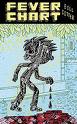
The cover of the book shows a man walking down the street with blood dripping from his hand.  This seemed like an odd choice to me.  However, for the bulk for the story, the narrator seems to be walking down streets with blood dripping from his hand (the one he eventually tries to bite off) so it perfectly encapsulates the tone of the book.

The story opens in the middle of a series of events from the narrator’s past (the first few sections are written in a wonderfully disjointed way that keeps the reader off balance).  Jerome Coe is currently living in an Apartment in Boston.  It has no heat.  His toilet is frozen solid and he is sleeping between his mattress and box spring to keep warm.  After ages of complaints to his landlord, one day the heat kicks on.  Full blast.  And Jerome cannot turn it off.  Soon, wallpaper is peeling of the walls and steam is flowing from his windows.  He is naked in his apartment and is preparing to run outside into the freezing weather just to escape the heat.

While he is standing outside, half-naked, a car pulls up and the driver, a woman named Tommy, asks him to jump in. (more…)

Read Full Post »

SOUNDTRACK: RUSH-Caress of Steel (1975).

Despite the fact that this album is largely considered a failure, it’s one of my favorite Rush albums.  There’s so much weirdness about it that I can see why it isn’t terribly popular but there’s so much goodness that it makes me a bit bummed that some glorious tracks are overlooked.

It opens with the one track people know from the disc: “Bastille Day,” a rough raw rocker that is heavy and really sets the tone for the first side of the disc. The heavy heavy riff is reminiscent of Black Sabbath and other early metal pioneers.  I also learned that they were touring with Kiss around this time, so maybe that’s where they got some of their heavy riff ideas from. I of course cannot imagine Rush and Kiss touring together.  That must have been a real trip.

The second song, the amusing “I Think I’m Going Bald” is rather obvious, especially the way he delivers the title line, but man the guitar solo just rocks and rocks and rocks.  “Lakeside Park,” a real location outside of Toronto is a gentle tribute to youth.   This quote amuses me no end, and is something I just read about.

The first real highlight for me is “The Necromancer,” a wacked out 12-minute mini epic.  It opens with a spoken word introduction, setting the tale of three travelers fording a river. The first part is pure psychedelia, with screaming guitars going from ear to ear.  The second part is heavy with a slow pounding riff and Geddy’s screamed vocals  It features a long headphone-happy guitar solo.  And just when you think it’s over, there’s some crazy sound effects and, yes more guitar soloing.

The third and final movement sees the return of By-Tor from “By-Tor and the Snow Dog.”  By-Tor is now a good guy and he scares off the Necromancer.  I always enjoyed playing this part on the guitar as the chord progression is really pretty.

Side Two is one song, a full side, their first proper epic. Called “The Fountain of Lamneth” it focuses on a man’s quest for this elusive Fountain.  It has six parts.  The first, “In the Valley” is a pretty, acoustic ballad that expands into a loud rocker.  It introduces our anonymous narrator, and by the end its sets the tone with a loud/quiet explanation of his satisfaction and dissatisfaction with his life.

It’s followed by the insane “Didacts and Narpets” (Teachers and Parents (anagram on Narpets).  It’s just drums and shouting.  Evidently it’s designed to show a young man fighting with teachers and parents, and sure why not.  It’s pretty out there, but it’s only 90 seconds long.  (I’ve always enjoyed it).

The middle sections are really quite mellow.  More of that beautiful classical guitar that Alex does so well.  The songs don’t remain mellow the whole time, with “No One at The Bridge” adding some loud aggressive bits.  But “Panacea” stays quite mellow, with some beautiful guitar harmonics.  The next bit, “Bacchus Plateau” is a really pretty song despite its ultimately downer message, and probably could have been a hit if tit weren’t part of  20 minute song..

The song ends with him finding the fountain.  And yet rather than rejoice, he’s exhausted.  But I’ve always enjoyed the “message” of the song: “Life is just a candle but the dream must give it flame.”  It’s inspirational and depressing at the same time.  It ends with a reprise of the opening acoustic bit. It’s a tidy song and a wonderful first attempt at an epic track.

The only reason I’m surprised this didn’t sell well is that it works so well as a trippy 70s disc, ideal for sitting around with headphones on in one of those round chairs.  I assume its the heaviness that turned away fans of Pink Floyd and the like.  And, well, probably the downer message and really weird title of the disc (what does Caress of Steel mean anyhow?) might have had something to do with it.

[READ: March 10, 2010] Rush, Rock Music and the Middle Class

I read about this book in an article from The Walrus. And I thought to myself, it’s geeky enough to love Rush, but how about reading an academic treatise about Rush? I’m so there.

Well, I haven’t really read a truly academic (as in published by a University Press) book in a while, but it didn’t take too long to get back in the swing of things.  Plus, if I may be so bold, ethnomusicology seems like a lot more fun than philosophy.

As the subtitle implies, this book looks at Rush as music for the middle class.  The only thing I had a hard time with the book was the definition of middle class.  It is specifically aimed at a U.S./Canadian middle class (although the UK does enter into it too), and with all of the definitions thrown around, middle class seems very broad.  The easiest breakdown to see was based on employment and the most prominent type of employment among Rush fans was “professional” (including librarians and IT people).  So, evidently I am middle class.  I only say this because for the most part classes are hidden in the US (they aren’t, of course, but there are many attempts to try to keep them hidden).

This concept of class obviously pervades the entire book.  But before we get too hung up on that, we must not forget that the real focus of the book: the music of Rush. (more…)

Read Full Post »

SOUNDTRACK: BLUE ÖYSTER CULT-compilations and live releases (1978-2010).

For a band that had basically two hits (“Don’t Fear the Reaper” and “Burnin’ for You”) and maybe a half a dozen other songs that people might have heard of, BOC has an astonishing number of “greatest hits” collections.

Starting in 1987 we got Career of Evil: The Metal Years (1987), Don’t Fear the Reaper (1989), On Flame with Rock n’ Roll (1990), Cult Classic (which is actually the band re-recording their old tracks (!)) (1994), and the two cd collection Workshop of the Telescopes (1995).  There’s even Singles Collection, (2005) which is a collection of their European singles & Bsides.

This doesn’t include any of the “budget price” collections: E.T.I. Revisited, Tattoo Vampire, Super Hits, Then and Now, The Essential, Are You Ready To Rock?, Shooting Shark, Best of, and the 2010 release: Playlist: The Very Best of).

The lesson is that you evidently won’t lose money making a BOC collection.

I don’t know that any of these collections are any better than the others.

The 2 CD one is for completists, but for the most part you’re going to get the same basic tracks on all of them.

And, although none of them have “Monsters” for the average person looking for some BOC, any disc is a good one.

Regardless of the number of hits they had, BOC was tremendous live.  And, as a result, there have also been a ton of live records released.  Initially the band (like Rush) released a live album after every three studio albums. On Your Feet or On Your Knees (1975) Some Enchanted Evening (1978) and Extraterrestrial Live (1982) were the “real releases.”

Then, in 1994 we got Live 1976 as both CD and DVD (which spares us nothing, including Eric Bloom’s lengthy harangue about the unfairness of…the speed limit).  It’s the most raw and unpolished on live sets.  2002 saw the release of A Long Day’s Night, a recording of a 2002 concert (also on DVD) which had Eric Bloom, Buck Dharma an Allan Lanier reunited.

They also have a number of might-be real live releases (fans debate the legitimacy of many of these).  Picking a concert disc is tough if only because it depends on the era you like.  ETLive is regarded as the best “real” live disc, although the reissued double disc set of Some Enchanted Evening is hard to pass up.  Likewise, the 2002 recording is a good overview of their career, and includes some of their more recent work.

If you consider live albums best of’s (which many people do) I think it’s far to say that BOC has more best of’s than original discs.  Fascinating.  Many BOC fans believe that if they buy all the best of discs, it will convince Columbia to finally reissue the rest of the original discs (and there are a number of worthy contenders!) in deluxe packages.  I don’t know if it will work, but I applaud the effort.

[READ: October 2009-February 2010] State By State

This is a big book. And, since it’s a collection essays, it’s not really the kind of big book that you read straight through.  It’s a perfect dip in book.  And that’s why it took me so long to get through.

I would love to spend a huge amount of time devoting a post to each essay in the book.  But, well, there’s 51 (including D.C.) and quite a few of them I read so long ago I couldn’t say anything meaningful about.  But I will summarize or at least give a sentence about each essay, because they’re all so different.

I’ll also say that I read the Introduction and Preface last (which may have been a mistake, but whatever).  The Preface reveals that what I took to be a flaw in the book was actually intentional.  But let me back up and set up the book better.

The catalyst for the book is the WPA American Guide Series and sort of Steinbeck’s Travels with Charley.  The WPA Guides were written in the 1930s as part of the Works Progress Administration.  48 guide books were written, one for each state.  Some famous writers wrote the books, but they were ultimately edited (and many say watered down) by a committee.  I haven’t read any of them, but am quite interested in them (and am looking to get the New Jersey one).  Each guide was multiple hundreds of pages (the New Jersey one is over 800).

State By State is written in the spirit of that series, except the whole book is 500 pages (which is about 10 pages per state, give or take).  And, once again, famous writers were asked to contribute (no committee edited this book, though).  I’ve included the entire list of authors at the end of the post, for quick access.

So I started the book with New Jersey, of course.  I didn’t realize who Anthony Bourdain was until I looked him up in the contributor’s list (I’m sure he is thrilled to hear that).  And his contribution was simultaneously exciting and disappointing,.  Exciting because he and I had quite similar upbringings: he grew up in North Jersey (although in the wealitheir county next to mine) and had similar (although, again, more wealthy) experiences. The disappointing thing for me was that Bourdain fled the state  for New York City (and, as I now know, untold wealth and fame (except by me))  I felt that his fleeing the state, while something many people aspire to, is not really representative of the residents of the state as a whole.

And that dissatisfaction is what I thought of as the flaw of the book (until I read the Preface).  In the Preface, Matt Weiland explains that they asked all different authors to write about states.  They asked some natives, they asked some moved-ins, they asked some temporary residents and they asked a couple of people to go to a state for the first time.  In reality, this decision makes for a very diverse and highly entertaining reading.  In my idealized world, I feel like it’s disingenuous to have people who just stop in to give their impression of an area.  But hey, that’s not the kind of book they wanted to compile, and I did enjoy what they gave us, so idealism be damned.

For most of the book, whenever I read an essay by someone who wasn’t a native or a resident of a state, I assumed that there weren’t any famous writers from that state.  I’ve no idea if that played into anything or not.  From what I gather, they had a list of authors, and a list of states (I was delighted to read that three people wanted to write about New Jersey-if the other two writers ever decided to put 1,000 words  to paper, I’d love to read them (hey editors, how about State by State Bonus Features online, including any extra essays that people may have wanted to write).

From New Jersey, I proceeded alphabetically.  And, I have to say that I’m a little glad I did.  I say this because the first few states in the book come across as rather negative and kind of unpleasant.  Alabama (written by George Packer) comes across as downtrodden, like a place you’d really have to love to live there.  Even Alaska, which ended up being a very cool story, felt like a veil of oppression resided over the state (or at  least the part of the state that Paul Greenberg wrote bout.)  But what I liked about this essay and the book in general was that the authors often focused on unexpected or little known aspects of each state.  So the Alaska essay focused on Native fisherman and the salmon industry.  Obviously it doesn’t do justice to the rest of that enormous state,  but that’s not what the book is about.

The book is meant to be a personal account of the author’s experiences in the state. (more…)

Read Full Post »

SOUNDTRACK: MUSE-The Resistance (2009).

If someone were to create a band that tickled all of my fancy spots, on paper it would be Muse.  Vocals like Thom Yorke from Radiohead.  Heavy heavy guitars.  And yet, not afraid to have prog rock keyboard sections.  On top of that, throw in pretentious titles (how about a subtitle in French?), or, just for kicks, a three part suite called “Exogenesis: Symphony.”  Oh, sure and let’s just throw in a clarinet solo in one of the songs too.  Okay, so that’s Muse.
I’ve been a fan of Muse for quite a few years, before they really broke in the U.S. (Origin of Symmetry being a particular favorite).  I’m still amazed that they’ve had success here, given their proclivities towards excess.  But more power to them.

For some reason, this disc (despite all the pros in the first paragraph) didn’t really grab me that much at first.  The first single “Uprising,” is awesome: heavy, rocking, over the top choruses, everything you could want in a pseudo political rebellion type song.  But somewhere after that I felt the disc drifted a bit.

Further listens changed my mind though, and I think that “United States of Eurasia” is great while “Guiding Light” (which could easily be mistaken for Queen) is fantastic.  In fact the entire end of the album, “MK Ultra,” “I Belong to You/Mon Coeur S’Ouvre a Ta Voix” and the symphony are a wonderfully decadent 25 minutes of music.

Clearly Muse isn’t for everyone, but I’m really pleased that they’re finding their fans.

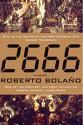
[READ: Week of February 1, 2010] 2666 [pg 102-159]

This week’s reading contains a lot of dreams and it often felt like a dream while reading it.

We pick up right where we left off, with El Cerdo telling our friends about his visit with Archimboldi.  We learn a little about why Archimboldi called El Cerdo, but nothing about what he was doing in Mexico City. It turns out that El Cerdo knows Archimboldi’s publisher Mrs Buber. (And Dieter Hellfield speculates that she, herself, may be Archimboldi. [I secretly wondered if he might be a woman given that earlier in the book, it was mentioned that [part of what was so unusual about Archimboldi’s name was that it was a feminine form of the name.]  However, his incredible height has definitely thrown me. And of course, since El Cerdo reports to have talked to him, it seems very unlikely at this point.) (more…)

Read Full Post »

SOUNDTRACK: THURSTON MOORE-Trees Outside the Academy (2009).

Thurston Moore is a founding member of Sonic Youth.  He’s put out several solo albums over the year, although I feel like only two really “count,” Psychic Hearts and this one.
Anyone familiar with Sonic Youth knows that the band has pop sensibilities but that they bury their poppiness under layers of guitars or noise or other things.  And everyone knows that Thurston is one of the main noisemakers (you don’t put screwdrivers under you guitar strings and expect to break the top 40).  So it may come as some surprise just how accessible and poppy this record is.  In fact, I first heard one of the songs on a Radio compilation (true it ‘s an awesomely hip radio station…88.5 WXPN Philadelphia), but I couldn’t get over how supremely sweet the song “Fri/End” was.

And, although there are a few noisy moments on the disc (Thurston loves his feedback squalls), the large majority of the disc is really catchy almost folky indie music (acoustic guitar and violins!).  But it’s important to mention that Dino Jr’s J. Masics is also on hand and that he plays some wild solos on about half of the tracks (most of the longer instrumental pieces).  Like on the the title track, a nearly 6 minute instrumental that has a great melody; the middle section just screams with a great Mascis solo.

Okay, so technically that’s not the final track.  “thurston @13” is a home recording from when the man was 13 years old.  It’s him recoding various things around his house (spraying Lysol, dropping coins) with hilariously pompous 13 year old narration.  It reminded me of me when I was kid and got hold of the family tape recorder–I used to record myself doing all kinds of weird kid things (I wish I still had those tapes).  It’s just silliness, but I really enjoyed it.

Even if you’re not particularly a fan of Sonic Youth, this is a worthwhile addition to any record collection.

[READ: Week of January 25, 2010] 2666 [pg 52-102]

As this second section opens, we see Norton and Morini still together during his visit.  She takes him to an area of London that has become trendy, and features great restaurants.  She relates the story of the first famous person to move there, a painter named Edwin Johns.  Johns is famous mostly for one painting but its notoriety led it to sell for a ton of money.

As this week’s reading draws to a close, we get a wonderful parallel story about this very painter.  Espinoza, Morini and Pelletier travel to the sanitarium where the painter is currently residing.  Morini is compelled to ask the man one very specific question.

For in the story that Norton related, she revealed that Johns chopped off his hand, had it embalmed, and placed it at the center of his one masterpiece painting.  This painting became the centerpiece of a very successful exhibition.  Morini is queasy during Norton’s story and when he later confronts Johns at the sanitarium, he demands to know why Johns cut off his hand.  As this section draws to a close, Johns reveals to Morini that the answer is, simply, money.

But fear not, Archimboldi fans, the man is not forgotten, and the next revelation about him comes from an unlikely source.  A Serbian writer reveals some tactile information that sheds light on Archimboldi himself.  One of the details is that he bought a plane ticket flight but never showed up for the flight.  The Serbian writer believes it was because he canceled the flight under the pseudonym and then rebooked the flight under his real name.  Although Pelletier published the article in his journal, further scrutiny by himself and Espinoza lead them to doubt its credibility or use. (more…)

Read Full Post »

SOUNDTRACK: RHEOSTATICS-Static Box (complete) (2008).

I’ve decided not to review all of the volumes of this fabulous free box set.  Rather, since I have now finished it, I’ll sum up and say that it is a fantastic collection from start to finish.

The final disc has a series of great cover tunes.  And of course, there’s the final songs from the final Massey Hall show which are quite emotional, even all these years later.

There’s one or two songs that I probably would have left off for sound quality reasons (although usually they’re pretty interesting/essential for what they are).  There’s one 8 minute song, “Monkeys Will Come” that has quite poor sound quality.  However, it is a recording of the song that the Canadian government asked them to record for Canada Day in 2000.  And I assume there are no better recordings of it, so it’s nice to have.

The best part of this collection is that it allowed me to see which concerts were worth downloading in their entirety (the site has a ton of concerts for downloading…a ton!).  It also got me to track down the two Violet Archers CDs, which I’m quite excited to be getting soon.

And, while I’m in a Rheos mood.  Martin Tielli’s final CDs in his subscription collection just made their way to my house and they are weird and wonderful.  And, I just learned that Dave Bidini put out a solo record a few months back, so that’s worth tracking down too.  Go Rheos!  You are all very star.

[READ: January 12, 2010] Generation A

I was quite excited when this book finally came out.  I had been dipping into the Douglas Coupland back catalog (including watching JPod the TVseries), so this book is a treat.

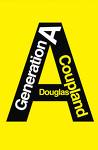
Strangely, when I started reading the book I realized I had no idea what it was about.  At all.  So, the first thing to note is that it is not in any way a sequel to Generation X.  None of the characters are the same, the setting is not the same, there’s no connection whatsoever (or if there is I didn’t see it).  The premise of the title comes from a Kurt Vonnegut address.  It is quoted on the book jacket and in the book itself, so I won’t quote it here, but the gist is that young people were dismissed unfairly when labelled “Generation X,” so they should insist that they be called “Generation A,” the beginning of the alphabet, and the start of it all.

But when the book starts, it’s hard to understand what that has to do with anything.  Because, as we learn right away, the book is all about bees (which explains the yellow and black cover design). (more…)

Read Full Post »

SOUNDTRACK: KISS-Alive! (1975).

This was the first Kiss live album and was the album that broke Kiss worldwide.  I’m not entirely sure why a live album of songs that didn’t sell very well would do better than the original studio albums, but so it was.

And, yes, the live recording is pretty awesome.  It is clearly a collection of greatest hits off their first three records, and the band sounds on fire: the songs are heavier and faster and largely more consistent than some of the odder tracks on the original records.

There has been considerable controversy about whether the album was overdubbed.  Wikipedia lists a few different possibilities for what originally recorded sounds were kept for the disc.  It never occurred to me that the disc might be overdubbed (and honestly that doesn’t bother me all that much).  But since I had the pleasure of watching Kissology recently, and I could see the state of their vocals live, it would surprise me entirely if the vocals were not overdubbed.  Not because the band didn’t sound good live (they did), but because they were very sloppy with their vocals, consistently leaving off the ends of lines and things like that, and the disc sounds perfect.

Of course this is all nitpicking.  Alive! is a fantastic document because the live versions add a lot of punch to the originals.  But on top of that, you get fun extras like the drum solo and banter of the 12 minute “100,000 Years” as well as Paul’s drinking banter: “I know there’s a lot of you out there that like to drink…vodka and orange juice!” (How can you pass that up?).  It’s hard to pick highlights from such a good record, but “She” is a particular one with Ace’s wild guitar pyrotechnics.  Right on to the end, the disc is a rocking good time.

It’s also funny to hear that “Rock And Roll All Nite” is not the final encore; rather it is the next to last track with “Let Me Go Rock n Roll” being the BIG FINISH.  That’s the last time that THAT would happen!

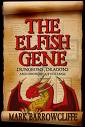
[READ: December 28, 2009] The Elfish Gene

I happened to pass this book in the New section of my library and I loved the title.  I read the blurb, made a mental note of it, mentioned how much I liked the title to Sarah and then more or less forgot about it (although, actually, I still see it every day, as it’s always facing out, cover forward).

Imagine my surprise to see that Sarah got it for me for Christmas!

So, yes, this is the best parody-titled book that is not a parody or a make-a-buck joke book that modifies a popular title.  Rather, it is a memoir of a British guy who spent his teen years utterly absorbed in Dungeons & Dragons.  But I must disagree with the Christian Science Monitor’s review as “laugh out loud funny.”  I only laughed out loud once in the book (the dog walking scene is hilarious), but that’s because I don’t think it was meant to be funny (at least I hope it wasn’t).

I’ve said before that I’m not a big fan of memoirs in general.  I find them mostly to be a big “so what,” and often without the subtlety required for a good novel.  But the topic here was delicious enough for me to dive right in.  And I think that this book, which I absolutely enjoyed, sort of proves my theory.

Barrowcliffe has done nothing worthy of anyone caring about.  He’s just a guy who played D&D, so when checking out the book, you kind of feel, so what?  Plus, the book is completely unsubtle, with him summarizing his attitude over and over and over.  But nevertheless, I could not put it down. I was hooked from the opening and was totally intrigued all the way to the end.  (I even put down the book I had been reading to speed right through this).

And yet, Barrowcliffe himself is so unlikable.  And not, as he suggests, because of the D&D. (more…)

Read Full Post »

SOUNDTRACK: KISS-Hotter Than Hell (1974).

Kiss’s second album came out just 7 months after their debut (which explains why it is less than half an hour long).

In my mind the album sounds different because it is somehow Japanese (I mean the cover is something of an indicator).  But it’s not Asian in any way.  Although, the album definitely sounds different than the debut and it’s clearly a recording style choice.

But this is one of the beloved early Kiss albums and I love every track, even the really crazy ones (“Goin’ Blind” is about a 93 year-old man lusting after a 16 year-old girl(!)).

The album starts with the crazily poppy “Got to Choose” complete with whoo hoo hoos in the chorus.  It’s followed by the blistering “Parasite” a fantastic fast riff with some cool vocal tricks at the end of each verse.  “Goin’ Blind” also features some cool slow riffs that are quite distinctive.  The title track & “Let Me Go, Rock n’ Roll” are pretty well known, and “Let Me Go” was played for many years live.

The second side is a bit more odd and seems to showcase Peter a lot more.  “All the Way” is a poppy Gene track and I’m not entirely sure what it’s all about (surprisingly not that “all the way” since “one of these days you’ll push me all the way”).  “Watchin’ You” is a great, dark song which has a really cool cowbell-fueled midsection, and gives Peter a great workout on drums.  “Mainline” is Peter’s poppy vocal track (like really poppy), while “Comin’ Home” is a Paul-sung song about (sort of like “100,000 Years”) returning home to his beloved.  “Strange Ways” is Peter’s other contribution.  This one is dark and really quite cool, with an awesomely wild, freaky guitar solo from Ace.

It’s something of an overlooked record, which is a shame as there’s some good stuff on it.

[READ: December 21, 2009] The Color of Earth

This is my first manhwa comic and I adore it.  Manhwa is (if I may be offensively simplistic) basically Korean manga (at least it is often marketed that way).  However, there are many many differences in style and tone.  And, if this manhwa is in any way representative of them all, (and of course it isn’t, but we can simplify) they are gorgeous!

Sarah received this trilogy of books by Kim Dong Hwa (The Color of Earth, The Color of Water, The Color of Heaven) and after reading this first one, I’m really excited about the rest.

The story is very simple: it follows the growth and development of Ehwa from age 7 to age 15 as she matures in a Korean village several generations ago.  The setting is extremely rural, and there are almost no amenities to be seen.  Ehwa’s father died when she was very young, so she lives with her mother in their tiny house.

Her mother owns an inn, and she must tolerate the crude comments and innuendos of her drunken customers.  Unfortunately for Ehwa, she learns a lot about the world from what she hears there.  She also gets an education from the village boys, who are foolish and impetus as little boys are (asking her why she doesn’t have a penis, and, later, to show them her persimmon seed). (more…)

Read Full Post »

SOUNDTRACK: BLACK SABBATH-Vol. 4 (1972).

When I was younger I liked this Sabbath album a lot more than I do now.  There are some absolutely stellar tracks on here, but most of the songs are a rather peculiar for Black Sabbath.  It showcases ballad-y nature that Ozzy would have for some of his biggest hits twenty years later.
“Wheels of Confusion” opens the disc with a fascinating bluesy sounding guitar solo that turns into a straightforward rocker.  But, as it’s 8 minutes long, there’s a lot of twists and turns.  And it ends with a two and a half minutes of upbeat guitar soloing (with a tambourine keeping the beat!).

“Tomorrow’s Dream” opens with a rocking bendy guitar riff  but in the middle the chorus turns the song into a delicate ballad.  This is followed by “Changes” a full-on piano ballad (!).  It’s catchy, no doubt, and I loved it when I was younger, but I’m not entirely sure it passes the test of time.  This is followed by “FX” which is literally almost two minutes of echoing blips and bleeps, some of which go back and forth on the headphones.  It’s a very strange addition to any disc and is really the perfect example of “filler” unless by some chance this was majorly cutting edge at the time.

This is redeemed by “Supernaut” one of the all-time great Sabbath tunes.  It’s heavy, fast and features a great guitar riff.

“Snowblind” is a another fantastic song.  A great riff, and of course, it’s totally pro-cocaine!  How can you tell?  Well, because at the end of the first verse, you can hear a very unsubtle whisper of “cocaine.”  My, how the band has changed in just a couple of years.  This song also features a ballady mid-section.  It also features an awesome middle bit that rocks very hard (and can be summed as: don’t tell me what to do).  The drugs hadn’t deteriorated Sabbath’s songwriting yet, but give it a couple more records!

“Cornucopia” is one of the weird songs that you find on the second side of a Sabbath album.  It’s a got an awesome slow, doomy opening riff which then turns into a speedy rocker.

When I was kid I really liked “Laguna Sunrise” and I still do.  It’s a pretty acoustic guitar number (with keyboards or strings or something).  After “Changes” you’re not surprised by anything that Sabbath will throw at you, but this song is really shockingly delicate.

“St. Vitus Dance” is probably the most schizophrenic Sabbath song.  The opening guitar riff is so incredibly upbeat, happy and boppy; who knows what will come from it.  And then the verses turn dark and edgy with lyrics about a breakup.  And then the happy guitar bits come back!

The disc ends with “Under the Sun/Everyday Comes and Goes.”  It is once again another wonderfully sludgy guitar riff that turns into a fast rocker (“I don’t want no Jesus freak to tell me what it’s all about!”).  After the verses, you get this wonderfully weird guitar solo that’s like an ascending scale on acid.  Fun!  About three minutes in, it turns into “Everyday…” an uptempo rocker that’s not out of place with the other half of the song, but which does seem like an odd placement.

This disc was strangely experimental for Sabbath.  And, while it’s nice to see them not getting stuck, some of their choices were certainly weird.  And yet all Sabbath fans seem to regard this disc pretty highly (I think it’s the iconic cover that we all remember so fondly).

[READ: December 10, 2009] Unseen Academicals

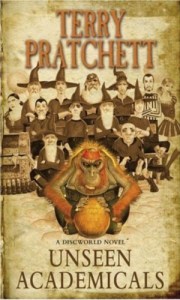
Terry Pratchett knows football (soccer)??!!  In all the years of Discworld books, I don’ think there has been any mention of football (or even any sport).  Who knew he had a 400 page book about football in him?

Oh, and what is wrong with US book publishers?  Look at the utterly lame US cover at the top here.  First of all, the book is about soccer…why are they reaching for the ball with their hands??  Second, look here at this awesome UK cover by Paul Kidby (the official illustrator of Discworld).  Does he not have publishing rights in the US?

American readers, check out this cover.  It is awesome!  It gives you the whole cast, it gives a wonderful graphic of just what you’d be up against when you play this team.  Look, there’s the Librarian!  And, of course, the drawing is great.  Well, at least we have the internet.

But back to the football.  As with any Pratchett book it’s not just about football.  There is a whole bunch of stereotype-busting, inner-strength growing, pop-culture raspberrying, and general hilarity as well.  Oh, and Rincewind is back!  Hooray! (more…)

Read Full Post »

« Newer Posts - Older Posts »