 SOUNDTRACK: KISS-Alive! (1975).
 This was the first Kiss live album and was the album that broke Kiss worldwide. I’m not entirely sure why a live album of songs that didn’t sell very well would do better than the original studio albums, but so it was.
And, yes, the live recording is pretty awesome. It is clearly a collection of greatest hits off their first three records, and the band sounds on fire: the songs are heavier and faster and largely more consistent than some of the odder tracks on the original records.
There has been considerable controversy about whether the album was overdubbed. Wikipedia lists a few different possibilities for what originally recorded sounds were kept for the disc. It never occurred to me that the disc might be overdubbed (and honestly that doesn’t bother me all that much). But since I had the pleasure of watching Kissology recently, and I could see the state of their vocals live, it would surprise me entirely if the vocals were not overdubbed. Not because the band didn’t sound good live (they did), but because they were very sloppy with their vocals, consistently leaving off the ends of lines and things like that, and the disc sounds perfect.
Of course this is all nitpicking. Alive! is a fantastic document because the live versions add a lot of punch to the originals. But on top of that, you get fun extras like the drum solo and banter of the 12 minute “100,000 Years” as well as Paul’s drinking banter: “I know there’s a lot of you out there that like to drink…vodka and orange juice!” (How can you pass that up?). It’s hard to pick highlights from such a good record, but “She” is a particular one with Ace’s wild guitar pyrotechnics. Right on to the end, the disc is a rocking good time.
It’s also funny to hear that “Rock And Roll All Nite” is not the final encore; rather it is the next to last track with “Let Me Go Rock n Roll” being the BIG FINISH. That’s the last time that THAT would happen!
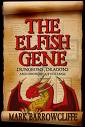
[READ: December 28, 2009] The Elfish Gene
I happened to pass this book in the New section of my library and I loved the title. I read the blurb, made a mental note of it, mentioned how much I liked the title to Sarah and then more or less forgot about it (although, actually, I still see it every day, as it’s always facing out, cover forward).
Imagine my surprise to see that Sarah got it for me for Christmas!
So, yes, this is the best parody-titled book that is not a parody or a make-a-buck joke book that modifies a popular title. Rather, it is a memoir of a British guy who spent his teen years utterly absorbed in Dungeons & Dragons. But I must disagree with the Christian Science Monitor’s review as “laugh out loud funny.” I only laughed out loud once in the book (the dog walking scene is hilarious), but that’s because I don’t think it was meant to be funny (at least I hope it wasn’t).
I’ve said before that I’m not a big fan of memoirs in general. I find them mostly to be a big “so what,” and often without the subtlety required for a good novel. But the topic here was delicious enough for me to dive right in. And I think that this book, which I absolutely enjoyed, sort of proves my theory.
Barrowcliffe has done nothing worthy of anyone caring about. He’s just a guy who played D&D, so when checking out the book, you kind of feel, so what? Plus, the book is completely unsubtle, with him summarizing his attitude over and over and over. But nevertheless, I could not put it down. I was hooked from the opening and was totally intrigued all the way to the end. (I even put down the book I had been reading to speed right through this).
And yet, Barrowcliffe himself is so unlikable. And not, as he suggests, because of the D&D.
From the get go, Barrowcliffe basically says that his obsession with D&D made him a loser, and worse, an unlikable loser. And so what we get is the author’s detailed love affair with fantasy which is perpetually undermined by him regretting that he spent so much of his life doing it. But as you read the details of his obsession and the fun that he was having in chapter after chapter, this regret, this embarrassment, this humiliation is totally misplaced. For it is not the D&D that makes him the way he is, it’s a combination of where he lived, the time he grew up, and his rather bad personality.
But let’s get back to basics. Barrowcliffe grew up in the 70s in Coventry, England, which was pretty much the middle of nowhere. And this was a time when there was no way to connect to other people aside from going up and talking to them (phone were prohibitively expensive, and obviously there was not internet). The author was a nerdy kid who willingly accepted the nickname “Spaz” and actually told people to call him that well into his teenage years.
In school, he found a fantasy wargamers group and discovered that he really enjoyed it. They would create alternate histories of battles and conflicts (I imagine it like an advanced Risk). One of the main guys in the wargamers group told Mark about D&D. None of them  could afford it as it was an import from America (and cost like £7). But the author had saved up a few pounds and mail ordered it (the small white box of original D&D which I have, although I ordered it much later). And what happens when the set arrives is a nutshell version of Barrowcliffe’s life: the other kids are thrilled that he bought the game, but unfortunately since it’s his game, that means that he has to play with them. He is loud, obnoxious and opinionated. And unfortunately he doesn’t have that much original thought to keep up with anyone else.
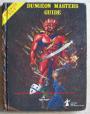
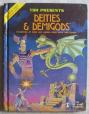
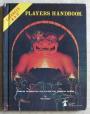 Around the same time that Barrowcliffe was playing D&D, so was I. I’ve included the covers of the 5 first edition books that I own at the side here. If yo click on them you can buy them too! Sadly, my original copies are obviously worth nothing if you can buy them for $12, eh?
I started a few years after him and I am also about five years younger than him. But I am well aware of the mania that D&D produces. I created characters all the time. I played with friends. I joined a group at the library and I read a bunch of fantasy. So I know what the author is talking about. The big difference between us is that I didn’t get outrageously obsessed with the game. The friends I had also liked playing the game, whereas Barrowcliffe made friends through D&D.
 D&D attracts all manner of people, but without a doubt the most obsessive gamers tend to be obnoxious, opinionated, condescending and persnickety. And that’s fine (the game encourages people to feel superior about themselves). if you act this way while wargaming. But once you start acting this way in real life, well that becomes a problem. And if all your friends act that way and you have no other friends to temper them, you become that person yourself. And this is what happened to him.
 So, for Barrowcliffe to blame D&D for his lack of social life is just false. Not to mention he got a girlfriend at a far younger age than I did, so his social life was better than mine. It’s quite clear that he has a certain personality which was magnified by the people he played with. And that judgmental personality is still evidence as he writes this book.
He explains that when he was a kid his D&D friends got him into heavy metal (also true for me), but now, his adult self sets out dismissing heavy metal as a stupid genre, just as he dismissed non-metal when he was a teen. I take personal offense at his mocking of Black Sabbath. Because even though I like the band that his mature self is now into, I’m not going to dismiss the music that I loved as a kid.
Eventually, Barrowcliffe, grows up, goes to college, acts like a total jerk until he cops on that he’s being a jerk and then somehow gets married. And yet even at the end of the book he’s still judgmental (against fatties). His saving grace is that he realizes these errors and apologizes for them (as he retroactively apologizes for his bigoted views as a teen).
But I fear that he overcompensates by disparaging his entire life rather than just his bad behavior. In fairness, he does include one line in the book where he says that D&D was not to blame for his behavior (phew), but that seems to be undermined by all of the preceding chapters which pretty much imply that it was all D&D’s fault.
 What’s especially weird though is that he defends D&D against all the weirdos who were sure that it led to satanism and all that jazz. It feels like he can’t decide if he’s bashing or enjoying his younger self. And that conflict is a problem for a memoir.
The thing is that Brrowcliffe clearly is a creative person, and fantasy was a perfect outlet for a creative kid in what seems like the wastelands of Coventry in the 70s. The fact that he cultivated the role of an outsider is not surprising when you don’t like anything around you. And I can’t help but think, with his personality, that if it were not for fantasy that he would have been doing far worse things than inventing characters.
Having gotten that gripe out of my system, I really loved the book. I enjoyed reading about his obsessions, and about the characters he created, the games he played and even the unlikable people that he hung out with. I would love to have heard more about Billy during the intervening years, and was sad to hear how he turned out).
Barrowcliffe became a professional writer of fiction and non-fiction (and a stand up comic? really?). Although many of the example of his earlier writing he mocks as being over the top (which they were), no doubt the fantasy worlds he created were essential to his eventual career.
The strangest thing about this book which more or less trashes D&D is that the target audience has got to be D&D players. I can’t imagine any non D&Der seeing that title and saying, ooh, just what I wanted to read! Because yes, D&Ders are still the butt of jokes, except in Freaks & Geeks where even the cool guy gets into playing it with the geeks–hooray!). And yes, even I find obsessive D&Ders to be offputting (but that’s more about obsessive personality types than what they are currently obsessed with). So, to write this book and essentially mock D&D players (which he does) seems to be shooting your target audience in the foot. Weird.
 So, overall, I really enjoyed this book. No, really, I did. I honestly couldn’t put it down. I couldn’t wait to see what was going to happen to him next (and there are so many interesting friends and situations described). And I loved remembering all of the books that came out and making sure to get the latest one (I’m surprised he never mentioned my personal favorite, The Fiend Folio). I even enjoyed remembering the die rolling and seeing the cool campaigns that they go on. I just flinched whenever he held D&D responsible for what was clearly his own personality defects.
So, if you like D&D be advised that you may be on the receiving end of some abuse. But if you used to play D&D and have long since given it up, it’s an amusing book to reminisce about what you used to do (written by someone who was clearly more obsessed than you). It’s also interesting to see it from a British perspective, where it wasn’t as readily available (even if all the best fantasy bands came from Britain. Come on, Barrowcliffe, you’re going to mock Saxon?).
We all regret things that we did in our childhood, but to dismiss them and assume that they are the cause of our lameness is not a valid excuse. Of course, having said all that, I suppose a memoir about playing D&D with no regrets wouldn’t be quite as dramatic, so what do I know.
The book also made me go online and finally track down some Hawkwind (after learning about them from The Young Ones nearly 25 years ago: “Play some Hawkwind or Marillion!”).

 I Just Read About That...
Thanks for the review and I’m glad you liked the book, even if you didn’t like me!
I think you’re right in many ways, I was quite conflicted about D&D. I didn’t think I was quite as hard on the game as you said, though maybe I was, nor as hard on myself.
You have to remember that self deprecation is something we drink in with our mother’s milk in the UK. An Englishman who says ‘I’m a bit of an idiot, really’ is saying the same, though in code, as an American who says ‘I’m one helluva guy!’.
I accept that I was a bit hard on D&D, particularly in the opening and closing chapters. If you take those away, though, I think you have a fairly fond memoir. For the record, if the book goes to a second edition, I will probably change those slightly.
Hawkwind well worth checking out – a long and varied career. Spirit of the Age my favourite but you may prefer Master of the Universe if you’re more of an HM fan. And I don’t think I dissed Black Sabbath. Sabbath Bloody Sabbath is still one of my favourite ever songs. I stand by every word I ever said about Saxon, though.
I thought I’d give you the heads up that I didn’t finish with fantasy after all. I’ve written a fantasy novel under the pen name MD Lachlan which is due out next year published by Gollancz. It’s on the website above.
Thanks again for reading the book and such a long and thoughtful review even if, as I’m bound to, I disagreed with parts of it!
All the best
Mark
I just finished “The Elfish Gene” as well, and also thoroughly loved it. I have never played D&D, but I am very familiar with the obsessive/nerdy/superior personality type. I really found the book genuinely insightful and even moving at times (in particular when the author describes his grandmother listening to his obsession, and how he hadn’t learned to care about the people who loved him yet, only the people who hated him). I didn’t think he blamed D&D for his own personality – it seems pretty clear it was just a venue for the expression of it.
I also do think the book was terribly funny – to be able to look back and describe some terrible thing you did or said, laugh at it, is a sign of the maturity and insight I found throughout the book. It took me also a long time to realize that being the one who would always “tell the truth”, the one who was “ready with a joke” and was proud to “make his friends cry” was maybe the reason I didn’t have any friends.
Finally, the author’s photo in the back…I kept looking at it and laughing out loud as I read. Each time I looked at it again I knew more about its subject, and so each time he looked more and more like someone just obviously waiting to be smacked.
Mark,
Thanks for writing (and for reading!). I am planning to write a follow up post inspired by your letter. But I did want to say a few words here too.
I am fully in the self deprecating camp (by way of Woody Allen & Monty Python, so I’m completely on the same page there).
I may have taken some of the D&D bashing a little personally. Since I don’t play it anymore, but it is part of my childhood, I’m reflexively supportive of it even if I’d be hard pressed to still play it (sounds familiar right?).
But Saxon? Biff Byford? Actually, I loved Saxon as a teen. They never really broke over here, so I think I have a protective spot for them (like my own little secret) but they are one of the few bands that I never bothered getting on CD, so I think I implicitly agree with you! But how much fun is drawing their logo, I mean honestly! Of course if you think Saxon is absurd, have you ever seen Manowar?
I’ll totally check out the fantasy novel though. Any appearances of Effilc Warrob? (Do all teens think fantasy names are just backwards? I have several characters that were very cleverly created with that same premise: Iksar BedLuap).
P.S. I was just going to the library shelf to get your book to find a quote and it has been checked out. So, huzzah!