Feeds:
Posts
Comments

Archive for the ‘Decadence’ Category

SOUNDTRACK: SILVERSUN PICKUPS-Live at KEXP October 27, 2006 (2006).

I liked Silversun Pickups’ album Swoon quite a bit.  True, the singer sounds uncannily like Billy Corgan, but the shoegazer swirls of music were so sonically interesting that I couldn’t resist.

The lead singer/frontman is very funny and very engaging–he has great patter, and it’s clear that they all feel comfortable at KEXP (who were major promoters of the band).  This set comes from their first album, which I don’t know at all.  And I found it a little samey.

The production–washes and layers of music kind of flattened it out a bit.  It’s true that the melodies are good and his voice is compelling in the way that Billy Corgan’s is, but this set just never sticks with me.  I don’t know if that’s to do with the songs from the first album or if maybe live they’re not that interesting, but I didn’t love this set as much as I wanted to.

You can hear it here and a bunch more sets from them here.

[READ: October, 10, 2012] “Fire at the Ativan Factory”

Now that I’ve finished with Vonnegut for a while, I was planning on turning my attention to some new books, and then I stumbled upon this short story by Douglas Coupland–another author whose oeuvre I plan to read (I’ve actually read most of his books already, but they were over a decade ago so I’m going to go through them again).

Douglas Coupland is not one for short stories.  As far as I can tell this is one of the few stories he has published.  (this is going by Wikipedia, because his own homepage, which one would assume would celebrate all things Coupland, leaves out quite a lot of things).  This short story was published in a U.K. released fin de siècle  compilation called Disco 2000.  I’ve never heard of the collection.  And I certainly wasn’t going to hunt too hard to track it down, even if there are a bunch of interesting writers in it (end of the century malaise is so twelve years ago).  But fortunately and somewhat inexplicably to me, Barcelona Review has a full text copy (in English and Spanish(!)) on their site. (more…)

Read Full Post »

SOUNDTRACK: KISHI BASHI-Tiny Desk Concert #215 (May 10, 2012).

A few days after the concert at the 9:30 Club, K Ishibashi stopped in at the NPR offices to record a Tiny Desk concert.  The Tiny Desk  concerts are always fun–incredibly intimate and always well recorded.  He plays three of the five songs that he played at the 9:30 Club, and while they sound quite the same, there are little differences.

I find it very cool how similar they sound–since most of the sounds he makes are with his voice, it’s quite cool that he has that much control.  But I also like that he varies things a bit (although it sounds like a slightly flat note that plagues “Atticus in the Desert”).

What’s interesting is that although he doesn’t play things very differently, the feel of “I am the Antichrist to You” is quite different in the Tiny Desk setting.  I don’t really understand why, but it sounds very different, and equally wonderful.

Watching the Tiny Desk show is also neat–I’ve never seen anyone strum chords on a violin before.   And watching all of the technical adjustments is very cool too.  I’ve definitely become a fan of Kishi Bashi.

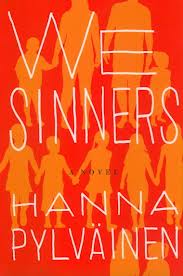
[READ: August 28, 2012] We Sinners

This has got to be the fastest turnover I’ve ever had where I read a short story and then read the author’s novel.  Well, it turns out that “Jonas Chan” was not a short story, but an excerpt from this novel.

The novel is a series of short stories about the same family.  I’m reluctant to brand it one of those connected-short story novels, but I think it really is.  Each chapter has a title and a specific focus and, as the excerpt showed, each chapter can work independently–although having all of the information certainly fills out the story.  (Unless I am mistaken, a few things that really depend upon the rest of the book were left out of the excerpt).

The novel is about the Rovaniemi family.  They are a very traditional Finnish family living in the midwest United States.  More than just Finnish, they practice Laestadianism, a very conservative kind of Lutheranism that is unique to the Finns.  There are nine children in the family (and 11 chapters in the book), and the novel follows them through about 18 years (the youngest, Uppu, is born in the first chapter and the second to last chapter is about her leaving for college.

There’s even a handy family tree:

WARREN  –  PIRJO  (parents)

BRITA  TIINA  NELS  PAULA  SIMON  JULIA  LEENA ANNI  UPPU

There isn’t an overall plot so much as an evaluation of this traditional family and how modern life impacts them.   And wisely, the book opens with the oldest daughter.  This (as opposed to first looking at the parents) allows us to see what kind of difficulties the kids will have with their religion.  We see Brita in school facing a tough decision.  The Laestadian religion doesn’t permit dancing (or TV, or much of anything).  And Brita has to inform her “boyfriend” that she can’t go to the dance because she isn’t allowed.  When Tiina finds out that Brita revealed their religious secret she freaks out that people will know about her too. (more…)

Read Full Post »

SOUNDTRACK: THE FLAMING LIPS-“Smoke on the Water” (2012).

There’s a new Deep Purple tribute album coming out shortly (is this the year of tributes?  what’s going on?).  Anyway, the lineup isn’t all that inspired, but I was curious to see what the Flaming Lips would do with that song

As with their recent reinterpretation of Dark Side of the Moon, this cover is respectful and utterly disrespectful.  Musically the song is pretty accurate. Well, the notes are the same.  But the style is very different, kind of wahwahed delicate chords–no heavy bass or anything.  But it’s the vocals that are the contentious point–he recites the entire song (which kind of works because it is a story) in a stilted, faux British accent.

The second verse has a very computerized voice singing an autotuned melody along with the recitation–sort of a harmony but not.  This voice continues through to the chorus (which the main vocals also simply recite).

I appreciate the Flaming Lips’ approaches to popular songs, but this version renders a big loud song kind of anemic.  Which is so weird because the last few Lips albums were so loud and bass-heavy.  I listened twice, I probably don’t need to listen again.

So, this is yet another tribute I won’t be buying.

[READ: August 22, 2012] Don’t Get Too Comfortable

I’m already making good on my promise to read more David Rakoff.  Indeed, as soon as I heard that he died, I put this book on hold at the library.  The strange thing about this book is that I feel like I read parts of it already.  I don’t feel like I read the whole book because some things were unfamiliar to me, and yet there was a strange feeling of déjà vu throughout the book.  But I looked in the front of the book to see where these essays had appeared and I don’t read any of the magazines where they initially showed up.  And while I like This American Life, I don’t really listen to it very often.  So either I read this book seven years ago or these pieces are inspirations for other pieces I have read (which is possible–two or three articles in here reminded me of things that A.J .Jacobs has since done).

So this collection of essays takes place during the early 2000s, George W. Bush’s first term (not the happiest time to be a gay Canadian living in New York).  But in addition to the first essay which is all about his quest for citizenship, it seems that Rakoff was now gainfully employed as a freelance writer.  Most of these essays seem to have been requested for magazines–like they sought him out to write them.  So his fame was clearly growing.  And, again, like A.J. Jacobs, he seems to have been picked as a guinea pig for certain pieces.   I don’t really know if this is a “genre” per se, I mean lots of un-knowledgeable people have gone into new experiences to write about them (insert inevitable David Foster Wallace reference here–but of course he wasn’t the first either).  But Rakoff’s subjects in the last couple essays seem to be closer to what Wikipedia calls Jacob’s “stunt” journalism. (more…)

Read Full Post »

SOUNDTRACK: PINK FLOYD-Alan’s Psychedelic Christmas (1970).

I’ve always loved Pink Floyd’s Atom Heart Mother.  I have no recollection of how I stumbled upon this live bootleg, but when I saw that it contained one of the few live recordings of “Alan’s Psychedelic Breakfast” I had to give it a listen.

So this show is from 1970 and was recorded in Sheffield just before Christmas (Nick Mason evidently introduced the show while wearing a Santa Claus suit).  The sound quality is pretty good given that it is 40 some years old.  There’s a bunch of hiss, and the quieter talking bits are hard to understand, but the music sounds fine.

So the show opens with “Alan’s Psychedelic Breakfast” and what is so silly (and I assume funny to watch (a little less funny on bootleg) is that the band made and ate breakfast on stage.  As Collectors Music reviews writes: “This is the only known live recording of ‘Alan’s Psychedelic Breakfast’ but also hosts an amazing performance by the band which included them making morning tea on stage which is audible. Just like most of their earlier performances, the performance of “Alan’s Psychedelic Breakfast” slightly differs from the album version due to some nice jamming done by the band, especially Gilmour with his delay pedal.” As I said, some of the audio is static and hard to make out in this song–the band is conversing during their tea, but who knows what they are saying.  And who know what is o the radio.

Then the band gets down to business.  One of things I love about this period Floyd which is so different from their later work is that the played really long spacey jams often with very few lyrics.  So we get a 12-minute version of “The Embryo” (the only available studio version is a very short one on Works which is quite a shame as the song is really good).  A 14-minute workout of “Fat Old Sun” which is usually only about 5 minutes.

There’s a great version of “Careful with that Axe Eugene” and “Set the Controls for the Heart of the Sun” (15 and 12 minutes respectively).

Then in a killer version of “Saucerful of Secrets,” just as they get to the end, there’s a power failure (at least according to the song title).  The band is rocking out just hitting the climax when suddenly all you can hear are un-miked drums.  Ha. After a couple of minutes, power comes back and they pick up from just before where they left off.

Then the band launches into a full 31-minute version of “Atom Heart Mother” complete with horns and choir  of voices.  It sounds quite good (the horns seem a little sketchy but that might be expected with such staccato music).

The set ends and the band needs an encore.  Apparently they couldn’t remember anything else because they just re-do the last few minutes of “Atom Heart Mother” again.

One of the things that cracks me up about these shows in the 70s in England, is that the audience is so polite. Their applause sounds like a classical theater rather than a rock show.  And with a bootleg you know they didn’t try to make the audience sound bigger than they are.

The whole package is a fun trip.

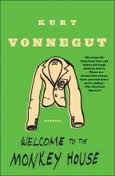
[READ: August 17, 2012] Welcome to the Monkey House

So this book is Vonnegut’s second collection of short stories.  But there’s a twist.  This collection contains all of the short stories from Canary in a Cat House except one. It also contains many of the stories he had written since then as well as stories not collected in Canary.  So you get basically 18 years worth of stories here.  And it’s interesting to see how much he has changed over those years (during which he wrote 5 novels, but not yet Slaughterhouse Five).

Since I read Canary a little while ago (see comments about the stories here), I knew that his 50’s era stories were influenced by WWII.  So it’s interesting to see how his stories from the 690s are not.  They deal more with day to day things and, of course, abstract concepts about humanity, although politics do enter the picture again once Kennedy is elected .

  • Where I Live (1964)

This was a good story to open with because it shows the then-later-period Vonnegut’s mindset and location.  This story is about Barnstable Village on Cape Cod (where I assume Vonnegut lived since there are a number of stories set on the Cape).  This is a very casually written story about an encyclopedia salesman who goes to the local library and sees that their two encyclopedias are from 1910 and 1938.  I enjoyed this line: “He said that many important things had happened since 1938, naming among others, penicillin and Hitler’s invasion of Poland.”  He is told to talk to the library directors who are at the yacht club.  I love the attitude that Vonnegut creates around the village which “has a policy of never accepting anything.  As a happy consequence, it changes about as fast as the rules of chess.” For really, this story is about the Village more than the encyclopedia salesman, and it’s an interesting look at people who move into a new place and want it to never change. (more…)

Read Full Post »

SOUNDTRACK: KISS-Creatures of the Night (1982).

In true fair-weather fashion, Music from The Elder ended my Kiss love–and I was a HUGE Kiss fan!  Which is a shame because their follow up album–Creatures of the Night, which I wouldn’t get for many many years is one of their heaviest and strongest albums.  Although there may be just as much fun/controversy about the cover than there is talk about the music.  Ace Frehley was contractually obligated to appear on their album covers, so his face is on the (original) cover even though he didn’t play a note on the record.

The album was re-issued in 1985 in a non-makeup version.  And this album features Bruce Kulick’s photo on the cover because he was then the guitarist in the band.  However, it was actually Vinnie Vincent who played all the guitar on the record and while he is credited, he doesn’t appear on the cover of either version.

This album also features Eric Carr on drums and he pounds the hell out of them.  Carr was on The Elder, but, well, we won’t talk about that.  Peter Criss had a kind of jazzy impact on the drums, but Carr was a heavy metal drummer and it really changes the sound of the album.

“Creatures of the Night” opens with a really heavy title track sung by Paul–he’s got his aggressive vocals down very well here (a song that might normally gone to Gene but which works better with Paul).  The only problem is the little poppy section just before the guitar solo–it’s almost dancey and doesn’t really fit.  “Saint and Sinner” starts off kind of unpromising–an almost poppy song by Gene, but the chorus redeems it.  “Keep Me Comin'” has a pretty typical-by-now Kiss chorus and a fast riff.  “Rock and Roll Hell” opens with almost all bass notes (and Gene’s voice).  It’s a pretty standard rocker for the time, but it still sounded fresh coming from Kiss (and it’s about Ace Frehley who wanted out of the band so badly).

“Danger” has some unexpected chord changes and features some of Paul’s excellent vocals.  It’s also got some genuinely fast guitar work (something that most Kiss song don’t have aside from the solos).  “I Love It Loud” is the anthem that should have been huge.  Slow, ponderous and catchy, this song should be played at every sports event.  It’s followed by the impressive 6-minute sorta ballad “I Still Love You,” the kind of song that Paul shines in–he gets a place to show off his impressive range and his ability to hold long notes (especially live).  Between this and “I Want You” Paul could keep an audience entertained for 20 minutes.  What’s best about the song is that although it opens as a ballad, it gets really heavy with some great drum fills from Carr.

“Killer” opens with a guitar sound like “Makin’ Love” of old.  Simmons’ songs about women are usually pretty uninspired and lyrically this is poor, but the music more than makes up for it.  An album this good can’t possibly end strong though, can it?  Why yes, it can.  “War Machine” is another awesome heavy track.  A great riff and a fantastic chorus.  It’s a shame that this record was lost in the shuffle, it really stands tall as a great heavy metal album.

[READ: August 8, 2012] “Jonas Chan”

I loved looking at the author name and the title of this story and having literally no idea what to expect.  I couldn’t even imagine what nationality the name Pylväinen was.  The first character introduced was named Uppu Rovaniemi (nor could I fathom what nationality that was).  And then the main character is Chinese and is named Jonas.  Woah.

Well, it turns out the story is about Finnish people.  I assume that means that Pylväinen is Finnish, although her website only says she is from suburban Detroit.

I have never read anything about Finnish people, I don’t believe.  So this was a wonderfully unique story for me.  And then to narrow the focus even more, Uppu and her family practice Laestadianism, a kind of Lutheranism that I had never heard of (Wikipedia is pretty informative about its convoluted history).  Her family is pretty lax about her (they have nine kids and she gets lost in the shuffle), but they are very strict about her religious upbringing (her father is a preacher).  And Uppu hates that.

Uppu is the ninth child of the fabled Rovaniems, the well-known family in the community, full of intelligent people, all of whom Uppu intended to show up.  She was confident and smart and seemed immune to everyone.  She flies through her exams.  She even recognizes that Jonas was a violin player who switched to viola (she could tell by the amount of weight he put on his bow).  Cool.

Jonas Chan was new to the school, but of course he knew who Uppu was as well.  He couldn’t imagine ever talking to her.  I love this description of him: “He wasn’t nerdy enough for the nerds, no one cared that he came from California, and there were exactly enough Asians for him to be different without being interesting.”  And yet one day Uppu linked arms with him and said “Let’s be friends.”  And so it was. (more…)

Read Full Post »
SOUNDTRACK: DJANGO DJANGO-“Default” (2012).

This song was featured in a post on NPR’s All Songs Considered site on July 31.  Django Django are a Scottish duo and they sound very retro.  The two guys sing in close harmony that is more of an echo than a harmony.  The music is mostly very old-sounding guitars–big and unprocessed–and yet the rest of the track is quite processed and electronic.

It’s a simple, straightforward song (with some cool effects).  The NPR write up about them says that they are more of an electronic band, although this song doesn’t really suggest that (except in the middle section where the sounds are manipulated in a cool way).  I’m not sure if I’m all that interested in the rest of the album  In fact, after a few listens, I’m not as excited by this song as I initially was.  But it’s still fun.

[READ: July 31, 2012] The Rector and the Rogue

The Collins Library is back!  And since this seems to be the summer of non fiction, I decided to read it now.  I have loved every Paul Collins book so far in the Collins Library (old, out of print and forgotten titles that Collins resurrects) and this one–which I admit seemed questionable–was just as wonderful as the others.  The Rector and the Rogue details a much-forgotten episode of a grand-scale prank–the systematic public abuse of Dr Morgan Dix, Rector of Trinity Church by a trickster known as “Gentleman Joe” in 1880.  Yes, 1880.

Swanberg told the story, eighty years later, as a rather gripping tale.  The afterward explains that he just happened upon some information about the story and needed to know more.  So, he did the research and compiled first an essay and then this (reasonably short) book.

And so he begins his tale without letting the audience know what they are in store for (just like Dix had no idea what he was in store for).  One morning in February 1880, Rev Dix opened the door to see a safe salesman from Acme Safe in downtown Manhattan.  The salesman says that Dix inquired about safes.  Dix had done no such thing and sent the man on his way.  Then a man from a local girls’ school rang the bell and said that Dix’ charge was more than welcome to attend.  Dix had no daughter or interest in the school. The schoolmaster showed him a postcard from Dix which asked for information.  The postcard was not his own (obviously) and was not in his handwriting (obviously).  Then came a man selling two horses, replying to his postcard….  This went on all afternoon.

The afternoon mail was full also of responses to similar inquiries–about wigs, dance lessons, kitchenware, etc.

And so began the botheration of Dr Dix. (more…)

Read Full Post »

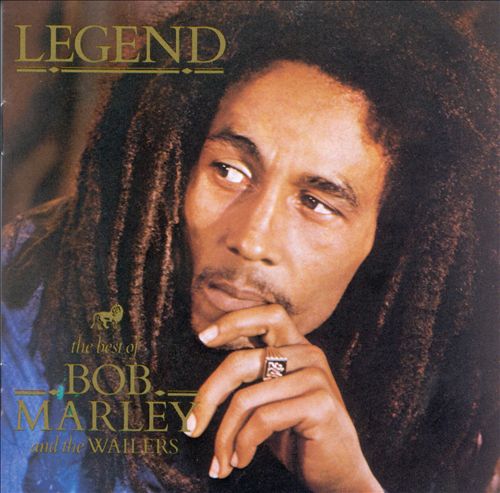
SOUNDTRACK: BOB MARLEY AND THE WAILERS-Legend (1984).

I’m white, so that means I own a copy of this CD (according to the book below).  And I do, because it’s mandatory in college that you play “Jammin'” at every party.

Now, I like ska (yup, still).  I know that ska came from reggae, but to me reggae is just boring ska.  I couldn’t agree more with Barney on How I Met Your Mother:

Ted: Oh, get this, she plays bass in a reggae band. They’re having a show this Friday. How cool is that?

Barney: Oh, does she know that one song? Mm-hm chaka, mm-hm chaka. What’s that song called? Oh, right, it’s called every reggae song.

Although in fairness, listening to this again, it is a rather nice album (I guess I know every song).  I have a personal aversion to some of the really overplayed songs, like “One Love” (because if you go to any Caribbean location they all act like it’s the official slogan of hot weather.  We even have a Christmas ornament from St. John that says “One Love”  WTF?  And I don’t think anyone needs a 7 minute version of “No Woman No Cry.”

But some of the lesser played its (“Could You Be Loved” and just about anything with The Wailers backing him are pretty great).  Although I’ve got to admit I can’t take more than a few songs.  I had to skip through some of the last songs (thank goodness I don’t have the 2 disc version).

[READ: July 26, 2012] Whiter Shades of Pale

Christian Lander created the blog Stuff White People Like.  It was very funny (it hasn’t been updated since Feb 2011, so let’s assume it has run its course).

Lander had released a first book of SWPL back in 2008.  I didn’t read it (blog to book deals were overwhelming in 2008), but I had seen enough of the site to assume it was funny.  One of the funnier jokes when the blog first came out was wondering if the creator was white or not.  (Well, the author photo gives that away, but I won’t).

We grabbed this book at a Borders going out of business sale (sorry Borders, you are missed).  This book continues where the first book left off (I gather).  I don’t know if every entry from the blog made it into the book (the thanks at the end of the book lead me to think not), but I have to assume most of them made it (and maybe there is new stuff in the book too?) (more…)

Read Full Post »

SOUNDTRACK: ST. VINCENT-Actor (2009).

I had seen St Vincent on Austin City Limits, and her juxtaposition of waif-singer with noise mongering guitar player blew me away.  So I was a little disappointed when this album opened up with this gentle, practically 1950s sounding vocal and string line in “The Strangers.”  It takes two and a half minutes, but the noise eventually comes and it totally changes the texture of the song.  Of course now, “make the black hole blacker” is a fun thing to sing along with (and the lyrics in general are pretty great).  “Save Me from What I Want” is another quiet song with a catchy chorus.  “The Neighbors” has a great melody with interesting strings over the top of it.  “Actor Out of Work” brings in some stranger sounds to the album.

There’s something interesting about the songs on this album, like the way “Black Rainbow” has these sweet string sections but for the end half builds a crescendo of tension. I also love that a seemingly delicate song can be called “Laughing with a Mouth of Blood.”  Perhaps the strangest song on the disc is “Marrow” which has a strange horn section and the chorus: “H.  E.  L.  P.  Help Me Help Me.”  “The Bed,” “The Party” and “Just the Same But Brand New” continue in this vein–like a Disney princess song with a horrible threat underneath: “Don’t Mooooove, Don’t Screeeam.”  But that sense of princess who are slightly askew really resonates on this record.  It’s not as willfully dissonant as her first record, but lyrically it’s a knife covered in cotton candy, it’s still a gem.

[READ: March 20, 2012] McSweeney’s #39

One of the bad things about having a job with actual work is not being able to write complex posts about compilation books.  It’s hard to have your book open while bosses walk by.  So, its been a while since I read this and I’ll do my best to remember it all.  Incidentally, if you’re keeping track I skipped 38, but I’ll get to it.

Issue #39 is a hardcover and a pretty one at that. It has a front cover photo (as well as many interior photos) taken by Tabitha Soren.  Yes, forty-somethings, THAT Tabitha Soren, from MTV who has a new career as a photographer.

This issue continues with the recent return of the Letters column (as the magazine and front matter become more serious the return of the Letters adds an air of silliness). (more…)

Read Full Post »

SOUNDTRACK: TAME IMPALA-Innerspeaker (2010).

Tame Impala are from Australia, and their sound is majorly retro.  They remind me a lot of Dungen, including the fact that I would have guessed (from the way the words are sung) that English wasn’t their native language (which makes this already trippy album feel even more trippy).

Fuzzy guitars over a cool bassline introduce this album.  “It is Not meant to Be” is something of  statement about the sound of this album.  And when the vocals come in (fuzzier still), it’s retro all the way.  “Desire Be, Desire Go” continues the fuzzy guitar with a slightly faster pace.  The chorus comes in a little cleaner which is nice as it breaks up the fuzz somewhat (but only somewhat).  “Lucidity” ups the noise and pace with a great catchy riff and a strong chorus.  I think of this as the “hit” based solely on the fact that I heard it first, but when they played KEXP in studio sometime after the release of the album, they didn’t play this song .

They did play “Why Won’t You Make Up Your Mind” which is probably the real single–the cool reverbed riff and the soaring guitars sound great.  “Solitude is Bliss” has become my favorite song on the album lately.  The vocals remind me of early songs by The Who (maybe from Sell Out), but again, the music is all reverbed and hippie sounding, it’s a nice pairing and the chorus is once again, really catchy.  “Jeremy’s Storm” opens with a cool riff. It turns into a wild jam instrumental.  “The Bold Arrow of Time” sounds like a song from the 70s.  The guitar sound as it opens could come from Jesus Christ Superstar and when the riff finally kicks in, it could be a Cream song.  And yet the vocals (always soaring) don’t sound like anything from that time).

I love any song with a good bassline (especially one that’s not just repeating the guitar riff)–so I love the cool bassline that runs through “Runway, Houses, City, Clouds”–high and kind of obtrusive.  A perfect way to keep pace.  And when the bass gets a little “solo” at the end, it’ s a nice payoff.  The final song is “I Don’t Really Mind.”  It’s the most conventional and not dreamy sounding album on the album.  There’s even a break from the wall of guitar where we get just some drum beats–it’s very p0ppy.  It’s a good ending, upbeat and catchy and makes you want to start the whole shebang over again.

The album is a little long-feeling overall (it’s about 55 minutes), and some of it can be a little samey, but there’s enough diversity and great songwriting to make this album really enjoyable.

[READ: July 2012] At Home on the Range

Another frickin cookbook?  For a guy who doesn’t do cookbooks, there’s certainly a lot of cooking-based items on this blog.  Blame McSweeney’s who put out this book, too.

As everyone knows Elizabeth Gilbert wrote Eat, Pray, Love.  I’ve never read it (although I have read some of her earlier books (Pilgrims and Stern Men) which I liked quite a bit–I was into her before she was cool, man).  But this book is actually a cookbook that her great-grandmother wrote and had published in 1947.  Gilbert’s contribution is slim, but engaging.  She gives a lengthy biography of her Gima.  She was born rich (Main Line Philadelphia rich) and loved to travel.  Gilbert says that you can sum up Gima with a Jazz Age sensibility and one word: Enjoy!  By the time she was married (to an “impossible” man) much of their money was gone–indeed, she slipped out of a few foreclosed homes as the sheriff was coming for them.

Gilbert also points out how far ahead of her time Gima was.  The 1940s saw food moving towards prepackaging and processing.  So this cookbook came out right around frozen dinners to try to re-introduce women to the kitchen (although not in a retrograde way) and to be proud of what you can accomplish there.  But more than just a cookbook, Gima tried to introduce Americans to Brains with Black Butter, Eels, Tripe and Calves’ Head Cheese.  She was also unafraid to try things in different neighborhoods (the story of how she first encountered pizza is wonderful).  Gilbert wonders what might have become of her in a different time place or circumstances and it’s true for she was really a remarkable woman.

And the remarkable nature of this cookbook is not the recipes (which are remarkable and I would like to try some of the simpler ones), but the prosaic nature of the book.  Gima is telling a story with each recipe.  Indeed, the recipes aren’t even given in standard annotated form: they are written in the prose.   Gilbert’s other contribution is to take ten of their family’s favorite recipes from the book and write them out in conventional cooking style for ease of cooking.  I enjoyed this book a lot–Gima is a fascinating woman with a delightful taste for life.  The question is what to try first? (more…)

Read Full Post »

SOUNDTRACK: REGINA SPEKTOR-Soviet Kitsch (2004).

After the poppy, polished joy of Far, I went back and decided to check out the one other Regina Spektor album I knew of–Soviet Kitsch.  This album has always stuck with me as an interesting title.  I ordered it from Amazon and was bummed to get a little cardboard sleeve rather than an entire disc (her artwork is really nice).  So I was a little biased against this disc from the start.  The music also doesn’t have any of the polish and sleekness of Far.  So it took a while for me to see the beauty within.

This album is largely simple piano (with strings and other addition), but it’s a much more raw album (akin to something like Tori Amos’ Little Earthquakes).

“Ode to Divorce” is a quiet piano song with some catchy moments.  “Poor Little Rich Boy” has some interesting percussion to accompany the piano.  And in this song you know that she’s in a slightly different territory than Tori Amos, which is good–the feeling is similar but the end result is unique.  Lyrically the album explores different ideas and on this song the repeated refrain of “you’re so young you’re so god damn young” is a little unsettling.  “Carbon Monoxide” introduces a more full sound (bass and drums).  And Regina shows off yet another side of her personality–playful, flirtatious and now almost childish (“C’mon, daddy.”)

“The Flowers” introduces another new aspect to the disc–more aggressive/borderline classical piano playing (rapid, loud notes).  It suits her style quite well and this song is  a definite highlight.  The end of the song has a very Russian-style nonsense syllable sing along which is very fun.   “Us” adds strings to the song and some great sing along parts.  “Sailor Song” is a funny song from a sailors perspective with the sing-along shanty chorus “Mary Anne’s a bitch” (complete with broken glass sounds).

The next song “****” is a whispered little conversation in which a young girl asks Regina when the next song is coming.  It makes the next song, “Your Honor” even more loud.  It really stands out on this disc because it is a full on punk song with screamed vocals and band work from Kill Kenada (who I don’t know anything about).  The song is about getting in a fight to defend a woman’s honor.  The slow piano middle section features the amusing question “gargle with peroxide a steak for your eye but I’m a vegetarian so it’s a frozen pizza pie…you fight for my honor but I just don’t know why.:”

“Ghost of Corporate Future” has a kind of lullaby feel and some amusing lyrics, ” When he gets to the crowded subway platform/He takes off both of his shoes/He steps right into somebody’s fat loogie/And everyone who sees him says “ew”/Everyone who sees him says “ew”/But he doesn’t care/Cause last night he got a visit/From the ghost of corporate future/The ghost said take off both your shoes/Whatever chances you get/Especially when they’re wet.”  It’s all sung in a manic style over a quiet piano melody.

“Chemo Limo” is certainly the highlight of the disc.  It’s 6 minutes long and is quite dramatic.  The basic premise is that dying from cancer sucks, so she’s going to live instead: “I couldn’t afford chemo like I couldn’t afford a limo/And on any given day I’d rather ride a limousine.”  There are several sections in the song–allowing Regina to show off her dynamic and dramatic vocal range (serious falsettos) and very impassioned sections, “Oh my God Barbara she looks just like my mom”  She even does some (very mild) beatboxing at the end of the song.  “Somedays” is a pretty, simple ballad, with some great vocals although it kind of gets lost at the end of the disc.  Although I was not that into this record when I first got it, repeated listens revealed wonderful surprises inside.

[READ: July 15, 2012] Canary in a Cat House

This is Kurt Vonnegut’s first collection of short stories.  It is currently out of print.  That’s not a big deal because almost all of the stories were later collected in Welcome to the Monkeyhouse.  But I thought it would be fun to read them in the original book.  When it came in from the library I was surprised at how tiny it was.  But what was really surprising was how small the print and how small the margins were.  They really crammed stories into collections back then!

These stories were all written in the 1950s and what was also surprising to me was how serious and unfunny some of those first stories were.  I realize that these were some of his first works, but the Vonnegut voice is so distinctive–a misanthropy tempered by jokes and absurdity, that I was surprised that some of these stories were not only serious but seriously emotional as well.  It’s been clear from all of his stories that WWII impacted his life tremendously (as one would expect), but in these early stories he talks very deliberately about violence and the cold war and the aftermath of WWII.  It’s pretty intense.  By the end of the book the more typical Vonnegut voice surfaces–sci-fi kinds of stories with dark humor involved.  It’s quite a collection. (more…)

Read Full Post »

« Newer Posts - Older Posts »