Feeds:
Posts
Comments

Archive for the ‘Death’ Category

SOUNDTRACK: MAYYORS: 3 EPs (online only) (2008-2009).
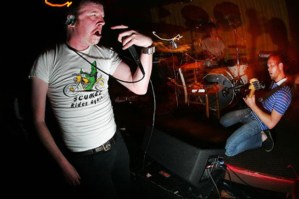
I learned about Mayyors from the NPR’s Best Metal and Outer Sounds releases of 2009 on All Songs Considered.  I enjoyed Viking’s picks for 2010 quite a bit so I thought I’d investigate his previous years’ selections.  I’d never heard of Mayyors before, but he makes the band sound so intriguing (and dirty).

The write up is so wonderfully enigmatic that I had to find the tracks online.  I mean, how can you pass up this:

This is a plea to Mayyors: If you’re going to release one of the ugliest pieces of noise rock this side of The Jesus Lizard, please start issuing your music in editions bigger than David Yow’s beer gut. After a couple of ripped 7″ singles made the rounds on blogs last year, those seeking the puss-popping skronk of Mayyors scavenged message boards and listservs to get their hands on the next limited affair. (After all, these Sacramento-based dudes don’t have a Web site or any known email addresses. Punk rock, I guess.) The Deads 12″ EP significantly dirties the rock gene pool with nauseating feedback and power chords dumber than the actual mud driven over the orange covers. Once again, Google is your friend.

That link to Google is the only way I was able to find these songs.

So Mayyors have released three EPs since 2008.  Each had a pressing of about ten copies, apparently.  You really can’t find any information about them online.  I don’t even understand how the band plays shows since their total recorded output is about 2o minutes long.  But I was able to get all 9 songs.

Having said all, that I don’t always like the music.  It hurts your head. The general sound is really downtuned sludge rock.  It’s not squealy feedbacky noise, it’s just distorted guitars played very loud and fast with vocals that are pretty incomprehensible (with lots of echo!). I have no idea what he’s singing about.  I’m sure it’s not very nice.  But I feel like their music would be even more subversive if they sang about love and kindness (or like the cover of Megan’s LOLZ: unicorns and rainbows).

The first EP: Marines Dot Com has two tracks “Metro” (3:08) and “Fatigure” (3:35).  “Metro” reminds me a lot of early Butthole Surfers.  “Fatigure” has a discernible riff (which is of course very downtuned.  It’s entirely possible they have only a guitar and a bass.  About half way through, the song changes into a noise-fest.  Of course, nearly 4 minutes of noise is pretty tough to handle.  Especially since the noise is sludgy and loud loud loud.

The middle EP, Megan’s LOLZ, is my favorite.  Three songs: “Intro” (0:59), “Airplanes” (3:23), “White Jeep” (2:18).  The noise and sludge is still there, but you can actually hear nascent riffs under all the noise. It also seems a little crisper (or something), which makes the tracks stand out a little more.

“Intro” actually plays around with different kinds of noise, suggesting they’re in for something new on this EP (of course, it’s still buried under noise and sludge).  “Airplanes” has another discernible riff, although it does sound like it’s recorded in an airplane hangar.  “White Jeep” has a similar (if not the same) riff, but it plays a bit more with feedback and genuinely piecing noises.  (There’s even a  kind of guitar solo).

The latest EP, the one that Viking likes, is called Deads.  It has four songs: “The Crawl” (1:41), “Ghost Punch” (1:41) “Clicks (2:42) and “Deads” (2:53).  And as he describes above, the cover does appear to have been driven over by a muddy truck.

This album is a bit more “polished” (how dare anyone use that word).  In fact the sludge doesn’t really get put onto “The Crawl” until about 50 seconds in.  Don’t get me wrong, it’s still a sludgy mess, but you can sort of tell what instruments there are and that there’s a guy singing.   “Ghost Punch” sounds a bit more death metal-like than their other songs, although it’s so tinny, it sort of transcends the genre somewhat.  “Clicks” seems to be the song of choice for examples of what Mayyors can do.  It’s got intense delay, squealing noises and a vocal melody! (Do I hear screams of sellout?).  Hear it and “The Crawl” here.  “Deads” actually has staccato notes in the opening, but it’s all sludge from there.

And then there’s silence.  Blissful silence.  Mayyors: Not for the sensitive.

[READ: March 5, 2011] “The Other Place”

Mary Gaitskill is generally acknowledged as a master short story writer.  I haven’t read all that much by her.

I’m not sure if her stories are all as dark as this one, but man this is quite dark, indeed.  It’s about a man and his son.  Well, actually it begins with the son.  He is into guns. Like really into guns. He draws them, he makes stories about them, he plays guns outside even if they don’t have guns.  He also loves violence on TV, especially if it’s funny.  The boy is thirteen.

When I read the story, I initially thought that the father was upset or worried about this gun fascination, because he opens the story with “How did this happen?”  But he seems to know how this happened: “The way everything does, of course.  One thing follows another, naturally.”

And so, with the wrong impression, I couldn’t quite understand why the father was so surprised by the son’s behavior because as the father relates his own past, it’s pretty full of violence itself.  Indeed, as it progresses, it seems like the son inherited all of his father’s traits. (more…)

Read Full Post »

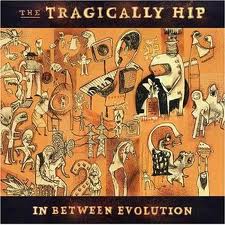
SOUNDTRACK: THE TRAGICALLY HIP-In Between Evolution (2004).

The Hip are still putting out solid rock records.  And “evolution” is a good word in the title, for the Hip are clearly no longer the band they were.  And yet there is a sense they are returning to something…if not their own roots necessarily, perhaps a more basic sound.

The opener, “Heaven is a Better Place Today” is so upbeat it’s almost shocking.  It’s bouncy and catchy with some very cool riffs.  It’s followed by “Summer’s Killing Us, a raucous, rocker with another great chorus.

This album has some of my favorite tracks of recent Hip albums.  The best song on the album is “Gus: The Polar Bear from Central Park.” Between the riff and the way Downie sings the song, it’s got a brooding intensity that I can’t resist.  “Vaccination Scar” has a really rocking slide guitar.  And it continues in the vein of the album in which the band sounds more like Pearl Jam than R.E.M.

“It Can’t Be Nashville Every Night” is another song that sounds typically Hip and yet with a bit more oomph.  Even some of the later tracks (tracks which tend to be less than stellar on Hip discs–am I wrong?) are really strong.

“Makeshift We Are” has a great stuttery quality to the chorus, and “You’re Everywhere” has an unending power with a great chorus.  “Mean Streak” sounds like a pretty typical Hip song until about half way through when it throws in a minor chord break that really surprises.

“The Heart of the Melt” and “One Night in Copenhagen” are two late album tracks that are short and urgent.  “Melt” is a speedy loud rocker and “Copenhagen” screams along until it comes to a catchy end.

This isn’t really a return to the Hip’s roots, but it is a return to an urgency that the Hips early albums possessed.

[READ: February 16, 2011] “If Things Happen for a Reason”

This story starts in a fairly shocking way: the narrator wakes up from blacking out to hear a man she doesn’t know saying that their kids will laugh over this someday.

We pull back to see that the woman was in a bicycle accident (face first into the pavement–ouch) and the man helped her up and brought her to a hospital.  The story proceeds with his declaration and her belief that indeed, they will have kids together (even though she hadn’t met him before that moment).

Her family believes she is too young for anything like that so she hides him from them.  Eventually the truth comes out and she introduces him.  And they settle down into a happy stability (even if they can’t always pay their bills on time). (more…)

Read Full Post »

SOUNDTRACK: MOGWAI-4 Satin EP (1997).

Mogwai seemed to thunder onto the scene back in 1997.  I missed this disc when it came out but I was on board with their debut.  And then it seemed like a whole bunch of stuff was released right away: a collection of early EPs and a remix album.  It was a little hard to keep everything straight including what the band actually sounded like.

This EP is pretty representative of their early sound: it has three songs that are less “songs” than they are soundscapes (or something).   It’s something of a noise fest.  Unlike their later songs which have discernible melodies (and are actually quite catchy) the three songs on this EP are more percussion and effects than actual melodies.

“Superheroes of BMX” is a series of washes over a simple series of electronic-sounding beats (it actually seems appropriate that they were on Chemical Underground records).  Although by around 5 minutes the minimal guitar structures do come out.  “Now You’re Taken” is closer to a proper song.  It has a beautiful understated structure and vocals (!) by Aidan Moffat of Arab Strap.

But it’s “Stereodee” that really stands out: 13 minutes of noise and crashing and feedback.  At about the ten minute mark, my five year-old son said, “I like this song daddy, it sounds like monsters crashing through a small hole.”  I couldn’t agree more.

[READ: March 7, 2011] “Honor”

Golly, this story is dark.  How’s this for an opener: “My father was supposedly dead, and I found out only years later that he’d left walked out when I was eighteen months old….”  Yipes.

And I’ll say that the story doesn’t get any brighter.

So the narrator, born in the late 50s, tells the story of her mother raising a daughter (with the help of her mother who lives close by), and somehow making ends meet.  Of course she would never even consider moving back home with her mom, but she is happy to have her so close.

The mother and the narrator are strong-willed and hard to stop.  And when they are on the same side, they are formidable together. But when they disagree with each other (which they did pretty much all the time once she was a teen), it was tough being in their house.

The story unveils a plot about half way through.  The plot concerns her Aunt Andy.  Aunt Andy is her father’s brother’s wife.  And she comes to stay with them for a period of time.  In the past, Andy was shy but a little superior.  Her husband is a used car salesman and quite wealthy.  But on this visit she is pale and visibly shaken.  She is quiet and doesn’t mention her son at all.  In the past, her son was a real jerk, so she’s somewhat relieved that the boy isn’t staying with them.

Andy won’t say what the problem is and her mother refuses to tell her anything serious.  But even at the young age the narrator knows something is wrong.  And then there’s the trial. (more…)

Read Full Post »

SOUNDTRACK: WAVVES-“Post Acid” (2010).

Wavves’ King of the Beach CD made many Top Ten of 2010 lists.  I listened to a track somewhere and wasn’t all that impressed.  Right now there’s a live show on NPR, which I listened to a bit (and which made me investigate them further).

They have a few songs on their My Space page and I really like this one.  It is short and fuzzy and catchy and cool.  It’s a fast blast of punk nonsense.  I have no idea what it’s about (and I rather like the weird break in the song where the singer can barely get words out).

I’m not sure if I’d listen to a whole record of them (although I love their hair).  But this was sure a fun track.

[READ: February 17, 2011] Arkansas

John Brandon did a pretty amazing thing with this book.  He took two rather unlikable characters and made them sympathetic and, eventually, compelling.  The unlikability may have come from the detached style of their introduction.  Each of the main characters is introduced separately with a brief anecdote that seems to end abruptly.  In fact, I wondered if it was going to be a series of brief character sketches and nothing more.  I’m thankful that that wasn’t the case since, each character’s “section” could have been a complete (but very unsatisfying) story.  When I saw more of Swin, I was pleased, even though I didn’t really “like” him.

First we meet Swin Ruiz, a very intelligent guy who makes it to college.  While in college a foolish mistake (resubmitting an essay to a teacher) costs him his scholarship, which essentially means he’s out of school.  He scams some money from the rich students and then takes off, leaving his family and his beloved younger sisters with their jerk of a stepfather.  From there, he drifts aimlessly until he meets a bartender who sets him up with someone to help “break the laws of the land.”

Kyle Ribb is the other main character. He’s a harder man, something of a bastard.  He tries to go legit by working in a bike store.  When that doesn’t pan out (the story of that is pretty funny) he reverts back to his “no boss” ways.  He eventually meets a guy who introduces him to Colin, a man with criminal connections.

The third character we meet differs from these two.  First, a date is given as an introduction (1974).  Second, the whole section is written in second person (“You are Ken Hovan”).  We learn about his life and his background and how, eventually, he took the nickname Frog and became a shop owner, a dealer of unusual merchandise (which begins with bootleg tapes and, naturally, transforms into drugs).

The story of Frog’s life from 1974 to the present intersperses the main story (which is really about Swin and Kyle).  And each time frame jump ties together some of the mysteries of the book (Frog, being the boss, ties the thread together).  And there are many mysteries.

Kyle and Swin move up the ranks of the ne’er-do-well scale, until they land a job in an underused state park in Little Rock, Ark.  They get a “legit” job manning the booth, checking visitors in and out, and cleaning up the brush, but their “real” job is to deliver packages to random locations in different states.  They drive a car to a parking lot, wait for a person to get in and then drive off in a different car with a package for the other end.  And that’s pretty much it. It’s obvious they’re doing illegal work, but they don’t ask questions and don’t know too many details.

Their boss at the park is Bright, a man who seems to really enjoy the park and genuinely likes to take care of it.  He is a middleman for Frog, but a rather benevolent one.  There are some other characters as well.  The first is Her, (that’s the only name she gives out), she gives Bright the details about the packages.  Bright’s boss at the park is Wendy, she knows what they do and receives a cut.  She only wears pink and wishes to be a painter.  She recites a quotes from a different painter before she leaves. (more…)

Read Full Post »

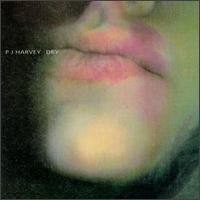
SOUNDTRACK: PJ HARVEY-Dry (1992).

This first PJ Harvey album was a revelation in 1992.  It was angry and loud and awfully disconcerting. And, perhaps most importantly, it showed a strong woman, unafraid to point fingers at foolishness around her. (Yes, I miss the 90s).

It was also raw and abrasive and, at times, scary.  The opening track featured discordant music and vocals that were more than a little uncomfortable.  “O Stella” has more uncomfortable vocals with super cool and slightly off harmonies.  The guitar is a great distorted mass and the bass is low and heavy.  A great track.

“Dress” is one of the least abrasive tracks musically, which really lets the lyrics come to the fore. And her lyrics are wonderful throughout the disc–she attacks conventions of femininity and flips expectations.  And although “Dress” has a very simple chorus–just the line “If you put it on”–it is catchy as anything.

But it’s not all loud songs, either.  The wonderfully titled “Happy and Bleeding” features some intriguing quiet guitar work and whispered verses.  It grows in strength but never wails like the other songs.  For real wailing, “Sheela-na-Gig” is your song. Terrifically rocking and obscene, it’s a funny, clever awesome alt rock song.

Harvey experiments with falsetto (although nothing like she will on Let England Shake) on “Hair,” a cool twist on the Samson and Delilah story.  “Plants and Rags” makes exquisite use of a creepy violin to bring some extra sounds to an already cool song.

It’s a stunning debut and showed that Harvey was a fearless singer.

[READ: February 27, 2011] Misadventure

This is Millard Kaufman’s final novel (after the very cool Bowl of Cherries).  The Afterword (written by Kaufman’s son) seems to suggest that Millard actually wrote this back in the 60s.  There are elements of this book that make me thing that he did write it in the sixties (and then obviously updated particulars to make it contemporary).  It just feels circa the 60s and it feels like the book of a younger man (Kaufman was 92 when he died).

The story opens with a dead body and a real estate agent.  And it quickly develops into a tidy noir fiction with double-crossing and undermining and all kinds of interesting twists.  I don’t read noir or “mysteries” as a rule, so this is kind of a novel novel to me.  Accordingly, I can’t compare it to the genre. (more…)

Read Full Post »

SOUNDTRACK : PHISH-Live Bait: Vol 2 (2010).

Phish has been releasing live concert downloads  for years now.  And now that they’ve started touring again, they have a whole bunch of new ones.  I’m not going to be downloading new shows, (I have a  bunch of old ones that I really never listen to).  But what I like is that they are giving away a few tracks from these shows.  And what I love is that they’re calling the freebies, Live Bait.

This set is a few tracks from shows recorded in August of 2010.  There’s nine tracks  ranging from 90 seconds (“NO2” ) to 17 minutes (“Twenty Years Later”).

Although this show is from 2010, this bait contains only two songs from their last album, Joy. The older songs are fan favorites (“Wilson, “Possum”) and weird interludes (“Kung”).  The band sounds fresh and really into what they’re doing and the old songs sound rejuvenated and fun.

Nevertheless, since most of the other live releases are older, it’s so nice to have the two new songs.  You can’t be choosy on a free sample, but I’d have loved to hear them do “Time Turns Elastic.”  If you’re new to Phish, this is a good place to get a free sample of their live shows.  Three volumes of bait have been released so far.

[READ: February 16, 2011] Ladies and Gentlemen, The Bible!

I discovered this book when I read the short story “Samson and Delilah in The Walrus.  I liked, but didn’t love, the short story, but I was intrigued enough to want to see how the other Bible stories would stack up.  And since we had the book on the shelf, I decided to check it out.

So this book is a retelling of several stories from the Old Testament.  What Goldstein does is create a backstory for these biblical characters who are really just sketches.  The stories are funny, serious, weird and often enjoyable.

The introduction is a very funny kvetch about at being a Jew and having dinner in the Grey Derby; waiting online for hours with so many other Jewish families, eating kosher food with your own family, fighting over the check, pointing fingers, calling each other names and, ultimately, leaving by 5:30 PM.  It made me laugh out loud in the best Woody Allen tradition.

With no real introduction, he moves right into his new versions of Bible stories.

The biblical stories that Goldstein updates include:

  • Adam and Eve
  • Cain and Abel
  • Noah and the Ark
  • The Tower of Babel
  • Jacob and Esau
  • The Golden Calf
  • Samson and Delilah
  • King David
  • part 1: Goliath
  • part 2: Bathsheba
  • part 3: Absalom
  • Jonah and the Big Fish
  • My Troubles (A Work in Progress, by Joseph of N–) (more…)

Read Full Post »

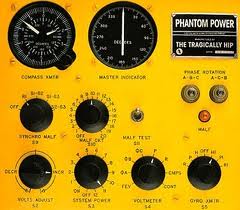
SOUNDTRACKTRAGICALLY HIP-Phantom Power (1998).

The last couple of Hip albums were pretty intense, and it seems like the live album seems to cured them of their need for raucousness. And so Phantom Power follows with a much less intense collection of songs.

The first three songs are somewhat loud and rocking, but they lack any of the twists and turns that the previous records had.  Rather they are pretty straightforward rock tracks.  “Poets” is catchy and fun to sing along to, with a good guitar intro.  And “Something On” is similarly rocking.  But after that the disc changes.

There’s a lot more folk and acoustic guitars here.  It’s an unexpected direction, especially when you figure that their first albums were so raw sounding.  In some ways that makes the album disappointing.

But what they have removed in intensity they have made up in subtler ways.  Take the cool harmonies on “Membership.”  I’ve always found their backing harmonies to be slightly off, usually in an interesting way, but the harmonies are perfected on this song, where they are more of an echo of Downie’s vocals which add a new sound to the song.

There’s a really fun rocking song about hockey (among other things) in “Fireworks,” although for all of its speed, it’s a very poppy track–there’s very little bass evident on the track (or most of the disc).  And it speeds along just as catchy as can be.

I have to wonder if “Vapour Trails” had any influence on Rush’s decision to name their comeback album Vapor Trails.  Probably not, but it’s fun to think about (and it is probably the heaviest song on this disc).

But “Bobcaygeon” is the obvious highlight (although it’s even better live)–the bridge into the chorus is sublime.  It’s one of their more mellow tracks, but there are cool twists and turns throughout.  Second is “Escape is at Hand for the Travellin’ Man” an uptempo but by no means rocking number that propels itself along on a simple riff and engaging lyrics.

I tend to forget about this album because it is not so intense, but listening to it again, I’m reminded not to overlook this album, even if it’s not a hit-worthy as some of their others.

[READ: February 8, 2011] “Samson and Delilah”

This story is a retelling of the Samson and Delilah biblical story.  I knew the original story pretty well, but I didn’t know that Samson was blinded (which he was).

This retelling is more contemporary (in langauge) and it is somewhat funnier (although it’s obviously not a funny story in the end).  Goldstein has added aspects that make it funny: anachronisms and such.  But he also imbues Samson (and Samson’s father) with characteristics that aren’t in the original. (more…)

Read Full Post »

SOUNDTRACK: MONEEN-The World That I Want to Leave Behind (2010).

I’ve liked Moneen’s discs; they played an interesting mix of grungey noisey rock and incredibly poppy emo.  And their song titles were really long and often funny (“The Frightening Reality Of The Fact That We Will All Have To Grow Up And Settle Down One Day,” “There Are A Million Reasons For Why This May Not Work… And Just One Good One For Why It Will”).

The first sign that The World I Want to Leave Behind is different is that their song titles are all really short.  The longest one is the title of the album–which is the shortest song: a 2 minute quiet intro that features some noisy guitars at the end.   The rest are 1-3 words long.  Now, perhaps you can’t judge a band by that; however, their music, like thier song titles, has eschewed complexity and embraced pop.  (“Believe,” “Waterfalls,” “Lighters”).

Okay Moneen always had this component to it.  So it’s not like suddenly the band is all pop.  Take “Are We Really Happy with Who We are Right Now?” from the album of the same name .  The song is all emo vocals (including harmonies) but the music is punky and noisy.  It’s also got a lot of dissonance.  Similarly, “The Start to this May be the End to Another” (from their debut), opens with really blasting noise and then turns into a heavy emo track with loud and quiet sections.  They are certainly poppy, but there’s at least nods to noise.

This album removes all of that noise and chaos and settles into to some tried and true emo.  If you hate emo, you will hate this album.  There’s virtually no dissonance on the disc at all.

Okay, that’s not entirely true.  The second song, “Hold That Sound” opens with some noiy aggressive guitars (and interesting noisy effects) and “The Long Count” has some noisy heavy opening chords which propel through the track.  But unlike earlier records, the noise gets pushed to the background pretty quickly.  “The Monument” also shows some remnants of heaviness–there’s even screaming vocals at one point.

And yet, the aforementioned “Wateralls” and “Lighters” sound like Guster-lite (and I like Guster quit a bit).

The final song, “The Glasshouse” does rock pretty hard (although the harmonies are all still there and the emo certainly seeps in by the end with a piano break and the final 2 minutes being all gang vocals).

Okay so in fairnes to the band, they haven’t smoothed off all the rough edged, but the polished bits are really polished now.  The thing is, I kind of like emo, so despite my tone, I don’t really dislike this record.  I’m always diasppointed when a band moves more commerical, especially if they cut off their more interesting bits, but Moneen make good emo (if you allow that such a thing exists).  I don’t like all emo bands, but there’s still enough interesting stuff here to keep me coming back to it.  In fact, for all of its poppiness, “Believe” is a really fantastically catchy alt rock song which should be in heavy rotation somewhere, if it’s not already.

[READ: February 13, 2011] A Place So Foreign and 8 More

When I saw that Cory Doctorow had a book of short stories out, I was intrigued. I’ve enjoyed two of his books quite a bit, so what could he do with short fiction?

This is some of his earliest work and I found it a mixed bag.

The first story “Craphound” was great (and the origin of his website name).  It concerns going to flea markets and buying all kinds of crap.  When you do it a lot, you become a craphound.  But when you take a fellow craphound’s crap of choice for yourself, you break the unwritten rule.  That’s all well and good.  But in this story one of the craphounds is an alien, like from another planet.  And what he trades for his crap is pretty wild.  But why would he break the unwritten rule?  The story is a fun look at what happens when extra-terrestrials are a part of your life.

“A Place So Foreign” was my absolute favorite story in the book, and one of my favorite short stories in quite some time.  I’m happy to say that I read it last, so it totally ended the book on a high note. Despite the cover picture with an “alien” hand holding a suitcase, the story has nothing to do with that at all. (more…)

Read Full Post »

SOUNDTRACK : BLACK MOUNTAIN-Wilderness Heart (2010).

As the Tea Party showed, it’s never too late to pay tribute to Led Zeppelin.  Of course in 2010, it seems really uncool.  So, why not go whole hog?  The opener, “The Hair Song” sounds uncannily like Led Zeppelin, from chord structure to guitar sound.  And then just wait until after a verse or two and you get the guitar solo which comes straight from a Led Zep song.  And, amusingly enough, the duet vocals of Stephen McBean and Amber Webber combine to sound an awful lot like Robert Plant.

It may not be fair to compare them to their forebears, but they seem so intent upon referencing them.  “Old Fangs” sounds a ton like Buffalo Springfield’s “Mr. Soul” (at least they’re fellow Canadians).  But the wonderfully 70’s-style sound of the keyboards raise the track above any mere copycat.

“Radiant Hearts” is a gorgeous acoustic ballad where you can really appreciate the split vocals of McBean and Webber (and which should make you go back to the first two songs to really listen to how great they sound together.  This is that rare ballad that doesn’t feel like a kind of sell out track.

“Rollercoaster” returns to the 70’s-lovin’ with a monster riff (and a solo) that Tony Iommi would be proud of.  But rather than simply bludgeoning us, the riff stops in its tracks and then slowly builds itself back up.  “Let Spirits Ride” moves out of the 70s and sounds a bit like a Dio riff circa 1983.  But there’s some cool psychedelic vocal processing on the bridge (and a massive organ solo) to really mess with your retro time frame.

“Buried by the Blues” is followed by “The Way to Gone.”  They’re both folkie songs (although “Gone” features a re harder edge).  After the heaviness of the first half of the album , these tracks seem like a bit of surprise but they match the album’s retro feel very nicely.  “The Space of Your Mind” reminds me in many ways of Moxy Fruvous’ “The Drinking Song” (you won’t see that reference too much to this album).  Until the chorus comes in, when it turns into something else entirely.

But it’s not all mellow for the end. The title track has some heavy riffage (and great vocals by Webber–she reminds me of some of the guest vocalists on The Decemberists’ The Hazards of Love, although she really sounds like any number of great 70s rock vocalists).  I love the way the track ends.  The disc ends with “Sadie” another folk song (which makes the album half delicate folk tracks and half heavy rockers). It’s a fine song, but the album is kind of ballad heavy by the end, and the teasing drums and guitars just never bring forth the climax I was looking for.

Despite the obvious homages to classic rock bands, (if you can get past that, the album actually sounds fresh (or maybe preserved is a better word) and strangely original.  Like the preposterous cover, the album is preposterous–over the top and crazy.  Yet unlike the cover, the pieces all work together to form a compelling picture.  Obviously it helps if you like classic rock, but there’s nothing wrong with good classic rock, now is there.

[READ: February 14, 2011] Literary Lapses

Despite the cover picture above, I actually downloaded this book from Google Books (and the cover of that one was boring).

So, obviously, reading the biography of Stephen Leacock made me want to read some of his humorous fiction.  True, I also wanted to read Mordecai Richler, but his books are much longer and I wanted this done by the end of February!

So, according to Margaret MacMillan, it is this book, specifically the first story, “My Financial Career,” that solidified Leacock’s reputation as a humorist.  And I can totally understand what she means (without having read the other books, of course).  “My Financial Career” is indicative of the others stories: not laugh-out-loud funny, but clever, kind of silly and very smile-inducing.  The gist is that the narrator is very nervous about going into a bank with his large amount of cash ($56!).  He asks to speak to the manager who thinks he’s Very Important and then proceeds to embarrass himself further. And further. It’s quite amusing.

“A Christmas Letter” is one of my favorite in the book.  It’s a very snarky look at a friend’s Christmas Party, with a great punchline.  And stories like “How to Make a Million Dollars” or “How to be a Doctor” are wonderfully amusing tales in which the narrator mocks the wealthy and “professionals.”

There are 42 stories in this book, so there’s bound to be a few clunkers.  Some were mildly amusing, some were mere trifles, and some are crazily out of date for a 2011 audience.  This book turned 100 years old last year.  (Neat). (more…)

Read Full Post »


SOUNDTRACK
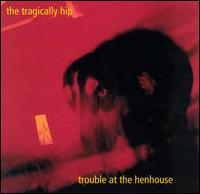
: THE TRAGICALLY HIP-Trouble at the Henhouse (1996).

After the major high of Day for Night, The Hip followed it up with Trouble in the Henhouse.

It opens with “Giftshop” which sounds like it could have come straight from Day for Night.  “Springtime in Vienna” is a marvel.  The opening is quiet with Downie’s almost whispered voice telling a compelling story until it blasts out with a wonderful chorus.  “Ahead by a Century” opens with a catchy acoustic intro.  Again, the harmony vocals add wonders to the verses.

But overall the album feels like the Hip exhausted their angst and anger on Day for Night and have chosen to go with a more mellow sound here.  It almost seems like Day for Lite.  Songs like the final track, “Put It Off” dabble with intensity, but have more atmospherics than powerful guitar and verses.  It’s like the come down after a big party.

The most peculiar song on the disc is “Butts Wigglin” which was used on the Kids in the Hall Brain Candy soundtrack.  It doesn’t really fit on this disc, but it’s such a great song that I understand them not leaving it off.  It’s very silly and musically groovy with  almost no guitars and all keyboards.  It’s a goof, but nice to see the lighter side of the band.

I find Trouble to be really enjoyable in itself, but it kind of pales in comparison to the previous two.  Nevertheless, these three albums are a wonderful trio of discs released by a great Canadian band.

They celebrated this era of the band with a live album the following year.

[READ: January 26, 2011] “An African Sermon”

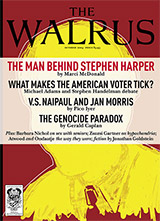
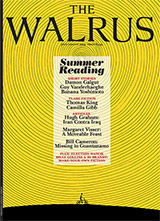
Of all the stories in this Summer Reading Issue of The Walrus, this one was the most powerful.  (It wasn’t my favorite because it was rather distrubing) but it had a strong impact on me.

The bulk of the stoiry is set on a train in Africa.  Two white men introduce themselves to each other; the older one confides that he hopes no Blacks come into thier car.  Of course a Black does come into thier car and the younger man, who is a preacher, tries to embarass the racist man but immediately shaking the black man’s hand.

The black man is hostile to the young man’s advances, more or less shutting him out entirely.  Indeed, when the young man follows him to the dining car to talk (he is genuinely sympathetic to people, but he’s also very curious about the man and wants to pry a bit) the black man (whose name is Leonard Sagatwa) listens briefly and then, claiming a headche, returns to the cabin  room and goes to sleep.

During the night, the train stops because of a malfunction and it will be some time before it is fixed.  The priest goes out to the landing to find something to occupy himself when Leonard comes down.  He says to the priest that he wants to tell his story.  He wants to tell it once, to a complete stranger so that he can unburden himself and then be done with it.  The priest is tickled to hear the story.

But the story is one of Rwandan genocide:  Hutu vs Tutsi, brothers who turn  against each other; Leonard’s brother turning on him and his family.  Killing family members slowly, cruelly, calling them cockroaches.  It is harrowing and the priest is taken aback by the brutality.

But at the end of the story, the priest is resilient and insists that Leonard can forgive his brother.  Never, says Leonard.

The priest is able to use this story for his very first sermon in Africa.  He pretties up the story somewhat and makes it moral, and it works.  The new congregation accepts him and he feels welcomed to Africa.

When, several months later, the priest sees Leonard again, everything has been turned upside down.  And I’ll just leave it at that.

It is a great story.  Wonderfully powerful.

Read Full Post »

« Newer Posts - Older Posts »