Feeds:
Posts
Comments

Archive for the ‘Death’ Category

SOUNDTRACK: WAVVES-Live at the 9:30 Club (2010).

Wavves opened for Best Coast (what a great double bill).  Wavves play a raucous, rowdy set of bratty punk.  Unlike Best Coast, the lead singer seems like he might be something of a jerk.  But it played pretty well into the personality of the music (sloppy, abrasive).  And I wonder just how many times he said he was drunk?

Personalities aside, the was a really fun set.  I have the newest Wavves album, but I think their live show was more engaging.  For all of their sloppiness, the band was always together, with no missed notes (except when the drummer was apparently not paying attention).

They play 16 songs, including a cover of Black Flag’s “Nervous Breakdown” (which the play very well).  And even if you’re not won over by the singer’s personality (which is kind of funny), you’ll be won over by the simple, punky music.  You can listen here.

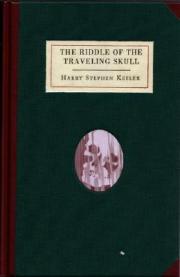
[READ: March 29, 2011] The Riddle of the Traveling Skull

This is the 4th book in McSweeney’s Collins Library Series.  It’s the final book in the series that I’ve read and I have to say that once again, Paul Collins has blown me away with this selection.  Collins apparently stopped his library after 6 volumes.  I wondered if there were more coming, but the Collins Library website is rather confusing.  There’s an almanac with updates as recent as March 1st, and yet the Biography of Paul Collins says: Paul Collins is currently on tour in support of his memoir, Sixpence House, which recounts his time spent living in the Welsh town of Hay-on-Wye, known as the “Town of Books.”  But Sixpence House came out in 2003 (and it sounds awesome!).

Anyhow, back to this book, which was my favorite of the bunch.  It is a genuine mystery from 1939.  Indeed, Harry Stephen Keeler was even more prolific than Agatha Christie (they were born in the same year).  The thing about Keeler though is that his stories are, well, crazy.  Many of his stories were just his attempts to meld disparate ideas into one story.  He includes crazy dialect.  He seems to have no concern for conventional storytelling.  Indeed, he has little concern for conventional mystery storytelling (in one of his stories, he introduced the murderer on the last page).

And this story has similar improbable elements.

In sum: Clay Calthorpe, a salesman returning from the Philipines picks up the wrong bag on the trolley.  When he gets home he finds a skull inside it.  The skull has a name plate affixed to it, a bullet inside it and, in the wads of paper that are keeping the bullet from rattling around, he finds the carbon copy of a poem. (more…)

Read Full Post »

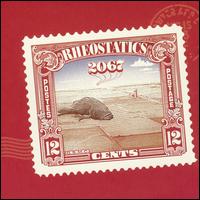
SOUNDTRACK: RHEOSTATICS-2067 (2004).

This was the Rheostatics’ final release.  I’m not sure if they knew this would be their last disc, but it kind of feels like they are throwing everything they can into it.

It opens with a delicate song from Martin which reminds me of Jane Siberry (the “row upon row” section).  Although at about 4 minutes it starts rocking out.  It’s a kind of meandering song, which is odd to open an album with.

It’s followed by “Little Bird Little Bird” a great folky song form Bidini.  But the disc really come alive with “Marginalized” a song that reminds me in some ways of “Horses,” as it is rocking and a little twisted (it seems surprising that it came from Tim Vesely).  It’s got some great guitar and an impressive keyboard solo (!) from new member Michael Phillip Wojewoda.

“The Tarleks” follows (with some fun frog noises). It opens slowly (as Martin songs tend to do) but once it really takes off, its got a great riff with his wonderful dramatic pauses and really funky sound from the bass/keyboards.  Then we get the wonderfully odd “Power Ballad for Ozzy Osbourne.”  It’s a kind of joke (but not really) about rock performers aging gracefully.  Bidini gets a bunch of songs on this disc, and here he gets two in a row, with the bizarrely wonderful “I Dig Music.”  The subtitle is “The Jazz Animal” and it tells you a lot about the song…it is indeed a kind of high-octane jazz.  But it has many different segments (and a lyric that references Squarepusher).

“Here Comes the Image” is a 6 minute track from Vesely which sounds very much like his more mellow tracks.  I’m not sure his tracks belong in the middle o f a disc because they tend to really bring the momentum to a halt.  Although it is a pretty song, it’s quite mellow (the organ solo at the end is pretty sweetly retro).  It’s followed by the five-minute slow instrumental “Who is This Man and Why is He Laughing?”  It really feels like an album ender.

So when “The Latest Attempt on Your Life” comes in, it revitalizes the sleepiness that those two songs imbue.  This track has the wonderful repeated chant “Everyone hates you, you sing like a woman”).  “Polar Bears and Trees” follows and it’s another kind of crazy song from Bidini.  It has such simple verses but the chanted “hey hey ho ho” rocks hard and is wonderfully fun.  (The lyrics are clever too).

Vesely returns with the beautiful, wonderfully catchy “Making Progress” which has another great retro keyboard solo at the end. The final track “Praise This Mutilated World” is one of the most beautiful songs in their output.  It starts as a fairly simple acoustic track (Bidini knows a good melody).  At about two minutes in, the band joins in with amazing harmonies.  The quiet parts keep coming back only to be overwhelmed by the harmonies once again.  The last two minutes are a spoken section.  It goes on a bit long, but is redeemed by another gorgeous chorus.

There’s a bonus track which is a very electronic version of  “Record Body Count.”  So this disc is definitely overly long in some places.  There are some great parts to the disc, but it feels like it could have used a good editor.  Nevertheless, since it’s the band’s final release, respect is due.

[READ: March 15, 2011] “Water Spider”

This very short (three-pages) story turned very dark rather quickly.

It opens with an African man, Bokarie, settling into his life as a convenience store clerk in Ottawa.  We learn that he was granted asylum, and that he has the scars to prove it.  He was quite nervous about leaving his country, and he still puts cinder blocks behind his door, to discourage uninvited guests.

At the same time, the action of the story concerns the accidental drowning of Caitlin, a young girl who presumably got too close to the creek when it overflowed.  The town is obviously distraught that one of their youngest and most innocent kids was killed, and they are planning a memorial service.  They are encouraging everyone to wear pink to the service and are even hoping to get a wreath put on the town’s crest.

Bokarie looks on this entire scene with a kind of bemusement.  His life in Africa was full of death.  Most of it horrifying.  So he seems somewhat unsure of what to make of the town’s outpouring for one lost child.  And then the story slowly reveals a shocking truth.

The truth is NOT that he killed Caitlin.  That’d not how the story is going (I didn’t really think it would go there, but it was a possibility).  Rather, the truth comes out about Bokarie himself, and his life back in Africa.  And it’s frankly horrible.

As the story draws to a close, Bokarie makes a decision that is going to impact the community.  It’s a little unclear what his motivation is, but it opens so many possibilities, that it really brings out a whole new realm to the story,

In some ways this story reminded me of Damon Galgut’s “An African Sermon (from The Walrus July/Aug 2004)  which also had an African character whose past has a hidden element and which turns out to be much darker than originally laid out.

Read Full Post »

[WATCHED: March 19, 2011] Until the Light Takes Us

Soon after finishing Lords of Chaos, I heard a radio interview on the Sound of Young America with the directors of this movie (which is about the same black metal scene in Norway).  I finally got around to watching the film, and I’m really glad I did.

It covers much of the same terrain as Lords of Chaos (although the book covers much more stuff), but what’s cooler about the movie is actually seeing these guys talk to you.  And seeing how “normal these guys are.”  The two “stars” of the movie are Fenriz from Darkthrone and the main man in the scene, Varg Vikerens.

In the radio interview, the directors talked about the way they structured the film. And, I’ll reveal a bit of that.  So if you don’t know this particular fact, I’ll give the next line as a spoiler alert:

SPOILER ALERT: (Highlight the blank space to read it) Varg is in jail for murder and for the burning of several churches and was sentenced to 21 years in prison.

They don’t reveal this information until very late in the film.  So when we first meet Varg, he is a clean cut, handsome man in his late 30s.  He is in jail (although not explicitly stated, it is clear he is in jail).  And he is talking about the Norwegian black metal scene.  Vikerens formed the band Burzum in 1991.  He later joined the band Mayhem.

Mayhem is at the center of the black metal controversy.  The singer of Mayhem, Dead, killed himself with a shotgun.  The guitarist Euronymous found him and took pictures of him (one of which was used as a bootleg album cover–ewww) before calling the police (and it is believed he took some “souvenirs” from the scene).

Vikerens talks about growing up in idyllic Norway, which is peaceful and beautiful–but he undermines all of that by talking about the fairly typical suburban ennui that kids face.  Of course, in Norway it surfaced in violence and death.   Later, he talks about Christianity and how when it came into Norway there was no respect for the Norwegian culture.  Christians built churches on top of ceremonial grounds.  And it seems that he and his mates became very interested in Norwegian folklore and avenging the wrongs done to it. (more…)

Read Full Post »

SOUNDTRACK: DARKTHRONE-“Kathaarian Life Code,” (1992), “Sacrificing to the God of Doubt” (2004), “Canadian Metal” (2007).

After watching Until the Light Takes Us, I wanted to check out some of Darkthrone’s music.  According to their Wikipedia page, over the years the band who pioneered black metal has morphed away from the sound.  They’ve added elements of punk and speed metal to their bludgeoning sound.  In the movie Fenriz says that he listens to all kinds of music and is very open-minded.

Kathaarian Life Code” is a ten minute dirge of black metal.  It opens the band’s second album (considered to be a black metal classic) with chanting and guttural spoken words.  Then it blasts forth with the jackhammer style of drums that is now standard in black metal.

It slows down from time to time, allowing for the really heavy parts to blast through the chaos of the fast parts.  It’s pretty intense and not for the faint of heart.  You can hear occasional guitars screaming through the din, but the production is intentionally murky, dark and noisy.  As they say in the movie, the bands intentionally recorded on the shittiest equipment they could find.

Sacrificing to the God of Doubt” is a later song, taken from what is considered their final album in the black metal style.  The band was turning away from the traditional black metal sound, and there are elements of punk (guitar riffs that are audible, and a sound that is less bass heavy) present.  And the production, while still mired by noise is relatively cleaner.

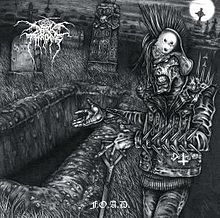
Canadian Metal” is from their third most recent album, after the shift from black metal was more or less official.  It sounds more like an early death metal song.  There’s low tuned notes, audible vocals (growled, but you can actually hear words) and a kind of headbanging aspect to it.  The album is called F.O.A.D. which was a song by Venom (and others, obviously), and this track reminds me of Venom somewhat.  I wouldn’t say that the band has sold out because there’s no way anyone is playing this on the radio, but it’s interesting to see how a band has managed to change things up and add new elements to its sound even though they were the forerunner and grandfather of a scene.

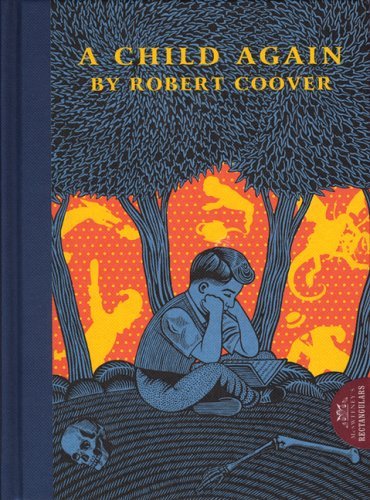
[READ: February and March 2011] A Child Again

This is a collection of short stories from Robert Coover.  There is a kind of theme throughout (most of) the stories about returning to childhood.  But the overall sense is one of despair, sadness, pointlessness and sex.  Lots and lots of sex.  And the sex is usually as vulgar and nasty as the tone of the book suggests it would be.  It’s a little off-putting, actually.

I was planning to say that I didn’t like this collection at all because I really didn’t enjoy the first half-dozen or so stories.  I continued because Coover has a great reputation that I didn’t want to give up after a few misfires.

The real disappointment came because the stories seem so promising: many of them are a kind of retelling of classic fairy tales that looks at “what happened afterward.”  However, and this was true for almost all of them, Coover tries to do two contradictory things with the stories.  He is playing with fairy tales but he is also writing stories that are completely unlike fairy tales.  By that I mean, Coover’s stories are long and very detailed, they bring far too much information to the story.  And a fairy tale is almost by definition short.  I mean, “Puff the Magic Dragon” is a song that’s about five paragraphs long.  But Coover’s “Sir John Paper Returns to Honah-Lee” is 26 pages long.  So instead of playing with the original, it feels like an original story that uses someone else’s characters.  It’s unsettling and unsatisfying.

It’s also not very funny.   And I’m not sure fit’s supposed to be.  But with a title like “Sir John Paper Returns to Honah-Lee” you expect the funny.  And there are funny moments.  I mean the whole premise is that little Jackie Paper has grown up into Sir John Paper.  He’s now an old Knight and he is sent to slay the dragon (Puff) who is plaguing the city.  Even though that is a tragic story, it is also inherently humorous.  And there are laughs when they reunite.  But it gets so bogged down in details, that the essence of the story seems to get lost.  Perhaps I’m just disappointed because it (they) turned out so unlike I wanted them to be. (more…)

Read Full Post »

SOUNDTRACK: FLEET FOXES-Live at The Black Cat, Washington, DC, July 7, 2008 (2008).

I still love the Fleet Foxes debut album, and I listen to it quite often.  One of the most impressive aspects of the band is their amazing harmonies.  So how does a band that is so vocal-centric perform live?

In an interview included with the concert, Bob Boilen asks that question.  They explain that the bigger venues are a bit harder because they have to crank up their monitors.  They also try to stay close to each other to be able to hear the harmonies clearly.  Well, they did something right because the harmonies sound very impressive here.

The main problem comes because lead singer Robin Pecknold is sick.  As in, just getting over a major cold, sick. As in, he admits that their last few shows were something of a rip off for the attendees.  Tonight’s show, he says is half a ripoff.  And that is most evident in my favorite Fleet Foxes song, “Mykonos” in which Pecknold’s voice cracks with abandon.  I would feel bad for the audience if the band wasn’t so personable and friendly and generally cool.  They make the best of a rough situation, and again, the backing vocals sound fantastic.

There are also a ton of delays in this show.  Most of them seem technical, although there seems to be a lot of tending to Pecknold’s voice, too.  But as I said, the band is engaged with the audience, telling stories (someone in the band is from DC and he asks if anyone went to high school there), and generally keeping everyone entertained.  It’s probably not their best show ever, but it still sounds great.  You can listen and download at NPR.

[READ: March 27, 2011] Miss Peregrine’s Home for Peculiar Children

Quirk Books, publishers of mash-ups like Pride & Prejudice & Zombies (as well as many other, well, quirky, titles) has published this fantastically exciting novel.

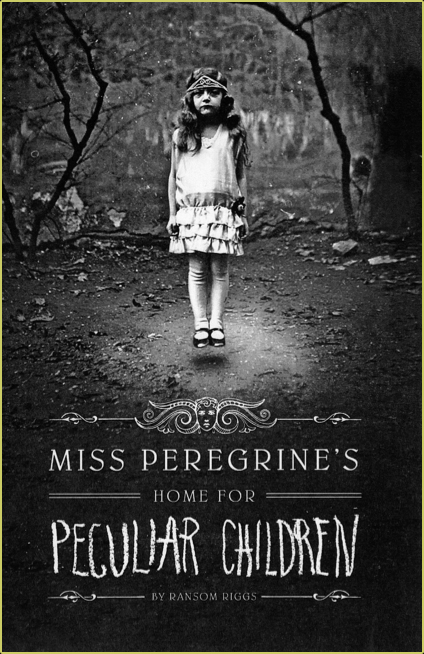
The cover depicts a creepy girl who is hovering off the ground.  But the girl herself is SO creepy that I didn’t even notice the hovering part.  She is just one of the peculiar children within the book.  And this picture is one of 50 included within the book (I’m only bummed that two pictures were not available in my copy).

So the story opens with Jacob Portman talking about his grandfather.  His grandfather (Abe) was a young boy in Poland during the 1940s.  When the Nazi’s invaded, his family was killed and he was sent to Wales, to the titular Miss Peregrine’s Orphanage (not widely known as a home for peculiar children).  But as details emerge from his grandfather’s version of the tale, things seem not right.

Abe talks about the monsters that chased him out of Poland–but he wasn’t describing Nazis, he was describing actual monsters, with multiple tongues and horrifying faces.  They followed him to Wales and were actually chasing him to that very day, in America.  And when he talked about Miss Peregrine’s house, he talked about the special kids who live there: the girl who could call forth fire out of thin air, the girl who could levitate, and the boy who had bees living inside of him.

Of course, that was all nonsense, just post traumatic stress from being attacked by Nazis, right?

That explanation works until the night that Abe is murdered.  He calls Jacob for help (they think he is going senile).  When Jacob gets to his house, he finds the screen door torn open and Abe missing.  The follow a trail and find Abe, bleeding in the woods.  Jacob thinks he can see the same kind of monster that Abe had always described lurking right nearby in the woods.  Although Jacob’s friend (who drove them to Abe’s house), didn’t see anything.

And now, Jacob’s dreams are plagued by scary monsters.  And he can’t get his grandfather’s cryptic last words out of his head.  Time to see a therapist, obviously. (more…)

Read Full Post »

SOUNDTRACK: BLACK MOUNTAIN-Live at the Rock n Roll Hotel, Washington DC, February 19, 2008 (From NPR) (2008).

I’ve really enjoyed the two Black Mountain CDs that I have (I’ve yet to hear their debut). Their blend of psychedelia and Black Sabbath is always interesting, especially when singer Amber Webber adds her great harmonies (and leads) to the proceedings.

So it’s astonishing that Webber herself is the sole reason that I can’t listen to this show.

The band sounds great.  The musicians are right on, and the energy is good. But I can’t imagine what possessed Webber to sing the way she does.  At the end of every sung line, she ends with a vibrato that is not so much vibrato as it is staccato.  I thought it was an odd affectation to increase the psychedelicness of the first song, but she does it on every track, even when she sings lead!

Holy cow, is it ever annoyin-in-in-in-in-ing.

There are tracks when she doesn’t participate, and those are fine.  There’s also a song that is mostly instrumental and that sounds great.  But as soon as she starts singing, the whole thing goes downhill.  She doesn’t sing like that on the records, so what ever made her think that was a wise choice for a live show?   To add a really obscure reference, she sounds not unlike Diamanda Galás during her Plague Mask recordings–but that was an operatic style befitting her over the top recording.  It simply doesn’t work here.

Even Bob Boilen, normally an ecstatic reviewer of the shows he hosts seems put out by them.  He says that the band never set up a rapport with the audience.  That’s not exactly true as they do thank everyone for coming out on a Tuesday night.  But there didn’t seem to be a lot of warmth shared between everyone.

Stick to the studio albums!

[READ: March 19, 2011] Half a Life

This book is a memoir by novelist Darin Strauss.  And it opens with the fairly shocking revelation: when he was 18, he killed a girl.  She was a fellow classmate in the grade below his.

He and some friends were driving to a of social event (they were all sober).  She was riding her bike with some friends on the same road.  He saw her, but he was in the left lane, so he wasn’t too concerned and then suddenly she swerved over two lanes and into his windshield.  She died soon after.

He was completely absolved of all blame: police, eyewitnesses, even her family (oh my god, her family), everyone agreed that it was not his fault at all, there was nothing he could have done.  And yet, as he puts it, because of where he was, a girl is now dead.

The rest of the book details how, at 18, one can learn to cope (or not) with the unthinkable.   He has to finish school and prom with all of the kids in his small Long Island town who know that he killed a classmate.  He also can’t stop thinking about her and wonders how he can go on with his life when she won’t be able to do the same.

It’s an emotionally riveting story and I was utterly empathetic.  Not that I’ve had any kind of experience like that, but (especially) now that I have children, I can’t imagine how I would react to such news.  And since Strauss is a sensitive individual I can imagine at how that would eat away at you forever.

By the second half of the book, something newly unthinkable has happened; her family is suing him for $1 million.  Which he obviously doesn’t have.  This trial–and remember he has been exonerated by everyone–lasts on and off for 5 years, all during his college.  And, of course, this isn’t something you tell people–he doesn’t want anyone at college to think of him as a killer–so there’s pretty much no one he can talk to.

The events of the story happened in the 80s.  Strauss has gone on to be a succesful novelist (although I hadn’t heard of him before this book). He also has a family of his own.  Writing this book was his way of trying to cope with this incident that really defined his life.

It’s hard to say much more about the book.  It is really powerful and a simply horrifying thing to consider.  Strauss is a very good writer who never plays for sympathy (he even sides with her family in the beginning). The book is also a remarkably fast read.  Many of his chapters are one or two paragraphs, and you can finish it in a couple of hours.  But that’s also because the story is so gripping.

For ease of searching I include: Diamanda Galas

Read Full Post »

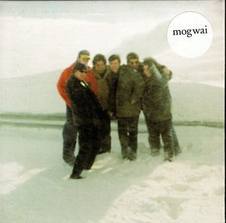
SOUNDTRACK: MOGWAI-Come on Die Young (1999).

Mogwai’s second full length record goes in a slightly different direction than Young Team. Although it is still full of somewhat lengthy instrumentals, for the most part, the loud and quiet dynamic that they’ve been mastering over their EPs and Young Team is dismissed for a more atmospheric quality.  There’s also a few vocal aspects that comprise some tracks.  One in particular is very puzzling.

The disc opens with “Punk Rock.”  The music is actually not punk at all; rather, it’s a pretty melody that plays behind a rant about punk rock spoken by Iggy Pop. It’s followed by “Cody,” a kind of  sweet slow song.  This one surprises even more because it has gentle vocals which are actually audible.  The track is surprisingly soporific for Mogwai.

And then comes the real puzzler, “Helps Both Ways” is another slow track. But this time in the background is a broadcast of an American football game.  The announcers begin by telling us about an 89 yard run that was called back due to a penalty, but the game stays on throughout the track.  And I have to admit I get more absorbed in the game than the music. After these few quiet tracks,”Year 2000 Non-Compliant Cardia” is a little louder (with odd effects).  It’s also much more angular than songs past.

“Kappa” is the song in which I realized that much of the songs here are more guitar note based rather than the washes of sounds and noise.  “Waltz for Aidan” is indeed a waltz, another slow track.  It’s followed by “May Nothing” an 8 minute track which, despite its length, never gets heavy or loud or noisy.

“Oh! How the Dogs Stack Up” changes things.  It features a distorted piano which creates a very eerie 2 1/2 minutes.  And it leads into the 9 minute “Ex Cowboy.”  Although the general feeling of “Ex Cowboy” is mellow, there are some squealing guitars and noises as well.  By about 6-minutes the song turns really chaotic, its “Chocky” is another 9-minute song (the disc is very backheavy), there’s noise faintly in the background as a simple piano melody is plucked out.  It’s probably the prettiest melody on the disc, and the noisy background keep its unexpected.  The disc more or less ends with “Christmas steps.”  This is a rerecording of the awesome track from the No Education = No Future (Fuck the Curfew) EP.  It is shorter but slower and it sounds a little more polished than the EP. I actually prefer the EP version, but  this one is very good as well (it’s honestly not that different).

“Punk Rock/Puff Daddy/Antichrist” ends the disc with a fun track sounds like a drunken Chinese western  It’s two minutes of backwards sounds and is actually less interesting than its title.

This is definitely their album I listen to least.

[READ: March 15, 2011] Icelander

It’s hard to even know where to begin when talking about this story.  So I’ll begin by saying that even though it was confusing for so many reasons, I really enjoyed it (and the confusions were cleared up over time).  This story has so many levels of intrigue and obfuscation, that it’s clear that Long thought quite hard about it (and had some wonderful inspirations).

The book opens with a Prefatory note from John Treeburg, Editor (who lives in New Uruk City).  The note informs us that the author of Icelander assumes that you, the reader, will be at least a little familiar with Magnus Valison’s series The Memoirs of Emily Bean.  As such, he has included notes for clarification.  He has also included a Dramatis Personae.  The characters in the Dramatis Personae are the characters from Valison’s series (not necessarily Icelander), and are included here for context.  He also notes that his afterward will comment on the disputed authorship of this very novel.

The Dramatis Personae lists the fourteen people who Valison wrote about inThe Memoirs of Emily Bean.  Except, we learn pretty early on that the The Memoirs were based directly on the actual diaries of the actual woman Emily Bean Ymirson.  Emily Bean died in 1985, but before she died she was an extraordinary anthropologist and criminologist.  She kept meticulous journals of all of her exploits, and Valison fictionalized it (to some people’s chagrin, but to general acclaim).

Emily Bean was also the mother of Our Heroine.  Our Heroine is, indeed, the heroine of Icelander, although her real name is never given.  We learn pretty early on is that Our Heroine’s friend Shirley MacGuffin has been killed.  MacGuffin was an aspiring author (whose only published work appears on a bathroom wall).  Her final text was meant to be a recreation of Hamlet.  Not Shakespeare’s Hamlet, but Hamlet as written by Thomas Kyd.  And, indeed, Kyd’s Hamlet predated Shakespeare’s.

There’s also a lot of excitement with The Vanatru.  The Vanatru lived underground, and had a serious quarrel with surface dwellers who worked hard at keeping them down. The Queen of the Vanatru is Gerd.  She controls the Refurserkir, an inhuman race of fox-shirted spirit warriors who appear literally out of nowhere.

Okay, so how confused are you now? (more…)

Read Full Post »

SOUNDTRACK: BLACK FLAG-Damaged (1981).

I’ve liked Black Flag since I bought Loose Nut on vinyl way back when (1985, the year punk broke for me).  And those four bars were iconic to me even before I had heard a note (although I just learned they are supposed to represent a flag waving).

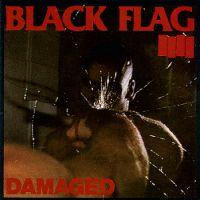
And this is where their legend really took off.  So a few things I never knew about this album until I looked them up recently.  1) That’s Rollins on the cover punching the mirror.  2) He didn’t really punch the mirror (it was smashed prior and the blood is fake).  3) I knew that Black Flag existed for a while before Rollins’ arrival and that they’d had a series of singers before him.  But I didn’t realize what a their first EP (Nervous Breakdown–Keith Morris on vocals) came out in 1978, their second EP (Jealous Again–Ron Reyes on vocals–credited as Chavo Pederast (he left the band in the middle of a live show, so they changed his name to that rather offensive one)) came out in 1980.  Their third EP (Six Pack –Dez Cadena on vocals) came out in 1981.  Rollins joined a few months after that and Damaged–their first full length–came out in December 1981.

“Rise Above” is a wonderfully angry song.  The gang vocals of pure empowerment work so well with the chords.  It’s still effective thirty years later.  “Spray Paint” goes in the other direction: rather than an uplifting, catchy chorus, it’s a deliberately angular chorus that’s hard to sing along to (even for Rollins).

“Six Pack” represents the more “popular” side of the band.  And it is a wonderfully funny single.  I just can’t decide if it’s serious or ironic (see also “TV Party”).  These two dopey songs are great to sing along to and are simply awesome.  (Fridays!)

The rest of the album turns away from the lighthearted tracks.  “What I See” is a really dark moment on this album.  And the negativity is unusual especially given Rollins’ later penchant for lyrics about fighting back.  True, Rollins didn’t write these lyrics.

“Thirsty and Miserable” is a blast of noise with some of Ginn’s first real guitar solos (which Guitar World says is as one of the worst guitar solos in history…and I say really? that’s the solo they pick?  Ginn has done some pretty outlandishly bad solos over the years…of course the whole list is questionable at best).  “Police Story” is a simple but effective description of the punks vs cops scene at the time.

“Gimme Gimme Gimme” seems childish, but that’s clearly the point.  “Depression” is a super fast track.  (Trouser Press considered Black Flag America’s first hardcore band).  “Room 13” is an odd musical track, with pretty much no bass.  It’s just some roaring guitars and drums and Rollins’s screams.  This track stands out because Chuck Dukowski’s bass propels most of the songs here.

“No More” sounds “typically” hardcore: very fast with the chanted chorus of “No More No More No More No More.”  “Padded Cell” is also fast (and is pretty hard to understand) except for the “Manic” chant, but the following track “Life of Pain” features what would become a signature Greg Ginn sound…angular guitars playing a riff that seems slightly off somehow.  Compelling in a way that’s hard to explain.

It’s funny that a band that plays as fast as they did also released some pretty long songs. “Damaged II” is almost 3 and a half minutes long.  It has several different parts (and a pretty catchy chorus).  And the final song “Damaged I” is a kind of crazed rant from Rollins;  It’s one of his scariest vocal performances; he sounds really deranged.  Especially when it sounds like he just cant think of anything else to say so he just screams maniacally.  But his vocals are mixed behind the music as if he’s trying really hard to get heard.  There’s very little else on record like it.

It’s a wonderful end to an intense disc, and the beginning of a brief but powerful career.

[READ: March 25, 2011] The Life of Polycrates

I’ve been reading Connell for a few years now.  In fact, the first time I posted about his work came with a blistering dismissal of his story “The Life of Captain Gareth Caernarvon” in McSweeney’s 19.  That story is included here, and upon rereading it, I learned two things:

  • One: context is everything.
  • Two: I was totally and completely wrong in that original review, and I take it back.

But before I explain further, some background about this book.  This is a collection of eleven stories, eight of which have appeared elsewhere.  Unfortunately there’s no dates of publication included so I don’t know how old any of these stories are.

The other thing I’m fascinated about is Connell himself.  I’m not the kind of reader who wants to know a ton of details about the author, but I like a little bit of bio (or a photo) when I read someone.  The only bio that is consistently presented about Connell is that he was born in Santa Fe, New Mexico.  I’m fascinated by this because so many of his stories are set in Europe.  So I have concocted a master biography about Connell’s life and how he has lived and toured extensively in Europe, studied theology (and found it wanting) and investigated all of the world’s darker corners.

It’s this latter aspect that really altered my perception of Connell’s writing.  I’ve liked the last few things that he’s written, but I fear that I was not looking at him through the proper lens.  And this relates back to bullet point one above.

Connell writes in a world not unlike H.P. Lovecraft–a world that is unconventional, dark and more than a little twisted.  And yet, unlike Lovecraft, there is very little of the fantastical in his stories.  Rather, his characters reside in our own world (with a little chymical help from time to time), but they are all real.  They’re just not characters most of us choose to associate with.  So, reading that first story in McSweeney’s, where it was so different from all those others, I found it really distasteful.  In retrospect, I’m not going to say that it is meant to be distasteful, although some of his stories are, but it was certainly not a pleasant story by any means.

The other fascinating thing to note about this book is that all of the stories are written in short, Roman Numeraled segments.  So the title story has 35 segments.  But even some of the shorter ones has twelve or thirteen segments (sometimes a segment is just a few lines long).    I actually enjoy this style (especially when the segments introduce something totally new into the story–which many of these do). (more…)

Read Full Post »
SOUNDTRACKMOGWAI-No Education = No Future (Fuck the Curfew) (1998).

This is a 3 song EP. The opener “Xmas Stripes” is one of my favorite early Mogwai songs.  The opening melody is really great, with a cool interesting bass and a nice guitar over the top.  At about 3:30 the song grows from a silent track to a menacing, growing beast until the drums start and the song and the main riff begins.  By 5 minutes it’s all out rock noise.  By 6 minutes the song is scaled back for the violin solo.  The remaining 7 (!) minutes are a denouement for the song.  Even though I love the track, I mostly love the first 8 or 9 minutes.  The ending tends to drag a bit.

But for all of their noise, Mogwai’s early releases were really quieter instrumentals, meditative songs that were really quite pretty.  “Rollerball” is a beautiful, sad three-minute track.

The last song “Small Children in the Background” continues in this quieter vein.  At nearly 7 minutes, it allows for a noisy middle section.  This noisy section is indeed mostly noise.  And yet the pretty melody of the rest of the track is just as loud throughout the mix, making for a very cool and very brief explosion mid-song.

Not all EPs are essential, but this one is pretty fantastic.  And I have Lar to thank for getting it for me.

[READ: March 10, 2011] Changing My Mind

It’s funny to me when that when I get into an author, I seem to wind up not reading the books that people most talk about until much later.  Take Zadie Smith.  Her debut, White Teeth, is something of a touchstone for many readers.  I missed it when it came out, but I loved On Beauty and figured I’d go back and read it.  That was almost a year ago.  And in that time I have read lots of little things by her and now this collection of essays.

Regardless, this collection of essays is a wonderful look in to the nonfiction world of a writer whom I admire.  And it was quite a treat.  Zadie is an intellectual, and that comes across in all of these paces.  Whether it’s the subjects she’s writing about, the footnotes she uses or just the acknowledgment that she likes art films and not blockbusters, we know where she’s speaking from.  And, of course, I’m right there with her.  The funny thing about this book then is how few of the subjects I know.

The book is broken down into five sections: Reading, Being, Seeing, Feeling and Remembering.  The Reading section is basically book reviews.  The Being section is about her experiences.  The Seeing section is about films.  The Feeling section is about her father and the Remembering section is about David Foster Wallace. (more…)

Read Full Post »

SOUNDTRACK: THE TRAGICALLY HIP-World Container™ (2006).

After delivering a number of different-sounding yet great records since their musical heyday, The Hip turned a commercial corner with this release.  The producer is Bob Rock, famed for all manner of commercial pop-metal recordings, and his style is all over this disc.  I don’t know how commercially successful this disc was or if it made a dent at all in the U.S., but it’s not for want of trying.

“Yer Not The Ocean” is the big opening song with big chords and soft verses.  The best song is the second one, “The Lonely End of the Rink” a breakneck track which brims with intensity (as a song about hockey ought to).  And then the album shows its commericalness.

“In View” is so aggressively poppy it could be on the soundtrack to any teenybopper movie.  It’s followed by “Fly” an unreasonably over-the-top ballad.  It’s somewhat unfathomable to think that the Hip had this kind of poppiness in them, as they’ve always been slightly left of pop-land.  But wow, they pull out all the stops there.

The Kids Don’t Get It” starts awkwardly (but with fun/clever lyrics) and then it gets catchy.  Those same clever/fun lyrics are repeated in the piano ballad “Pretend.”  It’s a very nice ballad, but seems odd for the Hip.  An instant encore/lighter moment, it’s not sappy exactly, it’s just lacking any kind of edge.

By this time, one hardly expects “The Drop Off” an aggressive track in which Downie’s voice sounds kind of bratty.  It’s an interesting effect.  And it leads to the final track, “World Container,” another major plea for airplay.  It is such an aggressively over the top radio anthem that you almost feel bad for the band.

I remember enjoying this album a lot when it came out, but listening to it now in the context of their other records, it seems like a strange plea for commercial success.  I’m not sure if that’s what they were after, but I hope they got a bit of it.

[READ: March 8, 2011] “Miss You Already”

I’ve read a few stories lately that have been rather dark. So when this one opened with “Mary Ann didn’t think she would want the casket open,” I thought, oh boy another one.  However, this story proved to be dark in an entirely different way.   And in fact, the darkness is tempered with incredible tenderness.

So, we know right off the bat that someone Mary Ann loves has died. It turns out to have been her husband.  He was a cyclist and was very fit.  But he was in an accident with a car and didn’t survive.  She loved him very much, and since they both agreed to never have children, they were very content with their lives.   So it was a surprise to many of her friends how quickly she seemed to move on.  But indeed, she was moving on in her own unique way.

And here’s where the story gets oddly touching and yet kind of creepy. She buys a camper van and drives around the country following a map that she has highlighted in pink.  We don’t learn what the locations are until she gets to the first one.  And here I have to give a kind of spoiler because there’s no way to talk about the story without revealing this bit so, the next paragraph will be a spoiler but nothing after that will be.

SPOILER: When her husband died, he had agreed to donate his organs.  She travels around in her van visiting all of the men who received his parts.  She wants to see her husband in these men, and when she finally arrives at everyone’s doors, she believes she does.  Indeed, as she gets closer she can see (in the eyes) or feel (in the scars) or smell (from the lungs) her husband, so she gets closer and closer.  And closer.

When she arrives unannounced at each circled destination, the people at the other end are overjoyed to see her, for she (via her husband) gave something so precious to each of them.  She spends some time with each one and then moves on to the next.  I found myself tearing up at the warmth and emotional reunions these people had, especially when she realized that she could see her husband in these man.  Yet at the same time I was kind of creeped out by it how close she wanted to get with everyone.

She proves to be a tender woman, expressing her love in an unusual way.  And the multiple uses of the title are really wonderful.  And all of that made it a very good story indeed.

Read Full Post »

« Newer Posts - Older Posts »