Feeds:
Posts
Comments

Archive for the ‘Death’ Category

terrySOUNDTRACK: VOIVOD-Phobos (1997).

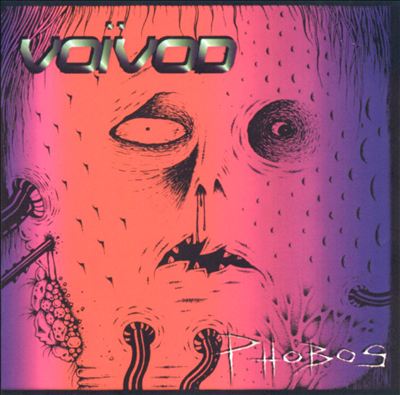
phobosIt’s tempting to say that Phobos is a carbon copy of Negatron, but that’s not true.  While the line up is the same, and the overall tone is very similar—very heavy, aggressive music—there are subtle differences.  The first is that the album sounds vaguely more electronic, as if they were really flirting with industrial after the experiment with Jim Thirwell on the last album.  E-Force’s vocals, while still abrasive and screamed have a lot of processing on them which makes them far more interesting and actually quite a bit more understandable.  There’s also a lot of weird electronic effects that link the album and make it feel more “spacey.”

And while there are different sections of songs and parts that are actually quiet, this i still a difficult album–the vocals especially are exceedingly harsh and will turn off people who like the instrumental sections.  I hate to sound like the band’s declining popular are all down to E-Force, but he is the weakest link in the band at this point.  Whats weird about thee two E-Force era albums is that although they are very very heavy with several weird parts per song, the basic structure of them is very conventional.  So instead of sounding proggy and weird, they sound more like a bludgeoning metal band.  Which didn’t really work for them.  Indeed, the band intended to if not call it quits at least take a hiatus after this album.

Phobos opens with “Catalepsy I” an introductory song—noises and whatnot.  And indeed, these electronic noises link all of the songs of the record, with different sounds in between the tracks (like the way “Bacteria” opens with spacey effects and electronic drum noises for 35 seconds).  But the first proper song “Rise,” has an opening guitar riff that is quite normal—dark, but normal.  It’s true that the heaviness of the chugging section is heavier than most (like earlier Voivod), but it’s still not that strange. Until the verses come in.  And here’s where E-Force’s vocals are a little different—more processed and robotic sounding.  It actually works a lot better.  And in the middle of the song while the heaviness is ongoing, that opening normal guitar riff comes back.  Rather conventionally.

“Mercury” has a more typical Voivod guitar riff although the pounding heavy chords are still quite heavy.  There’s more of the distorted vocals and weird chords for the bridge.  It also begins a series of increasingly longer songs.  This one is nearly 6 minutes.  While “Phobos” is nearly 7.  It also has an interesting echoing staccato guitar riff with E-Force’s vocals very distorted (like Nine Inch Nails or Skinny Puppy).  The bridge is a crazy noisy monstrosity and yet the middle section is very simple:  loud chords  delivered at a slow pace with interesting effects and fiddly guitar solo noises.  “Bacteria” reaches over 8 minutes long.  But it is unlike any of their earlier prog songs.  It has an interesting echoing guitar opening and a bunch of staggered parts.  But once the song’s major chords start up it sounds probably most like the previous album except for the lengthy instrumental/psychedelic section starting at around 5 minutes.

The album slows down somewhat with the 1:48 “Temps Mort” a short instrumental with what sounds alike an accordion. It’s a weird little time out (which is what the title means), and I like it a lot.

“The Tower” has an underwater kind of feel to it amidst the bludgeoning guitars.  The middle and the end have some very cool heavy trippy/spacey metal which is so radically different from the heavy Voivod chords that make up the proper song.  Indeed the very end is a minute of mellow spacey guitars.  “Quantum” is a pretty straight ahead (for Voivod) metal song with echoed vocals that take some of th edge off (until he screams the chorus).  There’s another cool instrumental section. In fact, the whole album has great instrumental sections, it’s kind of a shame the vocals are so offputting (although at the end of this song they are so distorted and computerized that they sound very cool)

“Neutrino” opens with those big loud slow ringing chords of noise before the simple but creepy solo riff comes in.  It’s 6 minutes long and has another interesting guitar line amid the noise.  It takes 3 minutes (of 7) before the vocals come in and the song gets much darker.  “Forlorn” is the closest thing to a hit on the album.  The chorus is really easy to sing along to.  And the verses are actually pretty straightforward.  It’s very very heavy and isn’t going to make the radio anywhere, but it’s still catchy.  The album proper ends with “Catalepsy II,” more swirling noises that sound like the beginning.

There are two bonus tracks on the CD.  “M-Body” was written by Jason Newsted and is the most industrial mechanized/voiced songs on the album.  It’s certainly out of place, although it does hint at what is to come on their next album.  “21st Century Schizoid Man” is a cover of the King Crimson song.  They’d done Pink Floyd and King Crimson fits pretty nicely.  As with the Floyd covers this one is very heavy.  Piggy gets the guitars right.  But as with the rest of the album, E-Force’s vocals just don’t work. Whereas Snake’s weird pronunciations accented the covers in a cool way, E-Force just seems to be forcing his way through the track (the fact that he puts 3 syllables in “century” is pretty unforgivable.  Overall the song is pretty great, although I’m not so sure about the guitar solo which sounds like Piggy doesn’t really know what to do.

And that’s the end of this Voivod lineup.  Two albums and a lot of lost fans.

[READ: September 20, 2013] Terry

I have known about this book for a pretty long time.  I was never really that interested in reading it because, while I don’t know all that much about Terry Fox, I felt like I knew enough about him to not bother with a full bio.

For those who don’t know (basically anyone from the U.S.), Terry Fox was a young man who developed cancer at the age of 19 in 1977. and had his leg amputated.  To draw attention to cancer research he decided to run (yes run) across Canada on the Trans Canada Highway.  He had a prosthetic leg, he practiced running every day (he was already a natural athlete) and he decided that in 1980 he would run from the Atlantic Ocean to the Pacific (he even had a bottle of water from the Atlantic that he wanted to pour into the Pacific).  His plan was to run between 26 miles a day.  Yes, run a marathon every day.  He called it the Marathon of Hope.

When he started out, the media coverage was nothing but as he progressed and his friend (who drove the van alongside him) started making media attention, Terry’s cause became more well known.  And by the time he made it to Ontario, he was a huge personality—making TV appearances, talking to anyone and, most importantly, making a ton of money for cancer research. (more…)


Read Full Post »

CV1_TNY_08_26_13Drooker.inddSOUNDTRACK: VOIVOD-Negatron (1995).

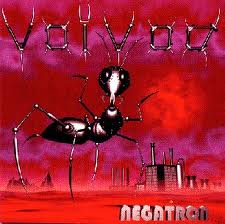
negatronAfter The Outer Limits failed to grab an audience, Voivod’s lead singer Snake departed the band.  With just the two original members left (and no bassist or singer), Piggy and Away decided to start again.  And they went dark and heavy.  For the first 45 second of this album, you think, wow, Voivod has made a really heavy album—with thundering riffs and, yet still, some unusual chords from Piggy (the chord progressions are definitely still weird).  Then new singer (and bassist) E-Force opens his mouth.  And that’s when a good portion of Voivod’s  prog rock fan base started weeping.

E-Force is a screamer.  He’s not unlike Snake on the first couple of albums (although without the French accent).  But there’s very little diversity.  E-Force’s voice isn’t a total failure.  It works pretty well with the heaviness of the music.  But those of us who grew used to Snake’s singing can’t help but be disappointed by E-Force’s very limited range and style.

Opener “Insects” has some very cool parts and the music is kind of interesting—Piggy is always inventive and it’s cool to hear him mix some of his weird chords with such heavy music (the style is kind of like Killing Technology era but heavier and weirder).  And there’s some sequences where the chords are just bizarre and cool.  There is a bridge in “Insects” where E-Force sounds a bit like Snake and it’s like a great heavy Voivod album of old.

Speaking of heavy, Away sounds like he is having a great time banging the hell out of his drums.  I feel somewhat surprised that after the last few albums of mellowing out that both guys could ramp up to play so fast and heavy again.  “Project X” gives E-Force some room to do some different vocal styles (like on the first bridge which is actually kind of catchy), but the song is more pounding than exciting,

“Nanoman” brings some diversity, with a standard, but cool metal riff (and double bass drums). It also has a chorus that you can sing along to (or scream along to at any rate).  “Reality?” is by now standard scream fare, but there is a chorus “upside down reality” in which E-Force shows he can actually sing and that part is quite good.  “Negatron” is over 7 minutes long, and yet there s very little prog at hand.  It does have some astonishingly noisy dissonant chords, though.  “Planet Hell” opens with a bass riff that stands out a bit on this pounding album.  But it quickly begins to sound like much else of the album.  I do like the middle of the song where it breaks down into alternating guitar and drum breaks.

Starting with “Meteor” the album gets a little more interesting.  There’s more high notes in this song, especially in the bridge—it’s still heavy and bludgeoning but there is some diversity here.  I haven’t talked about the lyrics on the albums mostly because I can’t make them out, but on this song you can actually hear the lyrics and you can tell that they’re also not really up to snuff: “I don’t fucking care, I don’t care no more, I don’t give a shit.”

“Cosmic Conspiracy” opens with a simple echoing guitar line.  It introduces a sci-fi element that the album has sorely lacked.  Between that and the heavy drums and the crunchy bass, the song sounds really promising.  Indeed, when E-Force starts singing, it’s muffled in an interesting way.  And mid way through, it breaks into just martial drumming from Away.  This is the diversity we’ve been looking for.  There’s even an impressive (an interestingly effected) drum solo.  Then the guitars that kick in are fairly traditional but actually fun speed metal.  Sadly, E-Force’s voice doesn’t work with this section and kind of ruins it, which is a shame.  There’s some interesting guitar work in the end of the song but it’s kind of drowned out by E-Froce’s screams.  “Bio-TV” has a staccato sound that breaks up the pummeling.  And the middle has a kind of pretty guitar riff (and a simplistic sing along section that sounds great amidst the chaos).

The final track is by far the most interesting and unusual.  It is called “D.N.A” which stands for “Don’t know Anything” (seriously).  But what’s unexpected is that the song is primarily written by and sung by Jim Thriwell (of Foetus).  It’s not entirely clear if Piggy’s guitar is even on it (it is so distorted beyond guitar that it could be anything), although you do hear some chords near the end.  Away’s drums are in the mix somewhere (it may indeed be all machines).  It sounds like a Ministry/Skinny Puppy hybrid, and I would have preferred that electronic direction to the fairly generic death metal sound of the album.  I’m really not sure what to make of this song.  If you like noisy industrial music, this is an unexpectedly interesting track and surely a weird place to look for something like this.

There is a degree of irony that Blacky left to play more electronic music and Voivod recorded “DNA”.  But even more ironic is that Snake left in part to start a much more heavy hardcore band (Union Made) and then the next Voivod album was the heaviest they’d done.  It’s cool that Voivod is ever evolving, but this is a weird sidestep in a career of progression.  It’s not a failure, but it takes a number of listens to find the gems within the noise.

[READ: September 17, 2013] “The Tribal Rite of the Strombergs”

This Simon Rich story is very funny.  It begins (as the picture that accompanies it shows us) with Scrabble.  Jeremy is playing his father.  Jeremy always loses to his father.  And yet, Jeremy reveals that he has been playing Words with Friends (his father doesn’t know what that is).  And through Words with Friends he has learned that words like “qat” are playable (his father doubts the word but doesn’t challenge).

It soon becomes clear (because Jeremy can see the score) that although he is losing, it’s close enough that he might, for the first time, be able to beat his father.

When Jeremy plays Ta (a word they have always used), his father challenges.  But it is useless.  Jeremy’s father has a Z and that should do it. (more…)

Read Full Post »

CV1_TNY_09_02_13Viva.inddSOUNDTRACK: TYPHOON-“Artificial Light” (2013).

typhoonartSince I mentioned “Artificial Light” the other day, I thought I’d link to it today.

The song opens with a pretty guitar melody punctuated by horns.  The singer’s vocal style is dramatic and often unexpected–especially the way he gets louder mid sentence and then drops to a whisper at other times (reminds me a bit of Wolf Parade or perhaps even Modest Mouse).

There are very pretty moments in the song (especially when the orchestration fills in).  But the horns also give it a kind of Spanish feel, which rides on top of the heavier guitars in the verses.

At about two and a half minutes, the song drops out completely.  It is picked up by some gentle guitar and horns as it builds back up.  By the end the chorus of voices builds the song to new heights and widths.

It’s interesting what you can do with so many band members in five and a half minutes.  This song really runs a breadth of ideas but remains quite pretty throughout.

[READ: September 12, 2013] “The Colonel’s Daughter”

The Kids in the Hall once made a sketch in which there was no beginning or ending, just a middle.

In the sketch, a man in a tutu slaps a man in a scuba diving suit saying.  “Stop it. stop it. I’ve got to stop you and your revolutionaries from taking over this country.”

This story is like the inverse of that sketch.  It has a beginning and an end but no middle.  Interestingly, since it is also about revolutionaries taking over a country, I now just insert that sketch into the story (I’m sure that makes Coover very happy.  I wonder if anyone else mentions this sketch in the review of this story).

I have mixed feeling about Coover’s work in general.  It often feels more style over substance.  And I fear that this one may have been playing with that somewhat. Interestingly as well, there is a lot of substance, but it is played in such as way as to make it almost seem meaningless—unless you are willing to really unpack it (which I wasn’t).

So, the Colonel is intent on overthrowing the President (the country is unnamed).  He has chosen the group of men sitting in the room with him.  Some of them know each other but not all do.  They look around and size each other up.  Indeed, 5/6 of the story is the men sizing each other up.  To me, the men are interchangeable.  I don’t know if that is lazy reading on my part or if it is indeed on purpose.

Each man gets a brief biography—the Deputy Minister, the Police Chief, the biplane pilot, the business man, the professor, the doctor and possibly someone else.

We learn a little about each man and why the Colonel would have chosen him.  We learn about his fears about the mission and who he mistrusts the most.  We also learn that one of the men is a double agent, working for the President.  Like a game of Clue, pieces of information are given that would let you know who the man is, but again, I didn’t feel like doing the work to figure it out.  I am curious to know if you can tell who it is from the story, but not curious enough to do the work (so I should not be rewarded). (more…)

Read Full Post »

sailorSOUNDTRACK: VOIVOD-Angel Rat (1991).

angelSo if you’re Voivod and you have just released a prog rock metal masterpiece, what’s your next step?  Hire Terry Brown, famed producer of the early Rush catalog!  And then try to go somewhat more commercial.  And name your new, commercial album… Angel Rat?

Oh but then—never a good sign—after recording the album, original bassist Blacky left the band.  It’s hard to find out exactly why (personal reasons) but he then went on to form The Holy Body Tattoo Dance Society and to create electroacoustic music.

When this album came out I was very disappointed in it—it is so far from the angular prog rock of Nothingface that I assumed the band had utterly sold out.  I mean, there’s ballad moments on it, there’s hardly any dissonant chords, and most of the songs are simply verse bridge chorus.  The band sounds a lot more commercial (sadly for them, the album tanked).  Listening to it now with fresh ears it actually reminds me a lot of Blue Öyster Cult, especially with Snake’s vocals and the chord structures that Piggy presents.  And since they used Terry Brown  there’s a Rush element as well.  Once I divorce the album from what came before I actually like the album quite a bit.  The songs are remarkably simple (I feel like Piggy could have been playing all the parts himself at the same time), but there’s still enough interesting weirdness that the songs don’t sound boring.  And once you get used to the overproduction and the fact that Snake can sing, there’s some really good stuff here.  Conventional but good.

It starts out pretty heavy with a chugging guitar but soon you notice that Snake is actually singing…nicely.  His voice sounds polished and good.  And then you notice that the guitars are fairly conventional—there’s almost no dissonance. True it is still heavy metal and there’s some slightly obscure chords, but for the most part it’s not all that weird.  Even the guitar solo is a fairly conventional speedy solo. And when the chorus comes in it’s actually quite pretty.  Speaking of pretty, the band photo is one of the more glammed up moments in Voivod’s career and, without being unfair, they are not a terribly pretty band, so this is kind of a funny picture.

“Clouds in My House” is also quite a pretty song, although admittedly the verses are a little dark (with that squeaking guitar solo sound that was popular around that time in heavy metal).  But the chorus is downright upbeat.  There’s a cool section in the middle with a noisy (but very simple) bass popping and a guitar solo over the top of it—it reminds me a lot of Rush in sound).  “The Prow” is the catchiest thing that Voivod has ever done—great sing-along verses and a big chorus.  “Best Regards” has more BÖC simiarlies—the chorus in particular has a very BÖC structure.  There’s also a some great bass on it.  Again, not the complicated bass of previous album, but a great rumbling sound that works very well as a riff while Piggy solos.  “Twin Dummy” is another fast song. This one features some of the stranger lyrics on the album.  Away says that he backed off on some of the concepts for this album and let Snake so his own thing.  So this song seems to be about ventriloquist dummies with the strange opening lyric “Dummy says…”  But the music is fast and furious here—some weird chords and really fast bass.  There’s also some keyboards on this track (pipe organ type sounds) that reminds me of Rush from around this period.

Title track “Angel Rat” sees Snake crooning over a very simple guitar ballad intro.  It’s almost unthinkable.  And yet the band keeps it interesting—especially Blacky’s bass.  Again, I don’t know why he left, but his bass is featured nicely on this album anyhow.  Blacky opens “Golem” with a powerful (but again simple) bass.  There’s an occasional funky note, but it’s a very staccato song. The drums have a strangely pop quality (the way he fills in the gaps).  It’s a little unsettling how obvious and catchy it is.  And even more unsettling is the solo—which has a very jazz feel.  I can’t even really tell what’s going on—is that Piggy or a keyboard?  “The Outcast” has probably the most conventional early 90s metal sound (except…is that a harmonica?)  Snake even does a falsetto at the end of a verse!  Probably the biggest surprise is that the final lines are “everything’s gonna work out.”

“Nuage Fractal” at least has a very Voivod title.  And the chorus sounds a lot like recent Voivod (except for the solo section).  The biggest surprise has to be “Freedoom” which opens with a very pretty guitar ballad sequence.  Something that early Voivod would have stomped all over.  Snake is whisper-singing and Piggy is playing gently for two whole minutes.  Interestingly, once the full band kicks in for the last two minutes, it is one of the heaviest sections on the album.  So even when they’re being conventional, they can’t do it for too long.  The bass in particular sounds very Geddy Lee to me on this track.  The final song “None of the Above” Is another political song—this one about global destruction.  The music is surprisingly upbeat for such a topic, but Blacky’s bass is wonderfully deep and rumbling here.

So yes, ever the chameleons, Voivod have made an album that could have sold a lot of copies–except that they’re a little too weird to do so.  But it was a good experiment and resulted in some great songs.

[READ: August 15, 2013] Sailor Twain

Sarah got me this book for Christmas.  I didn’t read it until right now because it’s fun to stretch out Christmas gifts as long as possible.

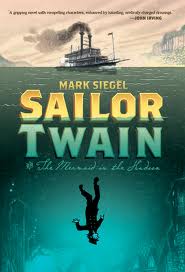
This book is a lengthy graphic novel from our friends at First Second.  It is complicated and a little confusing (the whole story is a flashback that is sort of explained in the very beginning).  It’s also very beautiful.

Except, I might say, for the main character. The background images and the interstitial pages are really beautiful and detailed.  But the main character is very cartoony–very two-dimensional with a triangle nose and big circular cartoon eyes.  I found this very disconcerting for about a third of the book.  Siegel does manage to make him very expressive and uses the big circle eyes to a good drawing benefit through, but the character just looks so–surprised?–all the time that it was hard to not notice him.  Of course later on his big eyes come in handy during the darker sequences, but I still found it an odd choice.  So too were the really cartoony choices of some of the other main characters–very big, comical noses or fat round faces.  It certainly made the characters distinctive, but as I said, I was unsettled by it.

As the story opens, Captain Twain sits in a bar and is approached by Miss Camomille.  She asks to speak to him but he says he wants nothing to do with her or his past.  She holds out a necklace and says he can have it if he tells her the story.  He is shocked to see it and reluctantly agrees. (more…)

Read Full Post »

cadaverSOUNDTRACK: TAVI GEVINSON-“Heart of Gold” and “Heart” (2013).

taviBoth of these songs were recorded for the release of the film Cadaver (see below).  Neither song appears in the film, although Gevinson herself is the main character.  I admit to being awed and repulsed by Gevinson [insert standard issue comments about fashion, young fame and blogging here].  But I am glad she’s using her fame to write feminist theory instead of fashion anymore.  And I enjoyed her article in The Believer recently.

As for the film, she does a very good job as the voice in the movie.  But let’s hope she doesn’t pursue her singing career any further.

She has the kind of flat delivery that Zooey Deschanel does, but Deschaenl’s voice has a gravitas that Gevinson doesn’t (sure, you can say she’s only 16 or whatever, but there are tons of teenagers who can sing amazingly).  Her take on “Heart of Gold” is fine.  She enunciates very clearly, but there’s very little passion in the song.  Her take on Pet Shop Boys’ “Heart” (a song I know very well, but didn’t know that was the title) is a little better.  Primarily because she takes the very discoy song and turns it into a slow acoustic number.  The instrumentation is a little bland (not her fault) but she puts moments of excitement into the singing.  In both cases I’d much rather hear the original, and in fact I am going to listen to the Pet Shop Boys version right now.

And before you yell at me for picking on a teenager, she is far more successful than I will ever be, so just assume this is all sour grapes.

[READ: August 31, 2013] Cadaver

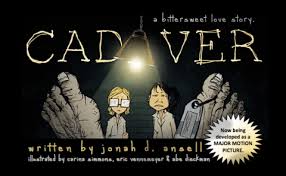
This book came across my desk and I was intrigued because it was a comic book about cadavers.  It’s shaped like a comic strip book (reminding me of early Far Side books) and it turns out to be a comic book adaptation of a short film which was originally a poem.  In the introduction, Jonah Ansell explains that his (baby) sister was going off to medical school so he wrote her a (funny) poem.  Eventually, the poem was turned into an animated short film.  And after being made into a short film it was made into this book.

The story is told in rhyme and is quite funny, until it gets rather touching.  In the introduction, Ansell also explains that there was more to the story than medial school–it’s about love and loss and cynicism vs romanticism.  Not bad for a 7 minute film.

An unnamed med student is handed a scalpel by the scary professor.  She is told to make the first incision into the cadaver.  She does so, but as she removes the heart (nicely shaped like a cartoon heart), the cadaver sits up and says that he needs it back.  The student’s partner passes out.  The man says he’s not read to die, he has a heart to give someone. (more…)

Read Full Post »

CV1_TNY_08_12_13RussoGate.inddSOUNDTRACK: KATHLEEN EDWARDS-Live from Mountain Stage (April 16, 2013).

Kkedsathleen Edwards is one of my favorite country/folkie performers.  I love her song craft and the beautiful way she sings.  And I’d love to see her live if she ever comes around.  Although she explains during this Mountain Stage show that it was near the end of her tour and she sounds….tired. Or perhaps just mellow.

I love the five  songs she plays “Asking for Flowers,” “Change the Sheets,” “House Full of Empty Rooms,” “Chameleon/Comedian,” and “Soft Place to Land,” but they all seem so…quiet.  I think of Edwards as kind of a rowdy performer—she can wail with them all, but everything seems dialed back here somewhat.  “Empty Rooms” is so quiet (and it is a mellow song, but even more so here).  But even  “Change the Sheets” which has a bridge and chorus that just blows me away the way it rocks and “Comedian” which ends with such wonderful anguish on the record, are both much more mellow here.

She has a very funny sequence talking about female singers and how she wants to create a Canadian ladies band called Modern Beaver (and she is apparently serious about it, and even has songs for them (as of summer 2013), but no time or energy to get it done.  Maybe for Xmas?

Any Kathleen Edwards is good Kathleen Edwards, but I’m looking forward to the next rowdy set I get to hear from her.

[READ: August 28, 2013] “Meet the President”

This is a most unexpected story from Zadie Smith.  It is set in the future and features a technology that allows the wearer to be fully absorbed into a virtual space.

It opens with a boy, Bill Peek, standing on a barren beach in England.  While his family may have once come from this area, that was immaterial, he considers himself a global child, accompanying his father on inspections.  But this part of England is a wasteland and only those who could not afford to leave England were still there.

Bill is pleased to have the beach to himself so he can plug in.  But then he is approached by an old lady with a young girl.  The girl, Agatha, is simple.  And both of the women talk to Bill even though he is doing his best to ignore them while he interacts with his virtual goggles.

Bill is deep in his world, creating his avatar (which has breasts and a tail) and by arming himself with grenades and knives.  He is trying to create the landscape.  Other users wondered whether you should augment the area around you or use a more or less barren world as your basis.  Bill has chosen the barren world and learns that it is three miles to the White House. (more…)

Read Full Post »

conchitaSOUNDTRACK: VOIVOD: Rrröööaaarrr (1986).

roarI have always loved this album because of its name (preposterous and complete with umlauts).  It also has the classic Voivod song “Fuck Off and Die.”  Interestingly, a band that Voivod liked, Venom, released a song “F.O.A.D.” the previous year.

But man, is this album hard to listen to.  The production seems even worse than on their debut.  And the songs seem faster and a bit harder to understand.  Perhaps it was my mood when I re-listened, but songs like “Ripping Headaches” seemed more portentous than fun.  And “Slaughter in the Grave” is just light years behind the kind of songs they would write as soon as the next album.

I like to think of these first two Voivod albums as part of a pair.  The cover art is kind of similar.  But starting with the next album, the cover art would jump ahead in detail and quality.  All of Voivod’s art (and apparently the entire concept of The Voivod (you’ll have to look that up) was by Away.  He has released a coffee table book (which you can’t get anymore) but a lot of his art is online at his website.

Not many people think too highly of Rrröööaaarrr, and it is safe to say that compared to their next several albums, this one might be best ignored.

[READ: August 29, 2013] Hi, This is Conchita

This is another book that crossed my desk.  I recognized…the translator of all people (Hi, Edith Grossman) but not the author.  I couldn’t remember why I recognized her name and then I realized she had translated Don Quixote, which is supposed to be an excellent version.

I also liked the cover and the packaging of the book (sometimes that’s all it takes) and since I left the book I was reading back at home, I brought this with me to lunch.

Imagine my surprise when the first story opens with a man calling a phone sex line (in graphic detail).  I flipped through the story (which I thought was a bunch of short stories) but is actually a very long story called “Hi, this is Conchita.”  In this story, each “chapter” is a phone call and each chapter title is the phone number and time of the call. (more…)

Read Full Post »

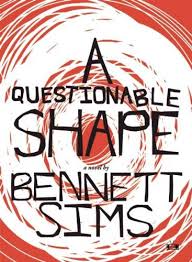
questionableshapeSOUNDTRACK: PHISH-Live Bait Vol 09 (2013).

live bait 9I just recently realized that Live Bait 9 has been released.  So I grabbed it just in time.  Vol 9 is full of long jams.  The shortest track here is 10 and a half minutes and there are three over 30 minutes (true, some of them are actually multiple songs melding into one track, but they still retain that long jam feel).

What I especially liked about this set was that it included a few songs that I feel like aren’t represented all that well in the Live Bait catalog.  Like “Foam” from 1994—a solid rocking jam (at 10:47).  And “A Song I Heard the Ocean Sing” (from 2004—I like how they splice the cuts together, so in this case they jump a decade but it doesn’t sound it).  I feel like this song is not played as much, so it’s nice to hear.  And then there’s a lively “The Moma Dance” from 2000.

There are a number of quirky moments in many of the songs.  Like “Split Open and Melt” which comes in at 31 minutes.  Around 11 minutes, they morph into “Kung,” and what’s weird about this version (aside from the fact that the song itself is bizarre) is that instead of it just being them making noise and shouting, there’s actually music behind it—mostly drums—I’ve not heard it done like that before.  During the jam, at around 15 minutes, Mike plays Collective Soul’s “Shine” riff on the bass, but the rest of the guys don’t join in.

“Mike’s Song” (from 1999) begins a 40 minute jam.  The song seems slower than usual, which I find odd.  But it works well for the very mellow jam that constitute the big instrumental section—they even use the echoey guitar the runs for a few minutes keeping the beat and setting a pace.  At 17 minutes the song morphs into a rousing version of “Twist”.  Then at 31 minutes they morph into “Weekapaug Groove” (with Gordon’s great bass opening.  At 36 minutes Trey starts playing the Macarena, although not exactly right, which is pretty funny in and of itself.

“David Bowie” (from 1995) is a 25 minute jam that gets pretty dark in the middle.  Then comes the most interesting juxtaposition of songs jam.  From “AC/DC Bag” one of their earliest songs to “Ghost” one of their then newest ones.  “Tube” a, to my mind, underplayed song is next.  It has a funky jam and is appreciated.

This free set ends with “Undermind,” one of my favorite new songs (this one recorded n 2012). It opens with a staccato riff which gives it a kind of reggae feel.  But it soon returns to its normal sound and proves to be a great ender to this “set.”

I can’t say enough good things about the Live Bait series.  I’m not one to buy many concert sets, but having free samples is really cool.

[READ: July 28, 2013] A Questionable Shape

Karen read this book and not only raved about it, she personally recommended it to me. So imagine my surprise to find out that it’s a zombie novel!  But it is a zombie novel like no other.  If Colson Whitehead (in Zone One) made a zombie novel that was literary, Sims has gone one step further, making a zombie novel that is philosophical.

The story is set in Baton Rouge and takes place some time after a zombie epidemic has broken out. In the time since the zombies started appearing (worldwide, it is suggested), the police and emergency teams have managed to contain the worst of it (already that’s something new).  Panic has subsided somewhat and the government has even released a pamphlet on how to deal with everything that’s been going on (called Fight the Bite–I never checked to see if there was a version online, it would make a great “online extra” (having now read Karen’s review, I’m glad to see she agrees)).

The book focuses on two primary characters: the narrator (Michael Vermaelen–referred to mostly as Vermaelen whose name is not given until very long into the story) and Matt Mazoch.  There is a third important character–the narrator’s live-in girlfriend, Rachel, who plays as something of a foil.

The simple plot takes place over a week.  Mazoch is searching for his father.  Mr Mazoch died just before the epidemic and Matt believes that he is among the walking dead.  And so Matt has asked Michael to go with him to try to find him.  There’s a couple things to note right off the bat (the pun was not intended, although Matt carries a bat with him as his line of defense and who knows what else).  Matt and Mr. Mazoch had a weird relationship, one which fell apart considerably over the last few years. Mr Mazoch let himself go completely and seems opposed to everything that Matt believed in–physical fitness and intellectual pursuits (or, as Michael points out, perhaps Matt pursued them to be the exact opposite of his father). The second is that while Michael is happy to go along with Matt, he has no idea and is even afraid to ask what Matt plans to do should he find his father.  And this issue comes to a head later with Rachel.

Matt has given them exactly one week to find his father, with the explicit instructions that after a week thy give up pursuit so that it doesn’t drag on indefinitely.

Okay so far so good–they are going zombie hunting.  But the thing is, the zombies have become a part of the landscape, but they have been tamed.  It is illegal to kill them (what an interesting twist).  Despite their zombie-ness (it’s actually considered an insult to call them zombies), and their desire for human flesh, rather than eradicating them, they are being rounded up and put in camps.  Naturally there are still a number of stragglers (zombies get everywhere), but there is a hotline to call if you see one and within minutes the police come and quarantine them.

So, what’s one to do on a day long adventure hunting zombies–or more specifically, one zombie–if you aren’t actually hunting them?  Well, mostly, you talk.  Michael is a philosophy student (he intended to read all of the important philosophical works although the outbreak has taken him off his goal somewhat), Matt is a literature student (Rachel is an art history major), so the discussions get very philosophical.  In addition to quoting Heidegger, Kant, Nietzsche and many other big names, they also talk video games and seek for metaphors for the zombie invasion.  The video game discussion was quite fascinating–Matt imagines the grid of zombie takeovers to be like a video game–going into blank nothingness. But Michael imagines it more like a filmy haze.

Indeed, since this is all told from Michael’s first person point of view, we learn a lot about what is in his head.  And it turns out that Michael is obsessed with the zombies (which is understandable, really).  But his obsession is different.  When the outbreak first happened he, like everyone else, refused to go outside.  But soon, when the government gave the all clear, Rachel not only went outside, she volunteered at the facilities. But Michael refused–seeing potential contamination everywhere. Indeed, even though he goes out with Matt every day, he still imagines and worries what would happen if and when someone he knows is infected. When they go to a diner, Michael won’t even eat the food, imagining some kind of contamination.

He even tries demilitarization exercises with Rachel (which she is understandably freaked out by).  But as the story moves on Michael’ footnotes (did I say there were footnotes? There are–almost one per page) spend more and more time wondering what the zombies are experiencing–he seems to be trying to pick the best one.  And he goes over and over these ideas in great detail.

After a few days (each chapter is a day) Rachel needs to know what Matt is intending to do if (when) he finds Mr Mazoch, especially since Matt suddenly believes he has some “evidence.”  Michael doesn’t want to know, which enrages Rachel.  She assumes the worst (that he wants to kill his father).  She assumes he would kill him out of malice towards zombies, but Michael suggests it would be to put him out of his misery).

Rachel has a personal stake in this issue.  Her father died before the epidemic, but she was convinced that he would be turned (before they proved that the longer-dead weren’t rising, it was only the recently dead).  So she waited at his graveyard, with the intent of digging him up if need be.  She proves to be a real bleeding heart on the issue.  To make her case, she gives the recent example of a scientist training a  zombie to speak.  She discusses the emotions of the woman whose father was the zombie.  She says this shows that these creatures still have humanity in them and to kill them all would be genocide.

By the end of the book, Matt has taken a polar opposite position–hurricane season is coming and these things are a security risk for all the living.   They should all just be killed.  For the safety of everyone.   Michael–always the intellectual–has a somewhat more nuanced position–he feels that perhaps they should be spared because we have so much to learn from them. And each case is made rather convincingly.

There are some wonderful passages–the discussion about leaves and greenery and the amazing description of Michael’s first encounter with a zombie (not at all frightening, just chilling) show what a great writer Sims is.

The strange thing about this book (aside from the whole “it’s about zombies, but not” premise) is that for such a short book (just over 200 pages), it’s a pretty slow read.  Between the footnotes and the philosophy, the book doesn’t exactly flow quickly.  It’s not light reading by any stretch.  And at times it’s a little…dull?  too in its own head?  Something?  But those moments seem few and far between, because ultimately the language is so interesting and fulfilling.

The end is one of those endings that’s not a real ending–it’s more of a “what would you, the reader, do?” kind of ending.  That’s always unsatisfying.  And yet at the same time, I have not stopped thinking about what I would do in his case.  And so it almost becomes the perfect ending.

Bennett Sims was a student of David Foster Wallace and although this book does have footnotes, the author he resembles most is Nicholson Baker–where not much happens in the body of the work and all of the “action” (which is really thought) is in the notes.

Karen put Bennett Sims along  with Seth Fried and Manuel Gonzales on her “magnificently weird” list, a list that I am intrigued enough by to hunt down these other two authors (and Sims’ story “House-Sitting” which i don’t seem to be able to find online.  So thanks Karen, i wouldn’t have found this one on my own.

Read Full Post »

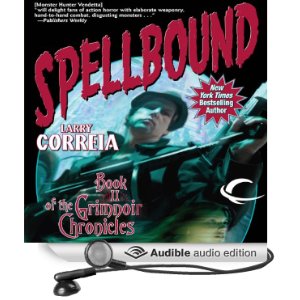
[LISTENED TO: July 27, 2013] Spellboundspellbound

I enjoyed Book I of The Grimnoir Chronicles immensely.  I wasn’t really sure what Correia could do to top it.  There’s the inevitable dread for sequels that everything has to be bigger bigger bigger with the cost to the heart of the story.  (That’s more true in movies, but books can suffer as well).

And indeed, Correia does go bigger, but he loses nothing.  Indeed, the higher stakes make this story all the more exciting without sacrificing the characters in any way.

As the story opens, we learn that it is a few months after the events of Book I.  The Grimnoir are dispersed somewhat, with things falling into a somewhat logical place.  Francis Stuyvesant is the head of United Blimp.  Faye and Francis are more or less dating and Heinrich is more or less his bodyguard. The other team members are up to assorted states of resting and recuperating.  And Jake Sullivan is lying low.

But no matter how low he thinks he is lying, he’s still very big.  And he is soon found by a woman named Hammer.  Of course, at first the story maintains the trappings of noir, with Hammer being a (beautiful) woman in distress.  Surprisingly, she is in distress at the library and she asks Jake for help (he is there studying magic and, well, lying low).  He tells her to ask the librarian.  But later when he is leaving, he sees her being robbed by some thugs.  He goes to rescue her (and easy job for a big guy like him), and Hammer uses her power to determine that he is indeed Heavy Jake Sullivan.  And he can still do what he can do.

Hammer wrangles him into a government facility where he accepts a phone call from the dead Chairman.  This whole section is lovingly described and far too cool to try to summarize.  So let’s just say that Alexander Graham Bell created a phone that could talk to the dead–but only if they wanted to talk to us.  The Chairman found the phone and, of all people, he wanted to speak to Jake.  (I’m skipping so much stuff here that it hurts me, but I don’t want to spoil the story or the humor). (more…)

Read Full Post »

Miskatonic University Press Weird Tales compendiumSOUNDTRACK: YUCK-“Rebirth” (2013).

Yuck-Rebirth-608x608-88e4ecb86a2dbcb086211620179bd14d6dbe5221-s1Yuck put out a great albumin 2011.  And then a principal songwriter and singer Daniel Blumberg left the band.  So they regrouped and are coming out with Rebirth (due in the fall).  This track is very My Bloody Valentinesque–big echoey guitars with gentle vocals on top of them.

The big difference comes in the bridge which seems a little more pop than most MBV songs. The chorus also has a few guitar notes that stand out as unechoed notes which also break the shoegaze vibe in a very interesting way.  The biggest surprise comes at the end when the song turns into mostly drums with a bit of a keyboard/dancey feel. It’s just a touch to show that they are not simply mimicking shoegaze, they are using it in their own way.

I’m excited to hear what else the come up with.

[READ: August 8, 2013] “The Horror at Martin’s Beach”

This short story was written by H.P. Lovecraft’s wife, Sonia H. Greene.  Apparently Lovecraft then edited/reworked it before publication in Weird Tales (when it was titled “The Invisible Monster”) although it seems every anthologized version has the “Martin’s Beach” title.  For more about Weird Tales issues, check out Yankee Classic.

I’m not sure how much work Lovecraft did on this story as it doesn’t have any of the hallmarks of his own work.  Indeed, it is a fairly straightforward story with none of the gods and supernatural eerieness that Lovecraft puts in his work.  Which is not to say that this story doesn’t have  supernatural elements, it’s just not Lovecraft’s supernatural elements.

In this short story, a group of sailors of the coast of Gloucester fought with an undersea beast for 40 hours before subduing it. The beast was huge–nearly fifty feet long and ten feet in its cylindrical diameter.  Although it was clearly a fish, it also had small forelegs.  Its skin was thick and, most peculiarly, it has one, giant eye.  After it was dissected, scientists determined that despite the enormity of the creature, it was only a baby–simply a few days old. (more…)

Read Full Post »

« Newer Posts - Older Posts »