Feeds:
Posts
Comments

Archive for the ‘Death’ Category

mouse winterSOUNDTRACK: MATT WILSON-“You’re a Mean One Mr. Grinch” (2010).

mattwiklsonI don’t know who Matt Wilson is, (surprisingly, he is the drummer of the trio and the album is called the Matt Wilson Tree-O (ha)).  Man, I love this version of the Grinch’s theme song.

What’s fun about it is that the main vocal line is played on the upright bass.  While the harmony lines are played on what I suspect is a baritone saxophone.  There’s also some simple snare and brush work for drums.

It’s really simple and it’s pretty much guaranteed to bring a smile to your face.  I haven’t heard anything else on the album, and I’m not entirely sure I need to.  This song ranks up pretty high on my Christmas music list now.

[READ: December 10, 2013] Mouse Guard Winter 1152

Winter 1152 follows on the heels of Fall 1152.  The Mouse Guard have traveled off to various cities to find supplies for the winter.  While they have dispersed in different directions, we are following only our friends from the previous book: Kenzie, Celnawe, Lieam, Sadie and Saxon.  Through tremendous snow (for a mouse) they make it to Sprucetuck, where they seek the elixir which Mistress Gwendolyn needs.

Although offered rest and comfort the mice are on a deadline and must make it back home with their supplies.  But on their way home they are attacked by an owl.  Sadie gets off a great shot that blinds the owl and the mice are free.  But just as they feel that they are safe, they walk into a hole in the snow.  And three of them fall through.

Saxon, Kenzie and Sadie find themselves in an underground tunnel which proves to be a (presumably) abandoned weasel tunnel.  They are nervous of course, but press on in the direction of home as there is no easy way for them to get above ground.  Meanwhile, Lieam and Celnawe proceed above ground.  There is talk of allegiances and who is rightly in charge of these missions (Celnawe, as the elder axe wielder, is testing Lieam’s mettle).  Then both parties encounter some trouble  The underground team finds a bat roost–and the bast (I love the way they speak as a kind of collective) are none too happy to see the mice down here. Meanwhile, as the snow continues to pile on the above-ground mice, they decide to settle in for the night by making a burrow and starting a small fire.  But something awaits them at their opening. (more…)

Read Full Post »

mouse fallSOUNDTRACK: AMIINA-“Hilli” (2006).

220px-HilliThis song (and the single version which features a spoken word track by Lee Hazlewood) was featured in NPR’s 2007 Holiday Music special.  I’m not exactly sure that there’s anything particularly Christmassy or Holiday about it, but it is certainly pretty.

Amiina are an Icelandic band who are known mostly for their strings.  They have played string accompaniment with Sigur Rós on albums and on tour.  I had known about them as a string quartet so I was surprised by this beautiful song which has no real strings (at least quartet strings).  The “strings” sound more like hammered dulcimers and plucked violin strings.  It has a very simple melody played delicately.  And then the voices–layers of sweet female voices–sing notes over the music.  It is calming and a perfect antidote to hectic Christmas time and treacly Christmas music.

I still don’t know if it has anything to do with the holidays, but it’s part of my holiday music collection now.

[READ: December 5, 2013] Mouse Guard Fall 1152

I saw this book in the library and decided to get it for C.  But I also thought the artwork looked amazing so I decided to read it for myself.  I feel like he may be a tad young for the book (it’s kind of slow and vaguely “political”), although I’m sure he’d like the artwork (and some of the fighting).  But I thought the book was absolutely gorgeous and I enjoyed every page of it.

The story itself is quiet simple (and feels like it could be much much longer).  It covers six books (and an epilogue) and is all about the mice of Lockhaven as they struggle for survival in the Fall of 1152.  Now these are normal sized mice—their homes and mansions and everything are hidden from view inside trees and ivy, but their problems are very real.  And very dangerous.

So dangerous that they have formed the Mouse Guard.  The Guard is there not only to fight off intruders but also to assist citizens as they wander through the territories.

This book follows three of the Guard: Lieam, Saxon and Kenzie as they become aware of a traitorous plot that threatens all of Lockhaven. (more…)

Read Full Post »

tny6.16&23.03 cvrSOUNDTRACK: SIGUR RÓS-Ba Ba Ti Ki Di Do (2004).

babaI didn’t realize that this was a soundtrack to Merce Cunningham’s dance piece Split Sides.  That doesn’t really change my opinion of the music, although it does make me wonder just what kind of dance this would have been.

There are three tracks on this short EP.  The primary instrument seems to be the music box.  There are no real vocals on the album, except for what sounds like sampled children and a few spoken words in the final track (the words are the title of the EP sampled and thrown around, apparently spoken by Cunningham).  Of course, it’s not all music box, there are synths and interesting percussive sounds (what sounds like the winding up of said music boxes).  The first two songs are quite similar, with the second being a bit more fleshed out.

The final track, with the sampled words, sounds much different and feel a bit more aggressive, although that is all relative of course.  The whole EP is about 20 minutes long.  Of all of Sigur Rós’ varied output (singles and EPs) this is probably the least essential one that is all new music.

[READ: November 8, 2013] “City of Clowns”

I had printed out all of the New Yorker stories that Alarcón had written because I enjoyed his previous ones so much. This was the first and I was blown away by how good it was.

It is a long and somewhat complicated story.

It opens with Oscarcito going to the hospital because his father died the night before.  He finds his mother mopping floors because his father’s bill was unpaid.  And in that very first paragraph, she introduces her son to Carmela—the woman whom his father left them for.  She was mopping the floor with Oscarcito’s  mother.  He is confused and enraged by this.

His half brothers are also there.  He had never met them before, preferring to stay away from his father’s other life.  But he saw them in front of him and clearly saw that they were related to him.  But the most galling thing was that although he was the oldest of all the children, they were clearly the chosen children—after all, his father stayed with them.

Then we learn about his father’s life.  He was born in Cerro de Pasco and moved to Lima when his young family was still young.  He worked hard in semi legitimate businesses and then brought his family to the city.  Young Oscarcito, age 8, loved it.  But his mother hated missing her family in Cerro de Pasco.  And now they we reliving with his father who was practically a stranger. His father worked hard and succeeded, but he was rarely home (more…)

Read Full Post »

cover-10-9_largeSOUNDTRACK: SIGUR RÓS-“Svefn-g-englar” (1999).

220px-SvernCoverAThis was the first I heard of Sigur Rós.  I suspect my friend Lar told me about them and I was just blown away by the first track on this single–a 9 minute swelling, string-filled, otherworldly enterprise.

The first song on the single is “Svefn-g-englar.”  It opens with overlaying chords and the beat is kept by an echoing keyboard note.  It’s very spacey and mellow.  And the vocals are unlike anything i had heard before–not just falsetto, but practically alien falsetto.  There are noisy guitars but they work into the background washes of sound and don’t really register as guitars exactly.  Gorgeous soaring vocals on the chorus, which I’ve always heard as “its you” but is apparently “tjú.”  It’s otherworldly and beautiful  Then at 6:30 the drums kick in and the song gets grounded, taking on more gravitas as the chords grow louder.  This lasts for one minute as the song then slows itself back into its original style.

The second track is “Viðrar vel til loftárása.”  It has a louder bass and great chords.  This slow airy song is grounded by the acoustic piano–a very pretty melody with the strings behind it.  Jonsi’s vocal line is beautiful but mixed very low as if he is so far away.  The song ends with a great string section until the abrupt end.  It clocks in at 10 minutes.

Two live songs “Nýja lagið” and “Syndir Guðs” (live at the Icelandic Opera House, June 12, 1999) show that the band can work this magic live.  The guitar is more intense bring a bit more drama to the sound.  But Jonsi’s voice is still amazing in the live setting.  The first one is funny because you don’t really realize it’s live until the end when people start clapping.  And at 9 minutes it’s an amazing listen.  When it goes into a minor chord at around 5 minutes, it’s really something.

The final song “Syndir Guðs” comes from their debut album Von.  It is only 5 minutes, but it’s really quite good here.  It’s nice to see them translate their style to this older song.  The song is quite a short one for this EP, which totals nearly 35 minutes.  This is a great EP for fans of the band.  Hearing those live recordings is totally worth it.

[READ: December 2, 2013] “Daniel Boone, By Himself”

I don’t know a lot about Daniel Boone, truth be told.  So this story may be very accurate or maybe it’s based-on-actual-research about Boone’s possible mental state at the time of his death.  Or maybe he just made it all up.  Whatever the case, I did not enjoy it.

From the beginning, in which we learn the proper way to scalp someone, to the death of Boone’s son, the story was explicitly violent.  And while I’m no shrinking violet when it comes to violence, there just wasn’t much more to it. I’m sure that Boone’s life was nonstop violence, and that this story is not inaccurate in that way (I don’t even know if he had a son).

And perhaps it was that nonstop violence that prevented me from learning much about him in the first place. (more…)

Read Full Post »

feb2003SOUNDTRACK: LAURA GIBSON-Tiny Desk Concert #1 (April 22, 2008).

gibsonI have enjoyed many of NPR’s Tiny Desk Concerts over the years.  And while I was listening to an All Songs Considered show, it was mentioned that there have been over 200 shows (I believe it is now over 300).  And I realized that I had missed dozens of good ones.  So, being the kind of person I am, I decided to start watching/listening to them all.  I don’t typically watch most of them as they’re usually not very visually interesting–they’re fun to watch for a minute or so, but most of the artists are there to sing, not to do visual entertainment.  So usually I just listen while doing something else.

I toyed with the idea of writing about one a day until I was done.  But the logistics of that made my head hurt.  So instead, I will write about them all over the course of however long it takes.  (And since they don’t post one every day, I will catch up eventually).

Laura Gibson had the first ever Tiny Desk show, and there’s some notable things about the show itself.  First, look how empty Bob’s shelves are!   And the camera work is a little wonky, I think.  I also enjoy how they introduce this performance without a clue as to whether there would be more of them!

I had never heard of Laura Gibson before listening to this.  She plays simple but beautiful guitar (I enjoyed watching how confidently she played the chords and individual strings).  But the big selling point is her voice.  Her voice is very quiet (this was the impetus for the Tiny Desk concept–they saw her in a club and the crowd was too loud for them to enjoy her so they invited her up to their office).  But her voice is also slightly peculiar (in a very engaging way), which you can especially hear on “A Good Word, An Honest Man,” where she is practically a capella.

She sings four songs: “Hands in Pockets,” “A Good Word, An Honest Man,” “Come by Storm,” “Night Watch.”  The sing-along at the end of the last song is really pretty–shame the audience wasn’t mic’d.  All four songs are beautiful and slightly haunting–her delivery is so spare you kind of lean in to hear more.  She currently has three albums out, and I’d like to investigate her music further.

[READ: October 31, 2013] “A Comet’s Tale”

Despite the fact that this article talks about and more or less guarantees the end of the world by asteroid or comet it was incredibly enjoyable and staggeringly informative.

Bissell begins by talking about the Biblical Apocalypse and how in 1862 Premillennial Dispensationalism (premillennialism is the belief that Christ will return before setting up his millennial kingdom and dispensationalism divides up the Bible and human history into various eras or dispensations, based on how God deals with humanity) was smuggled into the Americas and it has never left.  Fully 59% of Americans now believe that Revelations will come to pass (although what that could possibly literally mean is another question).  [Incidentally the book is not called Revelations, it is Revelation or more specifically Revelation to John.  And all of that numerology (666) must mean something right?  Well, yes, it means that the Ancient world was obsessed with numerology. The bible makes great use of the trick of predicting the future by describing the past.

Bissell pulls back from the bible to look at planet Earth “the most ambitious mass murderer in the galaxy.”  He then lists all the atrocities that have happened from natural causes to all species in the history of the planet.  But even recent tragedies (which seem to only happen to people in far off countries says the westerner) are only by happenstance happening there.  Between overpopulation and global warming we are preparing for our own apocalypse.  Although we also mustn’t look too crazy like in The Late Great Planet Earth (which still sells around 10,00 copies a year).  In that book Hal Lindsey predicted the end of the world but also the rise of a single world religion, a Soviet Ethiopian invasion of Israel and the obliteration of Tokyo, London and New York.  But astonishingly, Lindsey also worked for the Reagan administration, much like Tim LeHaye (famed “author” of the Left Behind series) was co-chairman of Jack Kemp’s 1988 presidential campaign.  Apocalyptos have way too much power in this country.

But even if we weren’t preparing for our own doom, there would still be space items to do it for us. Like 1950DA an asteroid that has near-missed the earth fifteen times and may just not miss us in the future. (more…)

Read Full Post »

mccarthySOUNDTRACK: PHISH-Undermind (2004).

undermindAs I understand it, Phish fans didn’t like Undermind that much and yet I really liked it and still do.  Indeed, “Undermind” is one of my favorite new Phish songs, it’s clever and boppy and just really catchy.  The album has very Beatles vibe to it—a kind of echoey feel on all the songs.  And I have recently read that people interpret the cover design to be a nod to Let It Be (there are other connections made but I’m not going to go too deeply into that).

“Scents and Subtle Sounds” opens the album.  This is a brief intro–the full songs, which sounds different appears later on the disc (it’s 97 second here)).  It leads into “Undermind” which has a loose, slightly funky sound—one of their more fun songs on recent albums.  The album version has some big fat organ sounds on it which make it even cooler.

“The Connection” is another great poppy song—gorgeous harmonies and wonderful melody, and indeed it was their first real hit.  “A Song I Heard the Ocean Sing” is another great song, great backing vocals, an excellent melody and great alternating verse vocals from Mike.  It also has a great middle guitar section—it’s long and wild and reminiscent of Jimi Hendrix’ solos.  “Army of One” is sung by Page.  It is a big soaring song and it’s got a very upbeat sound.  “Crowd Control” is a very Beatleseque song.

“Maggie’s Revenge” is a noisy instrumental, with Trey’s guitars making all kind of squealing noise.  It’s weird and quite refreshing from Phish’s more recent fair.  “Nothing” picks up with the open and poppy sounds of earlier records and has more great harmonies.  It seems to fade out in the middle though—a song that could have been longer!  “Two Versions of Me” is another mid tempo song with great harmonies and  great chorus.  “Access Me” is a brief poppy song that feels a bit like filler, although it has a cool and interesting coda.  “Scents and Subtle Sounds” resumes

“Tomorrow’s Song” has a very African feel to it.  It is a simple repetitive rhythm that lasts for about 3 minutes before it fades out just like it faded in.  “Secret Smile” is a very pretty piano ballad.  It’s a little heavy handed with the strings, and at nearly 7 minutes it’s too long (especially the long coda), but the melody is certainly nice.  The album ends with “Grind,” a barbershop quartet track which shows just what kind of great harmonies they cool do.

Although it’s a mature sound, there’s enough weird stuff to let them show their funky side too.  The CD comes with a DVD called “Specimens of Beauty.”

[READ: October 8, 2013] C

I received a prepub version of this book back in 2010.  The cover and title were weird and I thought I’d like to read it.  And it sat on my shelf for two years.

And then Borders closed (bummer, their chai tea was the best!) and I saw a hardcover copy of the book for $1 so I bought it (I’m enough of a geek to want to see how prepubs and final copies are different.  In this case, the books appear identical except that in the last two dozen or so pages, there’s a section with ellipses.  In the prepub, they are single spaced but in the final book they are double spaced which throws off the line spacing.  So by the end of the book, the lines are about three lines different.  Fascinating huh?).

Anyhow, what on earth is a book called C about?

Well, it is a Bildungsroman or coming-of-age story.  By definition these stories focus on the psychological and moral growth of the protagonist from youth to adulthood.  Our protagonist is Serge Carrefax, even though he is not the first person we meet.  That would be a doctor delivering materials to Serge’s father, Mr. Simeon Carrefax.  Mr Carrefax runs a school for the deaf in which he tells children to stop using sign language and to start speaking properly.  And he has had considerable success with the children, each of whom acting in a play every year.  (The book, by the way, is set in the late 1800s).  His mother is a silkworm farmer, and much of their money comes from this job.

But the main person in Serge’s life is his sister Sophie.  Sophie is a deviously clever girl who is alternately mean to Serge (as only older sisters can be) and then encouraging him to play with her.  She is mad for science and is constantly experimenting with her chemistry set (leading to more than one explosion in the house).  The early sections of the book show Sophie and Serge’s education.  And when Sophie goes off to school, Serge is lost, especially when she returns from school but keeps telling him to leave her alone.  And then one day, Serge discovers her dead in her “lab” and experiment in progress. (more…)

Read Full Post »

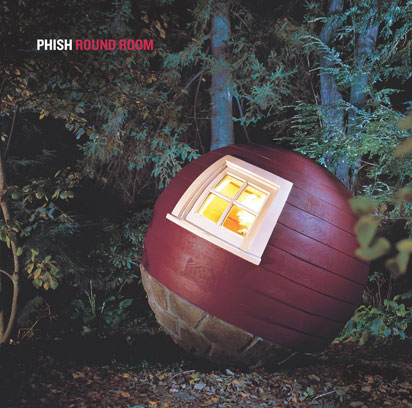
wallsSOUNDTRACK: PHISH-Round Room (2002).

round After Farmhouse, Phish went on a hiatus.  No one knew it would be quite so brief, but there was really a feeling that they were done.

And then they quietly released Round Room in 2002.  And it bursts forth with an 11 minute song.

“Pebbles and Marbles” has an interesting riff—complex and pretty.  And when I listened to it again recently I didn’t really quite recognize it.  But that’s because it’s nearly 12 minutes long and the really catchy part comes later in the song.  At around 5 minutes, the catchy chorus of “pebbles and marbles and things on my mind” announces itself.  And it is a good one.

“Anything but Me” is a pretty, mature song that is slow and piano heavy.  “Round Room” is a boppy little ditty (clearly a song written by Mike).  It is sweet and a little weird.  “Mexican Cousin” sounds a lot like a cover (maybe an old song by The Band) except for the solo which is very Trey.  It’s a funny, silly ode to Tequila.  “Friday” is a slow six minute song with two sections.  The verses are spaced out a bit, delicate riffs that are mostly piano once again.  The middle section is sung by Mike (which makes it more mellow somehow).

“Seven Below” is an 8 minute song.  It has another great riff (and the intro music is cool and bouncey).  When the vocals come in, it’s got gentle harmonies as they croon the sweet song).  Most of the 8 minutes are taking up with a guitar solo.  “Mock Song” is another of Mike’s songs.  This one seems to be a random selection of items sung to a nice melody.  Then when the chorus comes it’s quite nice, how this is a “just a mock song.”  The first verse is sung by Mike, then Trey does a kind of fugue vocal with different words in verse two.

“46 Days” opens with funky cowbells and turns into what seems like a classic rocking folk song—few words but a great classic rock melody (complete with 70s era keyboards).  “All of These Dreams” is a mellow piano piece, another mature song.  “Walls of the Cave” has an interesting piano melody that opens the song. The song is nearly ten minutes long and the middle part has a nice flowing feel to it.  There’s also a few sections that are separated be drum breaks—something that doesn’t often happen in Phish songs.  When the third part opens (to almost exclusively percussion, their vocals all work in a very nice harmony.  It’s a long song but with so many parts it always stays interesting.  “Thunderhead” is another piano-based song with some guitar riffs thrown on top. But it is largely a slow, mellow piece.

“Waves” is an 11 minute song with long instrumental passages.  It also begins with a kind of Santana feel to it, but it is a largely meandering song, with a simple melody that they stretch out for much of the song.  So this album proves to be an interesting mix of long jams and mellow ballady type songs.  It seems like Phish had a big mix of things to let loose.

[READ: November 1, 2013] If Walls Could Talk

This book reminds me of the work of Mary Roach—exploring a topic in great detail and including lots of amusing insights.  The two big differences here are that Worsley is British and that she goes back very far in British history to give us this fascinating information about the development of certain rooms of the house.

Worsley begins with the bedroom.  She looks at the furniture—the history of the bed from lumps with straw to fantastically ornate full poster beds that were made for kings who might never actually use them.

Then she moves on to more personal matters—sex (including deviant sex and venereal disease); breast feeding (for centuries mothers felt they were not equipped to take care of and nurse their own children, hence wet-nurses) and knickers (royalty had an entourage designed specifically to assist with underthings).  Indeed, privacy was an unknown thing in olden times.  Even royalty was expected to receive people in all of the rooms in the house.  Initially the bed chamber was for their most intimate friends, not just for sleeping.

The section on old medicine was also fascinating, they believed that it was vaporous miasma that did you more harm than say, excrement-filled water.

The section on Sleep discusses what was also in a recent article by Gideon Lewis-Kraus—that there were two sleep times at night.  With no electricity there was no artificial light to keep people up late so they would go to sleep early, wake up in the middle of the night (the best time for conception of children) and then sleep again. (more…)

Read Full Post »

lou_reed-620x412 SOUNDTRACK: LOU REED-Metal Machine Music (1975).

mmmfrom Wikipedia:

Metal Machine Music is generally considered to be either a joke, a grudging fulfillment of a contractual obligation, or an early example of noise music. The album features no songs or even recognizably structured compositions, eschewing melody and rhythm for an hour of over-modulated feedback and guitar effects, intricately mixed at varying speeds by Reed himself. In the album’s liner notes he claimed to have invented heavy metal and asserted that Metal Machine Music was the ultimate conclusion of that genre.

I don’t know how many people have actually listened to this album all the way through.  There are four 16-minute tracks.  Each one is, on the surface, exactly the same: feedback and more feedback.  In truth, the album is a bit more complicated than that.

There is a guitar in the left speaker and a guitar in the right speaker and each one is feedbacking in very different ways.  Indeed, if you listen to only one speaker at a time, you get a very different experience (I haven’t done that with the whole album, although that’s only because I really only found out about that recently, I did for a few minutes and it was pretty fascinating).

And fascinating is what this release is.  It was unlistenable in 1975, there is no question.  Just as something like Slayer would have been unlistenable in 1975.  But twenty years later, when Sonic Youth was riding high, Metal Machine Music seemed a lot less outrageous (indeed, their 1998 release Silver Sessions was essentially the same structure of feedback).

And now MMM seems very forward thinking.  Whether or not it was a joke or some kind of payback to the label or whatever (liner notes suggest he just really enjoyed enveloping himself in feedback), it’s a remarkable record.  If you can actually sit through it, there are some really interesting moments in it.  There are times when the squall and noise turns eerily beautiful, when the ringing notes take on chime-like status.

And unlike the aforementioned SY album in which they just turned up their amps and left, it sounds like Reed was actually hanging around and manipulating the sound.  You can hear times when new notes/strumming comes in and changes the mood.  And of course, Reed had to edit it for the album.

One of the more interesting moments comes right at the end of the disc.  On the vinyl release, he made a locked groove so the final rotation would keep repeating over and over until you had to get up and manually lift the needle (as if the album wasn’t difficult enough).  On the CD, they repeat that section for about a minute.  And that little repeated section is noteworthy for the rough distorted guitar and chiming feedback that all sounds very cool.

All of this is not to say that this album is enjoyable.  It’s really not.  It’s brutal and harsh and best handled in small doses (even Reed admits that in the notes).  But it is noteworthy and fascinating.  And it may have inspired as many feedback based bands as the Velvet Underground inspired droning bands.

[READ: November 2, 2013] “I loved Lou Reed more than you”

I was sad at the passing of Lou Reed, although I’ve never been a huge fan.  But of all of the eulogies, I knew that Neal Pollack would write the best one.

Neal Pollock is a wonderfully pompous “character” (who is the main character in most of the writing of his that I have read).  This article—while much briefer than most of Pollack’s short pieces—is an honest eulogy of Reed, but is also a hilariously over the top profession of fandom.

When Pollock heard the news of Reed’s death, he was polishing the acetate of his producer’s cut of Metal Machine Music.  He wept, mostly for himself but also “on behalf of all cultured people everywhere.” (more…)

Read Full Post »

april 2002SOUNDTRACK: PHISH-The Siket Disc (1999).

siketThis is an (almost) entirely instrumental disc.  It’s exactly the kind of thing that people think of when they imagine Phish—long jams with no structure.  But unlike some of their more frenetic jams, this is a kind of enjoyable chilling out disc.  The compositions are actually select excerpts from the long-form improvisations of the “Ghost Sessions.”

There are 9 songs and most of them are short.  Except for “Whats the Use” which is an 11 minute track with a very cool guitar riff (that reminds me again of Frank Zappa) and some cool accompanying keyboard sounds.

“Me Left Toe” is about 5 minutes and has a nice build up within  it.  And “The Name is Slick” is a bit more staccato and less smooth than the other songs and it holds up for 4 minutes.

Most of the other songs are short jams (with 4 tracks being about 2 minutes or less).  Although there are a couple of weird, nonsensey tracks like “Fish Bass” which is just a weird series of noises.  Or “Quadrophonic Toppling” which has some spoken words (just the title repeated) as does “Title Track” which has the repeated word “Siket”and laughing.  “Insects” is a little unsettling as well.

“The Happy Whip and Dung Song” is 5 minutes long and, despite some weird effect on the keyboards, feels like a full song.  “Albert” is a short, pretty, gentle ballad.  It’s a nice ending to this disc.  While this is by no means an essential Phish disc, it is an interesting insight into their recording process and is as I said, a good chill out album.

[READ: October 28, 2013] “Eternal Winter”

I had never heard of the Aral Sea before reading this article and I am surprised that I haven’t and I’m shocked by what has happened there.  Near the city of Karalpakistan (no connection to Pakistan), near Uzbekistan and Kazakhstan, lies the Aral Sea. It was once the fourth largest body of water on Earth, larger than lake Michigan.  It is now shrunk by approximately 74%.

It was through the Soviet Union’s thirst for development and “progress” that canals were built which diverted water away from the Sea.  This effectively slowly dried out the lake (which the Soviet Union knew would happen).  The Soviet Union also dumped insecticides and toxic waste into it, rendering what is left of the sea bed largely poisonous. Anything that is not poisonous is heavily salinated making it worse than useless.  And to make it worse (if that is possible), the windstorms that frequently occur simply pick up the toxic dirt and dust and blow it all around the land.  Without the water, the temperature soars in the region–often reaching 120 degrees.

One of the reasons for the diversion of the water was cotton.  Cotton is a thirsty crop and it was discovered that Uzbekistan was well suited to the climate for the crop.  They just needed more water.  And so in the 1950s, the Amu Darya river was diverted away from the Aral Sea and into the Uzbekistan deserts.  And cotton flourished there.  Then in 1960, the Aral Sea began to shrink. (more…)

Read Full Post »

curesSOUNDTRACK: PHISH-Billy Breathes (1996).

billyBilly Breathes is a much more mellow, acoustic feeling album from Phish.

Although the opener “Free” is a great song, with wonderful riffs.  It’s another of my favorites live, although the production sounds a little flat here, but the harmonies are great.  “Character Zero” again has a real ZZ Top feel (something many don’t really associate with Phish I’m sure).  But once the song proper kicks in, it rocks in a very Phish way.  “Waste” is a delicate song about insecurities that turns into a nice love song.  “Taste” is a rollicking piano-heavy song that gets played live pretty often and it sounds good here.

“Cars Trucks Buses” is a 2 minute instrumental that has a lot of organ in it, it’s very groovy.  “Talk” is an acoustic guitar/folky song.  You don’t hear it much live.  “Theme from the Bottom” gets us back into often-played territory, with its weird opening riff.  I really enjoy the way the bridge goes into a brief minor key, despite the overall happy vibe.  I like the harmonies towards the end, although the actual end of the song is a bit dull (the live endings are a bit more fun).

From here the album mellows out a lot.  “Train Song” is a pretty acoustic number with nice harmonies.  “Bliss” is an acoustic guitar solo.  “Billy Breathes” has more delicate harmonies and an acoustic feel.  “Sept Away” is another delicate short (90 second) song, with some more great harmonies. “Steep” is a slow, simple song (also 90 seconds) that has a pretty melody but serves more as an introduction to “Prince Caspian.”   “Prince Caspian” is a great epic-seeming song (even though it’s only 5 minutes long).  The build up is long , with the pretty chords repeating and growing fuller.  It’s a great live song and a great ending to this disc.

Although this disc has some great songs on it, it’s definitely not my favorite overall.

[READ: October 4, 2013] The Miracle Cures of Dr. Aira

This was another weird and fun book by César Aira (one of about six books he wrote that year). This one was translated by Kathleen Silver.  Ever since reading that Aira doesn’t edit his books—that he simply begins writing and lets the story keep coming out–I’ve grown suspicious of the beginnings of his stories. And so I am with this one. In the beginning there’s a whole thing about Dr Aira sleepwalking through a town.  He wakes up in various places, unsure where he is, but he’s never lost because he knows the streets so well.  This goes on for a few pages and then the plot kicks in.

Dr Aira is picked up by an ambulance—a man is dying right there in the ambulance and only Dr. Aira can save him.  Won’t Dr Aira help him? The Dr. refuses point blank.  He is convinced that this whole thing is a set up—why else would the ambulance (which he had heard for many blocks going up and down the street) be driving around with a sick man looking just for him instead of going to the hospital?  He will not help this man.  Disgusted, the ambulance driver pulls over and the Dr gets out.

So what is all this about? (more…)

Read Full Post »

« Newer Posts - Older Posts »