Feeds:
Posts
Comments

Archive for the ‘Death’ Category

SOUNDTRACK: KING CRIMSON-The Elements Of King Crimson – 2014 Tour Box (2014).

When King Crimson reunited in 2013, they prepared to tour as a seven piece behemoth the following year.  There would be three drummers, two guitarists, bass and horns.

And they were totally reinvigorated.

To celebrate this tour, Fripp and his minions created this Elements Tour Box, a 2 -disc set dedicated to displaying the elements that made up the band from the beginning until now.  It was made up of alternate takes, excerpt (lots of excerpts), live recordings and rehearsals from the entirety of the Crimson canon, including some of the 2014 shows.

It is a treasure trove for Crimson fanatics.  But it is also an excellent resource for anyone looking to explore the Crimson underworld without buying $150 boxsets.

The discs follow a vaguely chronological overview, starting in 1969 and moving on through 2008.  But there are 2014 takes of old songs thrown in as well–some sound better than others, but overall the quality is quite good.

The first disc covers 1969-1974.  It opens with
“Wind Extract,” which is the sound of Fripp’s mellotron being turned on back in 1969.
“I Talk To The Wind” is an instrumental version of the second song on ITCOTCK.  Purists will be able to tell how many things are different between this version and the actually-released product, but in a nutshell, this is the album version with no vocals.  It’s really interesting to focus just on the music and not the words for a change.  The song is quite pretty, with lots of flute.

“Cadence and Cascade” is from In the Wake of Poseidon and no one involved in the recording remembered Greg Lake singing a version of it.  Guest vocalist Gordon Haskell sang the album version.  Then someone recently found this “guide vocal” version of Lake singing it for apparently the first and only time.

The boxes often contain brief excerpts like this one–fifteen seconds of Fripp’s classical sounding guitars from “Cirkus.”  This is kind of an acoustic bridge before we hear the full song recorded in 1971 on the Lizard tour.  This song in particular sounds very dated live and the middle “circus sounds” sections are 70s crazy.
“Hoodoo (extract)” is a 2014 rehearsal that’s all of 20 seconds which segues into a raucous recording of Fripp playing a wild guitar solo for “Sailor’s Tale.”  It’s wild and really shows Fripp throwing everything he can at the song.
“The Talking Drum” is an early alternate mix which sounds great to me.  It gets really crazy by the end.

The “Lark’s Tongues in Aspect I” excerpt is from 2014 and is just Mel’s flute for 2 minutes.  It’s followed by a 1972 extract that’s just violin and dulcimer and harp.

This turns into a great new mix of the 11 minute “Fracture.”
After a minute of gorgeous harmonics by Fripp from “Fallen Angel,” we get a full, gorgeous 6-minute instrumental version of the song.  Because Crimson songs are so complicated and so carefully constructed, they are one of the few bands whose songs can have lyrics removed without them falling flat.
There’s a weird-sounding version of “21st Century Schizoid Man” from 1974, which sounds so very mid-70s in the recording style.  It seems somewhat slapdash compared to the utter tightness of the 2014 band.  The disc ends with Mark Charig’s cornet recording for the end of “Starless.”  On the proper release they use Mel Collin’s saxophone, but the cornet sounds delightful.

Disc two covers 1981-2008.

  This is pretty much the Adrian Belew era.  Belew was not invited back for the new incarnation, so that’s a little awkward.

It begins with an alternate take of the instrumental “Discipline.”  After a 45 second drum intermission, there’s a track called “Manhattan (Neurotica)” which is an instrumental version of “Neurotica.”  I love that the opening guitar sounds like sirens and car horns.
A minute and a half of the middle of “Neal and Jack and Me” is followed by the Steven Wilson mix of “Sleepless (Bearsville)” with an incredibly 80’s sounding slap bass from Tony Levin.

Then there’s a recording session of “Sex, Sleep, Eat, Drink, Dream.”  We hear lots of stops and starts, bass only, guitar parts and someone repeating “this is tough, tough shit.”
There’s a live version of “THRAK” followed by a minute of Fripp soloing around “Larks Tongue” called “Venturing Into Joy.”

This is followed by two tracks from Fripp’s side ProjeKcts,  “The Deception of the Thrush” is performed live by ProjeKct Four in 1998 with big thumping almost splatting-sounding drums.  Then there’s a trippy and ambient early version of “Heaven & Earth” by ProjeKct X.

After a scorching “Level Five” from 2008, there’s a minute long drum solo which would ultimately morph more fully into “The Hell-Hounds of Krim” and then two tracks from A Scarcity of Miracles.  “Separation” is an edited version of the bonus track (the disc label calls it something else).  And there’s an alternate take of “A Scarcity Of Miracles”–still long and a little too jazz-lite for me.

This is a really solid collection of all eras and styles of Crimson.  And it also showcases the various parts coming together.  A great production all along.

[READ: January 19, 2018] Monsters of the Ivy League

This book collects a series of Ivy League graduates and puts them in context with a they have a lot of support for all of their declarations.  Each entry gives a brief (biased) biography that highlights their flaws, outrages and downright unforgivable behavior.

So, rather than rewrite summaries of these assholes, I’ll present a grid with the shortcut (and some choice tidbits).  You can find the book and read the details for why our Ivy leagues have bred so many shitheads, including current miscreants:

Samuel Alito, Ben Carson, Ann Coulter, Ted Cruz, Laura Ingraham, Henry Kissinger, Dr. Oz, trump, and many more.

The introduction says that the term Ivy League refers to a bunch of football teams. (That’s why it says “league”).  The League was formed in 1954 to formalize the sporting relationship between eight teams: Brown, Columbia, Cornell, Dartmouth, Harvard, Univ of Penn, Princeton and Yale.

Of course, no one goes to these schools for sports, they go to find the best future contacts for your budding careers.

But read this book and remember:

An ivy education doesn’t force you to become a hideous person, but it doesn’t necessarily prevent it, either.

What follows is a smart-shopper warning to those applying, a count-your-blessings consolation to those who have been rejected and a watch-your-back caution to those already attending.

(more…)

Read Full Post »

SOUNDTRACK: TYLER CHILDERS-Tiny Desk Concert #729 (April 11, 2018).

I didn’t expect to like this set–I’ve really had it with country music encroaching on my radio station.  So when Childers was described as having “a coarse and soulful Kentucky drawl,” I wasn’t interested.

Especially when the songs were “about hard lives and hard love with direct heart.”

But he surprised me because it’s the coarseness that comes to the fore more than the drawl.  At least on the first song “Nose on the Grindstone” a song about a miner and the consequences of addiction.  I like his delivery and the intensity of the song.

The second song “22nd Winter” is a little less aggressive and his drawl does comes out, but he keeps it on the side of folk, in fact I would say more like English ballads than American folk.  He describes:

“This is a song about the first time I got snowed in with my in-laws,” he says, expecting a laugh, and giving it a beat. “It’s not a blues song, it’s a love song”)  “I’m pretty partial to my in-laws.  If you see my in-laws tell ’em I was talking good about then.

The final song is about the love of his life, “Lady May.”  It also has the feel of an old English ballad with the interesting chords and melody that opens the song.  I won’t be a huge fan or anything but I’d take him over many of the alt-country artists that I hear these days.

[READ: February 26, 2018] “Whites”

This is an excerpt from The Buddha in the Attic.

This excerpt is written entirely in the second person plural and it is about Japanese women coming to America–the first wave of migrant workers

It tells all of their stories in a sort of continuous forward motion.

The women settled at the edges of “their” towns. Unless “they” wouldn’t let them.  They moved from labor camp to labor camp.  They learned the word for water or they died from heatstroke.

In the beginning they wondered about the white men–why did they mount their horses from the left, why were the always shouting, why did they drink cows milk?

We were told to stay away from them to say yes sir no sir or nothing at all.

Some worked quickly, to impress, and they were admired for their tiny fingers and stature.

Even if their husbands were layabouts

Sometimes the bosses would proposition them with money or threats

Other times they shot holes at their shacks.

Some went to the suburbs and worked as maids, “we sang their children to sleep ever night in a language not their own.  Nemure. Nemure.”

We were taught how to light a stove, use a faucet, light a cigarette.

Some were inept and easily dismissed. Some made stupid errors and may have been fired or not

Some were seduced by the husbands.

Some went to J-Town which was more like Japan than Japan.

We promised ourselves we would leave and go to some other place.  Argentina or Mexico.  But eventually we’d go back home.

But for now we stayed.  What would they do without us?

This was an interesting excerpt–a realistic look at an overlooked subject.

Read Full Post »

SOUNDTRACK: LARA BELLO-Tiny Desk Concert #728 (April 10, 2018).

I was quite taken with the instrumentation on this Tiny Desk Concert.  Although Lara Bello sings in Spanish and the main instrument is flamenco guitar, the addition of the clarinet (Jay Rattman), was a real treat.  It was a sweet surprise in the beginning of the first song “Nana de Chocolate y Leche” and then it was like the addition of a new culture in the main body of the song when it had a more klezmer sound.

I love the percussion that Arturo Stable is playing.  In addition to the box drum, he’s got a wooden bowl with clattering stuff in it that he is manipulating with his foot.

I’m glad to note that the instrumentation was a deliberate choice and an eccentric one:

Lara Bello occupies the space between genres where magic happens. Born in Spain, she was raised with not only Spanish traditions like flamenco and canto but also pop music and jazz. The instrumentation she assembled for her Tiny Desk reflects that elastic approach to genre: acoustic classical guitar, clarinet, violin and a percussionist who didn’t keep time so much as color the proceedings.

None of this should detract from the amazing work of Eric Kurimski on guitar. It’s only about midway through the first song that you realize that all of the music that’s not clarinet or violin is coming from him.

Bello says that “Nana de Chocolate y Leche” is a lullaby for her friend who had twin babies one born with skin more the color of chocolate and one with skin more the color of milk. The na na na section was a lot of fun and felt like it could be any language especially as that section seems to drift every so slightly from flamenco.

“Suave” (soft) is about a butterfly that wants to reach the moon.  It opens with a beautiful violin (Janet Sora Chung) melody and a delicate clarinet addition.  The middle section of just guitar and violin is gorgeous.  I love hearing her sing the word “suave” at the end of the song.

“Sola” means “on my own” and is dedicated to everyone who has fallen deep and had to learn again how to fly again and once they did it, they flew higher.  It’s a pretty song with an extended clarinet solo.

After just three albums, Bello has become a noteworthy presence in the community of Spanish musicians who deftly mix jazz, classical and other traditions from Spain. That world can seem like a secret society to those who don’t understand Spanish, but you’ll see during Bello’s performances that the lyrics double as another flight of exploration as they float like wisps of smoke through the sonic spaces carved out by her collaborators.

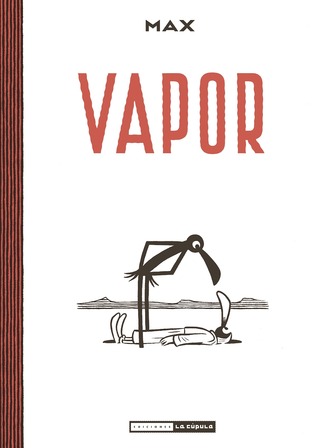
[READ: January 2, 2018] Vapor

Max is an illustrator from Spain (his full name is Max Bardin).

I really enjoy Max’s works.  Although not too many have been translated into English (this was translated by Carol Gnojewski), his visuals are pretty striking and “simple” and are easy to enjoy even if you can’t read the words (usually of dialog).

Max’s stories and pictures are usually pretty surreal.  I enjoy his pictures as much as the stories, although the stories are often quite funny and enjoyable even if they don’t always make perfect sense.  The fact thar the epigram is from Dinosaur Jr is pretty awesome: “I feel the pain of everyone / and then I feel nothing”

The main character of this story is a man with a crazily long, boomerang-shaped nose. He is lying in a desert saying he feels like he is floating.  Up walks a cat with a similarly large nose.  The cat says the man is just hungry.  The man says he is not.  The cat asks if he’s one of those self-righteous people.  The man says no, he is just looking for meaning.  The cat asks if he means God.  “No , God is only a contaminated and infectious idea.  I don’t pursue ideas, I seek experiences.”

Then he goes on to talk about Absolute and Transparent things, vacancy, silence, paradoxes. (more…)

Read Full Post »

SOUNDTRACK: CORNELIUS-Tiny Desk Concert #718 (March 19, 2018).

I was familiar with an artist known as Cornelius, but I guess I didn’t really know anything about him, because this blurb came as a total surprise:

As Cornelius, Keigo Oyamada has stretched his vision across frenzied indie rock, lush ’60s-style pop, psychedelic funk and glitched electronics, all deconstructed and reassembled like a neon cubist-pop sculpture. After a little more than two decades, no one can really imitate his complex cool.

Sporting a pair of sunglasses (always), Oyamada recently brought his band from Japan to the Tiny Desk on a rare U.S. tour, including his longtime collaborator and Pizzicato Five session musician Hiroshisa Horie, drummer Yuko Araki (Mi-Gu, Cibo Mato’s live band) and synthesist Yumiko Matsumura (Buffalo Daughter). They’re all musicians who tease and poke at music’s fringe territory, but still know how to make a song buzz and pop with gleeful curiosity.

So I guess I know Cornelius from Pizzicato Five.  But I was not prepared for the trippy synthy music that this band created.

Cornelius performs three very different songs from last year’s Mellow Waves. There’s the robotic groove of “Helix/Spiral,” which repeats and mutates the same phrase and melodic fragments in a delicate and strange dance.

“Helix/Spiral” is all synth with his vocals auto-tuned into robotic sounds.  The lyrics are mostly him speaking those two words over and over (which I thought was saying Alex Spy-lo, but that is clearly me not understanding his accent.  The synths are great.  One is doing cool trippy backing sounds while the main riff is a disjointed melody that begins confusing and ends as an earworm.

“In a Dream” is a star-swept landscape that invites the subconscious to search for meaning, its keyboard flourishes and light acoustic strums so breezy you could almost call it a kind of retro-futuristic yacht rock.

I love the full synth sound (and swirling bass of “In a Dream”).  I believe he is singing in Japanese.  The chorus of the song is so incredibly catchy in an almost light folk sort of way.

But set closer “If You’re Here” is the real marvel to behold live, as the band performs at different tempos, gradually solving a polyrhythmic puzzle of a slow jam. The song also features one of my favorite guitar solos in recent memory — it’s unflashy, but twists, spits and resolves in the most unexpected ways.

“If You’re Here” is a longer song–nearly 7 minutes–with a kind of slow building feel.  Those electric guitar solos from Cornelius himself are very cool indeed.  There’s a lengthy instrumental coda at the end which is very trippy and cool.

I really enjoyed this set and every new listen brought in something new.

[READ: January 9, 2018] “The Send-Off”

This is an excerpt from a novel called Inhumaines which has just come out in English (translated by Camille Bromley).

The previous piece that I read from Claudel was pretty surreal.  This one is as well.

It begins

Last night, Roger Turpon, from dispatching, invited us to his suicide.  There were twenty of us.  Family and friends only.

Turpon has been talking about killing himself for a while now, but boy “A suicidal person is tiresome.”

Finally Dupond helped him out by calling him a coward, saying he won’t do it.  They stood in the parking lot in mid-autumn with leaves blowing all around them.  “It was lovely.”

Three days later they received the invitation: Mr and Mrs Turpon are delighted to invite you to Roger’s suicide this Saturday. (more…)

Read Full Post »

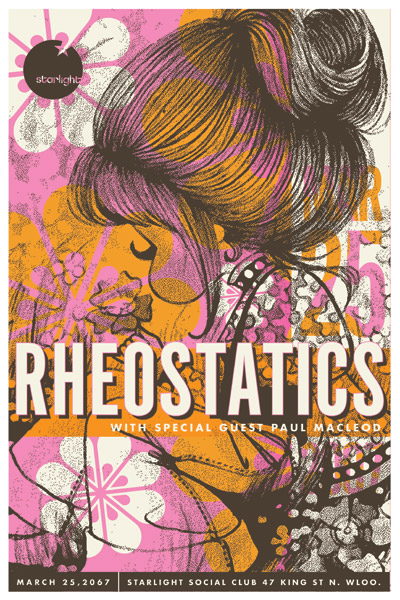
SOUNDTRACK: RHEOSTATICS-Starlight Club Waterloo, ON (March 25, 2007).

Rheostatics ended the first (or second, or third or whatever it was) phase of their career on March 30, 2007, presuming never to play again.  Before that final show at Massey Hall, the band played a few warm up gigs.

This first one was in Waterloo, perhaps a little over a year since their last live gig together.  It was hampered by the fact that Martin Tielli had laryngitis (just a few days before their final ever gig!).  Martin sounds like a caricature of a mobster whenever he talks–deep voiced and strangely Brooklyn-y.  And, obviously they don’t play many of the songs that he sings lead vocals on.  So, it’s a practice show of a sort.

Martin’s guitar is also too loud in the mix for some reason.  This means you can really hear the great sounds he’s making but it’s really distracting when it’s all you can hear.

“Fat” opens the show with all kinds of crazy sounds that Martin is making.  It sounds really cool and it goes on for quite a while, but it totally overwhelms Dave’s guitar and you can barely hear the bass.  The first time Martin sings backing vocals, he sounds completely sinister.

Next up is “Marginalized.”  There’s a long intro with some cool guitar sounds.  Tim’s voice is so quiet and Martin’s guitar so loud that the song sounds bizarre.  It also feels strangely subdued for such an angry song, but that may just be the mix.

“Me and Stupid” sounds good, although Dave forgets some words: “hang on, I got it, I got it.”

Dave tells a story of their first ever trip away from their home town.  Thanks to doc who brought us in to our first show in Waterloo in 1981.  We were ate the Kent hotel opening for L’Étranger, an old heroic Toronto punk/new wave band with Andy Cash, Chuck Angus and Bruce “Bruce P.M.” Meikle.  [Interestingly as of 2011, Angus and Cash were both in politics, sitting in the Canadian House of Commons as members of the New Democratic Party caucus].   We had on our dad’s blazers–our dads dressed cool at one time.  We did our set and were preparing to get high when L’Étranger showed up.  They had ripped jeans and leather jackets and they were shaking.  They had opened for the Dead Kennedys at the Concert Hall where they had been driven from the stage by spit and blood.  We thought they were a real band.

Tim picks up the story: they decided t o drive around and went to a park to get high.  Then the police came by.  Maybe they’d never smelled marijuana in Kitchener/Waterloo, but they let us go. Then we couldn’t find our way out of the twin cities.  We always got lost and ended up at the Alexanian Carpet Factory.

Paul Macleod fronts us for the next song, “Soul Glue,” another Northern Ontario tragedy.  Although it is sung by Tim.

“Four Little Songs” runs to 12 minutes long.  It has a fun cheesy keyboard sound and a silly long introduction.  Martin sings his and sounds insane.  Ford would you like to sing us a song?  Ford recites a quote from Valley of the Dolls, and the band poo poos that it was a song.  Martin sounding like a movie wise guy asks, “Ford was that really a song?”  So Ford sings a new song about Martin having laryngitis and he gets half of the room to sing “laryn” and the other have “gitis.”  Dave: “That bit’s gonna be great at Massey Hall.”

They do a really nice harmony at he end of the song “now they’re gone.”

Paul is back to the stage for “Little Bird, Little Bird,” although I’m not sure doing what.

Tim sings “Here comes the Image.”  I guess Martin is not on this song at all because everyone sounds the same level.  The keyboard solo is all back and forth in the headphones.

Guitar tech Tim Mech plays the terrific solo on “Legal Age Life.”  Then Martin says, “we’re gonna do ‘Take Me In Your Hand.'”  He gets cranky (or it’s just his voice–“oh Jesus, I’ll play it on electric.”  They either don;t play it or it didn’t get taped.  They move on to “Ozzy,” instead.  Martin, “we’re skipping tunes… things are changing…  We’re doing “Feed Yourself.”  This version is really intense with a lengthy guitar solo.   It runs about nine minutes.

Selina Martin comes out to sing “Dope Fiends and Booze Hounds.”  She says, “Poor Martin broke his voice.”  He makes up for it with a wild loud solo.  Then the go for a break.

Tim comes back out for the encore. He says some nice things, explains Martin’s voice and says somebody asked “Row” which he hasn’t done in a long time.  It sounds pretty good.

Andrew Roark the world’s tallest guitar tech and Paul will help us sing “Claire.”  Then they start “Horses” and Dave asks, “who has it in them to sing ‘Horses’ for us?”  The unnamed fan comes up and does a pretty decent job.  Martin’s solo is also really loud.

Finally Paul Macleod comes back to sing “Record Body Count.”  He says can you believe I get to to do this?  This is fucking crazy?  He sings an angry sounding version (not all that well).  Then he starts singing the praises of the band–really lays it on thick.  “This is the best band of all time.  Nobody is as good as this.  He gives a nod to Rush (Martin plays the Tom Sawyer riff).  He ends with I cannot believe that I have been alive during the time of this band (Dave: Holy shit!)

Martin recites (incorrectly) the end of the lyrics in that scary voice.

Someone (Paul, Michael?) starts the “whoo hoo hoo” intro to “Aliens.”  It’s pretty poor singing (he can’t get even close to the high notes), but it’s all in fun.

Michael: “give me more of Martin’s guitar in the monitor.”  Tim: “give me more of Martin’s voice, I can’t hear him.” (ha)

They play a really solid version of “When Winter Comes” (all 8 minutes of it), with Dave correcting one mistaken lyric “It’s ‘coal men’ not ‘snow men.'”

The show ends with a wild, scorching rendition of “R.D.A” with lots and lots of screaming from everyone except for Martin.  We hope that he will be ready in five days.

[READ: September 10, 2017] “Synchronicity”

I don’t know if it’s because I’m a city slicker or cosmopolitan or whatever stupid word people use for us East Coasters, but I don’t get stories like this.  And I don’t like them, either.

I can never tell if there’s supposed to be something beyond the obvious–some down home wisdom that I’m missing, maybe?

As far as I can tell, this story is about a guy visiting his friend Ward.  Ward likes to fix things, so when the narrator has a problem–like with his John Deere, he asks Ward for help. (more…)

Read Full Post »

SOUNDTRACK: JOHN PRINE-Tiny Desk Concert #717 (March 12, 2018).

For all of the legendary status of John Prine, I don’t really know that much about him.  I also think I don’t really know much of his music.  I didn’t know any of the four songs he played here.

I enjoyed all four songs.  The melodies were great, the lyrics were thoughtful and his voice, although wizened, convey the sentiments perfectly.

The blurb sums up things really well

An American treasure came to the Tiny Desk and even premiered a new song. John Prine is a truly legendary songwriter. For more than 45 years the 71-year-old artist has written some of the most powerful lyrics in the American music canon, including “Sam Stone,” “Angel From Montgomery,” “Hello In There” and countless others.

John Prine’s new songs are equally powerful and he opens this Tiny Desk concert with “Caravan of Fools,” a track he wrote with Pat McLaughlin and Dan Auerbach. Prine adds a disclaimer to the song saying, “any likeness to the current administration is purely accidental.”

I thought the song was great (albeit short) with these pointed lyrics:

The dark and distant drumming
The pounding of the hooves
The silence of everything that moves
Late in night you see them
Decked out in shiny jewels
The coming of the caravan of fools

That song, and his second tune, the sweet tearjerker “Summer’s End,” are from John Prine’s first album of new songs in 13 years, The Tree of Forgiveness.

He introduces this song by saying that.  This one is a pretty song.  It might drive you to tears.  He wrote this with Pat McLaughlin.  We usually write on Tuesdays in Nashville because that’s the day they serve meatloaf.  I love meatloaf.  We try to write a song before they serve the meatloaf.  And then eat it and record it.

For this Tiny Desk Concert John Prine also reaches back to his great “kiss-off” song from 1991 [“an old song from the 90s (whoo)…  a song from the school of kiss off 101”] called “All the Best,” and then plays “Souvenirs,” a song intended for his debut full-length but released the following year on his 1972 album Diamonds in the Rough. It’s just one of the many sentimental ballads Prine has gifted us.

He says he wrote it in 1968…when he was about 3.

Over the years, his voice has become gruffer and deeper, due in part to his battle with squamous cell cancer on the right side of his neck, all of which makes this song about memories slipping by feel all the more powerful and sad.

“Broken hearts and dirty windows
Make life difficult to see
That’s why last night and this mornin’
Always look the same to me
I hate reading old love letters
For they always bring me tears
I can’t forgive the way they rob me
Of my sweetheart’s souvenirs”

The musicians include John Prine, Jason Wilber, David Jacques and Kenneth Blevins.


[READ: December 11, 2017] X

I really enjoyed Klosterman’s last essay book, although I found pretty much every section was a little too long.  So this book, which is a collection of essays is perfect because the pieces have already been edited for length.

I wasn’t even aware of this book when my brother-in-law Ben sent it to me with a comment about how much he enjoyed the Nickelback essay.

Because I had been reading Grantland and a few other sources, I have actually read a number of these pieces already, but most of them were far off enough that I enjoyed reading them again.

This book is primarily a look at popular culture.  But narrowly defined by sports and music (and some movies).  I have never read any of Klosterman’s fiction, but I love his entertainment essays. (more…)

Read Full Post »

SOUNDTRACK: KUINKA-Tiny Desk Concert #716 (March 9, 2018).

Kuinka are a happy band.  Smiles are on all four members’ faces as they play their three songs.

Miranda Zickler says that they spend all of their time in the van listening to NPR, so this is pretty exciting for them.

The blurb says:

Last year I came across Kuinka (coo-WINK-uh), a band from Seattle… Kuinka’s live performance knocked me out even more than the creative video they’d submitted for the contest.

Since then, Brothers Zach (guitar) and Nathan (mandolin) Hamer, along with Miranda Zickler (keys) and Jillian Walker (cello), have come to D.C. for an official performance at the Tiny Desk, bringing with them their great harmonies and unique blend of energetic, string-band music with a dose of synth.

I’m not sure what the band sounds like normally–if they typically play electronic drums or what, but as the blurb notes

The songs are performed here on relatively tiny instruments, including a ukulele, a drum pad, a small synth, a mandolin and a banjo, along with an electric guitar. But the performance is fleshed out beautifully with rousing vocal harmonies.

All three tracks performed here are from Kuinka’s 2017 EP Stay Up Late, and each one has its own charm.

“Curious Hands” has lead vocals by Miranda.  There’s a cello, keys and Nathan playing a small acoustic six string guitar (or ukulele?).  He gets a pretty big (largely percussive) sound out of that little thing.  But it’s the harmonies that are really spectacular.  I feel like the electronic drums are a little too electronic for this largely folk band but whatever.

For “Spaces,” Zach switches from electronic drums to electric guitar.  He also sings lead with an unexpected twang.  Nathan has switched to mandolin which gives the whole song a kind of Americana vibe.  The electronic drums sound they chose is awful, but there’s a really cool synth sound between verses that prevents this from being overtly in one genre.

Miranda “explains” the name of the band: Kuinka is like kuinka-dink but it doesn’t have anything to do with that, it’s just a coincidence [that’s our ‘bit’].

The blurb’s recommendation to stay until “Mistakenly Brave” is a good one as it is the most rousing song.  They revert back to previous instruments, although Miranda plays banjo.  The harmonies are terrific (much better than the solo vocals, honestly).  It’s got that whole The Head and the Heart vibe going on.  Big soaring vocals and a cool break that leads to a rollicking coda.  Mid way through, Zach switches back to electric guitar to add some oomph.

[READ: April 20, 2016] Endpoint

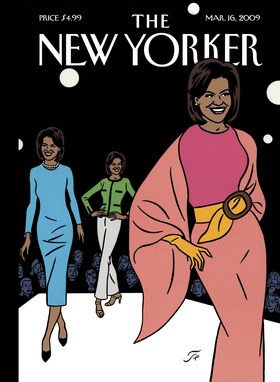
John Updike died in January 2009 after decades of writing for the New Yorker and elsewhere.  As the news settled in the magazine ran this tribute to him in the March 16 issue.

Rather than running a story, they published a ten-poem sequence called “Endpoint,” (I didn’t even know he wrote poetry).  Most of these poems were written in 2008, while presumably, he knew he was dying from lung cancer.

Endpoint (more…)

Read Full Post »

SOUNDTRACK: RED BARAAT-Shruggy Ji (2013)..

Red Baraat’s second album feels a lot bigger than their debut.  The production is bigger, there’s (even) more diverse sounds.  And there’s a lot more vocals album.

I enjoyed the brrrrrr ah! vocals, but I’m a little less excited by the rapping. Primarily because the lyrics are pretty lame (party type lyrics for the most part). But that doesn’t diminish from the music, which is super throughout.  It feels big and solid–evidently the band was recorded playing all together with only minimal overdubs.

“Hala Bol” opens with a wild melody and some singing “bol bol bol, hala bol–RAISE YOUR VOICE!–baby baby bol hala bol.”  The song is pretty long (as most of these are and the middle features the guys chanting all manner of things in possibly different languages.

“Tenu leke” opens with a celebratory “Brrrrrrrrr ah” and chants of  “hoy hoy hoy.”  There’s a wonderful uplifting sense to the melody especially when the song takes a breath and the notes spring forth once more.

“Shruggy Ji” opens with some slow, ominous horns for about 25 seconds and then the dhol, percussion, and drums kick it up into a furious meld of go-go funk, hip-hop, jazz, and South Asian groove.  The powerful funk makes way for a good-natured rap: “Move your body and shake those hips / just feel the rhythm all under your skin / drip drop the sweat / shruggy ji lets begin.”  Nothing exciting, but fun.  The rap in the second half is less successful although I’ve read that it’s meant to be all in fun, so I guess a line like “I’m gonna ask you some question like I was Biz Markee” is just comical.  About the song band leader Sunny Jain says, “We like to think of ‘Shruggy Ji’ as that shadow lurking next to us, waiting to take over when the night falls and move our body with no inhibitions.”

“Burning Instinct” has the kind of booty shaking vibe that make you wanna move.  The dueling horn solos add to the fun chaos that the percussion is creating.

“Dama Dam Mast Qalandar” has lyrics in Hindi (I assume) which seems to work better because I’m not trying to figure out what he’s singing about.  “Sialkot” opens with some thundering dhol paying and lots of “brrrr ahs!”

“Private Dancer” also features rapping party vocals over some slow rolling funk.  I love that it begins with someone shouting “yo, turn that dhol up!”   “F.I.P.” is full of more fun and dance and lots of call and response. “Apna Punjab Hove” has a bit of an upbeat  reggae feel and a smidge of klezmer for a change of pace.  It’s still dancing, just a different step.  Lots of chanting of “ah -ha” and the like.

“Azad Azad” is an album highlight.  It’s got great percussion and a fun riff from the horns and lots of chanting.  Unlike some of the more partying songs, this one is more political: “no borders, no walls, freedom [sings / dances / rings] through us all.”

“Mast Kalander” is a fun song which proves that the more nonsensical the lyrics, the better the party: “jump in the sauce / throw your hands up and go crazy.”  I love how it gets faster and faster as it progresses.”

“Aarthi”ends the album with a cool, jazzy melody.  The party is over and it’s time to go home so lets chill things down a bit.  I love that the song opens with what sounds like someone blowing into a bass saxophone and making vocals sounds at the same time.  It’s pretty cool.

The lineup remains the same as the first album:
Sunny Jain – dhol ; Rohin Khemani – percussion ; Tomas Fujiwara – drumset ; Arun Luthra – soprano sax ; Mike Bomwell – baritone sax ; Sonny Singh – trumpet ; MiWi La Lupa – bass trumpet ; Smoota – trombone ; John Altieri – sousaphone.

[READ: January 24, 2018] “Maps and Ledgers”

I haven’t really enjoyed the stories by Wideman that much.  So I wasn’t really looking forward to this one.  But it proved to be pretty straightforward and quite compelling.

As the story opens we meet a man who says that in his first year teaching at the university, his father killed a man.  The narrator was barely established in the school–he had no phone in his office–so the call went to the English Department chair’s office.  It was his mother, sobbing and blubbering.  He had told her to call there only in an emergency, which this was, obviously.

The chair was a southern gentlemen and he respectfully left the room once the narrator had been called down.

But the story isn’t just about him.  The narrator’s Aunt C got his father a lawyer.  Aunt C was a pioneer.  She had served as a WAC office in WWII and submitted applications for jobs through the Veterans Administration.  She managed to get a job in the city planners office before they realized she was black.

They did not convict his father–the victim was black after all.  But things got worse for him.

And this is when another one of Wideman’s stories gets confusing.

My father’s son, my youngest brother, convicted of felony murder. And years later my son received a life sentence at sixteen. My brother, my son still doing time. And my father’s imprisoned son’s son a murder victim. And a son of my brother’s dead son just released from prison a week ago. And I’m more than half-ashamed I don’t know if the son, whose name I can’t recall, of my brother’s dead son has fathered son or daughter.

Gets confusing doesn’t it?

Yes it does. (more…)

Read Full Post »

 SOUNDTRACK: RED BARAAT-Chaal Baby (2010).

Red Baraat is one of the few bands to play two Tiny Desk Concerts. I’ve also had the fun experience of seeing them live.

The band was founded by dhol player Sunny Jain as a way to bring Bangrha music to Brooklyn.  The band speaks to many disciplines and plays a wonderful mash up of styles.  So while the foundation is bangrha music, there’s elements of funk, go-go, Afro-Cuban, Brazilian, and jazz–all designed as one big party.

This debut album features the dhol, soprano and tenor sax, trumpets, trombones, sousaphone and drums and percussion.

To my ear the sousaphone is the grounding instrument–often standing out as the bass while the rest of the brass is playing melody or soloing.  And yes, sometimes the sousaphone gets a solo or two as well.

I love the vocal interjections–whether nonsense or actual words I can’t tell, but they are often fast and fun–good punctuation to the melody.  And the band knows melody.  The main riff of “Tunak Tunak Tun” is a blast.  And the vocal phrases are there to humanize the party.  I didn’t realize that this was a cover of Bhangra pop singer Daler Mehndi’s song of the same name, but that explains the catchiness.

In fact there are several covers on the album.  “Hey Jamalo” (a reworking of Malkit Singh’s popular “Hey Jamalo Tootak Tootak Tootiyan”) opens with a rousing introduction with a solo from dhol.  I rather wish there was more obvious dhol playing (which is so much fun to watch live) but it blends in pretty perfectly with the rest of the music and fits perfectly with the percussion solo in the middle of this song.

They play three Bollywood soundtrack hits “Dum Maro Dum,” “Samaro Mantra,” and “Mehndi Laga Ke Rakhna.” “Dum Maro Dum” has some cool percussion sounds an a real jazz feel–I love the way they stretch out the notes in the middle.

The word Baraat (Hindi: बरात) (Urdu: برات‬‎) means a groom’s wedding procession in North India, West India and Pakistan.  Unsurprisingly, they play two covers of traditional Indian wedding songs “Punjabi Wedding Song (Balle Balle),” which has some fun stop and start melodies and a real marching band kind of vibe and “Aaj Mere Yaar Ki Shaadi Hai” which opens with some dramatic percussion before settling into some very pretty processional music.

But it’s not all raucous party music.  “Arcana” slows things down with a cool riff or two and nice accompaniment.

However, other songs like “Drum and Brass,” escape easy categorization with a clarinet reminiscent of Eastern Europe combined with percussion and melodies from Western Asia.

The title song “Chaal Baby” has some great chanting and dramatic horns moments which I saw described as “the Dirty Dozen Brass Band gone Bollywood” or belonging at a Punjabi football halftime show.

Speaking of marching band, there are a few moments on this album that felt kind of like a marching band to me.  “Mehndi Laga Ke Rakhna” was an example of a marching band vibe.  That kind of sound is hard to avoid (if indeed they are trying to) with that kind of instrumentation, although perhaps that is the inevitable comparison to processional music. My experience is that it works better live than on record.

But songs like the original “Baraat to Nowhere,” showcase a great original melody and some fun soloing.  Nearly every song features a solo by one or more members of the band allowing everyone to show his chops.  And back to that sousaphone–I’ve never heard anyone make sounds like that from an instrument before.  Great stuff.

“Samaro Mantra” the Bollywood song, ends the album on almost a down note.  The melody is somber, the drums are martial.  It’s kind of an odd choice for an otherwise upbeat and celebratory album.  But maybe it works as a calm down after an exiting wedding–time to go home everybody, party’s over.

Sunny Jain – dhol / drumset / percussion ; Rohin Khemani – tavil / doumbek ; Tomas Fujiwara – drumset ; Arun Luthra – soprano sax ; Mike Bomwell – tenor sax ; Sonny Singh – trumpet ; MiWi La Lupa – bass trumpet ; Smoota – trombone ; John Altieri – sousaphone

[READ: January 14, 2018] “Pieces”

I rather enjoyed Hye-Young Pyun’s previous story and was intrigued to read another one.  This one was translated by Sora Kim-Russell.

The previous one was thoughtful and disturbing and so is this one.

In this story, which is surprisingly unspecific about the characters, a man’s wife went missing a month earlier.  She slipped off off of a gorge and was presumed drowned.

He has just gotten a call from the police that a body part has been found and they would like him to identify it.  The part that was found was a right leg. (more…)

Read Full Post »

McSweeney’s 49: Cover Stories: Contemporary writers reimagining classic tales (2017)

SOUNDTRACKBIG K.R.I.T.-Tiny Desk Concert #714 (March 5, 2018).

A while back I downloaded one of Big K.R.I.T.’s mixtapes and rather liked it.  Since then he seems to have become pretty huge and I feel like he has really expanded on his style.

K.R.I.T. sings/raps three songs from his new album.

4eva Is a Mighty Long Time, a double album in which he covers everything from blessings to depression while plumbing the carnal and spiritual depths of his own duality. All three songs performed here come from side two, titled after his birth name Justin Scott.

The first song “Mixed Messages” is really thoughtful.  He sings and raps

I gotta whole lotta mixed messages / in my songs am I wrong / to feel this way
I got me a lover but I still wanna cheat / I wanna be saved but its fuck the police
i never really liked the fake shit / but I’m attracted to the fake ass and fake tits
i really wanna sing but id better rap

K.R.I.T.’s backing band, which includes Burniss Travis II on bass and Justin Tyson on drums, also features on keys Bryan Michael Cox — the hitmaking producer and songwriter behind a slew of Billboard chart-toppers. Together, the trio delivers stripped-down versions of the latest thought-provoking material in Big K.R.I.T.’s catalog.

Introducing the second song, “Keep The Devil Off” he says his grandmother introduced him to gospel.  She brought him to church and “she would wake me up when i fell asleep saying wake up you gotta hear this.”  He sings beautifully.  And then the rapped verses are really well structured.

And when he stops to pay homage to his church-going grandmother before performing “Keep The Devil Off,” it’s clear that everything she instilled in him is keeping him alive, too.

Definitely in these times we need to keep the negativity away–keep the devil off.

His grandmother was clearly very important to him.

Big K.R.I.T. has kept her spirit alive through his music since his breakout mixtape, K.R.I.T. Wuz Here, which he released in 2010, the same year she died.  So it only makes sense that he would bring her with him for his Tiny Desk concert.

Halfway through his three-song set at NPR Music headquarters, K.R.I.T. stops to pull out an old-school tape recorder — the same one his grandmother would use to record him singing and reciting poetry as a child. “I have to feel like my grandmother was my first mix engineer,” he says before pressing play to reveal him and his brother as kids singing a duet of R&B crooner Donell Jones’ 1999 slow burner, “Where I Wanna Be.”

He plays the tape and cracks up listening to it.  He gets the audience to sing the refrain with his younger sell.  And then his grandmother introduces he and his brother as an R&B singer, “but I’m sticking with the rap thing.”

It’s a sublime interlude — one that resonated so strongly with K.R.I.T. that he had to start his last song, “Bury Me In Gold,” over to catch the proper beat. “I’m super emotional from this, too,” he says, laughing in a moment so genuine it was only right to leave it unedited.

He says “Bury Me in Gold” is not about gold really, it’s about having something so that in the event he gets to heaven he’ll give everything away.

He tells us to remember that peace of mind and your soul are more important than gold.

I’ve always enjoyed thought provoking rap and K.R.I.T.’s lyrics combined with his voice really work wonders.

[READ: May 29, 2017] McSweeney’s 49

It has been a long time (three years or so) since the previous McSweeney’s volume.  During that silence, the publishing house went non-profit and that seems to have taken up a lot of their resources.  They even address this a bit in the interdiction to this book.

But regardless of the reasons why, it is great to have them back.

As the subtitle says, this is a book of “cover stories.” What that means is a little vague–the contemporary writers model their story after a classic story.  I try to compare it to music covers, although in music covers the music and words are typically the same with some kind of variations.  Typically, the words are the same but the music is different.  I liked to flip this idea on its head for describing these stories in that the words are different by the music is the same.

Since I don’t know most of the original stories here I don’t know how similar these are to the originals–same character names?  Same ideas?  Same plot?  I don’t know.  And perhaps it would affect the way I read these stories if I was familiar with theory original pieces.  But without knowing them, these just turned out to be good stories from good writers.

Interspersed between the stories were poems and, in a wonderful commentary on our current shitty president and the cowardly house of representatives who on the day I finished this voted to strip 24 million people of health care, are comparisons of classic historical figures’ speeches with the petty garbled tweets of out current crap in chief.  Can we impeach this motherfucker already?  And send the whole lot of them to jail, please.  #ITMFA

As many McSweeney’s do, this one opens with letters.  And of course they aren’t really letters at all, even if they are addressed to McSweeney’s.  Many deal with cover songs, but a few are much more serious, political and right on.

WAJAHAT ALI writes from Camp FDR in Washington DC where he and his fellow prisoners were finally able to cobble together WiFi.  Ali explains that the Executive Order was inevitable the ban, the vetting, the registry were all just prelude. The need to protect against terrorism outweighs the individual rights and the rights of American Muslims…read the Supreme Court decision.

NICK JAINA writes about the Sept 23, 1970 episode of The Johnny Cash Show in which Ray Charles appears and plays “Walk the Line” and then “Ring of Fire.”  The letter states that the creator of “Ring of Fire” is actually mis-attributed.  The story is that June Carter wrote it after seeing a page in her uncle’s book of Elizabethan poetry.  But Johnny first wife claims that Johnny wrote it while drunk about a certain female body part: “all those years of her claiming she wrote it and she probably never knew what the song was really about.”  Then it reverts back to Ray Charles’ performance with an unseen band playing behind him–especially a great baseline–and as the song ends he lets out one last shudder and cackle like he just invented the orgasm.  “Johnny returns to the stage looking like a man who just watched someone have sex with his wife but was so in awe of how good he was at it that he could only thank him.”

ROBIN TERRELL talks about trumpmania in the Czech Republic from the perspective of a black woman, lesbian, child of civil rights activists, mother of a black man living in Prague.  The look in the eyes of people after the election: The U.S. is going to fuck us over again.  It stunned Europeans that the U.S. could generate someone fouler than Europe’s own crop of white male extremists.  She is now a refugee from her own country.  #RESIST #ITMFA

KIMBERLY HARRINGTON says she always believed that even in the darkest times humor has its place.  But lately she’s been bursting into tears rather than cracking a smile.  She hopes she can find things to laugh at–even death in these horrible times.

MARY MILLER says that for the longest time she thought her uncles wrote “Stagger Lee.”  Her uncles were musicians who wrote songs but also threw some covers into their shows.  She believed that “Stagger Lee” was one of theirs. She realizes that they are not famous and that no one will remember them–but she promises them that she will remember them.

RICK MOODY writes at length about Elektra’s 1990 tribute album Rubaiyat: Elektra’s 40th Anniversary.  I remember it coming out and I remember not getting it because it was too expensive. But Moody talks about what a great conceit this collection was to have contemporary artists cover classic songs.  He also talks about how the tribute album was quite popular in the 1990s (was it ever).  Some thought: He loves Bjork, but he thinks of the Sugarcubes as a cheeseball imitation of the B-52s (and that their “Motorcycle Mama” is pretty bad.  He mentions a few great tracks, like Kronos Quartet covering “Marquee Moon,” Metallica doing “Stone Cold Crazy,” and even a Howard Jones cover of “Road to Cairo” by the cult hero David Ackles.   But he says fully half of the collection is bad, some of it even awful–not worth its list price at the time but it has a great number of masterpieces on it.

Will Buttler (from Arcade Fire) wishes to make some amusing corrections: some errors during concerts, and apologizing for singing “I’m So Bored” with the USA because he is not.

ARIEL S. WINTER-This is an interesting philosophical question wondering whether or not Marty McFly actually created “Johnny B. Goode.”  How could he cover it before Chuck Berry had released the original.  As a child this blew her mind.  This facile beginning then goes on to say that before recorded music the notion of a cover didn’t really exist.  And indeed in the 1950s people recorded songs without concern for copyright.  It’s also true that when Chuck Berry plays Johnny B. Goode live, it’s not considered a cover of his original.  She concludes by that the Back to the Future is probably the first time she ever heard Johnny B. Goode.  So Marty McFly’s is the original to her (as it is to all the kids at the dance).  So in addition to a song having an original for the performer there is also an original for the listener.  Anyone who has loved a song for years before finding out that it’s a cover has had that experience.

INTRODUCTION BY THE EDITORS

This introduction talks about how the first time they did a “cover story” was in 1999 in issue 4.  Rick Moody covered Sherwood Anderson’s “The Egg.”  They had been planning to do an entire issue of covers as far back as two years ago and then things happened in the McSweeney’s universe to delay it.  And now : this issue is being born in a moment of racial, social and economic reckoning and imminent fascism…into a country that looks much different from the one in which it began, fronted now by a mean and disingenuous imitation of a president.   As such: Tucked between these thirteen beautiful renditions of thirteen classic stories are instances when a cover is not an homage but rather a perversion of its predecessor”  And by that they offer examples of eloquent speeches by former leaders and then tweets from our pervert in chief.

GARY BURDEN-excerpt from Nobody Knows (an autobiography)

Gary Burden created the cover images for this issue.  I had no idea who he was, but this autobiography tells me just how interesting a fellow he was.  He has been responsible for some of the most iconic album covers of the last 60 years!

These excerpt shows his origin story–he was 8 on December 7, 1941 and he has had vivid memories of WWII.  When he was 16 he joined the Marines.  But he was restless, got involved in bad things, was dishonorably discharged and got mixed up with even worse people (he says he can’t believe the things he did back then).  In 1964 he met “Mama” Cass Elliot. They spent a lot of time together and this opened him up to meeting all kinds of people: David Crosby, Stephen Stills, Graham Nash.  Eventually he met and hung out with Jim Morrison and designed Morrison Hotel (a fascinating story that).  In one of the nicer things I’ve heard someone say he says that Jim was a real poet, someone who was unafraid of delving deeply into life irrespective of the personal cost.  Then he met Neil Young. He says that Buffalo Springfield has been his favorite band and then one day Neil came to Mama Cass’ house in his 1948 Buick Hearse.  He was also hanging around when CSN decided to become CSN&Y and then he and Neil became friends. and Neil sold him his house in Topanga.  Eventually he made the cover art for After the Gold Rush (and he gives a little story about the old lady there on the cover).  I’m kind of curious to read this whole book now, especially if it includes album covers.

EMILY RABOTEAU-“The Babysitter” after “Some Women” by Alice Munro
This is the story of a babysitter for Mrs Fagan.  She is a young girl and her employer is very rich and locally famous.  And quite eccentric (she went to East Africa and allegedly witness the Ark of the Covenant and then wrote a controversial book about it).  But in their town she was known as the white lady with black kids (Maya 3, Eddie 10 months old).  The story reflects back on the babysitter as child (she is now the same age as Mrs Fagan was when the babysitting began.  The babysitter’s mother is kind of jerk and is very sarcastic about this babysitting arrangement.  She is also a very strict Jehovah’s Witness, so when the narrator gets her first period rather than tell her mom, she just takes products from Mrs Fagan.  As the story opens Mrs Fagan’s son has just arrived and that changes the dynamic in the house.  How will Mrs Fagan take it when the narrator accidentally sets fire to the kitchen? I really enjoyed the way the end of the story plays on the notions of memories and the impact people have on others.

MEGAN MAYHEW BERGMAN-“The Lottery, Redux” after “The Lottery” by Shirley Jackson
“The Lottery” seems like a pretty easy story to cover–I think everyone knows everything about it and it has been covered in things like The Hunger Games in their own ways.  I don’t know if this story references the original (with the redux),  for this story the people of the island of Timothy were exiled from America fifty years earlier for crimes against the environment.  They were gathering on July 27th, the day of the lottery.  And indeed the lottery is a death sentence, although it’s not entirely clear why.  Interestingly, the story is more about the girl chosen and what her life up to that point has been like.

ANTHONY MARRA-“The Tell-Tale Heart” after “The Tell Tale Heart” by Edgar Allan Poe
This story doesn’t diverge all that much from the original except for the wonderful modern twist on the beating heart.  It’s hard to say more without giving things away but I loved the modernization.

JESS WALTER-“Falling Faintly” after “The Dead” by James Joyce
I didn’t know all that many stories before hand, but I knew this one very well and this is wonderful homage.  It is not in any way rewriting the story–it’s a very different story, but it alludes to the Joyce story and directly mentions it and it is quite clear where the connection between them is.
Michael is a writer.  He is married with kids but has moved temporarily out to New York to write for this new police procedural.  The show is doing well and the female star is quite beautiful.  They bond over cigarettes–she is foreign and smokes like a European, he recently started again.  As stories like this tend to go, Micheal gets the wrong idea about this young, hot actress.  And given that she is not American she misunderstands the subtleties of his behavior (which isn’t very subtle admittedly).  But he wants her to know that his story is a tribute to Joyce’s “The Dead.”  When he talks about the dead she thinks he means real dead people and is pretty freaked out.  This leads to a restraining order and a police intervention–not how he thought his life in New York would go.  What doe sit have to do with “The Dead”?  Well they are standing smoking in the snow as it gently floats to the ground falling through the universe, faintly falling.

LAUREN GROFF-“Once” after “Wants” by Grace Paley
I loved the way this story started.  I saw my enemy at the beach.  With that as a groundwork we slowly learn just how this woman has an enemy (it’s an old boyfriend’s mother) and how they have grudgingly begun to respect each other decades after the two broke up. I really enjoyed this short piece.

ROXANE GAY-“Men on Bikes” after “Rape Fantasies” by Margaret Atwood
I can’t imagine what the original of this story is.  The actual story of this is pretty peculiar itself.  Basically, the men in town have all started riding bicycles everywhere.  It started when one of them was arrested for drunk driving.  He didn’t lose his license but his wife took it away from him.  He dug out a bike and began riding it.  She thought he looked ridiculous, but when another man had his license taken away, they began riding together.  It was quite a sight, although I’m not sure what the point of it was.

NAMWALI SERPELL-“Company” after “Company” by Samuel Beckett
I like Beckett, and I know that he can be confusing.  I don’t know what “Company” is about so I have no idea how it relates to it, but man I did not get this at all.

It was confusing and really long.  It is broken into many small sections which might be connected.  The first is about the brightening which happened although many people missed it. Then we learn about the ship which is electro epidermal, which is cool but not really explained  and then the story turns into a quest for melanin and just when you think it’s a sci-fi story, it becomes a story about race.  There is a pale man tied to a tree hitting a sack (pound pound).  There’s a lot of vomit.  If the white man inseminates even one person, finding pure stem cells is impossible.  Dark skin marked you as  lucky when the darkening came.  But then she says the mission is over.  There’s more vomiting.  A fellow is supposed to be invisible in the village but Pound sees him.  There’s more vomit, a section titled rape, where Pound rapes Lila every once in a while and then who the hell knows what happens at he end.

KIESE LAYMON-“And So On” after “Hills Like White Elephants” by Ernest Hemingway
Weeks ago 64 black folks changed the world.  You are the 11th.  Aside from the direct address to the reader the story is pretty straightforward and interesting.  Chanda Stewart was 8th, the narrators research assistant was 9th and Doug E., Chandra’s boyfriend was 1st.  They are at a fancy restaurant, Chandra, the narrator and you.  She swears that Doug is a porn star, but the narrator argues that having 1089 twitter followers and awkward consensual sex with a few white women filmed on an iPhone 2 in his fake Timberlands, blue knee brace and yellow wrist bands makes you a porn participant, not a star.  The story comes down to which side the narrator is going to choose.   sides or run for our lives.  Because while they were talking, Doug E. and about sixty young black kids were marching down the street.  To the school.  They each had an ax and a shovel.

MEG WOLITZER-“If You’re Happy and You Know It” after “A Perfect Day for Bananafish” By J.D. Salinger
I haven’t read this Salinger story in a long time, so I don’t really know how it connects to this, but I really enjoyed it.  I enjoyed the way that it was written which was a little confusing but in an intriguing way.  Set in a hotel on Miami there is the young woman in 609 who arrived with her new husband.  She’d sent him off to the beach.  We see her telling her parents that he is taking it easy, but they want to know if he is taking the Klonopin.  Later that night in the lobby, a four year old girl, Chloe, is in the lobby of that hotel watching a man play piano.  The man is a guest also and he is playing and really getting into it.  Another boy asks if he can play This Old Man and the player jokes about the boy calling him old.  But Chloe asks if he can play “If You’re Happy and You Know It.”  He says he might be happy but he may not know it. She is puzzled by that.  He says she is breaking his heart.  We soon realize that the pianist is the Klonopin man, and while things don’t get dark exactly, they certainly get strange.  And Chole’s parents have foisted her off on a poor babysitter the whole time.  This was one of my favorites in the book.

T.C. BOYLE-“The Argentine Ant” after “The Argentine Ant” by Italo Calvino
I can’t imagine what the original story is like, but this one from Boyle was really icky and really fantastic.  Its’ a fairly simple premise–a family moves to a rental property in Argentina, only to find that it is swarming with ants.  The ants are everywhere–even crawling all over their baby.  They run to the next door neighbor’s house only to see that they know about the ants and might have a secret weapon.  But mostly they just seem to be putting their furniture in jugs of water–presumably as a deterrent.  There is also an Ant Man who might be fighting the ants or who might actually be bringing more.  What is great about the way Boyle writes this is that the guy renting the house is working on an academic theorem that his wife thinks is rather frivolous.  And that tension underpins everything.

ALICE SOLA KIM-“One Hour, Every Seven Years” after “All Summer in a Day” by Ray Bradbury
Again I don’t know the original, but this story was great, and also weird. The weird part is that the story seems to start over multiple times. And that’s because there is a kind of time travel component to it.  The title refers to how often the sun comes out on Venus.  There is a girl, the main character, named Nargit. She was born on Earth and so she saw the sun.  The other kids are pretty angry at her for it (as if it’s her fault).  They are abusive to her, and the time travelling is the girl’s attempt to protect her younger self.  Many things go wrong but they bring about different results.

CHRIS ABANI-“Sleepy” after “Sleepy” by Anton Chekhov
This story was pretty horrific.  Kemi, a sixteen year old black girl who is now an orphan is working for a white family.  The family has two little children, one of whom is a baby.   The family is horrible to Kemi.  Pretty unrelentingly horrible.  Kemi is tired and never gets a break and the baby cries all the time.  She can’t soothe the baby and the family blames her for her failures.  Her exhaustion builds and builds until you pretty much know the ending several pages before it happens.

TOM DRURY-“The Yellow Wallpaper” after “The Yellow Wallpaper” by Charlotte Perkins Gilman
I know the original story although not super well.  But this version feels almost exactly the same. I honestly can’t tell what the difference is (without having re-read the original again to compare).   Jane and John are renting a place on an island for the summer.  John thinks Jane is not strong and keeps her hidden away in a room with yellow wallpaper.  He more or less runs everything in her life until she starts seeing people through the wallpaper.  You know things can’t go well from there.

POETRY:

REBECCA LINDENBERG-“Having a Coke with You” after “Having a Coke with You” by Frank O’Hara

MATTHEW ZAPRUDER-“Poem for Keats” after “Ode to a Nightingale” by John Keats

STEPHEN BURT-“A Nickel on Top of a Penny” after “Piedra Negra Sobre Una Piedra Blanca” by César Vallejo

BRIAN TURNER-“The Metaphor Program” after “The Red Wheelbarrow” by William Carlos Williams

STEPHEN BURT-“Roofers” after “The Armadillo” by Elizabeth Bishop

MATTHEW ZAPRUDER-“Poem on the Occasion of a Weekly Staff Meeting” [the first two lines are taken from “A Poem on the Occasion of the Consecration of Sandford and Shippon Churches” by Rev. F. Wilson Kittermaster, 1855]

STEPHEN BURT-“Suspense” after “To Brooklyn Bridge” by Hart Crane

KEVIN MOFFETT-“Second Wonder”-a monologue that will air on The Organist.
I found this puzzling at best.

PATTY YUMI COTTRELL-excerpt from Sorry to Disrupt the Peace
I read this book not too long ago.
This except was about two young children who invented a game called “Confession” in which the boy confesses his real or imagined sins to his sister.

~~~~~

The comparison quotes are called Great Speeches from History vs. the Tweets of Donald J. Trump:  I can’t bring myself to write any of the jerks tweets.

Mahatma Gandhi from the “Quit India” speech, 1942 vs. a Feb 4 2017 tweet

Abraham Lincoln’s “The Gettysburg Address” 1863 vs. a Feb 18 217 tweet (about fake news)

Martin Luther King Jr from “Letter from Birmingham Jail” vs. Feb 21 2017 (crowds planted by liberal activists)

Frederick Douglass from “The Hypocrisy of American Slavery” 1852 vs. Feb 6 2017 (negative polls are fake news).

Franklin D. Roosevelt, inauguration speech 1933 vs. Jan 22, 2017 (including all my enemies)


The bad thing about this issue is that the last four or five stories were all real downers, making it a pretty tough slog.  But I loved the idea, and I liked that they found the time and space to point out how stupid trump sounds and looks and is.

For ease of searching, I include: Cesar Vallejo

Read Full Post »

« Newer Posts - Older Posts »