Feeds:
Posts
Comments

Archive for the ‘Culture Shock’ Category

CV1_TNY_12_03_12Thiebaud.inddSOUNDTRACK:  NADA SURF-Live at Bumbershoot, October 2, 2008 (2008).

KEnadakexpXP presents this concert from the Bumbershoot Festival.  I have listened to a number of Nada Surf shows and they never disappoint.  They always sound great and their harmonies are spot on. This show is no exception. Although there appears to be a glitch at first because Daniel is in Spain for a couple of weeks (recovering from a leg injury) so they have a sub for him on bass (you’d never notice).   The band plays very well without him and Jose Galvez fills in perfectly.

Most of the set is taken from their then new album Lucky, a really great album.  There is also one song from Proximity Effect and two from The Weight is a Gift.

The set was performed in the Bumbershoot Music Lounge in a stripped down format. Ira plays the drum box rather than the kit and Matthew only plays acoustic guitar.  And it still sounds amazing. I especially enjoyed in “Weightless,” when they asked the audience to sing the backing vocals (ahhh ahhh) which sounds very nice.

There are nine Nada Surf concerts available on the KEXP site for your enjoyment, although this one is not one of them.  To see a video of the show (and Ira’s drum box), watch here.

[READ: December 3, 2012] “Trout”

As Philip Gourevitch talked about his unfamiliarity with a bear, Judith Thruman talks about her unfamiliarity with a trout.

It’s another article about volunteering to do something and being a little unprepared (although Thurman is a bit more successful in the end).  Thirty years ago Thurman went on a two-week wilderness course in Wyoming (the same location as Gourevitch, Wyoming must be pretty bad-ass).  There were fifteen adventurers in total.

She explains that they all brought supplies (like three camp stoves) and enough grains and staples so that no one would starve in even the most dire circumstances but they were a three-day hike from the nearest phone (it’s hard to imagine such a place exists in the U.S.).  Aside from the grains, they had to forage for greens and berries and for any protein they wanted to eat. (more…)

Read Full Post »

SOUNDTRACK: SUNN O)))-Flight of the Behemoth (2002).

I hadn’t really heard Sunn O))) until this record (which may not be typical as they collaborated with Merzbow on this one).  I knew that Sunn O))) played loud droney “music.”  And so it is here.  On “Mocking Solemnity” (9 minutes) and “Death Becomes You” (13 minutes) (which meld into each other seamlessly), the songs are mostly slow drones on electric guitar.  The chords are heavy and heavily distorted and they ring out for a few bars–not until the chords die naturally, there is a kind of pacing involved, but for a few bars until the chords are played again (often the same chord).  This is for those who thought Metal Machine Music was too complicated.

On paper this sounds unimpressive (or downright awful, depending) but in reality it is a very physical experience (if played loud enough).

The staticy noise of “Death” melds into track 3 “O))) Bow 1” which adds what sounds like radically modified piano playing a kind of melody.  It’s about 6 minutes and it really changes the tone of the record to suddenly add an atonal racket to the almost calming drone of the bass.  But by the middle of the song, the piano becomes what sounds like a chainsaw.  Merzbow mixed that track and  “O))) Bow 2” which is 13 minutes of the same slow pulsating noise.  It’s not exactly soothing.

The final track is “F.W.T.B.T.” a “remake” of “Metallica’s “For Whom the Bell Tolls.”  I can’t hear a thing that sounds like the original, but that’s what makes a cover interesting.  Although admittedly around the four and a half minute mark there’s some faster chords (for this band anyhow) that could be Metallica-like.  There are also drums (and vocals, although I have no idea what they are saying) on this ten-minute workout.

Not for the faint of heart (or fans of melody).

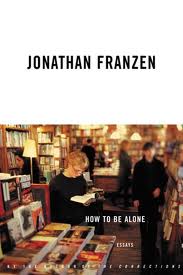
[READ: November 17, 2012] How to Be Alone

I read most of the articles in this book already.  But I read them over two years ago, so I thought it would be safe to wade into the world of Franzen again.  What I find most interesting about the title of this book is just how many of these articles are about being alone, wanting to be alone or feeling like you are alone.  Obviously that is by design but it seems surprising just how apt the title proved to be, especially given the variety of subjects  his father’s brain, being a novelist, the US Postal Service, New York City.

I’m not going to go into major detail about each article this time, although I am providing a link to the earlier review–my feelings didn’t really change about the pieces (except that from time to time I got a bit exhausted at his…whininess?  No, not that exactly…maybe his persecution complex.  But I will give a line summary about each one just to keep everyone up to speed.  The four pieces that I hadn’t read before I will give a few more words about.

One overall feeling is that when Franzen isn’t writing about the state of the novel (which he is very passionate about) his articles are well researched well documented which is kind of surprising given the state of panic he seems to be in the novel articles.  It’s also kind of funny how out of touch these articles seem (some are almost 20 years old and are kind of laughably outdated), but it’s also funny to see how poorly his predictions panned out.  The death of the novel is rather overrated (just see the success of his own Freedom.

So the book contains: (more…)

Read Full Post »

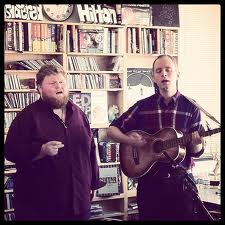
SOUNDTRACK: JENS LEKMAN-Tiny Desk Concert #173 (November 7, 2011).

I have enjoyed Jens’ skewed take on pop folk for some time. He plays great folk music and there’s wonderful backing vocals by Addison Rogers.  What’s funny about this Tiny Desk concert is that he talks a lot about the song before singing it.  But he pretty much gives away everything in the song (especially if there is a punch line).  For the first song, “I Want A Pair Of Cowboy Boots,” the explanation is pretty good, he says that if you have the same dream for two years you may want a new one…with cowboy boots.  The song explains that the boots will help him walk back to the girl of his dreams.  Sweet.

What’s cool about the second song, “The End Of The World Is Bigger Than Love”  (in addition to the song) is that you can hear a car driving away before it starts, just showing how intimate the Tiny Desk shows are.

But it’s the final song in which Jens gives away so much about the origin of the story that the song itself is almost redundant (although it’s still great).  When you finally get to the punchline of “Waiting For Kirsten,” you’re charmed and smiling.  Jens explains that Kirsten Dunst once said that she likes his music.  So when she was filming with Lars von Trier in Scotland, he couldn’t help but stalk her day and night.

He’s a charming guy.  You can check it out here.

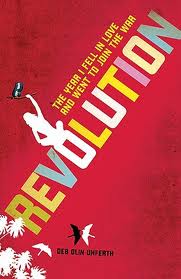
[READ: November 7, 2012] Revolution

Deb Olin Unferth has now published three books and I’ve read them all, even though I’m not a huge huge fan.  I enjoyed her novel Vacation, which was delightfully peculiar.  Her other book was a collection of flash fiction, a genre I’m really on the fence about, although Unferth’s is really quite good.

This book is a memoir.  And, as the subtitle indicates, it’s about the year that Unferth spent looking for a revolution in Central America.  The book proves to be about much more than Central America and revolutions–she talks about religion, family, morality, relationships, youth, idealism and reality.  Not bad for 200 pages.

It’s also about the man she fell in love with, George, who encouraged them to go to Central America and vive the revolution.  George is a Christian, Deb was an atheist Jew.  But she falls for him and his Christian ways and “converts” (much to the detriment of her younger sibling who had the family’s faux Jewishness now thrust upon her to avoid a similar thing happening.  (Poor Deb’s younger sister really is the victim in this saga).  George and Deb flee the comforts of home and all 80s capitalism and head to Central America.

As with Unferth’s short stories, these chapters are almost all very short.  And they often feel as unfinished as some of her flash fiction.  They are also mostly jumbled up in an utterly non-narrative way.  It’s entirely possible that you could shuffle some of these chapters and it wouldn’t matter at all (that’s not entirely true, as some do flow one in to the other, but many are jarringly out of sequence). (more…)

Read Full Post »

SOUNDTRACKQUASI Live at SXSW, March 8, 2010

I really enjoyed a few Quasi albums back around the turn of the century, and then I kind of forgot about them.  But this set is really great.  The always excellent Janet Weiss on drums and harmonies and the wonderful Sam Coombs on guitar and vocals. Around the time of this album, American Gong, they added Joanna Bolme on bass which really fills out their sound.  The first song, “Repulsion,” rocks harder than any of their older stuff (which was more keyboard based).  Indeed this album was apparently much rockinger than any of their earlier releases–I must check it out.

This set was recorded during SXSW  from the Gibson Showroom in Austin.  They play five songs in about 20 minutes.  “Never Coming Back Again” has a far more country feel (especially the backing vocals which have a real twang.  The lengthy instrumental section of “Black Dogs and Bubbles” is great–especially check out Weiss’ drumming.  “Little White Horse” is a shambolic rave of a song–fun and noisy.

The set ends with the inspiring Rise Up, a short stomper that encourages you to, yes rise up.  Weiss and Coombs both have other bands that they play in, so Quasi never seems like a full-time project.  But that seems to make their music all the better.  Listen here.

[READ: November 1, 2011] Under Wildwood

I enjoyed Wildwood, but I wasn’t blown away by it.  So I admit I wasn’t totally excited to read this one (especially since I had some other books lined up).  But Sarah managed to get it from the library (I guess it was not as a big a deal as I assumed it would be?) and I decided to give it a go.

I found it a little slow at first, but after about 40 pages, the book totally took off and I was fully engrossed.  Whether it was because there was less exposition since this was a sequel or because the story itself was more exciting, I couldn’t put the book down.  And, more importantly, the book did not feel like its 550 pages were excessive.  He really filled up every page with story.

But I was a little concerned because part of the story is set in an orphanage–a setting rife for cliché.  But Meloy has some great ideas and although he does use the orphanage as a scary setting (and employs some clichés from all orphanages) he transcends the conceit with some great characters and some evil owners who use demerits to completely move the story along outside of the orphanage–a great plot idea.

But let’s back up. (more…)

Read Full Post »

SOUNDTRACK: KATHLEEN EDWARDS-Tiny Desk Concert #206 (April 5, 2012).

Kathleen Edwards has a great voice and she writes great songs.  There’s not much more to this set than her singing four fantastic songs in the Tiny Desk setting.  Although her songs have full band arrangements on records, they do not sound out of place in this smaller, acoustic environment.

As she introduces the final song of the set “Change the Sheets” she says it’s the first time they’ve played it acoustically.  You’d ever know.  It sounds great.

There’s not a lot more to say about this Tiny Desk set–it highlights a great songwriter with a great voice.

[READ: October 15, 2012] “The Third Born”

I had a wee bit of trouble following this story, although I admit I didn’t give it my undivided attention at first.

If this isn’t an excerpt, then it’s a fairly disconnected story with large gaps–it reads like a few distinct scenes that happen so far apart as to be almost disconnected.  (I re-read it to make sure).

The story begins with a boy in a village in India.  He is sick and his mother knows how to help him with this not uncommon rural disease.  He watches the village as he lays there, more or less immobile–how the women seem to do a lot of work, although his mother doesn’t work outside the house.  Eventually his father returns from the city where he is a successful cook.  The boy’s mother asks if the whole family can move to the city.  He balks at the idea–he spends several month sat a time in the city where he makes good money, although he claims it is not enough for a family to live on in the city. (more…)

Read Full Post »

SOUNDTRACK: NADA SURF-Live at KEXP January 30, 2008 (2008).

Nada Surf is criminally underrated and shamefully treated as a one-hit wonder for a song that sounds nothing like the rest of their work.

This four song set at KEXP features four acoustic renditions of songs from their wonderful  album Lucky.  The songs are stripped down, but the harmonies are all there.  The only song that really suffers in this format is “See These Bones,” which is a little less spirited than the recorded version (although the harmonies stand out even better).

They are also funny guys and very personable, as the interview shows.  This set is definitely worth downloading.  You can get it here.

[READ: October 6, 2012] Timequake

Timequake is Kurt Vonnegut’s last novel.  It is very much unlike any of his other novels because it is actually more of a fictional memoir than a novel.

There are two main characters in the book–Vonnegut himself and Kilgore Trout.  Vonnegut talks about his life a lot–and if you know anything about Vonnegut’s life, you know that the details in the novel are accurate.  At the same time, he talks about Trout’s life, specifically the end of his life and how he went from being a destitute bum to a celebrated and oft-quoted author.

And then there’s the matter of the timequake.  In 2001, there was the first timequake.  The world stopped expanding and moving forward and instead flashed back to 1991, where everyone picked up exactly where they were on that date in 1991, and relived every detail of their lives in exactly the same way.  Only this time they knew what was going to happen.  So every person lived on autopilot through every day for the next ten years–all the good and all the band (like the man who spent several years in prison and had to relive those years all over again).  Even the dead were resurrected and relived their days.

It’s an interesting concept and yet in the end it’s really not that interesting of a topic.  In the Prologue, Vonnegut says that he had originally written Timequake (which version he calls Timequake One) with that very premise, and that Vonnegut himself made a cameo. And yet I can see that it wouldn’t really have worked as a very good novel–unless he made up ideas for what happened to everyone and we the readers lived them for the first time– or something.

But so he bailed on that novel, but he certainly left parts of it intact for this one.  And rather than a cameo, Vonnegut features largely in this one. (more…)

Read Full Post »

SOUNDTRACK:  PUBLIC ENEMY-Live at All Tomorrow’s Parties, Convention Hall, October 2, 2011 (2011).

NPR was cool enough to record and provide as a download most of the shows at the All Tomorrow’s Parties festival in Asbury Park, NJ.  (Portishead wouldn’t allow their show to be recorded, sadly).  But Public Enemy was a welcome surprise!
This tour is in celebration of the anniversary of Fear of a Black Planet.  And they play most of Fear and a lot of other things too (with almost nothing from their 2000 era CDs.

I can remember back in the early days of rap that it was hard to imagine what a rap show would be like live since they didn’t play instruments and much of the music was sampled.  Well, PE has musicians on stage and they have DJ Lord filling in for Terminator X behind the turntables (big shoes to fill, but done largely well–especially his fun “solo” in which he samples The White Stripes and Nirvana–although he should have mixed in Portishead, no?).  And mostly they have the personalities of Chuck D and Flavor Flav.

I suspect that this show would be a bit more fun to watch than it is to listen to–Flavor Flav’s antics don’t always translate well without his visuals.    Like when he asks the audience if that can all say “Ho” (which he eventually holds for 33 seconds!), it seems like a delay tactic in audio, but is probably fun to witness.

What’s especially cool about the show is that PE play so many songs, including small snippets of songs as segues to other ones (like the seventy second version of “Anti-Nigger Machine” that intros “Burn Hollywood Burn” which is practically hardcore) or the minute and a half of “He Got Game” that follows “Night of the Living Baseheads.”  I like that they even threw in some skits from the record like “Meet the G That Killed Me” and “Incident at 66.6FM.”

But of course the real joy is the full length songs, “Brothers Gonna Work It Out,” “911 is a Joke,” and of course “Bring the Noise” and “Fight the Power.”

Some of the improv sections don’t work all that well, the guitar solo in “Power to the People” leaves something to be desired (Khari Wynn maybe a legend, but he;s no Vernon Reid),  although the  “Jungle Boogie” riff is cool.   But the improv with guest drummer Denis Davis was pretty bad ass.  Flavor Flav hopped on the drums and was quite good for “Timebomb.”  We also got to meet Flav’s daughter Jasmine.  And Professor Griff was there too.

It’s also interesting that they keep saying they have no time left in the set (Portishead is next) but they play for at least 30 minutes after this.  Including a wonderful “By the Time I Get to Arizona and the set ending “Fight the Power.”

Chuck D has still got it and Flav is just as crazy and fun as ever (even if his screams and yos seems out of tune from time to time).  Of course, Flav has to get the last word in by raging  on for six and a half minutes  at the end (and about six-minutes in the beginning as well where he gave himself props about his reality show.

It’s a really good set–a little distorted from time to time, but really solid.  Here’s a link to the downloadable show.

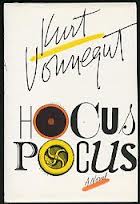
[READ: October 2, 2012] Hocus Pocus

This book may have put me over the edge in terms of Vonnegut exhaustion.  I bought this book some time in 1992, but I never read it. It’s been in my house for twenty years and it was about time I read it.

But as I’ve been noticing, each Vonnegut book has been getting darker and more misanthropic.  And this one is no exception.  The construction of the book follows Vonnegut’s cut and paste style but it feels even more shuffled and indirect than usual (more on that later).  In many of Vonnegut’s books, the “climax” occurs somewhere in the middle and he fills in the details later.  For this one, the climax came around h.and I wouldn’t have felt like I missed anything.

In this book, the main character, Eugene Debs Hartke  is a Vietnam vet (usually his protagonists are military men, and Vonnegut has criticized Vietnam a lot, but this is the first time he’s had a Vietnam vet as protagonist).  He married his wife and had a wonderful family until he learned that his mother in law had a disease that made her crazy–but it only kicked in later in life, after he married her daughter.  And that his wife has the same disease–so by the middle of the story both of the women in his life are crazy “hags.”  And, like in his other stories, his children hate him. (more…)

Read Full Post »

SOUNDTRACK: JAPANDROIDS-Live on KEXP, June 16, 2009 (2009).

Back in 2009,  one of the guys from Japandroids had surgery and they had to cancel some dates.  That’s only relevant to this because when this set is over, the guitarist is bleeding from his scar.

Japandroids are two guys and they make a lot of noise.  I can recall jamming on guitar with my friend on drums and even when we were totally in synch, we never sounded this good.  It really sounds like there are four or five people playing.  This set has three songs from their debut album and an amazing cover of Big Black’s “Racer X.”

The three  songs are very good and the guys pay hard and fast and, as I said, they sound amazing.  It’s a great set.  You can hear the whole thing here.  There’s also video of the performance.  It’s broken  into two parts.  This is part two, with the blistering cover of “Racer X.”

[READ: September 17, 2012] Bluebeard

I’ve mentioned this book a few times in the last couple of days as something that I’d been struggling with.  And, indeed, I found it to be a little slow going.  I was excited to start reading it because, as the subtitle says, this is an autobiography of Rabo Karabekian, an artist who appeared in Breakfast of Champions–I love that Vonnegut keeps working within his own universe.  But there was something about the early pages of the story that were just not that compelling.

Rabo is having a hard time getting his book going, and while that is a dramatic effect, I had a hard time getting into the book too.  It’s not that complicated of a story.  There are really only about a half dozen characters in the book:

Rabo–he is an American Abstract Expressionist painter (contemporary of Jackson Pollack, Jasper Johns, et al).
Circe Berman–she is an author who writes under the pseudonym Polly Madison (ha).  Madison’s books look at the real life of American young people and are staggeringly popular.
Paul Slazinger–Rabo’s next door neighbor who spends most of his time in Rabo’s house, although he and Rabo mostly ignore each other.  Slazinger is a writer with a decades long writer’s block.
Dan Gregory–a famous artist for whom Rabo apprenticed.  Gregory was such a good detailist that he once created a perfect forgery of a bill (on a dare).  Gregory was also a terrible racist and philanderer and treated Rabo with contempt at best.
Marilee Kemp–Gregory’s mistress and sometime muse.  She inadvertently sends Rabo an encouraging letter on behalf of Gregory and then she and Rabo begin a writing relationship which blossoms when they eventually meet. (more…)

Read Full Post »

SOUNDTRACK: …AND YOU WILL KNOW US BY THE TRAIL OF DEAD-Live on KEXP, March 12, 2009 (2009).

Back in 2009, …And You Will Know Us by the Trail of Dead had been hit by a truck.  Really.  Evidently no one was hurt too bad, but they did have to cancel a show in Salt Lake City. 

Nevertheless, they managed to get to KEXP to play a four song set from their latest album The Century of Self.  The opener “The Giant’s Causeway” is full of bombast and noise  and has a surprisingly catchy melody in the middle.  It merges into “The Far Pavillion” (just like on the album) which sounds like pretty typical Trail of Dead–rocking and yet melodic, with some good screaming parts.

“Luna Park” is something of a surprise to me as it’s a piano-based ballad (which I suppose Trail of Dead plays, but which I don’t associate with them).   “Bells of Creation” also opens with a piano, but it quickly grows very loud.  It’s a cool song with lots of depth.

I had actually stopped listening to Trail of Dead after Worlds Apart (and album I liked, but I guess the band fell off my radar) so it’s nice to hear they’ve still got it.  At least as of three years ago.

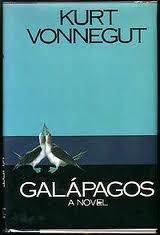
[READ: September 17, 2012] Galápagos

Each of these 1980’s era Vonnegut books gets darker than the last.  In this one the entire human race is wiped out (except for a few people who spawn what eventually becomes of the human race in a million years).  For indeed, this book is set one million years in the future and it is written by a person who was there, one million years in the past when the human race destroyed itself.  It’s not till very late in the book that we learn who the narrator is and, hilariously, what his relationship is to the Vonnegut canon.

In typically Vonnegut fashion, the story is told in that spiral style in which he tells you a bit of something and then circles back to it again later and comes back again later until finally 200 or so pages into the book you get all the details of what is happening.  Interspersed with the respawning f the human race (and flippers) is the story of the Adam and Eve and Eve and Eve and Eve and Eve who created the human race–how they got to be together, what their lives were like before and what contribution they made to humanity, such as it is now.

In another bizarre and fascinating twist, every character who is going to die in the near future gets a star next to his name so that the reader knows that that person is going to die.  We get a lot of things like ★Andrew MacIntosh for many pages until the character finally dies.  And pretty much everybody does die.  Well, obviously if it is set a million years in the future, but aside from that part, only a few of the characters survive.

So here’s how these few people managed to create a new human race in the Galápagos Islands.   (more…)

Read Full Post »

SOUNDTRACK: OF MONSTERS AND MEN-Live from Iceland Airwaves (2011).

This brief set was recorded at KEX hostel in Reykjavik, Iceland (how on earth KEXP in Seattle was there I don’t know).  This set was performed before the release of their debut EP, although “Dirty Paws” which they play was not on that EP.  “Little Talks” their (reasonably) huge hit them was on the EP and is on their full length album–it’s a great duet (and reminds me a bit of Stars).

There’s an amusing fail in the horn solo on “Lake House,” which is kind of surprising, but not terribly tragic or anything.  The band sounds great, especially in front of a home country crowd (I love hearing them say “Takk” at the end of the songs).  There’s five songs in all, and by  the final one, they feel  sound like they’re really enjoying themselves.

[READ: September 1, 2012] Wampeters, Foma & Granfaloons

This collection contains essays reviews and speeches.  So it’s non-fiction.  Except that, ever the contrarian, Vonnegut includes one fiction piece–a short play.  The title of this book comes from three words from his novel Cat’s Cradle: “a wampeter is an object around which the lives of many otherwise unrelated people may revolve.  The Holy Grail would be a case in point.  Foma are harmless untruths, intended to comfort simple souls.  An example: ‘Prosperity is just around the corner.’ A granfallooon is a proud and meaningless association of human beings.”

That all comes from the preface.  The preface also says that there are people who have collected everything he has ever written (even stuff he has forgotten about) but he will not let most of that see the light of day.  Here he has whittled down the least embarrassing stuff for publication.  He also explains that at some point (supported by reading this) he decided to stop giving speeches; to stop “talking” and to concentrate on writing.  So he did.

The final straw for this was a comment from the President of the American Academy of Arts and Letters.  Vonnegut had prepared a speech.  The president reread it and hated it, but the president told Vonnegut that nobody would actually listen to the words: “People are seldom interested in the actual content of a speech.  They simply want to learn from your tone and gestures and expressions whether or not you are an honest man.”

While Vonnegut’s essays are powerful and effective, it’s the Preface that really tells it straightg.”Not nearly as many Biafrans were butchered by the Nigerians at the end of the war as I had thought would be.  At a minimum those damaged children at the exact middle of the universe will be more honorable than Richard M Nixon.  [Nixon] is the first president to hate the American people and all they stand for.”

Get ready for a happy collection. (more…)

Read Full Post »

« Newer Posts - Older Posts »