Feeds:
Posts
Comments

Archive for the ‘Corporate skewering’ Category

socSOUNDTRACK: TINDERSTICKS-The Hungry Saw [CST055] (2008).

hungryIt was the releases of this Tindersticks disc (their first in 5 years) on the venerable Constellation Records (in North America) that inspired my trip through their back catalog. I was completely surprised to see them released on Constellation, as the band doesn’t exactly fit with the label’s stereotypical style (although, realistically with the last dozen or so releases, Constellation has really expanded the kind of music they release).

And this is a fantastic Tindersticks release!  There’s not a bad song on the disc. And, even though nothing is as immediately gripping as say “Can We Start Again,” the disc contains some of the band’s strongest songs.  “The Hungry Saw” is simply amazing, both lyrically and in its catchy (yet creepy) chorus.  But the highlight is probably “Boobar, Come Back to Me,” a song that begins slowly and builds gloriously, including a call and response segment that makes this song really swagger.

“Mother Dear” features a strangely comical musical episode.  In an otherwise very mellow piano based track, right in the middle of the song, come slashing, somewhat atonal guitar chords.  It’s as if a more rocking song is trying to overtake the mellow track.  (The coup is rebuffed, though).

The biggest thing to note about the disc is that longtime co-songwriter Dickon has left the band.  And so, some of the co-writing duties have been taken up by David Boulter.  While it is obviously sad that Dickon has left, Staples seems revitalized on this disc, and Boulter’s additions (especially his quirky instrumentals) bring a new point of view to the proceedings.  Also of note is something of a return to the orchestral style (albeit a much more understated version).  However, different songs emphasize different aspects: horns on one, strings on another, but always underscored by the ubiquitous Hammond organ.

It’s not a radical departure or anything like that.  It’s more of a continuation after a well earned vacation.  And it’s certainly their strongest release since their first four.

[READ & WATCHED: October 2009] Souvenir of Canada, Souvenir of Canada 2 & Souvenir of Canada (the movie)

I got the first Souvenir of Canada when it came out.  (I was on a big Coupland kick and may have even bought it in Montreal).  I didn’t get #2 when it came out, probably because I didn’t really invest a lot of effort into the first one.  But after recently reading City of Glass, I wanted to get a little more involved in Coupland’s visual art.  So, I picked up #2 and, while investigating this second book, I discovered that he had made a film of the books, too.

Coupland explains in the introduction that this book is his personal vision of what Canada is like. It is designed for Canadians as something of a nostalgia trip, but it is also something of an introduction to unseen Canada for non-Canadians.  And so, what you don’t get is pictures of mounties and Tim Hortons and other things that fit the stereotypical Canadian bill. Rather, you get things that are significant to Coupland (and maybe the average Canadian born on the West Coast in the 60s). (more…)

Read Full Post »

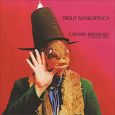
geniusSOUNDTRACK: CAPTAIN BEEFHEART AND HIS MAGIC BAND-Trout Mask Replica (1968).

trout–Fast and Bulbous.
–Bulbous yes, but also tapered.

This is an infamous disc in the history of music.  Which surprises me, as I can’t imagine many people have ever listened to it in its entirety.  I learned about it though my Frank Zappa fascination (he produced the record).

This disc also holds some kind of fascination for fiction writers.  I recall an episode of Beverly Hills 90210 (yes, of course I watched it) in which a new character was introduced.  He was a cool hip indie guy and I thought he was finally a cool character on a show I was getting rather sick of.  But because he was different, he was of course mocked.

He is first mocked for keeping his records in alphabetical order (and come on, anyone with more than 50 discs has to, it’s not a sign of weirdness, just common sense).  And second he was mocked for owning this album (picture a 90210er say Captain Beefheart?).  Of course, later on, he goes on to commit murder or arson or some other thing, thereby proving that alternative music is only for psychopaths, but heck, when has TV ever lied to us?

And now, this disc is a favorite of the hero of this book (which is what prompted me to bust out the disc and give it a listen).

And so wow, what a weird album.  Even 41 years later this record is still waaay out there.   The disc opens with “Frownland.”  And how to describe it?  The left speaker is playing sort of free jazz guitar chords.  The right speaker is playing a wild atonal guitar solo with a thumping bass.  In both speakers you get all over the place (but rather quiet) drums and the good Captain himself singing in a voice that could have inspired Tom Waits.  And the Captain’s song would be a very catchy melody if it had anything to do with what everyone else was playing (which it doesn’t).  And the whole things lasts for under 2 minutes.  There’s 28 songs not unlike this one, for a total of about 75 minutes.

Some other treats: a wild skronking horn solo on one song.  There’s also a song about the Holocaust.  And there’s even several music-free spoken word “poetry” readings.  And of course, the aforementioned bulbous quote.

Amidst this chaos are three songs that are more or less songs in the conventional sense, “Moonlight on Vermont,” “Veteran’s Day Poppy” and “Sugar ‘n Spikes,” meaning they have verses and choruses and whatnot.  But even those are still pretty far out and won’t be (and haven’t been) on the radio anytime soon.

Word is that this is a hugely influential disc and it lands on all kinds of Best Album Of All Time lists.  I can see that it has influenced a few people over the years (Devandra Banhart comes to mind), but still.  This is the kind of music you put on at a party when you want everyone to go home.

[READ: November 6, 2009] I am a Genius of Unspeakable Evil and I Want to be Your Class President

I heard about this book when Jon Stewart gave it a big plug on The Daily Show (the author is one of the writers for the show).  After many of the “heavy” titles that I’d been reading, it was a delight to read something that was purely comic.

And it was very funny indeed.

The book reminded me in many ways of Artemis Fowl (if Aretmis hadn’t turned over a new leaf–and without the fairies, of course).  In fact, I’m not entirely sure what the age group for the book is.  The main character is in seventh grade (and the language is very mild, certainly suitable for kids).  But when I found it in the book store, it was in the adult section.  So, I’m not entirely sure where to place it.

Anyhow, the premise here is that Oliver Watson is an evil genius.  Evil here doesn’t mean psychotic or sociopathic, he doesn’t want to kill people.  He just wants things to go the way he wants.  All the time.  And he is usually quite successful.  He is, after all, one of the top 5 wealthiest people in the world.  And he’s only in 7th Grade. (more…)

Read Full Post »

createdSOUNDTRACK: ONE RING ZERO-As Smart as We Are (2004).

orzI had this CD sitting around my house for about 4 years.  I had received it as a promo disc from Soft Skull Press (along with several other books on CD) and I just never put it on.  Then one day I was going through all these promos to see if any were books I wanted to listen to.  It was then that I actually read the disc label and saw that it was a band with lyrics written by some of my favorite authors.

I liked the disc so much I wound up buying it because the packaging is truly cool.  It’s a little booklet and it features an interview with the band and some really cool insights into how the songs came about, how they got the writers to submit lyrics, and the cool fact that One Ring Zero became McSweeney’s house band, accompanying writers during their weekly readings.

One Ring Zero is comprised of two guys (and guests).  And for this disc they split the tracks in half and one of them wrote melodies for 8 songs and the other guy wrote melodies for the other 8.  I’m not sure that I could tell the song writers apart by their styles, though.

But sure, the lyrics are probably great, but what does the band sound like?  Well, in the introduction, they are described as specializing “in the sort of 19th century, gypsy-klezmer, circus-flea-cartoon music you mainly hear in your dreams.” And, yep, that is a good summary of things.  The band uses water pipes, claviola, slide whistle and a theremin (among other homemade instruments).

And so, as with other McSweeney’s things, I’m going to list all of the lyricists with their titles.  But lyrically it’s an interesting concoction.  The authors were asked to write lyrics, but not necessarily songs.  So some pieces don’t have choruses.  Some pieces are just silly, and some pieces work quite nicely.  But most of them are really poems (and I can’t really review poems).  They’re fun to read, and it is fun to see what these authors made of this assignment.

PAUL AUSTER-“Natty Man Blues”
A rollicking opening that lopes around with the nonsensical lyrics, “There ain’t no sin in Cincinnati.” This one feels like a twisted Western.

DANIEL HANDLER-“Radio”
A supremely catchy (and rather vulgar) song that gets stuck in my head for days.  “Fucking good, fucking good, fucking good…”

DARIN STRAUSS-“We Both Have a Feeling That You Still Want Me”
A Dark and somewhat disturbing song that is also quite fun.

RICK MOODY-“Kiss Me, You Brat”
A delicate twinkly piece sung byguest vocalist Allysa Lamb *the first female vocalist to appear) .  Once the chorus breaks in, it has an almost carnivalesque tone to it.  This is the only song whose lyrics were written after the music.

LAWRENCE KRAUSER-“Deposition Disposition”
A twisted song that works as a call and response with delightful theremin sounds.  It has a very noir feel.

CLAY McLEOD CHAPMAN-“Half and Half”
This is a sort of comic torchy ballad.  Lyrically, it’ a bout being a hermaphrodite (and it’s dirty too).  Vocals by Hanna Cheek.

DAVE EGGERS-“The Ghost of Rita Gonzalo”
This has a sort of Beach Boys-y folky sound (albeit totally underproduced).  But that theremin is certainly back.

MARGARET ATWOOD-“Frankenstein Monster Song”
This song begins simply with some keyboard notes but it breaks into a very creepy middle section.  It’s fun to think of Margaret Atwood working on this piece.

AARON NAPARSTEK-“Honku”
This song’s only about 20 seconds long.  It is one of a series of haikus about cars, hence honku.

DENIS JOHNSON-“Blessing”
The most folk-sounding of all the tracks (acoustic guitar & tambourine).  It reminds me of Negativland, somehow.  It is also either religious or blasphemous.  I can’t quite be sure which.

NEIL GAIMAN-“On the Wall”
A tender piano ballad.  The chorus gets more sinister, although it retains that simple ballad feel throughout.  It’s probably the least catchy of all the songs.  But lyrically it’s quite sharp.

AMY FUSSELMAN-“All About House Plants”
An absurdist accordion-driven march.  This is probably the most TMBG-like of the bunch (especially when the background vocals kick in).

MYLA GOLDBERG-“Golem”
This song opens (appropriately) with a very Jewish-sounding vibe (especially the clarinet).  But once that intro is over, the song turns into a sinister, spare piece.

A.M. HOMES-“Snow”
This song opens as a sort of indie guitar rock song.  It slowly builds, but just as it reached a full sound, it quickly ends.  The song’s lyrics totally about twenty words.

BEN GREENMAN-“Nothing Else is Happening”
This song has more of that sinister carnivalesque feel to it (especially when the spooky background vocals and the accordion kick in).  The epilogue of a sample from a carnival ride doesn’t hurt either.

JONATHAN AMES-“The Story of the Hairy Call”
This song has a great lo-fi guitar sound (accented with what sounds like who knows what: an electronic thumb piano?).  It rages with a crazily catchy chorus, especially given the raging absurdity of the lyrics.

JONATHAN LETHEM-“Water”
This track is especially interesting. The two writers each wrote melodies for these lyrics.  So, rather than picking one, they simply merged them. It sounds schizophrenic, but is really quite wonderful.  The two melodies sound nothing alike, yet the work together quite well.

[READ: Some time in 2004 & Summer 2009] Created in Darkness by Troubled Americans

This was the first collection of McSweeney’s humorous stories/pieces/lists whatever you call them.  Some of the pieces came from McSweeney’s issues, but most of them came from McSweeney’s Internet Tendency.

The humor spans a great deal of categories, there’s some literary, some absurd, some nonsensical and, most amusingly, lists.  The back of the book has an entire selection of lists, but there are also some scattered throughout the book as well (I don’t know what criteria was used to allow some lists to be in the “main” part).

As with the other McSweeney’s collections, I’m only writing a line or two about each piece.  For the lists, I’m including a representative sample (not necessarily the best one, though!)

Overall, I enjoyed the book quite a lot (which is why I re-read it this year).  There are puns, there are twisted takes on pop culture, there are literary amusements (Ezra Pound features prominently, which seems odd).  It spans the spectrum of humor.  You may not like every piece, but there’s bound to be many things that make you laugh. (more…)

Read Full Post »

32SOUNDTRACK: TINDERSTICKS-Tindersticks [the red one] (1993).

tsTindersticks are a fascinating band.  The first distinctive thing about them is Stuart Staples’ voice: a deep rich bass that he uses almost like a whisper.  The second thing you notice is the music.  It’s an orchestral/chamber pop collection of dark rockers with fantastic moodiness to it.  And then you notice the lyrics: dark songs of lost (and decayed) love.

Yet despite the description of chamber pop, the nad is really much darker than chamber pop suggests.  The band has a very noir sound: organs that penetrate through walls of sound, tinkling pianos suring hushed moments.  The horns and strings add dark atmospherics (strings zing like a Hitchcock movie).  And the minor key chords are rich and loud.

You also get a song like “Whisky and Water” which genuinely rocks hard (loud guitars are featured).  Or a simple acoustic guitar driven song like “Blood.”  Throughout the disk you get these fantastic melodies that play off of Staples’ voice and the twisted lyrics.  “City Sickness” and “Patchwork” are just two of the tracks that are very catchy.

And then there’s the fantastic “Jism” with its awesome noir organ.  Or “Raindrops” with its accents of vibes and the beautiful piano trilling at the end (and the detailed and emotional lyrics: What we got here is a lazy love / It mooches around the house / Can’t wait to go out / What it needs, it just grabs / It never asks / We sit and watch the divide widen / We sit and listen to our hearts crumble”).  “Her” follows up with a wonderfully flamenco-infused spaghetti western number.

And lets not forget “Drunk Tank” a propulsive song that is as sinister as it is catchy.  Oh heck, I could just keep raving.  But there’s 22 songs!   Four songs are about a minute each, and the disc is about 75 minutes (not bad for a debut!).  And the disc never loses momentum or its sense of purpose.

What really distinguishes this disk is the mood of the music.  Like the best soundtracks, you can feel the emotions and imagery with the music alone, but when you add Staples’ evocative lyrics and powerful voice, it’s a deadly potent combination.

The disc was reissued a few years ago with a bonus disc of demo tracks.  The demos are surprisingly rich (they’re not at-home recordings or done without accompaniment) so they don’t differ that dramatically from the originals.  But they have a slightly less polished feel, which doesn’t hurt the band at all. There’s also a demo of the fantastic “For Those…” which doesn’t appear on the original disc.

I have to thank my friend Lar for getting me into this band. (Thanks Lar).

[READ: October 19, 2009] McSweeney’s #32

The concept for this issue is this: McSweeney’s asked several authors to “travel somewhere in the world–Budapest, Cape Town, Houston, any sleepy or sleepless outpost they could find–and send back a story set in that spot fifteen years from now, in the year 2024.”

And so, all of the stories are vaguely sci-fi-ish in that they are future related, but they are all grounded very heavily in reality, in particular, the reality of individuals trying to live in this future world. (more…)

Read Full Post »

glassSOUNDTRACK: DANKO JONES-Never Too Loud (2008).

dankoDanko Jones is a hard and fast rock band, with a one track mind and a straightforward sound.  They deal in excessive cliches (album titles include: Sleep is the Enemy, We Sweat Blood, Never Too Loud, etc) and play mostly short songs.  And despite all that apparent negativity, I enjoy them beyond reason.

Their first full length was a compilation of their early EPs, and it was full of outrageously short songs about big dumb sex (a bunch of the tracks were under two minutes).  Danko’s voice sounds a but like Phil Lynott from Thin Lizzy, to give a frame of reference.

Never Too Loud, despite the name, actually changes their style a little bit.  He throws in a ballad (!), and he’s got one song “Take Me Home” which reminds me an awful lot of Kid Rock.   And songs like “King of Magazines” and “Forest for the Trees” similarly slow the pace down (Forest for the Trees is even 6 minutes long!).  But despite all that, Danko still rocks hard.

And yes, I admit that lyrically the disc isn’t ground breaking (“Still in High School” tends to sum up a lot of the themes here), but I don’t care.  Sometimes it’s fun to just rock out.  And Danko rocks with the best of them.

[READ: October 14, 2009] City of Glass

Douglas Coupland is from Vancouver.  And this book (and the revised edition) is like a love letter to the city (although he describes it as a personalized guide book).

When he first published this in 2000, Coupland had been experimenting with things other than novels, but this was the first book he released that was primarily photography (not his own, mind you).  He mixes photos of Vancouver landmarks as well as stock photos to illustrate the varied and multicultural life of Vancouver.

He also includes alphabetically titled texts in which he writes about a paragraph or two or three about the topic.  Most of these are personal insights into the city.  It’s not a work of fiction or even a collection of essays.  It’s more like love notes about this city. (more…)

Read Full Post »

sierraThis is another periodical that’s not really a “real” magazine.  Sierra comes free when you join the Sierra Club.  I originally didn’t really look at this magazine much either.  Then one day the cover caught my eye, and I discovered there’s a lot of cool stuff in it.  Not the least of which is that there are some gorgeous photos of landscapes and animals (which the kids love) and there’s a ton of good information for living greener.

The early pages of the magazine have lots of interesting short articles, especially about things (that I suppose you could cynically comment about consumption and the planet) that you can buy.  (Things like cereal or trail bars, or, a personal favorite, straws made out of (virtually) unbreakable glass that you don’t discard).  This is followed by “Hey Mr. Green” a column where you can find out how to live a more green and earth-healthy lifestyle. (more…)

Read Full Post »

adidasSOUNDTRACK: TV ON THE RADIO-Dear Science, (2008).

sciencThe problem with TV on the Radio for me is that their first EP is so damned good that anything else they do pales in comparison.  Having said that, Dear Science, comes really close to topping that EP.  I liked Cookie Mountain (their previous disc) but I felt like they put so many elements into the mix that it detracted from the best part of the band: Tunde Adepimbe & Kyp Malone’s vocals.

And so, on Dear Science, the vocals are back up front where they belong.  This disc is a lot less busy, which may seem a little like selling out, but instead, it just heightens the complexity and originality of the band’s work.  The disc rocks hard but it also heightens some really cool jazz and dance elements.    But it all comes back to the melodies and vocals for me.  And on Dear Science, they pretty much outdo themselves.

And you can dance to it!

[READ: September 30, 2009] Shiny Adidas Tracksuits and the Death of Camp and Other Essays

After reading David Foster Wallace’s essay in this book, I looked at the other articles here and decided to read the whole thing.  And I’m really glad I did.  It’s an interesting book full of, funny and often thought-provoking pop culture articles circa 1996.  As with some of the other pop culture/political books that I’ve read several years after they were relevant, it’s often weird to look back and see what things fully occupied the popular landscape at the time.  And, when a piece is completed dated, it’s pretty obvious, and sometimes unintentionally funny.  But there are many pieces here that are timeless (or at least hold up for a decade), and those are still really good reads.

This book also does a good job of summarizing the tenor of the defunct Might magazine.  A dose of irony, a splash of humor and a lot of criticism of what’s trendy.

The strange thing to me about this book, though is the targets that they chose to go after sometimes.  Rather than critiquing right-wing attitudes or corporate shenanigans (which they do touch on), they really seem to be after pop and rock celebrity.  For instance, there are two separate articles which take a potshot at Eddie Vedder (this was around the time of the Ticketmaster fiasco which didn’t put him in the best light but which could hardly be seen as only self-serving).  This seems rather unfair, unless his sincerity could really be called into question by a bunch of ironic jokesters.  Magazines like Radar and Spy used to do snarky articles like this. I’d always thought that Might was a little better than that.  But indeed, there’s one or two pieces here that have a holier- (or perhaps indier)-than-thou attitude.   Which may have been fine in the 90s but which seem petulant now.

But aside from those, the irony-free pieces are very enjoyable.  (more…)

Read Full Post »

genxSOUNDTRACK: THE DEAD SCIENCE-Villainaire [CST054] (2008).

villainThis is probably the most fascinating album that Constellation has released recently.  I’d never heard of The Dead Science, but evidently they have a few disc out already.

The main thing one notices about this disc is the lead singer.  His voice is fascinating: a sort of slow, whispered falsetto laced with an incredible vibrato.  It almost sounds like he’s struggling to sing (although clearly he isn’t).  So take this delicate voice and put it over a series of songs (each one very different) that feature rapid time changes, punk breaks, mellow guitars and/or a harp.

The music is definitely strange and yet I found it very engaging.  I also thought that I wasn’t really absorbing the music since it was so esoteric, and yet after listening to it again today I realized I knew when all the breaks and interesting bits were coming up.  The disc definitely needs repeated listens to get what’s going on, but it is a fascinating collection.

[READ: September 23, 2009] Generation X

As with many books with multiple covers, I never seem to be able to find a picture of my cover online (my copy is a nuclear green, which I’m sure I spent a few minutes selecting back then).  I bought this book in November 1992 (I know this because that was back when I wrote the date I bought a book on the inside cover of the book). I know that I loved the book when it came out because it made me an instant fan of Douglas Coupland (I bought Shampoo Planet just one month later).

And Gen X is a generation-defining book. The margins of the book are filled with cartoons and slogans and definitions of Gen-X speak.  Now, I’m not sure if anyone ever used these definitions or if Coupland made them up.  I certainly never heard anyone say them.  Nevertheless, real or not, they work well as a frame of reference for the way (some) 20somethings in the 90s thought about culture and their place in it.

And so, by proclamation, this book speaks to every slacker and is ever so grunge and slacker and ironic and slacker and…well, no.

I’m actually surprised that I enjoyed this story as much as I did back then, because I’m not sure how it spoke to my 23-year-old self.  And from a vantage point of 17 years later, I’m surprised at how earnest and honest the book turns out to be. (more…)

Read Full Post »

dfwshelfSOUNDTRACK: LAND OF KUSH-Against the Day [CST058] (2008).

kushLand of Kush is a huge orchestra created by Sam Shalibi.  Shalibi is a maniac of independent releases, creating everything from orchestral pieces to solo records all with his unique blend of middle eastern tinged music (featuring his oud playing).

This album is inspired by Thomas Pynchon’s Against the Day, a book I have not read.  As such, I can’t say if the music works with the book, or indeed if the songs with lyrics have anything to do with the book at all.  The liner notes essay that Shalibi wrote reveal his deep appreciation for the book and how it made him hear this music.  Pretty neat.  Against the Day the book is over 1,000 pages, so I won’t be getting to it anytime soon.

The CD has 5 tracks: three of them about 8 minutes, one at 14 minutes and the centerpiece comes in at 21 minutes.  To read more than I’m going to say about this band and the album, check out the Constellation Records page.

In general, I find Shalibi’s music to be fascinating, but sometimes a bit much.  He is not afraid to pull out all the stops.  And I think that’s to his credit.  He does free jazz, psychedelic and middle eastern phrasing, often within one song.  And while it’s often very enjoyable, it can also be exhausting.

And that is the case with this disc. The 21 minute “Bilocations” is such a brilliant piece of music.  The main musical line is just fantastic: middle eastern instruments playing a sort of James Bond type suspense theme.  And the vocals are simply amazing.  The singer (and I regret to say I’m not sure which one she is) is snarling and sexy and brings the whole piece to life.  I’ve never heard anyone say “economics” with such emotion before.  And I enjoy probably the first 15 or 16 minutes of it.  The last five drifts into a sort of solo for voice which gets a bit tiresome, actually, especially after the intensity of the first part.

And yet it is then followed up by the last two songs, each about 8 minutes long, again with fantastic motifs that propel these weird and wild pieces beyond the middle eastern psychedelic soundscapes into actual songs.

Despite my amorphous criticisms (I think that the disc is just too long to appreciate in one sitting (and I find middle eastern music is hard for me to digest in more than small doses)) this is my favorite of Shalibi’s releases.  And some day I hope to read the book, too.

[READ: September 19th ish 2009] short uncollected pieces

This is my second (and final, I think) review of multiple DFW uncollected pieces.  There are a few uncollected pieces left that I’m going to read, but they’re all longer and will likely deserve their own post.  Most of these pieces are very short, and I don’t have all that much to say about them.  But, heck, I’m a pseudo-complestist, so I want to have them all here.

All the text in bold, including the links comes from (where else?) The Howling Fantods.  Thanks! (more…)

Read Full Post »

ijestSOUNDTRACK: SONIC YOUTH-Sonic Nurse (2004).

nurse

After the glorious Murray Street, SY return with an even better disc: Sonic Nurse.  This is probably their most overtly catchy (and therefore in my opinion wonderful) record since the Goo/Dirty period of 1991.  (Can it really be 13 years between these discs?).

This disc features Jim O’Rourke as well.  I’m led to believe that he has been playing bass with the band in order to free Kim up to do other things.  Although what she is doing I can’t really imagine.

“Pattern Recognition” opens with the most catchy guitar line in Sonic Youth memory.  Such a great and easy guitar riff.  Kim’s voice is sultry and wondrous.  And Steve Shelly really gets a chance to shine with some fun drum parts.  And, as is typical lately, the catchy songs get some lengthy end treatments, so this song ends with a 2-minute noise fest.  But it’s a good one.  “Unmade Bed” is one of Thurston’s special mellow-singing songs but the guitar solo is weird and wonderful.

“Kim Gordon and the Arthur Doyle Hand Cream” was originally called “Mariah Carey and the…” (and I have no idea if the original was different).  Is one of those noisy Kim-sung jams that SY are known for. But it also features a “Hey hey baby” sing along chorus too.

“Stones” continues this midtempo catchiness with another amazing guitar riff that runs throughout the song.  While “Dude Ranch Nurse” is another mellow Kim piece that has a great riff and wonderfully noisy bridges.  And of course, Lee is awesome on “Paper Cup Exit,” yet another fatastic song.  The cool breakdown in the song is a nice unexpected twist.

“I Love You Golden Blue” may be the most beautiful song the band has ever done.  Kim’s voice is delicate and delightful as she whisper/sings over a gorgeous guitar line.  The final song is another of Thurston’s beauties: “Peace Attack” a slow builder, complete with verse ending guitar solos.

Sonic Nurse is a beuaty.

[READ: Week of September 14, 2009] Infinite Jest (to page 949)

Flying in the face of potential spoilers, I was looking for any evidence of there ever being a “unedited Director’s Cut” version of Infinite Jest.  There is, supposedly, one copy of the full text floating around, and I’m actually quite surprised no one has tried to capitalize on DFW’s death by releasing it (I’d rather see that than another “This is Water” type publication).

But while looking around, I got this pleasant surprise from the Howling Fantods–these are comments on a first draft of IJ (without too much unpublished work shown).  But there’s also this disturbing (to me) item:

(N.B.: Wallace made numerous corrections for the paperback edition of 1997, so that edition is the one scholars should use. Put a Mylar cover on the pretty hardback and leave it on the shelf.)

Great. So I read the wrong copy?  Twice??

ijdot1
I haven’t said very much in any of these posts regarding DFW himself.  I don’t feel it is my place to comment on the man or his situation.   However, through a nice shout out to me, I found this really cool site: The Joy of Sox.  It’s primarily about the Red Sox but it has a delightful side venue in DFW information.  There’s not a ton, and he quotes extensively from others who have done more research than he–he’s a fan of DFW, but this is a sports blog after all.  But it is a delightful collection of miscellanea.  And he pointed me to this article, “Democracy and Commerce at the U.S. Open“, which I had never read (so thank you!).   So, do check out the site, he’s not doing Infinite Summer, but he’s likely going to read IJ again in the fall.

ijdot1
As this almost-final week opens, the book is flying downhill like an AFR wheelchair, paralleling Gately’s literal inability to talk with Hal’s metaphorical? literal? we’ll see? one.  But it really is the Gately show.  We learn more and more about him, and his back story makes him more and more likable.  Who ever would have guessed? (more…)

Read Full Post »

« Newer Posts - Older Posts »