 SOUNDTRACK: BLUE ÖYSTER CULT-compilations and live releases (1978-2010).
 For a band that had basically two hits (“Don’t Fear the Reaper” and “Burnin’ for You”) and maybe a half a dozen other songs that people might have heard of, BOC has an astonishing number of “greatest hits” collections.
Starting in 1987 we got Career of Evil: The Metal Years (1987), Don’t Fear the Reaper (1989), On Flame with Rock n’ Roll (1990), Cult Classic (which is actually the band re-recording their old tracks (!)) (1994), and the two cd collection Workshop of the Telescopes (1995). There’s even Singles Collection, (2005) which is a collection of their European singles & Bsides.


 This doesn’t include any of the “budget price” collections: E.T.I. Revisited, Tattoo Vampire, Super Hits, Then and Now, The Essential, Are You Ready To Rock?, Shooting Shark, Best of, and the 2010 release: Playlist: The Very Best of).

 The lesson is that you evidently won’t lose money making a BOC collection.
I don’t know that any of these collections are any better than the others.
The 2 CD one is for completists, but for the most part you’re going to get the same basic tracks on all of them.


 And, although none of them have “Monsters” for the average person looking for some BOC, any disc is a good one.
Regardless of the number of hits they had, BOC was tremendous live. And, as a result, there have also been a ton of live records released. Initially the band (like Rush) released a live album after every three studio albums. On Your Feet or On Your Knees (1975) Some Enchanted Evening (1978) and Extraterrestrial Live (1982) were the “real releases.”


 Then, in 1994 we got Live 1976 as both CD and DVD (which spares us nothing, including Eric Bloom’s lengthy harangue about the unfairness of…the speed limit). It’s the most raw and unpolished on live sets. 2002 saw the release of A Long Day’s Night, a recording of a 2002 concert (also on DVD) which had Eric Bloom, Buck Dharma an Allan Lanier reunited.


 They also have a number of might-be real live releases (fans debate the legitimacy of many of these). Picking a concert disc is tough if only because it depends on the era you like. ETLive is regarded as the best “real” live disc, although the reissued double disc set of Some Enchanted Evening is hard to pass up. Likewise, the 2002 recording is a good overview of their career, and includes some of their more recent work.


 If you consider live albums best of’s (which many people do) I think it’s far to say that BOC has more best of’s than original discs. Fascinating. Many BOC fans believe that if they buy all the best of discs, it will convince Columbia to finally reissue the rest of the original discs (and there are a number of worthy contenders!) in deluxe packages. I don’t know if it will work, but I applaud the effort.
[READ: October 2009-February 2010] State By State
This is a big book. And, since it’s a collection essays, it’s not really the kind of big book that you read straight through. It’s a perfect dip in book. And that’s why it took me so long to get through.
I would love to spend a huge amount of time devoting a post to each essay in the book. But, well, there’s 51 (including D.C.) and quite a few of them I read so long ago I couldn’t say anything meaningful about. But I will summarize or at least give a sentence about each essay, because they’re all so different.
I’ll also say that I read the Introduction and Preface last (which may have been a mistake, but whatever). The Preface reveals that what I took to be a flaw in the book was actually intentional. But let me back up and set up the book better.
The catalyst for the book is the WPA American Guide Series and sort of Steinbeck’s Travels with Charley. The WPA Guides were written in the 1930s as part of the Works Progress Administration. 48 guide books were written, one for each state. Some famous writers wrote the books, but they were ultimately edited (and many say watered down) by a committee. I haven’t read any of them, but am quite interested in them (and am looking to get the New Jersey one). Each guide was multiple hundreds of pages (the New Jersey one is over 800).
State By State is written in the spirit of that series, except the whole book is 500 pages (which is about 10 pages per state, give or take). And, once again, famous writers were asked to contribute (no committee edited this book, though). I’ve included the entire list of authors at the end of the post, for quick access.
So I started the book with New Jersey, of course. I didn’t realize who Anthony Bourdain was until I looked him up in the contributor’s list (I’m sure he is thrilled to hear that). And his contribution was simultaneously exciting and disappointing,. Exciting because he and I had quite similar upbringings: he grew up in North Jersey (although in the wealitheir county next to mine) and had similar (although, again, more wealthy) experiences. The disappointing thing for me was that Bourdain fled the state for New York City (and, as I now know, untold wealth and fame (except by me)) I felt that his fleeing the state, while something many people aspire to, is not really representative of the residents of the state as a whole.
And that dissatisfaction is what I thought of as the flaw of the book (until I read the Preface). In the Preface, Matt Weiland explains that they asked all different authors to write about states. They asked some natives, they asked some moved-ins, they asked some temporary residents and they asked a couple of people to go to a state for the first time. In reality, this decision makes for a very diverse and highly entertaining reading. In my idealized world, I feel like it’s disingenuous to have people who just stop in to give their impression of an area. But hey, that’s not the kind of book they wanted to compile, and I did enjoy what they gave us, so idealism be damned.
For most of the book, whenever I read an essay by someone who wasn’t a native or a resident of a state, I assumed that there weren’t any famous writers from that state. I’ve no idea if that played into anything or not. From what I gather, they had a list of authors, and a list of states (I was delighted to read that three people wanted to write about New Jersey-if the other two writers ever decided to put 1,000 words to paper, I’d love to read them (hey editors, how about State by State Bonus Features online, including any extra essays that people may have wanted to write).
From New Jersey, I proceeded alphabetically. And, I have to say that I’m a little glad I did. I say this because the first few states in the book come across as rather negative and kind of unpleasant. Alabama (written by George Packer) comes across as downtrodden, like a place you’d really have to love to live there. Even Alaska, which ended up being a very cool story, felt like a veil of oppression resided over the state (or at least the part of the state that Paul Greenberg wrote bout.) But what I liked about this essay and the book in general was that the authors often focused on unexpected or little known aspects of each state. So the Alaska essay focused on Native fisherman and the salmon industry. Obviously it doesn’t do justice to the rest of that enormous state, but that’s not what the book is about.
The book is meant to be a personal account of the author’s experiences in the state. (more…)
Read Full Post »
 SOUNDTRACK: GREEN DAY-21st Century Breakdown (2009).
 Like most people who like Green Day, I’ve been a fan since Dookie. They were incredibly poppy (although they wrote great punk riffs) and they sang about weird, kind of subversive things. And they got huge really fast. Of course since then they have become one of the most commercially successful bands in America (including having their song picked for the ending scene of the Seinfeld montage–jeez).
 SOUNDTRACK: STEREOLAB-Transient Random Noise Bursts with Announcements (1993).
 Stereolab are a bizarre band. They make bubbly electronic music, with all sorts of bleeps and whirls and buzzes. They even describe their music as space age pop. Their album cover art is overexposed or simply silk screened. (This is a hi-fi needle getting dropped on an LP). The back cover looks like it’s a hi-fi test record.
 SOUNDTRACK: BEATLES-Rubber Soul (1965).
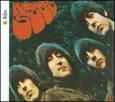 After the breakthrough of Help!, the Beatles followed up with their first proper album that is full of all original songs and which really pushes the envelope.
 SOUNDTRACK: WALLER NOT WELLER blog.
 WallerNotWeller
 SOUNDTRACK: BBC Sessions (various).
 Many many bands that I like have recorded tracks for the BBC. And after several sessions, they tend to get released as BBC Live or BBC Sessions discs. In the last few years, I’ve gotten discs from the Cocteau Twins, Tindersticks, The Beautiful South, Belle and Sebastian and Therapy? One of the first ones I’d every gotten was The Smiths’ Hatful of Hollow.
 SOUNDTRACK: ALANIS MORISETTE-Jagged Little Pill (1995).
 In this book, DFW considers himself to be absolutely useless when it comes to music. He doesn’t know anything at all. He says he listens to Bloomington country radio stations until he can’t take it anymore and then he switches over to the alt rock station. He’d never even heard of Nirvana until after Cobain’s suicide.
 Oh, and by the way, I also grew up watching Alanis on “You Can’t Do That on Television,” so it was pretty exciting to see a child star that I knew make it big.
 SOUNDTRACK: FUGAZI-Repeater + 3 Songs (1990).
 This was Fugazi’s debut album and my first exposure to them. They’d put out some singles before this but I missed them. Listening to it now, it sounds great, but not revolutionary. And yet, I remember back then, this was a pretty mind-blowing album. It’s full of heavy chunky guitars and yet it is underscored by a punk vibe (that comes from the source: Minor Threat).
 SOUNDTRACK: THE DEAD MILKMEN-Big Lizard in My Backyard (1985).
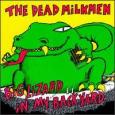 My friend Alison said the other day that she had “Bitchin’ Camaro” stuck in her head. And soon thereafter, so did I. So Philadelphia’s Dead Milkmen are a bratty punk band. They skewer all kinds of things: pop culture, racists, right wing pigeons, junkies and, quite possibly, music itself.
 Sarah and I watched a bit of the third or fourth episode of this show when it aired on CBC. But jumping into the middle of this show is difficult. The characters are established pretty quickly, their quirks are all explained in the first episode, and it’s a bit hard to care about them without knowing their whole story.
 And it has now given me a new favorite actor of the month: Sherry Miller who plays Mrs Jarlewski is just fantastic. She’s like an older, subtler version of perennial favorite Portia de Rossi.

 I Just Read About That...