While I was looking around for Jonathan Franzen pieces in the New Yorker, I stumbled upon the first 20 Under 40 collection from 1999. Since I had received so much enjoyment from the 2010 version, I decided to read all of the 1999 stories as well. It was interesting to see how many of the authors I knew (and knew well), how many I had heard of but hadn’t read, and how many were completely off my radar.
I initially thought that they had published all 20 authors in this one issue, but there are five stories (including Franzen’s) that were just excerpted rather than published in full. And I will track down and read those five in their entirety. But otherwise, that’s a lot of fiction in one magazine (a few of the stories were quite short). And it features a cover by Chris Ware!
So here’s the list from 1999.
**George Saunders-“I Can Speak™” **David Foster Wallace-“Asset” *Sherman Alexie-“The Toughest Indian in the World”
*Rick Moody-“Hawaiian Night”
*A.M. Homes-“Raft in Water, Floating”
Allegra Goodman-“The Local Production of Cinderella”
*William T. Vollmann-“The Saviors”
Antonya Nelson-“Party of One”
Chang-rae Lee-“The Volunteers”
*Michael Chabon-“The Hofzinser Club” [excerpt]
Ethan Canin-“Vins Fins” [excerpt]
*Donald Antrim-“An Actor Prepares”
Tony Earley-“The Wide Sea”
*Jeffrey Eugenides-“The Oracular Vulva”
*Junot Diaz-“Otra Vida, Otra Vez”
*Jonathan Franzen-“The Failure” [excerpt]
***Edwidge Danticat-“The Book of the Dead”
*Jhumpa Lahiri-“The Third and Final Continent”
*Nathan Englander-“Peep Show” [excerpt]
Matthew Klam-“Issues I Dealt with in Therapy” [excerpt] (more…)
The new Fall TV season is pretty much underway. It brings back a lot of old favorites, as well as a few new series that we’re going to check out. (more…)
SOUNDTRACK: CITY AND COLOUR-Live @ The Orange Lounge EP (2010).
City and Colour is Dallas Green from Alexisonfire (he’s the one with the good singing voice as opposed to the screamy guy).
This EP contains 6 songs, 4 from his last album Bring me Your Love and the 2 hits from his first album Sometimes.
As with his previous live release [Live CD/DVD], he sings these songs solo. Each song is done on acoustic guitar. But unlike that Live album, this disc does not appear to have been recorded in front of an audience. There is no cheering, no banter, just him and his guitar.
If you’re a fan of Green (and you really like his voice) this is a great release. There are several spots where he sings in if not acapella, then with very quiet musical accompaniment so his voice is pretty naked. This is a limited edition EP (apparently) but it’s a really good introduction to the man and his music.
I must say though that I never noticed just how obsessed with death he is! This recording style really highlights all the times he says death or dead. Huh.
[READ: September 12, 2010] “Love in the Ruins”
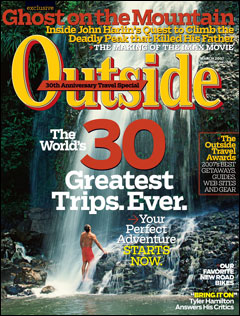
This was the darkest of all of Wells Tower’s Outside magazine pieces. And although it has some humor, for the most part it was a sad lost-love letter to a city that he once knew.
One year after Hurricane Katrina, Tower went back to New Orlenas to ride his bike. He had lived in New Orleans for a short time before Katrina hit and he used to ride his bike for long stretches across the Mississippi River levee. He decided to revisit it to see what it was like after the disaster. (more…)
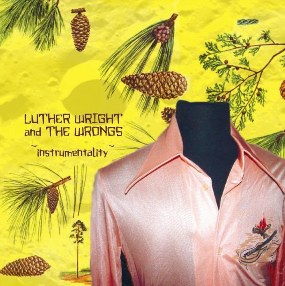
SOUNDTRACK: LUTHER WRIGHT AND THE WRONGS-instrumentality (2006).
I loved Luther’s Rebuild the Wall, and I kind of thought of him as country, but not really country. A sort of punky country (his song “Broken Fucking Heart” lead me in that direction, too).
But this album is all instrumentals (hence the title) and it’s very traditional bluegrass/banjo-fueled tracks. Eleven tracks in all (totaling about 22 minutes). There’s even a cover of “Yankee Doodle Dandy.” Listening to this I realized that I like banjo music (not as my favorite type mind you, but certainly more than a little). Steve Martin (an excellent banjoist himself) once said:
“You just can’t sing a depressing song when you’re playing the banjo. You can’t go– [grins, plays and sings] “Oh, murder and death and grief and sorrow!”
And there’s something to be said for that. With this fun collection of mostly 2 minutes songs, you’ll smile for twenty minutes or so. (And the playing is top notch, too).
[READ: September 11, 2010] Handle Time
When I wrote about One Night @ the Call Center, several readers said I must read Handle Time, that it was the consummate Call Center novel and that it was much better than One Night. So I tried to find it. No libraries in New Jersey carried it. And although I could get it at Amazon, there was precious little other information about it. Well, I finally decided to add it to our library collection (so I didn’t have to pay for it) and to read it for myself.
My first surprise came when the first line of the text has the word embarrassed written in a super large font. The font is so large in fact that it put a pretty sizable space between the lines of text (that’s called leading). My second surprise came when I saw that littered throughout the text were a whole bunch of large words and crazy fonts and a bunch of clip art pictures that showed what was happening. (I was especially surprised when one of them turned out to be Mr Burns from The Simpsons!).
So it turns out that there are different fonts throughout the book, some of them large and crazy, others fancy and scripty. But the long and short of it is that this book is really only about 50 pages long (I mean I read the entire 188 pages in about 2 hours).
Okay, but what about the content. Well the plot itself is fairly brief. Chase gets a job at a call center. She sits through orientation, begins working, gets demoralized and has a panic attack about her job. That’s pretty much it. But really what you read the book for is for the side bits, the comments, the snark, the sympathizing with call center workers.
Except that I’ve never worked in a call center and yet I have experienced many of the things in the novel. So, this book, much loved by call center workers, could be about pretty much any shit job (except for the part about keeping your numbers up (and the part about not actually helping people because it skews your average handle time)). But bad cafeterias, microwaves, bizarre HR nonsense, stupid powerpoints, they’re part of any corporate job. And she does a good job in skewering them, they’re just not specific to call centers. (more…)
I discovered this video (again, considerably later than the controversy for it) because my friend Rich said he didn’t know there was a genre called “crabcore.” A search for crabcore suggests that it is a goof “genre” named specifically for this band and the goofy way they dance around.
This song starts with very heavy riffing and some growls and screaming and then jumps quickly into an auto-tuned very catchy chorus (they sound like a more polished and poppy version of Alexisonfire).
Then comes the verses which are screamed very loudly and heavily followed by a bridge (?) that is even more cookie monster-vocals like (with a strange cartoon effect thrown at the end of each line of the chorus). It’s almost like commercial death metal, and I kind of liked it. They’re pushing boundaries
Then there’s more chugga chugga heavy riffing and the song is reaching the end and then WHAT? the songs shifts gears into a keyboard fueled discoey dance song. First it’s hi energy and then it slows into a mellow auto-tuned bit that proceeds to the end.
What the hell? I’m all for a band pushing the boundaries of genres, but holy cow. And just to add one more gimmick, they’re a Christian band as well (although you’d never know from the lyrics, whatever the hell he’s singing about). This is no “Jesus is My Friend,” let me tell you.
So yea, I don’t really know what to make of it. The video makes me laugh with their all black outfits and synchronized everything–and that may be why they have replaced it with a new video which is much more boring. I assume they’re just anther trendy band that will disappear soon enough (there’s a lot of snarky fun at their expense at this definition of “crabcore“).
I don’t have a clue what the title is supposed to mean, nor half of their other titles on the album: “Fumbles O’Brian” “Renob, Nevada.” I listened to some samples of the other songs and they seem far more dancey/discoey than death metal, so I’m not really sure what’s up with the rest of the record.
But whatever. In the meantime, enjoy the silly video
[READ: July–September 10, 2010] K Blows Top
I heard about this book through a great interview on NPR in June of 2009. It sounded like a really funny book and I was seriously considering reading it. Of course, then I forgot about it.
About 8 months later, the library received a huge donation of books, and this was right on top, just begging me to read it. So, I saved it for myself and decided it was about time to crack it open. Several months after that I finally opened it and was totally hooked.
I didn’t know much about Khrushchev before reading this. I knew vaguely about “the shoe” incident, but that was it. In fact, the whole beginning of the cold war era was a bit of a mystery to me. Since I lived through Reagan, I never felt compelled to find out what had caused the 80s.
But I’m super glad that I read this. The book follows Khrushchev’s visits to the United States when he was premiere of the Soviet Union. Carlson combed through tons of newspaper reports about his visit here (ostensibly to visit with Eisenhower, but more just to enjoy himself in the American heartland), and pulls together a fascinating story from a number of sources.
But more than just an interesting look at history, this book is very funny. (more…)
SOUNDTRACK: PHISH-LivePhish 11.14.95 University of Central Florida Arena, Orlando FL (1995).
I have a number of these LivePhish discs. They are universally solid releases (all from soundboards, I believe, which, have they really been recording all of their shows since like forever?). And it’s fun to hear Phish totally jam out on a few of their more meandering songs.
One of the most interesting aspects of the series is that they almost always throw in a cover song (on Halloween, they cover an entire album by another band).
I haven’t really mentioned any of these releases because there’s usually not much to say about them: you either like Phish live or you don’t. But this one is notable for being particularly odd.
They do an a cappella song in the first set–typically if they do an a capella track it is as an encore or the intro of the second set, but this one is right there in the beginning.
The end of the set also had the only instance (of the shows that I have) where Trey explains the audience chess match. Many of the recordings open up set two with an audience chess move. In this case, Trey explains that they have been playing chess with the audience at each show. Phish is white, the audience is black and anyone who wants to just has to go to the Greenpeace booth to play a move…I have no idea how they would choose who gets to play the final decision.
There’s some other odd things in the show. “The Divided Sky” features one of the prettiest solos that Trey plays. In this show there is a very long pause between the end of the first half of the solo and the beginning of the second. The crowd cheers quite a bit during the pause, but we the listeners, have no idea what happened.
And then there is the extra long rendition of “Stash.” It’s broken into three sections. The first one features a fun audience response guitar solo. And in this instance, he plays it in a much more staccato style. The middle one features a bizarre percussion type solo. And the third features a rendition of “Dog Faced Boy” which is not sung to the appropriate music, rather, the keyboards just play simple, unrelated chords while Trey sings.
Set two ends with a wonderful rendition of “You Enjoy Myself” that ends in their bizarro screaming and grunting. You’ll get funny looks listening to that loudly.
So this set is a good one, and it stands out as unique among the others for being so darn bizarre.
[READ: June 27, 2010] The Boy Who Couldn’t Sleep and Never Had To
I’m always bummed to read a prepub after it gets published. Sigh.
Sarah told me that I’d love this book and she was correct. It’s about a misfit high school boy who draws pictures and draws them really well. Despite this talent, he is not lauded by the cool kids in his class (the kid who draws licensed characters holding joints is lauded by the cool kids).
He’s also kind of defensive about his drawing, because he gets tired of people asking him what he’s drawing. Especially when they think that he’s just doodling. But then one day Eric Lederer asks him what he’s drawing. He and Eric have never talked. In fact, he doesn’t think anyone talks to Eric. Eric’s THAT kind of weird.
And what our narrator realizes is especially weird about Eric is that he is standing really really still: “No one stands this awkwardly sure of themselves except characters in my drawings staring straight ahead with their arms at their sides” (8). And with that awesome detail I fell in love with the book. (more…)
[WATCHED: August 26, 2010] Everything’s Gone Green
I’m including this film because it was written by Douglas Coupland (and he’s one of those writers that I read a lot).
Everything’s Gone Green is a story of suburban life in Vancouver. As the film opens the main character gets dumped by his girlfriend and loses his job. And he hasn’t won the lottery (this sequence with his family is hilarious). However, calling the BC Win line (is this what you do when you win the lottery?) gets him a job at the BC lottery. [This entire job and company absolutely fascinated me. It was an excellent location for a film].
From there the movie settled into Douglas Coupland territory: scenes from Vancouver, working in a cubicle, scenes from Vancouver, unattainable love, scenes from Vancouver, the Asian community of BC, and more scenes from Vancouver.
We had recently watched the TV series of JPod (based on his book). Steph Song from JPod is in this film (and it’s nice to see her with a different type of character). But what’s surprising (or maybe it’s not?) is how much of this film he recycled into JPod (or actually, they seem to be written concurrently, so I’m not sure which came first). (more…)
Like Woody Guthrie, Pete Seeger has been singing for the common man since forever. Unlike Woody Guthrie, Pete Seeger is alive and well and still kicking up a fuss.
This collection of his songs is fascinating in that it shows a certain aspect of Pete’s music: his songs are designed for “folks.” His songs almost demand audience participation. And so, he has albums for kids (that are weird but wonderful) and other, grown up songs that kids also know, which people have been singing for generations.
And so this disc features more than “studio tracks.” It opens with “Little Boxes” a wonderful song which features some awesome lyrics including this verse:
And the people in the houses
All went to the university,
Where they were put in boxes
And they came out all the same,
And there’s doctors and lawyers,
And business executives,
And they’re all made out of ticky tacky
And they all look just the same.
But in addition, you get some classic tracks that define rebellious folk: “Which Side Are You On?” “We Shall Overcome” and “Waist Deep in the Big Muddy.” It also has songs like “Wimoweh (The Lion Sleeps Tonight)” and “Abiyoyo.”
And of course, it features, “Where Have All the Flowers Gone” and “Turn Turn Turn” songs which I’ve known since I was a little kid, but whose lyrics never meant anything to me until I became an adult. There’s even “If I Had a Hammer” with the final verse:
It’s the hammer of justice;
It’s the bell of freedom;
It’s the song about love between my brothers and my sisters;
All over this land
For a really comprehensive collection of his “studio work” the ideal disc is If I Had a Hammer: Songs of Hope and Struggle (where he sets the tune of “Battle Hymn of the Republic” to a song called “Solidarity Forever” (Solidarity forever, Solidarity forever, Solidarity forever, For the union makes us strong.)
Pete Seeger is indeed a national treasure, and a man who fights in his own way for each of us.
[READ: August 23, 2010] Social Anarchism or Lifestyle Anarchism: An Unbridgeable Chasm
After reading Letters of Insurgents, I felt the need for a palate cleanser. Melissa suggested this title. And it really did wonders for me.
All along while I was reading Insurgents, I felt like everyone in the book was misguided about their role in society and, frankly about their ability to undermine the world. I never understood the idea that people were “making” them work. They didn’t have to work. They could have lived off the grid somewhere and eaten berries. What else is the point of a strike than to improve working conditions, not to abolish work altogether (that whole apart about the plants’ foreign offices plugging along despite their big lockdown was particularly hilariously naive).
In many ways I felt like their opinions were on par with what I thought anarchism was, and yet their opinions were nothing I wanted to be a part of. Bookchin argues that their attitudes are examples of Lifestyle Anarchism (this article does not address the book at all, but you can see the characters in what he’s describing.) (more…)
SOUNDTRACK: AVI BUFFALO-“What’s In It For” (2010).
I received an email from Amazon telling me that their top 50 CDs of the year (so far) were online. The second disc was by Avi Buffalo. I’d never heard of Avi Buffalo, but they were on Sub Pop, so that’s a good sign.
I was going to listen to a sample, but saw that they had a video for “What’s In It For” on the Avi Buffalo page.
Avi himself looks about 12, which is disconcerting. But his voice is really angelic (he sounds like one of those high voiced singer like from The Shins or Band of Horses or, indeed like Grant Lee Phillips) In fact, this song could be a B0H outtake. And as such, that’s a good thing.
I’m not sure just how original the band is, and I’m also not sure if they are tagging onto this high-voiced folkie bandwagon (he doesn’t have a beard at least, so that’s a relief; of course, he may not be old enough to grow one).
A sampling of the rest of the songs shows more diversity than the “single?” indicates. And, indeed, this looks like a great, quirky summer release.
[READ: July 20, 2010] “The Last Stand of Free Town”
Even though I read all the articles in The Believer, I don’t often talk about them, mostly because they are non-fiction, and I don’t tend to talk about non-fiction articles for whatever reason.
But anyhow, I’m mentioning this because it ties pretty directly to the Insurgent Summer story Letters of Insurgents that I and others are reading.
This article is about the pacifist commune that has existed in Christianshavn (part of Copenhagen, Denmark) since 1971:
That year, a group of squatters overtook an abandoned army base east of Prinsessegade, barricaded the roads, outlawed cars and guns, and created a self-ruling micro-nation in the heart of Copenhagen. They called the eighty-five-acre district Christiania Free Town, drew up a constitution, printed their own currency, banished property ownership, legalized marijuana, and essentially seceded from Denmark. The traditionally liberal Danish government allowed the settlement at first, dubbing Christiania a “social experiment.” Then it spent the next three decades trying to reclaim the area. Thirty-nine years and a dozen eviction notices later, the nine hundred residents of Free Town represent one of the longest-lasting social experiments in modern history.
Note that Christiania was founded in 1971 and Letters is from 1976, so something must have been in the air. (more…)
I had heard about Crass as being a political force to be reckoned with–they formed an anarchist commune that worked with other artists and on behalf of political causes. So why not start with a CD that says on the cover: “Suggested Retail Price $4.98.”
So I bought this CD before hearing anything else by them. It’s a live recording from 5.2.1984, and it’s a noisy muddled mess. You can hear occasional words in the noise (although most of the clearest things are soundbites from the likes of Thatcher and other politicians). These surround the songs which are mostly just noisy distorted guitars (more because of the sound quality of the recording I believe).
I’ve obviously never seen Crass, but this bootleg suggests that they were a visceral force (there’s so much screaming!). There are a few moments of clarity where you can hear their anti-establishment lyrics, but for the most part this is a terrible place to discover Crass.
I suppose if you know the band, it’s a worthy addition, but I have to assume the proper albums sound better and make more of an impact.
[READ: Week of July 9, 2010] Letters of Insurgents [Sophia’s Fifth Letter]
This week’s reading comes from Sophia. Her letter was nearly 80 pages long, so we get her POV exclusively.
Sophia’s tone has changed yet again. This time, it’s summed up when she dismisses Yarostan’s comparison of her life in the garage (and more about that soon) with his experiences during Magarna:
The only similarity between your experiences during the Magarna uprising and my experiences in the garage is that they both began at the same time. But I’ll let you be the judge of the similarities and the differences; you’ve scolded me enough for my comparisons and contrasts (338).
Sophia opens with two surprises: she was just in jail and Tina has left their house. [The way it’s worded: she is “no longer with us” (331) was rather a tease.] (more…)
 While I was looking around for Jonathan Franzen pieces in the New Yorker, I stumbled upon the first 20 Under 40 collection from 1999. Since I had received so much enjoyment from the 2010 version, I decided to read all of the 1999 stories as well. It was interesting to see how many of the authors I knew (and knew well), how many I had heard of but hadn’t read, and how many were completely off my radar.














 I Just Read About That...