Feeds:
Posts
Comments

Archive for the ‘Cigarettes’ Category

secretevilSOUNDTRACK: ABAJI-Tiny Desk Concert #47 (February 15, 2010).

abajiThis is the only time I have heard of Abaji. He is an unimposing man with roots in Greece, Turkey, Armenia and France.  He sings gently (often in Arabic with some English) and he plays while he sings.

The impressive thing about Abaji is his skill and love of musical instruments.  The notes say “when recording his latest album, Origine Orients, he played 10 different instruments, many of them simultaneously, with no second takes or overdubs. It took him just two days.”

“Min Jouwwa” (which means “From Inside”) is played on  what looks like a normal guitar but which sounds so very different. The notes say it’s “a tricked-out Western-style guitar with extra strings, giving it the sound of an Egyptian oud.”

“Steppes”  is a brief haunting instrumental.  It’s played by bowing a soft-toned kamancheh (a three-stringed instrument that you hold upright on your lap for a scratch, middle eastern sound).  He often times rocks the instrument instead of the bow back and forth.

The final song is played on the Greek bouzouki (with whistling as accompaniment).  “Summertime” is the Gershwin song (which is only recognizable from the words–the first verse anyhow, which he sings in English–the second verse he sings in Arabic).  It sounds nothing like the original with the serpentine riffs and that unique bouzouki sound.

I only wish the cameras were still rolling after the set because “he demonstrated a large duduk (an Armenian cousin of the oboe), an Indonesian suling (flute) and a Colombian saxophone (of sorts) made from bamboo that looked more like a snake.”

This is what I love about the Tiny Desk–seeing very different instruments and unconventional performers up close.  Abaji is fun to watch.

[READ: May 7, 2015] The Secret of Evil

This has got to be the final posthumous collection of writings from Bolaño.  The Preliminary note from Ignacio Echevarria explains that this book is a collection of the final fragments that were found on Bolaño’s computer.  As such, the book consists primarily of works that are unfinished (some barely even started).

This isn’t as disappointing as it sounds because Bolaño seemed to write very thoroughly right form the beginning with his stories.  So even though they are incomplete, the section that is written feels fully fleshed out–and you can imagine that more will be coming. Echevarria says that “Bolaño rarely began to write a story without giving it a title and immediately establishing a definitive tone and atmosphere.”  This of course made it difficult for Echevarria to know what to compile here.

Not everything in this collection if unfinished.  And indeed, with Bolaño sometimes it’s unclear if the unfinished things were actually unfinished. (more…)

Read Full Post »

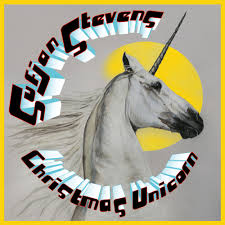
bolano SOUNDTRACK: SUFJAN STEVENS Christmas Unicorn: Songs for Christmas, Vol. X (2010).

sufjan 10This is the final disc in the second Sufjan Steven Christmas box set.  It is comprised of mostly shorter songs except for the final one which is 13 minutes long.

Interspersed in the disc are three short instrumentals (under a minute each).  “It Came Upon A Midnight Clear” “Angels We Have Heard On High” and “We Three Kings” are all pretty with flutes and minimal electronics.

The more traditional songs are “Have Yourself A Merry Little Christmas” which sounds very much like a Sufjan song with some fun electronic sounds and orchestration and some unusual vocals.  “Up on the Housetop” features lots of drums and layered vocals. It is the standard version but tinkered with with in fun ways.  “We Need a Little Christmas” is a fun and traditional version with choral vocals.

The other three tracks are originals from Sufjan.  “Happy Karma Christmas” a slow track of mostly drums and echoed vocals. It reminds me of Beck’s discoey electronic moments.  “Justice Delivers Its Death” is based on the lyrics of “Silver and Gold” (from Rudolph) but it is a much darker song (obviously, given the title) and sounds nothing like it.

The final track is “Christmas Unicorn.”  It’s a sweet song with funny/thoughtful lyrics.  After three minutes it turns into a nice instrumental.  At the four minute mark a new refrain begins. It sounds like the song is going to fade to end, but it doesn’t. At 6:30, drums come back in and the song takes off with more singers and a fugue style of interweaving vocals.  At 7:36 a new melody is introduced which is, Joy Divisions’ “Love will Tear Us Apart.” They incorporate that into the fugue vocals and it works very well.  It’s a strange song and very unChristmassey, but it’s very cool and quite catchy by the end.

I don’t enjoy this second box set as much as the first, since it is so unChristmassey, but it has some really interesting songs on it.

[READ: December 13, 2014] Bolaño: A Biography in Conversations

I don’t often read biographies about authors I like, but once in a while one will catch my eye.  I knew Maristain’s name from Bolaño’s last published interview, so I was curious what she would do with this collection.  It was translated by Kit Maude, and I am also curious about some of the words that Maude chose to use (the word savage/savages comes up an awful lot when not referring to The Savage Detectives).  But overall it was an easy, quick read.

As the subtitle suggests, Maristain has compiled a loose biography of Bolaño based on interviews with others.  Some are interviews that she has conducted and others are previously existing interviews that she has cobbled together.  The people interviewed are primarily his family and his fellow poets/novelists/friends.

Bolaño was born April 28 1953 in Santiago de Chile.  Soon after, they moved to Valparaiso, and then other smaller towns in Chile. In 1968 they moved to the Mexico City because of his mother’s asthma (although he never set foot in Sonora, the scene of the crimes in 2666). They lived close to the Olympic park and were within walking distance of the Olympic torch during the 1968 Olympics.

He had a difficult upbringing, with his parents splitting up and his mother moving out and taking his sister with her.  Roberto, meanwhile, stayed with his father.  They eventually had a falling out and Roberto went twenty years without seeing him.  His father was a boxer and an opinionated man, and there are lots of quotes from him in the book.

In 1977 Bolaño left Mexico for Spain (and never went back) and that’s when we start getting into his publishing history. (more…)

Read Full Post »

jdSOUNDTRACK: PET SHOP BOYS-Electric (2013).

psbAfter the sombre, more reflective Elysium, Pet Shop Boys came back with the far more upbeat and dancey Electric.  Right from the start, you know this is back to high energy fun (with of course sardonic lyrics). The opening track, “Axis,” is a major dance song with processed vocals and a great riff–I love how the song goes very electronic and artificial sounding around 4 minutes in.  “Bolshy” has a classic PSB sound–dancey keyboards and Neil Tennant’s ageless voice.  I don’t really quite know what the song is about but it is really fun to sing along to. It is followed by “Love is  Bourgeois Construct” (I sense a strangely political theme here–and I love that the follow-up line is “just like they said at University” ), I love the way the song gets really muddy while the synth line plays and that it emerges bigger and better than ever–the sound reminds me of the synth songs in A Clockwork Orange and the riff is on Michael Nyman’s “Chasing Sheep Is Best Left to Shepherds.” The way the music is so epic-sounding for such a simple idea of a song is great,

“Flourescent” is a darker song, with big synths and cowbells ringing in the song.  It’s got a steampunky wheeze as the drum beat and a echoey synth note which all coalesces before Tennant’s vocals which come in–two minutes into the song.  It’s a very moody piece and even at 6 minutes doesn’t feel overly long.

“Inside a Dream” is a dancey song with a fast melody.  “The Last to Die” is a Bruce Springsteen song from his album Magic (I had no idea) which they electrify and make synthy, but not dancey exactly.  They do a very good job of capturing the Springsteen vibe in their own way.  “Shouting in the Evening” is a very dancey song, one of may favorites on the record–I love the way Chris Lowe distorts his keyboards on this track.  “Thursday” has a great vocal line–“It’s Thursday night, let’s get it right.  I want to know you’re gonna stay for the weekend.”  It’s a catchy song with the repeats of the days: “Thursday Friday Saturday Sunday.”  I could do without the rap (by Example) which reminds me way too much of Blondie’s rap in Rapture–stiff and kind of forced.

The final song “Vocal” I find odd in the lyrics.  It’s about songs that he likes, which is fine, but the line, “every track has a vocal, and that make a change” is weird–do dance songs not have vocals anymore?  Well, how would I know, i don’t listen to a lot of dance music.  Anyhow, it’s super catchy and dancey.  I like the way it builds to the big chorus even if the song isn’t very complex.

While I enjoyed the introspective Elysium, it’s great to have a big loud Pet Shop Boys album as a return to form.

[READ: October 22, 2014] Three Early Stories

I found this book on the shelf at work.  I had no idea that a) Salinger had written so many stories that have yet to be collected (according to Wikipedia there are about a dozen) or that these three had been collected in this very strange edition.  The book collects three stories and includes illustrations by Anna Rose Yoken.  The illustrations are fine, but not worth getting the book for (and feel a bit more like a children’s book illustration than a Salinger story).  The other strange thing is that the text is only on the right side pages, so although the book is 69 pages, there’s really only about 35 pages of story.

I had never read any of these stories, so I was glad to find this book.  They were written before Catcher in the Rye, and it’s interesting to see what was on his ind before he created Holden Caufield.  These stories seem to focus on college-aged women and the way they behave.  The portraits of these women are not flattering, but they are fairly realistic.

“The Young Folks” is set at a party (I can’t believe how many cigarettes are smoked in these three stories).  At 11PM during the party, Lucille Henderson, (the college-aged host) sees that her friend Edna Phillips is by herself, still.  So she introduces her to William Jameson.  Jameson is more interested in the laughing (and presumably drunk) blond girl who is sitting amid three guys from Rutgers who are hanging on her every word.

As soon as Jameson is introduced to Edna, he starts making excuses that he should leave the party–he has a theme due on Monday.  But Edna clings to him  with conversation. She asks about his theme, she tells him about the guy who was too forward with her–she’s no prude, but come on.  She offers him cigarettes and invites him to the balcony.  He is too polite to tell her off, but he is giving major signals that she must see and is perhaps saving up as ammunition for later. (more…)

Read Full Post »

lostscrapSOUNDTRACK: THE XX-Coexist (2012).

coexGiven my proclivities towards noisy fast rock, there is no reason that I should like The XX, and yet I like Coexist quite a lot. It is such a spare album, but Romy’s voice is fantastic—so sensuous and breathy–that she can totally handle a song that is nearly a capella. So a song like “Angels” whose music consists pretty much entirely of a beautiful echoey guitar (and virtually nothing else except for some occasional soft percussion) is engrossingly intimate and not at all boring. In fact when that simple percussion eventually comes in, it’s like a revelation of sound accompanying her.

What also keeps the album interesting is that she is not the only singer (so there’s something for everyone). “Chained” has Oliver’s breathy, sexy voice as he more or less whisper/sings the lyrics. It has slightly more complex arrangements (meaning the drum is constant and there are quiet waves of synths). “Fiction” slowly builds with an ominous muted guitar motif and echoed chords. But when the chorus kicks in, that muted guitar grows loud and it’s almost overpowering (relatively, of course).   “Try” brings in a spooky kind of keyboards that is slightly unsettling under their mellow hushed duet of vocals.

The diversity of simple sounds that Jamie xx adds to each song are revelatory.  Even though each song is quiet and intimate, the sounds that he uses are so very different within that limited palate.  So “Reunion” sounds like a steel drums, before adding pulsing bass beats. “Sunset” has a slinky guitar and “Missing” introduces as drumbeat that is like a heart beat.  “Tides” has one of the loudest drum beats on the record, alternating with a delicate guitar line.

The simple bass line adds a really funky quality to “Swept Away.”  And when the claps and keyboard hits come in it feels almost like a dance song.

This is a great album for quiet nights and headphones.  Even if the songs seem to be mostly about lost love, it has a calming effect that is really enjoyable.  I’ll have to check out their debut as well.

[READ: September 30, 2014] The Lost Scrapbook

Some fans of David Foster Wallace speak well of Evan Dara (at least that’s how I’ve heard of  him).  I was unfamiliar with him and the fascinating story he has built around himself.  Evan Dara appears to be a pseudonym.  As one writer put it: “Hell, we don’t even now who Evan Dara is. Apparently, he is a male American in his 30s living in Paris.”  This, his debut novel, has attracted attention not only for being really weird, but for being really good.

What was fun about reading this was that I knew there were strange things afoot in the book, but I didn’t know what exactly (I really like to go into a book completely blind if I can).  So when the book started out with a conversation in which no character names were given (or even how many there were), I was prepared.  And while I didn’t really know what the subject they were talking about was, I figured that would be fine as well.  Then when four pages in the all caps word YIELD seemed to signal a change of narrator/perspective/something, I thought, okay this is what I’m in for.

Then I noticed that every paragraph which wasn’t conversation (with an em dash) was preceded by three ellipses (and ended with same).  A few pages later there’s an all caps TOW-AWAY ZONE which introduces another shift.

And somewhere around page 14 a sort of plot begins to form (although it’s unclear whether or not any of the earlier sections have anything to do with this one).  A man is shot…or not?  But then after the KEEP DOOR CLOSED section break, a new story develops.  A man with a Walkman (I was trying to decide if this was deliberately retro or intentionally set in the 80s, but that was unclear to me) is driving along to meet a man named Dave (at last a name!).  Dave is a filmographer who has been collecting fireflies for a video project.  And just as we near a kind of resolution of this section, it morphs, unannounced, mind you, into something else entirely–a discussion of music, specifically Beethoven and his decision to rework limited material into multiple variations.  It is fascinating and engaging and very well-considered, but it too ends before anything can be “resolved.” (more…)

Read Full Post »

flies2SOUNDTRACK: CIAN NUGENT-Tiny Desk Concert #353 (May 3, 2014).

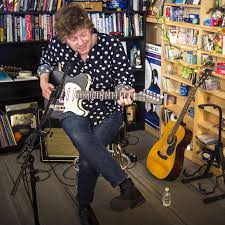
cianCian Nugent is from Dublin.  In this Tiny Desk Concert, he plays two guitars, including a crappy no name electric guitar with a great raw sound.  For the first song, he plays a pretty acoustic guitar instrumental called “Grass Above My Head.”   It has a slow melody that turns into a ragtime jaunt over the course of 6 and half minutes.

The next two songs are on that electric guitar and are both rather different (he says the songs comes from “incoherent range of the mess that is my musical career”).  Before playing “Hire Purchase” he tells a very funny story about getting a pencil from a garage (and that he uses it to keep his string from detuning–does that work?).  This is an electric guitar instrumental, bluesy and mellow with some great riffs.

The final song, “Nightlife” has words.  It’s a simple blues song. Nugent has a nice delicate voice.  I’m not a big fan of bluesy songs, but he does a great job with this and the other two styles.

He also wrote a song called “My War Blues” which is variations on a Black Flag song (I don’t recognize the original in his version, myself).  But you can hear that here.

[READ: June 4, 2014] King of the Flies 2. The Origin of the World

This book picks up right where Book 1 left off.  This edition was also translated only by Helge Dascher although it says she had help from Dag Dascher and Kim Thomspon (I didn’t notice any change in quality).

As this book starts, Eric’s mother is making serious advances with Francis–the man whom she just met but who she is already calling her fiance.  Eric fantasizes about killing him (his dream sequence mother says this is the 13th time he has killed Francis).  Marie and Eric are still together and, through a strange series of events, Ringo is asking Eric to hold on to a cool looking elephant bowling bag.

By the end of this first story, Eric has saved Becker from drowning.  And yet neither Becker nor Karine bothers to thank him.  Indeed, Karine seems even more angry at him.  But this blow off makes Eric want Karine even more.

In a later story we finally meet Karine’s family who are just as freaked out about her “dating” this old guy.  And, by the end of the story Becker has a heart attack and dies.  When she returns home after the funeral she sees Eric and she confides in him that she is pregnant.

The newest development in the book comes in the next story in which we learn that Damien is a ghost and that he visits everyone that he knew.  Some people who are receptive to seeing him can actually talk with him.  He’s obviously pissed about Eric and Sal, but he has come to terms with a lot of things.  He even forgives the man who killed him (by accident).  He also winds up meeting ghost Becker at some point. (more…)

Read Full Post »

flies1SOUNDTRACK: PUBLIC SERVICE BROADCASTING-Tiny Desk Concert #354 (May 5, 2014).

indexI heard about Public Service Broadcasting via NPR and I loved their song “Spitfire,” a rocking instrumental with interesting samples scattered throughout.  Well, it turns out that live, the rock just as hard.  Even though there’s only two of them.  There’s J. Willgoose, Esq. on guitar, banjo and electronics and Wrigglesworth on drums. The samples come from British public-service films from roughly the 1940s through the 1960s.

Watching this video, I was stunned at just how much Willgoose is doing, and just how much noise these two guys can make.  There’s even a video going on behind them.   The only problem here was that the samples were not loud enough.

 “Signal 30” opens with samples and samples and then a rocking guitar and solid drums. It amazing watching Willgoose do some many different things while playing the guitar. The change of tone at the middle of the song is great and I love watching him just bang the guitar to keep the notes going (while he is playing the keyboard).

 After the song, there is a sample of “Thank you very much” in an arch British voice (the duo don’t speak during the show).   “Spitfire” also sounds great hear–the song is surprisingly complex for an instrumental, and for what seems like it might be a novelty band, the song is really solid.  After this song, Willgoose had to fetch something and the talking sample said “talk amongst yourselves!” The final track “Everest” has a very catchy riff and some really great drumming.  But I love most watching Willgoose play the guitar with one hand and play a solo on the keyboard with the other.

This is definitely a band to check out live.

[READ: June 4, 2014] King of the Flies 1. Hallorave

Hallorave is a dark, violent, sexual comic series written by Pirus and drawn by Mezzo.  Both artists are French and have worked together before.  This book was translated by Helge Dascher and John Kadlecek (and it was translated very well–I didn’t realize it wasn’t American until they started talking about Euros sometime in the middle of the book.

So this is actually a series of short stories narrated by different people.  They seem unrelated, but after a couple of stories, you see the connections.  And there proves to be a core collection of characters all living in this suburb (the location is really irrelevant).

The first story starts with Eric (who proves to be the main protagonist) drinking, reading magazines and sitting on a couch on the (dried up and dead) lawn of his mother’s house.  He is also jealous of his best friend Damien because he is very hot for Damien’s girlfriend Sal.

That first story introduces us to a visual that will run through the book: Eric sitting with a giant fly head on.  The three are going to a Hallorave for Halloween.  Eric is King of the Flies, Sal has a giant cat’s head on and Damien is a skeleton.  By the end of the party, they are all high (you can seem them feeding each other drugs in the picture below).  Eric pledged his love to Sal in front of Damien, and Damien is in a foul mood.  He gets in a fight with some other party goers. By the end of the short story, Eric and Sal are having sex (with their costume heads on) and Damien has been hit by a car and killed.  That’s the kind of stories we’re getting here. (more…)

Read Full Post »

half pastSOUNDTRACK: FEU THÉRÈSE-Feu Thérèse [CST040] (2006).

feu1Feu Thérèse is a band created because of the hiatus of Le Fly Pan Am.  They offer a melange of styles, as befits the visual arts origins of several of the members.  And yet, there is a solid rhythm section that grounds the band in a wonderful way.

“Ferrari en Feu” opens with 3 minutes of pulsing waves of synths and electronic bird-call-like sounds. It’s unclear exactly what you’re listening to and it seems like the whole album will be a kind of ambient collection.  Then a proper rock song kicks in with chords and notes and drums–it has a cool psychedelic vibe and feels very late 60s.  “Mademoiselle Gentleman” has pulsing bass notes and staccato guitars with a layers of distorted laughing throughout (there’s no “singing” on the first two songs). At around 4 minutes (out of 6) the feedback squalls too and a simple steady beat.

“Tu n’avais qu’une oreille” seems like a traditional song–with singing (in the Serge Gainsbourg, dirty old man style of whisper/singing) which has a middle section that is quite conventional (with ahh ahhs) but again at 4 minutes, the song shifts into a faster drumming section (with more spoken words).  But then a lengthy trippy guitar solo shatters the mellowness.  “L’homme avec couer avec elle” starts with what sounds like horns.  At around 4 minutes in turns into a kind of western but with a crazy clarinet solo accompanied by sped up noises that sound like Pink Floyd’s Ummagumma.  There’s more psychedelic Pink Floyd styles on the final track, “Ce n’est pas les jardins du Luxembourg.”  The song opens with “drips” that sound like “Echoes.”  And then there’s more Ummagumma birds/animals (possibly distorted seagulls?).   At (yes) 4 minutes it turns into a trippy psychedelic organ based song (with Indian music as well).  The song is 12 minutes and leaves no sound unheard.

The music is experimental but it is not terribly “difficult.”  It’s actually quite a fun album which demands multiple listens.

[READ: April 24, 2014] Half Past Danger

The tagline for this book (which is presented like a movie in a number of ways) is Dames. Dinosaurs. Danger.  And the cover features a giant Nazi flag in flames.  Sounds like pulp genius to me.

And so it is.  Stephen Mooney has been an artist for some great graphic novels over the years and this is his first book that he wrote on his own, based on a labor of love–having Nazis fight dinosaurs.  Like a dream come true.

So obviously, this is a story of an alternate past.  Set in 1943 in the South Pacific, an Army battalion is tracking an area when they discover a secret Nazi base.  There are not supposed to be any Nazis this far east, and yet there they are.   Sergeant Tommy “Irish” Flynn is surprised but he gets his team ready to take pictures and prepare a report.  But that loud rumble sounds like the biggest tank they have ever heard.  And then out steps a T-Rex (in a great reveal).  The T-Rex wipes out all of Irish’s company.  Irish escapes with a few photos and little else.

We jump cut to two months later where Irish is drinking in a bar in New York City.  In walks General Noble of the USMC and Elizabeth Huntington-Moss of British MI6.  They request his service.  He tells them to fuck off.  Actually no, he doesn’t.  This is a PG13 story, there’s a few “shite”s and an occasional “damn” but it is squarely in the realm of comics–implied sex, a lot of blood and a few mild words.  A brawl ensues, in which a Japanese fighter helps out Noble & Moss.  And soon Irish is recovering and being told what’s going on.  After some string reluctance, Irish agrees to go back to the island.

Noble proves to be a supremely tough and string fellow.  The Japanese soldier has defected to the U.S. after the non-respectful attack on Pearl Harbor.  And Moss is an enigma.  As they approach the island, there is plane trouble and a wonderfully cool scene in the water (which I won’t spoil but the art and graphics are terrifying and wonderfully drawn and colored–Mooney did the colors for the first chapter, while Jordie Bellaire did the other five).  (more…)

Read Full Post »

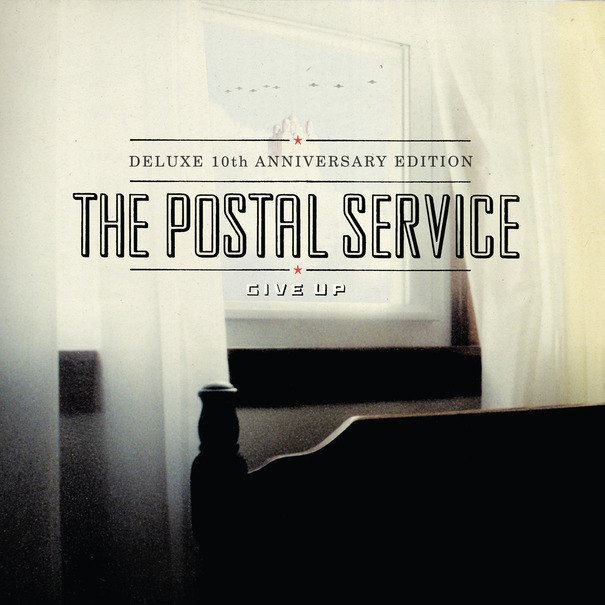
CV1_TNY_04_08_13Ulriksen.inddSOUNDTRACK: THE POSTAL SERVICE-“A Tattered Line of String” (2013).

postalI enjoyed The Postal Service record but I wasn’t as big of a Death Cab for Cutie fan at the time.  Now, having enjoyed DCFC so much in the last couple of years, this song sounds much more like a DCFC song but with keyboards (Ben’s voice is so distinctive).

This song has been released with the reissue of the Postal Service album.  It’s not on the original but it also sounds like it might be a remix (the skittery backing vocals make me think remix).

Either way this is a supremely catchy song (Gibbard knows from melody) and when you throw the keyboards and dancey beats on it, it’s even more poppy than DCFC’s stuff.  I wonder why the album wasn’t bigger when it came out.

[READ: April 21, 2013] “Valentine”

Tessa Hadley has written another story that I enjoyed–with that same quaint feeling of love in 1970s England.

The story opens with the narrator Stella and her friend Madeleine waiting at the bus stop.  They are fifteen, have never kissed boys, and think about nothing else (especially since they go to an all girls school).   Madeleine is willowy with long curls a “kitten face” and “luscious breasts” while Stella is small, plump and shapeless.

As they wait for the bus, Valentine approaches (yes I though the title was about the day not a person).  He is in school as well but he is new to them.  Valentine has just moved to the area from Malaya.  And, as he sizes them up, offering them each a smoke, when it comes down to it, amazingly, he chooses Stella.

She likes him because he is different as she is different–they are clearly soulmates.  While her parents (well, Gerry is her stepdad) don’t ‘t approve of him (his hair, his dress, his attitude).  He barely talks to her parents when they interrogate him and then he imitates their voices when they are alone.  Regardless of what others thought or really, because if it, they are soon hanging out all the time.  And soon he is her boyfriend.  And soon enough she had lost weight (because all they did was talk and smoke), they died their hair black (a proto-goth in the hippie 70s) and they basically began to look alike. (more…)

Read Full Post »

SOUNDTRACK: OF MONSTERS AND MEN-Live from Iceland Airwaves (2011).

This brief set was recorded at KEX hostel in Reykjavik, Iceland (how on earth KEXP in Seattle was there I don’t know).  This set was performed before the release of their debut EP, although “Dirty Paws” which they play was not on that EP.  “Little Talks” their (reasonably) huge hit them was on the EP and is on their full length album–it’s a great duet (and reminds me a bit of Stars).

There’s an amusing fail in the horn solo on “Lake House,” which is kind of surprising, but not terribly tragic or anything.  The band sounds great, especially in front of a home country crowd (I love hearing them say “Takk” at the end of the songs).  There’s five songs in all, and by  the final one, they feel  sound like they’re really enjoying themselves.

[READ: September 1, 2012] Wampeters, Foma & Granfaloons

This collection contains essays reviews and speeches.  So it’s non-fiction.  Except that, ever the contrarian, Vonnegut includes one fiction piece–a short play.  The title of this book comes from three words from his novel Cat’s Cradle: “a wampeter is an object around which the lives of many otherwise unrelated people may revolve.  The Holy Grail would be a case in point.  Foma are harmless untruths, intended to comfort simple souls.  An example: ‘Prosperity is just around the corner.’ A granfallooon is a proud and meaningless association of human beings.”

That all comes from the preface.  The preface also says that there are people who have collected everything he has ever written (even stuff he has forgotten about) but he will not let most of that see the light of day.  Here he has whittled down the least embarrassing stuff for publication.  He also explains that at some point (supported by reading this) he decided to stop giving speeches; to stop “talking” and to concentrate on writing.  So he did.

The final straw for this was a comment from the President of the American Academy of Arts and Letters.  Vonnegut had prepared a speech.  The president reread it and hated it, but the president told Vonnegut that nobody would actually listen to the words: “People are seldom interested in the actual content of a speech.  They simply want to learn from your tone and gestures and expressions whether or not you are an honest man.”

While Vonnegut’s essays are powerful and effective, it’s the Preface that really tells it straightg.”Not nearly as many Biafrans were butchered by the Nigerians at the end of the war as I had thought would be.  At a minimum those damaged children at the exact middle of the universe will be more honorable than Richard M Nixon.  [Nixon] is the first president to hate the American people and all they stand for.”

Get ready for a happy collection. (more…)

Read Full Post »

SOUNDTRACK: MOGWAI-Hardcore Will Never Die, But You Will (2011).

With an album title like that, you expect, well, some pretty loud music, right?

For this Mogwai album that’s not what you’ll get.  You’ll get lots of keyboards, and on the opening track “White Noise” you’ll get one of their prettiest melodies in ages.  Sure, there’s some distorted guitar by the end, but this is quite pretty.  “Mexican Grand Prix” opens with a computerized drums, keyboards, a propulsive bass line and whispered vocals.  This could be a dance hit.  What has Mogwai done with Stuart Braithwaite?  When the processed vocals start singing along (no idea what they’re saying), you can easily imagine a dancefloor packed with people for this track.

“Rano Pano” brings in the buzzy guitars again, both the first intro sounds and the noisier melody guitar, while “Death Rays” returns to the happy keyboard feel for a song that reminds me of Explosions in the Sky.  Once again, the melody is beautiful.  “San Pedro” brings guitars back in, with another killer melody and at 3 and a half minutes, it’s the shortest blast of rock.

“Letters to the Metro” opens with a spare piano melody and adds delicate washes throughout.  “George Square Thatcher Death Party” opens with some chanting (no idea what they’re saying) and then some of the loudest bass so far.  It’s another propulsive song, with some buzzy guitars way in the background, but the main force again is the keyboards.  This song sounds very 80s to me, with the processed computerized voice and the keyboard sound they use.  “How to Be a Werewolf” is 6 minutes. It’s a nice song but it doesn’t really grab me like the others.  “Too Raging to Cheers” has more 80s style keyboards (reminding me of Brian Eno or a PBS documentary about space) until about 2 and a half minutes in, when the Mogwai of old come crashes through–lots of cymbals and loud guitars.

“You’re Lionel Richie” is an 8 and a half minute song that opens with some French dialogue.  There’s a complicated guitar melody that plays for a time.  By about 5 minutes, the noise comes in–guitars, keyboards, cymbals, and while it doesn’t crescendo like Mogwai of old, it certainly gives you tastes of them.  This later section of the song brings in a good guitar melody that plays along until the slow fadeout at the end.

I continue to think of Mogwai as a loud, intense band, but their more recent output shows a band changing into something else.  Their melodies are still top notch and they definitely flirt with using noise in some of their songs, but they seems to be making more commercial sounding music (although realistically no band that makes almost exclusively instrumentals can ever be accused of selling out).

[READ: August 10, 2012] “Ghost Town Choir”

I have a read a few things from Ferris.  This story caught me completely by surprise.

The story is from the point of view of a boy who is living with his mom.  She is dating a man named Lawton.  Lawton had moved some of his stuff into their house, including his record collection–his prized possession.  They have a fight; he sings to her from outside their trailer, “What have you got planned tonight, Diana, he sang, though my mom’s name is Sheryl.”  She threw all of her dishes at him until he left.  He came back later that night calling her all kinds of unforgivable names.

Then the story shifts to Lawton’s point of view (both POVs are in first person, although they are quite distinct in style).  The boy goes to Lawton’s trailer even though he is not welcome anymore: “Your momma and me, we’re done.”  Lawton fancies himself a cowboy, and the backing singer in a cowboy band.

Back at home, Sheryl is on a cleaning binge–purging herself of everything.  When she gets to Lawton’s records, she is ready to toss them but the boy asks her not to.  She doesn’t listen and hauls them to the dumpster.  The boy grabs them later on and brings them to his fort in the forest.  That’s where he kept all of the things that the men left in his house after they were gone: “I wonder did they know about he cigarettes they’d never finish?” (more…)

Read Full Post »

« Newer Posts - Older Posts »