SOUNDTRACK: THE FAMILY CREST-Tiny Desk Concert #379 (August 4, 2014).
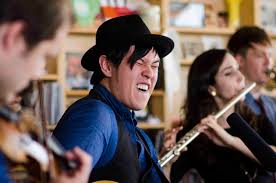
I first heard The Family Crest on this Tiny Desk Concert back in 2014 and I immediately fell in love with them. I received their album for Christmas, and it’s quite fantastic.
The band plays a wonderful mix of over the top chamber prog rock mixed with healthy doses of jazz.
There are seven people in the band, which is centered around guitarist and (amazing) vocalist Liam McCormick. Their instruments include violin, cello, upright bass, flute, trombone, drums, and guitar but this band rocks hard (and McCormick can wail like the best of them).
The set begins with the jaw dropping “Beneath The Brine” which opens with a great cello riff and is quickly accompanied by violin and flute. When the full band kicks in, grace notes are added to the riffs to really fill out he song (from the flute and the drums) and it builds until Liam starts singing. His voice is powerful and strong with a great sense of melody. The drums, by the way are playing wonderful jazzy patterns and accents. But it’s around 2:30 that Liam shows just what he can do with his voice as he hits some amazingly powerful high notes. As the song romps to an end, you can hear all of the instruments adding to the music before the final quite coda. It’s fantastic.
“Howl” is inspired by jazz. Liam was trained in opera (which explains a lot) and the band is full of classical fans, so he was excited to add Charlie the jazz drummer “hey man wanna listen to Miles David and drink whiskey?” The song opens with a big trombone riff before settling into a snappy jazz song. This song has a number of loud and quiet moments that work well together. It’s even got a great “ba ba ba ba ba ba” section that is fun to sing along with.
They ask “one more?” And Bob says “or stay all day.” So they play the final song, “Make Me a Boat.” If you can forgive the little GoPro ad, it’s neat that this relatively unknown band has been embraced by the camera company. “Make Me a Boat” doesn’t seem like the most obvious choice for a video since the beginning is kind of slow, bit the middle section is really pretty and has a great flowing feel that would work well with a video. And in this live version Liam does some great improv singing of powerful high notes that really flesh out the melody which the rest of the is playing (no wonder he’s so sweaty by the end).
The album fleshes out the orchestral sense of the band with a 30 piece orchestra which makes these songs even more grand. The Family Crest was a great find.
[READ: February 22, 2016] “Letting Go”
Sedaris is one of the funniest writers when the topic is smoking. He is (or was, I suppose) and inveterate smoker.
And I love that he starts the essay with this paragraph:
When I was in fourth grade, my class took a field trip to the American Tobacco plant in nearby Durham, NC. There we witnessed the making of cigarettes and were given free packs to take home to our parents. I tell people this and they ask me how old I am, thinking, I guess, that I went to the world’s first elementary school.
He starts this essay talking about how much he hated smoking when he was a kid. His mother smoked all her life and he just hated it. Not the smoke so much but the smell–he found it depressing “the scent of neglect.”
Of course then he started smoking himself. He talks about trying to decide which brand to use–the brand you chose was a statement back then. He chose Viceroy. And he started smoking them when he was in Vancouver. (more…)
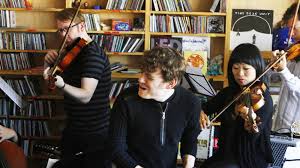
SOUNDTRACK: GABRIEL KAHANE-Tiny Desk Concert #178 (November 26, 2011).
When I saw Kahane a few months ago, he looked very different from the fellow here. (More hair and a beard will do that).
I found Kahane’s music to be really enjoyable even if it was never really that catchy. His songs are complex and thought-inducing, with many layers. Although I found that after listening to his songs a number of times, I could really find the hooks in there.
His voice has a kind of soft quality to it–not quiet, but very much not harsh, which allows his enunciations to be heard quite easily.
For “Charming Disease,” Kahane plays keyboards. He’s accompanied by strings and a guitar (I love the coloration of the guitar). Since he also writes classical music, his pop songs have a distinctly classical feel (even without the string quartet to back him up). So the piano lines that he plays are simple chords, they are full lines. And there are times when the guitar plays beautiful counterpoint to his chords. This song is about an alcoholic (“I took you home and took away your keys”), but you’d never know the darkness of the lyrics from the melody which is bright and cheerful. I love the middle section of the song–the chord progressions during the “Wine Dark Sea” are, in my mind anyway, very Kahane, and they’re what I love about his music.
For “Where Are the Arms” he switches to acoustic guitar. You know the song isn’t going to be simple when he counts of “1, 2, 3, 4, 5, 6” I love that he plays a continuing picked section while the guitar and strings play chords behind him, really fleshing out the song.
As they prepare for the final song, one of the violinists knocks over her music stand and he jokes, how did you fit an 11 piece band back her but we can’t get a string quartet. Someone shouts that it’s the strings–the bows. Kahane says, yes, “One string is two humans–ego and otherwise.” To groans from the band.
For “Last Dance” I love that he sings his vocal melody along with the guitar melody (something Frank Zappa used to do–it’s complex and interesting). And while there is certainly a melody there, he really complicates it with all of the single notes. The strings come in and the song modifies somewhat until his voice seems to resume the complex singing style. But then in the middle of the song (“she begins to sing”) it switches to a very catchy section with a refrain of “sex and cigarettes.” It’s the most immediate thing in the show and shows how poppy Kahane can be. even if the ending is quite abrupt.
He really deserves repeated and close listening.
[READ: February 5, 2016] “Learning to Look at L.A.”
I know Gabriel Kahane from when he opened for Punch Brothers this past summer. I really enjoyed his set and found his album charming and eccentric but very literary.
Turns out that at the time of the release of The Ambassador he wrote this piece for the New Yorker as well. It explores the themes that he delved into for his album, especially architecture in L.A. He even opens with a discussion of Die Hard. Like his song “Villains (4616 Dundee Dr.)” which contains the lyric:
I’ve been thinking a lot
About action movies of the 1980’s
Particularly Die Hard,
Which seems to illustrate
So many of the anxieties
Central to a time + place:
Japanese capital
The waning of the cold war
Pride in a downtown
What did they build it for?
He says that his “affection for this film is one hundred-percent unironic.” (more…)
SOUNDTRACK: CHRIS BATHGATE-Tiny Desk Concert #167 (October 14, 2011).
I’d never heard of Chris Bathgate before this Tiny Desk Concert. Bathgate is a singer and guitarist. For this show he has a band of five—another guitarist, bassist, violinist and drummer.
The first song, “Everything (Overture),” opens with a lovely slow echoing guitar sound. And then Bathgate and the violinist sing a lovely, slow duet—their voices play off each other very nicely and the lovely repetitive guitar riff is perfect background. The song picks up a bit for the chorus (which is mostly them singing do do dos) and the rousing chorus is a nice contrast to the quieter verses. I really like at the end when the second guitarist switches to the floor tom and adds to the intensity of the song.
He says that “No Silver” is “about living in Michigan and being broke.” The song is faster and a little heavier. There more good harmonies and a nice play between the loud acoustic guitar and the fiddle (this song is much more bluegrassy sounding). When the music drops off and its only drums and fiddle—the song booms.
He introduces “Salt Year” with “Think about the first person you ever had a crush on. so maybe not first crushes but…first lustses”
The slide guitarist messes up on the opening of the song and asks if they can do trainwrecks—his mother will never forgive him. Bathgate says they should leave it in. So they begin again, with that mournful slide guitar and Bathgate’s delicate vocals.
He tells a lengthy story about the final song “Levee.” He was in Maine (he had lobster ice cream for the first time–don’t try it, it’s terrible) and he was on an all night drive with a crying friend. She was inconsolable until the turned a corner and saw a gigantic harvest moon the filled the windshield. What’s odd about the story telling is that he seems to be telling the violinist rather than the audience. But that doesn’t matter because this song is fantastic. It begins with some more great harmony vocals (the violinist has a really great, slightly unusual voice. I loved that after each line, the violinist and the second guitarist play the floor tom with a great pounding rhythm. And the bass/guitar riff between verses is great too.
As the show ends, they reveal that they band brought pie for everyone!
[READ: February 5, 2016] “Climbers”
This story is about writers and the publishing world. But it comes from a wholly unusual angle that I liked a lot
The story begins with Gil raving about the world of Peter Dijkstra. Peter Dijkstra is a Dutch author who spent some time in an asylum. He wrote five novels in Dutch and recently had a novella and some short stories translated into English.
Gil works in publishing and says he would do anything–anything–to get Dijkstra published in the States. (more…)
I have enjoyed David Cross since the old days of Mr. Show, and the as Tobias on Arrested Development and even in Alvin and the, well, actually I’m just happy for him that he got a lot of money for it.
When he released his previous stand up album, Bigger and Blackerer, Sarah and I listened to it in the car on a long trip and we had tears in our eyes from laughing so hard.
So when I heard he was touring I thought it would be fun to see him live. And, yes, it was.
But we ran into a few bumps along the way. We had to leave very late because our babysitter had car trouble. She arrived just late enough that we weren’t sure if it was worth still driving the hour to Philly. We decided if traffic was terrible we would just stop somewhere and have dinner instead. I even called the Theatre to see if there was an opening act (nope) and if the show really started at 7:30 and not 8 (yup, he would start at exactly 7:30). Traffic was light and the GPS said we’d get to the garage at 7:35. I missed the turn for the alley that our garage was on, and then we got slightly lost on the walk from garage to theater and as we got there at 7:40… there were still a whole bunch of people milling about in the lobby. And then they flashed the lights telling us to get to our seats. We missed nothing!
And we even got to tsk at people who arrived later than us. Cross even joked that he would wait to start his joke because “it’s not fucking distracting or anything” when people are being seated. I was frankly shocked that people seemed to still be arriving around 8PM! (more…)
I didn’t know who Esperanza Spalding was before this show. But she defied my expectations by being a fairly tiny woman who sings while playing an upright bass (not a very common combination for anyone).
For the first song, “Little Fly,” she plays a kind of jazzy bass, but has a string accompaniment–violins, guitars etc. But it’s clear that the bass is the star. And while her playing is very good (she has some great vibrato), it’s her voice that is mesmerizing–she’s hunched over playing the bass and still manages to sound strong and powerful. “Little Fly”‘s lyrics come from a poem by William Blake.
“Midnight Sun” is a solo performance–just her voice and bass. I loved the beginning where she sang notes along with what she played. Then when the lyrics come in she sings in a very jazz voice (with eyes closed the whole time). Turns out this is a Lionel Hampton song that only appears on the Japanese release of her album which make explain her singing style.
Because on the final song she sounds very different. “Apple Blossom” is her own composition. It’s her singing with the string section playing along (there’s no bass). The song is lovely, but I prefer it when she plays bass in the song, too.
I enjoyed this performance and how delightful Spalding was.
[READ: January 9, 2016] “My Saga: Part Two”
Speaking of not finishing multi part essays, I ended my post about Part One of this essay by saying I couldn’t wait for part two. And then apparently I forgot all about it because here it is almost a year later before I read part two (which was published two weeks later).
In this second half of Karl Ove’s journey he spends most of his time realizing that he hasn’t really learned very much for his assignment. I can’t imagine anyone else being able to write endlessly about how he has nothing to write about (and still make it strangely compelling–his stress produces good sentences).
He does make some interesting connections though. (more…)
Promtomartyr’s Under Color of Official Right has been one of my favorite albums of the last few years. Joe Casey’s vocals are more or less spoken (and angry) while the music is propulsive and rocking. Sometimes punk, sometimes something else entirely. It’s a weird pairing but it worked wonderfully.
I hadn’t heard their new album yet–I am a little afraid that they’re going to mess with the perfection of their second album–but as soon as I saw they did a Tiny Desk Concert I had to check it out.
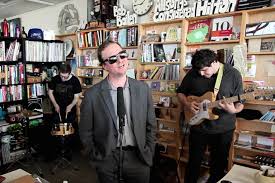
“Singer” Joe Casey stands at the front. He wears a suit and sunglasses (evidently he has some stage fright issues) and he barely moves. And then there’s the rest of the guys–each wearing all black, looking like the backing band for someone else entirely (the bassist has super long blond hair). And yet, man, do they play great together.
The band plays three songs. The first two are from their new album. “Why Does It Shake?” has a cool interesting bass line and sharp, occasional guitar chords along with drums that are mostly played along the rim. The song unexpectedly slows down for a middle section. And all along, Casey asks his tough, threatening lyrics. The song is over 4 and a half minutes, perhaps one of their longest tracks.
The second song, “”Devil In His Youth” is a fast propulsive song with a great catchy riff that leads to the simple spoken chorus of “the devil in his youth.” This song is much more familiar in terms of Protomartyr songs and is only two and a half minutes long.
The final song comes from their debut album, No Passion All Technique (which is hard to get and which I’ve never heard). The song doesn’t sound drastically different from the others, but you can hear a different tone, perhaps a little less abrasive?
Naturally for a curmudgeonly band, they don’t play anything from the album I love, but this set is really good nonetheless. And yes, it may be time to investigate the new album.
[READ: October 28, 2015] Super Mutant Magic Academy
I saw this book when we were visiting Toronto and I wrote down the title to check it out. I didn’t know anything about it, and didn’t realize that I knew the work of Jillian Tamaki from several great graphic novels
I also had no idea that this was actually a long in progress webcomic that Tamaki has put into book form.
And finally, I didn’t expect it to be a series of one page funny strips that tell an overarching story. (more…)
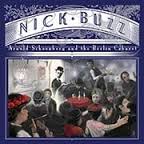
SOUNDTRACK: NICK BUZZ-Arnold Schoenberg and the Berlin Cabaret (2003).
In 1901, Arnold Schoenberg wrote eight Brettl-Lieder (Cabaret Songs). The songs were short and fun with naughty (cabaret influenced) lyrics. Some 100 years later, inspired by the Art of Time Ensemble who commissioned Nick Buzz to play pieces for their Schoenberg show.
So the guys from Nick Buzz got together and recorded four of the eight pieces. Then Martin Tielli released this disc as number 2 of his Subscription Series. Some of us were a little disappointed when this came out since it was only 15 minutes of music, but the art is wonderful and I have recently rediscovered this disc and have enjoyed it immensely.
Basically the Buzz guys have interpreted the songs in their own style, but they have remained faithful to the original melodies and lyrics (which were in German but are now in English).
“Gigerlette” explores electronic manipulations (presumably by Hugh Marsh) and offers lots of fun samples (what I assume is some earlier recordings of the song in German). It opens with sampled female singing and staccato piano as well as other unusual effects. Then Martin’s vocals come in and the effects clear out and the song becomes simple piano ballad for a brief moment. Then the noises come back in again, playing around with this amusing song. It’s a song of romance and love with the sweet punchline being that cupid is driving their coach and four. At over 5 minutes this is the longest song by far, even if the basic song is just over two minutes.
“Der genugsame Liebhaber” (The Modest Lover) opens with what sounds like a distorted harp (presumably the piano) and scratchy records (from Marsh). This song is about a man going to see his lover, but his over’s pussy loves his bald head so much that she continually climbs atop it. It is charmingly naughty. There’s some wonderful violin from Hugh Marsh on this song
“Galathea” is the most conventional of the three songs. A lovely piano ballad to Galatea.
“Arie aus dem Spiegel von Arcadien” (Aria from the Arcadian Mirror) is super fun. The music is weird and goofy with a very drunken feel. And the chorus is just wonderful “my heart begins to thump and dance just like a hammer’s blow it goes boom boom boom boom boom boom boom boom boom (getting faster and faster). I’ve listened to the original and it is very much the same, although Nick Buzz’s version is much better.
You can find some of these songs on line from a recording at Lula’s Lounge (Dec 9, 2010)
It’s cool to see how they recreate the album so faithfully in a live setting. It’s only a shame that the video isn’t a little closer so you could see just what they are doing.
Nick Buzz-December 9 2010 Lula’s Lounge
[READ: September 1, 2015] My Documents
I have enjoyed some of Zambra’s stories in other locations, so I was pretty excited that McSweeney’s released this collection (translated by Megan McDowell). The book is pretty much all short stories, although the first items feels a bit less fictional and more memoirish.
“My Documents”
This is a brief historical account of Alejandro as a child and as a writer. He talks about when he started working on computers and what happens when the computer dies with the information inside. He explains that this file is in his My Documents folder and he’s going to publish it “even though it’s not finished. Even though it’s impossible to finish it.”
“Camilo”
I read this story in the New Yorker. It concerns the relation of a man and his godfather, whom he has not seen since his father and godfather had a falling out years ago. See my link for a more complete synopsis. I enjoyed it just as much the second time.
“Long Distance”
The narrator worked as a phone operator in 1998. He liked the job–his boss was cool and would let him do anything he wanted so long as he answered the phones quickly. The job was in a travel insurance office and one day he received a call from a man named Juan Emilio. After speaking for a time about various things, the narrator realized it had been 40 minutes since they first started talking. They were expected to call clients back 14 days later as a follow-up and this time Juan Emilio talked with him foe a while and, upon learning that the narrator studied literature, asked if they could meet and discuss books. The narrator was already teaching classes at night, and these two situations overlapped somewhat. I loved the way all of this information is used as backdrop to a romance he has with a student known as Pamela. And the final line is great.
“True or False”
The titular phrase is uttered by a boy, Lucas, who declared, based on an inscrutable internal feeling, that things were True or False. An armchair might be true, while a lamp might be false. Hid father Daniel had a cat, Pedra, even though pets were forbidden in his building. Lucas loved the cat. Then the cat had kittens. There is a metaphor at work about the fatherless kittens and Daniel’s own behavior toward his son. I really enjoyed this story and the strangeness of the true or false brought a fascinating childlike quality to the story
“Memories of a Personal Computer”
The conceit of this story is great. A PC remembers what it was like to observe a relationship as it begins and then ebbs–and how the PC was moved around into different rooms as things changed in the relationship.
“National Institute”
At the school where the narrator went, they were called by number. He was 45. The main subject of his story was 34, although he doesn’t know the boy’s real name. 34 had failed the grade and was made to repeat it, but rather than being sullen about it, he was popular and fun. All of the students were worried about failing–the final test was very hard. But one day 34 approached 45 and told him he had nothing to worry about. The other students didn’t know what to make of it, but he slowly assessed everyone and told them whether they had anything to worry about. By the end of the story, when 45 is brought to the inspector of schools, he is told a lesson he will should never forget.
“I Smoked Very Well”
A look back on smoking and how quitting smoking made him a different (though not necessarily better) person.
“Thank You”
She is Argentine, he is Chilean and they are not together (even though they sleep together). They were in Mexico City when they were kidnapped together. The incident has unexpected moments. It’s a weird story (with some really unexpected moments) but a really good one.
“The Most Chilean Man in the World”
A Chilean couple has decided to separate once she was accepted to school in Belgium. After several months he is convinced that she wants him to visit, so he spends a ton of money and heads out to Belgium. Without telling her. And it goes very badly. But he can’t just leave Belgium, now can he? So he goes to a pub where he meets some new friends who call him the chilliest man in the world. The story hinges on a joke, but the story itself is not a punchline.
“Family Life”
I read this story in Harper’s. I thought it was fantastic–it was one of the stories that made me want to read more of his works. This is story of a man house sitting and the false life that he constructs around him. It was surprisingly moving.
“Artist’s Rendition”
I loved the way this story began. It tells us that Yasna has killed her father. But we slowly learn that Yasna is character in a detective story that an author is trying to write. We learn how the author constructs details about this character and the things that she has experienced which make her who she is. As this story unfolds we see how those first lines proved to be true after all.
This was a great collection fo short works and I really hope to see more from him translated into English.
Martin Tielli has been prolific both as a solo artist and with his “side project” Nick Buzz (named after his love of smokes).
Nick Buzz’ first album came out in 1996 (during a time when the Rheos had just wrapped up their album The Blue Hysteria) and was ignored. It was reissued in 2002 to a bit more fanfare. I reviewed it once before and while I thought I was more dismissive of it then, it turns out that I wasn’t. That I enjoyed it and felt mostly the same as I do now.
“Spilling The Wonderful” starting out with a mellow piano intro, the song jars into a noisy/drunken waltz melody and a violin solo before returning to the cabaret/waltz style that opened the song. It is deliriously catchy. The song ends with some tape manipulation before seguing into “That’s What You Get For Having Fun.” This song opens with some slapped and scratchy guitar sounds with a refrain of “there’s a monkey in my underwear.” There’s a super catchy guitar riff that is sung along to—this song really shines live.
“Just Because” mellows things down a lot, with a jazzy sounding guitar and Martin’s delicate vocals. The music for his one was written by pianist Jon Goldsmith which might explain the mellowness. It’s a sweet ballad. Although the segue after this song is some clips from the radio (possibly sung by Tielli?) which are distant and crackling. There’s a saxophone playing as well. This merges into an announcer introducing the band for their (live) cover of Joni Mitchell’s “River.” It’s a beautiful, delicate version with Hugh Marsh’s electric violin solo swirling around.
Some dissonant sax segues into Sane So Sane which is actually a pretty gentle piano song. They play with the recording sound as the drums get muffled and dense and there’s more backing vocals thrown over the top. But it remains largely conventional. “Hymn to the Situation” is a creaky somewhat creepy song that Martin described as being about a self-centered jerk. who says things like “I’d suicide for you.” There’s a canned crowd cheering at a particularly funny line and even a cow mooing as the song ends
“Fornica Tango” is a wild weird song. It is tango (Tielli speaks Italian), but the rhythm is kept by a squeaky sound (which is likely Marsh’s violin). The song is interrupted throughout by a crying baby or, even stranger, a screeching chimpanzee (fornica translates as ant). The song ends with some crazy sounds from Marsh’s electronic violin. The highlight of the record is “Love Streams’ a beautiful ballad based largely around a piano melody and Marsh’ keening violin. It’s followed by “Aliens break a heat” which is more tape manipulation and all kinds of weird effects (backward vocals I believe) for 2 minutes. Until it’s replaced by sounds of traffic (European) and horns honking.
The final song is the amusing “The Italian Singer/Just Because I’m Nick The Buzz” It starts slowly with some plucked strings and Tielli’s voice. There’s some spoken sections and lots of staccato music until the gentle ending which resumes the melody from “Just Because.”
It’s a peculiar album but one that gets better with each listen (and hearing him play some of these songs live has really introduced new aspects of them to me.
[READ: October 10, 2015] The Circle
I put this book off for a while but with no real reason for doing so. And I’m sorry I waited so long because the book is really good–it’s thought-provoking and questions a lot of established ideas but is also really kind of fun and utopian.
What’s most impressive to me about the way the book is written is that the story itself is really quite simple. It is a gradual building up of intensity. At the end of which the main character has to make a decision which proves to be very important both for her and everyone else.
The story is about Mae. Mae had been working at a dull and dispiriting job in civil service at her home town. The job was dull, the people were dull, there was zero energy in the place and even her boss was depressing. It sucked. She had been there for 18 months and when her boss joked about her getting a promotion, she’d about had it.
She contacted her friend Annie. Annie was her college roommate and boon companion for a few years. And Annie worked at The Circle, the coolest most awesome place in the country to work at–think google, but better). Was there any way that Annie could help out Mae? Indeed there was. Annie got Mae a job at The Circle, just like that. Annie was one of the Top 40, the influential crowd at The Circle and Mae was in (her first day is hilarious, because Annie plays a wonderful prank on her). (more…)
SOUNDTRACK: MARTIN TIELLI-The Hudson, Hamilton, ON (January 28, 2006).
After the flurry of solo activity, the Rheos released their final album and toured and then broke up. Dave Bidini said that Tim Vesely wanted to quit in January 2006. Who knows exactly when that was made clear or how this solo show from Martin came about.
It’s only 29 minutes long. When he comes out someone asks where he came from. So who knows what’s going on.
The recording is too loud and feels kind of harsh. But he says “I’m gonna try some songs on you.”
I think the entire set is him solo although it sounds like there may be an extra guitar on “My Sweet Relief” and “I’ll Never Tear You Apart.” He doesn’t mention anyone though, so maybe he’s just awesome.
There’s only 7 songs “Digital Beach” (an unusual Rheos cover by itself). Then six songs from his debut album. “World In A Wall” which is great (but again, kind of harsh sounding), “Waterstriders (The Bridge)” “My Sweet Relief” “I’ll Never Tear You Apart,” a rocking “That’s How They Do It In Warsaw” and “Wetbrain.”
It’s a brief show with very little chatter, but it’s interesting to hear him do many of these songs solo. Given that he tends to play songs from newer albums I can’t help but wonder if this was actually an older concert.
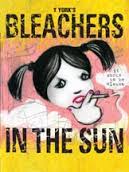
[READ: June 15, 2015] Bleachers in the Sun
Every now and then a big pile of short plays comes to my desk. The ones that sound interesting I’ll give a read–it usually doesn’t take too long.
This one is about 4 eleven year old girls (in the play the performers are adults).
The blurb on the back says “Why would adults go to see a play about eleven-year-olds? Possibly because none of us ever really stop being eleven. [This play] holds a mirror up to grown ups to darkly illuminate the world of modern adolescent girls, which is just like ours, only amplified.”
Okay, well, yes it sort of does that, But the mirror was so dark that I found the play less than illuminating. (more…)
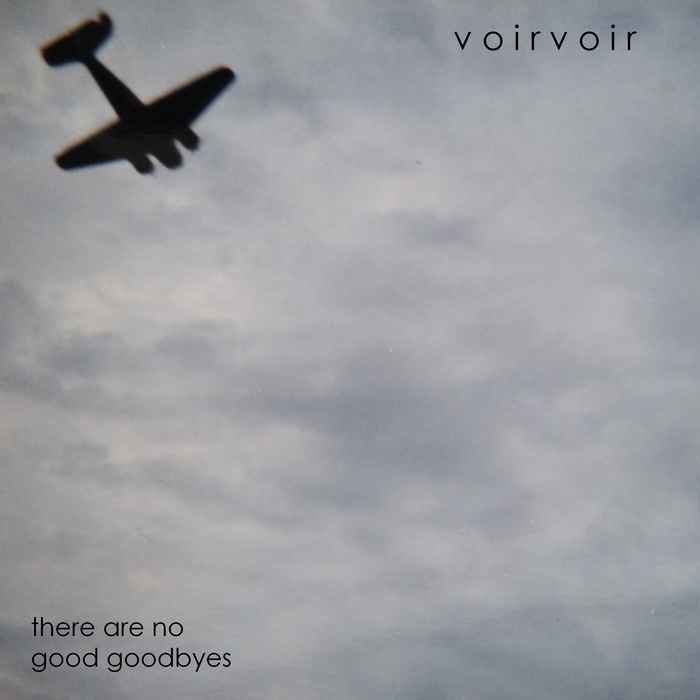
SOUNDTRACK: VoirVoir-There are No Good Goodbyes (2015).
VoirVoir eluded me at Musikfest this year. I was supposed to see them open for the Flaming Lips but my shuttle arrived late. And they played THREE TIMES on the following Saturday, but we couldn’t coordinate getting to a stage where they were playing. Which is shame because after missing their set the first night, I bought their CD and really liked it a lot.
My copy of the CD looks like the one at the right except that someone in the band hand cut out two irregular shapes in the cover so you can see through to the back, which is a cool touch.
The album itself is mostly punky and fast with vocals not unlike Superchunk or more accurately Built to Spill. Not that they copy either band, but you get that comfortable rocking feeling from these songs.
“I Wanna” is such a great opening statement. After the fast punky verse there’s a slower chorus which is just as catchy as the verses. I could listen to this song all day. “Make Your Bed” also has a wonderfully catchy chorus—the way it shifts into such an upbeat song after the buzzy and feedback filled verse is wonderful. “Stupid for Now” reminds me a lot of Built to Spill—there’s no guitar solos or anything, but in the catchiness and slow build of the verses and the much slower but still catchy chorus. It’s a great song. And I love that there is a glockenspiel as well as the guitars in the mix. “His Last Sound” continues in this vein with another great chorus.
Track five opens with a surprise when a new vocalist enters the mix. My copy of the CD has precious little information about the band–just a list of names. But I’ve pieced together some details to determine that the main vocalist is Matt Malchany and the female vocalist is (I assume) April Smith. So “Be Your Machine” opens with Smith singing and her voice is great–hushed and deep–a stark contrast to Malchany’s voice, which takes over after the first verse. She (or perhaps both women, guitarist Emily Meixell is also in the band) provide backing vocals to the more delicate chorus.
“Let’s Not” plays with the loud/quiet, male/female dynamic more as the verse is brash and loud and sung by Matt and the bridge is quiet and sung by April. Then they mix it up further with a later quieter section sung by Matt.
“There are No Good Goodbyes” is a gentle song sung by April. It has really interesting swirling guitar noises that are almost ominous. I love the way she sings the chorus slowly as the music builds and builds faster and faster. “If Miles Were Years” has some interesting dissonance as well, especially the closing ringing notes. And once again, there’s a catchy chorus. I also really enjoy how much attention is paid to the percussion at the end of this song and many others (nice job Josh Maskornick). And lest I forget bassist Matt Juknevic who keeps the rhythm steady throughout the variations of tone.
“Down Together” slows things down with a martial beat and a duet of vocals. It has couple of moments of loudness that build and drop off only to return to the delicate sound of the beginning. The final song, “This is a Drag” is indeed a bit of a drag. It’s slow and repeats that chorus in a kind of monotonous voice. It doesn’t really play well with the rest of the album, even if the end does build (and yes maybe by the you’re enjoying singing “this is a drag” along with them). I can imagine it might be fun live if they can let it build and build and jam on it for a while, but the rest of the album is so up and fun that this closer is kind of a drag (especially since it’s the longest track on the record).
But despite that, I absolutely love this album. And I love the way I discovered it, and I love that are from Bethlehem, PA, which means I’ll be able to see them live one of these days, surely.
Check out VoirVoir at their bandcamp site and order their album! We need to hear more from them.
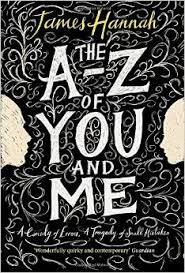
[READ: July 27, 2015] The A to Z of You and Me
I admit that I am a sucker for stories that work along a kind of theme (or gimmick). But only if the book is done well. And when this book had the subtitle of A comedy of Errors, a Tragedy of Small Mistakes, it seemed interesting enough to dive in.
When I say that this book is narrated by a man in hospice, you can be sure that that information would normally be enough for me to stop reading. The last thing I need to do is read a book by someone who is dying–especially if he is only 43.
But the way the story is told is really intriguing and it unfolds the plot in such a great way. The A to Z part is something that the hospice nurse has told the narrator, Ivo, to do to keep his mind active. Think of a body part for each letter of the alphabet and then think of the most interesting thing that has happened to that body part. And so page one starts with Adam’s Apple. And while he doesn’t exactly think back to his own, he does remember a teacher’s Adam’s apple from grade school and how it left quite an impression on his young life.
The book is written in first person but is mostly directed towards “you.” And “you” is the woman that he was dating whom he is no longer dating. (more…)
 SOUNDTRACK: THE FAMILY CREST-Tiny Desk Concert #379 (August 4, 2014).
 I first heard The Family Crest on this Tiny Desk Concert back in 2014 and I immediately fell in love with them. I received their album for Christmas, and it’s quite fantastic.















 I Just Read About That...