Feeds:
Posts
Comments

Archive for the ‘Canadian Music’ Category

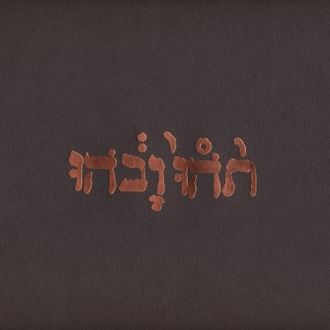
walrusSOUNDTRACK: GODSPEED YOU BLACK EMPEROR!-F♯ A♯ ∞ [CST003] (1997).

faGYBE is more or less the flagship band for the Constellation label.  Their band has spawned many other bands, and nearly every member has played on someone else’s record or released a solo album.  Which is why it’s surprising to realize just how few albums they have released.

This first album caused quite a stir.  It was released on vinyl and then released (with an extra 29 minute song) on CD.  Few bands sounded like this before, and a whole new genre was created around their brand of multi-piece, sorta orchestral post-rock.

There are three songs on this record, but based on some information given in the CD, the songs have been informally broken into parts.

The Dead Flag Blues.  The song opens with “The Dead Flag Blues (Intro).”  It features a rough-voiced man speaking what I have recently learned is a script by Efrim Menuck.  Backed by a string melody, the speaker describes a derelict city, where the government is corrupt and the inhabitants are drunks.  After the strings fade, two guitars play a repeating motif with occasional string fills and then a slow solo violin section which fade to silence

For part 2 “Slow Moving Trains” / “The Cowboy…”  the sound of a train whistle interrupts the quiet.  It’s followed by a series of slow descending notes on a guitar.  After a few minutes a twangy guitar comes in to play a Western-ish motif.  The rest of the band slowly comes in and creates what sounds like the first real Godspeed sound—a full band making beautiful orchestral instrumental music.  It’s all too brief though as it melds into part 3.

Part 3 is known as “The Dead Flag Blues (Outro).  It opens with violin and glockenspiel playing a much more upbeat tune.  It lingers for around 2 minutes and then the songs ends.

“East Hastings” has three parts as well  “…Nothing’s Alrite in Our Life…” / “The Dead Flag Blues (Reprise)” opens with bagpipes and a man ranting.  It’s only 1 minute and a half before “The Sad Mafioso” kicks in.  This part builds slowly with spare guitars and waves of sound.  The guitar reconciles itself to a riff, slow and quiet, with a neat minor note in the middle.  It sounds like the kind of thing that is just building to something bigger, slightly more ominous.  And as the band kicks in again, the riff becomes much more meaty, but before it can totally take over, it gives way to strings and drums–playing a simple melody that continues the feeling of the guitars.  When this ends, far in the distance you can hear a voice singing the melody although it is quickly replaced by two guitars  playing the riffs while the strings keep jumping in.  And then they start working together, growing bigger and louder and faster.  Until it reaches its end with squealing feedback and a man saying “they had a large barge…” which opens up part three, “Drugs in Tokyo” / “Black Helicopter.”   This last part opens with a guitar playing harmonic notes along with washes of noise and feedback.  Some of the noise sounds, yes, like helicopters (and this is where the band makes some use of the coolness of headphones).  It’s a brief section that ends what is technically side one (although I see that the vinyl had about one minute extra at the end of the song).

Track three, “Providence,” is 29-minutes long and has five or six parts, depending on if you include the 3 minutes of silence.  “Divorce & Fever…”  opens with a lengthy spoken piece by “Blaise Bailey Finnegan III”, who will have his own track dedicated to him on the next GYBE release.  The music opens with distorted and backwards sounding guitars.  Organs add to the mix and then this short section morphs into part 2.  “Dead Metheny…” begins with some quiet guitar notes with the violins playing some mournful notes.  But the glockenspiel jumps into play a pretty, fast melody.  And then the drums start pounding away while harmonic chords are played over the top.  There are simultaneous guitar solos in each ear while the drums continue to play loud and fast.

Kicking Horse on Brokenhill” has a staticy/echoey/distorted voice singing lyrics that are really hard to hear to a melody that is similar to “Amazing Grace.”  After that fairly unsettling intro, the band begins a great section with multiple guitars and other instruments playing the same melody (this is the “Godspeed sound” in a nutshell.  By the middle of this, it has built to something enormous–full of guitar lines and drums with the support of what feels like the rest of the band.

“String Loop Manufactured During Downpour…” has a distant voice (I assume from a record based on the static) begins singing “where are you going” in a rather haunted echo).  The rest of the track is primarily washes of notes and stat icy noise until the 3 minutes of silence which precede the final proper track, “J.L.H. Outro” (stands for John Lee Hooker).  It begins with guitars and washes of sound.  The guitars begin exploring the main riff in different ways.  When the song finally builds to a full band, there are different drum beats in each ear, creating a big cacophony of sound while the guitar wails away.

It’s a pretty great album, with many different elements–weird spoken word and fantastic instrumentals sections.

Godspeed You Black Emperor has had a few lineup changes over the years.  They began with some 15 members and ultimately settled on these ten for F♯ A♯ ∞.

  • Aidan Girt – drums
  • Bruce Cawdron – percussion
  • Christophe – violin
  • David Bryant – guitar
  • Efrim Menuck – electric guitar
  • Mauro Pezzente – bass guitar
  • Mike Moya – guitar, banjo
  • Norsola Johnson – cello
  • Thea Pratt – French horn
  • Thierry Amar – bass guitar

[READ: January 26, 2106] “Cowan”

The previous Walrus story that Bertin wrote (back in 2013) was very dark.  And so is this one.  But whereas I found “The Eviction Process” compelling, this one I just didn’t like and couldn’t wait for it to be over.

This strikes me a kind of redemption story–the word guilt is mentioned once or twice.  And it seems like perhaps this was the author’s attempt to make amends for being a shit heel. Except there is no real sense of redemption or apology or anything of the sort.

The end even seems like the narrator is simply lying. (more…)

Read Full Post »

redSOUNDTRACK: LE FLY PAN AM-fpamCeux qui inventent n’ont jamais vécu (?) [CST019] (2002).

After their previous EP, Le Fly Pan am (note the addition of the Le) come back with an album that can be described as funky.  True, it’s weird funky that gets dismantled while its going along, but it’s still pretty funky.

They wouldn’t be them if there weren’t some crazy noises.  And so the first song (parenthetical translations are from Wikipedia), “Jeunesse sonique, tu dors (en cage)” (“Sonic Youth, You Sleep (In a Cage)”) is just noise and static for 90 seconds before leading to the first song proper:

“Rompre l’indifférence de l’inexitable avant que l’on vienne rompre le sommeil de l’inanimé” (“Break the Indifference of the Inevitable Before We Come to Break the Sleep of the Inanimate”) which kicks in with a really funky bass guitar and drum section. It’s really catchy and almost danceable. But throughout the song’s ten minutes there are elements of destruction going on. There’s screeches that sound like a dentist’s drill. About a minute in, the guitars just seems to stop playing riffs and just tart going crazy–playing loosened strings and just random notes like a beginner (even though the original rhythm is still there).  That funkiness stays for about 5 minutes until the songs shifts gear into a loping melody with a big bass and simple repetitive guitar lines. And then it kind of falls apart all together with some sounds like broken strings and lots of chatter (in French).  At 7 and a half minute it resumes at breakneck speed with the drums and bass pounding away and all kinds of effects splashing on top. The song ends with low rumbling noise before jumping into….

“Partially sabotaged distraction partiellement sabotée” (“Partially Sabotaged Distraction Partially Sabotaged”) This song opens with a four-note, slightly off-key guitar and then loping bass riff that reminds me of SST Records bass guitar of the 80s. It switches between this and a slightly funkier sounding section. But the destruction is apparent from the get go as early in the song, the sound just completely drops out on a couple occasions, making you think the disc is broken (it isn’t).  The song starts to get more intense as the notes seem to get faster and more insistent (those repetitive notes and ringing guitars just seem to scream tension).

“Univoque/Équivoque” (“Univocal / Equivocal”) opens with static and then a very funky bass line.  There a music box playing over the top and some quiet guitars. About half way through the bass ends but the music box (tiny and distorted) continues.  At 3:30 a new bass line, similar to the previous but with a new section added pops up.  It’s a simple song showcasing their groove and their noise.

“Arcades-Pamelor” starts with low distorted noises.  Like the first “song” this is mostly sound effects and things slowed down. Until a screaming noisy static takes over about half way through.  It’s really quite unpleasant.

“Sound-support surface noises reaching out to you” opens with another funky bass and drums and some simple guitar notes. About a minute in a sound emerges that sounds like a skipping CD (but it’s not your CD).   And then a new, different bass pattern emerges with lots of noisy percussion(sounds like people banging things). The skipping sounds seems to work as a segue between section, with some great funky parts and and then the final section which opens with what sounds like a mildly out of tune guitar ran and more great bass. This really enjoyable section winds up glitching to a halt with the  sound of a skipping record player.

“Erreur, errance: interdits de par leurs nouvelles possibilités” (“Wandering Error: Prohibited by Their Opportunities”) has the sounds of sticks clacking together and silverware dropping and mechanical sounds.  And they all seem to somehow settle into a rhythm of piano notes. Unlike the other tracks this one is pretty consistent—strange noises and a simple piano motif.  It’s also probably the least interesting of the bunch.

The disc ends with “La vie se doit d’être vécue ou commençons a vivre” (“Life Must Be Lived or Begun to Be Lived”) another great, funky bass and piano line, with some interesting guitar sounds round the corners. This song is so catchy, it’s wonderful.  After about 2 minutes there’s another breakdown. The music all stops except for the guitars which sound like they are getting strangled.   The second half of the song has the same funky bass but very different guitars and lots of squeals and feedback. After a couple more glitches at 6 minutes in, the bass takes off playing fast rocking riff as the guitar tries to keep up. It’s such a satisfying ending that it’s hugely disappointing that it only last 45 seconds before the album ends.

While it was always obvious that Fly Pan Am were going to play weird experimental stuff, it wasn’t clear before just how funky and dancey they could be too.  If you can handle some noise in your dance, this is a great album.

[READ:January 10, 2016] Red Handed

I absolutely loved this graphic novel.

I had never heard of Kindt before and I didn’t really know what to expect from the book, but I certainly didn’t expect the complicated and super clever plot and structure that this book had.

It opens with a newspaper story that tells us about Detective Gould’s ten years on the force.  Since his arrival there have been no unsolved murders.  He credits the rise in technology for his success.  (continued on A12) and then it moves into the graphic format.  It is headed Detective Gould (in black and white).  Then it shows some mug shots of suspects in color.  And it turns out that these people’s stories will comprise the bulk of the book.

The next chapter opens with a woman fleeing a diner with a stool.  She worked there and is told the stool is coming out of her paycheck,.   We learn that stealing chairs is kind of her thing.  And then we see what her next acquisition after this stool is.

The next chapter is called the Jigsaw and it involves a man who is an art dealer.  As the story opens he steals a giant painting form a woman he has picked up at a bar. And then we learn what he did with it and how he made his reputation.

After he is caught, the story shifts to a series of dialogue boxes on a black background in which Sgt Gould is speaking to a woman who Sgt Gould assumes is connected to all of the cases in the book.  She is playing innocent and has explanations for everything.

After this there is another black and white section designed to look like newspaper stories of The Detective’s Wife  (in which the two are sweet together) and then Tess’s True Heart in which we learn that Tess (whoever that is) is a very smart girl.

The next chapter is The Ant in which an artist wants to tell a story told from the point of view of an ant.  But since the ant cannot write, it must collect letters from the newspaper.  This turns into an art installation in which the author’s editor begins finding the words all over town and using them to tell the story (it’s much more convoluted than that and really clever).  Then we learn that Tess is the author’s editor–the first connection is built.

And after that short piece, we see more black and white stories from Detective Gould and Tess’ True Heart.

The next chapter is The Forgotten about a sleight of hand magician who has stopped doing magic and has become a pickpocket.

The Repair Man is about an elevator repair man who takes pictures up women’s skirts when they are stuck between floors.  And then he begins selling them to a smut dealer.  The way these pictures connect to the rest of the story is amazing.

The next section is The Performance Artist in which a woman is set up to look like she is cheating on her husband (elaborate ruse once again).

The Escape Artist tells the story of a car thief and how so many thieves think they are going to stop but they are afraid of losing the rush.  Well, this guy retired for real.  Until he ran into Tess.  He knows from long ago.  And she brings him back to the city.

Finally, The Fire Starter is about a guy who gets paid to start fights with the intention of a payout coming somewhere down the line.

The last fifty or so pages show how all these crimes, all these cases solved by Detective Gould, are tied together.  And the way it is told just gets more and more interesting.

This was an outstanding book.  I loved the art and design–the various ways that the medium was used to tell the story.  I loved that it was confusing but not too confusing and that it unraveled in the way it did.   I really can’t say enough about this book.  This was another big win for First Second in their #10yearsof01 celebration.

Read Full Post »

americusSOUNDTRACK: FLY PAN AM-Sédatif en fréquences et sillons EP [CST011] (2000).

330px-SedatifsEnFrequencesCover This is an EP that works as a kind of remixes and deconstructs further the debut. There are three songs, the first is fourteen minutes, the second is 11 and the final is 4.  As the Constellation site describes the disc:

This 3-song EP of fractured, tape-infested experiments is an intransigent slab of self-referential auto-criticism. The band was sticking to its agenda of acutely self-conscious musical manipulations, re-working its own materials and assumptions to yield new compositions of uncompromising formalism. Side A is a medley of sorts, consisting of phrases and fragments reconfigured and replayed from their self-titled debut (Fly Pan Am). Various melodies are reassembled and played off of one another, creating an extended live remix with blissful passages of layered guitars, drones, sampled backing vocal lines, and the requisite incidental noise break in the middle of the piece. The result is something like a ‘Stars On 45’-style musical encapsulation of the entire debut record.

“De cercle en cercle, ressasser et se perdre dans l’illusion née de la production de distractions et multiplier la statique environnante!” (“From Circle to Circle, Rehash and Get Lost in the Illusion Born of Production and Increase the Static Distractions Surrounding!”) opens with the sounds of machinery rumbling and then slowing to a stop. The song proper opens with a rapid bass line and squalls of feedback.   Some beautiful guitars play over the noise. More guitars come in along with all kinds of crazy noises—scrapes and scratches, radios and distortion.

The propulsive music stops around 3 and half minutes in and the noise takes over. There’s loud noises and static and all kinds of things. Then the noise shifts to what sounds like someone emptying a bag of ball bearings onto a metal table.  And then maybe making microwave popcorn.  About five minutes later (seriously) a drum starts playing in the background and then a guitar line that references the debut album starts up.  It sounds a bit like the two note guitar from “Dans ses cheveux soixante circuits” with the voices from “Nice est en feu!” thrown on top.  And then at 11:20 that two note half-tone thing from “Dans ses cheveux soixante circuits” resumes, but it’s only for 20 or so seconds before different sounds come to take away the repetitiveness (although the guitars do continue that until the end of the song).  It seems like the band wanted to revisit their debut but also wanted to make sure that it was properly buried under chaos as well.

The second song “Éfférant/Afférant” (“Unrelated / Related”) (11 minutes long) is described as “somnambulist clockwork repetition.” The bass and drums are kinda funky with some simple guitar chords playing in the background. While things do change somewhat throughout song (including notes that seem inappropriate at times), the main source of change is the weird electronic sounds that play over the top. The noise starts to grow louder and louder around 9 minutes and just when it gets unbearable it fades out to the end of the song.

“Micro Sillons” (“LPs”) is only 4 minutes long and it opens with static and noises—different ones in each ear.  After about three minutes of that, the noise mutates into a kind of machine-like hum.

This is definitely a challenging listen.  There are rewards to be had, and it s amazing what good songwriters these guys are, if they’d ever let their songs stay unmolested.

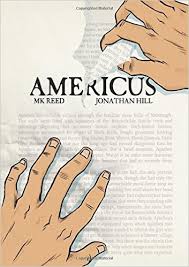
[READ: December 17, 2015] Americus

I didn’t really have any idea what this book was about–the title Americus evokes many different things.

So imagine my surprise to find out that this First Second graphic novel [go First Second!, #10yearof01] tackles the idea of banning books in schools.  It looks at religion, freedom of speech and middle school.

The story is about Neil Barton, an unpopular kid who loves fantasy and books, especially the Apathea Ravenchilde series (such a great name). Neil and his friend Danny race to library after school because the latest volume is out.  Neil is bummed that his library could only afford one copy of the book (budget cuts!) and Danny gets it first.  And as he starts reading, the artistic style switches to the Ravenchilde world (I loved that).

Then we meet Neil’s and Danny’s families.  Neil’s parents are divorced.  He lives with his mom who is harried and exhausted.  Danny’s family is an intact nuclear family, with two younger siblings.  And we learn soon enough that his mother (and father to a degree) are very Christian. (more…)

Read Full Post »

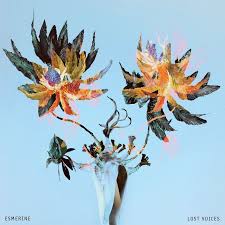
dirkSOUNDTRACK: ESMERINE-Lost Voices [CST116] (2015).

esmerine 2Esmerine’s previous album was recorded in Istanbul and featured a lot of Middle Eastern instruments.  This album was recorded in France and has an incredibly different tone than the previous one.   It doesn’t really have any unusual instruments.  Well, except for the darbuka (a drum) and the riq (a kind of tambouine), both of which appear on the track “Funambule.”  And these interesting items: the ekonting (a West African lute) and the sarod (an Indian lute).

This album has moments that rock a lot harder and louder than anything they’ve done before, but it also has some lengthy mellow moments too.

“The Neighbourhoods Rise” opens the disc with staccato strings and bass.  Then the cello and violin come in.  The song builds and grows more dynamic as drums enter the song, but at 3:30 the song bursts forth with big chords and loud drums.  There’s a great violin melody running through the exuberance.  Then the music all falls away leaving a lovely, sad cello and violin melody to take the song out.

“A River Runs Through This Town” opens with the most conventional sound of an Esmerine record–simple (loud) drumming and an acoustic guitar melody.  More instruments come in, adding complexity. I love that each instrument that comes in–marimba, cello–adds a new layer of notes to the mix until about 3 minutes in when it switches over to big chords.   The song works back and forth between these two styles and rocks much harder than any of their other songs.

“Pas Trop Pas Tropes” is a song of quiet marimba and lots of strings–the cello and violin are once again rather mournful, but very cinematic.  It doesn’t travel very far in its four minutes but it’s beautiful while its there.

“19/14” (can that be a reference to the time signature?) opens with marimba and drums and a deep upright bass (and I believe plucked cello).  When the staccato guitar (or is that the cello?) starts picking out notes the song gets even more interesting.  And then at 3 minutes an electric guitar solo bursts through the melody.  It’s probably the loudest thing the band has recorded yet.  Until the end of the song which gets even louder with pounding drums.  It’s fantastic.

After that, the album mellows out somewhat.

“A Trick of the Light” is but 2 and a half minutes.  It’s washes of keyboards and quiet cello/violin parts.  And then comes–a first for Esmerine, I believe–piano (played by Becky Foon).  The piano is simple but it stands out so dramatically on this track that it sounds amazing.

“My Mamma Pinned a Rose on Me” opens with a cool marimba melody and some ominous keyboard chords.  Some of the middle eastern instruments mentioned come out on this song.  It plays with variations on that simple marimba pattern with different instruments taking turns playing simple chords the top of it.  Somewhere round 5 minutes the song gets so mesmerizing that it nearly puts me in a trance.

“Funambule (Deux Pas de Serein)” opens with some thumping bass and rocks drums along with the Middle Eastern drum playing some cool accompaniment.   And then the nearly 8 minute song is off.   This song revisits the Middle Eastern sounds of the previous record, but with a difference–the drums make the song feel bigger and more intense until about 2 minutes in when the song shifts to a kind of screeching solo.  And then the song resumes with a much faster rhythm.  By 4 minutes the whole song is thudding away, powerful drums and a wall of sound.  When the wall wears itself out, the song’s denouement is more layers of cello and violin–beautiful intertwining melodies.

The final two songs are short.  “Our Love We Sing” is 3 and half minutes of synths and slow cello.  This song also features Becky Foon’s voice, singing wordless passages.  It builds and builds but has no grand climax.   The disc ends with “Lullaby for Nola” a simple piano twinkling and then strings accompany the lovely voice to create this slow, beautiful lullaby.

This album is not as cohesive as the previous one, but it really lets the band explore lots of different avenues.  I’m certainly looking forward to whatever they come up with next.

[READ: February 2, 2016] Delilah Dirk and the Turkish Lieutenant

I enjoyed this story quite a lot.  Cliff’s animation which was peculiar but ultimately very satisfying.  And more importantly, he tells a great story.

It opens in Constantinople in 1807.  The King has just begun a game in which the strongest men fight for as much gold and riches as they can grab

Then Chapter 1 shows us Delilah Dirk in prison.  And the guard Selim is reading off the extravagant list of charges against her.  These include–marksman, acrobat, swordsman, world traveler (alone!) and a woman with the ability to fly.  As we flashback to her meeting Selim in prison, we see her being quite cross at getting caught and just about to tell him.  Until she tastes his tea.  Then she reappraises him.

Turns out that Selim’s quite the man with a pot of spices.

As he relates Delilah’s exploits to the king, the king bursts out laughing–primarily because Delilah is a woman.  He doesn’t even think twice that she might try to escape until (and wee see this behind the scenes) she bursts through the wall to her rescue.  And takes Selim with her. (more…)

Read Full Post »

sculptorSOUNDTRACK: ESMERINE-Dalmak [CST096] (2013).

dalmakI really enjoyed Esmerine’s previous record–it was a delightful surprise from a band I didn’t know.  Since then, they have put out two albums.  Dalmak is a Turkish verb with many connotations: to contemplate, to be absorbed in, to dive into, to bathe in, to rush into, to plummet.

The album was recorded in Istanbul and after laying down the basic tracks, they added local musicians who contributed some great sounding Middle eastern and Turkish instruments–bendir (a drum), darbuka (another kind of drum), erbane, meh, barama and saz (a stringed instrument)–on tracks 2, 3, 4, 6, and 7.

“Learning to Crawl” opens the disc and consists of 3 minutes of beautiful swirling cellos and violins that create a wonderful atmosphere.  “Lost River Blues Pt 1” comes in next and it changes the whole tenor of the album with the first of the Turkish instruments.  The marimba keeps a musical rhythm as the other droning instruments play layers of music–creating an unexpected tension.  The repetitions of the rhythm is a wonderful undercurrent to the lovely cello and violin that play washes of music over the top.  Their melody adds a great deal of drama.  It is a 7 minute song and once it’s over it jumps right into “Lost River Blues Pt 2.”

Part 2 opens with some stringed instruments playing a great middle eastern melody alternating with some loud choruses of instruments.   The song grows quiet in the middle and the flute like instrument (the meh?) plays a melody before all of the drums kick in again (there are so many drums) the song grows more intense.

“Barn Board Fire” opens with some Middle Eastern strings again (the saz, I gather) and a simple two note bass to back in up. When the drums kick in the song really feels full.  There’s a cello solo that runs throughout the song and it’s quite lovely.  When the cello matches the rest of the music, there’s few measures that play with loud and soft and it’s quite cool.  It builds to a raucous ending before echoing out

“Hayale Dalmak” opens with some waves of keyboards, almost like a new age song.  it works as something of an intermission before the intense cello melody of “Translator’s Clos Pt 1.”  This time the first part is the shorter one, as the drums and cello play a great melody and rhythm together.  Again, it’s so scenic and evocative.  It builds to a great closure before switching to Pt 2 which opens with a great percussion intro (I need to know how they made those popping sounds).  This part is a little slower than the first, although the drums are still pretty intense.  In fact, even though there is a lot of cello in this song, the drums are really the highlight with all kinds of awesome percussion going on.  The middle of the song introduces the first vocals on the record–I assume they are in Turkish or Persian.

“White Pine” sounds like a western melody played on an Eastern instrument and a mournful violin played over the top.  It’s a neat twist. The final track “Yavri Yavri” opens with glockenspiel and strings.  The song swirls around before vocals come in again.  It stays like this for five or so minutes–always remaining somewhat mellow but never easy.

I really enjoyed this album.  And it gets better with each listen–the combination of Western and Eastern instruments works so well in these songs.  And of course, Becky Foon and Bruce Cawdron write some amazing melodies as well.

[READ: February 20, 2016] Sculptor

I know Scott McCloud from his excellent Understanding Comics, which does a great job in explaining how comics work to novices but also shows keen insight for fanboys as well.

I never really considered that he had created his own comics (even though the above book is also full of his drawings).  He had created a series called Zot!, but really not all that much more.

The premise of this book is fairly simple, but the details and twists and the psychological depth are really staggering.  As is the beauty of McCloud’s drawing. (more…)

Read Full Post »

aboveSOUNDTRACK: DO MAKE SAY THINK-& Yet & Yet [CST020] (2002).

DmstandyetandyetAfter the previous album, keyboardist Jason McKenzie departed the band.  I’m not entirely sure how this impacted the band, but this album is warmer and a little more delicate feeling.  It’s also their first album that was recorded all in the same place (in band member Justin Small’s house).

The disc opens with static and effects before a jazzy drumbeat comes in.   “Clasic Noodlanding” is mellow with a complex (for them) riff on the guitar and nice washes of keyboards.  It is primarily atmospheric until about two minutes in when it suddenly changes with the introduction of a great bass line.  And then this atmospheric song turns really catchy. The five and a half-minutes feel too short in this song.

“End of Music” opens with jazzy drums and keyboards.  It’s a slow piece that stretches to nearly 7 minutes.  About half way through the song, the drums come crashing in and a brighter, noisier melody takes over.  This end section is really catchy with some great chords and excellent drumming.

“White Light Of” opens with a cool slow bass line and drum pattern.  As the song grows in complexity I like the new bass rumble that is added and the way the guitar lines seem to intertwine. About half way through horns get added to the mix, quietly at first and then they slowly take over the song. About five minutes in the song comes to abrupt halt with some interesting echoed effects on the drums. It resumes again with a stranger version of the song—it feels unsettled and really interesting, with a nice riff interspersed with one that feels off somewhat.

“Chinatown” opens unlike any DMST song.  The bass sounds electronic and skittery with some interesting keyboard sounds over the top (it actually sounds a bit like later period Radiohead).  The song is slow and moody for all of its 5 and half minutes with keyboard washes and skittery guitars.  There are quotes thrown in throughout the song but I can’t tell what they are saying.  This song was features in the film Syriana.

“Reitschule” is one of two songs that are 9 minutes long. It opens with a slow meandering guitar line interspersed with another guitar playing an interesting counterpoint.  A cool bassline comes in around 2:30 which takes the song in a new direction.  Horns propel the song along until about 4 minutes when a jangly guitar takes over the song. It builds with some abrasive guitar chords until everything washes away except the bass.  And then it rebuilds as something else.  Distant horns play in the back as the guitars play overlapping lines.  It’s an epic song that demonstrates how much this band can do.

“Soul and Onward” has a pretty conventional melody line. It’s warm and friendly It also features wordless vocals by Tamara Williamson. I love the little tiny guitar lick that works as a bridge between the two sections.  This is my favorite song on this record.

“Anything for Now” is the other 9 minute song. It is slow and pastoral to start with a beautiful multi-guitar piece with gentle drums. At around 4:30 all the instrument vanish except for a single organ note. It plays for a bout a minute and it seems like the disc will end that way but then the chords build up again from the drone.  An acoustic guitar lick begins around 7 minutes in and runs through the end of the song.

Overall this album is more mellow than their previous discs, and there are some amazingly beautiful sections of music on this album.

[READ: February 8, 2016] Above the Dreamless Dead

I’m continuing with books that I wouldn’t normally read, to celebrate First Second’s #10yearsof01 challenge and to read something out of my comfort range.

This is a collection of poetry about World War I, written before during and just after the war.  Each of the poems is illustrated by a different contemporary artist.

As you can imagine, the book is pretty gloomy.  But the poetry is pretty spectacular and the illustrations were really interesting.  Obviously this book is not going to be a happy one.  But some of the artists do add a more positive spin on the poems (while some are just brutally violent as well). (more…)

Read Full Post »

bpSOUNDTRACK: GRIMES-“Kill v. Maim” (2015).

grimesI don’t know Grimes very well at all.  When I first heard this song I didn’t really know what to think, but after repeated listens, I think it’s great.

It opens with a synth riff (and air horns) and one of Grimes’s many voices (this one is kind of childlike).  But by the end of the second line, she screams “they don’t know me” and that seems to set up the various personas in this song.

It’s the pre-chorus that I find so catchy–sung like the cheerleader chant “B-E-H-A-V-E aggressive.  B-E-H-A-V-E nevermore.”  And then the super fast chorus (with her voice lifted to an incredibly high pitch).

There’s a slower section with what I assume is her natural voice (which is quite lovely).  But it’s soon back to the fun chorus.  I need to hear more from her, but if this is her only good song, that’s okay.  It’s angry and you can dance to it.  Welcome to 2016!

[READ: December 20, 2015] Bitch Planet

This series is a great manifesto for the new year–don’t take shit from anybody.

Kelly Sue DeConnick is a force to be reckoned with.  In addition to presenting Captain Marvel as a woman (in the amazing series of that name) and making some other cool looking series that I intend to read, she has created this feminist masterpiece.  Bitch Planet addresses violence and injustice against women and the whole “prison culture” that is always titillating for men.  It pushes Orange is the New Black to even further extreme that a comic book can.

Designed in a retro style by Valentine De Landro, the book comes complete with ads for “crap” in the back of each issue.   Which you may actually be able to buy. (more…)

Read Full Post »

ktelkSOUNDTRACK: NICK BUZZ-Lula Lounge, Toronto ,ON (Mar 23 2011).

NickBuzz-23Mar2011-1There is only one Nick Buzz concert at Rheostaticslive (although there are a number of videos online from an earlier show (from Dec 9, 2010) which could be turned into an audio download, I’m sure.

Anyhow, this show occurred nearly two years before the release of the (thus far) final Nick Buzz album.  It’s interesting that there are some songs that will appear on that album performed here (and there is no mention of it, of course).

As with many of the Tielli solo shows, the band plays songs from Nick Buzz, from Tielli’s solo albums, and even two Rheostatics albums.  But this is primarily a Nick Buzz performance (with Tielli, Goldsmith, Marsh and Piltch).  What I find interesting is that I believe that Martin is only singing (maybe a guitar here or there?) with Pitch on guitar, Goldsmith on piano and Marsh on violin and effects.  It’s a very different dynamic (no drummer!) and really changes the nature of some of these songs.

“Just Because” is a beautiful ballad.  It’s sightly more raucous than on the record, but still sounds beautiful.  Tielli’s solo song “I’ll Never Tear You Apart” sounds very different from the record–the awesome guitar line has been simplified and there’s a piano now.  In fact, piano is the main instrument for most of these songs, which is quite different.

The band then plays three of the four songs from the Arnold Schoenberg record (Martin says he should put on gloves as this is forensic music that’s over 100 years old).  They also sound great–I love they way they can recreate the weirdness from that short album.

When he introduces “Eliza” he says the music is by Schubert, although I don’t believe that is the case (unless the intro is).

In explaining “Milchig” he says that it’s about a dwarf-like creature who taught him “the relax.”  “The relax” is how they describe it in Italy (he wishes he had learned more Italian as a kid but he was too obstinate).

“Spilling the Wonderful” is not as dramatic as on the record–it’s a bit smoother but still really good.  And for “That’s What You Get for Having Fun,” a song which he has played in almost every solo concert, they really pare it down–it’s nowhere near as raucous.

The band goes for a cigarette break for 15 minutes and then comes back with “Beauty On” and the funny moment where Martin sings the intro, “I hate you all.”  When he gets to the “Are you with me Cincinnati are you ready to rock?” rather than singing it, he slurs it.  It’s a great effect.

The only song not on another album is “Now That I’m a Railroad Boy” which was done by John Southwith.  It’s a pretty ballad that fits in perfectly with the other songs.  “The House with Laughing Windows” and “Uncle Bumbo’s Christmas’ sound fanatic live.  And then they play the fourth Schoenberg song “Galathea” which Martin says is his favorite.

“Farmer in the city” has been my least favorite Tielli recording, but this version is fantastic.  It starts on piano and has melodies provided by the violin. Rather than being elliptical and standoffish, this new arrangement really brings you in with some lovely Marsh melodies.  Then the play “Love Streams.”  Martin says that their take on the record was the first time they played it.  It’s gorgeous!  This version is quite different with more violin up front.

“Sane, So Sane” adds a drum machine which is a surprise but a very welcomed one. It really picks up the tempo of the show and creates wonderful new textures.

For their last song Martin says “we’re going to confound you with this one.”  It’s a Jacques Brel song, “If You Go Away.”  It’s not unlike on the future record–slow and pretty.

When they come back out for the encore, Martin says they have played their entire repertoire.  He seems at a loss for what to play so they play a lovely version of “Take Me in Your Hand,” and a shockingly different version of “Shaved Head.”

Check it out here.

The setlist for that 2010 YouTube show is quite similar: Spilling the Wonderful, That’s What You Get For Having Fun, Just Because, Gigerlette, Persian Kitty, Boom, Hymn to the Situation, Milchig, Eliza, L’astronaut [a hilarious explanation of what the song is about], The House with the Laughing Windows, Sane So Sane, Love Streams, Uncle Bumbo [Martin on bass], If You Go Away

[READ: July 12, 2015] Mr Kiss and Tell

I loved Veronica Mars.  The show was great.  We supported the Kickstarter.  And I was pretty psyched when the first post TV show novel came out.  But I never actually read it.  It is still sitting on my shelf (Sarah really liked it).

Well, Sarah got this one from the library and since it was due back soon I decided to push it to the front.  The good news vis a vis the previous book is that they are unrelated.  The better news is that this book follows up the events of the movie!  And it has a new mystery as well.

The new mystery involves a man who has raped a woman and left her for dead. As with any good mystery there are dozens of twists and turns.  And Veronica is not willing to let go.  Unlike the TV show, this mystery lasts for months.  She is fairly certain she has a suspect and even manages to get some DNA but his “confession” reveals a whole new twist to the story that Veronica was not expecting and which really undermines her case. (more…)

Read Full Post »

eggersSOUNDTRACK: NICK BUZZ-Circo (1996).

nickbuzzMartin Tielli has been prolific both as a solo artist and with his “side project” Nick Buzz (named after his love of smokes).

Nick Buzz’ first album came out in 1996 (during a time when the Rheos had just wrapped up their album The Blue Hysteria) and was ignored.  It was reissued in 2002 to a bit more fanfare.  I reviewed it once before and while I thought I was more dismissive of it then, it turns out that I wasn’t.  That I enjoyed it and felt mostly the same as I do now.

“Spilling The Wonderful” starting out with a mellow piano intro, the song jars into a noisy/drunken waltz melody and a violin solo before returning to the cabaret/waltz style that opened the song. It is deliriously catchy. The song ends with some tape manipulation before seguing into “That’s What You Get For Having Fun.” This song opens with some slapped and scratchy guitar sounds with a refrain of “there’s a monkey in my underwear.”  There’s a super catchy guitar riff that is sung along to—this song really shines live.

“Just Because” mellows things down a lot, with a jazzy sounding guitar and Martin’s delicate vocals.  The music for his one was written by pianist Jon Goldsmith which might explain the mellowness. It’s a sweet ballad.  Although the segue after this song is some clips from the radio (possibly sung by Tielli?) which are distant and crackling.   There’s a saxophone playing as well.   This merges into an announcer introducing the band for their (live) cover of Joni Mitchell’s “River.” It’s a beautiful, delicate version with Hugh Marsh’s electric violin solo swirling around.

Some dissonant sax segues into Sane So Sane which is actually a pretty gentle piano song. They play with the recording sound as the drums get muffled and dense and there’s more backing vocals thrown over the top.  But it remains largely conventional.  “Hymn to the Situation” is a creaky somewhat creepy song that Martin described as being about a self-centered jerk. who says things like “I’d suicide for you.” There’s a canned crowd cheering at a particularly funny line and even a cow mooing as the song ends

“Fornica Tango” is a wild weird song.  It is tango (Tielli speaks Italian), but the rhythm is kept by a squeaky sound (which is likely Marsh’s violin).  The song is interrupted throughout by a crying baby or, even stranger, a screeching chimpanzee (fornica translates as ant). The song ends with some crazy sounds from Marsh’s electronic violin.  The highlight of the record is “Love Streams’ a beautiful ballad based largely around a piano melody and Marsh’ keening violin. It’s followed by “Aliens break a heat” which is more tape manipulation and all kinds of weird effects (backward vocals I believe) for 2 minutes. Until it’s replaced by sounds of traffic (European) and horns honking.

The final song is the amusing “The Italian Singer/Just Because I’m Nick The Buzz” It starts slowly with some plucked strings and Tielli’s voice. There’s some spoken sections and lots of staccato music until the gentle ending which resumes the melody from “Just Because.”

It’s a peculiar album but one that gets better with each listen (and hearing him play some of these songs live has really introduced new aspects of them to me.

[READ: October 10, 2015] The Circle

I put this book off for a while but with no real reason for doing so.  And I’m sorry I waited so long because the book is really good–it’s thought-provoking and questions a lot of established ideas but is also really kind of fun and utopian.

What’s most impressive to me about the way the book is written is that the story itself is really quite simple.  It is a gradual building up of intensity.  At the end of which the main character has to make a decision which proves to be very important both for her and everyone else.

The story is about Mae.  Mae had been working at a dull and dispiriting job in civil service at her home town.  The job was dull, the people were dull, there was zero energy in the place and even her boss was depressing.  It sucked.  She had been there for 18 months and when her boss joked about her getting a promotion, she’d about had it.

She contacted her friend Annie.  Annie was her college roommate and boon companion for a few years.  And Annie worked at The Circle, the coolest most awesome place in the country to work at–think google, but better).  Was there any way that Annie could help out Mae?  Indeed there was.  Annie got Mae a job at The Circle, just like that.  Annie was one of the Top 40, the influential crowd at The Circle and Mae was in (her first day is hilarious, because Annie plays a wonderful prank on her). (more…)

Read Full Post »

feschukSOUNDTRACK: THE ART OF TIME ENSEMBLE with MARTIN TIELLI–Korngold: Source & Inspiration (Enwave Theatre, Harbourfront Centre, Toronto, ON, January 30, 2009).

aotimeAfter seeing The Art of Time Ensemble yesterday, it was quite serendipitous that I would have a show from them (featuring Martin Tielli) to post about on the following day.

This concert is the third in the Art of Time’s “Source & Inspiration” series. Two years earlier the first concert focused on composer Franz Schubert.  The previous year’s concert focused on Robert Schumann. This time the spotlight was on the 20th century Jewish composer Erich Korngold–a composer of European pedigree who became well known for his wonderful Hollywood film scores.

This concert featured Korngold’s Suite for Two Violins, Cello and Piano as the ‘source’ as well as new songs inspired by this work from Martin Tielli, Danny Michel and John Southworth.

This recording is only 8 minutes long because there’s only two Martin Tielli songs. “Lied Two” (the German word for song is lied (pronounced leed) so Martin called his “Lied Two.” And “Moglich” which translates into “possible.”  Both pieces are played with by the orchestra.  Martins sings.

The more dramatic of the two would be “Moglich” with his loud whispered “Relaxxxxx at the end.”  For more information about the show, you can click on this link.

Full Program & Repertoire:
Suite Op. 23 for 2 Violins, Cello and Piano Left-hand
Erich Korngold
i.Praeludium und Fuge
ii.Walzer
iii.Groteske
iv.Lied
v.Rondo-Finale

INTERMISSION
Athabasca
Adventures of Erich Korngold
—John Southworth
The Sailor Song
Island

—Danny Michel
Lied 2
Moglich
—Martin Tielli

Performers
Andrew Burashko, piano
Danny Michel, singer
Erika Raum, violin
Stephen Sitarski, violin
John Southworth, singer
Martin Tielli, singer
Winona Zelenka, cello

[READ: November 22, 2015] The Future and Why We Should Avoid It

The title of this book made me laugh so I set it aside to read it.  Little did I know that it would be so very funny that I put aside other things so I could finish it.

I hadn’t heard of Feschuk before.  He has written two previous books (How Not to Completely Suck as a New Parent sounds pretty good) and writes mostly for MacLean’s magazine.

As you might guess from the title, this book looks at the future, and Feschuk’s predictions are uncanny.  For instance, I brought the book home and decided to look at it in the bathroom.  And the introduction states quite clearly:

By now, life should be awesome and leisurely and you should be wearing a spacesuit and high-fiving your wisecracking robot sidekick.  Except instead your dishwasher is broken, your god-damn iTunes won’t sync up and right now you’re reading this book on a toilet in your bathroom instead of where you should be reading it–on a toilet in your hover car.

Too right, too right. (more…)

Read Full Post »

« Newer Posts - Older Posts »