Feeds:
Posts
Comments

Archive for the ‘Canadian Music’ Category

dfwreadSOUNDTRACK: CHRISTIAN SCOTT aTUNDE ADJUAH-Tiny Desk Concert #477 (October 9, 2015).

aacsChristian Scott aTunde Adjuah and his septet play what he calls stretch music: “the particular type of jazz fusion he’s up to: something more seamless than a simple collision of genre signifiers.”

They note that even his appearance stretches traditional jazz: “You may note that he showed up in a Joy Division sleeveless T-shirt and gold chain.” It’s sleek and clearly modern, awash in guitar riffs, but also bold and emotionally naked.

Christian Scott aTunde Adjuah (not sure how to abbreviate that) is a trumpeter and he can hit some loud powerful and long –held notes.   It’s funny that when he bends over the trumpet grows quieter—those ic really are direction-based.

For the first song “TWIN” he does some impressive soloing over a simple and cool beat—piano and delicate guitar riffs (there’s also an upright bass and drummer).   After his lengthy solo there’s a flute solo that also works perfectly (if less dramatically) with the background music.  (Christian plays tambourine during her solo).  He says that this song is about being a twin.  His brother, Kyle Scott is a film director and for whom Christians scores the music.  Christian also explains that he comes from an African-American and Native-American background and that this song has rhythms as a sort of history of his family that touches on Mali, Senegal Gambia and The Ivory Coast and makes its way to the Caribbean, Cuba and into New Orleans.

He’s pleased to play the Tiny Desk Concert for an audience that appreciates “Music that has nutritional value.”

For the second song, “West of the West” he brings on a young alto-saxophonist who plays with his drummer in a different band. The song opens with a rocking electric guitar solo and then the jazzy band kicks in behind it.  The instrumental features a couple of solos by the saxophonist, the pianist and the bassist.

“K.K.P.D.” is a dramatic song for which he gives a lengthy back story.  Many years ago in his home of New Orleans, he was stopped by New Orleans police late at night for no reason other than to harass and intimidate him.  he was coming back from a gig.  He resisted and was in a serious situation and was seriously threatened—the story is long and very affecting, especially given how articulate (I know, terrible word, but true) and calm he is about retelling this horrifying story.  His pride almost made him do something ill-advised, but instead he channeled that pent-up frustration into a piece of music whose long-form title is “Ku Klux Police Department.”

He adds that we see things on TV about inner cities or the ninth ward and we believe them to be true.  Like that the neighborhood is happy that the police are clearing out the youth there.  We begin to think that the narrative is true, although the people who live there can tell you otherwise.  Despite the title and the origin, the is song is designed to reach a consensus to move forward –not to build derision or hate.  He says that we have to start working on that now, because if it doesn’t start now then our children will continue to inherit this situation.

It opens with a noisy guitar wash and fast drums.  It’s quite noisy and chaotic although it resolves very nicely into an almost sweet piano-based song with slow horns.  The middle of the song ramps up with some intense soloing from Christian.  I love how that segues into a very different section with an electronic drum and delicate piano.  Chritsian’s next solo is much more optimistic.  The final section is just wonderfully catchy.

When he introduces the band, he points out just how young some of his newest members are: Drummer Corey Fonville (another new member) used a djembe as a bass drum, and also brought a MIDI pad so he could emulate the sound of a drum machine; Lawrence Fields, piano; Kris Funn, bass; Dominic Minix , guitar (21 years old); Braxton Cook, saxophone (24 years-old) and Elena Pinderhughes, flute: 20 years old!

I don’t listen to a ton of jazz, but I really liked this Tiny Desk Concert a lot.

[READ: July-October 2016] The David Foster Wallace Reader

I’ve had this book since Sarah bought it for me for Christmas in 2014.  I haven’t been in a huge hurry to read it because I have read almost everything in it already.  And some of that I have even read recently.  But this summer I decided to read some of my bigger books, so this was a good time as any.

One of the fascinating things about reading this book is the excerpting in the fiction section.  I have never really read excerpts from DFWs longer books before.  And once you decontextualize the parts, you can really appreciate them for themselves rather than as a means to the end of the story.  This is especially true of the excerpts from Broom of the System and Infinite Jest.  But also just reading some of these sections as a short story makes for an interesting experience.

It was also very interesting to read the non-fiction all together like that.  These pieces come from difference anthologies, but they have thematic similarities  So, placing them together like that allows for really comparing the stories.

And of course, the selling point for most DFW fans is the teaching materials in the center of the book–an opportunity to look into the man’s mind at work shaping younger minds.

I have written about virtually everything in this book already (title links refer back to previous posts), so mostly these are thoughts about the pieces themselves and not a part of a whole. (more…)

Read Full Post »

black-daimons SOUNDTRACK: LAST EX-Last Ex [CST107] (2014).

last-exOne of the things I love about Constellation Records is that you often never know what you’re getting.  They used to very specifically release a certain kind of music, but they’re now just releasing interesting and exciting music.  But also, a band name can’t really tell you what to expect from this label.

So who knows what a band like Last Ex will sound like.  And how cool that their first few songs on this are so good.

The disc’s sides are split into Side X and Side XX.

“Hotel Blues” opens with some scattered drums and chords.  It has  vaguely early-Pink Floyd feel to it.  But around a minute in, the synths pick up a repetitive melody and the bass and drums kick in to give it a very Can or Kraftwerk vibe.  The song is fairly straightforward, but there are sprinklings of notes—sometimes slightly off and vibrated that add some very cool textures to this pulsing track. It’s really groovy and fun.  But it’s “Girl Seizure” that I find so strangely compelling.  Again, over simple repetitive drum and bass, the guitar (or keyboards) play warbling notes that are unsettling and yet enticing.  The song quiets to almost nothing and then resumes in much the same way—and you welcome that weird warble and its of Moog feeling.  At just under 3 minutes its just the right length.

“Flûte magique” slows things down with some simple arpeggios.  There’s not a lot to the song, but it is wonderfully soothing as the bass notes tick away and then the guitar notes rise higher and higher.  The song picks up speed as it goes along and leads to a middle section that’s almost stiffly funky, if that’s possible.  The ending gets a little louder as it thuds to a conclusion.

“It’s Not Chris” opens with some static and strange noises and some soaring keyboards.  About a minute and a half in a strange staccato organ melody comes in with a violin sound doing a kind of solo over the top.  It’s all a little strange but it drops out in the middle to a kind of sinister pulsing, and when the melody resumes, it seems strangely comfortable again.  The end of the song has some high-pitched violin notes that sound almost like a theremin.

“Resurrection Drive” is mostly drums and echoed surf guitar chords. After a minute or so some strings are added to the mix.  It’s only 2 minutes long but it introduces some interesting tension.

Side XX has a quieter feel overall.  “Nell’s Theme” opens with acoustic guitars playing a simple, pretty four-note melody.  The song slowly grows more complex as a violin is added to the song. With about 30 seconds remaining, everything drops away save for a mournful violin.

Thudding bass and picked notes echo through “Trop tard.”  It has a slow, spacey feel (like mid-period Pink Floyd).  A guitar is added and it speeds up some but still sounds of the era and then settles back down to a languid pace.  “Cape Fear” is less than 2 minutes of swirling outer space sounding synths—a creepy, lonely feeling.

“Cité d’or” has more slow pulsing rhythms and more echoing surf guitars and the whole thing feels rather tension filled.  Some squealing  feedback intersperses the surf guitar.   “Hotel Blues Returns” for 1:43.  It’s primarily the drumming pattern of “Hotel Blues” with some swirling synth noises (it’s good for headphones).  “Hotel Kiss” ends the disc with sirens and then a slow thudding drum and more noir guitars.  This could be used in a Twin Peaks scene.

So this album is an interesting mix of rocking songs with unsettling noises and mellower songs with cool synth effects.  It’s a great find.

[READ: September 24, 2016] The Black Diamond Detective Agency

I read this book a while ago, but I never posted about it.  And that gave me the opportunity to re-read it and, frankly, to enjoy it more.

This is the third book by Eddie Campbell that I have read.  I have found his stories to be complicated and hard to follow on first read.  They really demand a second and even a third read.  Part of it is that he writes complicated and somewhat intentionally convoluted narratives.  And part is because of his drawing style.

I love the cover of this book, how it is set up to look like an Old West placard: ORPHANS! MAYHEM! TERROR!  “In This the most recent offering from The First Second Quality line of Books.  An epic take of a newly industrialized America as revealed in words and pictures by the inimitable Mr Eddie Campbell.  Based upon  the manuscript of a Kinematographic play by Mr C. Gaby Mitchell.”

And its this last part that I missed when I first read it–that it was based on a screenplay.  And this book does resemble a screenplay.  However, I noted that in my other posts about Campbell that I’ve said of this book: I liked and didn’t like this book.  Well, which is it?

The story is incredibly complicated–with double and triple crosses.  And the visuals call for mistaken identity and hidden identity as well as new characters who all look vaguely the same–like pale photographs of turn of the century urban gangsters. But the story is really interesting. So I liked it, although I think I’d like to see it more as a film. (more…)

Read Full Post »

orcsSOUNDTRACK: AVEC LE SOLEIL DE SA BOUCHE-Zubberdust! [CST106] (2014).

cst106cover_258x242Avec le soleil sortant de sa bouche (With the sun out of his mouth–no translation for Zubberdust) is the creation of former Fly Pan Am bassist Jean-Sebastien Truchy.  With this album he has created a fascinating hybrid of near Krautrock repetitions with some King Crimson guitar lines and time signatures.  And interesting sung almost operatic male vocals.  Technically the disc has four songs, but songs 1 and 3 are extended suites broken into chapters.

“Face à l’instant” (Face Now parts I-IV) is the first suite.  This disc opens like Ministry–with an aggressive, fast, pounding guitar riff for 8 bars, a sharp pause and continuation of same.  After four measures of that, a quirky quiet instrumental takes over and at about a minute the heavy guitars return. Part 2 of the song starts with a funky, slightly off-kilter sounding guitar line and whistling.   About a minute into this secretion the song shifts to a quiet sequence of overlapping riffs and sounds.  About 5 minutes in, the voices start singing in wordless chants–it’s strangely catchy and slightly militaristic at the same time.  The song builds with voices until it climaxes with a stop.  Then a complex drumming pattern begins Part 3. The guitars lines resume and there are several vocals sections (I assume singing in French) that add a lot of tension to the song.  Midway through this part the song stops and that aggressive introductory guitar pummeling resumes, this time changing keys and not letting up.  New sounds and super heavy drumming are added as this brings part three to a climax.  Part 4 returns to quieter playing (and sounds a bit like Fly Pan Am in the way the guitar line as intersect.  The final section continues with the vocals and rhythms of the other three and then ends with some dramatic keyboard chords playing us out.

“Super pastiche fantastique” (Super fantastic pastiche) is the other suite.  It opens with some complex drumming and then several sequences of notes–guitar and synth that meld nicely.  Part 1 is just 3 minutes and by the end some electronic noises start overtaking the melodies.   Part 2 opens with the same melody but the electronics have been replaced by a wah-wahed guitar and more synth lines.  The song is complex and repetitive, with the only non-repeating part being the singer’s voice (no idea what he’s even saying).  The second half of part 2 (which is 7 minutes in total) ends with some sung vocals (not unlike David Byrne).  Part 3 is a 90 second interlude of very quick tinkling strings that are overwhelmed by noise and static and thudding drums.  The end of the track seems to be building up to part 4 which picks up the momentum into a great instrumental motif–intertwining guitars and electronics all with a cool bass line underneath.  After 2 and a half minutes the  song drops to drums and a funky guitar line with all kind of noises and static and voices working as transition to the cool bass line that comes in around 3 minutes.  As the song careens towards the end, the pace picks up and you can hear some intense screaming of vocals way in the distance.  The song cleans up and plays that great fast riff right up until the end when it abruptly ceases.

Tracks 2 and 4 are weird pastiches of sound. “Déja hier…” (Already yesterday…) is a four-minute song.  Interesting music plays very quietly in the background before it gets overwritten by conversation and static.  You can occasionally hear the song being played behind the noise, but it’s mostly just a weird kind of muffled noise.  “À partir de dorénavant” (From now) is similar.  You can hear a distant muddy drum and what sounds like la dinner party–tons of conversations going on at once.  It seems like the disc is going to end with 3 minutes of this, but a keyboard melody begins to slowly overtake the din.

The last minute or so is this interesting sci-f sounding synth line with warbling effects and an interesting, mellow bass.  Although it’s nowhere near as complicated as the rest of the album, it’s a cool way to end and almost feels like a segue into something else.

This album has a whole lot of styles and genres blended together into a (mostly) very cool mix of sounds.  I like it a lot, although I’ll probably skips tracks 2 and 4 most of the time.

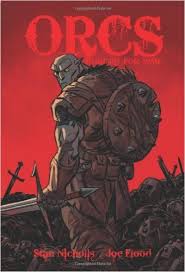
[READ: June 15, 2016] Orcs: Forged for War

This book was a little hard to learn about because Stan Nicholls has written several novels in the Orcs series.  So when you look up his books you get a confusing list of the series and other things.  This book is not part of the series, but it is part of the overall Orcs arc. It comes just before the First Blood Trilogy.

In the intro, Nicholls tells us lot more about his whole Orcs oeuvre.  He points out that unlike Tolkien (whom he loved) his Orcs are not mindless brutes. In fact, in his books, the orcs are the heroes and the humans are the ones who have along and messed things up.  He says that anyone unfamiliar with his orcs books should have no trouble following this book.

And that is true to a degree.  One thing that it behooves an author/artist to do is to make sure that everyone understands who all of the characters/races are in his/her book.  He does give a brief summary in the intro, but that doesn’t really help because there’s no visual guide.

Humans are divided into two camps.  The Manifold (Manis) pursue ancient pagan ways.  The Unity (Unis) are monotheistic.  They are both fanatics but the Unis have more bigotry and demagoguery.

This book opens with the Unis fighting the Manis.  And then the Orcs enter the fray but it’s not always clear whose side the Orcs on, if any. Regardless of which side they are on, they are willing to fight and kill whomever (there is much much bloodhsed and a shocking amount of vulgarity in the book). (more…)

Read Full Post »

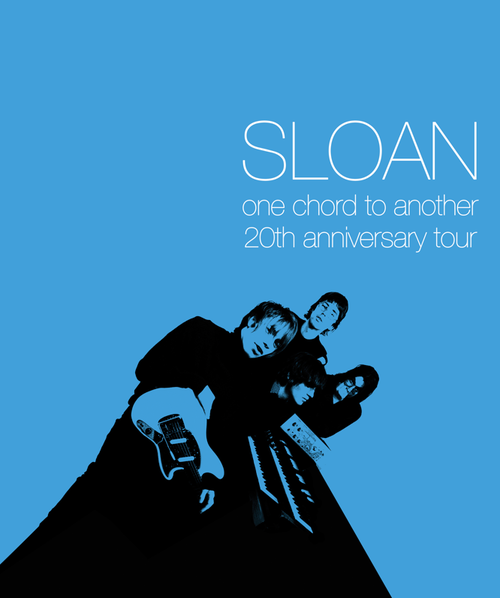
sloan[ATTENDED: October 15, 2016] Sloan

Back in the early 1990s, I heard Sloan’s “Underwhelmed,” and I loved it.  Such a great song that is still rocking and clever over 20 years later.  Sloan has a tumultuous few years after that, appearing to break up but not, getting signed and then dropped and then settling down and putting out some amazing music over the next 20 or so years which few people outside of Canada heard.

They have released eleven albums and I think that each one gets better and better.  Sloan is touring the 20th Anniversary of One Chord to Another.  There are some great songs on it, although it’s wasn’t my favorite album.  But the point is I have never seen Sloan.  In all the years I’ve been a fan, we’ve never been in the same place at the same time.  So even though I had been to a show the night before and this would make six concerts in twelve days (!), I bought tickets to see one of my favorite underground bands.

Since I knew they were playing all of OCTA, I listened to it a lot before hand and now, after seeing it live, I do like it even more than before. (But seriously if they do a 20th anniversary tour of Between the Bridges in three years…. you couldn’t keep me from that stage).

I’d never been to Underground Arts before.  It is indeed underground.  And it is indeed quite small (about 500 people max).

I arrived pretty early (start time was supposed to be 9:15, but they didn’t go on until 9:30–divas!).  But that meant that I was able to score a spot right behind the guy leaning on the stage.  As they say in Fast Times at Ridgemont High: so close I could scare the band. (more…)

Read Full Post »

class3 SOUNDTRACK: OUGHT-Sun Coming Down [CST115] (2015).

oughtsunSun Coming Down changes but also enhances the sound that Ought worked with on their debut. This album is faster overall–with fewer slow and mellow sections.  It is jittery and sometimes hostile but very much alive.

And yet as with the debut you can hear inspirations from The Fall and trippier Sonic Youth throughout the album.  And there’s more than a hint of No Wave sprinkled throughout.

Notice that Tim Beeler is now known as Tim Darcy.  But the band is the same and Matt May’s fuzzed-out keys often sound like a second guitar.  And drummer Tim Keen and bassist Ben Stidworthy keep the pace perfectly.


“Men for Miles” has a very Mark E. Smith feel–especially in the chorus–a kind of spoken/shouted style.  But that’s not the only way that Ben “sings.” There are actual sung parts like the “tear to your eye” section.   The music is kind of like Protomarytr–aggressively, slightly angular but mostly fast and propulsive.  I love the guitar riff which is surprising and yet catchy at the same time.  And amid a quieter moment, he asks, “Excuse me, did you say there’s a chance of bringing this whole fucker down?”

“Passionate Turn” is a but less intense, but it has a nicely sung verse and a cool, unusual chanted chorus.  There’s also a nifty guitar riff right after the chorus.  The steady rhythm of the bass really keeps the song moving along.

“The Combo” has aggressive guitars and a lumbering bass and drum line combined with some noisy guitars and more of that Mark E Smith chanting vocal.    The middle section grows almost pummeling with the noisy guitars and jackhammer drums as he chants “it’s a little bit strange” in a voice that sounds like he’s almost mocking punk singers.  It’s a surprise about 2/3 of the way in when the vocals grow almost positive: “Jubilation coming.”  It’s one of two songs on the disc that are just over 3 minutes but which still pack a lot of music in.

“Sun’s Coming Down” opens with a ringing feedbacking guitar and some noisy soloing.  “I am talking out of my ass because my heart is not open.”  About half way through, he starts saying “just like that, it changes” and the music follows suit–it changes to a slower thumping drum with some vocals “oooh oohhoohhoooh.”  The song reaches its end with a guitar that sounds like a police siren before returning to that calming “oooooh.”

I love the way “Beautiful Blue Sky” opens.  The guitar riff sounds very familiar in tone, and when the other guitars and noises come in it has  very Sonic Youth feel, with a pretty guitar riff. And then some spoken words enter over some abrasive scratchy guitar “warplanes, condo” that morph into a series of clichéd phrases: “beautiful weather today, how’s the family, how’s your health been, fancy seeing you here.”  The middle section slows things down with “I am now longer afraid to die because that is all I have left.  Yes.  I am now longer afraid to dance tonight because that is all I have left.”  And the ecstatic way he says “Yes” is surprisingly powerful as it sounds so different–almost ecstatic– from the rest of his delivery

“Celebration” is a much shorter piece with a sort of angrily chanted “Celebration.”  There’s buzzy guitars and a feedback-seeming drone behind the music.  It all leads up to a slow down where he chants, “All right, I’ll take it!” in a rather louche voice.

“On the Line” begins with the vocals sung quietly over a buzzing drone.  Slowly a synth line comes in.  The song sounds like nothing else on the disc until  the drums and guitars come bursting forth and the song blisters along.  And then it settles back to the quieter section with spoken word recitation.   The changes are abrupt and switch between a mellow poetry and garage rock.

“Never Better” opens with an aggressive riff and keening vocals.   It has a quieter chorus but the song never flags in intensity.

Even though it is obviously the same band, their three discs really explore many different facets of their sound.  I’m really looking forward to what the come out with next.

PERSONNEL
Matt May: Keys, Vocals
Ben Stidworthy: Bass
Tim Keen: Drums, Violin
Tim Darcy: Vocals, Guitar

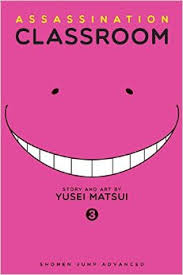
[READ: September 24, 2016] Assassination Classroom 3

I looked up this series online and saw that there are currently 21 volumes in it!  (11 are translated into English so far).  I can’t imagine how he can keep this story going (and at a pretty fast pace until the Earth will be destroyed) for so many more books!

This book begins with the students still on vacation in Kyoto.  Two of the girls have been captured by other students.  It’s a disturbing chapter with the implication that these boys have done things to girls before.  But Koro Sensei’s book about field trips actually covers the event of a kidnapping!  So the rest of the class is on it.  It even suggest where they might find the culprits (how did he know?).  It’s also a really big book and can be used as a weapon.  And our class comes out unharmed.

In the next chapter a new assassin named Red Eye is sent to take out Koro Sensei.  Red Eye is a sniper but he is baffled by Koro Sensei–who is able to stop a bullet with a dumpling.  Koro Sensei proves to be such a good teacher that even the Red Eye can learn something from him.

After a light episode in which the kids try to learn about Koro Sensei (and Irina’s) past girlfriends/boyfriends, a new student is added to the class.  But this student is a computer named Autonomous Intelligence Fixed Artillery.   It is a fast learning computer (with a pretty girl as its avatar).  And it is designed to learn from its mistakes.  It estimates that bu the end of the day it will have a .03% chance of killing Koro Sensei but by the end of the month it will be 90%.  So it begins class by opening fire on Koro Sensei (despite the fact that it breaks the class rules and disrupts class).  And then the kids have to clean up the mess of BBs.  In fact the kids are so annoyed that they tape the machine up so it’s guns can’t come out.  Eventually Koro Sensei teaches it that it needs to respect the fellow students or it will never blend in.  Koro upgrades the machine who actually seems to enjoy learning.  This is pretty fun sequence of chapters.

In the next section, Koro Sensei is affected by humidity–his head swells to a crazy size.  But that proves to be a diversion compared to the real plot that follows–revenge on a cheating girlfriend and her jerky boyfriend.  It’s very funny and quite elaborate.

The final chapter of the book is all about Irina.  She is trying to teach them to speak without an accent but the kids can’t seem to get their Ls and Rs correct.  She says that if they can’t get them straight, she will have to French kiss them (totes inappropes–although the previous chapter revealed that she was 20, which is much better than the mid 30s I assumed she was).  But we soon see that Irina’s “handler,” the guy who sent gave her the assignment, determines that she is no longer the right assassin for the job.  She is pissed but her services are no longer useful.

The book end with Koro Sensei proposing a test between Irina and her handler to see which one is the better assassin!

This manga is written in the traditional style of right to left, which is fun.  It is translated by Tetsuichiro Miyaki with an English adaptation (whatever that means) by Bryant Turnage.

Read Full Post »

assclass2 ought-once-moreSOUNDTRACK: OUGHT-Once More With Feeling… [CST108] (2014).

This EP came hot on the heels of their debut record.  It reworks a couple of older songs and has a largely improvised jam as well. It sounds pretty different from the previous record.

From the Constellation website: Discussion of a tour-only release that would grab a couple of the band’s self-recorded early tunes and commit them to vinyl shifted by the end of spring towards a realization that Ought might update this material to reflect how the songs have evolved on stage and in concert. … This yielded new recordings of two early pieces, “Pill” and “New Calm Pt. 2” (the self-recorded 2012 versions of which remain available on Ought’s Bandcamp) along with the brand new, more experimental and largely instrumental “New Calm Pt. 3.”. The non-album track “Waiting” from the More Than Any Other Day sessions (and the first tune to be given out via Constellation when we announced the Ought signing) rounds out this 24-minute EP….  In light of this new/freshly recorded material, it seemed unfair to restrict the Once More With Feeling… EP to tour-only status.

“Pill” sounds unlike anything else they’ve done.  It is mellow with Beeler Darcy’s (note the name change) singing as opposed to chanting/speaking voice.  I like that it is a fairly conventional sounding song and the way it builds slowly.  There’s a great bass line that enters after a bout 2 minutes.  The song feels meandering but it never wanders much from its mellow path (with some louder chords in between verses).  By around 4 minutes the song begins to build with a noisy solo and smashing drums that bring out the punkiness of the band. (That solo!).  But they never lose the basic momentum of the song—and the bass keeps things constant with that riff at the end of each segment.  This song also appears on their New Calm EP from 2012 which you can hear here).

“New Calm Pt 2” is a super catchy rocking song.   It starts with him saying “Oh I love this one.”  This is basically a song that encourages the audience to participate.  He tells us, “Hear  me now I am dead inside.  That’s the refrain.”  It’s a fun catchy bouncy riff repeated through pretty much the whole song.  The lyrics are pretty strange and seem arbitrary but are a lot of fun.  “Who invited Paul Simon?  I didn’t invite him.”  “I think everybody’s here now.  Everybody put your arms in the air.  That’s the generally accepted sign for not having a care.”  The song “ends” for about two minutes of him encouraging everyone to sing along to the “Da da da dah da da” section.  “It’s the part where we all sing together.”  “I have the microphone but you can sing it as well….”  And about ten times he says, “last time” then sings it again.

Interestingly, the original version of this song (on their bandcamp site) is much slower but has all of the same words

“New Calm Pt 3,” is the exact opposite of Pt2.  The lyrics are spoken slowly (“That is some good clear water an ocean of air rushes over your head”) while he guitar is a wall of noise and chaos.  The drums are loud in the mix with a lot of crashing cymbals and high hats.  The last three minutes are just some noisy guitar sounds.  And the notes say: “New Calm Pt. 3” ‘was recorded during this EP session, taken from an 20 or so minute long (maybe longer, can’t remember lol) improvised piece.’  And it seems like it.

“Waiting” is a faster, more propulsive song—with a cool bass line and alt 90s guitars.  The song grows in intensity with a wild screeching solo.  This EP is not as compelling overall as the album, but it has some fantastic moments, especially “Part 2.”

PERSONNEL
Matt May: Keys
Ben Stidworthy: Bass
Tim Keen: Drums
Tim Beeler Darcy: Vocals, Guitar

[READ: September 22, 2016] Assassination Classroom 2

Book 2 opens with a handy “the story thus far” which nicely sums up some important details from Book 1:

A mysterious creature showed up in our junior high classroom claiming that he had attacked the moon and promising to destroy the earth next March.  And then…he took over as our teacher.  The leaders of the world had no choice but to rely on the students of Class 3-E to do the job.  For a reward of ten million dollars.  Will the students of the so called End class, filled with loser sand rejects be able to kill their target by graduation?

Tabby was interested in this series–the cover of the big smiling Koro Sensei is pretty appealing.  But it is rated for teens and is all about killing your teacher.  I didn’t think I should let her.  Well, book 2 gets a bit more intense. In part, this is because there is a new professional assassin hired.  Irina Jelavich is a sexy lady with intense cleavage (which the junior high boys are well aware of).  She has killed many many people.  And Koro Sensei–despite not being human–seems to be not immune to her charms.  Shiota notes that his 5th weakness is boobs.

Despite her aggressive flirting (or maybe because of it) the kids don’t much like her.  Also because they want to win the $10 million themselves–not for her.  And she’s not very nice.  She tells them not to call her Miss Irina–she’s not a teacher after all (even though she is pretending to be one to blend).  So they call her Ms Hella-bitch (wonder how that worked in Japanese?) which gets her super angry.  But Ms Jelavich has it all figured out.  She plans to lure Koro Sensei to the shed where pleasure and pain awaits him. Of course he’s not so easily fooled. And she is made to appear ridiculous (I won’t speculate on what actually happened to her).

But her failure emboldens the students who are no longer impressed by her.  And soon she is made to actually agree to be a languages teacher–being an assassin she has learned how to say key phrases in multiple languages.

A new wrinkle appears in the book, though.  Koro Sensei has been working very hard helping each student succeed in his or her own way–he has even cloned himself (the students are concerned since he seems exhausted).  And when the school gathers for an assembly–rather than 3-E being put in its place and mocked, the students seem to be feeling pretty good about themselves.

And that’s when the principal steps in.  He lets Koro Sensei know in no uncertain terms that 3-E must fail their tests–that’s how the other students succeed–through fear of being like 3-E.  Koro Sensei has other ideas though.  He tells the class that if the 3-E students don’t score to a certain percentage he will flatten the school.  But he doesn’t know how serious the principal is about the status quo.  As Koro is preparing his students, the principal is trying to modify things.  This is upsetting Koro (and don’t forget that the students are still trying to kill him as well).

The last two chapters of the book see the students of a field trip to Kyoto.  And things change mightily when the students are away from school. For one thing, they aren’t under the protection of the school–against strangers or, worse yet, aggressive fellow students who want them in their place.

And as the book ends a new character is introduced, a psychic, Saiki, and he is here for a sweet bun–the very one that Koro Sensei wants to buy as well. The book end with the two of them having a very strange bonding moment.  I don’t know how this story can be stretched out into a number of volumes but clearly he has a lot of twists and turns planned ahead for us.

This book is rated T for teen.  Despite the cute grinning covers, it’s not for kids..

This manga is written in the traditional style of right to left, which is fun.  It is translated by Tetsuichiro Miyaki with an English adaptation (whatever that means) by Bryant Turnage.

Read Full Post »

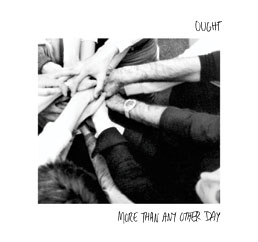
assclassSOUNDTRACK: OUGHT-More Than Any Other Day [CST103] (2014).

oughtmoreOught might just be the most straightforward band every released by Constellation Records. They are a rock/punk band with some spoken word singing that sound at times like Mark E. Smith.  However, the music is a bit catchier than The Fall’s with fast moments and really slow almost ambient stretches.

“Pleasant Heart” opens with a raw echoing guitar riff and chords that sound like nothing else on the album.   The song lurches through some great sounds and Beeler’s unusual chanting style of singing.  There’s also a cool bass line rumbling throughout the song built with lots of drum fills and chaos.

About half way through this six-minute song the bass and drums drop out leaving just a squeaky violin and harmonic guitar (this squeaky violin is possibly the only thing that makes this record sound like a Constellation release).  The bass comes back in slowly.  But it’s not until almost two minutes of this instrumental that the song resumes with a crunch and the lurching melody and verses continue until the end.

“Today More Than Any Other Day” was the first Ought song that really grabbed me.  It starts out slowly with some spare drums and meandering bass.  It doesn’t really feel like its going to resolve into anything.  By a minute and a half it’s finally starting to sound like something–a slow meandering song perhaps.  Around 2 minutes Beeler starts whispering “we’re sinking deeper, and sinking deeper.”  And then the song starts building and turning into something else .  We’re now half way through this 5 minutes song when the guitar starts chiming and he states “The name of this song is ‘Today more than any other day Parts 4-43.  So open up your textbooks … or any kind of reading material.”  And as the guitar plays the verses he recites various things that have happened today more than any other day (making a “decision between 2% and whole milk.”  A cool bass line starts playing as else drops away and he starts chanting a rather laconic “dah dah dah dah dah” following the bass.  It reminds me, strangely enough of the Dead Milkmen as its kind of not exactly out of tune but almost as if  not really caring.  But when the song resumes, it’s all right on again.  It’s a weird and wonderful, strangely catchy song.

“Habit” opens with a nice slow bass riff and chiming guitars.  It brings the intensity of the previous song down some.  And the vocals sound a little different, especially in the chorus, where the whole song take on a kind of Talking Heads vibe (the falsetto singing in particular).  It slows down toward the end with some scraping violins. The song is quite pretty in an alt-sorta way.

I love “The Weather Song” from the opening harmonics and intriguing bass line to the way the song suddenly ramps up for the chorus.  In addition to the catchy spoken opening there’s a great chorus of “I …. just wanna revel in your lies.”

“Forgiveness” is a relatively short 4 and a half minutes and opens with almost an organ sound.  A scraping violin sound joins the drones. After 2 minutes he sings in a very slow drawl “forgiveness is a drug that you take with a shrug.”  It has echoes of the Velvet Underground’s “Heroin” although it never changes tempo or intensity.

“Around Again” has a very 1980s guitar riff and whispered vocals until the whole band kicks in and it grows in intensity.  And then the whispered “go slow” returns the song to the beginning.  After 3 minutes, the song builds and then drops out with a spoken: “It’s coming. Why is it you can’t stand under the sun but you can stick your head into a bucket of water and breathe in deep” and then a whole new sound of dissonant guitar and thudded bass and drums “we have reached the intermission.”  But it’s not an intermission it goes through to the end of the song like this.

“Clarity!” opens with what sound to me like “Love Will Tear Us Apart” but with guitar chunks played over the top.  Slow harmonics and whispered vocals move the song forward.  After 2 minutes it rocks out, with a returning ringing high note and interesting sound effects.  And by the end the song comes to a plunging conclusion

“Gemini” opens with some low rumbling notes and then a sprinkling of keyboards.  There’s some scratchy guitars and a rumbling bass.  After 2 and a half minutes, the song’s punky parts take over with jagged guitars and screamed vocals.  The end of the song is mostly just two-note thumping while he screams “you wanted … wanted … wanted … wanted.”

I really like this album a lot.

I noticed that the lead singer changes his name on each release.  So, to help keep it straight:

PERSONNEL
Matt May: Keys
Ben Stidworthy: Bass
Tim Keen: Drums, Violin
Tim Beeler: Vocals, Guitar

[READ: September 20, 2016] Assassination Classroom 1

Assassination Classroom has a very strange and unsettling premise–the students of this classroom are being taught to assassinate their teacher.  Given the current climate of guns in the US, that’s probably not a comfortable position to take.  However, Matsui alters the premise to make it more palatable, and frankly more fun. The students’ teacher is actually an alien (or maybe not, but it is certainly not human).  He (I guess) is a multi-tentacled creature who can move at Mach 20, is exceptionally perceptive and can’t be harmed by most conventional weapons.  But wait, there’s more.  The students are sent to assassinate this particular creature because he blew a huge chunk out of the moon (it’s now a permanent crescent) and is planning to do the same to the earth in a year’s time.  But wait, there’s more.  One of his conditions for not blowing up the Earth sooner is that he be allowed to teach this particular classroom.  Although no one is sure why yet.

The class is 3-E, the lowest of the low, the worst students in the very prestigious Kunugigaoka Junior High.  The 3-E class are misfits–they were smart enough to get into the school, but they have done something wrong and they are treated very poorly because of it.  In fact, 3-E is used as a kind of cautionary tale for the other students–act up and you could wind up like them.  (Why they don’t just leave the school is not addressed).

The kids call the creature Koro Sensi (which is a pun on the Japanese “Koro senai” which means “can’t kill”), and it turns out he is actually a pretty great teacher.  He really seems to care about the kids.  So why would they want to kill him?  Well, aside from the destruction of the planet, there is also a ten billion yen reward (the amount seems to change some in the book, but it’s roughly 100 million dollars).  Of course, as the name implies, this guy is really hard to kill.  And when they try to kill him in a way he finds beneath them (they are training to be great assassins after all), his own revenge will be swift.  At the same time, he heartily encourages them to try their best to kill him–and he applauds their most creative efforts. (more…)

Read Full Post »

rollerSOUNDTRACK: SARAH NEUFELD-Hero Brother [CST095] (2013).

heroroSarah Neufeld is best known as the violinist for Arcade Fire. I wanted to like this disc more than I did.  There’s a lot of really good music and ideas, but the whole album felt a little lacking in excitement.

This solo album was recorded in Berlin by pianist and producer Nils Frahm, with Neufeld’s performances captured in a number of locations with site-specific acoustics, including an abandoned geodesic dome, an underground parking garage, and the legendary Studio P4 orchestral recording hall at the broadcast complex of the former GDR.

On track with a * you can hear the echo of the surroundings (although I’m not sure which is which).

*”Tower” is a repeat of three notes quickly bowed with an echoed ghostly voice floating over the top of the melody. Its lasts but 2 minutes and then disappears.  “Hero Brother” has repeated low notes flanked by high notes until the main fast riff spirals out.  About a minute in, a stomping drum comes in and her playing sounds a bit more folksy. It’s an interesting twist on the more formal earlier style.  I love that it ends almost starkly in the middle, allowing those last notes to resonate.

*”Dirt” begins with high pitches notes that seem to echo and resonate forever.  And then she switches to a spritely somewhat upbeat melody of quick notes. The third part of the song luxuriates in slow bowing—long notes that linger.  “You are the Field”  begins slowly with some bending notes that descend and then ascend.  It’s interesting to hear her slide up and down the neck while some of the main notes remain the same.

*”Breathing Black Ground” has slow echoed note, but about mid way through a low note anchors the pieces as the high notes play a melancholy melody while Nils Frahm plays the harmonium.  “They Live On” is primarily plucked strings until her echoed voice sails over the top. This piece is more pretty than the others but is still rather stark.

“Wrong Thought” has a kind of sci-fi sound as it opens.  A kind of piercing high note is resolved into some lowers notes and then a cool melody.  The ending few notes are a pretty series that rise from the darkness of the main piece.  “Right Through” is a series of three notes played in different location on the fret. It is lonely sounding until some higher notes begin to appear as well.  And then Sarah’s ghostly voice emerges from the background with a kind of haunted phrasing.  It’s quite lovely and then things become quite raucous with some very fast fiddling.

“Forcelessness” opens with a series of three high pitches notes that are quite breathtaking. The notes descend slowly through the melody as a piano plays long held notes to accent the descent. It’s by far my favorite on the disc.  The disc ends with *”Below” which is slow and melancholy with her voice echoing in.

I guess I was expecting there to be more virtuoso pieces rather than a kind of moody ambient record.  Most of the melodies are pretty, but  there’s not a lot of diversity.

[READ: February 12, 2016] Rollergirl

Oh boy, did I love this story.  And not just because it’ about roller derby (although that is quite a lot of it).  I loved it because it had a protagonist who felt she didn’t have a personality or a “thing” and managed to not only get one, but to get an unsuaul one–and to make friends doing it

This story is a bout Astrid Vazquez (an unlikely name if ever there was).  Astrid’s mom always wants her and her best friend, Nicole, to do cultural things.  So they go to museums, to the opera, poetry readings, that sort of thing.  It’s not always fun.  But on this night she takes them to a warehouse where the see a roller derby match!

Astrid (who loves to wear black and is the tomboy of the two) is hooked immediately.  Nicole, who is more prissy and does ballet, is interested but a little freaked out.  And when they discover that there is a roller derby camp for the summer. Astrid assumes they will both sign up and become derby superstars like their new heroine Rainbow Bite (is there anything better than roller derby names?).

But Nicole quietly informs her that she is not doing that.  Not only doesn’t she want to but she actually wants to go to ballet camp this summer.  So there.

And that’s when the opening scene where Nicole is with the horrible, awful, super mean Rachel.  Rachel is the one who came up with the nickname Ass-turd (which maybe makes this not so much a children’s book, but it’s the only bad part). (more…)

Read Full Post »

shadowSOUNDTRACK: ERIC CHENAUX-Skullsplitter [CST112] (2015).

chenAn album named Skullsplitter sounds like it should be really heavy and loud.  But if you know Chenaux, you know that that’s not his thing at all.  So what wins?

The traditional Chenaux wins.  At times light and beautiful and at times wobbly and disorienting, Skullsplitter sounds like many other Chenaux releases.  And you either like him or you don’t. His slow songs, vibratoed guitar and really delicate voice either win you or not.

“Have I Lost My Eyes?” has one of the most wobbly guitars I can thing of (even for him).  The slow electric guitar solo is pretty much perpetually played with wah-wah bar in motion.  After 90 second of this, Chenaux’s delicate tenor voice comes in and sings a melody that is not exactly suited to the music, but which doesn’t sound off, either.  Classic Chenaux.

Alternating with the vocal pieces are instrumentals.  Chenaux plays a lot of ringing and delicate solos and overdubs them.  And the instrumentation is pretty varied: Voice, electric guitar, un-amplified electric guitar, nylon-string guitar, speakers, melodica and electronics.  “The Pouget” is roughly two minutes long.  “My Romance” has a kind of warbling guitar solo over some mellotron.  “The Henri Favourite” is another 2 minute slow piece with a slow guitar solo played over some keyboards.  The last instrumental is quite different.  “La Vieux Favori” changes the tone with a bowed sound (although you can see there’s no violin listed–he must be bowing the guitar).  It doesn’t have the same smoothness as the other songs, although it is certainly interesting, especially near the end when it is just that bowed instrument with no accompaniment.

“Skullsplitter” is, as I said, a mellow song just like the others.  His voice is relaxing and calming and the music is also mellow with waves of keys.  I’ve never really tried to figures out the words to any of his songs before–he sings so slowly it’s kind of hard to follow the thoughts.  But the lyrics to this song are the cover art.  And seeing them printed, I still don’t know what they mean.

“Spring Has Been a Long Time Coming” is the most friendly song of the bunch–music and vocals meld perfectly, and Chenaux’s guitar sounds beautiful.  The 8-minute “Poor Time” has a jazzy feel as it unfurls slowly.  It intersperses his vocals with a delicate but wildly-wah-wahed solo.  The final track, “Summer & Time” ends the disc with some pretty acoustic guitars and Chenuaux’s delicately soaring voice.

[READ: June 1, 2016] Lighter Than My Shadow

I was looking on the shelves in the library for some books and I saw this book on the shelf next to them. I loved the title, Lighter Than My Shadow and when I pulled it off the shelf, I really liked the drawing style that Green employs.

I genuinely had no idea that this book was going to be about woman suffering from body issues and anorexia.  It all seems obvious, but i didn’t look that closely at first.  Such a topic could be really hard to read about, but I was also really surprised and delighted at how good the book was.

She covers her mental state in all capacities.  And she really demonstrates the way her body rebelled against herself.  In fact, this was the most compelling and complete look at anorexia that I have ever seen.

There is something about the way her drawings style–simple figures and even simpler backgrounds work perfectly in this story.  She is able to show herself getting thinner without resorting to shocking illustrations (well, there are one or two mildly shocking ones).  The most effective part of the book is the black scribble that hovers around her representing her interior self. (more…)

Read Full Post »

jerusalemSOUNDTRACK: JERUSALEM IN MY HEART-If He Dies, If If If If If If [CST114] (2015).

ififif Since 2005, Jerusalem In My Heart has been Radwan Ghazi Moumneh (all music) and Charles-Andre Coderre (all visuals).  This is only their second album, however, because they were always more of a live band.

Obviously there’s no real visual component to the record.

Since I don’t know all that much about this band, I rely on the Constellation records website for my information.  Thus:

Moumneh expands his compositional palette on If He Dies, If If If If If If, exploring new deconstructions and juxtapositions of both traditional and popular Arab musical currents, with an album that oscillates between powerfully emotive vocal tunes and instrumental works that primarily make use of Radwan’s expressive acoustic playing on buzuk as a point of departure.

The album’s first song “Al Affaq, Lau Mat, Lau Lau Lau Lau Lau Lau (The Hypocrite, If He Dies, If If If If If If)” opens the disc with a short piece of processed vocals.  The Arabic traditional voice is mildly auto-tuned which sounds kind of cool.  [FROM CST: One of Moumneh’s finest melismatic a cappella vocal performances].

Track 2, “A Granular Buzuk” is a 7-minute instrumental piece of Moumneh on buzuk with pulsing electronic background music.  [CST: the buzuk is processed, re-sampled and otherwise disrupted through Radwan’s real-time custom signal patches]. As with a lot of this record, pretty instrumental passages are interrupted and taken over by noise—this time a kind of mechanical scratching.  It ends with some quietly ringing percussion as the electronics all slowly drift away.

“7ebr El 3oyoun (Ink From The Eyes)” is a vocal track with an electronic drone.  It sounds traditional and mournful, but about 3 minutes in, a drum and buzuk keeps time and the song grows a bit more upbeat.  [CST: languidly plaintive vocals set against a gradually accelerating riff underpinned by hand percussion].

“Qala Li Kafa Kafa Kafa Kafa Kafa Kafa (To Me He Said Enough Enough Enough Enough Enough Enough)” has incredibly loud static with a buzuk playing in the background.   After a minute and a half the static drops away and the background is filled with a quiet pulsing kind of static.  You can finally hear the instrument being played in all its glory.  [CST: a scabrous white noise intervention wherein the entire audio mix is fed through a contact mic placed in Radwan’s mouth].

“Lau Ridyou Bil Hijaz (What If The Hijaz Was Enough?)” is mostly synth–again an old sound with metronymic electronic percussion and quiet vocals. It’s all kind of muffled and very retro.  [CST: Moumneh continues to channel his love for Arabic pop and Casio/cassette culture with this silky lo-fi dance].

“Ta3mani; Ta3meitu (He Fed Me; I Fed Him)” is a faster piece.  Echoed vocals and drones rest behind a fast buzuk melody.  [CST: he pays homage to the until-recently-exiled Kurdish poet and singer Sivan Perwer on this traditional-minded, unadorned folk tune].

“Ah Ya Mal El Sham (Oh The Money of Syria)” opens with a loud vocal and a flute mirroring the voice.  It runs for seven-minutes and ends quietly.  [CST: a tour-de-force drone piece built from Bansuri flute (performed by guest player Dave Gossage)].

The disc ends with “2asmar Sa7ar (The Brown One Cast A Spell),” a fast buzuk solo played over the relaxing sounds of oceans waves.  It has a cool melody and runs quickly and then calmly for some five-minutes before the disc ends with more waves lapping against the shore.  [CST delicate acoustic number set against the sound of waves recorded on a beach in Lebanon].

As with the previous record, song titles employ the transliterative characters used in Arabic phone texting, which I think is pretty cool.

[READ: March 30, 2016] Jerusalem

With a title and subtitle like that you know this isn’t going to be a fun and lighthearted story.  And it is not.  The introduction explains how this is the story of a family, but it is more about the land and the strife that has been there for generations.

A lengthy history of Jerusalem is given, but for the purposes of this story the most recent action is the 1929 dispute over prayer rights which led to riots.  And then the British imposed the White Paper of 1939 which blocked Jewish immigration and was in place as the Nazis were riding to power. This led many Palestinian Jews to regard the British as hostile. And yet many Palestinian Jews joined the British army to fight the Nazis in Italy and the Middle East.  At the same time there were underground forces of Palestinian Jews who were attacking the British.

The action of this story takes place in 1945.

There is also a history of the Halaby family about whom this story is concerned.  Yakov Halaby was born after a series of girls were born in his family.  His father vowed that if they had another son they would move to Jerusalem.  After Izak was born they did so.  But Yakov was jealous from the start.  And he made Izak’s life miserable.  Eventually Izak left and married an Egyptian woman and they both moved back to Jerusalem. (more…)

Read Full Post »

« Newer Posts - Older Posts »