Feeds:
Posts
Comments

Archive for the ‘Books about writers’ Category

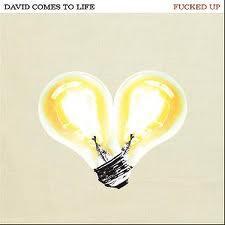
lacavaSOUNDTRACKFUCKED UP-David Comes to Life (2011).

Fdavidor a band named Fucked Up, they make music that is surprisingly catchy.  Of course, as befits their name, they also have a pretty aggressive punk sound with lots of drums and loud guitars.  But many of the guitar lines and choruses are surprisingly melodic.  And then comes singer Pink Eyes.  He screams in a gravelly, rough, cookie-monster type voice (although he is mixed lowish in the mix so he doesn’t often overpower the music).  Despite the fact that most of the words are indecipherable, he also have a good sense of melody.

So how does a band that plays distorted hardcore punk with a barely comprehensible singer decide to make a 78 minute concept album?  Beats me.  But guitarist 10,000 Marbles has written a pretty solid collection of songs.  Of course, it also beats me exactly what the concept is.  According to allmusic the plot is: In the fictional town of Byrdesdale Spa UK, David has a humdrum life working at a light bulb factory, and finds an escape by falling in love with a communist rebel rouser, only to find out later that she has died in a terrorist bombing and that he has a lot of emotional turmoil to face.

I’ve listened to the disc a dozen or so times and never got that plot.  I even followed along with the lyric sheet and never got that plot.  Part of the reason may be that Pink Eyes sings all of the parts in the same way, so it’s really hard to notice that there are different characters (like Veronica) in the story.  While it is fascinating to hear a really catchy choruses sung by someone who is kind of scary, it doesn’t do a lot for the story.  The other odd thing is when Mustard Gas provides female backing vocals–they are sweet and pretty–a drastic counterpoint to the noise that Pink Eyes makes.  But she only comes in on a few songs.  I wish she did more.

There are some really great songs on this disc.  Song two, “Queen of Hearts” has some incredibly catchy sections.  And the “dying on the inside” harmony in “The Other Shoe” compliments the grizzly “It can’t be comfortable when you know the whole thing is about to fall” very nicely.  The b vox are also great in “Turn the Season.”  I find myself singing the “Hello my name is David, your name is Veronica.  Let’s be together. Let’s fall in love” section over and over.  It’s surprisingly sweet when sung by such a voice.

Since this is a concept album (or rock opera I suppose), there’s things like the nearly two-minute instrumental intro to “Remember My Name” which doesn’t fit with the rest of the song but is really catchy.  There’s also a kind of introductory “theme” that crops up in the album.  Fucked Up confound you at ever turn with beautiful melodies that morph into noisy punk.

By the middle of the disc (where I gather David is a low point), there’s some really loud heavy songs.  Amid the pummeling noise, there’s some nice acoustic guitar in “A Slanted Tone” and some very cool rumbling drums and bass that propel “Serve Me Right.”  These songs help to break up the flow nicely.  “Life in Paper” which is near the half way point opens with the same staccato notes as the disc itself, and it proves to be a very catchy song in which David asks “Who can I trust?”

The second half of the disc continues with the more catchy style with “Ship of Fools.”  But as the story nears the end, it starts to feel very samey.  There’s a few breaks, but it’s a hard row to hoe.  There is redemption in the end, but you still feel exhausted.  Perhaps 78 minutes of Fucked Up is too much.  For some listeners even 5 minutes will be too much.  Despite the accolades (and they received a lot), you won’t be hearing this one the radio (and not because the DJs couldn’t say their name).

And yet amid all of the noise, there are some really shiny gems.  They have even released four music videos for the album!  The first one, “Queen of Hearts” is especially cool as the video is set in a classroom and the kids sing all the parts (after a nearly two-minute spoken intro of the song.  I admit to not having any idea what’s actually happening in the video, but it’s still cool.

[READ: January 26, 2013] An Extraordinary Theory of Objects

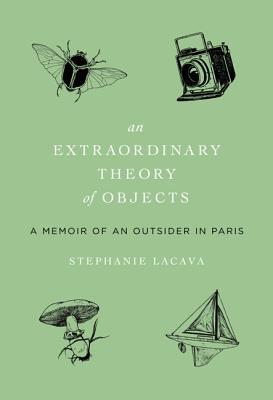
This is a strange little book.  It was another one that I saw while waiting online at the library.  I was attracted to the cover (I know, don’t judge… but honestly, you can tell a little bit about a book by the way it is marketed. And this was marketed at me.)  It’s a small book with a stark cover and interesting drawings on it.   And then there’s the unusual title.

The book was only 180 pages (plus notes and a bibliography) and it was chock full of pictures.  I mean, this thing can be polished off in an afternoon.

And here’s what it’s about.  Well, let me modify that.  Here’s what’s in the book.  Stephanie is a young girl when her family moves to France (for her father’s work).  She has always felt like an outsider and now feels even more so in France.  She is introverted and spends a lot of her time in books.  Then she moves back to America and reflects on her childhood.

Yeah, that’s about it.  For here’s the thing, Lacava isn’t famous and she hasn’t done anything that you might have heard of.  She’s just a person who went to France as a kid.  The introduction kind of gives you some reason as to why you should read the book.  Lacava was a sad and miserable child and she took refuge in objects–not as a collector so much as an admirer.  On her windowsill she has collected various geegaws that she treasured (and which she brought from America in her carry on, they were so precious).  And she has this interesting relationship with objects.  Although, as with many things in the book, that relationship is not really delved into very much.   (more…)

Read Full Post »

penumbraSOUNDTRACK: FIONA APPLE-The Idler Wheel is Wiser than the Driver of the Screw and Whipping Cords will Serve You More than Ropes Will Ever Do (2012).

fionaFiona Apple released the album with the longest title a few years ago.  The title of this new album (also taken from a verse of Apple’s) doesn’t quite match in terms of length, but the music absolutely delivers in terms of quality.

When the Pawn… was full of big numbers–it was loud and brash and gorgeous.  The Idler Wheel is much more subdued and initially I didn’t think it was as exciting.  But this subdued music draws you in and gets you to really absorb everything that’s going on.  Musically, this album takes notes on the orchestration from her previous album Extraordinary Machine, but it scales  everything back  to what amounts to just Fiona’s voice (often multitracked) and minimal instrumentation.

Like “Every Single Night” which opens with beautiful bells/glockenspiel as Fiona sings.  “Daredevil” is almost all percussion and loud piano.  Indeed, the main sounds of the song is a quick shuffling followed by short piano chords.  It is so stark but her voice just sails through the open space beautifully.

The meandering piano of “Jonathan” is great–at turns minor and sad but then come chords and beauty.  More drums fill “Left Alone” as the opening twenty or so seconds are all drums followed by a menacing piano riff and the amusing lyric, “How can I ask anyone to love me when all I do is beg to be left alone” (and with each subsequent repeating of this chorus she sounds more and more exasperated).

“Periphery” is also mainly percussion.  But in this case, the percussion sounds like feet scraping on gravel–rhythmically of course.  This leads to a great vocal turn by Fiona, one that climaxes in a big roaring almost shouting section.  Speaking of roaring, just listen to the rawness that Fiona reaches on “Regret.”  It is spine tingling.

“Anything We Want” opens with more odd percussion, which I’m led to believe came from Fiona tapping on things on her desk–and it sounds like it–not instruments, but found objects.  Indeed, read the list of instruments that she and her compatriot used on the album: For “Feedy”: Artwork, Celeste, Composer, Dancer, Field Recording, Keyboard Bass, Loops, Percussion, Piano, Primary Artist, Producer, Stomping, Timpani, Vocals and for “Seedy”: Autoharp, Baritone, Bouzouki, Cora, Dancer, Drums, Field Recording, Guitar, Marimba, Percussion, Producer, Stomping.

The final song is just Fiona and tympani as she sings a line about hot knives and melting butter.  Then the piano and second voice (her sister) sings a fugue as the lines repeat over each other.  It’s a crazy, daring song to end an album with and it sounds like nothing else on the radio today.

I have never been disappointed by an album from Fiona.  Each album is different, taking new chances having wilder experimentation   And this one is up there with the best.  It’s easily one of the best records of 2012.

[READ: January 16, 2012] Mr Penumbra’s 24-Hour Bookstore

I saw an ad for this book in The Believer (I believe) and I thought it looked great.  Sarah said she had already put it on hold.  And when it came in from the library, I grabbed it first.

This book is really great.  It’s a story full of intrigue and secret societies  it embraces old books and modern technology; it’s a romance and a puzzle.  And it’s all done in a very comic style.

What is surprising is how different the book is from what I initially expected.  True, I didn’t know anything really about the book before reading it, but the book opens with an overeducated and underemployed guy, Clay, getting a job in the titular bookstore.  But it’s no normal bookstore.  First, it’s open 24 hours a day (that’s 8 hour shifts for three clerks because they really don’t have many customers).  Second, it’s very narrow and very tall–Penumbra has a massive ladder that rolls along all of the shelves and there’s a chapter dedicated to using it properly.  Third, although there are books for sale in the front (an esoteric lot based mostly on Penumbra’s whims), the back section of books (the tall shelves called the Waybacklist) are not for sale–indeed, they are not even real books per se.

There is a small group of local readers (called the Unbroken Spine) who come to the store, give Clay a code, return a book and check out a new one.  Part of Clay’s job is to write down every detail he can about them each time they come in.  But he is not supposed to open any of these wayback books.  Those are really the only rules of the store.

Clay has two roommates, one of whom is Mat, a guy who works for Industrial Light and Magic as a miniaturist (he is building a miniature city in their living room called Matropolis).  He also has an old friend, Neel, with whom he played a Dungeons and Dragons like game called Robots and Warlocks.  Neel has since become a very wealthy programmer (his job is very funny).  Clay and Neel both loved the The Dragon-Song Chronicles, a trilogy of nerdiness by the author Clark Moffat (incidentally, later in the book a character is named Tabitha–this is now the SECOND book in which both of my children’s names are included and both of them are good guys.  Hooray!  So obviously I loved this book).  I love that later in the book, Clay is making an mp3 version of the books because they were only available on cassette!  (I was equally outraged with him).

When Clay’s friends visit the store, they are enchanted by it and can’t believe that he hasn’t looked at any of the books.  So, he does.  He breaks the rule and flips through a book.  But he can’t make much out of it as it has been encoded.

Soon after, a pretty young girl named Kat Potente enters the store (because of a Google ad that he placed trying to get people into the store–she fit every quirky demographic he could dream up).  Kat works for Google, recognizes that Clay is a kindred soul and, in the whirlwind way of people who know what they want, she sets up a date with him.  They hit it off immediately, especially when she sees that he’s working on a program to graph the checkouts of the books that the Unbroken Spine take out.  (Yup, there’s programming in the book–in Ruby).  The graph suddenly starts taking shape and Clay believes that a pattern is slowly emerging.  And when it does, it is like no pattern you have ever seen! (more…)

Read Full Post »

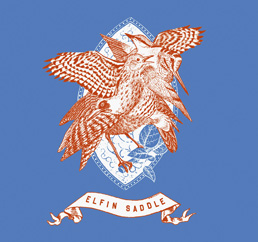
seamSOUNDTRACKELFIN SADDLE-Devastates [CST087] (2012).

elfinElfin Saddle continues their streak of oddly juxtaposed music that works very well.   The band specializes in a kind of Middle Eastern folk music (there’s a lot of Jewish-style singing), but with Emi Honda singing Japanese-style vocals it really alters the overall sound.  They also use a lot of raw sounding “instruments” many of which are found or quite simply, junk.  Check out the instrumentation list: Jordan McKenzie: voice, guitar, half-accordion, drums, varied percussion, membrane pipes, organs, piano, pvc processing, tapes, phonographs, speakers, etc.  Emi Honda: voice, ukulele, drums, half-accordion, musical saw, extra percussion.  It’s that extra percussion and etc. that you hear a lot, rattling around in the background of these songs.

They play complex rhythms (with lots of low end drumming) underneath ethereal noises (music boxes and the like).  And all the while, Honda and McKenzie trade off their unusual vocals.  It’s mesmerizing.  When the band really starts rocking, like in “The Changing Wind” you hear how well it all works together, and how well the two play off each other.  The slower pieces, like “Boats” are very cinematic, probably because everything sounds so real–you can see the items that are making these odd sounds.

The music is definitely not pop, but with just a listen or two, you can really appreciate what they’re doing.  If you like your folk a little noisy or your rock a little experimental, this is a great record to check out.

[READ: January 13, 2013] The Seamstress and the Wind

Things that I have said about every book of Aira’s that I have read: they are all short, he writes a lot of books (according to Wikipedia he has written at least 45 books since this one came out about twenty years ago), and they are all nonlinear.

And so it is with this 130 page book.

As the book opens, a young boy named César Aira is playing with his friend in the back of their neighbor Chiquito’s truck.  They are playing a game of ghosts when suddenly, César finds himself walking in a trance back to his house.  Turns out his friend Omar couldn’t find him for hours (and when César snaps out of it, indeed hours have passed).  And yet, despite this story, it turns out that really Omar is missing (what? who knows?).  Omar is the son of the local seamstress, Delia Siffoni.  She is sewing a wedding dress for the art teacher, Silvia, who is (scandalously) pregnant.  When she hears that her son is missing, she freaks out and calls out a search party.

She concludes that Omar was hiding in Chiquito’s truck when he left for Patagonia.  So she takes a taxi to chase after Chiquito.  Since the dress is due to be finished right away, she takes it and her supplies with her in hopes of finishing it on the road.  When Ramón, Delia’s husband realizes what she has done, he chases after her.  And when Silvia realizes that her dress is driving away in a taxi she follows Ramón.  And so it becomes a road novel in which none of the characters are together.

By the end of the story there has been a terrible accident with a taxi crashing into a truck.  There has been a poker game where one of the two women has been lost in a bet (unbeknownst to her) and we have met The Wind (Sir Ventarrón) who helps the seamstress with her problems.  Indeed, Sir Ventarrón becomes an integral part of the story, including a flashback when Sir Ventarrón assisted a snowman in his quest for eternal life (yes). (more…)

Read Full Post »

literarySOUNDTRACK: CHELSEA LIGHT MOVING-“Burroughs” (2013).

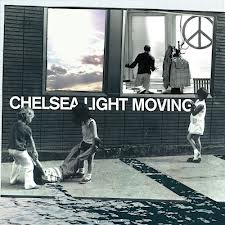
chelsea-light-moving-albumChelsea Light Moving is Thurston Moore’s new band [no comments about the state of Sonic Youth/Kim Gordon will be included in this post].  I don’t know anything about the other members of the band; I’ve not heard of any of them.  “Burroughs” is one of four new songs streaming on the Matador Records site.

The song is spot on for the noisy/sloppy style of Sonic Youth.  Fans of Sonic Youth will certainly detect some differences–the counterpoint of Lee Ranaldo is definitely absent, indeed, the entire low end sounds very different from what SY would create given this song.  But man, if you’re jonesing for some chaotic noise, this song has it in spades.

Moore is capable of creating some traditionally beautiful songs (see his Trees album), but here it’s all about discord.  The song is over six minutes long and the last 3 or so are devoted to some noisy guitars in both chords and solos.

While SY has not shied away from long songs, this song doesn’t feel like an epic–it’s not multi part or “extended” exactly.  It’s a fairly straightforward rock song with an extended solo section.  It’s really great.  I’m looking forward to the whole album (and I love the cover, too),

[READ: March 23, 2012] The Literary Conference

This has been my favorite Aira book so far.  And that’s probably because it is wonderfully over the top, mixing fantasy, sci-fi, genetics and literature.  All in 90 pages.

The story is about César Aira, translator.  He has been invited to a literary conference in Venezuela.  While there, he solves the age-old problem of The Macuto Line.  The Macuto Line is, essentially a rope which is attached to a pirate treasure.  For generations, people have tried all kinds of  things to impact this line–but it has proven to be unsolvable and indestructible.   Aira happened to be staying near the Line in a hotel.  He claims that he is no genius, but it just happens that the elements of his life have given him the exact information he needs to solve the puzzle.  And with a simple touch of the rope, the treasure is his.

But that’s just part 1 and has nothing to do with the rest of the story, really.  For despite his newfound wealth, he will still be attending the literary conference.  Primarily because he knows that Carlos Fuentes will be there (Fuentes is a real person, a Mexican author who died in 2012).  For, you see, Aira is planning to clone Fuentes in his bid to take over the world.  (In addition to being a translator, Aira is a mad scientist). (more…)

Read Full Post »

dtmaxSOUNDTRACK: TOM WAITS & KEITH RICHARDS-“Shenandoah” (2013).

roguesgallery-f8be47f3887d51de57ea842a129f0a722e53ef74-s1This tune comes from the album Son Of Rogues Gallery.  The album is, of all things, a sequel to the album Rogues Gallery.  The full title is Son Of Rogues Gallery: Pirate Ballads, Sea Songs & Chanteys.  The first album was a kind of novelty–I can’t even say novelty hit as I don;t know if it was.  But it must have had some success because here’s a second one (and there’s no Pirates of the Caribbean movie to tie it to).

The album has 36 songs (!) by a delightful collection of artists, including: Shane MacGowan, Nick Cave, Macy Gray, Broken Social Scene, Richard Thompson, Michael Gira and Mary Margaret O’Hara (among many others).  I enjoyed the first one, but I think the line up on this one is even better.

“Shenandoah” is not a song that I particulalry like.  Because it is traditional, I have a few people doing versions of it, but I don’t gravitate twoards it–it’s a little slow and meandering (like the river I guess) for me. And this version is not much different.  What it does have going for it is Waits’ crazed warbling along with even crazier backing viclas from Keith Richards (there;s no guitar on the track).

[READ: January 7, 2012] Every Love Story is a Ghost Story

I had mixed feelings about reading this biography.  I’m a huge fan of David Foster Wallace, but I often find it simply disappointing to read about people you like.  And yet, DFW was such an interesting mind, that it seemed worthwhile to find out more about him. Plus, I’ve read everything by the guy, and a lot of things about him…realistically it’s not like I wasn’t going to read this.  I think I was afraid of being seriously bummed out.  So Sarah got me this for Christmas and I really really enjoyed reading it.

Now I didn’t know a ton about DFW going into this book–I knew basics and I had read a ton of interviews, but he never talked a lot about himself, it was predominantly about his work.  So if I say that Max is correct and did his research, I say it from the point of someone full of ignorance and because it seems comprehensive.  I’m not claiming that he was right just that he was convincing.  And Max is very convincing.  And he really did his research.

It’s also convenient that DFW wrote a lot of letters–Max has a ton of letters to quote from.  And DFW wrote to all kinds of people–friends, fellow authors  girlfriends, colleagues….  Aside from old friends, his two main correspondents were Don DeLillo, whom he thought of as a kind of mentor, and Jonathan Franzen, whom he considered one of his best friends and rivals.  I guess we can also be thankful that these recipients held on to the letters. (more…)

Read Full Post »

SOUNDTRACK: RA RA RIOT-“Is It Too Much” (2013).

raraI loved the first Ra Ra Riot album The Rhumb Line.  This song expands on some of the ideas from that album, but I fear that it goes in the one direction I would have preferred they not go.  The album had strings, nice harmonies and a great singer all melded into an interesting rock structure.

This song retains all of the elements that were interesting, but it removes it from the rock structure, making it  sound much more lightweight.  It’s pushing too far into easy-listening.  And do I hear autotune on the vocals?  The instrumental middle section is the most interesting part of the song.  But Ra Ra Riot seems to have removed the riot part of their sound.  If this is the direction of the album, I’m afraid I won’t be following.

[READ: January 8, 2013] “Consider the Writer”

I just finished the D.T. Max biography of David Foster Wallace.  I was curious what kind of reception it received.  And lo, here’s a review by Rivka Galchen (something I would have read anyhow since I enjoy her so much).

Galchen opens with two main points–the biography is gripping (and it is, I’ll be saying more about that tomorrow, too).  She writes: “In writing a chronologically narrated, thoroughly researched, objective-as-­imaginable biography, Max has created a page turner.”

The second idea is that you keep thinking “that you just don’t find Wallace all that nice”  (which I also thought).  But then she wonders if it is fair to be worried about that.  We should not judge others after all.  Especially since, as she points out, “We don’t always find ourselves asking whether a writer is nice. I’ve never heard anyone wonder this at length about, say, Haruki Murakami or Jennifer Egan.”  So why is that a concern about Wallace?  Because niceness is what Wallace wrote about, tried to encourage.  And perhaps “One understandably slips from reading something concerned with how to be a good person to expecting the writer to have been more naturally kind himself.”  But that is not necessarily the case–people strive for things that they cannot achieve.   I like her example “the co-founder of A.A., Bill W., is a guru of sobriety precisely because sobriety was so difficult for him.”   And her conclusion: “Wallace’s fiction is, in its attentiveness and labor and genuine love and play, very nice. But what is achieved on the page, if it is achieved, may not hold stable in real life.”

And Galchen talks a bit abut DFW himself (the book is a biography after all).  How he wore the bandana because he sweated so much–how self conscious he was about that and by extension nearly everything he did.  This mitigates his not-niceness somewhat.  It also ties in to his alcoholism  drug use and depression.  And his competitiveness, which is obvious in the biography.  She enjoys the pleasure of Wallace’s correspondences, “especially with his close friend and combatant Jonathan Franzen, but also with just about every white male writer he might ever have viewed as a rival or mentor. Aggressive self-abasement, grandstanding, veiled abuse, genuine thoughtfulness, thin-skinned pandering — it’s all there.”  I rather wished that the authors’ own reactions were included (of course it’s not biographies of them, and they are still alive), just to see if they sparred back with Wallace or if they were put off by yet indulgent of his needs. (more…)

Read Full Post »

grantladn4SOUNDTRACK: PUBLIC IMAGE LTD-“Poptones” and “Careering” on American Bandstand (1980).

abThe Dick Clark article below alerted me to this bizarre gem–PiL “playing” on American Bandstand.   The article talks about John Lydon ignoring the lip synch, climbing into the audience and generally disregarding the show’s script. The video suggests something sightly less sinister (although maybe for 1980 it was outrageous–do you really cross Dick Clark?).

Dick Clark himself announces the band nicely, and then the crazy off-kilter bass and simple guitar of “Poptones” kick in.   Lydon runs into the bleachers with the kids (most of whom are dressed in New Wave finery not unlike Lydon).  They shriek with glee when he comes nearby (do any of them know who he is?  I have no idea).  When Lydon’s spoken rambling come in a little later you can’t help but wonder what the hell they are doing on AB.

Then, Lydon starts grabbing people from the audience and pushing them towards the stage–something I believe was unheard of on AB.  The fans dance around to the impossible-to-dance-to “Poptones.”  The song ends and Dick asks John if he wants the kids out there for song two.  Yes, song Two!  He does and John faux lip synchs through “Careering,” avoiding cameras at all costs and dancing with the kids–one of the most egalitarian performances I can think of from Lydon.

And listen for Dick asking Jah Wobble his name (reply THE Jah Wobble) and him saying, nice to meet you Wobble.  What a surreal moment–wonder what Dick thought of it.

Enjoy it here:


[READ: December 28, 2012] Grantland 4

Grantland continues to impress me with these books (and no, I have not yet visited the website).  My subscription ran out with this issue and I have resubscribed–although I take major issue with the $20 shipping and handling fee.  I even wrote to them to complain and they wrote back saying that the books are heavy.  Which is true, but not $5/bk heavy.  The good news is that they sent me a $10 off coupon so the shipping is only half as painful now.

This issue’s endpages were “hypothetical baseball wheel-guides created by JASON OBERG–they were pretty cool and a fun idea.  They look very retro, but use contemporary batters, pitchers and catchers.  I’d like to see them for real.

Each issue makes me like sports a little bit more, but not enough to actually watch  them.

(more…)

Read Full Post »

[WATCHED: December 16, 2012] McSweeney’s #11

11

THE DVD that came with Issue #11 was listed as a “Deleted Scenes” bonus feature for this issue.  The colophon of the book explains in great detail what they wanted to do and how they went about doing it all.  And that’s all quite amusing in itself.

Now, of course, there are no “deleted scenes” up front.  The DVD is, at first glance, authors reading from the works in the book.  But as you scroll down the menu, there are some deleted scenes, as well as behind the scenes features and audio commentary.  All in all there’s about two hours worth of stuff crammed in here and some of it is quite interesting.

DELETED SCENES

This is where the authors read from their works.  They each read between 3 and 6 minutes, with some of them reading different sections (Samantha Hunt), but most of them reading a chunk.   (more…)

Read Full Post »

11SOUNDTRACK: THE ANTLERS-Live at the Black Cat, Washington DC, May 11, 2009 (2009).

antlersI mentioned that I was uncertain about my appreciation of this band.  And I wondered how they would hold up to a longer show.  The answer is surprisingly well.  The sound quality of this set isn’t great–the levels seem way too loud (not sure if that’s the band or the recording) and I really can’t understand the words, but the music is very moody and evocative and I like it quite a lot.

This set comes from the album Hospice, which is a concept album about a person dying of bone cancer (with lyrics like “they told me that there was no saving you” and song titles like “Kettering”).  Earlier descriptions made me think the album was a major drag to listen to– I mean the subject alone is exhausting–but musically it’s a different story.  There’s lush strings and interesting guitars.  And, at least live, the band can make a holy racket.

I’m a little surprised by the number of keyboard errors in “Atrophy.”  I mean an occasional bum note is fine, but there’s a bunch in that track.  It’s very weird.  But that is made up for by the vocals which are angsty and impassioned, especially on the final song “Cold War.”  The NPR site has three tracks available for viewing and I must say that watching the band is more exciting than just listening to them.  But I have really gained an appreciation for The Antlers.

Check out the show here.

[READ: December 16, 2012] McSweeney’s #11

This crazy title for this Issue/Post comes because the cover and spine of the book are all text.  Indeed, the book is gorgeously bound in black leather(ish) with shiny gold print.  Each author gets a summary of his or her work and a note that he or she is free (see each story below).

I did not read Issue #10 yet because it came out as a thrilling paperback, and I’ve been putting it off for a reason even I can’t quite fathom.  I anticipate reading that one last.  Again, no idea why.  In some ways, Issue #11 picks up where Issue #9 left off.  There’s lots of text on the cover, there’s letters and everything else that makes it look like McSweeney’s.  But as I said this one seems more somehow.  It’s the hardcover.  And, it’s also the DVD that accompanies the book.  I have a hard time believing I’ve owned this book for almost ten years and never watched the DVD but I finally got around to it.  More on that soon.

This issue contains letters, fiction, non-fiction and a play that picks up from Issue #9 (more…)

Read Full Post »

SOUNDTRACK: SUNN O)))-Flight of the Behemoth (2002).

I hadn’t really heard Sunn O))) until this record (which may not be typical as they collaborated with Merzbow on this one).  I knew that Sunn O))) played loud droney “music.”  And so it is here.  On “Mocking Solemnity” (9 minutes) and “Death Becomes You” (13 minutes) (which meld into each other seamlessly), the songs are mostly slow drones on electric guitar.  The chords are heavy and heavily distorted and they ring out for a few bars–not until the chords die naturally, there is a kind of pacing involved, but for a few bars until the chords are played again (often the same chord).  This is for those who thought Metal Machine Music was too complicated.

On paper this sounds unimpressive (or downright awful, depending) but in reality it is a very physical experience (if played loud enough).

The staticy noise of “Death” melds into track 3 “O))) Bow 1” which adds what sounds like radically modified piano playing a kind of melody.  It’s about 6 minutes and it really changes the tone of the record to suddenly add an atonal racket to the almost calming drone of the bass.  But by the middle of the song, the piano becomes what sounds like a chainsaw.  Merzbow mixed that track and  “O))) Bow 2” which is 13 minutes of the same slow pulsating noise.  It’s not exactly soothing.

The final track is “F.W.T.B.T.” a “remake” of “Metallica’s “For Whom the Bell Tolls.”  I can’t hear a thing that sounds like the original, but that’s what makes a cover interesting.  Although admittedly around the four and a half minute mark there’s some faster chords (for this band anyhow) that could be Metallica-like.  There are also drums (and vocals, although I have no idea what they are saying) on this ten-minute workout.

Not for the faint of heart (or fans of melody).

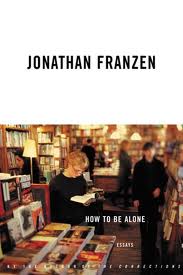
[READ: November 17, 2012] How to Be Alone

I read most of the articles in this book already.  But I read them over two years ago, so I thought it would be safe to wade into the world of Franzen again.  What I find most interesting about the title of this book is just how many of these articles are about being alone, wanting to be alone or feeling like you are alone.  Obviously that is by design but it seems surprising just how apt the title proved to be, especially given the variety of subjects  his father’s brain, being a novelist, the US Postal Service, New York City.

I’m not going to go into major detail about each article this time, although I am providing a link to the earlier review–my feelings didn’t really change about the pieces (except that from time to time I got a bit exhausted at his…whininess?  No, not that exactly…maybe his persecution complex.  But I will give a line summary about each one just to keep everyone up to speed.  The four pieces that I hadn’t read before I will give a few more words about.

One overall feeling is that when Franzen isn’t writing about the state of the novel (which he is very passionate about) his articles are well researched well documented which is kind of surprising given the state of panic he seems to be in the novel articles.  It’s also kind of funny how out of touch these articles seem (some are almost 20 years old and are kind of laughably outdated), but it’s also funny to see how poorly his predictions panned out.  The death of the novel is rather overrated (just see the success of his own Freedom.

So the book contains: (more…)

Read Full Post »

« Newer Posts - Older Posts »