Feeds:
Posts
Comments

Archive for the ‘Books about music’ Category

SOUNDTRACK: HARVEY MILK-“I Did Not Call Out” (2010).

This album is #2 on Viking’s Metal and Outer Sound list of 2010 CDs (from NPR).  During the radio show when Viking revealed his Top Ten albums, he mentioned that Harvey Milk is his favoirte band of all time.  I’d never heard them before, so this was eye opening (confusing them with Harvey Danger is a big mistake).  This song comes from the album A Small Turn of Human Kindness.

The melody is dark (pretty but in a bleak sort of way), but the instrumentation is sludgy and menacing.  It is very slow-paced with occasional “riffs” that run through the “verses.”  It has a sort of Melvins meets Swans kind of vibe, but run through the menace of a black metal band.

The lyrics are sung/growled, but unlike a lot of growled vocals, there are only a few words and they are stretched and held for several beats.  It’s a weird thing to hear the demon voice hold notes and actually sound like it is singing!

Interspersed within the ponderous heaviness are some beautiful if not uplifting guitar melodies and soaring solos.  Until, that is, the very end when the song slows to a crawl… deep notes and ambient noise stretch out and the track ends with crackling silence.

It’s menacing, but after several listens, I’m hooked.

[READ: December 30, 2010] “Empire Records”

This is the second of the one page articles labelled “Something Borrowed.”  I have also never read anything by Mistry before.

A few months before leaving Bombay for Toronto, Mistry loaned a friend his LP of A Hard Day’s Night (this was circa 1975).  Albums were very important to him because his father ritualized the playing of the gramophone.  When they eventually progressed to 45s and LPs the family got into pop music and from there, obviously, The Beatles. (more…)

Read Full Post »

SOUNDTRACK: THERION-Theli (1997).

I bought this disc when I was living in Boston and I immediately fell for it.  I seem to recall I was doing a lot of driving at the time, and this mix of extreme metal, orchestral accompaniment and twinned vocals was very captivating.  It was also really fun to play very loud on a dark highway.

I’d read a very good review of this disc that claimed it was a big step forward in styles of thrash/black metal (and if you Google reviews for this album they are pretty universally great).  The disc is exemplified by the track “To Mega Therion” which is almost entirely a full choir singing what I guess is the chorus.  The verses are populated by a guy screaming in a guttural voice who is answered by an almost mechanically twinned voice which sounds great but is even harder to understand.  Follow this with a beautiful piano (!) solo not unlike something Randy Rhoads put together for Blizzard of Oz, and add a pounding double bass drum all the way through (truth be told the album could be a little heavier in the bass) and you get a crazy mix of styles which is catchy and creepy at the same time.

It’s hard to match a song like that.  And, admittedly, the band doesn’t quite manage to do so, but the rest of the album keeps up this orchestral death metal throughout.

Reading about Therion has taught me that this album is something of  touchstone for a new genre of metal, called variously symphonic or operatic metal (I suppose we have this to blame for the Trans Siberian Orchestra?).

In addition to the choirs and guitars there are a lot of keyboards. They are disconcerting when you’re thinking death metal and yet really they add an even fuller sound, even if at times they are not as grand or powerful as anything else.  At times the album seems cheesey, but that may have more to do with thirteen years distance than the music itself.

Anyone who has seen The Exorcist knows that choirs can be spooky.  And when you mix it with the heavy guitars and guttural vocals, you get a really cool sinister yet catchy (and possibly uplifting) album.  There are certainly a lot heavier albums, but this one is pretty stellar.

[READ: Summer of 2010, finished December 12, 2010] Lords of Chaos

My brother-in-law gave me this book for my birthday this year.  I was familiar with it as it is fairly well-known in heavy metal circles as a fascinating read.  And so it was.

This book is basically a history of black metal in Norway and how some bands’ antics went beyond music into burning churches and even murder.  The authors present a pretty neutral account of the story.  They let the main participants (criminals) have their say and the interviews don’t comment on their answers, they just let them tell their side of the story.  The authors also know a lot about the music scene.  Of course, in the end, the authors (thankfully) disapprove of the violence.  It makes for an interesting and somewhat conflicting read. (more…)

Read Full Post »

SOUNDTRACK: PETER, BJORN & JOHN-Living Thing (2009).

After the raging (relative) success of Writer’s Block, with their crazily catchy whistling song, “Young Folks”, PB&J could have gone in any direction.

And I was quite surprised when the opening song of this follow up (actually, there’s an instrumental disc in between) opened with single note and drum sounds and virtually a capella vocals.  But unlike a typical a capella song, the thudding notes were kind of dissonant and unpleasant.  And there wasn’t much more to the song than that.

Even the second song starts out starkly.  A single piano note plays a simple riff.  The verse kicks in with some simple electronic drums (and again minimal accompaniment).  And this sparseness is the main musical theme on the disc.

And I have to say it took almost a half a dozen listen before I really enjoyed what they were doing.  They are eschewing the pop structure that won them popularity and they’re shifting their melodies to the vocal lines rather than the instruments (I guess).  It’s a risky proposition, but it pays off.

Take “Nothing to Worry About.”   It opens with what sounds like a distorted children’s choir singing the chorus at full volume.  But then it settles down into, again, a simple drum and vocals song with just a hint of instrumentation.  (Did they get all their music out on the instrumental?  I don’t know I’ve not heard it).  Even the title track is sparse guitar noises and clicked drums.  But, man, is it catchy (it reminds me in a weird way of Paul Simon).

And then, continuing my contention that the best and catchiest songs always have curses in them, “Lay It Down” with the chorus, “Hey, shut the fuck up boy, you’re starting to piss me off” will stick in your head for days.

The end of the disc (the last three songs) are considerably mellower.  They’re less catchy, but they use the starkness very well.

Initially I really didn’t like this album.  It had none of the immediacy of the previous disc.  But I found myself really enjoying it.  I wouldn’t want all of their albums to sound like this, but it was an enjoyable twist on a good formula.

[READ: October 7, 2010] Garden State

I mentioned the other day that I just found out about this book when looking up information about Rick Moody.  I was so excited to read a book set in Haledon (two towns from where I grew up) that I checked it out and begin it immediately (it’s only 200 pages, so that helped too).  But I have to say I was really disappointed with the book (even if it did win the Editor’s Book Award).

My first gripe is about the supposed setting in New Jersey.  I have no problem with fictionalizing an area.  Writers do it all the time.  But Moody fictionalizes the area in two ways to suit his thesis, and as a lover of New Jersey and a former resident of the region, I found the lack of reality to be very upsetting.

The first minor, and I have to say really weird thing is that despite the real towns included (Haledon, Paterson, Paramus) he makes up towns nearby–Fleece, Tyre– and he makes up a river–The Dern River.  He also plays around with the names of the highways that run through the state, constantly referring to the non-existent Garden State Thruway.  Now, again, there’s no problem with making things up, but nobody in the story ever goes to Fleece or Tyre, the Dern River doesn’t come into play aside from being a river that people refer to (it’s not a renamed Passaic river, because that’s included in the story, too).  So, why make up random town names?  Why say that you drive from Haledon to the edge of Paterson near Boonton, when that is not geographically correct (or relevant to the story)?  It just seems like he didn’t have access to a map. (more…)

Read Full Post »

SOUNDTRACK: THE DUCKWORTH-LEWIS METHOD-The Duckworth Lewis Method (2009).

This is a CD released by the combined forces of Neil Hannon of The Divine Comedy and Thomas Walsh of Pugwash.  And if that weren’t enough of a sales pitch, the title of the band is a method of calculating cricket scores!  And even more…in concordance with that, this CD is largely about cricket.  Huzzah!  Buncha sellouts.

I don’t know a thing about cricket, but I know about great orchestral pop, and this disc has it in spades.  Some of the more obvious cricket songs are even understandable to non cricketers (the themes of “Jiggery Pokery” are familiar to anyone who has failed in a sport–and musically it sounds like a silent film soundtrack).

“The Age of Revolution” begins with an olde-fashioned soundtrack as well (jazz swing, including tap dancing) but quickly jumps into a dancey discoey verse (the two soundtracks blend surprisingly well in the chorus).  And the revolution?  Well, it has something to do with cricket.  Next, “Gentlemen and Players” is a wonderfully Divine Comedy-esque track complete with harpsichords.

“The Sweet Spot” is another discoey dancey track with some funky bass work (and innuendo whispered vocals).  And “Rain Stops Play” is a fun musical interlude.

“Mason on the Boundary” is the first track that seems distinctly Pugwash-y.  Hannon and Walsh have similar singing styles, and I find it hard to know who is who sometimes.  But this track is clearly Walsh’s and it’s very nice indeed.  Similarly, “Flatten the Hay” has that distinct Pugwash XTC/Beach Boys vibe and it’s quite good.

“The Nighwatchman” is also a very DC type song (it even sounds a bit like “The Frog Princess” but pulls away before being a repeat of that great single by introducing some very 70s sounding strings).  The rest of the disc follows in this same wonderfully orchestrated pop feel.  This a great record that, as far as obscure bands that get no statewide attention go, is top notch.

Oh, an it’s even more fun with headphones!

[READ: October 9, 2010] Skippy Dies

Wow, there’s a lot going on in this book.  It’s exhausting just trying to think of all the topics covered: boarding school life, failed romance (two big ones), life as a teacher, the appeal of pop singer Bethani, the Catholic priest sex scandal, drugs of all kinds, sneaking into a girls’ school, World War I, institutional cover ups, M-theory–which is pretty much the entire universe, and donuts.

But let’s start at the beginning.  Yes.  Skippy dies.  In the first couple of pages.  And what’s fascinating about this is that we don’t care.  I mean, in the scene where he dies, he’s not even the major character.  But then Skippy turns out to be more or less the glue of the book once the story proper begins.

Skippy resides at Seabrook school in Dublin (the best, most prestigious Christian academy in the country–sorry Gonzaga).   His roommate is Ruprecht (perhaps the strangest major character name I’ve read in a long time).  Ruprecht is a large boy who is incredibly smart (he will single-handedly raise the school’s average on the year’s final exams).  He is a computer geek who is obsessed with aliens and SETI.  And he hopes to be able to communicate with the other world by using techniques suggested in M-Theory.  The book does an admirable job explaining M-theory and string theory.  I’m not going to take up space here, but there’s a fine description at Wikipedia (or, if you don’t like Wikipedia, here’s an academic explanation that is written for the lay person).

Anyhow, Skippy and Ruprecht are two of a few dozen boys who reside full time at the school.  (Most of the other kids are day students).  And they have a cadre of half a dozen friends that they hang out with who make jokes at each other’s expense.  It’s a very realistically written entourage.  Mario is Italian and claims to have had sex with many many women (thanks to his lucky condom which he has had for three years).  Dennis is the ballbreaker.  He’s the abusive one (but by most standards, he’s not a bad guy).  And a few other hangers on.

This story of dorm life is a good one.  The boys are funny, their stories believable, even if they are all eccentric in their own way.  And then, one day, Skippy sees a girl playing frisbee at the girls’ school across the way (Ruprecht has a telescope which he uses for the stars, while eveyrone else uses it for the girls’ school).  And Skippy winds up becoming rather obsessed with the unknown “frisbee girl.”

This girls’ school plays a part in the story in another way too.  Carl and Barry are the Seabrook’s thugs.  When Barry hits upon the idea of selling ADD meds to the locals (as diet pills), it’s the girls’ school that he mostly preys on.  For yes, this story is also about drugs. (more…)

Read Full Post »

SOUNDTRACK: ODDS-Bedbugs (1993).

This CD features the minor “novelty” hit “Heterosexual Man” (the video featured some of the Kids in the Hall in it).

This disc feels like a big step forward from their first disc.  It isn’t radically different, but it feels more accomplished and maybe more confident.

The bluesy tracks feel bluesier (“Car Crash Love”), the rocking tracks feel more rocking (“The Little Death”) and the acoustic songs feels more substantial (“What I Don’t Want”/”Fingertips”) with really nice harmonies.

And of course, there’s “Heterosexual Man” a great, funny rocker with a fantastic sing-along chorus.  Odds are still doing poppy, slightly alternative rock, but they’ve simply gotten better at it.

[READ: September 13 2010] Light Boxes

I received this book from the Penguin Mini at BEA.  It’s been sitting on my shelf tempting me since then and I decided that I would give it a read (even though I am anxious to start the two books that are next on my list).  Well, it was certainly a good book to read first as it is even shorter (and faster) than its tiny size suggests (it’s 150 pages).

I’d never heard of Shane Jones before (he’s a poet and this is his first novel), but the premise sounded so intriguing: a small town is experiencing perpetual February (going on some 900 days now).  It is cold and dark and depressing and for many, sunlight is but a distant memory.

And plotwise, the story is interesting: a spirit/god/being (let’s call him February) is playing tricks on the townsfolk to keep them in this state of February.  He convinces them that someone in town (let’s call him February) is causing the perpetual cold.  He also seems to be inspiring the town’s children to go missing.  And all of this is a punishment for men’s attempts at flight: kites, balloons, even birds are now verboten (and the priests enforce the rule). (more…)

Read Full Post »

SOUNDTRACK: DAVE BIDINI-The Upstairs, Sydney Nova Scotia July 26 2007 (2007).

Dave Bidini recorded three shows in 2007 in eastern Canada which are all available on the Rheostatics Live website.  They were acoustic shows and featured a reading from his then new book called Around the World in 57½ Gigs.

On this particular venue, he gives two readings (and the readings are very good.  His writing has grown even more engaging since this first book).

The songs he plays are a couple from the Rheostatics: “My First Rock Show” which sounds good in this format.  “Me and Stupid” which is almost made for this format and “Horses.”  Now “Horses” is a wild and raucous song, typically full of Martin Tielli’s amazing guitar pyrotechnics.  The acoustic version is much more mellow, but no less affecting.

He’s got a number of what I assume are new songs (I haven’t heard any BidiniBand songs yet, so I don’t know from whence they come).  “Song Ain’t Good” is a kind of jokey song about how the song itself isn’t any good.  Lyrically, the song grows on you as it progresses.   “The List” is indeed a list of people and things that are killing us now: Tim Hortons, Chad Kroeger, Stephen Harper etc.  It’s a protest song and is kind of catchy.

“The Land is Wild” is a more interesting song, musically.  Lyrically it’s about Bryan Fogarty, a dead hockey player.  And the final track is “The Ballad of Zeke Roberts” the story of a Liberian singer.

The other shows feature essentially the same songs (one of them includes “Fat” instead of “Horses”).

The difference with these new songs as opposed to the Rheos songs is that these are more pointedly about something.  They are quite message driven.  And one needs to care about the message I suppose.  Bidini does not have a great voice. Or, more to the point, he has a limited voice that works great for certain things, but it’s not always at its strongest in this acoustic setting.  Nevertheless, he has great rapport with the audience, and is a very charming performer.

I’m rather interested in hearing what the BidiniBand have to offer.  There’s an interesting interview with the Bidini here.

[READ: September 1, 2010] On a Cold Road

So Dave Bidini was in the Rheostatics.  This book is a chronicle of their tour as the opening act for The Tragically Hip on their tour across Canada.

The book offers lots of insights into the ins and outs of touring–the frustration, the loneliness, the elation, the confusion, the shattering disappointments, everything.  As a fan of the Rheos and the Hip, I found this to be a really interesting chronicle of a cross-country tour.

And what I found interesting about the book itself is that the main guys aren’t a small band struggling, nor are they a headlining megaband.  They’re a reasonably small band but they are successful, and are certainly well looked after on this  tour.  So it gives the feeling of being the underdog without actually working too much about pathos.

The Rheos are simultaneously jealous of the Hip, but also very grateful to them.   It makes for an interesting read. (more…)

Read Full Post »

SOUNDTRACKRUSH-“La Villa Strangiato” (from Rush: Beyond the Lighted Stage) (2010).

In the bonus features of the DVD for Rush: Beyond the Lighted Stage, we see (in addition to some awesome live footage of Rush in 1974 with original drummer John Rutsey) a fantastic live clip of Rush playing “La Villa Strangiato,” one of the best instrumentals around.

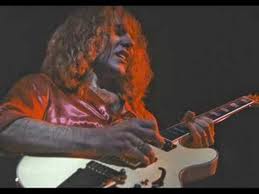
The camera angle focuses mainly on Alex Lifeson.  And man does he rock!

It’s common knowledge, even among Rush haters, that Geddy Lee and Neil Peart are (or at least were) always at the top of the list of “Best” bassist and drummer respectively.  And yup, they are pretty amazing.  But this has always left Alex in the shadows.

Admittedly, there are thousands of great, amazing, ear melting guitarists.  And, typically, the bassist and drummer are kind of dull, so it makes sense that Alex’s playing is in the shadows of the other two.  But I fear that he is often labelled as just not very good.

This video should totally prove that suggestion incorrect.  He plays quickly and with amazing accuracy, in a multitude of styles.

And speaking of the movie, I always wondered if their families minded that Alex and Geddy changed their names for the band (it’s never addressed in the film). It seems like a weird thing to have done circa 1974 in Canada, although Kiss did the same thing at the time in New York (removing the Jewishness of their names).  I just love the name Živojinović, and it’s a shame it’s not better known.  (Huh, although Wikipedia tells me that Lifeson is a sort of literal translation of Živojinović.  Who knew?)

[READ: July 29, 2010] “Grokking Rush”

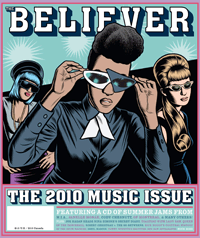
Since Rush has been everywhere lately, I figured I’d mention this recent article in The Believer.  There’s nothing terribly new in the article.  In fact, it seems like something of an introduction to the uninitiated, giving a basic history of the band and their lyrical themes.

The only thing I didn’t know, which is teased out in the subtitle, was that so many academic papers have been written about the band. Dissertation titles include “Permanent Changes: Rush, Musicians’ Rock, and the Progressive Post-Counter-Culture” and “Grand Designs: A Musical, Social and Ethnographic Study of Rush.”  They have also been written about in The Journal of American and Comparative Cultures and Popular Music and Society.  And, they are the only band ever to be cited in the Journal of Ayn Rand Studies. (more…)

Read Full Post »

SOUNDTRACK: YOUNG RIVAL-“Got What You Need” (2009).

I was only able to hear this song once.  It’s surprisingly on available on the Young Rival playlist on CBC Radio 3).  Young Rival play a kind of fast, noisy punk and yet the melodies underneath the noise are very poppy.

I also played the track “Authentic” which is similar in style.  I found both songs very catchy, but have to admit that even a few minutes later I couldn’t recall them at all.  I’d say it’s perfect  for radio airplay.

[READ: June 14, 2010] “Say the Names”

This, indeed, is the quintessential Canadian story.  Every line in the piece is taken from a Canadian song, book or movie.  (I only learned that from the introduction to all of the stories. There’s nothing in the story to reveal that.  Although given its fractured nature and the very obviousness of some of the titles, it wouldn’t be too hard to figure out.]

It’s kind of fun to play “spot the lyrics” or what have you.  I knew some, but far fewer than I would have guessed.

As for the story itself, well, it’s a little disjointed. (more…)

Read Full Post »

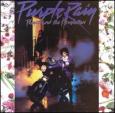
SOUNDTRACK: PRINCE-Purple Rain (1984).

I resisted Prince for most of my high school and early college years.  He was just so, so, so.  Well, actually I think he was just so popular.  Plus, my freshman year of college, someone on our floor used to blast this CD at full volume every time he did laundry.  It was pretty oppressive.

As I grew less strident, I learned to appreciate his talent (and his absurdity), and even to like Purple Rain.  And when I divorce Prince from the hype, the overplay, the excess, the quirks (yes, I’m talking 2 U) this is a damn fine record.

It’s also somewhat surprising that it was as big a hit as it was.  Musically, it’s all over the place (or is that something for everyone?).  I think in today’s specialized market, this may not have sold as well (or else it would be like Gnarls Barkley and be a hit regardless).

“Let’s Go Crazy” is poppy sure, but it rocks really hard (and showcases Prince’s guitar virtuosity).  But it’s the  second half of the disc that is just berserk with great music. “When Doves Cry” has that insane guitar solo opener.  The rest is simple keyboard pop (until the ecstatic screams at the end).  “I Would Die 4U” is the poppiest thing on the disc.  And the disc ender, “Purple Rain” is just a great rock track.  Delightfully pretentious in the beginning, full-bodied by the middle.  It’s quite genre defying.

I’m obviously not the biggest Prince fan in the world.  I have a few discs from this period (and the greatest hits).  It’s more than enough Prince for me.  And while I don’t listen to this disc while I do laundry, sometimes, when it’s warm, I’ll open the windows and crank this up.

[READ: May 14, 2010] “1999”

This story opens with the line “I wouldn’t fuck [the artist formerly known as Prince] if he was the last man on Earth.”  This turns out to be excellent foreshadowing.  The year is 1999, morphing into 2000.  And the unthinkable has happened.  There is no one left on the planet.  Except for the voice of TAFKAP on the radio, exhorting women to cum 2 him and b with him.

Although Sonya wouldn’t fuck him, several other women in the story most certainly would.   And so, the story follows four different women, each with her own agenda as they travel across the continent to Minnesota, to Paisley Park. (more…)

Read Full Post »

SOUNDTRACK: NEIL YOUNG AND CRAZY HORSE-Greendale (2003).
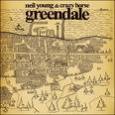
This is a lengthy song story (rock opera?) from Neil Young.  It’s a pretty meandering story, musically, although there’s a lot of electric guitars involved, and Crazy Horse keeps the pacing pretty brisk.

The songs are all pretty long (from about 5 to 12 minutes).  And they are all employed for telling the narrative of the town of Greendale and its first family: the Greens.  The town of Greendale was named after a patriarch of the Green family.  The story focuses on his great-granddaughter ( I believe) whose name is Sun.

Her parents own the Double E ranch, where her mom sings and her father paints.  The story is set during Bush’s war in Iraq.  And as more revelations come out, Sun has more and more reason to fight.  She ultimately winds up fighting PowerCo, chaining herself to their giant eagle statue, wielding only a megaphone and the truth.

Later, she plans to travel to Alaska to protect the environment.

But there’s also ancillary characters.  Sun’s cousin Jed is trying to do anything he can to avoid joining the army.  But when his drug running comes to the attention of the cops he acts impulsively against someone he actually knows and is punished for his crimes.  We also meet Sun’s grandfather, a tough old man who speaks his mind just a bit more often than he speaks with his guns.

And there’s also Earth Brown, the boy that convinces her to go to Alaska with him.

Musically, the songs fall into a similar vein: long, loping, kinda sloppy jams, acoustic guitar over the top of Crazy Horse, and of course Neil’s voice.  There’s nothing revolutionary about the music.  It’s just a solid collection of tunes.  If you don’t like songs that last 12 minutes, this may not be your cup of tea.  But I find that if I engage with the story I really enjoy the disc.  And yes, there’s a few catchy choruses too.

[READ: May 11, 2010] Neil Young’s Greendale

Adaptations from one media to another are quite common these days.  So, to see a comic book made from a record (and a film) isn’t that surprising.  What is surprising is how this story comes to life on the page.  I haven’t seen the film of this record, so I don’t know how it compares, but this graphic novel really fleshes out the story from the CD.

I was delighted to get this as a prepub, as I didn’t even know it was coming out.  This preview copy of the comic is one of the first advance copies I’ve received that is not anywhere near the final version.  The final product will be in color, while my version has about ten pages in (beautiful) color and the rest left uncolored.  I didn’t count the pages, but I suspect that a fairly large amount of the final product was left out as well.  And that’s fine. (more…)

Read Full Post »

« Newer Posts - Older Posts »