Feeds:
Posts
Comments

Archive for the ‘Book Reviews’ Category

secretevilSOUNDTRACK: ABAJI-Tiny Desk Concert #47 (February 15, 2010).

abajiThis is the only time I have heard of Abaji. He is an unimposing man with roots in Greece, Turkey, Armenia and France.  He sings gently (often in Arabic with some English) and he plays while he sings.

The impressive thing about Abaji is his skill and love of musical instruments.  The notes say “when recording his latest album, Origine Orients, he played 10 different instruments, many of them simultaneously, with no second takes or overdubs. It took him just two days.”

“Min Jouwwa” (which means “From Inside”) is played on  what looks like a normal guitar but which sounds so very different. The notes say it’s “a tricked-out Western-style guitar with extra strings, giving it the sound of an Egyptian oud.”

“Steppes”  is a brief haunting instrumental.  It’s played by bowing a soft-toned kamancheh (a three-stringed instrument that you hold upright on your lap for a scratch, middle eastern sound).  He often times rocks the instrument instead of the bow back and forth.

The final song is played on the Greek bouzouki (with whistling as accompaniment).  “Summertime” is the Gershwin song (which is only recognizable from the words–the first verse anyhow, which he sings in English–the second verse he sings in Arabic).  It sounds nothing like the original with the serpentine riffs and that unique bouzouki sound.

I only wish the cameras were still rolling after the set because “he demonstrated a large duduk (an Armenian cousin of the oboe), an Indonesian suling (flute) and a Colombian saxophone (of sorts) made from bamboo that looked more like a snake.”

This is what I love about the Tiny Desk–seeing very different instruments and unconventional performers up close.  Abaji is fun to watch.

[READ: May 7, 2015] The Secret of Evil

This has got to be the final posthumous collection of writings from Bolaño.  The Preliminary note from Ignacio Echevarria explains that this book is a collection of the final fragments that were found on Bolaño’s computer.  As such, the book consists primarily of works that are unfinished (some barely even started).

This isn’t as disappointing as it sounds because Bolaño seemed to write very thoroughly right form the beginning with his stories.  So even though they are incomplete, the section that is written feels fully fleshed out–and you can imagine that more will be coming. Echevarria says that “Bolaño rarely began to write a story without giving it a title and immediately establishing a definitive tone and atmosphere.”  This of course made it difficult for Echevarria to know what to compile here.

Not everything in this collection if unfinished.  And indeed, with Bolaño sometimes it’s unclear if the unfinished things were actually unfinished. (more…)

Read Full Post »

harperioctSOUNDTRACK: BROOKLYN RIDER-Tiny Desk Concert #44 (January 26, 2010).

brooklynThis is one of the darkest Tiny Desk Concerts I’ve seen.  Meaning it is rather poorly lit.  I’m not sure why it is so dark in the office–oh, I see that it’s 4;30 PM.  But this string quarter isn’t hindered by it (although they do remark on it before the final song).

The notes state that the quartet (two violin, a viola and cello) loves Debussy and Brahms but they also write their own music and have teamed up with a Kurdish kamancheh player (or as the one player states, a Japanese shakuhachi player and an electronics musician).

The first song, “Vagharshabadi Dance” is an Armenian dance written by an Orthodox priest named Komitas. And they are quite animated as they play it.

In the introduction to the second piece called “Second Bounce” (which is a companion to a Debussy piece, which they play next). Colin Jacobsen (violin) says that he based it on the way a super ball’s first bounce is expected but the second can go anywhere.  And the notes they play are often unexpected (and bouncy).  They’re also quite hard (the viola player (Nicholas Cords) says the piece hurts his hand).  That piece is only a trio–they wanted to mix it up a bit.

The Debussy piece “String Quartet in G Minor: 2nd Movement” is very nice.  It’s got a lot of pizzicato (from all the instruments) while the others play a cool riff.  Johnny Gandelsman (violin) sat out of “Second Bounce” but he gets some great “solos” in this one.  I don’t know all that much by Debussy, but I like this.

“Ascending Bird” is sort of their theme song–an arrangement of a Persian folk song.  It has some incredibly fast riffs (even from the cello (Eric Jacobsen)) and some interesting scratching on the strings.

Check them out here.

[READ: March 6, 2015] “The Monkey Did It”

I had just read a short story by Murakami, so I was interested to read this piece by Galchen, whose insights are, I think, spot on.

toricelliShe talks about Murakami’s latest book, Colorless Tsukuru Tazaki and His Years of Pilgrimage and she uses the simile  that Murakami’s works are like Torricelli’s Trumpet or Gabriel’s Horn–finite space with infinite surface area.  And while I wouldn’t say that I thought of that myself, I would say that I have often thought that his stories seem so simple (at least in plot) but there is so much more in them.

I like the way that she talks about his books as having a plot that sums up pretty easily, but within the plot several other new threads are opened.  And they are more metaphysical at the same time.

In the novel friends vanish, but that is not the main plot.  Rather, Tazaki is haunted by the fact that his friends abandoned him some time ago.  His girlfriend Sara tells him he needs to figure this out.  So he sets off on a kind of quest.  Galchen notes that the girlfriends in his stories are always encouraging the main characters to do these quests. (more…)

Read Full Post »

dec20133SOUNDTRACK: FRANKIE SPARO-Arena Hostile (VPRO Radio Recordings) [CST017] (2001).

sparo2I didn’t love Sparo’s debut album, but a year later while on tour with A Silver Mt. Zion (whom I do love) he went into a studio in Amsterdam to re-record some of those songs.  I’ll let the Constellation site tell you what this EP is and why I like it so very very much,

In January 2001, Frankie Sparo toured Europe with a Silver Mt Zion. Musicians from the latter group worked on new arrangements of songs from Sparo’s debut record My Red Scare, adding strings, organ and electronics to Frankie’s guitar and beatbox compositions. Some of the results were captured in a live studio performance recorded live to 2-track at VPRO radio in Amsterdam, where a feverish flu found Sparo in a ravaged, hallucinatory state – which only added to the dark magic of these recordings. The four songs on this EP are all first takes, beautifully recorded by the good people at VPRO. Along with 3 songs reworked from the debut album, the EP also includes a heartbreaking cover of the Rolling Stones’ “I Am Waiting”, which Sparo performed solo a number of times in concert.

“Diminish Me NYC” is great in this version with an off-kilter electronic arrangement and strings. “The Night That We Stayed In” which I singled out on the debut album has two violins, turning the song into an even cooler number (although the “throw your hands in the air” line seems moderately less comical now).  “Here Comes The Future” has an almost dance beat—a slow dance mind you, but still, a good one and ends with some organ waves.  And the cover of “I am Waiting” must be the slowest cover of a Stones song ever.  I don’t know the original, but I bet it sounds nothing like this.

I really like this EP a lot and it makes me want to like the debut album even more–if I had more patience with it.

[READ: April 15, 2014] 3 book reviews

noveltyThis month Bissell reviewed non-fiction three books.

The first is Novelty: A History of the New by Michael North.  In this book North argues that newness, that novelty, has always been a problem: “one of the very first ideas to trouble the consciousness of humankind.”  This dates all the way back to Aristotle who argued that nothing came from nothing; that everything came from something else.  Even the Renaissance, that period of great exploration and creativity was really just mimicking classics (hence the word renaissance).  The new tends to be looked at askance, so we get terms like “novelty act.”

North says that one thing which is genuinely new is our proclivity to turn everything into information as gigabits or as abstract knowledge.

I’m intrigued by the premise of this book but not enough to want to read it and frankly, Bissell doesn’t make it sound that compelling.

Bissell connects this attitude about newness and novelty to the rock world (and rightly so).  Where we (well, some people) value novelty and criticize anything that is derivative.  Which leads to the second book (another one I don’t want to read but for different reasons).  Beatles vs. Stones by John McMillian.  The Beatles were arguably the most original band ever since no one did what they did before them.  And then, bvssarguably, the Rolling Stones came along and did just what the Beatles did a little bit afterwards.

Some easy examples:

  • The cover of the Rollings Stones’ first album is compositionally similar to the cover of The Beatles’ second album.
  • A few months after the Beatles released their ballad “Yesterday,” the Stones released their ballad “As Tears Go By.”  (The song was recorded earlier but was initially dismissed as not Stones enough).
  • After the Beatles used a sitar in “Norwegian Wood,” the Stones used one (in a different way) in “Paint It Black.”
  • And quotemaster himself, John Lennon, once said, “Everything we do, the Stones do four months later.”  [The Stones did still released some great music after The Beatles broke up, of course, even if now they play nothing they wrote after 1981 on tour anymore].

And this Lennon quote is typical of this book which is a gossipy casual look at the differences between the Beatles and Stones [Beatles when you’re writing, Stones when you’re jogging; Beatles when you’re alone, Stones when you’re with people).  But in addition to comparisons, he includes scenes like when the Beatles attended a Stones show and when Jagger and Richards were at Shea Stadium for The Beatles’ arrival.

There are many similarities between the bands, although the biggest different seems to be that the Stones never really became friends, while The Beatles were friends till the end.

Of course, the Stones has always been cooler than the Beatles, which is a nice segue into Bissell’s third book: The Cool School: Writing from America’s Hip Underground by Glenn O’Brien.

coolschoolO’Brien’s thesis is the seemingly obvious one that “cool” is not a new thing–that early tribes doing war dances had cool people playing syncopated drums in the corner.  But he is not arguing about coolness, he is collecting “a louche amuse bouche [that must have been fun to write]…a primer and inspiration for future thought crime.”  The book includes works by the likes of Henry Miller, Delmore Schwartz, LeRoi Jones and Eric Bogosian.  I like some of these guys, but as soon as I see them assembled together, I know I’m not going to be going anywhere near this book.

Bissell says that there is some cool stuff here: Miles Davis writing about Charlie Parker for example, but most of the cool seems to be trying too hard.  Like the “charmlessly dated” Norman Mailer piece, “The White Negro.”

I appreciate the way Bissell sums up what comes through from the book: “to be cool…is to make the conscious choice, every step of the way through life, to care about the wrong damn thing.”

It is comforting to come away from one of these book reviews without wanting to read anything.


Read Full Post »

bothfleshSOUNDTRACK: SIGUR RÓS-Von brigði [Recycle Bin] (1998).

recycleAfter releasing their first album, Sigur Rós was approached by Icelandic musicians to remix the album. And thus came Recycle Bin.  I realized too late that I really just don’t like remix albums all that much–they’re mostly just faster drums plopped on top of existing songs.  And such is the case here.  Despite the interesting musical pedigrees of the remixers, there’s nothing anywhere near as interesting as on Von itself.  There are ten tracks, but only 5 songs.

”Syndir Guðs” gets two remixes:

Biogen keeps the bass but adds some more drumlike sounds.

Múm removes the bass, adds some wild drums and trippy textures and reduces the 7 minutes to 5.  It is quite pretty but very far from the original.

“Leit að lífi” gets three remixes

Plasmic takes a spacey 3 minute wordless noodle and turns it into a heavy fast dance song with speedy drums, big bass notes and with spacey sounds.

Thor brings in some fast skittery drums and keeps the spacey sounds (which sound sped up).  And of course bigger bass noises.

Sigur Rós recycle their own song into a dance song by adding funky bass and drums.

“Myrkur” gets two remixes.  the original is a fast-paced groovy track.

Ilo begins it as a spacey non-musical sounding piece.  After two minutes they add a beat of very mechanical-sounding drums.  It’s probably the most interesting remix here.

Dirty-Bix adds big, slow drums.  It keeps the same melody and vocals as the original but totally changes the rhythm and texture of the song, (removing the guitar completely).

The remaining three songs get one remix each.

The original “18 Sekúndur Fyrir Sólarupprás” is 18 seconds of silence.  Curver turns it into “180 Sekúndur Fyrir Sólarupprás” and makes a muffled drum beat and some other samples from the album, I think.  It constantly sounds like it is glitching apart until the end where it practically disintegrates–an interesting remix of silence.

“Hún Jörð” 7 min Hassbræður increases the drums and adds a more buzzsaw guitar sound and makes the vocals stand out a bit more.

“Von” has delicate strings and Jónsi voice.  The remix by Gusgus adds low end bass and drums making it a thumping rather than soaring track.

I prefer the original, but I much prefer their next album to the first one.

[READ: end of October to early November 2013]  original articles that comprise Both Flesh and Not

As I mentioned last week, I decided to compare the articles in Both Flesh and Not with the original publications to see what the differences were.  I had done this before with A Supposedly Fun Thing… and that was interesting and enlightening (about the editing process).

This time around the book has a lot more information than the original articles did.  Although as I come to understand it, the original DFW submitted article is likely what is being printed in the book with all of the editing done by the magazine (presumably with DFW’s approval).  So basically, if you had read the original articles and figured you didn’t need the book, this is what you’re missing.

Quite a lot of the changes are word choice changes (this seems to belie the idea that DFW approved the changes as they are often one word changes).  Most of the changes are dropped footnotes (at least in one article) or whole sections chopped out (in others).

For the most part the changes were that the book version added things that were left out or more likely removed from the article.  If the addition in the book is more than a sentence, I only include the first few words as I assume most readers have the book and can find it for themselves.  The way to read the construct below is that most of the time the first quote is from the original article.  The second quote is how it appears in Both Flesh and Not.  At the end of each bullet, I have put in parentheses the page in BFAN where you’ll find it.  I don’t include the page number of the article.  And when I specifically mention a footnote (FN 1, for example), I am referring to the book as many times the articles drop footnotes and they are not always in sync.

Note: I tried most of the time to put quotes around the text, but man is that labor intensive, so if I forgot, it’s not meant to be anything significant. (more…)

Read Full Post »

contficSOUNDTRACKTHAO NGUYEN-Tiny Desk Concert #5 (September 4, 2008).

thaoI had never heard of Thao Ngyuen (who admits that her last name is a phonetic disaster–it’s pronounced When) before this concert and man is she a lot of fun.

  She plays a great acoustic guitar—very percussive on the strings (and even some percussive noises from her mouth before the first song starts).  Her voice is a strange mix of a few singers, reminding me a bit of Björk (but with a kind of Southern sounding accent) and maybe Beth Orton, if Beth was a bit more excited.   Thao plays her guitar very loosely—a kind of sloppiness that is really fun—but not in a “she can’t really play” way.  It’s an I’m having a lot of fun style.

NPR dude Mike Katzif heard her band Get Down Stay Down opening for another band.  And he loved her off-kilter melodies (which are ample).  “Bag of Hammers” is played on the high strings and it has an almost Caribbean feel—boppy and fun and totally made for dancing. Her guitar playing is very fast strumming, especially on “Beat (Health, Life and Fire),” I love watching the chords she is playing up and down the neck of the guitar.

I really enjoyed the conceit of “Big Kid Table” and the Hawaiian vibe she gets from her guitar.  “Feet Asleep” brings out a bit more of a country vibe from her singing (she is from Virginia).  I love the diversity of her music and I’m looking forward to checking out both her band and her solo work. In addition to being a great singer and songwriter, she is also quite funny—the story about her grandma and her calves is very funny indeed.

This continues the greatness of the Tiny Desk concerts.

[READ: November 14, 2013]  “The Empty Plenum”

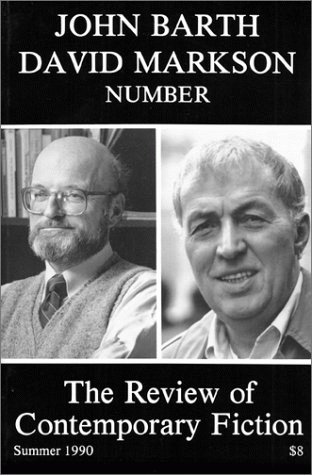
The reason I got involved with Wittgenstein’s Halloween was because David Foster Wallace had said Wittgenstein’s Mistress was one of the best books of the 1990s.

The whole list is on Salon, but here’s the quote about WM:

“Wittgenstein’s Mistress” by David Markson (1988)
“W’s M” is a dramatic rendering of what it would be like to live in the sort of universe described by logical atomism. A monologue, formally very odd, mostly one-sentence ¶s. Tied with “Omensetter’s Luck” for the all-time best U.S. book about human loneliness. These wouldnt constitute ringing endorsements if they didnt happen all to be simultaneously true — i.e., that a novel this abstract and erudite and avant-garde that could also be so moving makes “Wittgenstein’s Mistress” pretty much the high point of experimental fiction in this country.

I had also read his review of the book before [I copy everything I said then below].  I admit I didn’t get that much out of it before because it was mostly about Wittgenstein and a book I hadn’t read.  Well, now that I’ve read the Markson book, it seemed like a good time to revisit the review.

Two things strike me immediately–this was written after Wallace had written Broom of the System and some other fiction and yet he speaks of himself as a “would-be writer,” not a writer.  And two, this review really belongs in a philosophy journal rather than a literary journal–DFW was making the jump from philosophy to literature, but his knowledge of philosophy is very strong, so he is focusing on that aspect of the story. (more…)

Read Full Post »

dec2000SOUNDTRACK: FLY ASHTRAY-“Also Muffins” (2013).

flyRecently I was thinking to myself that I don’t hear much music that is just weird anymore.  It could be that I am exposed to it a lot less than I used to be (when I was music director at my college station I received all kinds of crazy stuff) or maybe people just don’t do unconventional music as much.  This latter option seems very unlikely give the preponderance of cheap home recording equipment.  But bands that are not exactly novelty acts, but who are just totally out there (and amazingly used to get album releases).

And then my friend Paula forwarded me this absolutely weird song from Fly Ashtray.  Not only was I delighted to hear a weird song, I loved how good it was.

“Also Muffins” starts with big sloppy guitars and a piercing guitar riff which is simple but slightly off.  This goes for about 20 seconds before a staccato decrescendo brings the riff to a halt.  This fun chaos is repeated three times. It’s a crazy wonderful punk intro.

Then at a minute an a half the song turns almost folkie, with strummed acoustic guitars.  The band starts singing together (in no-part harmony) about how good their delicatessen is (they also sell muffins).  They all seem somewhat flat in their delivery, as a deliberate let down from the frenetic earlier section.  Then for part 3, an electric guitar comes back in with a kind of great alt 90s solo and a series of fast chords.  I love this section a lot.

The final section comes in and opens with another simple riff that is at once catchy even if the last note is flat.  It is fast and vaguely sinister (with a kind of siren sound in the background) and with some skittery guitars and an occasional bass element thrown in.  This last part lasts for over a minute and then the whole song fades out.

The video is low budget and fun and gives a kind of explanation to the music, although I have found that i enjoy it without the video as well.

And visit the band’s website.

[READ: November 1, 2013] “All is Vanity”

This is not an actual article by Bissell, it is one of those “annotation” items in Harper’s in which an advertisement or press release is critiqued.  in this one they analyze an Xlibris ad.

Bissell was an editor at Henry Holt (and may still be) when he wrote this.  And he is snarky from the start (as the Annotation always is), emphasizing the “Publishing Services Provider” and noting with numbers why Xlibris is a foolish vanity project.

“70 percent of the books the company has sold have been bought by their own authors.”

And how in general

“90 percent of the half-million [books] written each year remain unpublished.” (more…)

Read Full Post »

april 2013SOUNDTRACK: RICHARD THOMPSON-Electric (2013).

electRichard Thompson is remarkably consistent in his albums.  Especially his most recent ones.  The songs are all solid—both musically and lyrically.

Despite the name Electric, this album is no more or less electric than his other records.  Indeed, while this name may imply a much faster, heavier album, there are a number of ballads (and acoustic guitars) as well.  But if you like Richard for his amazing solos, you won’t be disappointed.

“Stony Ground” and “Sally B” are dark rockers (both mention gutters) with great fast solos.  “Treadmill” is one of RT’s class/money songs which are always spot on, even if he’s singing about sheet metal rather than playing guitar (great riff on this one too).

“Salford Sunday” is a more gentle rocker and “My Enemy” has a wonderful circular-feeling delicate melody and a gorgeous solo.  Both songs have female harmonies from Siobhan Maher Kennedy.  Indeed, Siobhan sings backing vocals on “Where’s Home” (an acoustic guitar ballad complete with violin solo), “Straight And Narrow” (a rocking song with aggressive guitars) and “Saving The Good Stuff For You.” “Good Stuff” Is a beautiful album ender, a sweet and tender ballad which I enjoyed even more live.

Alison Kraus sings backing vocals on “The Snow Goose,” a slow, somber song–the kind of which RT does so well.  “Good Things Happen to Bad People” is so unfailingly catchy, practically an earworm, that if there were any justice, this song would have been huge.  It’s got a great melody, cool lyrics and a really rocking solo.  “Another Small Thing in Her Favour” is a mellow acoustic/country song.  The end of the album goes a little too mellow.  Even though I like the songs individually, as a record it kind of trails off, which is a shame since “Good Stuff” is such a beautiful song.

I enjoyed this album tremendously and hearing him play some of those songs live was a treat.

[READ: October 10, 2013] 3 book reviews

This month Bissell reviewed three novels.

grossmanyouThe first is YOU by Austin Grossman.  Bissell explains that this is a book about a middling video games company circa the 1990s (Grossman was born in 1969 so he knows the territory well).  Bissell really enjoys the philosophical attitude of the book, specifically the narrator’s thoughts on making and playing games, although he fears that some of the characters are rather two-dimensional (and can’t decide if this is a flaw or if it’s intentional since the book is about video games).

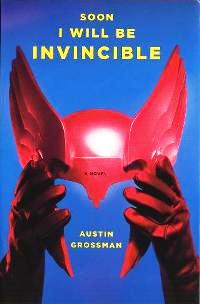
grossman soonBissell is largely very positive about the book although the excerpt he quotes about human duality and videogames was not terribly exciting to me.  However he casually raved about Grossman’s first book Soon I Will Be Invincible (which is a literary work about superheros) which I think I’d be more inclined to read. (more…)

Read Full Post »

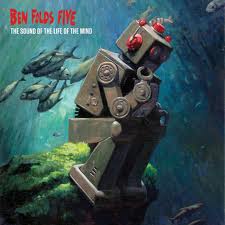
febSOUNDTRACK: BEN FOLDS FIVE-The Sound of the Life of the Mind (2013).

bffThe first Ben Folds Five album in over a decade opens with a big noisy sound and then quickly shows the diversity of the band by pulling back and showing a mellow verse with Ben’s piano and occasional bass.  But then the chorus comes in and Robert Sledge’s bass is once again masterful.  While Ben is clearly the leader of the band, there is something about the BFF’s bass that is so notable.  And this album rocks in BFF’s unique way–rollicking piano, and noisy buzzy bass.

“Michael Praytor, Five Years Later” has some great harmonies (the kind that BFF do so well).  “Sky High” is the kind of social commentary ballad that Ben excels at. And the title track is a fast moving rocker that has more great harmonies.

“On Being Frank” is a Sinatra inspired song with strings.  While “Draw a Crowd” continues Ben’s humorous vulgarity in a very unexpected way: “if you’re feeling small, and you can’t draw a crowd…draw dicks on a wall.”  “Do It Anyway” the single, which inexplicably wasn’t huge, gets more and more fun with each listen–to scream along with “OKAY!” is very cathartic.

“Hold That Thought” is one of those mellow but speedy numbers that I love from Ben.  And when then bass plays that high solo bit near the end (oh that bass), the song kicks into new levels of excellence.  “Away When You were Down” is another string-filled mellow song.  The final track “Thank You for Breaking My Heart” reminds me of “Boxing”, a mellow piano ballad which is, obviously, heartbreaking.

This is a great return to form.  There’s some heavy rockers and some pretty ballads. It’s nice to hear the Five back together again.

[READ: October 5, 2013] 3 book reviews

This month Bissell reviewed three books.

The first book is a biography of Flavius Jospehus called A Jew Among Romans jar by Frederic Raphael (who also wrote the screen play for Eyes Wide Shut).  I had never heard of Flavius Jospehus but evidently without him we would have no historical accounts of time from around the beginning of the Common Era.  His writings are pretty much the only works that have survived.

And his story itself is interesting too. In 70 A.D. the Romans destroyed Jerusalem. This attack has had more impact on current life than can be explained.  Judaism lost the Second temple, Jewish Christianity soon disappeared beneath the waves of Gentile Christianity, even Islam was shaped by this because a Mosque now stands where the Second Temple was.  And nearly all modern forms of anti-Semitism can be traced back to this attack in some way.  Flavius Jospehus chronicled this time as a Jew in a reasonably impartial way (which led many to call him a traitor).  His books Jewish Antiquities and The Jewish War are the sources for almost all of our knowledge of that era, including about Pontius Pilate. (more…)

Read Full Post »

harper juneSOUNDTRACK: JOHN ZORN-“The Dream Machine” (2013).

dreamThis is the title track to the third installment of instrumental albums by composer Zorn (as opposed to wild sax-player Zorn).  The new album is called Dreammachines.  Evidently this trilogy is somehow related to William S. Burroughs (sure, why not).  The first was called Interzone (and was three 15 minute-plus suites), the second was Nova Express (which was shorter pieces) and now Dreammachines (which is also shorter pieces).

It’s impossible to know what Zorn will throw at us next, but this song proves to be a beautiful jazz piece with the quartet of pianist John Medeski, bassist Trevor Dunn, vibraphonist Kenny Wollesen, and drummer Joey Baron.  It opens with a quick but pretty vibraphone melody.  The melody shifts keys but stays in the same pattern until the main melody kicks in.

Variations on the theme continue until about 2 minutes in when Medeski gets a big piano solo and this sounds more like traditional jazz than most Zorn pieces.  Then there’s a very cool vibes solo.  It’s pretty standard jazz and it’s really quite beautiful.

[READ: September 20, 2013] 2 book reviews

Bissell reviews two books this month.

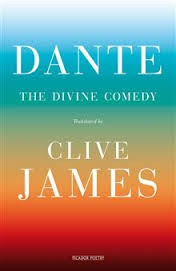
danteThe first is Dante’s Divine Comedy as translated by Clive James.  James has decided that since Italian is so easy to rhyme “For an Italian poet it’s not rhyming that’s hard,” rather than following Dante’s linked terza rima rhyme scheme, he chose the rhyming quatrain.  Bissell expects that academics and traditionalists will be very suspicious of the book because of that, but he says that for the average person (the average person who wants to read Dante, of course), it will be more fun and enjoyable.  Especially, James popularizes the book.  I have always resisted The Divine Comedy but this one sounds like it might be a bit more fun, and isn’t that what reading is all about?

magicalThe second book is The Magical Stranger by Stephen Rodrick.  When Rodrick was 13 his father died in a military plane crash.  His carrier was en route home when it was told to reroute to help with the hostage crisis in Tehran.  But his plane was destroyed.  The hardest part for Stephen was when he read that the accident was deemed “pilot error.”

This book is Stephen’s attempt to learn more about his father.  Through the course of the book, he discovers more and more unpleasant facts about his father—from the lies his father told his mother to a pilot who knew his father who calls his an asshole.  Bissell finds this part of the book very moving but not quite warranting a novel length treatment.

But there is a secondary story about the man who now commands his father’s squadron James Hunter “Tupper” Ware.  Bissell says that this part of the story is far more engaging (Stephen is a journalist and this section is more investigative).  Stephen more or less tries to live his father’s life through Ware, a man who finds the same level of difficulties in his job and his life as Rodrick’s father did.

This is definitely not the kind of book I would read, but for those with an interest in the military and pilots its sound like a good warts-and-all investigation.

Read Full Post »

aug2013SOUNDTRACK: JIM GUTHRIE-Tiny Desk Concert #294 (August 10, 2013).

jimgI was unfamiliar with Guthrie before this set and I almost didn’t play it because of his mustache–he just looks so country to me.  But then I read that he and his band drove 9 hours from Ontario just to do the show (which is 11 minutes long, so that’s pretty crazy).  But the set is really good.

The three songs come from Guthrie’s new album Takes Time (his first solo album in ten years).  And I was hooked…not right from the start, but 15 seconds into “The Difference a Day makes” when the guitar plays the chorus riff.  There is something so… Canadian about the melody line.  It reminds me of Neil Young, Sloan, Rheostatics, even Kathleen Edwards, all of these great Canadian songwriters who play with slightly different melodies.  The fact that he sings “doubt” and “out” with an Ontario accent solidifies it.  It’s one of my favorite mellow songs of the year.  “Before & After” sounds a bit like  Barenaked Ladies mellow song, like something  written by Kevin Hearn.  I tend to not like the Hearn songs, but I thin kit’s that I don’t like Hearn’s voice, because I like this song quite a lot.

Guthrie has a delicate but strong voice–I can’t imagine him screaming, but he conveys a lot.  Especially in the final song, the more mellow (and minor key) “Like a Lake.”  I’ve heard Tiny Desk shows that go on for five or six songs.  I wish that Bob and Robin had let them play for ten more minutes. Now I’m off to find his records.  Check it out.

[READ: September 10, 2013] 3 book reviews

Tom Bissell reviewed three new books in the August 2013 issue of Harper’s.  I like Bissell in general and since I’ll probably wind up writing about these when they get collected anyway, why not jump the gun here.  Especially when there’s three good-sounding books like these.

sagamoreThe first is Peter Orner’s Last Car Over the Sagamore Bridge.  I know Orner from McSweeney’s mostly, where I’ve read a few of his things  But one of the stories that Bissell mentions from this short story collection sounds familiar and yet it doesn’t seem to be something I’ve read.  Hmmm.  Well anyhow, he says that Orner’s previous book (with a title that Bissell assumes he had to fight to keep–The Second Coming of Mavala Shikongo) was a great piece of fiction about Africa, and that his previous collection Esther Stories was also very solid.

This book is a little stranger—bundled into 4 sections, it includes more than fifty “stories” and is all of 200 pages.  (Sounds like just the kind of thing I can get into).  Bissell suggests that the stories have a layer of remove, like someone telling a story about someone telling a story.  Or, if they were about a bank robbery, the story would actually be about someone describing having once met the guy who sold the robbers their ski masks.  But the real selling point for me was this pithy description of the collection: imagine Brief Interviews with Hideous Men written by Alice Munro.   That sounds hard to pass up. (more…)

Read Full Post »

« Newer Posts - Older Posts »