Feeds:
Posts
Comments

Archive for the ‘Authors’ Category

SOUNDTRACK: JAN VOGLER AND ALESSIO BAX-Tiny Desk (Home) Concert #128 (December 16, 2020).
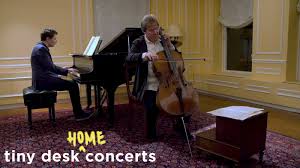
This is the third of three Tiny Desk Home Concerts to honor Beethoven’s 250th birth anniversary. This was my favorite. The first was just piano the second was a quartet of strings.  But this one, a combination of the two, was the most exciting.  I love the way the cello (Vogler) played off of the piano (Bax).

For this Tiny Desk (home) concert, we pay a visit to the doctor’s office. Actually, the venue is called Rare Violins of New York and it’s something of a second home to cellist Jan Vogler, who pops in frequently to have the experts give his 1708 Stradivarius cello a thorough checkup. If your multi-million-dollar fiddle has a cough or the sniffles, or even needs a full-blown restoration, Rare Violins, which sits just a block away from Carnegie Hall, can help. The firm also has a lovely music room, kitted out with a fine piano – something Vogler lacks at his place.  With help from the fine pianist Alessio Bax, Vogler makes a convincing case for Beethoven as one of the great heroes of the cello. Beethoven, whose 250th birthday falls this week, wrote five cello sonatas, plus other works for the instrument, which, before his time, was primarily relegated to beefing up the bass line in various chamber music situations.

Beethoven, in essence, liberated the cello. Listen to how it dances and struts in the opening scherzo from the Sonata in A, Op. 69.

“Cello Sonata in A, Op. 69: II. Scherzo” starts with a piano and the cello quickly jumps back in.  The song builds and swells and then quiets down to a pretty piano and cello melody.

Like Jonathan Biss, these two are very chatty. They are mostly chatty with each other, but they do direct their answers to the camera sometimes too.

Up next is a short piece from the beginning of his career “12 Variations on a Theme from Handel’s Judas Maccabaeus: Variation XI: Adagio.”   In this piece the cello “sings sweetly.”  Vogler says that Beethoven was friendly with a fantastic cellist and he may have inspired the composer to write more pieces for the cello.

Although the piece starts with a lovely piano intro and has several moments of just piano, the cello adds so much to it.

Before the final song the two talk about how the pandemic has changed them and what they are looking forward to doing when it is over.

And finally there’s the opening to Beethoven’s last cello sonata, which Bax — whose role is far more than just an accompanist here — says is compact with emotion, yet “stretches the boundaries” for the instrument.

“Cello Sonata in D, Op. 102: I. Allegro con brio” feels like a call and response–two instruments in conversation.  And they had a lot to say.

[READ: December 20, 2020] The Disaster Tourist

In continuing with my around-the-world reading, I picked up this novel that was originally written in Korean (translated by Lizzie Buehler).

This story sounded really weird and interesting.

Yona works for a company called Jungle which specializes in offering vacations in areas that have suffered a disaster.

On a disaster trip, travellers reactions usually went through these stages

shock; sympathy and compassion, maybe discomfortable gratefulness at their own lives; a sense of responsibility that they’d learned a lesson and maybe a feeling of superiority for having survived where others didn’t.

For instance, a tsunami had hit Jinhae–in an instant everything was underwater.  Yona travelled there because Jungle currently didn’t offer any tours there.  But they would soon.  Yona would give donations and offer condolences to the community.  Then she would create a vacation package that involved viewing the aftermath along with volunteer work.

Yona had worked at Jungle for over ten years.  She was something of a star.  But apparently, her star was starting to fade because she had all of sudden been asked to handle some customer service phone calls–never a good sign.

Things got even worse when a supervisor named Kim got on the elevator with her.  He said:

Johnson is asking me to send my greetings to you.
Who?
Johnson.  My Johnson. Kim pointed to his crotch.

At this point I had to wonder.  Is this level of harassment something that happens in Korea?  Is this  shocking incident for any reader?  Is this a hyper real fiction in which everything is just a bit beyond reality?  I don’t know.

Then Kim grabs her bottom and put his hand in her blouse.  The gesture suggested that Kim didn’t care if he was caught.

Yona was upset, but not because of the sexual assault. Because Kim was known to only target has-beens. (more…)

Read Full Post »

SOUNDTRACK: JONATHAN BISS-Tiny Desk (Home) Concert #126 (December 14, 2020).

This is the first of three Tiny Desk Home Concerts to honor Beethoven’s 250th birth anniversary. 

Biss is uniquely qualified for the task at hand. The 40-year-old pianist has recorded all 32 of Beethoven’s freewheeling sonatas, performed them worldwide and has taught an online course in the music.hat’s impressive. Still, what’s more astounding is the personal story behind Biss’ obsession with Beethoven. The recording project alone took nearly 10 years and the things Biss says he gave up – relationships, even his sense of self – in order to live the dream is heartbreaking. The pandemic has shut down the life and livelihoods of many musicians, and for Biss the down time offered space to confront his relationship to Beethoven and his own demons. He tells his story in a raw and insightful audio memoir called Unquiet: My Life with Beethoven.

You can hear some of Beethoven’s own struggle in these perceptive performances. The bittersweetness of the Bagatelle Op. 126, No. 1, the moments of fragility in the Sonata, Op. 90, and the interior perspective that reaches outward from the Sonata Op. 109, all prove that Beethoven’s music is as meaningful today as ever.

Jonathan Biss is a chatty pianist.  After playing the lovely if brief “Bagatelle in G, Op. 126, No. 1” (it’s under 3 minutes), he explains that the six bagatelles were the last thing Beethoven ever wrote for the piano. 

He also jokes that he had the overwhelming urge to introduce himself via the “invent your NPR name” by inserting your middle initial somewhere in your first name and your last name is the most exotic place you’ve ever traveled.

He says that didn’t expect to be drawn back to Beethoven during the pandemic because hos music is so intense and so much.  He thought he’d rather be drawn to comfort food.  But he can’t get away from Beethoven.

The pandemic has sidelined many big Beethoven birthday plans. Jonathan Biss was slated to play concerts around the globe in celebration of the 250th anniversary of the composer’s birth. Instead, he’s home in Philadelphia. So it’s no surprise that for this all-Beethoven Tiny Desk concert, Biss chose music that explores the composer’s own isolation, brought on by deafness and an uncompromising personality.

He talks about cancelling his tour in March.  He came home  and decided to read more–do he randomly picked out How to Be Alone as if the fates were telling him something.  Biss feels that beethoven provided a guide to being alone.  He was alone for most of his life–his personality was rather off putting, but he was also functionally deaf–the most profound form of isolation.  He retreated into his imagination to create these songs.

“Piano Sonata in E minor, Op. 90: I. Mit Lebhaftigkeit und durchaus mit Empfindung und Ausdruck” is a piece that shows his vulnerability–a rare things for Beethoven.

He plays the first two movements of “Piano Sonata in E, Op. 109: I. Vivace, ma non troppo — Adagio espressivo, II. Prestissimo.”  You can hear him humming an grunting along.

He signs off with his “NPR name” which I can’t quite make out.  Then he concludes with the final bagatelle, “Bagatelle in E-flat, Op. 126, No. 3” which ends by drifting into the ether.

[READ: January 1, 2021] The Linden Tree

I’ve had a few César Aira books sitting around that I wanted to finish and the beginning of a new year seemed like a great opportunity.

It’s not always clear if his stories are fiction, non-fiction or some combination of the two.  The back of this book calls it a “fictional memoir,” as if that clears things up.  Chris Andrews translated this fictional memoir.

The book opens with the narrator explaining that his father used to go into the town square to take leaves and flowers from the linden trees (in particularly one unusually large tree) and make a tea out of them.  This had some kind of regenerative properties for him–they cured his insomnia at any rate.

From there, as happens with Aira stories–it goes everywhere.

About a different Aira story Patti Smith once wrote:

I get so absorbed that upon finishing I don’t remember anything, like a complex cinematic dream that dissipates upon awakening.

And THAT is exactly the way Aira books work for me too.  I have to go back through them just to try to remember the details.

So, in this story the narrator’s father is black (mixed race marriages were unusual in Pringles at the time of their marriage).  His mother, who he praised for marrying a black man, was also flawed in many ways, including being very short and very bossy.

But the main thing about this story is the rise and fall of Peronism. (more…)

Read Full Post »

SOUNDTRACK: HAYLEY WILLIAMS-Tiny Desk (Home) Concert #124 (December 9, 2020).

I basically missed Paramore entirely.  I’ve heard a few songs not realizing it was them and really liked them.  I listened to a bit more recently and really like the pop punk energy.

So this Tiny Desk (Home) Concert came as a real surprise. The music is stripped down and really spare.  There’s a real dancey element (funky bass and drums) and the guitars are really quiet.

The second big surprise came when Hayley introduced her band.  Becca Mancari on keys and backing vocals!  And Julien Baker on guitar!

This change in musicians and sound is intentional.

Petals for Armor is a soul-cleansing exhale from years of holding her breath. Originally released in a series of EPs, her solo debut sings through heartache in a tangle of triumph and hard-earned wisdom. It’s a pop album that knows sadness can simmer, but also shout over an ever-shifting sonic palette.

She plays three songs in ten minutes.

During the pandemic and protests, Williams has played these songs from her couch with muted restraint, and self-serenaded with acoustic covers — sad songs really can be sympathetic companions during dark days. But in her home, surrounded by blank canvases, Williams and friends splash a bottled-up energy.

The joy is infectious, as “Pure Love” bursts from first bloom

Aaron Steele counts off on the drums, while Williams gives a Huh! and Joey Howard introduces a funky bass line.  Her voice is powerful and soars throughout.

I’m disconcerted by the high fiving after the song–I hope they’ve been safe.

“Taken” shows off Baker’s jazzy-funk licks.

It opens with an outstanding bass from Joey Howard line that repeats throughout.  The song feels quintessentially dancey and a very different sound from Paramore.  Baker plays quietly wah-wah’d guitar as Mancari sings the backing bah bah bahs.  Williams plays a keyboard on a very tiny stand (I feel for her back).  The best moment comes with the five seconds of silence while Williams looks around and then jumps back into the danciness.

For the final song, Williams leans into the “Dead Horse” kiss-off with gleeful abandon.

The foundation of this song is the funky drum and bass once more. Williams picks up the guitar, but it’s Baker who plays the slightly askew riff that opens the song.  Baker plays lead licks throughout while Williams adds grace notes.  The best of which comes at 10:08 when both Williams and Baker plays a single note in harmony to make it really stand out.

And that kiss off?

When I say goodbye, I hope you cry.

[READ: January 5, 2021] “A Philadelphia Local is Unamused by the Fuss”

Today seemed like an ideal day to post about this election-related essay from Dave Eggers.

Today, a bunch if seditious Senators are going to pretend like our election was unfair.  They are going to make a spectacle of themselves and question the integrity of our very democracy.  They should be removed from office immediately.

This essay shows, in a small aside, how this phony scandal, this manufactured outrage, was created by the trump team long before the election happened.

On November 5th, while the election results were being tabulated, Eggers was in Philadelphia talking with Anna Palagruto.

Palagruto is the quintessential Philadelphian:

Palagruto has an accent so acute–“gonna” was “go-won-a” and an attitude so Philly-specific, that, if the city ever wanted a no B-S tourism spokesperson, no one but her would suffice. Come to Philly, she’d say. Or don’t.  No one cares.

Palagruto is fed up with the protesters on both sides. (more…)

Read Full Post »

SOUNDTRACK: ASHLEY RAY-Tiny Desk (Home) Concert #125 (December 11, 2020).

Ashley Ray is a singer from Kansas.

Her voice is raw and harshly accented–purely from Kansas.  But her voice goes beyond country into what sounds like ancient folk music.

In this Tiny Desk (home) concert, Ray is

sitting on a screened-in porch with producer, songwriter and longtime friend Sean McConnell (and a distant chorus of crickets chirping in the early evening light).

I don’t know what her music normally sounds like, although this blurb says the songs 

all from Ashley Ray’s latest album, Pauline feel like a breakout release for this Kansas native, but she’s been putting in the hard work for close to 20 years now, spending much of her time waiting tables while writing songs for better-known artists.

All three songs feature Ray singing.  She plays guitar on the first one.  She is accompanied by McConnell.  He plays guitar as well, but it’s when he adds his harmony vocals that the songs really flesh out.  The second song, “Dirty work” almost feels like an X song (or many a Knitters song) with Exene singing lead and John Doe adding the harmonies (and playing the only guitar).

It’s interesting that Ray’s speaking voice is almost unaccented, when a song like “Pauline” is so clearly Southern.

“Just A House” feels more country than the other two–the melody of the chorus, I’m sure.  But I like the understatedness of it.

I do not like country music (duh), bit I really enjoyed this.  It was devoid of production and twang and felt real.

[READ: January 5, 2021] “Delaware Voters Await Joe Biden: ‘We Just Need Him'”

Today Georgia voters get to decide if Joe Biden will be roadblocked by The Worst Man in America, Mitch McConnell (he may have actually done more damage than trump).  

They get to decide if two trump supporters, who have already proven that their role in government is exclusively to get rich and screw the rest of us, should be thrown to the curb (preferably from a moving car).  

This election shouldn’t be happening.  These two horrible people should in no way be close to winning an election for anything.  And yet here we are. (more…)

Read Full Post »

SOUNDTRACK: CHLOE X HALLE-Tiny Desk (Home) Concert #123 (December 8, 2020).

Chloe x Halle’s album, with its arresting album cover, has been on all the top album lists this year.  I hadn’t heard anything off of it, so this is my introduction to this “powerful sister duo.”

Flanked by personal memorabilia supplied by their mother, the Bailey sisters did their best to make this studio performance really feel like a home concert.

I don’t know what he album sounds like, but this recording (complete with a full band, horns and strings) sounds pretty amazing.  Almost as amazing as Chloe and Halle’s voices.

As they volley off each other, swapping lead and harmonies, it’s amazing to watch how years of practice and innate genetic chemistry have them synced tight.

After introducing themselves, the sister play “Don’t Make It Harder on Me.”  There’s a clean bass opening from Elin Sandberg and quiet guitar chords (it’s fun to watch Lexii Lynn Frazier play as she is smiling a lot and really into it).  The addition of the trumpets (Arnetta Johnson and Crystal Torres) adding soft and then loud accents is a really nice touch.  But nothing can distract from the voices.

Halle takes the higher notes and wow does her voice soar.  But the two of them together, whether singer counterpoint or their gorgeous wordless harmonies are really amazing.

“Baby Girl,” the second song here, starts with notes reminiscent of Crystal Waters’ “Gypsy Woman (She’s Homeless),” and is preceded with Chloe sharing “I know this year 2020 has been absolutely bonkers for all of us. For those moments where you kinda feel less than and you’re not good enough … that’s why we wrote this song. … Whatever happens, we’ll be OK. And this is our world.”

The song is softer with keyboard splashes from Elise Solberg and soaring strings from Stephanie Yu (violin), Chelsea Stevens (cello) and Marta Honer (viola).

Halle sings the first verse with Chloe adding punctuation on this cool refrain

step up to the patio
listen to the radio
try to play it on my Casio

more great punctuation from the horns nicely flesh out this song.  The song ends with a short drum breakdown from Brandi Singleton with some ripping bass work as it segues into “Do It.”  “Do It” is a great moment to see the sisters play of of each other.  It’s fun watching them smile at each other as they bounce and bop and back and forth with the “do it”s and the “woo”s.

“Ungodly Hour” is upbeat but “Wonder What She Thinks of Me” is a very different song.  Chloe says it’s a song telling the perspective of the other woman and what does that feel like?  What would we do in that situation.  Chloe sings the first verses accompanied by gorgeous strings.  It’s a beautiful torch song and their voices are simply fantastic.  Their harmonies in the third chorus are, frankly, jaw dropping.

I don’t tend to like R&B albums, (and it’s possible the album doesn’t sound like this), but this set was really impressive.

[READ: January 3, 2021] “Preparing to Spin the Wheel of Fortune”

I like when an author I enjoy has a Personal History in the New Yorker.

This one was especially fun because David Gilbert relates his experience appearing on Wheel of Fortune.

The studio is cold.  There are contestant handlers who are mystically upbeat.  They tell them to clap without clapping (so they dont mess up the sound recording).

He rather enjoyed the make up because she makes him look very good (he’s very critical of himself).  Before talking about the whole process though, he gives some background on the show. (more…)

Read Full Post »

SOUNDTRACK: BLACK PUMAS-Tiny Desk (Home) Concert #122 (December 7, 2020).

After hearing a couple of Black Pumas songs on WXPN, I had to get the album.  They played such an interesting and catchy style of “gritty, retro soul.”

I was pretty happy for them when the were nominated for a bunch of Grammies.  Then S. and I were laughing because so many people we knew (who follow pop music) had never heard of them.  So I guess they are quite the niche band.  But I’m glad to have heard them.  And I’m glad they get the Tiny Desk Home Concert.

The Austin-based rock band Black Pumas is having a good 2020. The group, led by singer Eric Burton and guitarist Adrian Quesada, was just nominated for three Grammys, including album of the year for Black Pumas (Deluxe Edition), and both record of the year and best American roots performance for the track “Colors.” The band’s turn behind a tiny desk (and chair) shows why its debut album — now more than a year old — is receiving so much recognition right now.

The band is socially distanced in a studio with singer Eric Burton in a bad ass leather jacket up front.

Behind him are terrific backing singers Lauren Cervantes and Angela Miller.

Then, masked in the back row are guitarist Adrian Quesada, drummer Steve Bidwell bassist, Brendan Bond and keyboardist JaRon Marshall.

They play four songs and

the intensity level builds gradually throughout this four-song set. It’s clear why the band’s live shows have won over fans. From the opening strains of “Red Rover,” Burton digs deep and by the time we get to the ballad “OCT 33,” he’s burning with old-school soul heartbreak.

“Red Rover” is on the second disc of the deluxe edition, so I wasn’t as familiar with it.  But it’s got a nifty wah wah and echoed guitar solo from Quesada.

Up next is “Fire.”  Burton grabs a guitar as a keyboard melody opens the song.  Quesada plays a cool surf riff and then Burton takes over the vocals.  His voice is outstanding and this song is crazy cathy (the backing vocals are just icing on the cake).  When Burton sings a note mid song and kicks it even higher, his hat falls off–that’s the kind of intensity they bring.

Burton opens “OCT 33” with a soft, echoing guitar melody.  It’s simple but instantly grabbing.  He starts to sing as bass is added.  The song slowly builds over the length of it to a wonderful moment mid song where Burton sings and Quesada plays a ripping fuzzy guitar solo.

They end with the wonderful “Colors.”  An echoing, instantly memorable guitar lick opens the song.  Burton’s voice sounds fantastic as he sings.  I love the “doo doo doo doo” part in the middle and JaRon’s extended old soul-sounding organ solo is a fantastic treat.

The Pumas are probably my favorite new band of 2020.

[READ: January 3, 2021] “Rwanda”

I’ve really had a hard time getting into Wideman’s stories in the past.  I don’t like his writing style and I often feel like I know what’s going on until he starts to get really elliptical and he loses me.  I feel like this is a failing on my part, but who knows.

This story is told in four parts.

Part I

The narrator asks his niece (and us) a thought experiment.  If you were in charge of running the world and you learned that life on earth was going to end shortly (6 months at most) would you tell the public?

Wideman ties the story to what’s happening in the world.

What if this deadly plague meant that all life would soon end.  Would they tell us?  How would people react?  Would people freak out and go crazy–everyone for himself, or would some carry on as normal? (more…)

Read Full Post »

SOUNDTRACK: DUA LIPA-Tiny Desk (Home) Concert #121 (December 4, 2020).

I first encountered Dua Lipa a few years ago when I was watching the NPR series Field Recordings.  It showed Dupa Lipa in 2016 singing a song from a balcony.  An accompanying essay said that she was hoping to “break America.”  I said I thought her song was fine.

I guess she has now broken America as she was on lots of best of lists this year (and the blurb lists her as a “global megastar.”

I haven’t actually heard anything from this album (or any of her albums–oh, she only has two), so this is really my introduction to her.

Of Kosovar Albanian descent, Dua Lipa was raised in the UK and rose to super stardom in the three years since her eponymous debut album dropped in 2017.

The band gets a remarkably full sound for having just a bass (Matthew Carroll) and a guitar (Alex Lanyon).  Even when Lanyon solos, the recording is robust.

I do find it strange that she has FOUR backing singers, though (Naomi Scarlett, Ciara O’Connor, Izzy Chase, and Matthew Allen).  I can’t hear that any of them are doing anything different than the others, making me thing two or even one would suffice, but whatever, it’s good to give musicians a job, right.

And, this is the first time she has been able

to reconnect with her band for their only performance since their tour in support of her sophomore album, Future Nostalgia, was cancelled in March. This vibrant four song set of dance hits, all from Future Nostalgia, will surely have you cutting up the floor in your kitchen while quarantining in the cold weather.

All four of these songs are enjoyable but pretty forgettable.  Even though You can sing along by the end of the song, it’s not likely you’ll be humming them an hour later.

“Levitating” has a fun descending vocal melody and a funky bass line.  I do rather like th emiddle “rapped” section because I like hearing Lipa’s accent as she says her London o’s in

My love is like a rocket, watch it blast-off
And I’m feeling so electric, dance my ass off

“Pretty Please” is a fun dancer. “Love Again” has a lovely full guitar introduction.  And the refrain of “God damn, you got me in love again,” is quite arresting.

“Don’t Start Now” has a cool funky bass line and a catchy chorus–definitely fun to dance along to.

[READ: January 2, 2021] “Our Lady of the Quarry”

This story is written in second person plural (and translated by Megan McDowell).

A group of younger (16 year old) girls are jealous of an older girl, Silvia.  Silvia has a place of her own, a job with a salary, and a know-it-all attitude:

If one of us discovered Frida Kahlo, oh, Silvia had already visited Frida’s house with her cousin in Mexico.

Silvia’s hair was perfectly dyed, she always had money and, worst of all, Diego liked her. (more…)

Read Full Post »

SOUNDTRACK: PJ MORTON-Tiny Desk Concert #120 (December 2, 2020).

PJ Morton did a Tiny Desk Concert back in 2018 and he won me over musically (although I didn’t love his voice).

If we invite artists to return to the Tiny Desk, we ask that they do something completely different from their first show. For PJ Morton, the obvious shift would’ve been to come solo. After all, he defied the laws of space back in 2018 and managed to squeeze 14 bodies behind the Desk. This time around he’s just as generous with the spotlight, but puts a new focus on gospel.

Gathered in a big airy space in his hometown of New Orleans, PJ and his band performed three selections from the now Grammy-nominated The Gospel According To PJ, his very first gospel album. He grew up playing gospel music, but chose secular music as his professional path. The album brings him back full circle, a journey mapped out in conversations on the album with his father, Bishop Paul S. Morton.

I like the sound of gospel, although lyrically I’m not that interested in it.  I’m also not that keen on his guest vocalists.

PJ only sings lead on one song but is clearly the maestro for this Tiny Desk (home) concert.

I like that the guests appear on TV screens in the middle of the room.

They open with the reggae-infused “So In Love,” featuring Darrel Walls and Zacardi Cortez.

This song opens with the standard reggae drum fill from Ed Clark before the reggae guitar of Shemaiah Turner and bass of Brian Cockerham join the trumpets from John Perkins and Stephen Lands and saxophones of Tajh Derosier and Brad Walker.

Darrel Walls sings first; Zacardi Cortez has an interesting raspy style of singing.  But I am far more interested in the backing singers who sound fantastic: Tiondria Norris, Jarell Bankston and Ashton Fortner Francis.

The song slows way down to just some lovely horns and piano as the song segues into the very religious song “All In His Plan.”  Morton sings this one and again, I love the backing singers.

The set closes with “Repay You,” featuring J Moss.

I’ve also never heard of him.  He’s got a Stevie Wonder kind of delivery.   I really don’t like the grace notes that he uses, but when he tells PJ to “let him be intimate” and he sings quietly it sounds really nice.  Morton’s piano is also really good.

[READ: December 30, 2020] “Acting Class” 

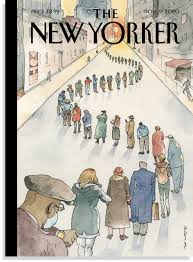
In 2019, the New Yorker experienced a cartoon takeover issue.  The same has happened to end 2020.  There are many many cartoons in it, including this excerpt from a Drawn & Quarterly.

I don’t know Nick Drasno’s work.  At first I thought it looked a lot like Chris Ware (lots of detail).  But Drasno’s people look very different from Ware’s.  Drasno’s people are realistic but with very limited line work–he conveys a lot with just a few lines.

This story opens in a car–there’s a neat moment in an early panel where he has light fall on one of the characters to show movement–a simple but elegant touch.  They are driving from the city to the middle of nowhere to go to an acting seminar. (more…)

Read Full Post »

SOUNDTRACK: JULIA BULLOCK-Tiny Desk (Home) Concert #119 (December 1, 2020).

I had not heard of Julia Bullock, so when I started this video I was surprised that she was an operatic singer.  Their setting seems so casual–just her sitting next to her husband, Christian Reif, at the piano.  And then pow–what a voice!

Soprano Julia Bullock prefers to be called a “classical singer.” It’s a rather humble, even vague, appellation for one of today’s smartest, most arresting vocalists in any genre.

Bullock is in Munich Germany and has decided to sing songs in both langauges.

Carefully choosing songs in German and English, Bullock begins with something bittersweet and introspective by Franz Schubert that cautions patience when looking for inner peace.

Franz Schubert: “Wanderers Nachtlied II” [Wanderers Night Song] features poetry by Goethe and is barely two minutes long.  It’s a wonderful start.

She follows with “Wie lange noch” (How Much Longer), a World War II-era song by Kurt Weill. Written after Weill emigrated to the United States, the song contained coded messages for Germans back home. But Bullock has no time for secrets in these days fraught with uncertainty. The meaning behind her insistent cries of “How much longer?” as she stares straight through the camera, couldn’t be more transparent.

That direct look at the camera is certainly uncomfortable–I hope the right people are made uncomfortable by it.

The next two songs are a gut-punch of clear-eyed observation, struggle and hope. The spiritual “City of Heaven” finds a determined protagonist facing down sorrow.

The song is sung as a spiritual, but Bullock’s operatic voice cannot be denied.

while Billy Taylor’s “I Wish I Knew How it Would Feel to be Free,” written at the height of the civil rights movement, speaks truth to power. At the very end, Bullock spins out a long flowing line on the word “free.”

After a soft piano intro, she sings the beginning of the song a capella.  So that when the piano comes back in it’s even more powerful.  As are the deep notes she hits.

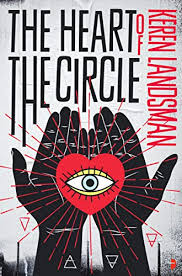
[READ: December 29, 2020] “The Heart of the Circle”

This was an excerpt in the back of the novel Simantov.  It’s another book from Angry Robot and “more Israeli fantasy.”  The story was translated by Daniela Zamir.

I enjoyed the way this book starts right in the middle of the action–giving very little in the way of context.

A few people (college students) are seated at a bar.  There’s Reed and Daphne.  He is close with Daphne (her curls tickle his nose), but she is a free spirit.  There’s also Reed’s brother Matthew.  Daphne and Matthew were supposed to be an item (according to the boys’ mother) but it never happened.  Their mother now sees her as part of the family–as a sort of sister.

They are all somber.  It is the day after the latest murder.

The first murder was unbearable.  This is now the fifth or sixth and they are almost numb. This time they didn’t know her, but they were marching with her when she was killed.

When pyros tried to get revenge after the first murders, they were arrested and executed by the Prevention of Future Crimes Unit. (more…)

Read Full Post »

SOUNDTRACK: MAC AYERS-Tiny Desk (Home) Concert #118 (November 30, 2020).

I’ve never heard of Mac Ayers and while I respect the fact that he plays everything in this Tiny Desk Home Concert (and syncs things up nicely) and even wears different clothes for each instrument, this 15 minute set was pretty torturous for me.

If you were to ask what kind of singing do I hate the most, my answer would now be Mac Ayers.  I hate the tone of his voice, I hate the way he does those whiny ooooooh at the end of his lines (note in the first song the first verse the way he says “you” and then the way he ends the rhyming word do (he even makes a face like it hurts him as much as it hurts me.

Obviously my opinion is not the popular one, because Ayers is apparently a big star.  But not in my house.

The 23-year-old Long Island native shot this in his basement back in September (hence the ‘register to vote’ comment). Mac’s modus operandi lends itself to the Tiny Desk naturally. No over-produced beats, lots of live instruments and a stunning vocal range — and he handles all duties: guitar, bass, keyboard and background harmonies for three songs from previous albums and the premiere of a new song, “Sometimes.”

He plays “She Won’t Stay Long” and then fiddles on the keyboard as he introduces “Walking Home.”  This song is a little bit more enjoyable for me.  There are fewer grace notes.  Although I do dislike the chorus.

He talks to us from his guitar to introduce the third song (I like that he’s mixing things up).

“Sometimes” is a new song.  It reminds me a lot of Billy Joel (not his voice, but the melody–must be a Long Island thing).

“Easy” has some terrific harmonies, although I hate the lead vocals.  I give him a lot of credit for being an exceptional musician, I just hate the music he makes.

We were well on the way to hosting Mac Ayres at our D.C. offices until we had to shut down and pivot.

I hope this Home Tiny Desk means he doesn’t have to do one in the office.

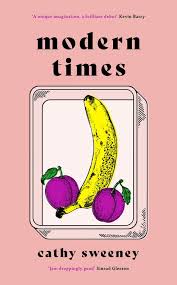
[READ: December 13, 2020] Modern Times

I saw this book at work and, given some of the blurbs, I thought it might be, if not fun then at least unusual to read flash fiction from an Irish writer.  I also prefer this Australian cover (right).

The book starts out with a bang.  “A Love Story” is bizarre and memorable.  In a page and a half, Sweeney talks about a woman who “loved her husband’s cock so much that she began taking it to work in her lunchbox.”  The story is bittersweet and outrageous at the same time.  It was a great opening.

But I feel like the rest of the book lost some steam.  Possibly because I assumed all of the stories would be this short.  It felt like the longer stories dragged on a bit (which is strange for stories about 4 pages long).

Interestingly, “The Woman With Too Many Mouths” even addresses this (to me anyway) as the narrator says, “I could expend many pages recounting my time…. but you would become bored, and worse, you would forget all about the woman with two many mouths.”  The woman with too many mouths had moths (among other things) fly out of these mouths.

“A New Story Told Out of an Old Story” is, as the title suggests, a story within a story.  It feels like a fairy tale with a Woodcutter and a Miller’s Daughter.  There’s even a Grandmother and a Wolf.   In the internal story, the wolf attacks the grandmother.  She survives, but the scar from the wolf makes her husband not want to look at her and the villagers treat her badly.  When you get to the Grandmother’s story, she has a different take on things.

This book is very current and I am reading “The Palace” as being about the pandemic.  Specifically, the outrageous bungling of the response by the current (and soon to be ex!) administration in the U.S.  

The palace was sick  no one believed it, but it was true.  

In the story the palace physically deteriorates.  The king patches it up but doesn’t actually do anything about the problem.

Soon reports of the sickness were breaking in the news on a daily basis. The king gave a rousing speech about battling the forces of evil that had created the sickness and people screamed ‘Long live the King’ until they were hoarse.’

(more…)

Read Full Post »

« Newer Posts - Older Posts »