Feeds:
Posts
Comments

Archive for the ‘Authors’ Category

SOUNDTRACK: MILCK-Tiny Desk Concert #752 (June 8, 2018).

I know of MILCK the same way anyone who has heard of her knows her:  from her performing her song “Quiet” during the Women’s March On Washington last year.

MILCK is the music of Connie Lim:

Before the concert, we talked a lot with her and her production team about how to best share her deeply affecting, anthemic pop songs. Should we have a choir? Maybe a string quartet? Or should she bring out all her gear and perform as a one-woman band, live looping everything with backing tracks, to recreate the album experience? In the end she chose the simplest (and perhaps most fitting arrangement for an artist often billed as a one-woman riot): just MILCK, by herself, with a keyboard.

MILCK has a great powerful voice and she writes some very pretty melodies.

The beautiful soaring “Black Sheep” is restrained in this version.  Her voice sounds lovely but this song needs to soar.  Nevertheless, her positive message is undeniable.  Indeed:

the ultimate message in “Black Sheep,” like pretty much all of MILCK’s music, is that you are not alone. It’s a celebration of universal, unconditional love, something the whole world could stand to hear and get behind. These songs also resonate so profoundly because they come from a genuine and heartfelt place – from MILCK’s own experiences and not a corporate office churning out scientifically proven pop formulas

Next came “Quiet” which she says she wrote as a healing song.  It has become an anthem for women and men around the world.  She laughs that this song pulled her out of her own emo isolation.  It’s wonderful how clear and powerful her voice is on this version of the song.

She encourages everyone to take a deep breath which reminds herself how shallowly she breathes.  She was comfortable being emo and then complains that “Oh My My” is “infuriatingly joyful,” it reminds us that even if we suffer there is still room for joy.

The verses are spoken/sung with this amusing start

Thought I’d be 50 still alone chain-smoking cigarettes at a bar
talking shit about my married friends to my single friends

Mid song she annotates a line that she was singing songs in hotel lobbies–covering songs by Adele and Jason Mraz and now she is opening for Mraz, so she gets to tell his audience that she used to be ignored singing his songs in hotel lobbies and now she opens for him.

It’s a lovely happy song, with some pop leanings although she keeps it on this side of good taste.

[READ: February 7, 2018] “My First Real Home”

This story was in Vicky Swanky is a Beauty which I read so long ago I don’t remember. Of course these stories are so short I don’t remember most of them anyway.

For a Diane Williams story, I felt like this one was actually pretty enjoyable and pretty understandable.

Of course, once again, it ended and I had to double-check to make sure I hadn’t lost the last page.

This is about a man who sharpens knives .  He did a great job and the narrator discovered him because Tommy used to use him and Ernie’s have hit the chain saws.  Or the man’s name was Ernie and he would do Tommy’s chainsaws.  It’s not clear. (more…)

Read Full Post »

SOUNDTRACK: BAHAMAS-Live at Massey Hall (February 5, 2016).

Afie Jurvanen is Bahamas, an indie folk act.  For this set he is joined by Jason Tait, Felicity Williams, Christine Bougie, and Darcy Yates in various roles.

This set opens with “Like a Wind.”  Jurvanen’s voice is rough and scratchy  and quite nice. But its his backing vocalist (not sure which one) that really launches this song into the ether.  She sounds amazing.  There’s a nice touch a of a slide guitar and the rumbling drums are a great addition as well.

It was some time around “Southern drawl” that I realized he sounds a bit like Tom Petty.  It’s a pretty poppy song–perfect for summer.

“Caught me Thinking” is another poppy song with a rocking 1-2-3-4 rhythm for the verses and “I Got You, Babe” has a wonderful pop riff (but is not a cover).

“Alone” is a new song that he says he’s been working on.  It’s just him and the staccato guitar plucking is quite arresting.  I love the lyric

“men and women equal, but we’re not the same.”

It’s a great song–shame it gets interrupted by his interview.

The final two songs are “All the Time” which has a great solo at the end and “Never Again.”

[READ: February 5, 2016] “The Glow Light Blues”

This story started off doing one thing and then quickly went in a direction I did not expect.

As the story opens, Carl Hirsch is going to a party.  He rarely goes to parties, especially work holiday parties.  And when he shows up, the host greets him with alarm.

There’s some weird things mentioned in the opening paragraphs too. He compares going to the party to going to a dog house where you have to sniff ass and compliment the host.  He hopes there’s food: “even if he was only permitted to sniff…because of his feeding regimen.”

What the heck is going on? (more…)

Read Full Post »

SOUNDTRACK: THE WEATHER STATION-Live at Massey Hall (February 5, 2016).

I know of The Weather Station from All Songs Considered.  The Weather Station is Tamara Lindeman and she has been making music under this name for many years.

But as her profile rises, she says that she has been moving from small clubs to bigger venues:

“So many things I’ve learned, like how to perform on a big stage and make sure people pay attention to you and hear your words.”

The larger venues are odd because her songs are “thoughtful and philosophical not full of showmanship” but you don’t really have a choice you’re in that situation–step up and be confident

The set opens with “Tapes” which is very quiet and soft with lovely backing vocal oohs and a pedal steel guitar.

“Floodplain” is a bit more upbeat but there’s some  interesting guitar work and a nice juxtaposition with the bass.

I love the titles of “Almost Carless” and “Shy Women.”  About “Shy Women” she says it’s about a particularity conversation but it could apply to 1,000 conversations.  It’s my favorite song with some great moments of backing vocals and chord changes

On “All of It was Me” she sounds a bit like Aimee Mann. She says “Loyalty” is also about a conversation.

She talks about evolving as a performer, playing electric guitar on “Personal Eclipse.”  She talks about how on a big stage you have to expand to fit the space you are given and so “Know It To See It,” finally rocks out–the drums and bass really adding something to her music.  The show ends with “Way It Is, Way It Could Be.”

She was joined by Ben Whiteley, Ian Kehoe,  Adrian Cook, Ivy Mairi and Misha Bower.

[READ: February 4, 2018] “Sick Soldier at Your Door”

Reading all of these excerpts in Harper’s has really brought to my attention just how much fiction is written about war.  It’s not a genre I like, so I had no idea it was so popular. This is an excerpt from a then forthcoming novel.

Anse Burden is apparently the main character. He says he has found six soldiers from the ’91 desert war with Iraq.

He talks about how he was on Percordan and Dexedrine when he was shot down.  Others believe he shot himself down (is that even possible?  I guess so.) He was found babbling incoherently.  There’s a great description of him being in the surf with his parachute attached looking like a dirty white whale rising up and down. (more…)

Read Full Post »

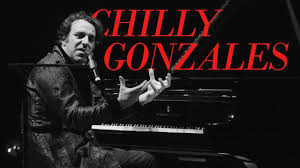
SOUNDTRACK: CHILLY GONZALES & KAISER QUARTETT-Live at Massey Hall (February 5, 2016).

Years earlier, Chilly Gonzales had signed a record deal in Toronto but it didn’t go well “because I wasn’t prepared for what the job of being a true musician was.  I didn’t really have a narrative.  I couldn’t draw people in and guide them.  I thought the music would be enough.”

He went to Europe–Berlin–taking the name Chilly Gonzales and creating this persona.  He wanted reassuring satisfying elements and surprising, uncomfortable elements.  He wanted to  take a page out of the rappers playbook–embodying superficiality and depth ant the same time ridiculousness and seriousness at the same time.

Toronto was like the place where lighting hit the lab and turned him into a supervillain.  The failure of the label is his origin story.

They play primarily instrumental compositions, but ones that are very different and unlike anything else I’ve heard.

“Green’s Leaves” is a staccato piece with great melodies from the Quartett and lovey piano sprinkled throughout.  It’s a short piece with a lot of beauty.

He tells the audience he thinks of the Kaiser Quartett (Adam Zolynski-violin; Jansen Folkers-violin; Ingmar Süberkrüb-viola; Martin Bentz cello) as the world’s most expensive sampler.  He tries to use them in ways that string quartets might not be used.

“Sample This” is a simple request to rappers or producers to feel free to sample this piece of music (and of course call my lawyer beforehand).   He says you don’t have to have a rapper to make rap music–it is an attitude.  He says, “see if you can rap along in your mind.  Imagine what a rapper might say over this.”

This song moves along prettily at a rapid pace.  As it reaches the middle it slows down to a gentle piano with pulsing low notes from the strings and just as it feels like it has hit the end, Joe Elory (I wish it was filmed better) gets up and thuds the drums for one loud beat as the song resumes and picks up the pace.

The fact that he ends the song with quiet piano melody and a rapper pose and says “bitch” is really quite funny.

He says that a sampler can contain the history of all recorded music.  The Quartet plays  a bar of “Eleanor Rigby” which he introduces as “Elizabeth Ridley by the Rolling Stones.” Then they play Joseph Haydn–the song we all know– but says he wants the gansta version–put it into a minor key.  Then they play the opening of Schoenberg’s “The Rites of Spring.”  When Schoenberg played it, it caused a riot.  The dissonance is something.  He jokes that that was the verse now here comes the catchy part (it’s the same).  Is this offensive to you?  Or is this offensive that I’m wasting so much time playing this terrible music “hashtag fuckscheonberg.”

He mashed all the above together to make “Advantage Points.”  The loud and quiet parts balance nicely and its really quite catchy.

“Supervillain” has lots of high notes on the piano before the strings kick in.  And then its a rap (!).  The lyrics are good but the flow is only okay.  It’s funny but not comic.  When it’s over he affirms: “So you like rap music when it is over a waltz beat.”

“Knight moves” is a fast piano piece that builds to some really fun rollicking piano and even adds (minimal) drums by the end.  As it moves along he starts playing very very fast and heavy, including more or less pounding on the low notes for a low rumble.

“Smothered Mate” has a kind of action movie vibe.  There’s also percussion for the whole piece.  Unfortunately, he speaks over it for the end:

In the pre-Drake era there were not a lot of reasons to think that Toronto was on the musical map.  But Charlie Parker and Neil Young  showed this hall had glamour you dint get in a lot Canadian venues.

[READ: June 19, 2018] “Edison Labs, 1891”

This story goes in a direction I never expected and the anachronism of the humor is terrific.

Thomas Edison is working in his lab when his assistant, Jed, confesses that he screwed up again–he used centiliters instead of milliliters.  Which leads to a beaker exploding.

Edison believes that this boy is an idiot–useful only as a subject for medical experimentation.

Except for one other possibility.

He asked Jed to stand there in one spot.

Then he pulled over his new contraption, an apparatus made of metal and glass. (more…)

Read Full Post »

SOUNDTRACK: AMELIA CURRAN-Live at Massey Hall (April 29, 2016).

I knew of Amelia Curran but I didn’t know her work before this show.

She says that growing up in Newfoundland it’s all about original music and the oral tradition and story discovering.  She loves to play at the pub back home.

But she continues that when you move into a more professional scene–recording your first album–you also become a Canadian musician, which is an extra thing that happens later.  You look to Neil Young and Joni and Massey Hall.  You come from a musical place like Newfoundland and then coming to Canada and “arriving.”

She plays great folkie songs.  Lyrically her songs are rich, but I find the drums to be quiet compelling on most of the songs.  There;s nothing flashy, but I really like the way the drums are somewhat unconventional or rhythmically interesting, like on “Song on the Radio.”

She is also quite sweet as she says, “Well thanks, oh golly.”

After “Blackbird on Fire” she says “the teenage me on the inside is really freaking out.”

Before “The Reverie,” she says “I’d like to play you a love song and to introduce you to this handsome fellow on the electric guitar Dean Drouillard.”

Before the nest song, “The Modern Man: she says, “Ladies and gentlemen, I don’t know if you know, but this handsome lad on the bass guitar has the best hair in the business.  This is Devon Henderson”

And before “The Mistress” (which is probably her biggest hit), she says “I know it’s hard to believe but there’s even more handsome up here.  This man behind me on the drums is Joshua Van Tassel.”  This song is more jagged and sharp than the others.  It’s a darker, more pointed song and it’s really great.

“Devils” is a slower, moodier song, with snaky electric guitar leads.  Next up is “Time” which is  a beautiful song that’s just her on the acoustic guitar.  It’s quite different from the other songs, much more stark.

For the final song, “Somebody Somewhere,” she says, “Here’s a happy-sounding song I wrote about being depressed.”  This song has more great drums and some cool guitar sounds that change on each verse, including a great buzzy sound during the second verse.

[READ: June 18, 2018] “Omakase”

Even though I love sushi, I had never heard of the titular “omakase” which is a meal consisting of dishes selected by the chef, typically with suggested wine pairings.  And frankly it’s something I’d likely never do (if I was paying for it).

This is the story of a couple who’d met online two years ago.  Three months ago they had moved in together.  They both liked sushi and omakase–they liked the element of surprise.   It also worked for their personalities–she second guessed herself too much and he liked to go with the flow.

They went to a tiny room with a sushi bar and cash register.  The woman (their names are never given) imagined it could fit no more than six people.  How had he even heard of it?  There was a young waitress and old sushi chef who ignored them longer than she imagined they would.

The story leaves the meal from time to time. The first time is for aside about New York City trains.  How she has not gotten used to the subway and the delays.  Tonight’s delay was because of someone jumping in front of the tracks.  In Boston people rarely did that, “probably because the trains came so infrequently, there were quicker ways to die.” (more…)

Read Full Post »

SOUNDTRACK: TANYA TAGAQ-Live at Massey Hall (December 1, 2015).

This show begins the third season of Live at Massey Hall.  There are ten episodes in all.  And the first one is with the otherworldly whirlwind of Tanya Tagaq.

Tanya Tagaq is an Inuit singer.  She works with throat singing, but in a new (and somewhat controversial) manner.  She pairs the deep growls and grunts with high-pitched wails.  Her songs become primitive and raw and she seems to become possessed by the music.

This performance is simply amazing–there’s probably been nothing like it.  And what is most remarkable about the performance is that it is all improvised.

But none of this would work if the music were subpar or uninteresting and here’s where she is to be commended for selecting this group of musicians.  Including the 50 voice Element Choir.

Jesse Zubot plays violin like no one else, often as a percussive instrument and with all kinds of effects. Bernard Falaise plays guitars in washes of sound.  he’s also manipulating everything to create otherworldly effects.  And Jean Martin plays drums like no one I have seen.  It’s so much fun to watch.  And the way he punctuates things on and off the beat is really inspired.

The performance is intercut with an interview from before the show.  Its kind of a shame to interrupt the flow of the performance, but she’s also got a lot of interesting things to say.

The show opens with Zubot’s amazing violin, which includes him sliding the bow up and down the neck sideways to make a kind of scraping (but pleasant) sound.

She tells us (paraphrasing)

The combination of the venue and the audience impacts the music which is improvised.  They fall into the groove of the place–a cement box of mosh pits will come out differently from a seated hall.

I’m pretty grounded and I’m lucky because I spend half my time in the air.

Indigenous people are having a voice.  When I was growing up there was more shunning of our own culture.

Around 3:40 she starts singing/fluttering her voice. The choir is filling in behind her.

Around 5 minute she starts doing some real deep vocals and the drums kick in.

Martin is an amazing drummer.  He keeps the beat constant but is playing all over the cymbals and snare on polyrhythms with lots of clacks and rim shots.

Things get really intense around 8 minutes with the choir singing and the lights swirling and Tanya hitting cool high notes.

A kind of natural quieting moment occurs around 10 minutes and she talks about throat singing.

13 minutes she gets into a kind of rhythmic breathing with some cool sound effects from….someone.

After 19 minutes things start to build in intensity. It is so much fun watching the musicians play everything especially Martin–the way he is practically out of his seat hitting things.  Tagaq is singing in a  high voice, on her hands and knees.

Around 24 minutes things build to a peak that lends to a quieter moment and it cuts to her cracking up over

having people give me shit for not being traditional…. over the internet

Then the show comes back until the end.  She makes animal noises sounding like she’s having a conversation, with finger-animal-horns on her head.  Ecstatic moans and animalistic groans evoke a kind of call and response with the choir.

The final uninterrupted ten minutes are just an amazingly tense exercise.  Between the lights, the tension of the guitar the thumping of the drums and Tagaq herself being possessed where you can hear her “human voice” coming through the growls.

At 31 minutes she starts howling, and it sounds like a wolf–not a person doing a wolf.  The chorus is answering her as she poses and distorts her body.   And then she starts her circular breathing.  The sound of her breathing in and out is so intense–is she being chased, is she in the throes of passion.  Combined with the motions she makes and again the amazing percussion the last ten minutes are just mesmerizing.

Then it’s all denouement as she comes back into herself with thunder rumbling and crackling as she breathes.

I sure hope Owen Pallett didn’t have to follow that!

[READ: May 15, 2018] “Slingshot”

This is a story about love and how people perceive it.

The narrator explains that she was 70 when she met Richard who was thirty-two at the time.

Richard moved in next door and had lots of parties.  He was a fun-loving kind of guy and he had lots of lovers.

But he also stated that there is no such thing as love.  The narrator’s granddaughter Rose claimed to be in love all of the time and would then wind up crying by the phone.  The narrator herself had been in love–she had been married once some thirty years ago. (more…)

Read Full Post »

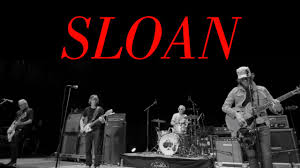
SOUNDTRACK: SLOAN-Live at Massey Hall (September 11, 2015).

Having now seen Sloan twice, it’s nice to compare this earlier show with mine.  And I get  to say that my shows were longer!  Much longer.

This edited for the web version leaves out 11 songs (including the ones which drummer Andrew Scott sings on–so there’s no switching instruments).  Having said that, the band sounds great and the set list is really strong.  I also had no idea that Gregory MacDonald had been touring with them for that long.

Jay Ferguson compares Massey Hall to Carnegie Hall and then regrets comparing something Canadian to something American).  Chris Murphy says “I don’t often use the word “hallowed,” but it is a “hallowed hall.”

He continues, “We are quite loud, we wondered, Do we try to tailor our set for Massey Hall–more like a theater set of songs?  We didn’t do that essentially because we’re incapable:   everybody turn down and then its like a volume war everybody turning up until we’re as loud as ever.”

They start with a great Jay song “You’ve Got a Lot on Your Mind.”  The band sounds great although the dominance of keyboards from Greg is surprising as the first song.

Introducing “The Rest of My Life,” Chris says, “You don’t have to stand but… sing along please.  Of course everyone sings “I know that I’ll be living it in Canada.”  As the song rings out, Chris starts a clap which segues into Patrick singing “Ill Placed Trust.”

Chris says, “We never got giant but we enjoy an audience that has followed us for a long time.  Thank you.”

The start the great guitar riff on the dark “The Other Man.”  There’s lots of sing-alongs in this one, too.

Jay is back with the super catchy “Who Taught You to Live Like That.”  And as the song fades out the siren roars the intro for “Money City Manis.”  Chris notes, “You actually have to stand up for this one.  You have to.”

Patrick and Chris take turns on lead vocals and then during the instrumental break Chris calls a six-year-old girl up on stage who dances, plays the tambourine and knows all the words.  Patrick says, “like I’m gonna be able to solo over that–that’s the solo right there.”  Chris wonders, “When you look at this stage, where does your eye go?”  She is amazingly self-possessed.

They end with the obvious–but a wonderful obviousness with “Underwhelmed.”  They (and the audience) have a ripping time of it.

It’s interesting just how long the band played in reality.  But yes, even after all this time, Sloan is a dynamic live act.  And this is great proof of that.

  1. O Canada
  2. Deeper Than Beauty
  3. If It Feels Good Do It
  4. C’mon C’mon (We’re Gonna Get It Started)
  5. Carried Away
  6. Keep Swinging (Downtown)
  7. Snowsuit Sound
  8. Fading Into Obscurity
  9. Forty-Eight Portraits
  10. Unkind
  11. You’ve Got a Lot on Your Mind
  12. The Rest of My Life
  13. Ill Placed Trust
  14. The Other Man
  15. Who Taught You to Live Like That
  16. Money City Maniacs
  17. encore
  18. People of the Sky
  19. Underwhelmed

[READ: May 10, 2018] “Dinner Party”

This is an excerpt from a novel Kudos.  It being an excerpt does explain some of the sparseness, but it feels like such a unique event that I can’t imagine even who the main character is supposed to be involved with in previous and future pages.

A writer enters a restaurant.  She is at a writing conference and she and the other delegates are to be treated to dinner.  I love this line “The delegates were reluctant to [sit], knowing their fate would thus be settled for the duration of the meal.”

The narrator recognized a woman from an all-female panel discussion who recognized her and instantly came over to talk to her.  The woman introduced herself “with the pragmatic directness of someone who accepts rather than fears the likelihood of such things being forgotten.” (more…)

Read Full Post »

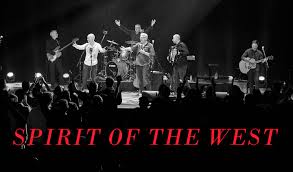
SOUNDTRACK: SPIRIT OF THE WEST-Live at Massey Hall (June 6, 2015).

This proves to be a pretty powerful show.

I was introduced to Spirit of the West by my Vancouver based friend Amber back in the 1990s.  I didn’t really keep up with them, but I have long enjoyed their album faithlift.

But here it is 2015 and as the blurb at the beginning of the show says:

In 2014, at the age of 51, John Mann, Spirit of the West’s lead singer, was diagnosed with Early Onset Alzheimer’s Disease.  On June 6, 2015, Spirit of the West would play their one and only show at Toronto’s Legendary Massey Hall.

The rest of the band includes Hugh McMillan, Vince Ditrich, Tobin Frank and Matthew Harder all of whom play various instruments including keyboards, accordion and all things with strings.

Most of the band have never been in Massey or even seen it.  But they marvel at the venue and are genuinely moved by the end of this show.

They open with their hit (from faithlift) “And If Venice is Sinking.”  It’s got accordion and a big bass line and some funny lyrics and a full backing vocal chorus.

We made love upon a bed
That sagged down to the floor
In a room that had a postcard on the door
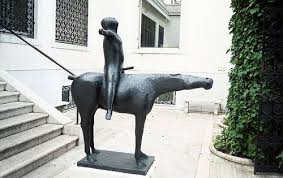
Of Marini’s Little Man
With an erection on a horse
It always leaves me laughing

John Mann is the lead singer, Geoff Kelly is the co-lead guy.  He does most of the speaking.  He says “This is as close as were every gonna get to Beatlemania.”

Next up is “King of Scotland” about a man who desperately wanted to be Scottish.  It, like many of their songs is a rousing half-trad/half rocking song.  Incidentally, Mann has been singing off of an iPad to help with his memory.

“Doin’ Quite Alright” is the first of many songs sung by Kelly.  he also plays bodhran.  It sounds quite trad and is much faster with a  cool bassline.  The addition of 70s sounding keyboards is a little odd though.

“July” sees the introduction of what I think is a bouzouki and sounds an awful lot like “Love is All Around” by Wet Wet Wet except for the fun and powerful chorus of JuLYYYYYYYY!

Kelly jokes that someone in the band is delighted by Massey Hall because it is finally something he’s found that is older than Kelly is.

Up next is “Political,” a song “we recorded on our Labour Day record in 1988ish and then again on Go Figure and then again with the Vancouver symphony.  I guess we really like this song.  Kelly is on flute and plays a wild harmonica solo.

Next up is their newest song, which is about 12 years old.  It’s about how every year New Year’s parties just get worse and worse.  “Another Happy New Year” starts out with slow staccato piano and then it really takes off (with Kelly on the penny whistle).

After sincerely thanking everyone for their kindness (it’s getting pretty emotional), they are going to play a drinking song called The Crawl.  The crowd really gets into the raucous song.

The night ends with Kelly saying this was the most awesome night ever.  They are going to leave everyone with “Home for a Rest.”  The audience sings along with Mann for the first verse and then Mann backs off and lets them sing it all.  It’s pretty great.  As is the song which ends with a wild instrumental jam that’s basically a flute-led jig which ends the sing and the show.

I imagine being there was pretty special.

[READ: May 15, 2018] “Nothing But”

This is a wonderful short essay on memory with the epigram: “The truth–that thing I thought I was telling.”

He begins by talking about a chapter in his book White Sands about a visit to the house of Theodor Adorno.  The essay takes its title “Pilgrimage” from a short story (why is it not considered a memoir?) by Susan Sontag in which she and her friend Merrill went to the house of Thomas Mann when she was 14.

It came out later that Merrill never understood why Susan left their friend Gene (who had gone with them) out of the story entirely.  (It happened in 1947, she wrote it in 1987).   This shows “a startling manifestation of the vagaries of memory and a vindication of what can sometimes seem like the fussiness of editorial fact-checking.” (more…)

Read Full Post »

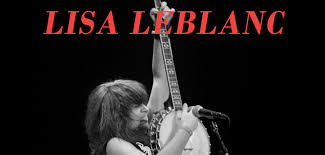
SOUNDTRACK: LISA LEBLANC-Live at Massey Hall (June 6, 2015).

I thought I didn’t know who Lisa LeBlanc was, but it turns out that I knew her song “5,748 km” from a NPR episode.  How funny.

LeBlanc thanks Massey Hall for putting her on and for supporting new artists.  It’s so legendary, she can’t imagine what’s going to happen right now.

The show, in which LeBlanc opens for Spirit of the West, opens with this formal introduction.

Welcome to Massey Hall. To get the night going when you have a band like Spirit of the West who is dynamic and fun, who else can you bring to match that kind of excitement?  Please welcome to the stage Lisa LeBlanc.

She walks out on stage, grabs the banjo and plays a slow banjo melody.  After a beat or two she starts whistling a forlorn melody–a perfect Western-sounding instrumental (her whistling is very impressive).

Her whistling is great.

Then she gets a sly look and starts playing her banjo a little faster.    And then completely unexpectedly (to me anyway) her drummer (Maxime Gosselin) and baritone guitarist (Jean-Phillipe Hebert) start trashing like lunatics.  “Gold Diggin’ Hoedown” is a song that perfectly meets what her style is called: “trash rock” It is crazy and fun.

She says she grew up in New Brunswick playing music in the “kitchen party” scene.  She played with her uncles in the garage instead of going partying with the cool kids.  “I was kind of a loser.”

The next song is in the same style, but it is sung in French.  “Cerveau ramolli” which she translates as “My Brain is Mushy.”  This song is totally rocking with great thumping floor toms.

I can’t find the names of all of the songs (usually the video names them, but not this time).  There’s another song in French.

She switches banjos and then talks about “Katie Cruel,” a song that no one knows where it came from and it’s her favorite song of all time.  There’s a quiet part in the middle with just banjo and then nearly a capella before rocketing back to life.

She gets a new banjo and sings quietly over gentle picking:

Don’t try to figure out what’s going on his head / he ain’t trying hard to see whats going on in yours….  I love these lyrics:

He’ll give you the shirt off his back but he wont give you his heart.

She tells the audience she’s from New Brunswick.  Cheers from half the crowd.  Then she says she’s from a town of 51 people.  She was trying to date someone from Vancouver.  Canada is really big.  This is an introduction to “5.748 km” in which she plays guitar instead of banjo.  It’s a spoken/sung song.

She says “Let’s talk about cowboys” and then sings a song in French called (I believe) “J’pas un cowboy.”

For the final song she says the title “You look like trouble but I guess I do too” is quite self-explanatory.  After a few verses they take off.  That baritone guitar is so low and rumbling.  Things slow down in the middle where she plays a great banjo solo and then the sing thrashes to an end.

Over the credits she sings part of one more song this time with electric guitar.

LeBlanc is multi-talented and a lot of fun.  She’d be an excellent opener for anyone.

[READ: June 2, 2018] “Mum’s the Word”

This issue of the New Yorker had a section entitled “Parenting.”  Five authors tell a story about their own parents.  Since each author had a very different upbringing the comparison and contrasting of the stories is really interesting.

This is a funny (sort of) essay about being a parent and how “as a parent I spend a good amount of time talking about things that don’T interest me like My Little Pony, or pasta, or death.”

The death part is funny because her four-year old daughter is suddenly obsessed with it.  But in unusual ways: “When I die…I want to die in Egypt so that I can be a mummy.”  After half paying attention, Rivka nods assent then her daughter says “Mummies make other mummies.  With toilet paper.” (more…)

Read Full Post »

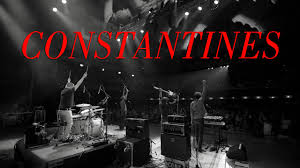
SOUNDTRACK: CONSTANTINES-Live at Massey Hall (May 27, 2015).

From the clips I’ve seen, Constantines are (were?) an incredible live band.  They have so much intensity.

In the opening, they are asked  Are you guys nervous?  They don’t seem to be although they concede that “Nervous is good, it keeps you on your toes.”

At some point we decided to run the band where we would play anywhere with a three-pronged outlet.  It led to playing a lot of amazing spaces…non-performance spaces like skate shops and basements and art galleries.  This feels like an incredible extension of that to play Massey Hall… a historic venue.

“Draw Us Lines” opens the show with thunderous drums and squalling feedback as the band gets the audience clapping along to a simple rhythm while Bry Webb sings in his deep raspy voice.  I love how much noise the keyboardist makes just pounding on keys–at times leaning on the machine with his whole arm.

“Our Age” has martial beats and an interesting low riff that runs through the verses–but the choruses burst forth really catchy.  “On to You” was a single I believe.  It has loud verses and a quiet, understated chorus.  I love how much they raise their guitars–the bassist even plays with the instrument raised over his head

“Young Offenders” rocks as hard as anything else they play, but it adds the surprising lyric: “young hearts be free tonight … time is on your side,” before launching into the heady section with the crowd shouting “Can I get a witness.”

“Nighttime/Anytime {It’s Alright)” has a great slinky guitar intro and sounds very familiar–as if it’s quoting another song, but I can’t figure out what.

More thumping drums (the drummer must be exhausted) and some distortion and feedback introduce “Young Lions” which starts as kind of catchy rocks song but features wonderful noise section in which everyone plays with feedback and the keyboardist actually sits on the keys before returning to that really catchy section.

The show ends with “National Hum,” a blistering loud track with discordant chords and intense vocals.  The drums just seem to go faster and faster as the song goes on.

They play this show like it’s the most important show they’ve ever played.  And the crowd responds accordingly.  It’s unclear to me if Constantines are broken up or not, but if they ever come around, they are a must-see show.

[READ: June 2, 2018] “What is Possible”

This issue of the New Yorker had a section entitled “Parenting.”  Five authors tell a story about their own parents.  Since each author had a very different upbringing the comparison and contrasting of the stories is really interesting.

I love the opening of this essay in which Mohsin says that his mom worked an entry-level job at what would now be considered a Silicon Valley tech business.  They made audiocassettes.

His father made peanut-butter and jelly sandwiches and picked Mohsin up from school on his bike.  His dad had a mustache and sideburns but no hair.  They went to the university where his father was studying.  Or they went home to watch cartoons on the small black and white TV.

Mohsin says he always saw colors on it “though I was told by friends that this wasn’t possible.”  I relate to this because I had a black and white TV in my room growing up and I was sure it was color until one day when I went to my parents TV and compared sided by side and saw just how colorful their TV was. (more…)

Read Full Post »

« Newer Posts - Older Posts »