Feeds:
Posts
Comments

Archive for the ‘Jeffrey Eugenides’ Category

SOUNDTRACK: THE COLIN McENROE SHOW-The Life & Legacy Of David Foster Wallace (December 5, 2011) (2011).

This NPR show features an interesting discussion about David Foster Wallace:  his fan base, his cronies and his archive.   The guests were Donald Brown (New Haven Review), Evan Hughes, Ryan Walsh (who created the David Foster Wallace Audio Project) and Maria Bustillos.  Evan Hughes recently wrote a piece in New York that I’ll look at tomorrow and Maria Bustillos wrote the main piece for today’s post.  The other two guys I admit I don’t know.

This show looks at some interesting aspects of DFW’s life in the wake of his suicide and the release of The Pale King.  Although really the impetus seems to be Hughes’ article (which was published in Oct).  McEnroe asks him about the state of literature today and how both Jonathan Franzen and Jeffrey Eugenides have created characters that “resemble” DFW in some way.

They talk about the cult of DFW and play some audio clips.  Brown is an older reader and so does not embrace DFW as much as others.  He is of the same age as DFW and so loves the people DFW loved more than DFW himself.  I get the feeling that he is a curmudgeon.

But they can all agree that fans of DFW feel that he was their buddy.  Super-intelligent but very human, almost speaking like they would (if they were that smart).  They conclude that the Kenyon commencement speech is something of the pinnacle of his project of earnest warmth in humanity.

At the half way point, Maria Bustillos comes in to talk about going to the archive (which you can read about below).  She explains her own interest in self-help books and how DFW was a person who needed help.

The end of the episode has them talking about DFW’s voice.  They wonder why DFW has an “audio project” but other writers do not.  They talk about DFW’s voice and his presence during interviews and how he is very warm, even when he’s being cold (it’s an odd clip they choose). I’ve mentioned the Audio Project before.  It’s wonderful.

For anyone interested in reading books that are in a similar vein to Infinite Jest, Bustillos recommends Under the Volcano (Malcolm Lowry) and wholeheartedly recommends The Last Western (Thomas Klise).

A fascinating thing about this show was finding out that McEnroe was the author of a pretty funny piece in McSweeney’s many many years ago called “I Am Michiko Kakutani.”  He offers an anecdote about originally mentioning DFW in the story but that the McSweeney’s guys asked him to change it to someone else.

But I have to say that the show seems a bit too much about Colin McEnroe (the McSweeney’s anecdote was just one of many involving McEnroe).  He talks a lot about himself and about how he’s “afraid” that the Awl will make fun of him or that Franzen (who was with McEnroe in a green room backstage at some show) will put him in his next book (because he was discussing Neti Pots).  But I’m just not sure that Colin McEnroe rates enough to warrant the concern. 

It’s an enjoyable show, although unlike other interviews by people like Charlie Rose or Michael Silverblatt, McEnroe’s questions and comments aren’t very well informed.  If you know a lot about Wallace, this show is a bit frustrating because it takes a tone that Wallace is basically a “postmodern ironist” or that he sees everything as “a big dark joke.” And even when the guests are showing that that is not the case, he seems to try to keep reverting back to this trope.

Oh well, it led to some interesting articles at least.  Like the one below.

[READ: December 7, 2011] “Inside David Foster Wallace’s Private Self-Help Library”

For no reason in particular, I’m devoting this weekend to articles that are specifically or tangentially about David Foster Wallace (it’s been awhile, and I have yet to finish my Consider the Lobster project, so, why not). 

I actually read this because of the above radio show.  I know Maria Bustillos because we’re both in a newsgroup.  “Newsgroup” is so 90s, I wonder what they’re called these days).  Anyhow, Maria has always proven to be smart, funny and very articulate.  And the only reason I didn’t read this article when it came out was because I wasn’t sure I wanted to dive into this topic. 

After listening to the above radio show, however, I felt that this would be a very interesting article. And so it was.  It’s available at The Awl.

As it opens, Bustillos lets us know that she visited the DFW Archives Ransom Center at the University of Texas at Austin and pored over all of the materials they have there (undergrad papers, drafts of fiction and non-fiction, syllabi, tests and quizzes, and juvenilia among other things). 

Wallace was a major note-taker.  And he loved to take notes in a book as he was reading.  Just look at some of these books

But what surprised Maria (and me) is that among Wallace’s collection of wonderful fiction was a collection fo self-help books which were equally annotated and marked up. 

Much of the set up of the article concerns why DFW had self-help books at all.  The answer is, of course, because he was a depressed person (obviously) and because he had been in rehab for a pretty long time.  None of this background information is new, but Maria offers insights into DFW and his life that I had never heard before (Maria and DFW had corresponded, although I don’t know if they were “friends” or not).  (more…)

Read Full Post »

SOUNDTRACK: MEGAFAUN-“Get Right” (2011).

I’ve never heard of Megafaun before, but this song is just wonderful.  It’s an 8 minute blast of psychedelia that covers and sometimes obscures a beautiful poppy song.  I hear overtones of Dinosaur Jr (but more for J. Mascis’ seemingly lazy style than for his crazy guitar riffing) and a bit of the Lemonheads in the folky pop feel.  Throw in a dose of My Bloody Valentine for the waves of sound and you get a perfectly lovely track.

The opening is a fairly simple, straightforward melody.  And his voice is so familiar-sounding.  There’s some cool squeaky/feedbacky guitars layered over the top of a hazy distorted sound.  By about four minutes, the song turns into an instrumental, with a guitar solo that comes in an out of the hazy chords.

This is a great song, and although the NPR write-up says this is the longest track, I imagine the rest must be equally as exciting.  Preview it on NPR.

[READ: September 1, 2011] “Asleep in the Lord”

This is a story about Mitchell, a formerly unhelpful person who never changed a diaper or helped a sick friend.  He has decided to change that, so he goes to Calcutta with the intention of joining Mother Teresa’s mission (and just how many stories involve Mother Teresa these days?—she even makes an appearance in the piece!).  He’s reluctant to do anything majorly gross, but he’s happy to hand out medicines (for what good they do).

After a few days, Mitchell is still somewhat surprised by his decision to go to Calcutta at all.  Then he meets Mike and Herb.  Herb is following the Bhagwan, but Mike is less grounded in who he is following here in India .  He came here because the economy tanked back home and he wanted somewhere to hide out for a few years.   As we learn more about Mitchell, we see that his intentions are understandably confused.  For really, like Mike, he also came to India to wait out the recession.   However, unlike Mike, he honestly did come to seek some kind of spiritual guidance.  Mike seems to be here for the easy sex–he has a picture of a young woman from Thailand who wanted “to marry him.”   (more…)

Read Full Post »

SOUNDTRACK: MOGWAI: GovernmentCommissions: BBC Sessions 1996-2003 (2005).

It’s unlikely that Mogwai will ever release a greatest hits (well, someone probably will, but the band themselves don’t seem likely to do so).  As such, this compilation of BBC Recordings will certainly work well as one.

As I’ve mentioned many times, the BBC recordings are universally superb.  The quality of the recordings is unmatched.  And, typically the band takes the sessions very seriously.  The major different between these sessions and the official studio release is that the band is playing these songs live.  They are mixed well and sound great but they are live, so you can catch occasional subtle differences.

Mogwai, despite their seemingly improvised sound (all those noises and such) can recreate everything they do perfectly, and their live shows are tight and deliberate (except for the occasional moments where they really let loose).

The ten songs here span their career and are not played in chronological order.  This allows all of these wonderful songs to play off the tensions of each other.  And it shows that their later songs, which are less intense than their earlier ones, are still quite awesome and in a live setting don’t really lack for intensity after all.

The highlight of this disc is the scorching eighteen minute version of “Like Herod.”  The original is intense and amazing, and this live version allows them to play with the original in small ways, including allowing the quietness to really stretch out before they blow the speakers off the wall with the noise section of the track.

Even though I’m a fan of Mogwai, I don’t hear a radical difference between these versions and the originals.  Or should I say, it’s obvious which song they are playing.  There are some obvious subtleties and differences as befitting a live album, but unlike some live discs you don’t immediately notice that this version is “live.”

And that works well for both fans of the band (because as you listen and you hear the subtleties) and for newcomers–(because you’re not listening to weird, poorly recorded versions or versions that are for fans only).  And so, you get ten great Mogwai tracks.  Just enough to make you want to get some more.

[READ: June 11, 2011] The Burned Children of America

I found this book when I was looking for other publications by Zadie Smith.  This book kept cropping up in searches, but I could never really narrow down exactly what it was.  As best as I can tell, it is a British version of a collection of American authors that was originally published in Italy (!).  Editors Marco Cassini and Martina Testa work for minimum fax, an Italian independent publisher.  In 2001, they somehow managed to collect stories from these young, fresh American authors into an Italian anthology (I can’t tell if the stories were translated into Italian or not).

Then, Hamish Hamilton (publisher of Five Dials) decided to release a British version of the book.  They got Zadie Smith to write the introduction (and apparently appended a story by Jonathan Safran Foer (which was not in the original, but which is in the Italian re-publication).  This led to the new rather unwieldy title.  It was not published in America, (all of the stories have appeared in some form–magazine or anthology–in America), but it’s cool to have them all in one place.

The title must come from the David Foster Wallace story contained within: “Incarnations of Burned Children,” which is one of his most horrific stories, but it sets a kind of tone for the work that’s included within (something which Zadie addresses in her introduction): why are these young successful American writers so sad?  So be prepared, this is not a feel good anthology (although the stories are very good).
Oh, and if you care about this kind of thing, the male to female ratio is actually quite good (for an anthology like this): 11 men and 8 women.

ZADIE SMITH-Introduction
Zadie Smith was a fan of David Foster Wallace (she wrote a  lengthy review of the ten-year anniversary of Brief Interviews with Hideous Men which is republished in her book Changing My Mind), so she is an ideal choice to introduce this book.  Especially when she provides a quote from DFW’s interview in 1995 about how living in America in the late 90s has a kind of “lostness” to it.  With this in mind, she sets out the concerns of this collection of great stories: fear of death and advertising.

Zadie gives some wonderful insight into each of these stories. The introduction was designed to be read after the book, and I’m glad I waited because while she doesn’t exactly spoil anything, she provides a wonderful perspective on each piece and also offers some ideas about the stories that I hadn’t considered.  And it’s funny, too. (more…)

Read Full Post »

SOUNDTRACK: CITY AND COLOUR Live at the Sasquatch Festival, May 29, 2011 (2011).

City and Colour have a new album coming out soon.  So it’s kind of surprising that this seven-song show is three songs from their previous album, two from their first album, a cover, and only one new track (“Fragile Bird”).

This is the first time I’ve heard City and Colour live with a band (most of the recordings I have by them are just Dallas Green solo).  It’s nice to hear how powerfully they work together (giving some of those songs an extra push).

Despite the brevity of the set (and the amusing banter about airport etiquette) you get a pretty good sense of what the “pretty-voiced guy” from Alexisonfire can do on his own.   I found the cover, Low’s “Murderer,” to be a really perfect choice–one that suits the band and their slightly-off harmonies, rather well.

I’m looking forward to their new release–“Fragile Bird” is another beautiful song.  But in the meantime, this is a good place to hear what they’ve been up to.

[READ: early June 2011] 2011 Fiction Issues

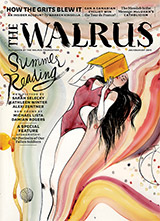
Five Dials seems to always generate coincidences with what I read. Right after reading the “”Summer’ Fiction” issue from Five Dials, I received the Fiction Issue from the New Yorker.  A few days later, I received the Summer Reading Issue from The Walrus.

I’m doing a separate post here because, although I am going to post about the specific fictions, I wanted to mention the poetry that comes in The Walrus’ issue.  I have no plan to write separate posts about poetry (I can barely write a full sentence about most poetry) so I’ll mention them in this post.

The main reason I’m drawing attention to these poems at all is because of the set-up of The Walrus’ Summer Fiction issue.  As the intro states: “We asked five celebrated writers to devise five guidelines for composing a short story or poem. They all traded lists–and played by the rules.”  I am so very intrigued at this idea of artificial rules imposed by an outsider.  So much so that I feel that it would be somewhat easier to write a story having these strictures put on you.  Although I imagine it would be harder to write a poem.

The two poets are Michael Lista and Damian Rogers.  I wasn’t blown away by either poem, but then I don’t love a lot of poetry.  So I’m going to mention the rules they had to follow. (more…)

Read Full Post »

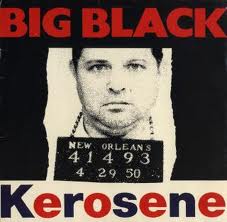
SOUNDTRACK: BIG BLACK-Kerosene [live] (1990).

It never occurs to me to go looking for live versions of songs online, even though there are clearly  thousands of songs I would like. So, I wait for them to come to me.  My friend Andrew posted a video of this song.  And it’s the first time I’ve seen Big Black live.

I’ve liked Big Black for a while (I got into them after they broke up). It’s not pleasant music by anyone’s standards, but there’s something visceral and unsettling about the lyrics and about Steve Albini’s guitar sound that I really enjoy.

I’ve seen pictures of Albini before, but I’ve never seen him in action, and I have to say, I can’t believe a guy as skinny and frankly, nerdy, as him is making sounds like this (although I can see someone like him being this angry).  Watching him in this video is pretty great.  He’s got huge glasses, his t-shirt is tucked into his pants–no that’s not right, it’s tucked into his guitar strap…how is he holding his guitar up??– and then he plays this guitar that sounds like, what…glass, needles, pins, shards of something, certainly.

And just when you think that the song is only noise, this fantastic bassline kicks in.  The riff is outstanding: it’s heavy and propulsive and balances the sharpness of the guitar perfectly.  In this version, about midway through the song he seems to be walking out into the crowd, and they sort of hold him up or push him back on stage, while he’s playing.  And at the end, of course, he destroys the guitar.

Lyrically, it’s as disturbing as anything Albini has written, but man is it cathartic.   And this live version is even more stark and brutal than the studio version.

[READ: June 2010 & October 12, 2010] “Extreme Solitude”

After reading “The Oracular Vulva,” I decided to re-read this, his recently published story.  When this story came out in June, I heard that to some readers the main character reminded them of David Foster Wallace, and they speculated about whether or not this story was inspired by or a tribute to him.  Unfortunately, I read that analysis before I read the story and it automatically influenced my reading (which if you haven’t read it I have now done to you, sorry).

I’m not in any way convinced that it is about him, although there are many similarities–size, athleticism, chewing tobacco, intelligence, semiotics.  But since I know nothing about DFW personally and I don’t know if Eugenides does either, I won’t pursue that line any further.  I will say that I didn’t find that train of thought terribly distracting while reading, though.

Anyhow, this story is about a senior in college named Madeline.  Madeline was a good student and a good girl.  She had dated some, but never had any crazy affairs (and was a bit uncomfortable when her roommate proudly wore (or displayed) her diaphragm–the joke about wearing it to an event is particularly funny).

By her senior year, after breaking of a long relationship with Barry, Madeleine was prepared to settle into her major: English.  She was excited to read and to read a lot (it was her passion as well as her major).  She also decided to sign up for a Semiotics class, which is where she met Leonard.

The description of the semiotics class is wonderful, from the pretentious students to the insanity of the class assignments–from Lyotard to Derrida and everyone in between, authors that I loved in college but since leaving academia I find so convoluted as to be kind of silly. I adored the sentence: “(Could “the access to pluridimensionality and to a delinearized temporality” really be a subject [of a sentence]?)” (more…)

Read Full Post »

SOUNDTRACK: RUSH-“BU2B” (2010).

I’m a little freaked out that Rush has a song that is just initials (it’s so text message-y).  And, listening to the lyrics tells me that the 2 is for “to.”  That is no way for 50-some year-old men to behave!

Of course, neither is the pounding heavy song that is “Bu2B.”  Like “Caravan,” the song opens with a dark and dirty riff.  The song is not as complex as “Caravan” although it also features a quieter section.  After the verse, the quiet bridge comes as a more natural progression (and it, too has some strong bass stuff going on).

What’s fascinating about the song is that despite its heaviness, it is layered with some really delicate keyboards that plink along the top of the sections.  It showcases both sides of Rush in one track.  And lyrically it’s quite dark as well.

These two early release songs have me really excited for the new album, Clockwork Angels, due out in 2011.

[READ: October 11, 2010] “The Oracular Vulva”

Jeffrey Eugenides was the next writer in the 1999 New Yorker 20 Under 4o issue.

I really enjoyed Eugenides’ The Virgin Suicides, and I regard him highly as a writer (even though I haven’t read very much else by him).  About midway through reading this story I realized it must be an excerpt from Middlesex (which I haven’t read, but hope to one of these days).   The bad thing about realizing this is that it impacted my reading of the end, making it kind of hard to assess the story as a story (which, I realize it isn’t, so maybe it’s moot anyhow).

This excerpt focuses on Dr. Peter Luce (the famous sexologist).  The title of the story certainly implies a degree of sexology, right?  I was surprised however, that the story opens with the doctor in a jungle, studying the Dawat tribe.  Luce, a very comfortable middle class sexologist is miserable out in the jungle, with crazy animal sounds, oppressive heat and, worst of all, little children trying to pull down his pants.

The doctor is studying this tribe because they have very specific gender roles–so specific, that the men and women are not permitted to interact with each other at all, except for once a month for three minutes, for procreation.  So, for sexual outlet, the men engage in oral sex with each other (semen being a very important thing for the young men to consume).  Yet no matter how progressive Dr Luce is, he simply can’t deal with the thought of this young boy, who is trying to do his culture’s most honorable thing.  (more…)

Read Full Post »

While I was looking around for Jonathan Franzen pieces in the New Yorker, I stumbled upon the first 20 Under 40 collection from 1999.  Since I had received so much enjoyment from the 2010 version, I decided to read all of the 1999 stories as well.  It was interesting to see how many of the authors I knew (and knew well), how many I had heard of but hadn’t read, and how many were completely off my radar.

I initially thought that they had published all 20 authors in this one issue, but there are five stories (including Franzen’s) that were just excerpted rather than published in full.  And I will track down and read those five in their entirety.  But otherwise, that’s a lot of fiction in one magazine (a few of the stories were quite short).  And it features a cover by Chris Ware!

So here’s the list from 1999.

**George Saunders-“I Can Speak™”
**David Foster Wallace-“Asset”
*Sherman Alexie-“The Toughest Indian in the World”
*Rick Moody-
“Hawaiian Night”
*A.M. Homes-
“Raft in Water, Floating”
Allegra Goodman-
“The Local Production of Cinderella”
*William T. Vollmann-
“The Saviors”
Antonya Nelson
-“Party of One”
Chang-rae Lee-
“The Volunteers”
*Michael Chabon-
“The Hofzinser Club” [excerpt]
Ethan Canin-
“Vins Fins” [excerpt]
*Donald Antrim-
“An Actor Prepares”
Tony Earley-
“The Wide Sea”
*Jeffrey Eugenides-
“The Oracular Vulva”
*Junot Diaz-
“Otra Vida, Otra Vez”
*Jonathan Franzen-
“The Failure” [excerpt]
***Edwidge Danticat-
“The Book of the Dead”
*Jhumpa Lahiri-
“The Third and Final Continent”
*Nathan Englander-
“Peep Show” [excerpt]
Matthew Klam-
“Issues I Dealt with in Therapy” [excerpt] (more…)

Read Full Post »

walrus-99SOUNDTRACK: NEKO CASE-Middle Cyclone (2009).

nekoI first learned of Neko Case through The New Pornographers.  Their song “Letter from an Occupant” blew me away.  But when I’d investigated her solo work, I learned she was more of a country singer than anything else.  Reviewers said that Middle Cyclone broke from that mold a little into more rock territory.

I don’t know her early stuff, but I can attest that these songs are mildly rocking. However, it’s hard to take the country out of the singer.  There’s something about Neko’s voice on this disc that screams country (even as her songs get faster and more furious).  But, much like k.d. lang who won me over when she broke away from her country roots, so did Neko Case.

Rather than explicit country, Neko case seems to be filling in the shoes of the sorely missed Kirsty MacColl, another great singer-songwriter who melded genres like so much fondue.

Case never hits the manic intensity of “Letter from an Occupant” (she admitted on Wait Wait Don’t Tell Me that her vocals were sped up for that song), but she proves to be a powerhouse singer.  And once I got over the fact that this album didn’t ROCK, I accepted that it was very good.  I don’t know if I have a favorite track, although I do like her cover of Sparks’ “Never Turn Your Back on Mother Earth.”

I finally managed to listen to the last track, “Marais la Nuit” all the way through on my lunch the other day.  It is, literally, 30 minutes of frogs and bugs chirping away.  It’s quite relaxing, but not really worth listening to all 30 minutes.

[READ: October 8, 2009] “Summer of the Flesh Eater”

The title is not misleading exactly, but it may make you think zombies are afoot.  But they are not.  (I debated about revealing this, but figured it would win more fans of people who don’t like zombies than lose people who do). (more…)

Read Full Post »

ny1It took me going to Seattle to learn about The New Yorker magazine.  I was visiting my friend Rob and he was really surprised that I didn’t read the magazine all the time (my reading always seems to surprise people, see The Believer.)

Upon my first read of the magazine, I was surprised to see that the first twenty pages or so are taken up with upcoming shows: films, concerts, sports, everything.  I actually wondered how much content would be left after all that small print.

Since then I have learned that Sasha Frere-Jones writes columns in here quite ofuiten.  For reasons known only to my head, I was convinced that Sasha was a black woman.  Little did I realize that he is not.  And that he was in a band that I have a CD of called Ui.  He is an excellent resource for all things music, whether I like the artist he’s talking about or not.  Some entries are here.  This audio entry about Auto-Tune is simply fantastic.

But of course, there’s a lot of content.  And the first thing you get are letters.  I don’t think I have EVER looked at the letters section. (more…)

Read Full Post »

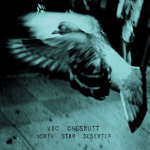
SOUNDTRACK: VIC CHESNUTT-North Star Deserter [CST046] (2007).

The only thing I knew about Vic Chesnutt before this CD was that he was the songwriter for a benefit CD called Sweet Relief II: The Gravity of the Situation (1996).  I bought it mostly for Garbage’s “Kick My Ass” and Mary Margaret O’Hara’s “Florida”, not for Chesnutt, who I’d not heard of before then.  Usually if you get a CD of covers of an artist that you like, it’s hard to remove the cover from the original.  An album of covers by someone you don’t know is much easier to parse.

I got North Star Deserter because I’m a fan of the Constellation record label based in Montreal. They’ve released some great stuff over the years.  Recently, they’ve diversified their lineup to include some unexpected artists.  Like Vic Chesnutt.

The basic sound of this CD comes in two ways: acoustic guitar with world-weary singer,  and acoustic guitar with world-weary singer and the baking cacophony of what is essentially Thee Silver Mt Zion Orchestra and Tra La La Band.  It works surprisingly well.

The first song starts out with basically just Vic and his guitar.  He sings in a raspy weathered voice.  It’s a short acoustic song full of passion.  What threw me off here is that you expect that the whole album will be like this: short, passionate, acoustic songs.  The really unexpected part comes with song three, “Everything I Say,” when the backing band kicks in loud and hard.  Silver Mt Zion, for those unfamiliar are an offshoot of sorts from Godspeed You Black Emperor.  They have a great variety of instruments in the group, and much like Godspeed… they play grand, sweeping orchestral works. Unlike Godspeed, they have vocals.  And while backing Vic, they pull out all of the stops: cellos, contrebass, choruses, Casio keyboards, the works.

Perhaps my favorite song of the bunch is “You Are Never Alone.”  The premise is simple: Vic sings some very stark verses (“It’s OK, you can take a condom; It’s OK, you can get an abortion; It’s OK, you can get a quadruple bypass and then keep on, keeping on.”), and then the chorus slowly builds with first the men, then the women harmonizing and then finally everyone singing beautifully “You Are Never Alone.”  It’s 5 minutes of mesmerizing beauty.

And the rest of the album continues in a similar vein: stark, humanizing lyrics and alternating spare guitar or great swells of music.

Overall, I feel like the album runs a little long (or maybe it’s just exhausting to listen to).  But I can’t think of anything to get rid of; the two longest songs are actually two songs that I really like.  “Splendid” is a slow building song, where you don’t realize that 5 minutes have already gone past.  And then there’s “Debriefing.”  The first two minutes are noisy and brash, they settle down into a short sparse verse and then crash away for two more minutes.  Off and on like that for 8 minutes.  Cathartic to say the least.

The strangest thing for me is that I find Vic’s voice to be similar in tone and style to Matthew Sweet. There’s a few songs where you might even think that it’s Matthew Sweet singing.  But this Matthew Sweet sounds not like the pop singer of “Girlfriend” but like a man who has been beaten down by life for a little while.  It’s a voice that you instantly listen to to see if you can learn anything.

I’m not sure if this will make me get any more Chesnutt discs, but I’m glad I got this one.

[READ: September 15, 2008] “Great Experiment”

Jeffrey Eugenides wrote The Virgin Suicides, a great book notable for its use of first person plural narrator (!).  He also wrote Middlesex, which is on my bedside right now (and which I learned today was an Oprah pick).  But in the interim I just read this short story.  It’s my only exposure to Eugenides aside from Virgin Suicides, so it’s a nice change.

This story centers around Kendall, an over-educated, hyper-literate poet who is making a living working for a non-profit company.  This particular non-profit was founded by Jimmy Dimon, a former porn king who apparently grew a heart and decided to publish great books at a loss.  Kendall’s current assignment is to edit down Alexis de Tocqueville’s Democracy in America‘s most cogent ideas into a small pocket version called Pocket Democracy. (more…)

Read Full Post »

« Newer Posts