Feeds:
Posts
Comments

Archive for the ‘Ernest Hemingway’ Category

SOUNDTRACK: RHEOSTATICS-Ultrasound Showbar [2nd GSMW Night 4] (February 28, 1994).

Second annual Green Sprouts Music Week held at Ultrasound Showbar Feb 25-March 1 1994. Setlists for all shows were fairly similar in content focusing mainly on the 25-30 songs that they would use for consideration on Introducing Happiness which began recording the following week. Rare performances of Symphony, Green Xmas, Floating, Woodstuck, Halloween Eyes and a cover of Blondie’s Heart Of Glass. This is show 4/5.

Sounds like people are sitting and then there s a request for people to stand up to make more room, but what about the people who can’t see…?  Let them fight it out I guess.

Most of this show is pretty clear with the exception of a few moments of wobbly tape.  Also notable is that most of the songs seem to be played a little bit more slowly than usual.  This makes them much easier to hear–and makes most of the lyrics really clear.

The tape is wavery through “In This Town.”  As an introduction to “Introducing Happiness,” Martin says “I think our next record is going to be a happy record…we didn’t have any idea how it was going to sound but…  [someone mentions where they are going to record it]: “how could it not be happy.”  It segues segues into “One More Colour” and Clark says that should dispel all rumors about any antipathy between Rheostatics and Jane Siberry–we are going to cover one of her most excellent songs on our new record.

Once again for “The Woods Are Full of Cuckoos,” they ask “fancy beginning or simple?”  Some people shout fancy!  Then a few for simple!  And then someone shouts “Angular.”  Martin says “This sing is angular.”  It’ sa fast burst of music and then comes a slow and kind of moody “Michael Jackson.”

Starting “Fishtailin'” Martin says, “I remembered to put my capo on this time.”  Bidini says, “the capo is like the condom of the guitar.  I don’t know how or why but it is.”  Someone in the audience shouts, “it prevents you from having another key.”  To laughter and confusion.  Martin then says, “For this one we gotta start by snapping on what they call the one.”  Tim jokes, “If you’re really good we’ll fly you down to Compass Point so you can record the snaps on the album.”  They stop after a verse (everyone likes Tim’s falsetto) and no one seems to know what happened.  Then they start again and all is well

Dave says “Me and Stupid” is a song about “fishing for fun and misadventure.”

Earlier in the night Dave and Dave were “fighting,” and Bidini said he was “Danny Bonaduce” and Clark was “Donny Osmond.”  [I had no idea that this was a real “event” that happened in January 1994].  At one point he says he will have to go through Tim to fight Clark–that must make Tim Susan Dey.  Tim: “At least I still got a career.”  There’s a long version of “Oneilly’s Strange Dream” and Martin repeats the first verse entirely.

“Claire” sounds good–slightly experimental–like many of the other songs this night.  “Floating” has an interesting opening with a cool bass line–this is probably the best recording of the song.  “Full Moon Over Russia” is suitably wacky with some really extra crazy nonsense singing and playing–lines about Colgate and teeth and litter and whatnot.  There’s some really jazzy section and Dave says, “I guess that’s why the kids love the jazz sound.”

“Green Christmas” opens with some whistling–“there should definitely be whistling on our happy pop album.”  There’s an interesting bass throb to open “Alomar” which segues into the opening pretty guitar of “Artenings Made of Gold/Cephallus Worm–they loudly sing the “what did martin pull out of cat’s ass in Italy”many times.  Every part has an extended section including a kind of ska groove during Uncle Henry.”  In the middle they ask for “some of that nifty audience participation stuff”  Tim says, “Get them to do something silly.”  There’s some howling “kind of Halloweenish,” which gets them to sing a verse of   “devils got horns devils got a tail 666 you’re a sitting duck ahoooooo.”  This is from a thing called “Halloween Eyes (666 gonna fuck you up!)” that seems to have been recorded once in 2001.  Martin jokes that the next time they’ll sing: “don’t look at me with those Halloween eyes / don’t tempt me with those pumpkin pies.”

Clark says “Uncle Henry” and “Halloween Eyes” just prove what you can do with a lot of… weed.  Sorry, I mean happiness.   Bidini says, “Someone is spontaneously combusting because we played this not on Halloween.”

Dave tells a story about smoking substances in the back of the van (audience member: “but that’s illegal!” and then says “I told Don Maclean I’d always call it marijuana perfume.”

“It’s the cleanest version of “Symphony” I’ve heard yet.  It is slower than the others.  As is “Jesus.”  “Jesus” is so slow that Martin speaks one of the middle verses.

They give a shout out to Kevin Hearn (and other musicians) who is hanging around and watching–it seemed like they called him up at one point but I don’t think so.

They have a ton of fun with “When Winter Comes”– a really lengthy opening in which they tease each other (what can I do to please you, Tim?).  Unfortunately this is where the tape gets all wobbly and warped so you can’t hear it very clearly.   The whole song is ten minutes long.  It’s wild and crazy sloppy with another song squeezed in by Bidini.  But the crowd is insane for the chorus.

The next few songs are really slow and moody.  They sound very different and interesting.  But that pace seems to mess everyone up a bit.  During “California Dreamline,” Martin misses the fast guitar solo during the “dolphins” line.  And in the really slow “Palomar” it seem like Tim can’t sing the chorus that slowly.

Clark asks if everyone is enjoying themselves and a fan shouts “Green Sprouts always enjoy themselves.”  Bidini notes, “but not too much… they always have just the right amount of fun.”  He says that they’re going to be on Much Music to debut the video for “Shaved Head,” which they also play really slow and really moody.

For the encore they start with their weird sorta half-assed version of “Heart of Glass” that segues into their new wavey “Crescent Moon.”  Martin says “we’re taking requests,” and someone immediately shouts “Woodstuck.”  “Done!”  Someone else shouts “and let’s hear it for the Trans Canada Soul Patrol.”  They throw in the “Mommy’s alright” line from “Surrender” during the song.

Lots of requests for the last song, someone shouts “I Fought the Law,” but they decide to do “The Battle of Wendell Clark” which I haven’t heard in a long time and which they segue into “The Good Old Hockey Game.”  It’s dedicated to the Olympic team who brought home silver.

As they finish, Clark says you can shuffle out to the shuffling sounds of the Shufflestatics.

Shave an a haircut, goodnight.

[READ: January 18, 2017] “Cold Fish”

This is a story of a couple who has gone to Key West.  They are engaged, but this is not a wedding-related trip, just a vacation that Neil wanted to do.  Mara can’t think of a reason not to go to Key West, so she decides that she just wants to get drunk and get a tan.

Mara orders dessert–key lime pie–and Neil who doesn’t like desserts, seems sad when she says it’s not the best pie she’s ever had (as advertised on the door).

Neil is always looking around for someone to take their picture.  In the photos Mara looks put-upon.

She calls her sister from the hotel that evening and tells her about watching a Jane Fonda movie.  Later her sister tells her not to call back unless they’ve eloped. (more…)

Read Full Post »

maha SOUNDTRACK: MASHROU’ LEILA-Tiny Desk Concert #543 (June 24, 2016).

mashrouMashrou’ Leila is a band from Beirut.  And because I love this kind of thing, here is their name in Arabic script: مشروع ليلى

They are on their second ever tour in the U.S.  They sing in Arabic but their music is full of rock and indeed dance motifs.

There are five members of the band: singer and lyricist Hamed Sinno, violinist Haig Papazian, keyboardist and guitarist Firas Abou Fakher, Ibrahim Badr on bass and drummer Carl Gerges.  And the band make up is rather diverse:

Sinno is openly gay, and Mashrou’ Leila is well acquainted with the targeting of LGBT people. The band has faced condemnation, bans and threats in its home region, including some from both Christian and Muslim sources, for what it calls “our political and religious beliefs and endorsement of gender equality and sexual freedom.” And yet, when Mashrou’ Leila performs in the U.S., its members are often tasked with representing the Middle East as a whole, being still one of the few Arab rock bands to book a North American tour.

Their set took place on the morning after the dead club murders in Orlando (June 12), and since the band has had direct experience with this, they modified their intended set list.

I want their music to speak for itself, because it’s really good.  But since it’s sun in Arabic, some context helps

“Maghawir” (Commandos), is a song Sinno wrote in response to two nightclub shootings in Beirut. In the Beirut incidents, which took place within a week of each other, two of the young victims were out celebrating their respective birthdays. “Maghawir” is a checklist of sorts about how to spend a birthday clubbing in the band’s home city, but also a running commentary about machismo and the idea that big guns make big men.

It begins with a low menacing bass (keyboard) note and some occasional bass (guitar) notes until the echoed violin plays some singularly eerie notes.  Sinno’s voice is really interesting–operatic, intense and not really sounding like he’s singing in Arabic exactly.  He has rock vocal stylings down very well, and the guttural sound of Arabic aids the song really well.  I’m really magnetized by his singing.  And the lyrics:

“All the boys become men / Soldiers in the capital of the night,” Sinno sings. “Shoop, shoop, shot you down … We were just all together, painting the town / Where’d you disappear?” It was a terrible, and terribly fitting, response to the Florida shootings.

For the second song, “Kalaam” (S/He),Sinnos says it’s about the way “language and gender work in nationalism.  In Arabic, words are feminine or masculine and it’s about being in between while trying to pick someone up at a bar.”

Sinno dives deep into the relationships between language and gender, and how language shapes perception and identity: “They wrote the country’s borders upon my body, upon your body / In flesh-ligatured word / My word upon your word, as my body upon your body / Flesh-conjugated words.”

There’s interesting percussion in this song.  And more of that eerie echoed violin.  But it’s when the chorus kicks in and there’s a great bass line (which comes out of nowhere) that the song really comes to life.  There’s a cool middle section in which the keyboards play a sprinkling piano sound and there some plucked violins.  All along the song is catchy but a little sinister at the same time.

The final song, “Djin,” is based on Joseph Campbell’s archetypes.  Sinno describes the comparison between Christian and Dionysian mythologies but it’s also about just about “getting really messed up at a bar.”

“Djin,” is a perfect distillation of that linguistic playfulness. In pre-Islamic Arabia and later in Islamic theology and texts, a djin (or jinn) is a supernatural creature; but here, Sinno also means gin, as in the alcoholic drink. “Liver baptized in gin,” Sinno sings, “I dance to ward off the djin.”

It has a great funky beat and dance quality.  The way the chorus comes in with the simple backing vocals is great.

There’s some pretty heady stuff in their lyrics, and that works on the level of their band name as well:

The most common translation of “Mashrou’ Leila” is “The Night Project,” which tips to the group’s beginnings back in 2008 in sessions at the American University of Beirut. But Leila is also the name of the protagonist in one of Arabic literature’s most famous tales, the tragic love story of Leila and Majnun, a couple somewhat akin to Romeo and Juliet. Considering Mashrou’ Leila’s hyper-literary bent, it’s hard not to hear that evocation.

I hope they get some airplay in the States. Sadly their album is only available as an import, but it is downloadable at a reasonable price.

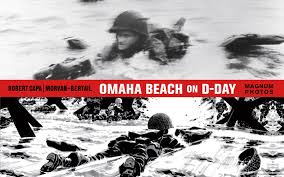
[READ: June 10, 2016] Omaha Beach on D-Day

Nobody picks up this book for fun.  I mean, look at that title. You know this isn’t going to be a laugh.  But it is an amazing book and I think  perhaps the title does it a bit of a disservice.

This book is not exactly about the massacre that was Omaha Beach on D-Day.  It is about that certainly, but the book is really about Robert Capa, the photographer who took the most iconic photos of Omaha Beach on D-Day.  This book is far more of a biography of him than an account of the war.  And in typical First Second fashion, they have made a gorgeous book full of photorealistic drawings that really exemplify the work that the book describes.

The book opens in Jan of 1944 with Capa carrying bottles of champagne amid the burned out wreckage of war.  He is bringing the celebratory drink to his fellow reporters who have been hiding out for a few days. Capa says he is leaving for London. (more…)

Read Full Post »

krausSOUNDTRACK: THE FLAMING LIPS-The Terror (2013).

terror After the distortion heavy and heaviness of At War with the Mystics and Embryonic (to say nothing of their other experimental releases), I wasn’t sure what to expect from an album called The Terror.  Yet with a title like that the album is far more invested in psychological terror than in pummeling you with scary noises and music.  The album is more unsettling and spooky with existential dread.

Wayne Coyne has always been a pretty optimistic guy–weird, sure, dealing with feelings of dread, sure, but never so dark and insular.  But I learned that before recording this album and most likely as an impetus to record it,  Coyne separated from his partner of 25 years, Michelle, and Lips multi-instrumentalist Steven Drozd temporarily relapsed into addiction.

In an interview, Drozd says the album is like a crisis of life confidence.  He also says that the uniformity in sonic style was intentional: “Instead of writing songs and then figuring out sounds, we’d write the other way around: create sounds then make songs out of those sounds.”

So the vocals are quite low in the mix, and there is not a lot of “music” in the album.  Rather there are layers of sounds–swishing synths, spiraling noises, percussion effects that seems to almost cover up the vocals, giving it a very claustrophobic effect.  “Look… The Sun Rising” opens the disc.  It is primarily percussion with some noisy sounds and really sharp piercing guitars (that play noisy counterpoint to the soothing chorus of Oh Oh Ohs).  And yet after all of that noise and chaos, the very lovely “Be Free, A Way” surfaces as a quiet introspective song.  There are gentle keyboard notes (not unlike on Yoshimi) that propel this song along.  “Try to Explain” is a pretty song with some unusual sound effects swirling around it (The Lips can’t so straight up pretty, right?).  And yet lyrically, this song, along with the rest, is very dark indeed.

“You Lust” is a 13 minute (!) invocation about various forms of lust.  It opens with the couplet: “You’ve got a lot of nerve/A lot of nerve to fuck with me.”  The middle of the song is a kind of Pink Floydian keyboard workout.  It’s a  lengthy jam that’s kind of samey, but I’ll bet if you can really sit (with headphones) and close your eyes and focus it’s pretty intense.  After about ten minutes of that repetitive claustrophobia, some lightening occurs with sprinkled keyboard notes.

“The Terror” is primarily in Coyne’s falsetto, and it seems gentle until the mechanized noises come bursting forth.  “You Are Alone” is the shortest thing here, under 4 minutes of squeaking noises.  And again, a lovely melody despite the title.  I feel like this song summarizes the album pretty well.  In it, Coyne sings “I’m not alone” while a deeper voice replies, “you are alone.”  Whose voice will ultimately win?

  “Butterfly, How Long It Takes to Die” returns to that abrasive guitar of the earlier tracks, but the main body of this 7 minute song is just bass, keening keyboards and Coyne’s whispered voice.  There’s a recurring synth line that is magical and/or creepy depending on your frame of mind.  It, along with many of the other songs, have a kind of coda that links the songs.  This one is mostly just choral voices, but it twists the ends of the songs in a different direction. “Turning Violent” is a quiet track, in which Coyne sounds nearly defeated until the second half of the song grows louder and more animated with layers of vocals.  The disc ends with “Always There…In Our Hearts” which seems to offer some hope…maybe.  There’s signs of uplift in the melody, and when the drums kick in at the end, it seems to propel the song into a more intense frame of mind.

And lyrically, despite all of the darkness that is always there in our hearts, there is a light peeking out: “always therein our hearts a joy of life that overwhelms.”

Although most reviewers find this album unremittingly bleak, I find the music to be beautiful in an aching sort of way–a beautiful way to deal with pain (better than getting the same tattoo as Miley Cyrus, anyway).

[READ: October 31, 2014] The Kraus Project

The title page of this book read: The Kraus Project: Essays by Karl Kraus translated and annotated by Jonathan Franzen with assistance and additional notes from Paul Reitter and Daniel Kehlmann.

So just what is this thing anyhow?  Well Karl Kraus was a German writer (1874-1936) whose main contributions to letters were some essays and a newsletter Die Fackel (The Torch).  The authors compare the newspaper (favorably) to a blog (while also complaining about what blogs have done to letters).  He started Die Fackel in 1899 and he continued to direct, publish, and write it until his death.  He used the paper to launch attacks on hypocrisy, psychoanalysis, corruption of the Habsburg empire, nationalism of the pan-German movement, laissez-faire economic policies, and numerous other subjects.  For the first ten or so years, Kraus was the editor, accepting contributions from around the German speaking word.  But in 1911, he became the sole contributor to the newsletter.

He also wrote many essays (he did not care much for fiction), including the two main ones that compression this book: “Heine and the Consequences” (1910) and “Nestroy and Posterity” (1912).  The book also includes two follow up essays: “Afterword to Heine and the Consequences” and “Between Two Strains of Life: Final Word to Heine and the Consequences” (1917) and a poem: “Let No One Ask…” (1934).

The essays themselves are quite brief.  Despite the first coming in at 135 pages, note that the left pages are all in German (so reduce 135 by half), nearly all of the English pages are filled with footnotes (reduce by half again) and some of the footnotes run for several pages.  So the essay could be said to be about 25-30 pages.

The same is true for all of the pages in the book.  The left sides are in German (except the footnotes) and most pages are split in half because of the footnotes.  Which means that Franzen and friends write far more than Kraus did.  Ultimately, this book is actually three things: It is a collection of Kraus’ essays with Franzen’s fine translation; it is an explication of Kraus’ attitude and about life in Germany during Kraus’ life and finally it is an insight into Franzen as a young man living in Germany and why Kraus was so appealing to him.

The first part: Kraus’ essays. (more…)

Read Full Post »

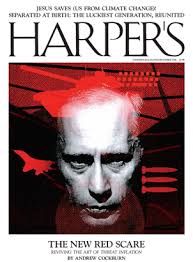
harpoctSOUNDTRACK: FRANKIE SPARO-My Red Scare [CST013] (2000).

sparo1Speaking of early Constellation Records releases, Frankie Sparo was everywhere in the early stages of the label.  And then he just disappeared.  That proves to be quite literal as he was the pseudonym of Chad Jones (who i don’t know from anywhere else).  Frankie released two albums and an EP and then Chad retired him.

This debut is perhaps the most deconstructed and un-musical album of songs that I can think of.  It’s as if Sparo wrote songs and then decided to take four of every five notes out of the song.  And then he sings in a style that accompanies that spareness.  It’s actually too much of such littleness.  If Sparo’s voice filled the song the minimal accompaniment would be interesting.  If there was more music, his slow singing wouldn’t sound quite so… flat?  There’s talk of his lyrics being good, but I honestly find his singing to be so slow that I can’t really follows any of the songs.

And it’s a shame because his voice is plaintive and longing and the construction is very interesting, it just doesn’t really pan out for me.

The final two songs start to add more to them and I like them better.  I especially like the final tack “The Night That We Stayed In” which has without a doubt the slowest rendition of the oft cited phrase “throw your hands up in the air and wave them like you just don’t care” (imagine falling asleep while saying that).  But the music is fuller, bringing in a new and interesting style to the end of the album .

I suppose that in the right frame of mind this would be exquisite, I just hope I’m never in that frame of mind.

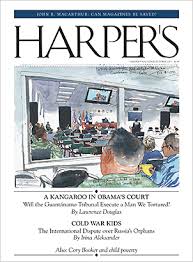
[READ: April 18, 2014] “Near-Death in the Afternoon”

I’m not  huge fan of Ernest Hemingway–I just don’t like his macho schtick.  But this piece–which is a comic story (I don’t know who the person he’s talking about is) is not only quite funny, it seems to be turning his macho image on its head.  Although perhaps I am oversimplifying Hemingway.

Anyhow, this comes from a collection of his letters, although it is considered a story and what submitted to (and rejected by) Vanity Fair in 1924.  The full title is “My Life in the Bull Ring with Donald Ogden Stewart” which implies to me that it is a longer piece, although it feels full to me.

It begins with Hemingway saying that he often encounters Donald Stewart in the bull ring (which make me laugh).  But he’d often ignored him.  Yet on this occasion the crowd is going crazy for him: “Don Stewart!” they chant.  Ernest wants to get into the ring but the crowd is insistent and, indeed, someone even throws a tomato at him (and hits him right in the face). (more…)

Read Full Post »

[LISTENED TO: November 21, 2013] “You Must Know Everything” podcast

podcastIn the fourth New Yorker fiction podcast, George Saunders reads Isaac Babel.  I know Saunders very well, although I knew next to nothing about Isaac Babel.

Saunders sets up this story very briefly before diving in to the read.  There’s something fantastic about the way Saunders read the story–full of emotion and affect.  He absolutely made the story come to life and his commentary at the end made the story even better.

Babel was 21 when he wrote this story (he was amazingly prolific–his Complete Works is over 1,000 pages), and Saunders is blown away by the amount of depth such a young writer fits into the story.  Saunders says that for him Babel is a combination of Hemingway and Kerouac–Hemingway because Babel edited his storied very intensely and Kerouac because he wasn’t afraid to add the occasional poetic touch.

In the story, a young boy is going to visit his grandmother.  As the story opens, he explains that he was always very observant.  He knew everything about the streets of his city, Odessa.  He knew the stores and the anomalies in the buildings.  He observed every new window.  Until someone teased him for looking in a lingerie store. (more…)

Read Full Post »

SOUNDTRACK: KISS-Smashes, Thrashes + Hits (1988).

This was Kiss’ second greatest hits collection (Double Platinum being the first).  This was before there were literally hundreds of Kiss Greatest Hits collections.  Seriously, look at the list on AllMusic.  This was also the era in which bands would release a greatest hits collection and include one song to sucker fans into buying it.  And we did.

Kiss also re-recorded a bunch of songs for this disc (something they would do many times in the future as well).  I’m not exactly sure what has been re-recorded, although the one obvious change is that Eric Carr sings on “Beth.”  But some of the other songs get tweaks as well.

As for the two new songs, it seems like maybe they were leftovers from the Crazy Nights sessions–they are poppy with keyboards.  “Let’s Put the X in Sex” sounds a lot like Robert Palmer, which is pretty embarrassing.  Although interestingly, the song itself seems to serve as a model for a couple of songs on Hot in the Shade (as if maybe they thought Kiss fans wouldn’t buy the greatest hits?).  “(You Make Me) Rock Hard” is another okay song (which sounds a lot like another song on Hot in the Shade).  Both of these songs are just filled with sex similes, I swear they have more than any other writers in the world.  Both songs would be better without those pesky keyboards.  I rather liked the songs at the time as they are both better than anything on Crazy Nights, although neither one has held up all that well.

And “Beth,”  Kiss’ biggest hit, which may be largely forgotten by the general public by now, has Eric Carr on vocals.  He sounds a bit like Peter Criss, but without Criss’ years of hard living in his voice.  It’s a weird choice, although I understand it from a business standpoint–which is clearly more important than the music, right?

[READ: August 10, 2012] “Paris in the Twenties”

This story starts out with a paragraph that I found very confusingly written.  There’s a very long sentence with several clauses that, after reading the story, make perfect sense, but which up front are more than a little confusing.  The upshot of that paragraph is that in 1972, when the narrator was a senior in high school, a whole bunch of bad things happened to her in a short period of time–just before they were to hear which of the Seven Sisters had accepted them.

The catalyst was that her father threw a tumbler of scotch at the giant window of their penthouse apartment.  The window shattered but did not fall and the glass came back into the room.  The irony of course is that he had chosen the apartment for the gorgeous panoramic views those windows afforded.  Her father had been riled up about the state of the world, and felt that the sexual revolution meant that monogamy was outdated.

Their father was also very conscious of wealth and was very conscious of appearing wealthy–even if “he usually had more credit than money and now had very little of either.”

The narrator escaped into fantasies of Paris in the twenties–she read A Moveable Feast and was determined to move to Paris even if the party was over decades ago. (more…)

Read Full Post »

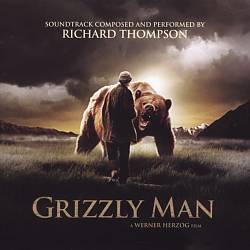
SOUNDTRACK: RICHARD THOMPSON-Grizzly Man Soundtrack (2005).

This is a largely instrumental soundtrack by Richard Thompson.  It features some wonderful guitar work (no surprise there).  There are several slow acoustic numbers (“Tim & the Bears,” “Foxes”–which is in the style of his old traditional folk ballads) there’s also the slow impassioned electric guitar solo (set over a simple beat) of “Main Title.”  “Ghosts in the Maze ” is a dark piece, the exact opposite of “Glencoe” a traditional-sounding song, both of these are under two minutes long.  “Parents” adds a cello, which means a sombre song.  “Twilight Cowboy” is one of the longer pieces, and it really conveys an openness of nature.

“Treadwell No More” is a slow six-minute dirge type song.  “That’s My Story” has spoken dialogue by Treadwell, over a simple unobtrusive guitar.  But as the title of the record says, Music composed and performed by Richard Thompson.  Which means there are other musicians on the soundtrack too.  “Small Racket” is where things start to get noisy and a little uncomfortable.  There’s some squeaks and slashes of sound, but it’s mostly a tense guitar feel.  Then comes the darker, scarier stuff.  “Bear Fight,” is a series of cello noises and swipes.  “Big Racket” is indeed that, with guitar from Henry Kaiser and noises from Jim O’Rourke.  “Corona for Mr Chocolate” is all Jim O’Rourke, it’s also odd noises and moods.  None of these three songs are terribly off-putting but they reflect a very different tone.

The album ends with “Main Title Revisited,” which is what it says and “Coyotes” by Don Edwards which has some coyote yodels.

It’s a good soundtrack, really conveying what the movie is about, and while not essential Richard Thompson, it is still some great guitar work

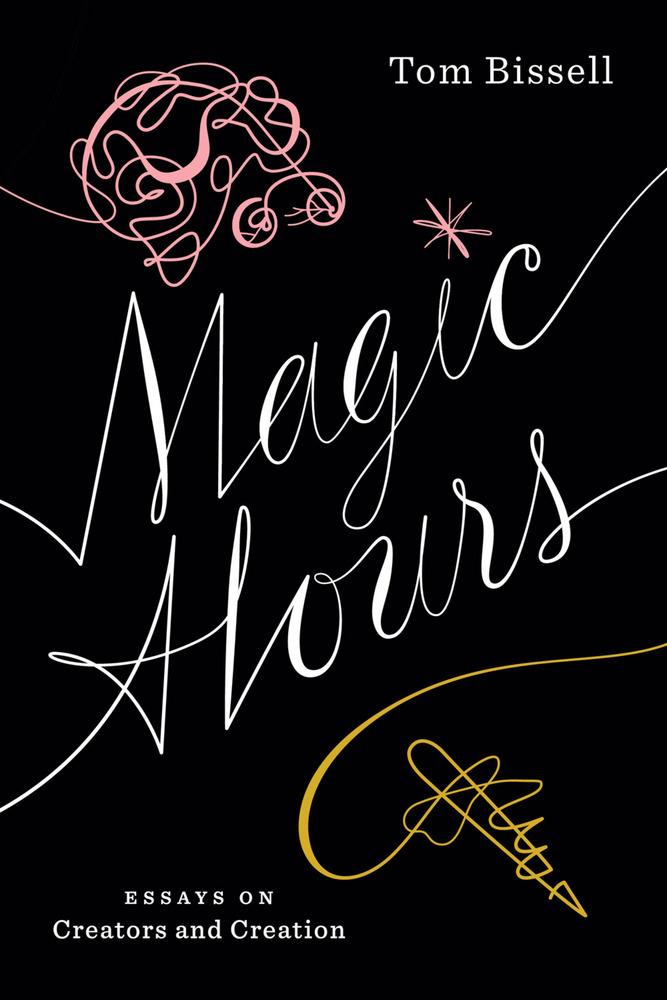
[READ: July 23, 2012] Magic Hours

I thought that I had never heard of Tom Bissell, but I see that I have read three of these articles already (I guess I don’t always pay attention to the author’s name).

This collection of essays comes from the last eleven years (2000-2011).  The articles have appeared in The Believer & The New Yorker (these are the ones I have read) and Boston Review, Harper’s, New York Times Magazine, Virginia Quarterly Review, New York Times Book Review and Outside (which I am starting to think I should really check out more).

Primarily they are articles about writing–he looks at fiction, non-fiction, film or a combination of them.  Bissell is a strong writer and he does not hold back when he sees something he likes or dislikes.  I found his articles (all of which are quite long–about 30 pages each) to be engaging, funny and very persuasive.  I’m really glad I read the book (and was even glad to re-read the articles that I had read before). (more…)

Read Full Post »

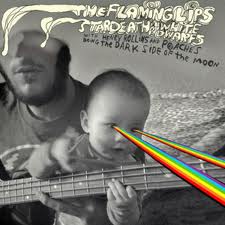
SOUNDTRACKTHE FLAMING LIPS AND STARDEATH AND THE WHITE DWARF WITH HENRY ROLLINS AND PEACHES-“Money” (2011).

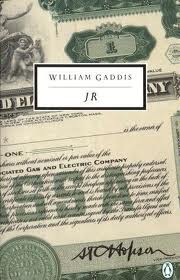
I’ve already mentioned this full length album, but how can you not talk about JR without mentioning this song.  (I probably could have dine a post a week about all of the covers of it).

This is one of the most famous songs certainly by Pink Floyd on one of the most popular album s of all time.  So how do you cover it?  You can’t lose the bass line, it’s way too important to the song.

But aside from that the song is pretty different–the vocals are machine tuned almost out of recognizability.  And that’s when you realize that although this is a pretty faithful cover, it’s also a goofy cover.  Not silly, not really disrespectful but not entirely right either (notes are out of tune and flubbed).  It’s very mechanized, as if they are talking about the auto-tuned nature of making hit songs.

  Henry Rollins takes the roll of the random punters ranting at the end of the song, and that’s pretty fun.

The whole thing is kind of  a trifle.  It works better in context of the album because you can understand what the group is doing.  On its own it’s a bit of  shock.

[READ: Week of July 9, 2012] JR Week 4

This week continues where last week left off–in the middle of trying to get Dan to convince Ann to drop the lawsuit against the school (for firing Bast). Whiteback tries to speak for Vern, but Vern will have none of it–Whiteback, despite being president of the school and the bank, is proving to be more and more of a pushover as the story goes along.

Vern gives his take on the school:

The function of this school is custodial.  It’s here to keep these kids off the streets until the girls are big enough to get pregnant and the boys are old enough to go out and hold up a gas station, it’s strictly custodial and the rest is plumbing.  If these teachers of yours strike just sit still and keep the doors open, by the time these kids have been lying around the house for a week their parents will march the teachers back in at gunpoint (226).

Dan interrupts the proceedings to talk to Whiteback about his mortgage (Vern magnanimously tells Dan to go ahead and conduct personal business during work hours).  Dan’s mortgage is not working out so well because the studs in his house are too far apart–causing it to be less insurable and causing him to pay a lot more. When Whiteback commends Major Hyde’s house for being spectacularly built Dan says that he was surprised to see that Hyde was moving.  Hyde doesn’t know what he’s talking about.  Dan tells him that there was a moving van in his driveway taking all of his things out.  There’s some chaos (and a stolen car) when JR comes in and tells them that Buzzie (who was sent down for possession) has taken off down the hall. (more…)

Read Full Post »

SOUNDTRACK: RUSH-“Something for Nothing” (1976).

This song comes from Rush’s 2112 album.  Since I’ve started reading JR, the refrain keeps popping into my head.  People talk of the influence of Ayn Rand on the band at this time and this song fits the bill.  When you think about the themes of most rock songs (carefree sex and partying) the lyrics to this song are totally conservative: “You don’t get something for nothing, you can’t have freedom for free.”  Rush has always been a hard working band, so this attitude makes sense.

And the song also resounds with the capitalists in this story–make your money (and other people’s money) work for you.  “Countless ways you pass the day.”

The song starts quietly but man it rocks hard with some really heavy guitars.  And the solo is intimidatingly noisy.

Oh and as for Rand, “What you own is your own kingdom.”

Of course, there is a little less capitalism as the song ends: “in your head is the answer, let it guide you along, let your heart be the anchor and the beat of your song.”  So, the message is not one of greed, but that to make your dreams come true you have to work for it.  Not bad advice, really.  Unless you were born into money of course.  In which case, never mind.

[READ: Week of July 2, 2012] JR Week 3

My JR posts are proving to be a day late (but not a… nope I won’t say it). It’s not the reading that’s hard it’s finding time to write these up.  So, apologies for those waiting with bated breath.

The week’s section opens with sex, specifically, Polaroids of sex.  Mr Angel, Stella’s husband, gets a call from Coen at the hospital (he got into an accident because of his broken glasses (ha–it was not reckless driving).  Then he starts talking with Terry about sprucing up the place–nice paneling, some plants–she thinks that’s a great idea (and actually buy a plant with her own money later).  They are interrupted by Mr Angel’s worker Leo who presents him with a stack of photos of the same Terry engaging in various graphic sexual positions (the boys in shipping had them).  With multiple men.  And although none of the men work in the office, the pictures are taken in this very office.  Mr Angel suggests that the photos could be doctored, to which Leo replies, “You’d have to have a picture of her eating a cucumber to paste onto this one, that’s some doctor” (151).   Childish but very funny.

Mr Angel goes off to Dayton to deal with some business and we see that quickest passage of time yet in the book.  Most of the book so far has been set in a day or two, but as we stay with the secretaries, several days pass in Mr Angel’ absence.  Terry and Myrna move their things into the same area so they can talk and listen to the radio while they work.  So there’s the gossip and the radio chatter vying for attention (the radio comes in Spanish as well as English) and the scene stays with them over a few days and through weekend.  Although this book doesn’t shy at all from potty humor, I enjoyed this little exchange before he leaves: Mr Angel say that she’s left the letter “s” off the word scrap on one of the documents.  She’s so embarrassed!

Terry also says she has something to tell Mr Angel about Leo…but that never gets said aloud, even when he returns and reminds her. (more…)

Read Full Post »

[WATCHED: March 5, 2012] Midnight in Paris

I took a course on Woody Allen’s films in college and, as a result, I had seen everything he had done (and a lot of what had inspired him).  After college, I made a point of seeing everything he released.  Often on opening day.  (My double feature of Deconstructing Harry and Good Will Hunting on Christmas Day is still a highlight).

But after The Curse of the Jade Scorpion, which was okay, but just barely, I basically gave up on him.  I watched Match Point in three parts (no time at the time) and really enjoyed it, but I never really got back on track with Woody.  And then came Paris.

Despite its huge popularity, I knew nothing about this Woody Allen film.  I knew Owen Wilson was playing the Woody Allen character in this one and it was getting amazing reviews.  Now, it’s very true that critics don’t always get Woody Allen, but when they unanimously get his film it’s pretty safe that it’s a good one.

And boy was it ever. (more…)

Read Full Post »

« Newer Posts - Older Posts »