Feeds:
Posts
Comments

Archive for the ‘David Foster Wallace’ Category

SOUNDTRACK: BLACK FLAG: The Process of Weeding Out (1985).

Fans of Black Flag were (justifiably) freaked out by this EP.  It’s a four songs that clock in at almost 30 minutes (from the band who gave us the one-minute long hit “Wasted”).

This album is all instrumental and it provided Greg Ginn yet another outlet for his experimental guitar workouts (see also: Gone, October Faction, Saccharine Trust, Tom Troccoli’s Dog etc.)

So what you get is Kira’s fantastic and unusual bass riffs (she did amazing work with Black Flag), Bill Stevenson’s intense (and cymbal fueled) drums and Greg Ginn’s what the hell? guitars.  I’ve always found Ginn’s guitar work to be somewhat off.  It always struck me that maybe he didn’t exactly know how to play the guitar.  And yet he was always right on with his riffs and chords, it’s just that his solos never conformed to any standard version of guitar solo I’d ever heard.

So this EP comes across more as fee jazz than punk.  “Your Last Affront” is 9 minutes of chaos all under-girded by an interesting if unconventional riff.  It’s followed by the two-minute “Screw the Law” a much faster song, with an intense riff repeated for much of it.  The last 30 seconds or so has some screaming solos from Ginn, but of all the tracks, this is probably the most user-friendly.

The second side has the title track starts with a lengthy solo from Ginn.  A few minutes in, Stevenson’s drums come clacking around the place and Kira is somewhat relegated to the back as her bass is steady but not that exciting.  Until about 3 and a half minutes in, when the band takes over and Kira plays a super cool riff and when Ginn joins in, the song is really solid.  “Southern Rise” ends the disc with 5 minutes of relative quiet.  Although the main instrument appears to be the drums.

The whole things sounds like they were jamming in Greg’s garage.  And I’ll bet lots of fun was had in that garage.

[READ: March 15, 2011] three items about what didn’t make it into Infinite Jest

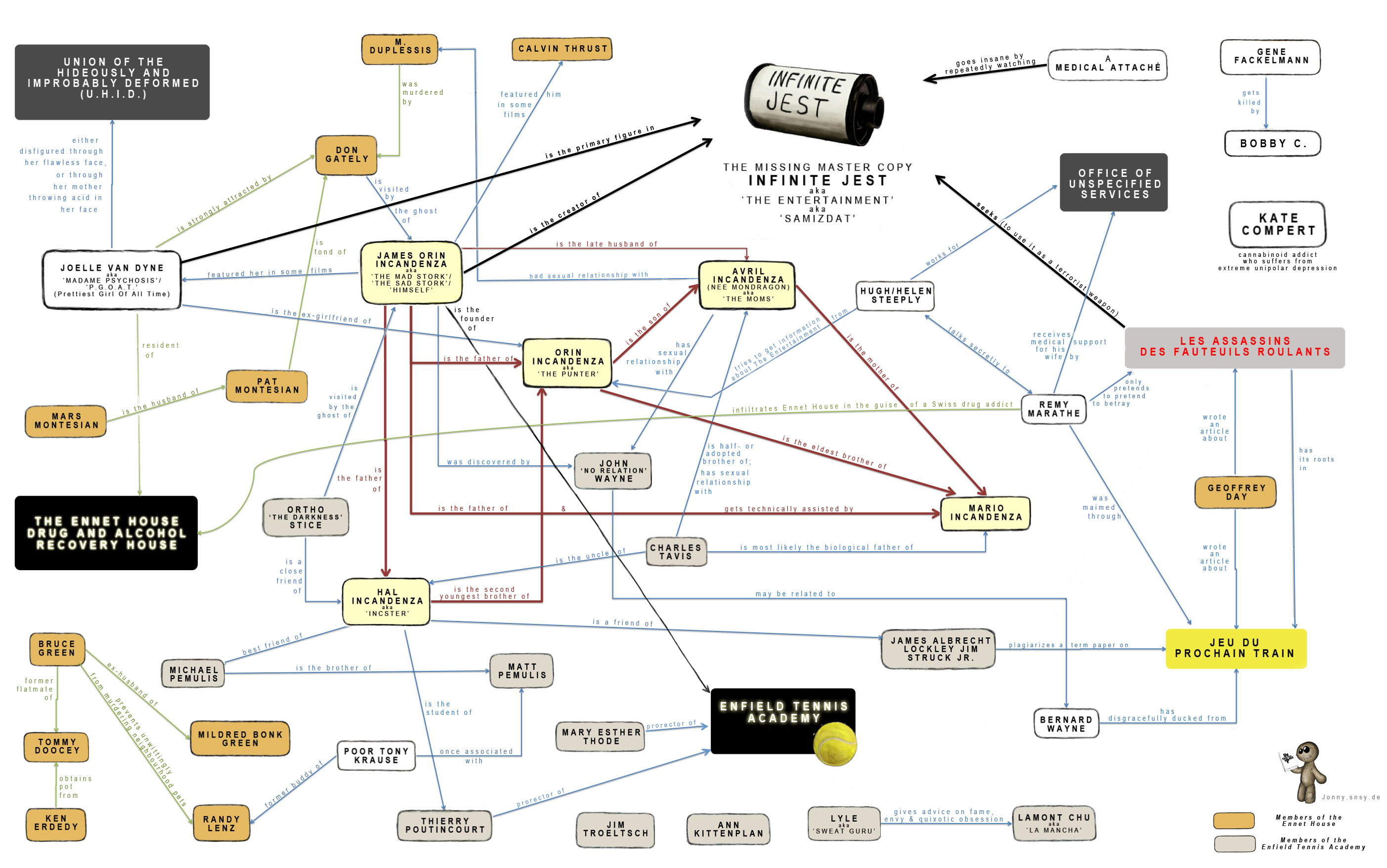
In honor of The Pale King’s release this week, I’m doing this post on Infinite Jest-related stuff.  This is all of the stuff that we lay people have access to without going to the Wallace archives to find all of the cool DFW stuff.

After finishing IJ this summer, I found out that it was initially much much longer (I think around 300 pages longer).  I grew mildly obsessed with wondering what had gotten cut.  And I had to wonder, if you have an 1100 page book, what difference would an extra 500 pages make, really?  Initially, I thought that the things that were cut were just minor changes, but then I heard about fairly large things that were removed.  And I dreamed of a “director’s cut” of the book.  That will never happen, and that’s fine (I’m less obsessed now).  But these little glimpses into scenes that didn’t make the book are fascinating.

And all told, they confirm that most of the cuts were minor, although there were some large scenes that were left on the cutting room floor. (more…)

Read Full Post »

SOUNDTRACK: DC3-“Theme from an Imaginary Western” (1985).

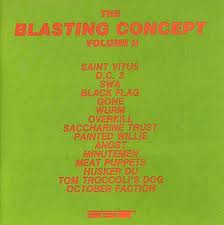
This song comes from the SST compilation The Blasting Concept Volume II, which came out in 1985.  I bought it on vinyl and was psyched when it came out on CD.   This version of an old Mountain song was one of my favorite songs on the disc (I don’t even know the Mountain version very well).

DC3 was the brainchild of Dez Cadena, former singer for Black Flag.  They put out a couple of albums and then disappeared.  And yet all these years later this song has stayed with me.  For a singer from Black Flag, this song is remarkably poppy (and features a lengthy keyboard solo!).  The real treasure of this song for me comes at the first chorus.  When the band sings “Oh the sun was in their eyes…” the vocals begin in a disparate, perhaps minor key harmony, and then merge into a perfect harmony.   It gets me every time.

DC3’s records have never been released on CD, and the vinyl is out of print. There’s a live CD out, but I’ve never heard it.   So, as far as I can tell, this is the only studio song available in the world.  Maybe the albums are terrible, but DC3 will always be great because of this one track.

Oh, and someone posted it on YouTube

Thanks!

[READ: March 22, 2011] Consider David Foster Wallace [essays 13-16]

This is the final batch of essays from this collection about David Foster Wallace.  The first is about Oblivion and the last three are about his non-fiction.  Perhaps it’s because I have been reading his non-fiction a lot lately (or maybe I enjoy reading essays about nonfiction more than fiction) but I found these to be the most enjoyable essays in the book.

As I’ve stated with each post, because I don’t have a lot to say about the pieces (I’m not an academic anymore), I’m only going to mention things that I found puzzling/confusing.  But be assured that if I don’t mention the vast majority of the article it’s because I found it interesting/compelling/believable.  I don’t feel comfortable paraphrasing the articles’ argument, so I won’t really summarize. (more…)

Read Full Post »

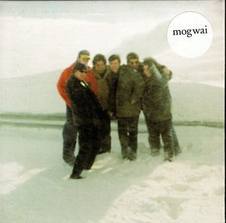
SOUNDTRACK: MOGWAI & MAGOO-Do The Rock Boogaloo (2002).

This split CD features a song each by Magoo and Mogwai.  Both songs are Black Sabbath covers, with Magoo doing “Black Sabbath” and Mogwai doing “Sweet Leaf.”  This was released by Fierce Panda records and it’s clearly kind of a joke (the top of the disc says: two sonic scratches of the big bad rock arse”).

And yet despite the jokey nature of the project, the covers are actually quite faithful.  I’ve never heard of Magoo in any other context so I don’t know anything about them.  But their version of “Black Sabbath” is pretty right on.  The big difference is that it seems like Magoo have no bass in their band.  Everything from guitars to vocals is much more tinny than anything Black Sabbath put out.  In fact, when the really fast part at the end comes up, you can hear the bass, but it sounds like perhaps just more guitar notes.  The vocalist is also far less than scary.  And yet for all of that, the song isn’t really jokey, it just doesn’t sound scary like the original.

Mogwai’s cover of “Sweet Leaf” seems even more jokey.  It opens with a pretty heavy sounding riff and then stops after a few seconds so someone can say “give me the microphone.”  There’s also a lengthy conversation going on throughout the background of the song.  The vocals are quite fascinating.  They are utterly understated, bordering on spoken.  As such, there is a notable Scottish accent for the verses.

After the main body of the song, they never quite get to the heavy drum part at the end, in fact, the song kind of just fades out while the lengthy (drunken?) conversation (and burping) continues for over a minute.

No one is going to say this is an essential recording, although it’s good for a laugh, I suppose.

[READ: February 28, 2011] Consider David Foster Wallace [essays 10-12]

More than half way through the essays, we’re moving away from infinite Jest era and into the Brief Interviews era.  These articles look at sincerity, love and footnotes.

Because I don’t have a lot to say about the pieces (I’m not an academic anymore), I’m only going to mention things that I found puzzling/confusing.  But be assured that if I don’t mention the vast majority of the article it’s because I found it interesting/compelling/believable.  I don’t feel comfortable paraphrasing the articles’ argument, so I won’t really summarize. (more…)

Read Full Post »

SOUNDTRACKMOGWAI-No Education = No Future (Fuck the Curfew) (1998).

This is a 3 song EP. The opener “Xmas Stripes” is one of my favorite early Mogwai songs.  The opening melody is really great, with a cool interesting bass and a nice guitar over the top.  At about 3:30 the song grows from a silent track to a menacing, growing beast until the drums start and the song and the main riff begins.  By 5 minutes it’s all out rock noise.  By 6 minutes the song is scaled back for the violin solo.  The remaining 7 (!) minutes are a denouement for the song.  Even though I love the track, I mostly love the first 8 or 9 minutes.  The ending tends to drag a bit.

But for all of their noise, Mogwai’s early releases were really quieter instrumentals, meditative songs that were really quite pretty.  “Rollerball” is a beautiful, sad three-minute track.

The last song “Small Children in the Background” continues in this quieter vein.  At nearly 7 minutes, it allows for a noisy middle section.  This noisy section is indeed mostly noise.  And yet the pretty melody of the rest of the track is just as loud throughout the mix, making for a very cool and very brief explosion mid-song.

Not all EPs are essential, but this one is pretty fantastic.  And I have Lar to thank for getting it for me.

[READ: March 10, 2011] Changing My Mind

It’s funny to me when that when I get into an author, I seem to wind up not reading the books that people most talk about until much later.  Take Zadie Smith.  Her debut, White Teeth, is something of a touchstone for many readers.  I missed it when it came out, but I loved On Beauty and figured I’d go back and read it.  That was almost a year ago.  And in that time I have read lots of little things by her and now this collection of essays.

Regardless, this collection of essays is a wonderful look in to the nonfiction world of a writer whom I admire.  And it was quite a treat.  Zadie is an intellectual, and that comes across in all of these paces.  Whether it’s the subjects she’s writing about, the footnotes she uses or just the acknowledgment that she likes art films and not blockbusters, we know where she’s speaking from.  And, of course, I’m right there with her.  The funny thing about this book then is how few of the subjects I know.

The book is broken down into five sections: Reading, Being, Seeing, Feeling and Remembering.  The Reading section is basically book reviews.  The Being section is about her experiences.  The Seeing section is about films.  The Feeling section is about her father and the Remembering section is about David Foster Wallace. (more…)

Read Full Post »

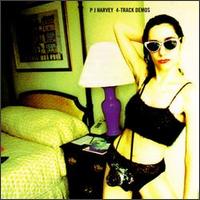
SOUNDTRACK: PJ HARVEY-4-Track Demos (1993).

After the intensity of the Steve Albini produced Rid of Me, Harvey releases this collection of demos.  The amazing thing is that these versions actually seem more intense than the Albini version. Or if not more intense, then certainly more raw.

The songs definitely have an unfinished feel about them, and yet they only vary from the final version in polish (and Albini’s stamp).

“Rid of Me” is just as quiet/loud, and has those high-pitched (and scary) backing vocals.  Speaking of scary vocals, her lead screams in “Legs” are far scarier here than on Rid of Me–like really creepy.  (Which sort of undermines that idea that this was released because Rid of Me was too intense for fans).   “Snake” actually features even creepier vocals–Harvey must have had a field day making these sounds!

I admit that I like the finished version of “50 Ft Queenie” better,”but there’s something about this version of “Yuri-G” that I like better.

The disc also has some tracks unreleased elsewhere.  “Reeling” is an organ-propelled song of female strength with the nice lyric: “Robert DeNiro sit on my face.”  “Hardly Wait” is a slow grinder that is fairly quiet for this time period.  “M-Bike” is a cool angry rocker about a guy and his motorcycle which is one of my favorite tracks on the disc.

It’s a great companion to Rid of Me.

[READ: end of February to early March]  original articles that comprise A Supposedly Fun Thing I’ll Never Do Again

As I mentioned last week, I decided to compare the articles in A Supposedly Fun Thing I’ll Never Do Again with the original publications to see what the differences were.  It quickly became obvious that there were a lot of additions to most of the articles, and it seems rather pointless (well, actually it seems exhausting and really outrageously time-consuming) to mention them all.  But what I did want to note was the things that are in the articles that have been removed from the book.   There’s not a lot but there are a few juicy tidbits (especially in the early articles) that are fun to note for anyone who read only the book and not the original articles.

My process for this was rather unthorough: I read the article and then right afterward I read the book.  If I noticed any changes, I made a note on the article version.  Many of them were surprisingly easy to note as DFW’s writing style (especially his idiosyncratic phrases) really stand out.  This is especially true in the Harper’s articles.  The academic ones were less notable, I believe, and I’m sure I missed a bunch.

I’m not sure in any way how these pieces were dealt with initially by the magazine or DFW.  I assume that DFW handed in the larger article (like we see in the book) and the magazine made suggested edits and DFW edited accordingly.  Then the book copies are probably the originals, bt which have also been updated in some way.

In most cases, it’s not really worth reading the original article, but I’m including links (thanks Howling Fantods), for the curious.

As for length, it’s hard to know exactly what the conversion from magazine article to book is.  The “Tornado Alley” tennis article is 8 pages (more like 4 pages when you take out the ads) and the book is 17.  Perhaps more accurately it seems like one Harper’s column = just under one book page.  I’ll try to figure out what the conversion is if I can.

One last note, whenever I say “article” I mean the original magazine version.  And obviously “book” means ASFTINDA. (more…)

Read Full Post »

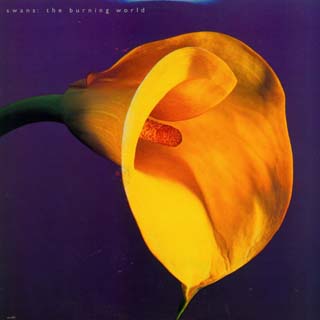
SOUNDTRACK: SWANS-“Can’t Find My Way Home” (1989).

In the Swans review yesterday, I mentioned this as a song that was as far afield from early Swans as was imaginable.  This is a cover of the Blind Faith song and it is surprisingly faithful.  In fact, the original song features a voice that is so falsetto’d it’s almost higher than Jarboe’s.

The big difference here is that Jarboe is an unusual lady and her voice has a weird almost strangled quality to it which adds an air of longing to the song that the original doesn’t.   There’s also an ethereal quality to the music which contrasts with the original’s folk styling.  Not to mention that the production on this version is better.

I also happen to think that the Swan’s guitar intro (while less technically accomplished) is more intriguing.  Not bad for an industrial band.

[READ: February 20, 2011] Consider David Foster Wallace [essays 7-9]

The group read of this book seems to have come to a halt.  Coincidentally, so had my reading of it.  So, I decided to finish up the last few essays of the book to have it done in time for the April 15th release of The Pale King (yay!).

It’s been three months since I last posted about this book so I’ll give my disclaimer:  because I don’t have a lot to say about the pieces (I’m not an academic anymore), I’m only going to mention things that I found puzzling/confusing.  But be assured that if I don’t mention the vast majority of the article it’s because I found it interesting/compelling/believable.  I don’t feel comfortable paraphrasing the articles’ argument, so I won’t really summarize. (more…)

Read Full Post »

SOUNDTRACK: LOW-“Try to Sleep” (2011)

This was NPR’s song of the day for March 2.  I don’t really know Low all that well.  I know they play very slow music (which I’m typically not a fan of –slow music, not Low specifically).

I think I have been kind of frightened off of Low as being so soporific that it would make me sad.  But this song is a delight.  It’s not particularly slow and there’s a very cheery bell motif that pecks out the gorgeous melody.

The vocals are very nice harmony between the male voice (which reminds me a bit of lower register Damon Albarn–in fact the song gives of kind of an Albarn vibe) and the high-register female vocals.   It’s a really beautiful song.

In fact, this song has really changed my opinion of Low, and I may have to check out more by them.

[READ: March 2, 2011] “Backbone”

This is an excerpt from DFW’s forthcoming posthumous novel The Pale King.  Wallaceheads have already heard and/or read a variant on this piece which DFW read aloud at the Lannan Foundation.

I was reluctant to read this piece for a couple of reasons:  The Pale King is coming out in a little over a month.  I have read/listened to this particular piece not terribly long ago.  And, I didn’t love it all that much.

Well, it turns out that much like any draft or work in progress, with a bit of tweaking and editing, the passage can be made very strong and quite enjoyable.  This finalized version also intercuts a lot more information about other characters than was in the original version, making it a far more compelling piece of fiction in toto. (more…)

Read Full Post »

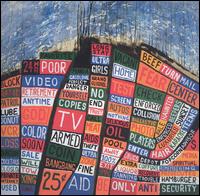
SOUNDTRACK: RADIOHEAD-Hail to the Thief (2003).

After the claustrophobia of Amnesiac, Hail to the Thief was a nice compromise between their earlier guitar rock and the ambience and the technology of Kid A.  “2 + 2 =5” is one of their most satisfying songs, opening with a nice guitar lick and Thom Yorke’s keening vocals, it abruptly jumps into a full-fledged rocker.  “Sit Down Stand Up” has similar properties–it opens quietly with a distant guitar riff.  The song builds and builds into a manic intensity.  By the end, when the pace is much faster and the lyrics are repeating “the raindrops” over and over, it’s a glorious mess.

“Sail to the Moon” is a keening piano-based ballad.  Not one of their best, but with very nice melodies.  “Backdrifts” flashes back to the experimental side of Kid A, with lots of percussive noises tapping into the electronic groove.

The band surprises everyone with a very acoustic sounding song, “Go to Sleep.”  It’s a really wonderful track, especially placed amidst the electronica of the other tracks.  The bridge brings Yorke’s vocals into the stratosphere (and the guitars get noisier and noisier).  “Where I End and You Begin” is a noisy staccato piece of fun with effects and more effects trying to hide Yorke’s voice.

“We Suck Young Blood” is a spare, almost completely stripped song composed of pianos and handclaps.  It is eerie and not a little disturbing.  While “The Gloaming” is practically all electronics.  It’s one of those transitional songs, not terribly exciting in itself, but not throwaway either.  And it leads into the gorgeous quintessential Radiohead of “There There” which could be an OK Computer outtake.

“I Will” is mournful dirge with just guitar and multitracked voice that lasts only 2 minutes and leads into the experimental “A Punchup at a Wedding.”  “Punchup” opens with that rarest of Radiohead sounds: a solo bass.   But it is quickly swallowed by more electronica.

“Myxamytosis”  is a nother great rollicking track with a great slinky keyboard riff that propels the song through the murky depths.  “Scatterbrain” features a cool guitar motif that shows that they can still play pretty music and which leads to the album closer, “A Wolf at the Door.”  “Wolf” ends the disc wonderfully with a cool guitar song and awesome almost-spoken lyrics.  It is kind of sinister and kind of sad at the same time.

This is a disc that rewards repeated listens (and headphones). If OK Computer was difficult, Thief is much more so, but for very different reasons.  But it pays wonderful dividends.

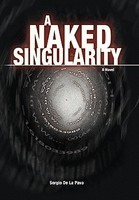
[READ: January 6, 2011] A Naked Singularity

I received a copy of this book about a year ago in March.  It is self-published and seems to have been sent to many folks who blogged during Infinite Summer (because it’s a big book, you see).  I was interested in reading it, but I had a lot of other things that I was reading first, so I put it aside until last month.  And I am really bummed that I waited this long.

A Naked Singularity is a wondrous, beautiful mess of a book that I was so absorbed in, I couldn’t put it down.  The writing style is great: funny, clever, funny, philosophical, funny, legal, funny and at times rather violent.

I’m torn when writing this how much of the “story” to give away.  I didn’t know anything about the book (the blurb on the back is just a quote from the book–there’s no summary or anything).  So I’m going to rob you a little of the “what the hell is going on in this story” aspect that I had, but I’m not going to give anything major away.

The story opens in a the middle of a conversation between a prisoner and a lawyer.  It’s a bit confusing until the story pulls back and we get the whole deal.  The story is about Casi.  He is a wunderkind lawyer who has never lost a trial (in 14 attempts).  He plays the system, but he’s also dedicated to getting his clients off (even though he–and everyone else on staff–knows they are guilty) mostly because he is undefeated.

The entire first Part of the book (320 pages) introduces us to Casi, to his workload, to his clients, to his coworkers and to his family.  His clients are mostly drug dealers. His coworkers are mostly jaded and are no longer excited by their jobs.  His family is wonderful, a group of Colombian immigrants who love each other and fight with each other loudly.  (The early scene at his family’s house is hilarious scene in which unattributed dialogue overlaps–it’s wonderful).

And yet for all of that, the first part never quite gives us a plot.  This might be a problem for some books, but the whole set up is so compelling that you just go with it, from one amusing (or hilarious) segment to the next.

In addition to introducing us to his cast of drug addicts and low level criminals, Casi also indicts the New York Justice system (in hilarious detail).  There are quite a few chapter spent talking about “bodies” (criminals) and how many of them sit in jail for 72 hours until they see a lawyer.

Of course, when he gets home, all is not normal there either.  His apartment is free (because his downstairs neighbor’s father owns the building and Casi squats there).  The neighbors are a curious bunch of college students.  One of them is a total TV junkie.  And, there’s a bizarre, wonderful subplot about him trying to bring Ralph Kramden from The Honeymooners to life in his room by watching the shows nonstop for weeks.  Yes.

Textually, the story also plays with lots of styles.  In addition to the dramatic scene with his family, we also see many court transcripts.  The second one with Mr McSlappahan is quite funny not least of which because the judge cannot get the poor man’s name right and the official transcript changes his name throughout the case.  There are also letters to and from one of the clients.   There’s a chapter-long epic poem (which was probably the hardest thing in the book for me to digest).  There’s even a recipe for empanadas (which sounds delicious).

In addition to some wonderful wordplay and punning there is also childish gross-out humor.  A scene with frozen burritos (pp. 150-158) had me laughing out loud for several pages.  But there’s also a lot of commentaries on society.  For instance Television is always capitalized and treated as a proper noun.  The mayor of New York is named Toad.  There are street vigilantes with cameras everywhere and, most amusingly, there’s an in-the-making TV show: Clerical Confessions.

By the time Part Two comes around a plot starts forming.  I was concerned that all of part two would follow this nascent plot, but it doesn’t. The book continues in a similar vein with the plot-instigator [coworker and lawyer, Dane, one of the most consistently amusing characters I’ve read in a long time] continually popping up on Casi’s periphery to try to get him to help him with…the perfect crime.

And that’s when boxing comes into play.  Casi is a fan of boxing, specifically a fan of Wilfred Benítez (who I didn’t know was a real boxer, but whenI looked him up I found this part of the story even more compelling).  And so, interspersed throughout the rest of the book is Benítez’ biography and fight history. It’s a rather lengthy character study of the man himself and boxing in general.  Now, I’m not a fan of boxing, I’ve never watched a fight, but I was totally engrossed by the storytelling.

Because he is setting up a whole story about muiddleweight champiosn, the novel follows many boxers who I had heard of and knew from pop culture (I checked and even Sarah knew who most of these boxers were, so they really must get into the pop culture world): Sugar Ray Leonard, Marvelous Marvin Hagler, Thomas Hearns (I didn’t know him, but De La Pava’s description of the 3 round Hearns-Hagler fight is so exciting that I’m going to watch them on You Tube) and Roberto Durán (she didn’t know him).  And so the story of these middleweight fighters trying to knock each other over for the title becomes something of a metaphor for the Casi’s life pre- and post- crime.  In fact, when they go to execute the perfect crime, the first half of that chapter is taken up with a story about Benítez…that’s quite unexpected.

While the crime is beign set up, Toom, one of Casi’s coworkers asks him to help with a case in Alabama.  A severely mentally retarded man is to be executed and Toom has taken on the case to rescue the man.  This plot adds a surprising amount of pathos to the story, especially when Casi flies to Alabama and meets the man.  But even that sequence is lightened by a wonderfully absurd hotel scene.  I totally want to stay at this hotel.

Part Three of the story is where the whole thing devolves into a crazy quilt of insanity.  The crime has happened, and it is messing with everything. There is a city-wide blackout, Casi has no heat, no cars are allowed on the streets so he can’t even escape to his mother’s house.  There’s also a strange guy in is building who looks and sounds suspiciously like Ralph Kramden.  And, Casi is accused of contempt (and is about to be ousted by his law office’s morals group, the childish but amusingly named Committee to Oust Casi Kwickly). Both trials are as absurd as a Marx brothers movie (Karl of Groucho?).

The lead up to the end is very satisfying will all kinds of loose ends tied together (things that I thought he’s never address were in fact cleared up!).  But with a story this all over the place, it’s hard to imagine how you would finally end it.  The ending goes in a direction that is supported by the title (and is a little overwhelming).  It’s a little unsatisfying, but aside from a tidy happy ending (which you knew you weren’t getting) I don’t know how else you could have ended the book.

Ending aside, this is a fantastic novel.  There is just so much going on in it (I didn’t even mention the discussion of Hume vs Descartes “I guessed there was nothing wrong with Hume provided it was acknowledged that Descartes was The Man” (510)) or the whole subplot about the two kids who kidnap a baby), and it is very well constructed and tied together.

Somebody please publish this book officially!  Yes it’s long, yes it’s multifaceted, yes it demands a lot of the reader,but the payoffs are wonderful and, frankly, this is the kind of unexpected story that could be embraced by, well, not the general public, but a niche market who enjoys clever books (and yes, probably fans of David Foster Wallace (and his progenitors)).

Give De La Pava a contract, huh!  You can read an excerpt here.

Read Full Post »
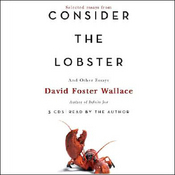
[LISTENED TO: November 18, 2010] Consider the Lobster

This was the final audio book that DFW read.  As with Brief Interviews, this is a collection of selected, unedited essays [actually it says “Text slightly edited for audio, with changes approved by the author.”  I don’t know these essays verbatim, but it seems like the changes simply acknowledge that this an audio essay and not a written one].

The only problem with the entire package is how few essays were selected.

I don’t know if it’s because this collection was recorded later and DFW felt more comfortable reading or because DFW had more fun reading these essays or that these essays lend themselves to more animated reading, but this collection is absolutely stellar.

The audio book includes

  • Consider the Lobster
  • The View from Mrs. Thompson’s
  • Big Red Son
  • How Tracy Austin Broke My Heart

and, sadly, that’s it.

Not included are (more…)

Read Full Post »

SOUNDTRACK: LETTERS TO CLEO-“Cruel to be Kind” (1999).

I’ve liked Letters to Cleo since I first heard them back on WFNX radio in Boston.  And since I had a dog named Cleo and their album was called Aurora Gory Alice, how could I not love them?

This cover of Nick Lowe’s song comes pretty close to the end of their career when they were poppier and slightly less indie.  In fairness, they were always a poppy band and their hooks were irresistible, but they had a bit more of an edge in the beginning.

This cover is pretty spot on.  There’s not a lot of “Cleo” put into it.  It sounds a lot like the original, only sung by the wonderfully voiced Kay Hanley (she sang Josie’s parts in the (terrible) Josie and the Pussycats movie, the title song for My Friends Tigger & Pooh and (gasp) as a backing singer for a Miley Cyrus tour (that’s the sound of my indie heart breaking).  I love her voice (she has a strange pronunciation/accent of some words that I find endearing), so I find the LTC version better than the original, but it’s honestly not all that different.

[READ: Week of November 16, 2010] Consider David Foster Wallace [essays 4-6]

These three essays cover the novella “Westward…” and Infinite Jest.  I was pleased to begin the essays about IJ because I know that novel far better than I know the short stories or Broom of the System.

As I mentioned in the previous entry:  because I don’t have a lot to say about the pieces, I’m only going to mention things that I found puzzling/confusing.  But be assured that if I don’t mention the vast majority of the article it’s because I found it interesting/compelling/believable.  I don’t feel comfortable paraphrasing the articles’ argument.  Besides, what would be the point of that? (more…)

Read Full Post »

« Newer Posts - Older Posts »