Feeds:
Posts
Comments

Archive for the ‘Art’ Category

mixeduop[LISTENED TO: December 2015] From the Mixed-Up Files of Mrs. Basil E. Frankweiler 

I was sure that I had read this book.  I have a copy of it and I knew the premise, but clearly, after listening to this audio book (at Sarah’s suggestion) I learned that I had not.  And the book was awesome.  All four of us enjoyed it a lot.

The story was great, but it may have had to do with Jill Clayburgh’s reading.  I don’t really know anything about her and at first I wasn’t convinced that two kids from suburban Connecticut would have such strong New York accents, but they really worked.  Especially when the kids started fighting and she had subtle distinctions between Claudia and Jaime.

Of course, the book itself is masterful.  But there’s some really unusual choices in the book, which made me wonder how good it would be.  It begins with a letter from Mrs Frankweiler to her lawyer, Saxonberg, (a rip-roaring intro to a kids book, eh?).  This introductory device sets up the story in which Mrs Frankweiler tells the story of Claudia and Kincaid’s adventures in New York City.  And it works wonderfully. (more…)

Read Full Post »

rainbowSOUNDTRACK: MARTIN TIELLI-Steamers, Victoria BC (September 1, 1999).

steamersOf all of the three main Rheostatics, Martin Tielli has released the most music outside of the band.  He had a band called Nick Buzz who has released three albums and then he has released three solo albums under his own name. His first came out in 2001.  And this tour was something of a preview for that album.

He called “Farmer in the City” (a song with this title, originally sung by Scott Walker was released on the 2001 album).  This was the second night of the tour (Torfino, on the west coast of Vancouver Island was the first date).

What is most amazing about this show (aside from the fact that the audio quality is outstanding) is that there are a number of songs here that never made it onto any albums.

Also interesting is that even though the show sounds great, Martin was having trouble with his monitor all night. He keeps asking if the crowd can hear him, and saying that he could barely hear himself at all.  And yet his voice sounds fantastic.

The show begins with an intro loop—Martin playing his guitar in waves and crescendos. It’s interesting and unexpected.  “Farmer in the City” is probably my least favorite Martin song—and I find it interminably slow and spare on the record.  Although each live rendition reveals something new in it.

The songs that are heard only on this bootleg include:  “Elkdog” (a description of horses as seen by people for the first time) it’s a rocking and fairly conventional song.  The next is “Indian Arrow” which is as song about his dad being killed by an arrow. It’s a simple rock song (and I just learned was actually recorded very early on a Rheos demo).  “Dear Darling” is a slow song with lots of dramatic singing—very Tielli.  “Redwing Blackbird” is another fairly conventional song but with great harmonies.

“Don’t You Forget It” is a loud, vulgar, sexual song which is dedicated to Vivian (happy birthday).  It’s even got a kind of funk metal middle section.  And “All My Life” is a funky song too.

Although Martin is not very chatty, his band is.  The rest of the band includes Mike Keith on guitar Andrew Routledge on bass and Max Arnason on drums (Mike introduces them as Bob Loblaw on bass and Basic Max on drums).  He also says that during their three days in Torfino, Andrew became a certified surfboard mechanic to which Andrew replies that Mike became a driftwood sculptor (len Tukwila).

There are a number of covers as well-Joni Mitchell’s “River” (which is on the Nick Buzz album, too) Three Bruce Cockburn songs, the mellow “Thoughts n a Rainy Afternoon” (I prefer the original) and then a blistering take on his “Arrows of Light” (I love this version a lot) which segues into “Joy will Find a Way.”

They even do a cover of the Suzanne Vega song “Tombstone.”  Actually, the backing band plays it while Martin goes for a smoke.  It sounds nothing like the original, as their version is loud and rocking.  When Martin comes back from his smoke break he says it didn’t sound like a Suzanne Vega song (I had to look it up by the lyrics).  The other cover is Neil Young’s “Barstool Blues,” which is a rather unusual Neil Young cover I would think.

After a few songs Mike the guitarist says that they were eating some tasty spicy black bean chips which he’s going to pass around for everyone to share… But don’t take them all ”you guys with the hat you take everything.”

They also do a Nick Buzz song “That’s What You Get for Having Fun,” which is a rocking song that sounds great.

He throws in some Rheos songs too.  Their versions of “Digital Beach” and “California Dreamlne” sound great. Martin is in fine voice and although it is somehow different than with the Rheos it still sounds fantastic.  “Shaved Head,” is more dramatic.  A quieter take on the song with no guitar solo.

But when he plays “Record Body Count” he messes up the lyrics so bad that he stops and says “I fucked up my own song.” He refuses to play the end and when someone says he’s being pretentious, he says he’s not he just can’t play it.

The final two songs are just him on his guitar.  He plays “Self Serve Gas Station” which sounds great.  After this he says he doesn’t know what to play.  Someone shouts out “Claire” and he says that he didn’t write that (of course he didn’t write the other covers either, but that’s a funny answer).  For the final song he plays “Christopher” which is truly fantastic.

This is a fantastic show, with lots of dramatic songs, a bunch of real rockers and some rare treats.  It’s a great starting point to listen to Martin solo, and a must listen for any Rheos fan and you can get it (and all these live shows) from the Rheostaticslive site.

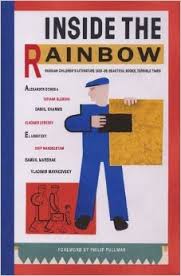
[READ: July 27, 2015] Inside the Rainbow

I grabbed this book because I am intrigued by Russian and Soviet art.  I don’t always like it, but I find it utterly fascinating (I wish I could read Cyrillic too, which I think is such a cool looking language).  This book collects illustrations–covers and interior pages from Russian children’s books.

The Soviet Union was formed in 1922 and Joseph Stalin was head of the Union.  A nutshell history of the titular terrible times is: Stalin launched a period of industrialization and collectivization that resulted in the rapid transformation of the USSR from an agrarian society into an industrial power. However, the economic changes coincided with the imprisonment of millions of people in Gulag labor camps.  The initial upheaval in agriculture disrupted food production and contributed to the catastrophic Soviet famine of 1932–33, known as the Holodomor in Ukraine.

The images in this book do not date to the Socialist propaganda style (the striking graphic images of red black and white), rather, these are a more pastoral style.  All of the images come from the Raduga (Rainbow) publishing house. (more…)

Read Full Post »

pablo SOUNDTRACK: BUILT TO SPILL-Live (2000).

btsliveSoon after releasing “Carry the Zero,” Built to Spill released this, their first (and so far only) live disc.

This disc shows a jamming side of the band that their records up to now hadn’t really displayed (sure there was some evidence of the jam band within, but who would have guessed 2 songs on this disc would stretch to 20 minutes?).

The live set also shows a rather contrarian spirit in that there are only 9 songs in 70 some minutes and only 5 of the songs are actual Built to Spill songs.

The disc opens with “The Plan,” a great version of their most recent disc’s opener.  Then they jump right into Perfect from Now On’s  opening track “Randy Described Eternity.”  That song has a lot of parts and sections, and they do them perfectly.  They follow it with another song from Perfect, “Stop the Show” which also has multiple parts and again, they nail it.  These three songs were recorded in New York.  Brett Netson joined them for “Randy,” and “Stop” which really helps to flesh out those songs.

The next song is a cover of The Halo Benders’ “Virginia Reel Around the Fountain.”  And if it sounds very fitting for Doug, he was in The Halo Benders with Calvin Johnson before he started Built to Spill.  Then comes the centerpiece of the record–a 20 minute version of Neil Young’s “Cortez the Killer.”  And it is amazing.  He sounds enough like Neil to be totally respectful, without just being a rip off.  It’s probably the best version of this song I’ve heard (until I saw Neil do it this summer).

They switch gears to their first single, “Car,” a delightful 3 minute song.   And then, to fill out this almost all covers section, they play “Singing Sores Make Perfect Swords” a song originally done by Love as Laughter.  I don’t know the original, but it fits in with Doug’s style.  These four songs were record in Seattle.

There’s one song that was recorded in Denver, “I Would Hurt a Fly,” which is yet another song from Perfect, and is one of my favorite songs of theirs.  It does not disappoint.

The final song on the disc is a nineteen minute version of the song “Broken Chairs” (which is 8 minutes long on Secret).  They do the whistling section and a ton of solos.  Indeed, the way they stretch out the song out with guitar solos and noise (and the way the song ends with feedback) is really cool.  Netson joined them for “Fly” and “Broken Chairs” (which is why that ending solo is so intense.

It’ s a great live collection of songs and the sound is outstanding.  You’d never know it was recorded in different venues, either.

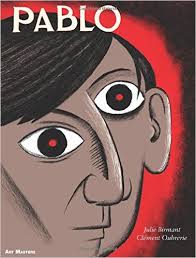
[READ: October 4, 2015] Pablo

Judging this book by its cover you would be correct in assuming that it is about Pablo Picasso.  But rather than being a simple history of the Art Master (the title of the series), this is a thorough recounting of Picasso’s life.  And what’s even more interesting is that the story is told from the point of view of Picasso’s lover and model Fernande Olivier.

And Fernande’s diary entries make up the bulk of the story and allow for a very personal look into the man and the stylistic choices that Picasso made over the years.  As the book says on the back, the authors show “how Picasso’s style developed in response to his friendships and rivalries.”  And of his rivals none was greater than Henri Matisse.  (The book also covers Picasso’s life before she met him too, of course).

The original work was published (in French) in four volumes.   This edition was translated by Edward Gauvin.

I especially like the way the book begins from the point of view of Fernande as an old woman, still alive and reminiscing about her life. (And yes, it’s amazing to realize that Picasso died in 1973…in my lifetime!).  (more…)

Read Full Post »

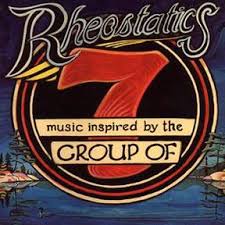
sicocSOUNDTRACK: RHEOSTATICS-Music Inspired by the Group of 7 (1995).

go7albumIn music there’s always a… key in which the composition is set…  In painting there’s a mother color that goes through all–it holds the painting together…you might call it the signature of the painting.

And thus opens the Rheostatics Group of 7 record.  I had always been vaguely dismissive of the album because it is mostly instrumental and, while good, I just didn’t listen to it that much.  After seeing it live it’s time for a reappraisal.

The disc opens with “One” a lovely minute-long piano introduction.  It’s followed by “Two” which has a series of piano and guitar trills as they set a bucolic mood. Then the drums kick in.  This song starts slowly with some plucked strings (and a sample from Queen Elizabeth).  What I love about this piece is that after the trills, the song seems to build to a very cool cello riff (provided by drummer Don Kerr).  Then there’s a vocal section (of bah bahs) which was really highlighted when they played it live.

The first highlight of this record for me is “Three,” which is known as the Boxcar song.  Someone shouts “All aboard” as the chugging begins and the cello and drums keep an excellent rhythm with Martin’s amazing guitar melody.  “Five” is another waltz with, to my ears, a vaguely Parisian sound.  Martin sings a few verses (and a chorus of “blue hysteria”).  It’s a lovely, delicate piece.

“Six” is a longer piece which centers around a slowly swirling guitar and cellos motif.  It ends with some noisy moments and more rainfall.  Until a noir sounding coda creeps up with piano and upright bass,.

Then comes “Seven” a cello based version of the awesome song “Northern Wish.”  I prefer the original because it is so much more intense, but this quieter version is really interesting and subtle.  “Nine” starts slowly with some gentle acoustic guitars.  But it builds and grows more intense (it has the subtitle “Biplanes and bombs”).  As the song progresses (around 3 minutes) Tielli’s guitar comes in and the backing notes grow a little darker.  The last 15 second are sheer noise and chaos (live they stretched this section out for a while, and it was very cool to see Hugh Marsh makes a lot of noise with his violin).

“Ten” uses some nontraditional instruments including what I assume is a didgeridoo and all kinds of samples.  On stage Tim and Kevin were swinging those tubes that whistle to make the noises).

Eleven is a reprise of track one, Kevin’s Waltz, with the vocals sung by Kevin Hearn.

I have really come to appreciate this album a lot more.  It doesn’t have any of my favorite songs on it, but it is a really amusing collection fo songs.

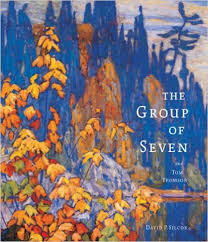
[READ: August 20, 2015] The Group of Seven and Tom Thompson

I have had this book for a number of years.  I’m not even sure where I got it (in hardback no less).  I know that I purchased it because of the Rheostatics, because I had never heard of the Group of Seven before the band made their record inspired by them.  Since I was going to see the paintings live, I decided to read up about the Group a bit more (I liked the paintings a lot, I just hadn’t read much).

Sadly, the Art Gallery of Ontario wasn’t open for viewing when we went to the concert (which makes sense as it was at night) and we didn’t have another opportunity to go to AGO.  Fortunately, we also went to Casa Loma which had a room full of Go7 paintings, so I was delighted to see some of these up close.  (They may have been prints, it was unclear, but it was cool seeing them).

So the Group of Seven were (initially) seven Canadian painters who joined together to create uniquely Canadian works of art from 1920 to 1933.  Their art was meant to celebrate their country which they felt was under-represented in art.  They planned to not follow conventional European styles of painting and often made striking scenes of nature.  They are largely known for their landscapes, although they also painted portraits and other works.

The Group of 7 originally originally consisted of (links are to Wikipedia bios): Franklin Carmichael (1890–1945), Lawren Harris (1885–1970), A. Y. Jackson (1882–1974), Frank Johnston (1888–1949), Arthur Lismer (1885–1969), J. E. H. MacDonald (1873–1932), and Frederick Varley (1881–1969). Later, A. J. Casson (1898–1992) was invited to join in 1926; Edwin Holgate (1892–1977) became a member in 1930; and LeMoine FitzGerald (1890–1956) joined in 1932.

Two artists commonly associated with the group are Tom Thomson (1877–1917) and Emily Carr (1871–1945). (more…)

Read Full Post »

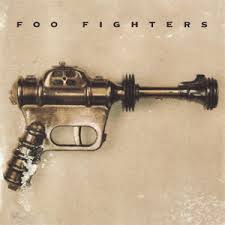
kurt-cobain-montage-of-heck-psterSOUNDTRACK: FOO FIGHTERS-Foo Fighters (1995).

ffDave Grohl was like the anti-Kurt Cobain.  How many photos do you see of him with a big stupid grin on his face.  He seems to be silly and fun all the time (despite some apparent angst in his life).  And how surprising was it to find out that not only could he bang the hell out of the drums, he could also write songs (and play guitar).  Of course we all looked for songs “about” Kurt, on this record, but I realize that Dave only knew Kurt for a couple of years, he likely didn’t even really know him that well.  Dave has other things on his mind.

And somehow, despite the really aggressive often heavy metal feel  of Foo Fighters albums, they are always popular.  Foo Fighters have gotten so big, it’s easy to forget that Grohl was even in Nirvana, which is saying something.

The Foo Fighters debut album was written and performed entirely by Dave Grohl.  I remember when it came out (well, after it was revealed to be Grohls’ album–it was a secret for a little while) listening to it in an apartment in Boston.  I must have listened to it a lot because I know the whole thing so well.

Grohl uses some of the loud/quite format of Nirvana, but mostly he just writes songs with simple lyrics (easy to sing along to even if you don’t know what he’s saying (bridge to “I’ll Stick Around” anyone?) and big catchy choruses.

If you like loud rocking songs, this album is fantastic.  “This is a Call” and “I’ll Stick Around” are super catchy heavy songs.  “Alone + Easy Target” is a bit less catchy, although the chorus has a very cool riff in it.  “Good Grief” is super heavy with an aggressive chorus.

But it’s also git some sweet songs.  “Big Me” is quite tender and it makes me laugh because the drums are so incredibly simple and gentle for a basher like Grohl.  “Floaty” is a really pretty song with some cool fuzzy guitars and a cool riff that goes from bridge to chorus.  The chorus has an aggressive punk riff which complements the rest of the song in an interesting way.

“Weenie Beenie” (I had no idea that’s what the song was called) is loud and aggressive with a massively distorted vocal. It’s kind of a throwaway but shows Grohl’s love of punk.  “Watershed” is a similarly fast punk track and is only 2 minutes.

“Oh, George” is a mid tempo song, with some very catchy moments and a classic rock style guitar solo.  “For All the Cows” opens with a kind of jazzy guitar and drum sound and then really rocks out.  It was released as a single but never did anything, which is a shame because it seems like a joke but is actually quite good.

Even though Grohl did everything on the album, he had a little help from Greg Dulli who played guitar on “X-Static.”  I would never have noticed it was Dulli, although knowing that it’s someone else playing, you can hear a different style in the guitar.  The disc ends with “Exhausted,” a song which sets a kind of trend of longish more meandering songs near the end of Foo Fighters albums.  I don’t love it but its a fine ending.

So many things could have been wrong with this album–a drummer writing songs, and an ex-famous drummer at that.  He even initially wanted to record it with Krist Novoselic, but was afraid that people would think it was a Nirvana band (and he’s very right about that).  Despite all of that, it turned out to be pretty great.  And it was the start of something of a phenomenon.

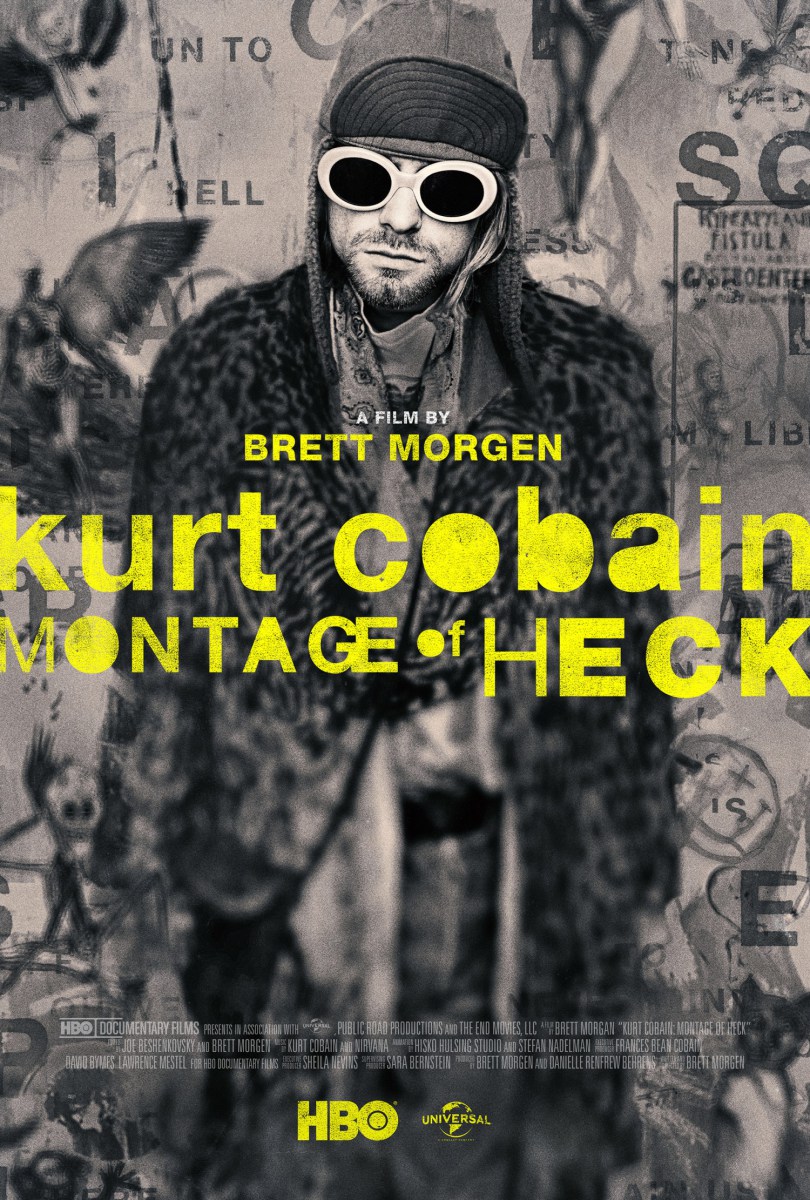
[READ: May 20, 2015] Montage of Heck

So I was a huge fan of Nirvana (like the rest of the world) when they came crashing forth on my speakers.  And yes, I knew that they saved rock.  But by the time Kurt killed himself, I was bummed but not distraught.  I was never going to have a poster of him on my wall or anything like that.

I was intrigued when I heard this documentary was coming out. But I didn’t have any plans to see it.  And then NPR played an audio excerpt from the movie in which a drugged up Kurt is getting yelled at by Courtney while their infant baby is lying next to them.  And I decided I didn’t need to see that film–it was brutal just to listen to.

Then I saw this book at work and thought it might be an easier dosage than the film.  (Although my friend Eugenie has seen it and says it’s excellent).

It turns out the book has a lot more stuff that the film does (although I can’t say what as I haven’t seen the film).  It consists entirely of interviews and illustrations (very cool ones by Hisko Hulsing and very creepy ones from Stefan Nadelman.   There’s lots of photos and a few excerpts from Kurt’ diaries and the like.

The interview subjects are listed on the page 18-19 spread of the book.  Each has a photo.  There’s Don Cobain and Jenny Cobain (Kurt’s father and stepmother).  Then there’s Wendy O’Connor, Kurt’s mom and she looks exactly like Courtney Love WHAT IS UP WITH THAT?  In her early younger photos she doesn’t.  It is creepy. (more…)

Read Full Post »

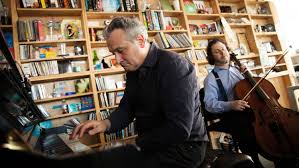
5dials34SOUNDTRACK: MATT HAIMOVITZ & CHRISTOPHER O’RILEY-Tiny Desk Concert #426 (March 14, 2015).

matthThere’s no introduction or fanfare for cellist Matt Haimovitz and pianist Christopher O’Riley’s Tiny Desk set.  They just start right in with a romping Beethoven piece.   I don’t know these two, but the notes say the duo has a new album out called Shuffle.Play.Listen., in which music by Stravinsky and Astor Piazzolla mingles with Cocteau Twins and Arcade Fire.  There’s no contemporary music in this set, but it’s very cool nonetheless.

The Beethoven piece sounds alive and wild and very modern.  The Glass piece is slow and beautiful  The final piece is lively and playful (with hints of darkness).  It introduced as reminding O’Riley of a scene in The Unbearable Lightness of Being when Daniel Day-Lewis gets a quickie.

It’s especially fun to watch how animated Haimovitz is.  The set list:

  • Beethoven: Cello Sonata No. 4 in C – IV. Allegro vivace
  • Philip Glass/Foday Musa Suso: The Orchard
  • Leoš Janáček: Pohádka – II. Con moto

[READ: April 6, 2015] Five Dials 33 Part II

After several themed issues of Five Dials we get back to the ones that I really like–random things thrown together under a tenuous idea.  It’s got some great authors and a surprising amount of large scale doodles–full page scribbles and some drawings that go from one page to the next (which works better online than in print).  Some of the giant illustrations also are fun–they are of jokey images like a memory stick that states I have only memories.  The art was done by JODY BARTON.

As with a previous issue there is a page of contributors and “The Unable to Contribute Page.”  These are journalists unfairly imprisoned (see more at cpr.org).  The Table of Contents is back, along with the FAQ: (more…)

Read Full Post »

5dials32bSOUNDTRACK: SYLVAN ESSO-Tiny Desk Concert #429 (March 30, 2015).

sylvanI haven’t really gotten into Sylvan Esso (NPR loves them), although there was something about the show that made these songs, which I’d heard before, gel for me.  Perhaps it was seeing Amelia Meath dance (or make that hilarious face).  Or her commenting about how quiet the room is and that maybe everyone could “move like the seaweed in Ursula’s cave.”  Maybe it was the preposterous shoes she is wearing.  Or maybe it was watching Nick Sanborn play around with this new to him equipment.

Or maybe it was just time for me to “get” them.  They have a  great chemistry in this setting, and Meath’s voice is really pure and beautiful.  I love that she often sings without moving the microphone to her face.

They play three songs: “Coffee,” “H.S.K.T.,” and “Come Down.”

It’s also hilarious that her dad sends her texts messages during the show (which she reads to us while Sanborn is trying to fix the equipment).

This is a great set and funny banter from this charming band whom I should listen to more.

[READ: April 3, 2015] Five Dials 32b

The email that accompanied this issue explains what those words in the title mean.

In Maori, there’s a word for the extra bit of time added at the end of a game, perhaps after the final minutes of a rugby match. Wā tāpiri is the noun. We’ve decided to make this our wā tāpiri issue. At the beginning of June we released an issue dedicated to new New Zealand writing.  Our wā tāpiri issue offers extra time for you to read some of the wonderful Janet Frame’s correspondence and look at a few untamed paintings from Shane Cotton. We’re pleased to be able to include them in our extended New Zealand special.

So there’s only two things in this extra issue.  Some letters and some art.  I enjoy these little extra issues, and this one is especially cool.

JANET FRAME-Correspondence: Camping in Our House
This is a series of letters passed between New Zealand author Janet Frame and poet Charles Brasch.  In 1963 and 1964, they share some nice compliments.  And then in 1969 they talk about what home (New Zealand) is like, while she is away at Yaddo.  First off, it’s interesting to hear that a) Yaddo was around in 1969, b) just how many famous people were in residence and c) the interesting details of residence there.  We also learn about some troubles in New Zealand but how they pale in comparison to the troubles in the States where “West Virginia has just passed a law which reads ‘police or mayors shall be guiltless if anyone is killed or wounded in an attempt to put down a campus disturbance even if this victim is only a spectator'” (Jesus!).  Meanwhile she is happily staying for free in Yaddo and getting a lot of work done.   There is also a facsimile typed letter from 1967 (which is fun to read and to see that people made mistakes back then and just fixed them with pen) in which she talks about first going to Yaddo.

JUSTIN PATON-“Shane Cotton’s The Haymaker Series”
Paton introduces Cotton’s Haymaker series which is indeed 5 panels on the wall of a gallery (each piece is presented in this issue too).  He describes how the New Zealand artist references other artists well as his own previous works in these panels.  He references the carved heads from his Tradition History & Incidents (from 2009), in addition to many other.  But this is not a retrospective piece.  This introduction really gives some great context for the works (which I talk about below before having read this introduction).

SHANE COTTON-The Haymaker Series
From Page 10 is the Haymaker series, mechanical and geometric prints in front of a gray foreboding background which looks like a storm.

The final page shows some photos from the launch of issue 32, including a link to a video by Lail Arad who was at the launch.  It’s a quirky video for her song “Everyone is Moving to Berlin.

Read Full Post »

5dials32SOUNDTRACK: DEATH CAB FOR CUTIE-Tiny Desk Concert #430 (April 6, 2015).

dcfcIt’s hard for me to believe that Death Cab for Cutie had not been on a Tiny Desk Concert before.  But they are here at last.  Well, three of them anyhow.  It’s simply Ben Gibbard (of course) on vocals, Nick Harmer on bass, and Zac Rae on piano (now that Chris Walla has left).  And what makes this concert so special is that all 4 songs are played on piano–there’s no guitar at all.  It gives all of these songs (familiar and new) a much starker feel.  Not better, but very different.

There are two new song from Kintsugi, “Black Sun,” and “No Room In Frame” which sound so much like Death Cab for Cutie (probably because of Gibbard’s voice), that they fit in perfectly with the other two songs. “Your Heart Is An Empty Room” from Plans and “Passenger Seat” from Transatlanticism.

It’s a little uncomfortable watching Gibbard sing close ups with his eyes closed, but he sounds right on.  He says some nice words about NPR (a station they actually listen to for news) and he gets a nice round of applause when they say they’ll do a fourth song.  And Gibbard can even hit those high notes in this quiet setting.  This is a must hear for any fan of the band.

[READ: April 2, 2015] Five Dials 32

Issue Number 32 is a thematic one–based around the Australia & New Zealand Festival of Literature & Arts.  And so many of the writers and artists are from New Zealand.  There are dozens of paintings by Francis Upritchard: colorful watercolors of monkeys, monocolor paintings of people and colorful masks.  They all look incredibly simple–like first drafts–yet are quite effective in their displays.

A Letter from the Editor:  On New Zealand Issues
Craig Taylor didn’t have a letter last issue.  This time he talks about the issue and about issues in New Zealand. He talks a bit sadly about how the New Zealand writer most often find a home in London even if the writers mostly think about national (New Zealand) issues. (more…)

Read Full Post »

5dials31SOUNDTRACK: BEACH SLANG-Tiny Desk Concert #431 (April 10, 2015)

beachslangI had never heard of Beach Slang before watching this Tiny Desk Concert.  Evidently they are a new band with only a couple EPs out.  The write up says they are a punk band.  But in this Tiny Desk show, it’s just lead dude James Snyder and his guitar.

He plays four songs.  They are all sort of jaunty acoustic songs.  They are almost anthemic, but not quite.  The strangest thing is Snyder’s super-raspy singing voice, especially since his speaking voice is gentle and his laugh is kind of high-pitched. He is very funny and nervous when he talks, which I enjoyed quite a bit.

Exploring a little their bandcamp site, I see that they do a cover of the Psychedelic Furs’ Love My Way, and that sound is pretty apt.

Their recorded versions are heavier and actually sound a bit like the Goo Goo Dolls.

This is a brief but enjoyable set.  I find him so charming that I like it more than I might normally.

[READ: April 1, 2015] Five Dials 31

It has been quite a while since I’ve read a Five Dials.  And that’s no fault of the magazine–its all on me.  I always think, I’ll just put it off till I have time, and then I realize that I can always find something to read…so I just need to actually make time for Five Dials because it is totally worth it.

So this issue came out about a year ago.  Maybe that’s not too bad?

It begins with the contributors page and is followed by the Unable to Contribute page which lists five journalists who are currently in prison (find out more at the Committee to Protect Journalists).  Page 5 is a Table of Contents which I feel they haven’t done before.  It has a cool drawing on the bottom.  All drawings from this issue came from The Public Domain Collection of the British Library.

Then there’s a Frequently Asked Questions page.  Many pertain to corresponding with Five Dials, but others, well: (more…)

Read Full Post »

CV1_TNY_08_11_14Mattotti.indd SOUNDTRACK: PRIMUS-Sailing the Seas of Cheese (1991).

cheeseHere they come, here comes the bastards again.  Sailing the Seas of Cheese was the band’s major label debut, and they were given a lot of freedom to do whatever they wanted.  Which they did.

The first two songs sort of ease you into the chaos that is “Sgt Baker” a noisy stomp that mocks the military. It’s followed by “American life” a relatively quiet song that is rather sad.  Although I like Ler’s solo at the end (which is rather conventional for him).

But the album really takes of with “Jerry Was a Racecar Driver”, Primus’ first real hit.  Which is amazing in and of itself given how weird a song it is and how noisy (and moshy) the middle section is.  Fun drumming opens “Eleven,” a rocking song done in 11/4 time–count it, its crazy!  I just love the lunacy of “Is It Luck?”–the bass is fast and so bizarre while Ler’s guitars are playing one simple dissonant note for much of the song.  “You wanna get lucky little boy?”

“Grandad’s Little Ditty” is basically Les singing in the shower (and one of the few songs I know of which use the word “flatus”).  It leads into the new recording of “Tommy the Cat.”  This time the role of Tommy is played by Tom Waits, which make a slot of sense.  The Primus book has a funny story about Waits singing this (he sent them a version without having heard the song and he sang it through a megaphone).  The bass in the middle of the song is just incredible.

“Sathington Waltz” continues the adventure of Sathington Willoughby, although this is a scattered instrumental with banjos and loud drums (and lots of guests).  “Those Damn Blue Collar Tweekers” is a stomping song with a great riff.  I never knew exactly what it was about (not that its hard to figure out), but the book explains exactly who Les was talking about.

“Fish On” is a 7 minute song (most of the songs on this record are shorter than on Frizzle Fry) with a lengthy intro and outro.  The disc ends with “Los Bastardos” a reprise of the opening bastard music with some samples from The Young Ones and all kinds of friends playing along.  It’s a really fun record with some absolutely classic songs on it.

Shut up you bastards!

[READ: January 5, 2015] “Picasso”

The ever prolific César Aira had a new short story in The New Yorker (he usually writes novella length pieces, but this appears to be an actual short story (3 pages)) which is a little different.

In the story, the narrator says he was in the Picasso museum enjoying the artwork when a genie came out of his bottle of Miracle Milk and offered him a choice: Would he rather have a Picasso or be Picasso.  I enjoyed this twist on the typical three-wishes genie (he even mention how most people are prepared to ask for more wishes), and that this was totally unexpected.

To me, the answer was obvious from the start, Picasso was a pretty unhappy guy, why would I want to be him?  Of court, as the narrator goes through the options, he says that if you were Picasso you would automatically have all the Picassos.  Plus, he says that he himself has a pretty unhappy life, so Picasso would be a step up.

The narrator reviews Picasso’s life and output, but ultimately he decides that owning a Picasso would give him the financial security to allow himself to write his novels.

As soon as he thinks that, a painting appears on the table in front of him.  It is clearly a Picasso.  He spends the next few paragraphs describing the painting and then comes upon a “meaning” for it.  It’s an interesting look at a Spanish fable or joke.  The fable involves a queen who is lame and her servants who want to tell her without actually telling her.  The punchline of the joke comes down to “Su Majestad, escoja” which translates as “Your Majesty, choose” or if the last word is broken up (into es coja) “Your Majesty is lame.”  It’s a pretty elaborate painting or what amounts to a joke (and I have no idea if this is a real painting or not).

As the story comes to an end, the final paragraph introduces a whole new aspect of the story which was hilarious and unepxetced.  It was a great twist.  I do have to wonder if this is part of a bigger story because although it feels complete, I could easily see him following this character further.

This was translated by Chris Andrews.

For ease of searching I include: Cesar Aira

Read Full Post »

« Newer Posts - Older Posts »