Feeds:
Posts
Comments

Archive for the ‘Animals’ Category

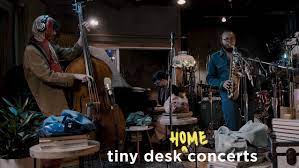
SOUNDTRACK: IMMANUEL WILKINS-Tiny Desk (Home) Concert #164 (February 3, 2021).

Immanuel Wilkins is a saxophone player who creates mellow but poignant jazz.

Candles and books rest on a trunk at the bottom right corner of the wide shot. There, too, are special photographs of alto saxophonist Immanuel Wilkins with family in his childhood home in Philadelphia.

Wilkins plays three songs from Omega in this twenty minute

Omega was released last year to high acclaim. The project is all about Blackness, Black theory, the Black experience and the struggle and triumph that go with it all.

They open with “Grace and Mercy,” which is “a lyrical story about peace, forgiveness and humility with carefully crafted form and melody.”

He met up with his long time bandmates — Micah Thomas on piano, Daryl Johns on bass, Kweku Sumbry on drums —in Manhattan’s Sear Sound studio to record this set. The quartet has been playing together for years, which is remarkable considering Wilkins is only 23 years old.

There’s a really nice piano solo in the middle of the track from Thomas

“Warriors” opens with a saxophone intro before the band joins in for this

driving, dynamic tune that conveys the shield of protection provided by our inner circles.

Wilkins gets up to some wild soloing in the middle of the song.  As the song comes to an end and Wilkin repeats the same melody, Sumbry gets to show off his chops on the drums.

“The Dreamer” is a tender piece that honors the Black writer and activist James Weldon Johnson and is based on his poem “A Midday Dreamer.” The opening lines are played effortlessly on bass by Johns and when Wilkins joins in, his melodic saxophone exudes the rhythm of the poem’s first stanza: “I love to sit alone, and dream, and dream, and dream…”

This is some wonderfully thought provoking instrumental music.

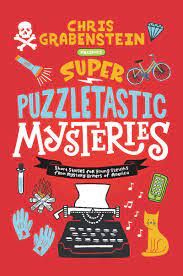
[READ: March 3, 2021] Super Puzzletastic Mysteries

I was in Barnes & Noble at the end of last year and I was feeling splurgy so I picked up this book, thinking that everyone in the family might like it.  We all love Chris Grabenstein after all.  So this is basically a series of pretty short mysteries.  The end of the story is pushed to the back of the book so you can figure out if you solved the mystery before it is revealed to you.

CHRIS GRABENSTEIN-Introduction
Grabenstein sets up what the book is about.  it was inspired by Donald Sobol (the guy who created Encyclopedia Brown) and his Two Minute Mysteries.  There would be some kind of crime, clues would be presented and the story would end without a  solution.  The end of the story (and the solution) came at the end of the book so you could try to figure it out for yourself.  Amusingly, he also tells us that his story is “based on something I actually saw out the library window when I did a school visit the day after a snow day.”

I’m giving a brief summary of each mystery and then whether my adult brain could solve it. (more…)

Read Full Post »

SOUNDTRACK: ÓLAFUR ARNALDS-Tiny Desk (Home) Concert #177 (March 4, 2021).

Ólafur Arnalds is an Icelandic composer who creates (mostly) beautiful soothing songs.

I really enjoyed his previous Tiny Desk Concert where he displayed his high tech player piano gadget (used in one of these songs although it’s hard to tell).

He and his accompanying quartet (Geirþrúður Ása Guðjónsdóttir, Sigrún Harðardóttir and Karl James Pestka on violins; Unnur Jónsdóttir on cello) play four tracks.

The pensive set opens with an older tune, “Happiness Does Not Wait,” with Ólafur Arnalds seated at a short upright piano known as a Danish ‘pianette.’

“Happiness Does Not Wait” opens the set with a beautiful looping melody on the piano and gentle strings added on top.  Then the strings take over playing the piano melody and the backing melodies as Arnalds preps his next song.

The remaining three songs are form 2020’s, some kind of peace. 

For “Woven Song” he winds up an Edison “Fireside” cylinder phonograph which plays a haunting melody–a traditional Amazonian healing song sung by the late shaman Herlinda Agustin Fernandez.  He plays a complex piano melody on top of the song.  Then strings layer on top and then once again take over the melody as he stops playing and heads to his other piano.

He explains that in the tribe where Fernandez sings, they weave their melodies into cloth to write them down.

Then moving from the wax cylinder to his high tech Stratus music software.

Look closely at the piano toward the back of the studio during the tune “Spiral,” and you’ll see a piano playing seemingly without a performer. That piano is reacting to Ólafur Arnald’s real-time performance using algorithms he and his coder friend, Halldór Eldjárn, developed.

The song opens with the violin and then the rest of the strings flesh the song out while he begins the piano.  Then the instruments fall back leaving just one violin along with the piano for the end.

For the final song, he moves back to the first pianette to play “We Contain Multitudes” which has an otherworldly echoing quality to it.

It’s a lovely calming session.

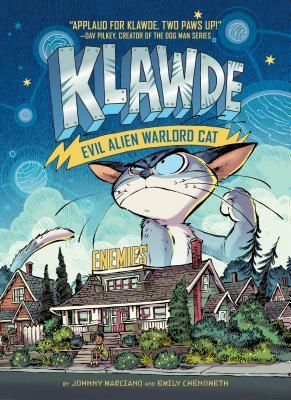
[READ: March 21, 2021] Klawde: Evil Alien Cat 2

Book 2 picks up soon after the events of Book 1.  In other words, summer is over and it’s time for Raj to go to his new school.  The good news is that the friends he made at camp–Cedar and Steve–will be there.  The bad news is so will his enemies Scorpion and Newt.

In the introduction, Klawde explains that his name is not Klawde, it is Lord High Emperor Wyss-Kuzz, the Magnificent.  He says he hated the planet Earth when he was exiled here and he hates it even more now.

Raj is freaking out about school, but Klawde is not interested in his pathetic classes. Where is Battle Tactics?  The Art of Slash-and-Claw? The Art of Ambush?  And that made Klawde think–he will start his own school–a school for warriors.

Marciano wrote this book in 2019 but how crazily prescient was this.  Raj goes into his classroom but there is no teacher.  Instead a voice came from speakers

Now, y’all may think it’s weird to have a teacher on a screen, but it’s part of a new wave in education… remote instruction! [And] no you cannot do whatever you want… I may be sitting down here in Alabama, but … I have a split screen monitor right here with every student’s face on it.

Spooky! (more…)

Read Full Post »

SOUNDTRACK: GIVĒON–Tiny Desk (Home) Concert #166 (January 28, 2021).

GIVĒON is a pretty classic R&B crooner.  He seems pretty grateful to have gotten where he is.

“Just bear with me while I just enjoy this and soak in it,” GIVĒON admits with a laugh.

He plays three songs.

“The Beach” opens with gentle guitar chords from James Murray and a slow bass line from Ivan Chatman.  Then GIVĒON and RaVaughn Brown sing together.

After the song, he says he’s pretty excited to play in February.

“Any moment to do this would be special,” he says between songs, “but I think Black History Month … just celebrating Black culture for this month, I’m really excited to get to do this on this platform.”

He also notes that he is a Pisces.  “Pisces are emotional, maybe that’s why I make songs like this.”  “Like I Want You” opens with a simple drum intro from Andre Montgomery and a slow bass line.  Deondre Ellis plays a keyboard melody that matches the vocal melody at the beginning each line–it’s a nice touch.  Murray plays a pretty ripping guitar solo, too.

Before the final song, “Stuck on You,” he says, “I can’t wait to watch this with my mom and see what she thinks because she likes to nitpick sometimes.”  It’s a bit of a faster song and when there’s about a minute left, GIVĒON walks off to let the band jam out the set.  The mark of an old school singer already.

[READ: February 20, 2021] Goliath

The final book of this trilogy was as exciting as the rest of the series.

Everyone is back aboard the Leviathan and they are heading toward the Arctic.  They have an exciting and dangerous mission up ahead–they are going to lower Leviathan as low as she can go so that they can retrieve some cargo from the back of a polar bear beastie.

Deryn and Newkirk are on a small platform swinging madly through the air as they try to secure this very large parcel from the back of a moving bear.  It’s something that’s been done before, but never with something this large (usually just mail bags).  This is a massive time saver, but if they miss, it means a several hours before they can turn around an try again.

The package is a huge amount of supplies both for the Leviathan and for the special guest who they are going to meet in the Wilderness. Things don’t go as smoothly as promised because the package weighs more than was promised–the danger is pretty great and the scene is very exciting.

When they open up the packages in the ships hold, they discover that in addition to the various supplies there is a massive Clanker gadget that needs assembling.  It is good that Alek and his men are on board to help assemble the Clanker contraption.  He’s also happy to have gainful employ for a time–it’s the happiest he’s been in a while.

The device proves to be a portable metal detector–a powerful one designed to be used almost like a giant magnet. But there’s no explanation for why it’s here.

The ship continues on its mission further up towards Greenland.  Then the watchman sends a message: Trees All Down Ahead.  It doesn’t make sense until they see a clearing up ahead and indeed all of the trees are destroyed–knocked over as of by the world’s largest hurricane. Worse yet, there are gigantic bones littering the place–as if a whale beastie was eaten. (more…)

Read Full Post »

SOUNDTRACK: MESHELL NDEGEOCELLO–Tiny Desk (Home) Concert #167 (February 10, 2021).

I bought Meshell Ndegeocello’s Plantation Lullabies back in 1993 on the strength of “If That’s Your Boyfriend,” a funky track that is still pretty great.  I didn’t realize she had been steadily putting out music ever since.

This Tiny Desk (home) concert … includes songs from throughout her career framed by her thoughts on the importance and influence of James Baldwin: “He deserves flowers every day. Most of all because he was willing to discuss things that were painful, hard to look at, hard to see, hard to accept.”

Ndegeocello is a bad-ass bass player with a serious funk edge.  And yet in this Tiny Desk Concert, she strips almost all of that away.

The first song comes from Lullabies, but in this version of “Step Into the Projects” she strips away all the music and turns the song into a spoken word piece (although she does keep the rhythm of the original).

For the next three songs she is accompanied by her longtime guitarist Chris Bruce.

“Price of the Ticket,” is from Ndegeocello’s recent project, Chapter & Verse: The Gospel of James Baldwin, “a 21st century ritual toolkit for justice” inspired by Baldwin’s The Fire Next Time.  In the track, it’s just Bruce’s gentle guitar and Meshell’s quiet voice.

“Forget My Name” from Comet Come To Me (2014) is stripped down from its original reggae arrangement and lays bare the haunting imagery in the lyrics.

She plays some spare bass, but musically it’s all about Bruce–the cool low riff and the pretty high melody.

“Fool of Me,” from her acclaimed album Bitter (1999), ends the set with just vocals and guitar.

Like the other songs, it is spare and beautiful, allowing you to really hear the words.  I love Meshell’s funk, but this is a beautiful set.

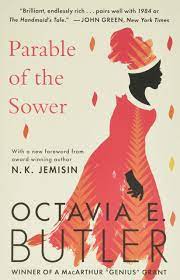
[READ: March 29, 2021] Parable of the Sower [2026-2027 (chapter 19)]

I have not read Cormac McCarthy’s The Road, and I don’t intend to.  But I feel like this book acts as a precursor to that one.  And that is something I did not in any way expect.

2026 opens in June, almost seven months after the previous entry.  I’m curious about the distance between entries.  It’s possible that Lauren has dozens and dozens of pages that just said, “today sucked” and we don’t need to see that.  But I am curious about the time jumps.

Is it a way for Butler to move us ahead quickly so that something that needed to take a few years to happen is given the time to do so?  I’m thinking about Mars a bit.  In two years a lot can happen with the space program.  Of course, the President was supposed to cancel the program.  So who knows what’s going on there.  Aside from basic passage of time, did we need to wait six months to see what came next?  I’m not sure.

In June Keith is back–bigger and more confident.  He’s not yet 14, but he’s very successful, bringing home money and gifts (but none for his father).  He has ingratiated himself into a gang by being the only literate one in the group:

They’re all older than me, but not one of them can read or write anything.  They stole all this great stuff and they couldn’t even use it.  Before I got there they even broke some of it because they couldn’t read the instructions. (105)

Lauren and Keith have a heart-to-heart–really their first ever.  He learns a bit about her and while he gains a little more respect he also tells her that she’d never survive out there–she doesn’t know enough.  He also tells her about these new crazies called Paints who paint their skin green or blue or yellow and eat fire and kill rich people.

Keith comes back on her birthday and gives her a present.  A month later he is dead–killed in a horrific and gruesome way.  He was clearly tortured and left to be found.  His death was a message for someone–a rival gang, probably.

But they don’t call the police:

cops liked to solve cases by “discovering” evidence against whomever they decided must be guilty.  Best to give them nothing.  They never helped when people called for help.  They came later and more often than not, made a bad situation worse. (114)

In October, a new component to the story crops up.

Kagimoto, Stamm, Frampton and Company (KSF) has taken over a nearby town called Olivar.  It is small and well to do.  The citizens voted to let their town be taken over–privatized.  They intend to set up energy resources in the community–solar, wind, desalinization.  They mean to own great industries in an area that people have given up on.

Kagimoto, Stamm Frampton: Japanese, German, Canadian.  When I was young, people said it would come to this. Well why shouldn’t other countries buy what’s left of us if we put it up for sale. (121)

This is another aspect of the story that confuses me.  Is it basically that Los Angeles has exploded and the rest of the country is okay?  There’s talk about work up north, but why?  What happened to the country that they/we would let L.A. collapse but nothing else.  Or maybe it’s the entire South West?  Nobody knows anything about the East Coast, apparently.   I’m hoping that they will get explained a bit later on.

Olivar was accepting applications to live there.  They were looking for educated people.  And here we learn that both of Lauren’s parents have PhDs [a commentary on the invisibility of Black scholars?].  Her stepmother thinks it’s a great idea to go to Olivar.  They would be guaranteed safety and security.  But her father is against it, calling it “half antebellum revival and half science fiction” (122).

Anyone KSF hired would have a hard time living on the salary offered. In not very much time, I think the new hires would be in debt to the company.  That’s an old company-town trick–get people into debt, hang on to them and work them harder.  Debt slavery. That might work in Christopher Bonner’s America. Labor laws, state and federal are not what they once were. (121)

Come November, the Garfields have been accepted at Olivar.  The Garfieds include Joanne, Lauren’s one time best friend (who misplaced Lauren’s trust by tattling to her father).  Joanne has been serious with Harry Balter.  But Harry is staying in Rebledo.  Lauren suggests they get married and then Harry can move in with them, but she says that Harry wants to get married and travel north.  He thinks they way Lauren’s father does about Olivar.

But the Garfields are still going: “conservative and sensible and mature and wrong” (128).

In November, Lauren’s father did not come home one night.  They spend days looking for him with no luck.  The search parties uncover all kinds of remains, some of which they think might be her father’s but which turn out not to be.

The search also reveals an aspect of Lauren’s hyperempathy that we didn’t know–sound doesn’t trigger it (she hears a man screaming), only sight does.

Five days alter they have a Sunday survive that turns more or less into a memorial.  Lauren speaks at he service and proves to be powerful preacher.  She speaks of God but presumably she means her own god–the earthseed god.  By mid-December they have a formal funeral–they accept that he would have found his way home by now.

Later, when KSF came for the Garfields, it was in an armored truck

The two movers were a black and a white, and I could see that Cory considered that hopeful.  Maybe Olivar wouldn’t be the white enclave that Dad had expected. (139)

All along Lauren has been romantically involved with Curtis.  People anticipated that she would get married an have a baby with him–something she strongly resisted.  Indeed, her plan all along was to leave Rebledo without him.  But now with Lauren’s father gone (he was the reason she hadn’t left yet–she didn’t want to hurt him), Curtis suggests that they both go.  He’s upset that she wanted to go without him, but she explains that she didn’t want to force him to make that choice.

Two days later, someone burned down the Payne/Parrish house; while that was going on. they robbed three of the other houses including Lauren’s.

I’ve been frightened at the phrases that Butler says that prove eerily prophetic to the last few years:

People are setting fires because they’re frustrated, angry, hopeless. They have no power to improve their lives, but they have the power to make others even more miserable.  And the only way to prove to yourself that you have power is to use it.  (143)

Interestingly, the drug that gave Lauren her hyperempathy–Paracetco–was initially a legitimate drug intended to help victims of Alzheimer’s disease.  Pyro was an accident–a homebrew on the East coast it made it was away across the country.

People on the fire drug get off on watching things burn.  Blaze, fuego, flash, sunfire.  The most popular name is pyro short for pyromania [I’m fascinated that she needed to spell that out as I feel that in 2021 (and much earlier) it was a common abbreviation].

As the year ends, the families try to make due with what they have left.

Then we enter 2027.  Once again it’s six months into the year.  And this is when things change dramatically.   Thieves drove a truck through their wall and set everything on fire.  Nearly everyone in the community was killed.  [I did wonder if it was worthwhile learning anyone’s names, and it was two people I didn’t think twice about who survived].  The description is a violent orgy of death, rape, fire and who knows what else.  It is brutally described.  Lauren escaped.  She had the forethought to run back in and put on clothe and shoes and grab her bug out bag.  No one else in her family had done so. She saw them n bare feet and pajamas and then she didn’t see them any more.  She managed to get outside and to hide until the next day,

She crept back into her community and went to her house which was being looted and stripped. She knew where there were some hiding places and she managed to get clothes for her family as well as money that was hidden in the ground.  She grabbed a gun and got out, looking like all the other miserable looters.

Lauren was sure she was alone.  Then out of the rubble came Harry Balter and Zahra Moss–the youngest wife of Richard Moss the polygamist.  Zahra’s baby was killed (brutally) and an attacker was about to (or had begun to) rape her when Harry saved her (and got beaten for his help).  Neither one had planned for anything like this and they are pretty hopeless.  Lauren decides that three is safer than one and invites them to go North with her.

Zahra’s backstory is interesting.  Richard bought her from her mother who was a drug addict and a prostitute.  Zahra has lived on the streets and she knows what’s what.  She takes them to Hanning Joss, the biggest secure store complex.  I’m fascinated to learn that there are are still megastores and that they have security allowing people to shop safely there–commerce always wins.

Then they do what everybody else does–they head North.  Lauren has decided to pass as a man.  She’s tall and muscular and can do so, so she cuts her hair short.  They encounter much danger and violence but manage to get relatively far north.  Harry is a trusting guy, trying to avoid violence in any way possible.  But Lauren (and Zahra) knows the reality of the situation–kill or be killed; steal or be stolen from.  And with Lauren’s hyperempathy, she can’t afford to let people around her suffer.  She winds up cutting a man’s throat to stop the hurting that he (and she) are feeling.  Harry is appalled at her.  So she finally admits to her hyperempathy assuming they’ll abandon her.  But they do not–three is better than two.

Zahra and Harry become a couple and have unprotected sex (what harm could come from that?)

Then the trio meet another family who seems to be tagging along after them.  Everyone is out for themselves, but Lauren takes pity on this mixed race couple with a baby.  She helps them out at the second Hanning Joss and a few days later, when Lauren saves their baby from a feral dog, they agree that five (or six) is better than three and two (or three).

The new people are Travis Charles Douglas, Gloria Natividad Douglas and six month old Dominic. They are going to Seattle where Travis’ aunt lives.  Travis is quite taken aback when he learns that Lauren is a woman–especially since she saved them, but he’s going to have to get over it.

All of this time, Earthseed has been running around in Lauren’s head, but it hasn’t really shown up.

Then in chapter 18, Lauren starts talking to them about Earthseed.  Travis is a (surprisingly) intelligent man–he knows about entropy.

Travis’s mother was a live in cook for a rich man.  But before that she had written for newspapers and magazines.  She taught Travis to read. The man she worked for had a library and she would sneak out one book at a  time–he didn’t want Travis touching his stuff.

Of course. Slaves did that two hundred years ago.  They sneaked around and educated themselves as best they could sometimes suffering whipping, sale or mutilation for their efforts. (218)

Natividad was a maid and the rich man let them marry:  The son of the cook marrying one of the maids. That was like something out of another era too.

They discuss her poems–Earthseed.  Travis pushes back against her ideas, although never in an aggressive way.

She argues that here is no pore pervasive power than change.  Travis says that nobody is going to worship change.  Lauren says she hopes not

This excerpt from God is Change summarizes this discussion nicely:

“I was looking for God. I didn’t know whether there was a god to find, but I wanted to know. God would have to be a power that could not be defied by anyone or anything.”
“Change.”
“Change, yes.”
“But it’s not a god. It’s not a person or an intelligence or even a thing. It’s just … I don’t know. An idea.”
“It’s a truth. Change is ongoing. Everything changes in some way— size, position, composition, frequency, velocity, thinking, whatever. Every living thing, every bit of matter, all the energy in the universe changes in some way.”
“Sort of like saying God is the second law of thermodynamics?”
“That’s an aspect of God. There are all kinds of changes in the universe.”
“But why personify change by calling it God? Since change is just an idea, why not call it that? Just say change is important.”
“Because after a while, it won’t be important. People forget ideas. They’re more likely to remember God— especially when they’re scared or desperate.”
“Your stuff isn’t very comforting.”
“It is after a while. I’m still growing into it myself. God isn’t good or evil, doesn’t favor you or hate you, and yet God is better partnered than fought.”
“Your God doesn’t care about you at all.”
“All the more reason to care about myself and others. All the more reason to create Earthseed communities and shape God together. ‘God is Trickster, Teacher, Chaos, Clay.’ We decide which aspect we embrace— and how to deal with the others.”
“But nobody’s going to worship change.”
“I hope not.  Earthseed deals with ongoing reality, not with supernatural authority figures. Worship is no good without action. With action, it’s only useful if it steadies you, focuses your efforts, eases your mind.”
“Praying makes people feel better even when there’s no action they can take. I used to think that was all God was good for.”
“That isn’t what God is for, but there are times when that’s what prayer is for. And there are times when that’s what these verses are for. God is Change, and in the end, God prevails. But there’s hope in understanding the nature of God— not punishing or jealous, but infinitely malleable. There’s comfort in realizing that everyone and everything yields to God. There’s power in knowing that God can be focused, diverted, shaped by anyone at all. But there’s no power in having strength and brains, and yet waiting for God to fix things for you. Best to understand that and return the effort: Shape God.”

Lauren thinks he might join her movement.  Zahra is already on board.

She imagines finding and isolated place on the coast and making a deal with the owners–if there were more of them and they were better armed, they could provide security as well as education.

This fantasy, this plan gives the first sign of hope in this bleak world of Lauren’s.  It seems impossible.

Read Full Post »
SOUNDTRACK: THE MOTHERS OF INVENTION-“Trouble Every Day” (1966).

Frank Zappa and the Mothers of Invention would play all kinds of music over the course of their existence (even more genres added when Frank went solo).  It’s not even entirely clear how you’d describe their first album Freak Out!

This song opens up side three of the double album and is a bluesy song based around a four note (and one bent note) melody and includes harmonica solo.  The song runs almost 6 minutes long and doesn’t change much until after about five and a half the tempo increases dramatically until the song fades.

It was written after the Watts Riots.  It was an accurate description and also sadly prescient.

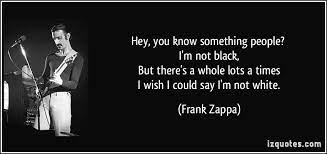
Right in the middle of the song Frank states:

Hey you know something people I’m not black But there’s a whole lots a times I wish I could say I’m not white

That seems like it was a pretty powerful thing to say (and something you’d be unlikely to hear on the radio) back in 1965.

The chorus sticks with us

So I’m watchin’ and I’m waitin’
Hopin’ for the best
Even think I’ll go to prayin’
Every time I hear ’em sayin’
That there’s no way to delay
That trouble comin’ every day
No way to delay
That trouble comin’ every day

He certainly predicted the state of 24 hour news

Well you can cool it, You can heat it…
Cause, baby, I don’t need it…

Take your TV tube and eat it
‘N all that phony stuff on sports
‘N all THOSE unconfirmed reports
You know I watched that rotten box
Until my head began to hurt
From checkin’ out the way
The newsmen say they get the dirt
Before the guys on channel so-and-so
And further they assert
That any show they’ll interrupt
To bring you news if it comes up
They say that if the place blows up
They’ll be the first to tell
Because the boys they got downtown
Are workin’ hard and doin’ swell,
And if anybody gets the news
Before it hits the street,
They say that no one blabs it faster
Their coverage can’t be beat

Things haven’t changed since this song was written

And it’s the same across the nation
Black & white discrimination
They’re yellin’ “You can’t understand me!”
And all the other crap they hand me
In the papers and TV
‘N all that mass stupidity
That seems to grow more every day
Each time you hear some nitwit say
He wants to go and do you in
Because the color of your skin
Just don’t appeal to him
(No matter if it’s black or white)
Because he’s out for blood tonight

Perhaps the theme verse for recent events

Don’t you know that this could start
On any street in any town
In any state if any clown
Decides that now’s the time to fight
For some ideal he thinks is right
And if a million more agree
There ain’t no great society
As it applies to you and me
Our country isn’t free
And the law refuses to see
If all that you can ever be
Is just a lousy janitor
Unless your uncle owns a store

It’s a shame this song still resonates.

[READ: March 22, 2021] Parable of the Sower [2024-2025]

I found Kindred to be an enjoyable (not exactly the right word, I know) novel.  I thought the premise was really cool and I thought the content was impactful and was conveyed really well.  It was a powerful story that did not shy away from brutality.

But it in no way prepared me for Parable of the Sower.

I didn’t know anything about this book at all before starting.  At first I thought it was neat that it was set in 2024 (hey that’s so close!)  And that, coincidentally, myself and my daughters are almost the same ages as the main character and her father (will this be our future?).

But then, holy crap, Butler doesn’t hold back.

The brutality of Kindred was based on reality.  It was horrible and, in retrospect, hard to believe that people could do such things.  The brutality of Sower, however, is all based on the future projection.  The book was written in 1993. Basically, she posits that in 30 years, America has become a rotting hellscape.  And while we haven’t reached quite the levels that she imagines, there are some pretty eerie accuracies.  I have to assume, given the natural of the elected politicians, that some things are going to get very very spookily prescient.

The book opens in 2024 with a quote from Earthseed.  We don’t know what that is yet, but by the end of this week’s read we’ll learn that Earthseed is a sort of manifesto written by the main character, Lauren Oya Olamina–I didn’t realize her name was given after the first quote from Earthseed until looking back on it.  Each chapter has another quote from Earthseed and then the story unfolds as a series of diary entries. (more…)

Read Full Post »

SOUNDTRACKFUTURE ISLANDS-Tiny Desk (Home) Concert #158 (January 25, 2021).

I’m not a huge fan of Future Islands.  I like some of their songs, and I think singer Sam Herring’s voice is really interesting.  The biggest thing I remember about them is NPR’s fascination with singer Sam herring’s dancing.  Herring does some dancing here, but saves most of it until the final song.

Future Islands’ four members are gathered not too far from their Baltimore base in Carroll Baldwin Memorial Hall, sans desk. “We lost the desk,” singer Sam Herring tells us with a smile. With drummer Michael Lowry on the tiny stage, the rest of the band — including bassist William Cashion and Gerrit Welmers on electronics — took to the floor, allowing Sam Herring to make his moves and sing his heart out. This music is clearly for the head and the feet.

The first three songs are from

their sixth and very recent album, As Long As You Are. 

“Hit the Coast” is an upbeat song musically.  The notable thing about Future Islands is that their music is primarily keyboard based, but there’s something about having a bassist that brings an organic element to the music.

Along with themes of loneliness and love, we also hear songs about race, which is most evident in “The Painter,” a song about how we can all look at the same thing and see it so differently.

He continues, “Art is subjective but they way we think about people and the way we treat human lives shouldn’t be.”

My favorite part of this very precise song comes mid-song when Cashion scratches up the strings a bit to add some chaotic distortion.

“Thrill” is set in Greenville NC on the banks of the great greasy Tar River.  It’s about feeling isolated in your society, about self-isolating through substance abuse and about continuing to push forward as all the seething bubbles up inside of you like the great river.  It is a slow and moody song and yo can tell that its very personal to Herring.

We end with a song that came out shortly after visiting NPR in 2011 [Oh man, I miss my hair] called “Balance.” It’s one of those tunes that feels repurposed for the 2020s: “This is a song for anybody who’s struggling through their lives,” Sam Herring says, “and I know there are a lot of you all out there, just trying to get by, but it’s going to take a little bit more time.”

This is a fun dance song–the kind of earlier, faster song that I like from them.  Herring lets his dance shoes lose, with some impressive and wild moves.

[READ: March 1, 2021] Behemoth

Book two of this series was longer and more dangerous–as a sequel should be.

As this book opens, everyone is on board the Leviathan having just sailed to safety.   Alek is showing Deryn how to fence.  She is impatient and has no technical skill.  But it’s nice for her to be with Alek (who Deryn has admitted to herself that she fancies) and it’s nicer that he is saying things like “we” when he talks about the Leviathan.

But soon they see some enemy ships.  The ships look in bad shape and the Leviathan looks poised to destroy them.  Until one of them fires up what they learn is a Tesla tower–a generator that can shoot lightning across great distances.  No one has ever seen one before.  But Alek’s men piece together what it is.  Since they are the only ones who know how to fly Clanker engines, they are in charge of propulsion.  And they disobey orders by bringing the ship to a halt.  The Leviathan, being sentient, also senses what’s going on and starts to concur with the decision.

But disobeying orders is mutiny (except that Alek’s men aren’t technically part of the crew so they can’t be punished).

The Tesla cannon fires and grazes the Leviathan.  It doesn’t puncture the ship (it could literally blow it up if it got to any of the hydrogen), but it does mess with everything electrical.  It also leaves one of the men stranded on a Huxley–essentially electrocuted.

Deryn takes it into her hands to save her mate in an exciting an daring rescue. (more…)

Read Full Post »

SOUNDTRACKMAX RICHTER-Tiny Desk (Home) Concert #150 (January 22, 2021).

I really enjoyed Max Richter’s Tiny Desk Concert back in January of last year.  The pieces were pretty and sad and had a modern classical feel.

For his Home Concert, he seems to be one of the few people who actually plays in his home.

Shot in artful black and white, their simplicity and beauty invite us into a world as we once knew it, where fresh air wafts through open doors and dogs peacefully snooze (canine cameos by Evie and Haku) in the late summer sunshine in southern England.

These half-dozen short pieces can offer two very different modes of experience.  There’s a mysterious potency in instrumental music, where the mind is open to wander and free-associate. Max Richter taps into that power with singular grace and humanity.

His entire set is 16 minutes, so indeed all of these pieces are quite short.

He played “Vladimir’s Blues” when he was at the Tiny Desk.  There’s no blurb about it here, but the first time, the blurb told us

Its delicately toggling chords are an homage to novelist Vladimir Nabokov who, in his spare time, was a respected lepidopterist, obsessed with a subfamily of gossamer-winged butterflies called the blues. Richter plays the piano with the practice pedal engaged for a warm, muted sound.

It’s a 2004 piece that’s only a minute and a half and it is quite lovely.

Up next are the

gently swaying chords of “Origins,” where the music lumbers in the lower half of the keyboard.

It reminds me a lot of a famous piano piece which I can’t quite remember the name of.  After about three minutes of the piece, one of the dogs who had been lying outside gets up and walks almost up to the camera.

Infra is a ballet he made with Wayne MacGregor for the Royal ballet in London in 2008.

He plays the “soothing, oscillating figures” of “Infra 3” and follows it with the mellow but more upbeat “Horizon Variations.”  This piece also lasts less than two minutes as well.  It’s lovely.

“Prelude 6” from Voices which has a much faster melody than the other pieces.  About half way through, the other dog (who looks like a puppy) comes in all tail-wagging and heads over to dog number 1 (both off camera now).

“Fragment” is a pretty, sad piece to end the set (also about a minute in a half).  As he signs off he says

“Looking forward to the time when gigs can come back and we can do this for real,”

As the video ends, both dogs get up and walk into the lovely sunshine.

[READ: March 1, 2021] Klawde: Evil Alien Cat

I saw this book at the library (actually I saw book 5, I think) and thought it sounded funny. They had book one so I decided to start from the beginning.

The title says it (almost) all.  Klawde is an evil alien warlord cat.  The book opens on the planet Lyttyrboks where Klawde (whose Lyttyrboks name is Wyss-Kuzz) is on trial.  He is found guilty of clawing his way to power and committing crimes against felinity.

The elder says that thousands of years ago the punishment’s on Lyttyrboks was banishment to a vast wasteland of a planet inhabited by a race of carnivorous ogres.  For generations they sent their convicts there, but eventually that punishment was deemed to cruel.  However, given the severity of Wyss-Kuzz’s crimes, they have resurrected this punishment.  He is transported across the galaxy to the horrible planet known as Earth.

Alternating chapters are written from the point of view of Klawde’s and an earth boy named Raj.  Raj’s family recently moved from Brooklyn to Elba, Oregon and he is bored and alone.  So when a spaceship lands in front of his house and the doorbell rings… well how exciting to find a cat without a tag.  Even if this cat meows like nothing he’s ever heard before and seems kind of mean.

The book is full of illustrations by Chenoweth.  I love the wickedness of Klawde and Raj’s parents are a hoot as well.

Klawde sees the humans as furless ogres and fears what they will do to him.  They put him in a cage (kitty carrier) and force him to eat horrible food–what is this torture?  Raj’s dad names him: “like clawed, but spelled in a more exciting way.  Why use a C when you could use a K?  K is the alphabet’s party letter.” (more…)

Read Full Post »

SOUNDTRACK: CECIL TAYLOR-Jazz Advance (1956).

As the biography below states, Cecil Taylor was ahead of his time and harshly criticized for being so.  This was his first album and it made waves–as did his subsequent performance at Newport Jazz Festival (it’s like when Dylan went electric, but for jazz).

Since I’m not a big jazz follower, I’ll start with those who are.  Here’s some notes on the album from The Guardian.

A Taylor group comprised of Buell Neidlinger on bass and Dennis Charles on drums is augmented here and there by soprano saxophonist Steve Lacy; the repertoire mixes tunes by Ellington, Monk and Cole Porter with the leader’s fearlessly personal reinventions of the blues. Thelonious Monk’s “Bemsha Swing” is played even more cryptically and succinctly, the lines breaking up into jagged fragments and jutting chords. Taylor’s “Charge Em Blues” is a 4/4 walk with a surprisingly straight Lacy sax solo, and “Azure”‘s lazily struck chords and delicate treble sounds might even remind you of Abdullah Ibrahim, until the cross-rhythmic improvised piano patterns clattering chords typical of later Taylor emerge. …  It’s a historic document that still sounds more contemporary than most jazz piano music being made today.

As I listened I first thought it didn’t sound all that shocking and I wondered if that was because I was listening in 2021 and not 1956, but around two minutes into “Bemsha Swing” he starts throwing in some atonal and dissonant notes.  You can tell that he knows how to play, but that he’s deliberately hitting either “wrong” notes or just letting his fingers fly where they will.   And it still sounds surprising today.

“Charge ‘Em Blues” sounds far more “normal” at least in the beginning.  Lacy’s sax solo is fun and bouncy.  Then around 5 minutes a back and forth starts with Taylor’s wild free-jazz atonal improv and a drum solo.

“Azure” is a more chill track although about halfway through the improv starts going off the rails.

About half way through “Song” the solo is all over the place–sprinkling around the piano and pounding out a few chords here and there.  It’s dissonant and off-putting, but seem more like it’s trying to wake up the listener. When Lacy’s pretty sax comes in and plays a delightful improv and Taylor is bopping around behind him, the contrast is stark.

“You’d Be So Nice To Come Home To” is the only song on the record that I knew before and I never would have recognized it here.  As AllMusic puts it

At his most astonishing, Taylor slightly teases, barely referring to the melody of “You’d Be So Nice to Come Home To,” wrapping his playful, wild fingers and chordal head around a completely reworked, fractured, and indistinguishable yet introspective version of this well-worn song form.

This is a solo piece and he is all over the place.  At no point did I recognize the original melody.

“Rick Kick Shaw” features some lively drums and walking bass while Taylor goes to town.  He plays some really fast runs which slowly turn experimental. I’m very curious if future renditions of this song were in any way the same or if all of this soloing was improvised each time.

“Sweet and Lovely” is very slow and more traditional sounding.  Without the speed of his solos, this song comes across as almost like a standard jazz song.  Although at the very end he throws in a few sprinkles of chaos just because he can.

[READ: February 2, 2021] The Musical Brain

I’d only read a couple of short stories from César Aira (all included here).  His novels are so short it almost seems weird that he’d write short stories, but some of these stories are very short indeed.  They do also tend to meander in the way his novels do which makes it seem like some of them don’t end so much as stop.

“The Musical Brain” was the first story I’d read by Aira, and what I wrote about the story has held true for pretty much everything I’ve read by him:

There are so many wonderful and unexpected aspects to this story that I was constantly kept on my toes.  This also made it somewhat challenging to write about.

“A Brick Wall”
I thought I had read this story before but I guess I hadn’t.  It begins with the narrator saying that he went to the movies a lot as a kid–four or six films a week (double features). He says he has an impressive memory for details.  He remembers seeing Village of the Damned decades ago.  A small village’s children are all born as zombies. The zombies can read everyone’s minds so the hero thinks–erect a brick wall.  He also remembers North By Northwest which was titled in Argentina: International Intrigue.  He and his friend Miguel loved the elegance of the movie. And they decided to become spies.  So they created a game in which they would “forget” that they were spies. They would leave notes for each other and then “discover” them so that when they came upon them they were new and exciting.  It was surprisingly easy to forget the game, apparently. (more…)

Read Full Post »

SOUNDTRACKRHEOSTATICS-3rd Annual Green Sprouts Music Week Show 6–all ages (Ultrasound Showbar, Toronto Ontario September 23 1995).

It has been a while since I’ve listened to a live Rheostatics show.  Darrin at Rheostatics Live has added a number of new shows in the last eight months.  On the last night of Green Sprouts Music Week, the band played two shows in one day. This first one is all ages, which I kind of think of as a children’s show, but really it means that people under 21 (or whatever the drinking age is) can get in too.

Sixth show of the annual Green Sprouts Music Week held at Ultrasound Showbar September 18-23 1995. This is the all ages afternoon show. Very solid fun show. Of note is Aliens sung by Julia Pietrus and her stuffed chicken followed by Joe Jackson’s I’m The Man sung by Don – actually this to me could be considered the genesis of his band Communism. A couple of nice acoustic in the crowd numbers as well. Near the end the band mentions they were commissioned to perform the GO7 but hadn’t as of yet written a single note for it which is pretty crazy seeing as it would be performed just a month later.

Dave says that at this show they have people aged 6-60.  A nice sober crowd–a daunting thing.  Martin says “after we play tonight they’re going to tear this place down.”  Tim: No.

Martin’s wearing sailor blue for the nautical song “Saskatchewan.”  It’s great to hear this.  There’s a line in the song about knowing the truth and when the song is over, Dave asks, “what is the truth?”  A prescient and profound young person says “I’m the truth.”

Tim tells everyone that this is his first week with picks taped to his stand.  Do you put them back or drop them? Dave says you fling them.  Tim does and is mocked–you throw like girl.  Tim: which isn’t a bad thing.

Then comes three solid versions of “All the Same Eyes.” “Four Little Songs and “Introducing Happiness.”

Dave then calls Julia Pietrus and her stuffed chicken Dale to the stage.  Dale has been to all of the shows.  Julia is going to sing “Aliens” in Polish.  Her mom made her translate it and she’s here tonight to sing it.  She’s also in a band called Ow, That’s My Head.

It’s amazing to hear her translate this song and hear how it works and doesn’t work at the same time.  But it’s really cool.  They they give her a Rheostatics single from 1980.

Then comes some “Old New Wave” as Don Kerr sings “I’m the Man” (it seems like he used to sing this with his old band).  It’s really fun.

That song was written by someone we’ll tell you who it was in the next song.  They play “Fan Letter to Michael Jackson” but shout JOE!  JACKSON! (no relation).  Dave starts shouting “One Step Beyond” and then sings the Tuesday night in the discotheque. I can’t dance what the heck, I’m an Uzbeck.

Dave: You kids okay out there?  I didn’t know it was gonna get so dark and loud and weird but I think you’re loving it.

People start whistling “You are Very Star” which is pretty cool.

Up next is the “Digital Beach / Earth segue and then they announce they’ll do a few acoustic songs in the audience.

They are in the crowd for a spirited run through of “Take Me in Your Hand” and “Peas & Rice.”

Dave says that they have been commissioned to write 40 minutes of music for the Group of 7 at the National Gallery next month.  But we haven’t written a minute of it, yet.

Martin asks him to tell the Neil Young story.  Dave says he went to see Neil Young at the Garden during the Ragged Glory days.  It really wasn’t very good.  They all had Marshall stacks and were trying to be the loudest band in rock.  These two folks behind me shouted “acoooooooustic” through the entire show–he never brought the acoustic out.
Martin: the loudest sound I have ever seen was at the first stadium concert I went to about three years ago for Rush.  It wasn’t Rush though, it was this guy behind me who was whistling so loud I couldn’t believe it.
Tim: Whistle like this?  [puts fingers in his mouth and can’t do it].
Dave: have you done that and tried to say “puck?”  Don: The title of the next BNL album is going to be Born on a Pirate Ship.  They all crack up.

Martin: We unplugged and we plugged it back in.  Replugged?

After a great “Sweet Rich Beautiful Mine,” Dave plugs the Green Sprouts Music Club–people who have written to us and we’ve written back.  We’ve met many bands.  Like The Inbreds, Farm Fresh and Local Rabbits (in the audience now, playing tonight at the Horseshoe).

They play a lovely version of Tim’s “All in a Row.”

Don: Are there any more Dave Bidini dolls?  Sold out!
Dave: When you pull the string, what does it say?
Can I let you off the corner?
I can’t break this 50.
I found a great thrift store.
Can you pick up my dry cleaning for me?

Martin brought art to sell but left them in the back–I declare them for sale.  A page from the lyrics from Saskatchewan and the other is a story book.  We were going to do Melville part 2 with corresponding songs.

We’ll do one more song and they’ll be available.  They end with a great “Fat.”  How fun to be done with a concert by 7:30.  But it was totally worth it to go at night as well because it’s a very different set.

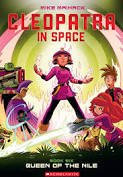
[READ: February 5, 2021] Cleopatra in Space Book Six

Book five was dramatic and pretty intense.  Where do you go from there?

You start on Cada’Duun, the home of the Golden Lion, where a battle with the Xerx has left yet another one of their forces dead.  But our heroes are okay and Brian has made Cleo a new crown.

Her old one was an heirloom but it was destroyed.  Cleo us touched. They even got the ibis just right (they thought it was a snake). She asks if it does anything–Brian made it after all. Brian is annoyed to be figured out but he is pretty pleased to show of that the lower left side makes her invisible.

They are en route to Thonis, a remote, previously unpopulated planet where they have terraformed a small section to make it habitable.  They been bringing refugees from around the Nile galaxy.  Luckily, the right side of the crown is a universal translator (thanks Brian). (more…)

Read Full Post »

SOUNDTRACKRHEOSTATICS-3rd Annual Green Sprouts Music Week Night 2 (Ultrasound Showbar, Toronto Ontario September 19 1995).

It has been a while since I’ve listened to a live Rheostatics show.  Darrin at Rheostatics Live has added a number of new shows including this entire week from 1995.

Second night of the third annual Green Sprouts Music Week held at Ultrasound Showbar September 18-23 1995. This show is much tighter than the first night. Of note this is the third show that Martin played his double neck guitar (the second being the night before). First live performance of Feed Yourself, An Offer and My First Rock Concert. I believe this is the first time Stolen Car made a live appearance as a verse in the middle of Dope Fiends and Boozehounds. Also Farm Fresh from Brandon Manitoba opened all the shows this week and guested on an amazing version of Fat which had also only been played live a couple times.

“Digital Beach” is a quiet opening and I’m glad the crowd are pretty respectful  It segues into “Earth with its “Monstrous Hummingbird” crashing end and a pretty guitar trilling at end the song.

“Aliens” has a middle slow down part which is pretty unusual–the music cuts back to a simple groove.

Dave notes that “the one wearing the Green Sprouts jersey is the first to start the mosh pit.  Then he addresses Dale the Rooster.  More about Dale later in the week.  But Dave says they don’t allow chickens in the mosh pit.  Dale the rooster has seen five shows.

A swinging “All the Same Eyes” is followed by “Four Little Songs.”  They coordinate ahead of time but they get the countdown perfect.  After the “can’t go wrong” but Dave prepares us for the next verse with a scary “UNLESS!”  And in what would be a weeklong thing Dave starts picking a different Neil whose kitchen he was in.  Tonight it’s Neal Schon’s kitchen.

At the end of the song Tim says “We got the 1234 right–nothing can be harder than that.”

Dave: This is the second night of our residency.  Of the third Green Sprouts week.  There’s an all ages matinee saturday at 6.  Three years old? We’ve had younger than 3.  We birthed a baby onstage at last GSMW and they named it Green Sprouts Music Week.

MT: [“Sweet Rich Beautiful Mine”] is a song I wrote the chorus to [not true, so I must have misheard].  He messes up the chord, which leads to a “Capo Problems” reprise this time with an avant garde solo by Dave.  He wonders, was the person who invented the capo named Capo?  Don: Victor Capo.  MT corrects: this is a song I stole from Mrs. Torrance.

Mrs. Torrance is here every Tuesday in September.  And Farm Fresh drove all the way from Brandon, Manitoba.  They play dope shit or is it shit dope?

“Fan Letter” gives another shout out to Farm Fresh instead of Michael Jackson.  Dave says “we just re-recorded that song and are selling it on white vinyl.  Two sides of the record have music–quite an idea.  Side 1 is the Springfield Duff mix and side two is the Shelbyville Fudd mix.

Up next is a song about Etobicoke: “Dope Fiends and Boozehounds” gets a big reaction, then Don throws ina drums solo and the song segues into “Stolen Car” (sung by Dave!).

Don tells a story about the first time he tried to smoke a joint.  It was in Etobicoke at a condominium complex on Islington and Dixon called Fortuna 2000  MT: He once saw a girl going in there with Simon Le Bon.  Don: That’s who I was with!

Up next is “Desert Island Poem” or “Drumheller” (name undecided as of yet) a “happy song about cannibalism.”

Dave says tonight’s show is better than last night–suckers who paid last night got a bad show.

It’s the first time they’re playing “An Offer,” in which Tim sings in a major falsetto, they play a rocking “Feed Yourself.”  This is the first time they’re playing it as well and Dave is still tinkering with the words, instead of “sucking his thumb,” he sings “fucking his mom” (!).  The end is chaos.  Tim says we’ve haven’t even done it yet and we’re trying to change it.

Dave: We’ll play a few old ones now–sweatin’ to the oldies tonight.

Dave asks about Martin’s double neck guitar.  Martin: I’m getting used to its weight.  Dave: I’m a little afraid that you’re gonna be buff like Thor.  Tim: It’s only the third show you’ve used it in, and you brought it out and it didn’t get a laugh.  It got a laugh the night before because Tyler was there–everything is funny when Tyler Stewart (from Barenaked Lades) is there.

A solid “Northern Wish” (Martin forgets a line but it’s fine) is followed by a really funky “Soul Glue” in which Dave plays a great scratching sound for “Dragged the bottom of the lake.”

Drum roll ladies and gentlemen for “My First Rock Concert” (the first time Dave played it live).  Some of it is different–the Joe Jackson part is more improv sounding.  Martin: that’s a song we’re just gonna learn on stage.

Dave says he tried to fit in a verse about Tim passing out at a Devo concert.  Tim: in the early 80s when everyone was wearing those big heavy winter overcoats. Tim wore it to Massey Hall.   Devo were marching on treadmills and it freaked him out and he passed out and thought he was going to hell.

A delightful “Introducing Happiness” is followed by “Fat.”  They call Farm Fresh up to rap.  They say that really nice people come to see the Rheostatics because people actually listen to the music.  Tim: I heard 18 Farm Fresh tapes were sold last night is that true?

Farm Fresh do a freestyle over an awesome intro jam (there’s lots and lots of “shit” and “fuck” in it).  Although the refrain of “when I say ‘What do you think of Farm Fresh’ you say ‘they suck'” will appear throughout the week.  “Fat” sounds great with a lengthy jam at the end and some more freestyling that you can’t really hear.

They end the set with a combo of “Legal Age Life at Variety Store” and “Bread Meat Peas and Rice.”

Tim: I know it’s time for us to go because the bartender has put on Conan O’Brien.  Dave: We have commemorative T-shirts for sale, as well as pamphlets and biscuits and bowling shoes–we got all kinds of stuff.

They end the night with a two part–“The Royal Albert” and “Record Body Count” which get a huge reaction.  This is a really solid set and a great sounding recording.

[READ: February 10, 2021] Tsukuyumi

I found this book at work and thought it looked really interesting.

Then I saw that it was all in German.  But when I flipped through it, it didn’t seem like there was all that much dialogue.  So I thought I’d translate it for myself.  This took longer than I anticipated it would and no doubt I missed a lot, but it was still fun.

It turns out that this book was created to go along with a board game of the same name.  This book came with certain pledge levels.  There was an English version that came with a lesser level.  but i’m not sure if it’s the same story.

Felix Mertikat did all of the drawings in the book and there is a different author for each story.  All of the stories seem to be setting up something bigger, like this is the first intro part to a much larger saga.

The general idea: Man lives in fear all the time–fear that his creators could destroy him just as easily as they once created him. (more…)

Read Full Post »

« Newer Posts - Older Posts »