Feeds:
Posts
Comments

Archive for the ‘Animals’ Category

york200SOUNDTRACK: CHASTITY BELT-“Ann’s Jam,” “Elena” and “Drown” (2019)

chazzyWhen Chastity Belt first arrived they posted some gnarly band photos and wre pretty aggressive musically.  Their No Regerts album was brash.  Jagged music, pointed lyrics and rather harsh vocals.

Over the course of five years they have mellowed out quite a bit.  Not necessarily lyrically, although there is some of that, but musically it’s almost a different band. Their guitars are tastefully echoed and the vocals are really pretty and delicate.

The music on these three tracks (the only ones streaming on bandcamp) is practically shoegazey with the hazy vocals and ringing guitars.

There’s some really nice harmonies on “Elena”–and when the two distinct vocals lines intertwine, it sounds great.

“Drown” opens with a really catchy guitar part–it’s a bit faster and sounds a little more like their last two albums, but continuing with the softer vocals.

The only problem with these songs is that they tend to lack a bit of the dynamics that their earlier songs had.  We don’t want them to be too chaste, after all.

[READ: September 20, 2019] “Traditions”

This story is about an English school.  It opens with seven boys: Hambrose, Forrogale, Accrington, Olivier, Macluse, Newcombe and Napier.  Each boy has discovered that his tame jackdaw–birds they had taught to talk (as well as a jackdaw can)–had been killed.

The boys suspect Leggett.  Although Olivier believes it is one of the “girls,” one of the maids who lived in the nearby village and attended to the boys.

Despite the birds, they must go on with their day.  This included Olivier going before the headmaster.  The headmaster was disappointed because Olivier had failed to come up to scratch in any of the sciences he was studying.  When the headmaster asked if Olivier had ambitions in that direction, he had to admit that no, he was just curious about the sciences.

The headmaster replied

You indulged a curiosity.  You indulged yourself.  That can be dangerous.

But when Olivier offered to drop out of science, the headmaster said that would be dangerous too.

Olivier quickly forgot about that and resumed thinking about the dead birds.  He was more convinced than every that it was a girl.  Although the other boys had found Leggett and beat him up (and then didn’t think he had done it).

There had been other traditions of strange things happening at the school–bells ringing in the night, things going missing.  But no one was ever caught.

Olivier was certain it was a particular girl, a maid who was no longer a girl, really.  It seemed like she was watching him as well.

No one–no previous headmaster–knows that this maid, who had been with the school for a long time, had been part of a tradition at the school “supplying to boys who now were men, a service that had entered the unofficial annals.”

I have to assume this is an excerpt from a novel, because as a short story it was very unsatisfying.  So many characters introduced, the whole science thing, and so much unspoken about the maids.  But it doesn’t appear to be from the novel he published in 2002.  So I don’t know what to think.

Read Full Post »

2000SOUNDTRACK: BERLIN“Sex (I’m A)” (2019 version) (2019).

berlinBerlin had a few more hits than most people remember.  There is of course, “Take My Breath Away,” and “The Metro” but also had and the infamous hit “Sex (I’m A)” which is the most 80’s song I can think of.

So here it is 2019 and the Terri Nunn has reunited with Berlin co-founders John Crawford and David Diamond for their first Berlin album together since 1984.  That album, Love Life, featured “No More Words” (I had forgotten that one).

I also didn’t know that Terri Nunn was not the original singer of Berlin.  Their first album, Information had Virginia Macolino on lead vocals.

But in 2019, the three got together to release Transcendance.  And this album has an update of “Sex (I’m A).”  Terri Nunn pointed out in an interview that she still wanted to sing about sexuality now that she is in her fifties, but didn’t want to make songs that made it sound like she was still in her twenties.

So why they decided to cover this song, I don’t know. It’s not very different.  The lyrics are (I think) the same (It’s hard to remember all of the things she “is”  in the song.

The music is different–the drums are bigger and the synth is a little less plastic sounding.  The vocals sound almost identical. Terri Nunn’s voice sounds great.

The one big difference is the inclusion of a lot of guitar. Both in the chorus (which rocks a bit more) and in the occasional solos after the verses.  And after the chorus there’s a more modern pulsing rhythm which sounds pretty good.

It’s a fine update–adding some things and not really losing anything, but it doesn’t seem entirely necessary.

[READ: September 10, 2019] “Beulah Berlin, An A-Z” 

This story was created with a kind of gimmick, but it works.

Almost every paragraph (some sections are longer than one paragraph) starts with an oversized capital letter, A to Z.  And each capital letter is the first word of the new section and (almost) the last word of the previous section.

So paragraph one begins with “Angst” and ends with “Berlin.”  Section two begins with “Berlin” and ends with “cooler.”  Section three opens with “Color” (so there’s a slight variant at work sometimes).

This formal structure sort of makes the story forced, but not really.  Mostly it’s fun to see how Boyd set it up. (more…)

Read Full Post »

amazSOUNDTRACK: KAWABATA MAKOTO [河端一]-INUI 2 (2000).
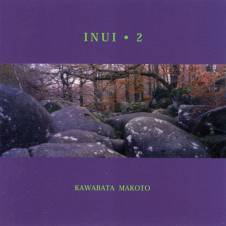
a1729275931_16Kawabata Makoto [河端一] is the guitarist and mastermind behind Acid Mothers Temple. The band is hugely prolific. But he still had time to record solo albums. Often times without any guitar.
This was Kawabata’s second solo LP, now available on bandcamp

INUI 2 was the first widely available solo CD by this prolific Japanese guitarist/composer/bearded guru. Known primarily for his recent work with oddballs Acid Mothers Temple, Kawabata’s career actually goes back to the late ’70s and spans many styles, including solo guitar improv, electronics, folk, and, of course, the deranged acid mayhem associated with the PSF scene. Performed entirely solo on violin, kemenje, zurna, electronics, sarangi, taiko, gong, water, bouzouki, cello, vibes, organ, and sitar, the four tracks that make up INUI 2 are perfectly executed dream-music, equal parts delicately floating and heavily droning. There’s also one all-too-short modal essay for bouzouki that is amazingly beautiful.

“Mou” (9:56) has a drone underpinning the song as he plays a quiet keyboard melody over the top.  About half way through the zurna comes in playing its somewhat harsh melody (although it is less harsh here).  This is a pretty cool chill out song.  [Instruments: Violin, kemenje, zurna, electronics].

“Meii” (11:02) is composed of slowly plucked sarangi strings.  They ring out loud and are accompanied by thumps on the taiko and occasional crashes of the gong. There is also a high pitched feedback/electronic sound that rings out form time to time.   About midway through the bowing become s a little wild and improvisational until it settles back down again.  [Instruments: Sarangi, taiko, gong, water].

“Shi” (3:47) is the ‘all too short” piece and I agree that it is too short.  It features a quietly plucked string melody on the bouzouki that is very pretty.  It has mild drones behind it.  About half way through the melody changes, a faster more deliberate style but still quiet and pleasing.  I could listen to this one for much much longer.  [Instruments: bouzouki, cello, vibe, organ].

“Kan” (14:18) starts as harsh electronic drone with occasional blips of hi frequency sounds.   It’s the first unpleasant sound on the disc.  Although after 2 and a half minutes, the string drones enter and smooth things over.  At some point a pulsing possibly, backwards recorded series of notes comes in to give the drone some drive.  [Instruments: bowed sitar, violin, electric sitar, electronics].

[READ: September 10, 2019] “Ranch Girl”

This brief story was collected in Meloy’s Half in Love.

It starts with the fatalistic sentence:

If you’re white and you’re not rich or poor but somewhere in the middle it’s hard to have worse luck than to be born a girl on a ranch.

The unnamed protagonist grew up the daughter of the foreman of the Ted Haskell Running H Ranch.  Haskell’s brand was a slanted H–she had seen it all her life and didn’t know an H was supposed to be upright until she went to school. (more…)

Read Full Post »

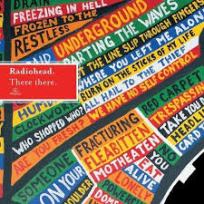
indexsep18SOUNDTRACK: RADIOHEAD-“Paperbag Writer” (2004).

I had recently read a review of Radiohead’s Kid A by Nick Hornby.  he really did not like the album at all.  He bemoaned their lack of musicality and, I gather, catchiness.  The bass line in “Is Chicago” reminded me a tad of this song and I thought it would have been a funny dig at him to include this modern Radiohead song that is almost a Beatles song but in fact nothing like a Beatles song.

Washes of strings and jittery quiet percussion open the song as Thom Yorke quietly mumble/sings:

Blow into this paperbag,
Go home, stop grinning at everyone.
It was nice when it lasted,
But now it’s gone.

After about a minute a bass comes in.  A series of two notes followed by the one main melodic moment of the song–a bass line that ascends a scale.  The song follows this pattern–strings, clicks and this bassline.

There’s a middle instrumental section which is just the strings and clicks.

Then Yorke returns, muttering “Blow in to this paper bag,”

The end of the song is pretty much all this bassline, now modified to not include the melody part just a repeated Morse code kind of sequence.

It’s not always easy to know what Radiohead are playing at. But the title of this song is strangely funny.

[READ: September 10, 2019] “Issues”

It’s hard to read a story about a man who hits a woman.   Even if he feels badly about it. Even if the woman doesn’t seem all that perturbed by it.  Even if he does get his comeuppance.

The story begins with Steven Reeves and his wife Marjorie driving to a party.  This observation about them was interesting: “They were extremely young, Steven Reeves was twenty-eight, Marjorie Reeves a year younger.”  Twenty-eight is “extremely” young?

As the story opens, Marjorie confesses that she had an affair with George Nicholson, the man of the house they are going to right now.  She doesn’t confess that the affair went on for a while–until they got tired of it.

I liked that the women in their neighborhood didn’t care for Marjorie.  They thought she was a bimbo who wouldn’t stay married to him for long and that his second wife would be the “right” wife. (more…)

Read Full Post »

SOUNDTRACK: KIAN SOLTANI-Tiny Desk Concert #880 (August 16, 2019).

I feel like listeners are more familiar with a violin than a cello.  Violins are everywhere (they’re so portable), but cellos only seem to come out when you need a bigger string section.  I have come to realize that I much prefer the sound of a cello to a violin  The cello can reach some impressive high notes (check out about three minutes into the Hungarian Rhapsody) but its the richness of the low notes that really impresses me,  Or maybe it’s just the historical value of Kian Soltani’s cello

It’s not every day someone walks into our NPR Music offices and unpacks an instrument made in 1680. And yet Kian Soltani, the 27-year-old cellist who plays with the authority and poetry of someone twice his age, isn’t exactly fazed by his rare Giovanni Grancino cello, which produces large, luminous tones. (He also plays a Stradivarius.)

I love Liszt’s Hungarian Rhapsody, and I love this one as well. What is it about Hungary that inspires such wild songs?

The Hungarian Rhapsody, by the late 19th century cellist and composer David Popper, traces its inspiration to similarly titled pieces by Franz Liszt and Johannes Brahms, but showcases a number of hot-dogging tricks for the cello, including stratospheric high notes, flamboyant slides and a specific high-velocity bouncing of the bow called sautillé. Soltani nails all of them with nonchalant elegance, backed with companionable accompaniment by pianist Christopher Schmitt.

He says that that piece was a very extrovert, out-there piece and so from this mode we take it more inward.

To prove he can make his instrument truly sing, Soltani worked up his own arrangement of “Nacht und Träume” (Night and Dreams) by Franz Schubert, replacing the human voice with his cello’s warm, intimate vocalizing.

It’s fascinating to think that this song was musically written for the piano and voice.  But he has taken the vocal track and turned it into a moving (possibly better?) version on the cello.

His parents emigrated to Austria from Iran in the mid-1970s.  He grew up in Austria and loved it as a locus of great classical music.  But he also hold on to his Persian roots.

And in the Persian Fire Dance, Soltani’s own composition, flavors from his Iranian roots – drones and spiky dance rhythms – commingle with percussive ornaments.

This is a wonderful Concert and Soltani’s playing is really breathtaking.

[READ: September 1, 2019] Middlewest

I had heard of Skottie Young as the author of I Hate Fairyland (which sounds like a children’s book but is definitely not).

This book is also definitely not for children (although I see some people think it could be for YA readers).

Abel is a young boy who lives with his abusive father.  His father, Dale, is a real piece of work. Abel’s mother left, so Dale blames Abel and is on him all the time.

As the first chapter opens, Abel has overslept his paper route (the second time in five years).  His father is very angry even if Abel has been getting up at 4:30 every day for five years. As Abel is running late delivering the papers, his friends tell him to blow it off–it’s too late anyway, just go with them to play video games. (more…)

Read Full Post »

SOUNDTRACK: THE FLAMING LIPS AND HEADY FWENDS-“Children of the Moon” (2012).

2012 saw the release of this very strange collaborative album.  Whether The Flaming Lips had entered the mainstream or if people who’d always liked them were now big stars or maybe they all just liked doing acid.  Whatever the case, The Lips worked with a vast array of famous (and less famous) people for this bizarre album.  Here it is 8 years later. Time to check in.

Lately, Jim James has been going in a more mellow direction after the pretty heavy psychedelia of Circuital in 2011.  But this song stays in that heavy psychedelic vein with a big distorted guitar riff and distorted vocals from James (and Coyne, I assume).

It’s that weird mix of creepy and catchy that the Lips do so well.  You can clearly hear James on the lead vocals, but who knows who is contributing vocals to the rest (the oh oh ohs).  The guitar solo is all distorted and reversed–a noisy explosion of sound.

This song is barely four minutes and it’s followed by another noisy short one before the album segues back into quieter terrain.

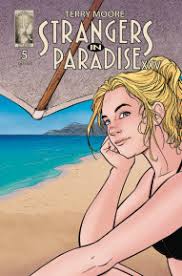
[READ: August 1, 2019] Strangers in Paradise XXV #6

Katchoo was given coordinates to meet Stephanie.  The coordinates put her way off the grid in Colombia.  As she waits, a guy on a moped drives up and a monkey hops off and delivers a package (that’s pretty adorable, honestly).

Katchoo can only assume things are bad since Stephanie didn’t show.  She can’t imagine what is in the satchel (she hopes it’s not Francine’s head).

But no, it is a tube and in the tube is an ancient piece of papyrus–Cleopatra’s mathematical ideas. (more…)

Read Full Post »

SOUNDTRACK: MASEGO-Tiny Desk Concert #870 (July 24, 2019).

Naturally when I saw this guy’s name, I assumed Massive Ego.  And he does seem to have a massive ego.  But he totally earns it.  And I’ll agree with this allusion:

Imagine for a moment if Cab Calloway, the Cotton Club’s exuberant bandleader, was reincarnated in the 21st Century. Now imagine if he was dropped in the middle of the music world of today. He’d no doubt be a tall and slender, silky-wearing goof ball with a moisturized braid-out, instruments inscribed as knuckle tattoos and a penchant for genre-blending. Yes, the spirit of Cab lives on in Masego, the singer, producer and multi-instrumentalist who surprised NPR’s Tiny Desk audience with a zany sense of showmanship and a demonstration of his own genre, TrapHouseJazz.

Masego gets five songs (and over 20 minutes…come on!), but the whole set is fun and flows really nicely with Masego acting as the great frontman he is.

First, before opening with the jazzy “Tadow,” Sego pulled off a quick, mini-prank by sending his friend, comedian Lorenzo Cromwell, up to the mic before stepping forth himself.

Cromwell wears a Michael Jackson glove and plays a fake saxophone (the credits state: comedic saxophone).  But Masego plays a proper saxophone, smooth and jazzy.  Then he starts singing and he has a nice smooth voice too.  Lex Nelson adds some nice call and response backing vocals.

Throughout the song, Maxwell Hunter plays some excellent grooving sliding five string bass.

This next song, “Nayhoo” he says “white people love it.”  It opens with some fantastic guitar work from Melanie Faye–she plays amazing guitar licks throughout the show.

Next, Sego tossed up 100 dollar bills with his face on it and beckoned the crowd into a call-and-response of “hi-di-hi-di-hi-di-ho.”  (There’s the Cab Calloway).

Up next, is “Queen Tings.”  He points to Jon Curry and says “You.  Show me that junk you showed me yesterday.”  Curry stars playing a nice beat.  Masego says, “Now gimme that shoulder” and Curry starts swaying his shoulder into it.

Midway through the song Masego plays a saxophone solo.  Then keyboardist Dan Foster picks up a saxophone and plays a solo as well.  Then the two play together and it sounds fantastic.

Before the fourth song he says, “there’s black people here, I got a song called ‘Black Love.'” Then he points to the keyboards.  “You.  Play some keys for me.  This is Dan Foster.  He has a flower tattoo.”  The melody of this sounds a lot like the melody for “Careless Whisper.”

All these instruments you see here are tattoos on my knuckles because I can play them all.  That’s why he wrote this song, “I Do Everything.”  This song is pretty good but the best part is when he introduces Melanie Fay and she plays a ripping guitar solo.  I wonder what else she’s been in.

Finally, to have a few more moments of fun after “I Do Everything” — and to prove he really does do everything — Sego juggled water bottles to the rhythm of the luscious music his band providing.

Masego is a lot of fun and I enjoyed his set a lot more than I expected to.

[READ: July 31, 2019] “Three Days”

I enjoyed the way this story started but hated the way it ended.  I hope it’s an excerpt, because there’s so much more that could be done with all of this and yet so much was wasted on a dead horse.

Beatrice is walking to her mother’s house from the bus station.  The house is actually a farm, but not a working farm. It is the only remaining farm in the area, since all the other farms sold out to to the box stores.

The farm is in disrepair.  I like this detail:

There are some withered Duane Reade Easter decorations–a hip-high bunny rabbit and a bright-green egg–wired to the front porch.  It is Thanksgiving.

Her parents weren’t farmers and as soon as they both agreed they didn’t want to farm, they gave up and got proper jobs.  Beatrice’s mother loved her work.  She was employed by “Mythologic Development, which turned myths and sometimes history into marketable packages used for making new products and ideas more digestible to the consumer public.”

I love this idea and want to learn more about it. Although the examples her mother gives about Atlantis and Montezuma are disappointing. (more…)

Read Full Post »

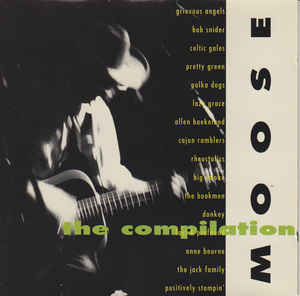
SOUNDTRACK: LAZY GRACE-“You Don’t Know How Much” (Moose: The Compilation, 1991).

Back in the 1990s, it was common to buy a compilation or soundtrack or even a band’s album based on one song.  Only to then find that you didn’t really like anything else on it.

Maybe that single sounded like nothing else on the album.  Maybe the movie was almost entirely one genre, but they had that one song that you liked over the credits.  Or maybe the compilation was for something but a song you really wanted was on it, too.

With streaming music that need not happen anymore.  Except in this case.

I bought this compilation, used, recently exclusively for one song, Rheostatics’ “Woodstuck.”  It’s a goofy song and this is the only place you can get the studio version.  The actual compilation was not well documented, so I didn’t know what the other bands on it might sound like.  It turns out to be a compilation for Ontario based Moose Records which specialized in Rock, Folk, World & Country.  They put out another compilation in 1992 and that’s all I can find out about them.

Here’s another traditional song performed very slowly.  This feels like a blues song only played with a more country style with violin as the lead instrument.  The two women singing have good harmonies, but it feels so downcast that I don’t want to listen to it again.

[READ: July 1, 2019] “Poem #8–Beetle”

The July/August issue of The Walrus is the Summer Reading issue. This year’s issue had two short stories, a memoir, three poems and a fifteen year reflection about a novel as special features.

I assume this poem is part of a series, although I don’t know for certain

This is a poem about nature.

It is set at a lake in the woods of the eastern slope of the Rockies. (more…)

Read Full Post »

SOUNDTRACK: BOB SNIDER-“Old Nova Scotian” (Moose: The Compilation, 1991).

Back in the 1990s, it was common to buy a compilation or soundtrack or even a band’s album based on one song.  Only to then find that you didn’t really like anything else on it.

Maybe that single sounded like nothing else on the album.  Maybe the movie was almost entirely one genre, but they had that one song that you liked over the credits.  Or maybe the compilation was for something but a song you really wanted was on it, too.

With streaming music that need not happen anymore.  Except in this case.

I bought this compilation, used, recently exclusively for one song, Rheostatics’ “Woodstuck.”  It’s a goofy song and this is the only place you can get the studio version.  The actual compilation was not well documented, so I didn’t know what the other bands on it might sound like.  It turns out to be a compilation for Ontario based Moose Records which specialized in Rock, Folk, World & Country.  They put out another compilation in 1992 and that’s all I can find out about them.

This song by Bob Snider is another story song.  This one is about a Old Nova Scotian far from the ocean.  He’s a derelict dead on his feet.

This song is a slow ballad–it feels like an old Irish ballad especially with this accordion.  Although a whipping violin solo would perk the song up.

Snider has been playing music since the 1980s.  Moxy Fruvous covered his amusing song “Ash Hash,” which makes sense as it didn’t sound like one of their songs.

[READ: July 1, 2019] “Fishing with a Straight Hook”

The July/August issue of The Walrus is the Summer Reading issue. This year’s issue had two short stories, a memoir, three poems and a fifteen year reflection about a novel as special features.

Jackson talks about one summer when she went fishing on Lac Catherine, a small lake in Quebec.  She and her husband rent a chalet fora  a month each summer.

Their son’s friend Roberto, an experienced fisherman, came to visit and she hoped to learn a thing or two from him.  Roberto had many sage things to say about fishing (as fishermen are wont).  Roberto’s secret: “put the worm where the fish wants to eat and if you’re lucky you will catch a fish.” (more…)

Read Full Post »

SOUNDTRACK: LADAMA-Tiny Desk Concert #853 (May 30, 2019).

There’s a lot to like in this Tiny Desk, but I am immediately drawn to Mafer Bandola’s  bandola llanera.  Is it see through?  Is it hollow?  I have so many questions.

Some of which are answered in the blurb.

But what might be even more interesting than the instruments is the international makeup of the band.

During the course of their performance behind the desk, the four core members of LADAMA — Lara Klaus, Daniela Serna, Mafer Bandola and Sara Lucas — had a chance to display their individual cultural and musical roots as part of an engaging and mesmerizing whole. Represented in glorious musical virtuosity are Brazil (Lara Klaus), Colombia (Daniela Serna) and Venezuela (Mafer Bandola), with a dash of New York City (Sara Lucas and bassist Pat Swoboda) thrown in just to make it interesting.

Not to mention all four of them sing lead.

“Sin Ataduras” opens with great sounds from the bandola llanera and some really great bass work Pat Swoboda.  Daniela Serna sings, almost raps, the lead vocals.  The song is catchy with a middle parts that’s all rim shots from Lara Klaus and clap alongs.  Then Sara Lucas adds a little guitar work, but it’s Mafer Bandola’s solo that’s really fantastic.

For the second song, “Elo” Lara Klaus plays the pandeiro and it’s amazing how much sound a little tambourine-looking drum can make.  She also sings lead–a very different vocal style.  Daniela Serna moved over to the congas and the tambor alegre.  Mafer Bandola switches to a more traditional-looking bandola llanera but still plays some amazing leads.

Throughout the songs, Sara Lucas plays quiet electric guitar that acts a foundation to lead bandola.  Incidentally, Mafer Bandola is a stage name (I assume Mafer is her first names put together).  Her real name is Maria Fernanda Gonzalez.

“Tierra Tiembla” is a much slower ballad.  Sarah Lucas sings lead (in Spanish).  Has a slow, smooth rhythm with nice echoing sounds form the bandola.  Sara Lucas sings lead on this one.  Lara Klaus is back on the kit, so with her and Daniela on congas, there’s a lot of percussion.   Mafer plays some nice lead lines and everyone sings delicate backing vocals.

The final song is “Inmigrante”  this song is for everybody–para todos inmigrantes–we are all immigrants.

It’s the fiery “Inmigrante” that finally raised the BPM meter and got hips swaying in our corner of NPR’s HQ, with its call-and-response back-and-forth and a very enthusiastic audience. T

Mafer Bandola sings this last song.  The bandola is a echoed and very cool sounding as she plays an excellent riff.  The drums are mostly hi-hat while the congas supply most of the percussion.  Sara Lucas puts down her guitar to play the raspa.

The song ends with a clap along and some fast and furious congas from Daniela.

This is yet another great Spanish-language band that enjoyed quite a lot.

[READ: July 1, 2019] “A Love Story”

The Summer 2019 issue of The West End Phoenix was a special all comics issue with illustrations by Simone Heath.  Each story either has one central illustration or is broken up with many pictures (or even done like a comic strip).

Each story is headed by the year that the story takes place–a story from that particular summer.

1992: This is the story of tree planting and romance.  Claudia and her friend drove to the planting location with dreams of getting rich.

I have heard about tree planters from many different sources (it seems a very Canadian thing to do–I’m not even sure if people do there).  All sources suggest it is very hard, physically exhausting and pays little.  No matter how romantic the idea sounds, it’s not a fun job.

Claudia adds to this idea and includes that they slept in tents and were sleeping in an area where bears traveled.  They could hear the bears every night but the experience planters assured them they were safe (how does anyone do this long enough to become experienced?). (more…)

Read Full Post »

« Newer Posts - Older Posts »