Feeds:
Posts
Comments

Archive for September, 2019

yorkernSOUNDTRACK: SOUL COUGHING-“Is Chicago, Is Not Chicago” (1994).

soul cI really enjoyed Soul Coughing’s output, and Ruby Vroom stands out as a great debut.  They had a terrific blend of great music played behind a more or less spoken word.  The idea wasn’t unique, but they made it work as more than a gimmick.

The musicians of Soul Coughing were tremendous and Mike Doughty’s voice has a wonderful resonance for telling is offbeat/absurd stories/poems.

This track seems especially appropriate when talking about Saul Bellow.

Starting with rhythmic guitar chunks, an upright bass plays a very cool rising and falling bass run.  It sounds like modern noir.

Then Doughty tells us “a man drives a plane into the Chrysler building.”  It’s difficult to hear it now, but in 1994 it was simply a fantastical image.   The drums come in as the guitar starts making shapes and slashes of sounds.

The chorus is a rather boppy moment amid the noise as things slow down for the recited “Is Chicago is not Chicago.”

Then the bridge(s):

Saskatoon is in the room
Poulsbo is in the room
Bennetsville is in the room
Palmyra is in the roomKhartoum is in the room
Phnom Penh is in the room
Pyongyang is in the room
Cairo is in the room

The song ends with a wonderful cacophony of guitar scratches and drum beats that definitively ends the song without it having to end itself.

[READ: September 1, 2019] “Re-Reading Saul Bellow”

I decided to read this article because I like Philip Roth and because I have never read any Saul Bellow.  In fact, although Saul Bellow is a name I was familiar with, I wasn’t entirely sure what he had written. So I was pretty surprised to read that he wrote The Adventures of Augie March, which I had without a doubt heard of, but which I knew very little about.  I was also really surprised to find out that he was still alive when Roth wrote this esay (Bellow died in 2005).

Roth knew Bellow, of course, and Bellow had once told him that his Jewish heritage led him to doubt himself as a writer.  This was mainly because “our own WASP establishment, represented mainly by Harvard-trained professors considered a son of immigrant Jews unfit to write books in English.”

By the time he wrote Augie March, he was prepared to open not with a line like “I am a Jew, the son of immigrants,” but “I am an American, Chicago born.”

Roth summarizes a few of Bellow’s works and talks about how he progressed as a writer.  Of course, he writes this re-reading as if we ourselves have read the books (so, spoiler alerts).

He more or less dismisses the first two novels Dangling Man (1944) and The Victim (1947) and moves straight on to The Adventures of Augie March (1953) saying how the transformation from the earlier writer to the writer of Augie is remarkable.  It won the National Book Award.

He especially likes “the narcissistic enthusiasm for life in all its hybrid forms” that is propelling Augie.  He cries out to the world “Look at me!”

What appeals to me about the way Roth describes this book is the “engorged sentences” as “syntactical manifestations of Augie’s large, robust ego.”  That sounds like a fun 500 page book to me.

Up next was Seize the Day (1956) which is a short novel and the fictional antithesis of Augie March–a sorrow-filled book about the culmination of a boy who is disowned and disavowed by his father.  Whereas Augie’s ego soars, Tommy Wilheim’s is quashed beneath its burden.  Tommy cried out to the world “Help me!”

Bellow seemed to alternate between comedy and tragedy and I would much rather read the comedies myself.

Next came Henderson the Rain King (1959) which contain an exotic locale, a volcanic hero and the comic calamity that is his life.  Henderson is a boozer, a giant, a Gentile, a middle-aged multimillionaire in a state of continual emotional upheaval.  He leaves his home for a continent peopled by tribal blacks who turn out to be his very cure. Africa as medicine.

According to Wikipedia, Bellow became very conservative and somewhat (or very) racist as he got older.  I hesitate to read this book although it was written when he was younger.  On the other hand, I do enjoy that Roth calls it “a screwball book but not without great screwball authority.”  So that’s a tentative maybe on reading this.

Herzog (1964) also won the National Book Award.  Moses Herzog is a labyrinth of contradiction and self-division. He is Bellow’s grandest creation.  Herzog is American literature’s Leopold Bloom.  Although in Ulysses, “the encyclopedic mind of the author is transmuted into the linguistic flesh of the novel and Joyce never cedes to Bloom his own great erudition… whereas in Herzog, Bellow endows his hero with a mind that is a mind.”

Much of the plot is given away in the review, presumably because a 50 year-old award-winning book is pretty well known.

Roth says that Herzog is Bellow’s first excursion into sex in a novel. Adding sex allows Herzog to suffer in ways that Augie March never did.  He also says that “in all of literature  I know of no more emotionally susceptible male, of no man who brings a greater focus or intensity to his engagement with women than this Herzog.”

In Herzog, there is barely any action that takes place outside of Herzog’s brain.  Roth suggests, the best parts of the book are the letters that Herzog writes.

This book sounds rather appealing.  Unlike Mr. Sammler’s Planet (1970) which also won the National Book Award (dang this guy must be good).  Roth gives it a rather short write up, but it appears to be about a man dealing with the culture around him.  It is a darker story, that sounds like a critique of the sixties.

That leads to Humboldt’s Gift (1975) which won the Pulitzer Prize for Literature [that is an impressive amount of awards Mr Bellow].  Roth describes it as the “screwiest of the euphoric going-every-which-way-out-and-out comic novels.”  It is “loopier and more carnivalesque” than the others.  It’s like the tonic that helps him recover from the suffering in Sammler.

Interestingly. Roth doesn’t really talk about the rest of Bellow’s works: The Dean’s December (1982); What Kind of Day Did You Have? (1984); More Die of Heartbreak (1987); A Theft (1989); The Bellarosa Connection (1989); The Actual (1997); Ravelstein (2000).  Rather he continues with Humboldt and talks about Bellow’s relationship with Chicago.

Roth says that in Bellow’s early books Chicago was barely mentioned–a few streets here and there, but by Humboldt Chicago infuses the book.

Perhaps Below didn’t seize on Chicago at the start of his career because he didn’t want to be “a Chicago writer” any more than he wanted to be “a Jewish writer.”

Roth does in fact mention The Dean’s December, but only to say that the exploration of Chicago in this book is not comical but rancorous.  Chicago has become demoniacal.

It feels like Bellow is no longer a part of Chicago.

Read Full Post »

SOUNDTRACK: LAURA MARLING-NonCOMM (May 18, 2017).

I enjoyed listening to the sets from NonCOMM back in May, so I dug into the archives and found out that a lot of sets are still available.  I was especially happy to see this one from Laura Marling.  The end of the blurb says:

You’ll have another chance to witness this fixating performance when Laura Marling comes to the TLA tomorrow night.

And that’s the show I saw.

After a hearty introduction from Bob Boilen, Laura Marling and crew swan-dived right into debut single, “Soothing,” off of her latest album, Semper Femina.

“Wild Fire” is an amazing example of her incredible voice as she speak-sings, whispers, coos and soars all over the verses which come together in the beautiful harmony of “meeeeeee” in the chorus.  This song has a bunch of curses in it, but she kept it clean for this performance.

With a piercing yet still somehow soft gaze cutting through the crowd (I don’t know how she does the thing, but it’s true), Marling unleashed her otherworldly vocals — flawlessly ebbing and flowing with the track’s funkier rhythm.

“Always This Way” is a beautiful song off of Semper Femina.  The guitar melody is delightful and, of course, her voice is outstanding.

“Next Time” has a simple, quiet, guitar melody which allows her voice to just wend all over this song.  When the backing vocals come it it’s quiet angelic.

“Nothing, Not Nearly” has some wonderfully fast vocals that are as fun to try to figure out as they are to sing along to.  It ends Semper Femina and is my favoirte song on the record.  From the main melody to her wonderfully high notes this song is amazing.

She ended the set with “Once” from Once I Was an Eagle, the album that introduced me to her.

This song is very different from the others, but it still sounded great.  When I saw her I wished she’d played ten songs from each album.  Maybe some day I’ll see her do everything.

[READ: September 7, 2019] “The Stone”

This was an otherworldly story about an earthly object.

As a young girl, the main character’s family drove to an island in Lake Superior every summer.  She was wandering in the brush one day when she felt sure someone was looking at her.  There was no one there, but then she saw the stone.

It was smooth and black, half the size of a human skull and rain had carved what looked like two eye holes in it.

She was spooked at first but then was drawn to it.  She brought it back to the vacation home and put it where she slept.  But then she was sure one of her siblings would try to take it, so she hid it in her sleeping bag.

She brought home after the summer and put it in her room. Her mother saw it as she was getting them ready for school in September. Her mom asked if she’d found the rock the summer.  She nodded and, after dinner, hid it in her room. (more…)

Read Full Post »

[ATTENDED: September 7, 2019] Boris

It was almost exactly two years ago that I first saw Boris.  They had come out with a new record and were actually thinking of calling it quits.  But they were inspired to do a tour, which I was sure was their last one, and it was spectacular.

Yet in the last two years they have signed to Third Man Records and have done a live session there.  They are just about to release a two album set called Love Evol (technically Lφve Evφl) and reissue Feedbacker and Akuma No Uta.  So when they announced that they were coming back–and coming to Jersey City–there was no way I could pass it up, even if it meant three concerts in three days.

Especially since the last time they played pretty much the whole new album, which was great, but I wanted to hear some older stuff too.

After the previous two nights of cutting it very close to the start of the show, I knew I wanted to get their early, in part because I had some merch to buy.  I’ve gotten very frugal about buying merch and I often don’t buy anything.  But Boris is a band that’s hard to find stuff here.  And even though Third Man was reissuing records which would mean they are much easier to get, I wasn’t taking any chances . So I arrived plenty early, bought some vinyl (and now greatly regret not buying the Tears EP, which I somehow didn’t know about and now see that it is impossible to get anywhere else). (more…)

Read Full Post »

[ATTENDED: September 8, 2019] Uniform

Uniform is a duo from New York.  But for this tour that had a live drummer Michael A. Engle (from Crawl).  The main two guys in the band are former Drunkdriver singer Michael Berdan and recording engineer Ben Greenberg (formerly of the Men) on guitar and other sounds.

I looked them up before the show to see who they were and the general impression I got was that they were loud.

So when the band walked on stage, I said to the guy next to me, “time for earplugs.”  And before I could put the second one in, Berdan pressed a button on a machine behind him and out blasted the single loudest sound I’ve ever heard.  Granted, I was standing literally right in front of the massive cabinet that the sound came from, but holy crap.  I assumed it was some kind of accidental feedback.  But indeed, no, that was the opening sound of the band.

And it never let up. (more…)

Read Full Post »

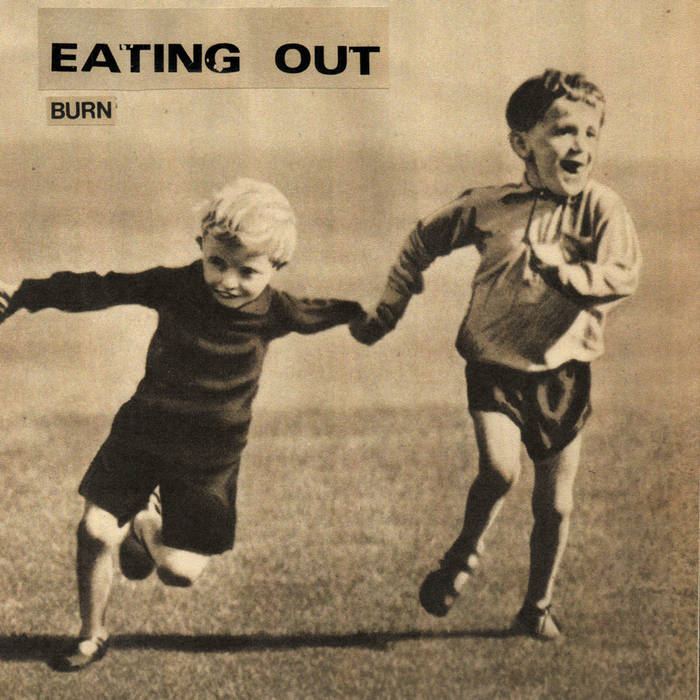
SOUNDTRACK: EATING OUT-Burn 7″ (2013).

Orville Peck has been getting a lot of attention lately.  In his act, he is a masked cowboy and his identity was (for a time) unknown.

It was fairly recently revealed that Orville Peck is actually Canadian musician Daniel Pitout (those tattoos will always give it away).

Pitout is in a couple of bands including Eating Out and Nü Sensae.

Eating Out plays a noisy grunge.  They have a bunch of one-song singles on bandcamp and this 7″ collects three of them.

Pitout is the singer (and he sounds NOTHING like Orville Peck).  I’ve felt like Orville Peck is a joke character because of the insane way he sings.  Hearing this, I’m evening more convinced of it.  But I’m glad he’s in on it.

“Burn” opens with a clean guitar intro followed by the biggest most distorted guitar around.  It’s certainly grunge and not metal and it runs through the verse and chorus.  The middle reintroduces the opening guitar riff and then the big distortion returns.  The song ends with that same clean guitar–it’s reall catchy–before crashing to a conclusion.

“Come Around” has two lead guitars (nicely fuzzed out) and a big fuzzy sound.  The sound reminds me of an updated version of SST bands.

“That’s My Man” closes the 7″ with a quiet intro.  Echoed vocals and a simple guitar melody.  It’s a poppy, almost do-wop melody with a bit of reverb drenched over the whole thing.  The song doesn’t change much, it just gets bigger as it goes along.  It’s probably the least interesting of the three, but it certainly shows Pitout looking to stretch beyond punk and grunge way back in 2013.

[READ: September 2, 2019] “To-Do”

This is a story about feminism, sex, and a woman’s relationship with her mother.

Constance is in front of a crowd of women at Antler’s Bar for Storytelling Wednesday.

She is telling them that her mother had been a beauty.  She had gotten a degree and was successful in a typing pool in New York City.  Although her boss told her that she had to cut her long hair and adopt the stylish updo of the time.  When she refused, her boss called her hysterical.  I can imagine her telling the audience: Do you know the origin of the word hysterical is the belief that the uterus could reach up through the body and and grip the throat.

The women in the audience seem agitated and bored.  Constance tries to win them over by reciting her mother’s to-do list, something she found in her mother’s effects after she died.

She tries to convince them of the significance of post its and to do lists in a woman’s life.

None of the women see it. (more…)

Read Full Post »

[ATTENDED: September 7, 2019] Fontaines D.C.

I had heard of Fontaines D.C. from NPR.  They raved about the band’s live show.   I was pretty exited to get to see them in a small place like Johnny Brenda’s.  Then I was really quite surprised that they sold out.  I feel like a lot of times bands that I think have a lot of buzz either don’t or don’t have it in Philly.

But it was sold out and the crowd knew the band really well (much better than I did).

When Pottery went off stage, the floor cleared out a bit and I got a great spot right up front.

Then they turned on these awful blue lights.  Was that the band’s decision?  Why were they like that for the whole show?  Who thought that wa sa good look for anyone?  But I didn’t really care because I was ready to hear this legendary (already) band.

They are an interesting band to be sure.  Many (but not all) of their songs are fast.  But all of their songs feature lead vocalist Grian Chatten speak-singing ala Art Brut but with a Dublin accent.  On stage Chatten is something of a caged tiger, walking around grabbing the mic stand, lurching, looking distracted or pissed off.  And then he bursts out his vocals.  (more…)

Read Full Post »

[ATTENDED: September 7, 2019] Pottery

After cutting it so close last night for the Joanna Newsom show, I made sure to leave plenty early for this sold out show.

A few months ago, Route 95 was closed at Girard Avenue.  For TWO YEARS.

So the ease of getting to Johnny Brenda’s has been removed.  They are also doing a lot of other road constructions in the neighborhood.  Which meant it was impossible to find a parking space.  I drove around for nearly 30 minutes before finding a spot in a neighborhood I’ve ever been to before. By the time I arrived for the show, Pottery had already started.  I don’t know how much I missed, but I am bummed I did because e I really enjoyed them a lot.  [Judging by other setlists, I suspect I walked in during the first song, but I’m not sure].

Nevertheless, I did get to hear a solid 30 minutes of their set. (more…)

Read Full Post »

SOUNDTRACK: FRENCH, FRITH, KAISER, THOMPSON-“Bird in God’s Garden/Lost and Found” (1987).

The words are a poem by Rumi.   It is a slow droney song that is primarily drums from John French.  Thompson sings in his quieter style.

There are several different versions of this song. There’s an earlier unreleased version with Richard & Linda Thompson that is much quieter.  I especially like this version because after every other verse they brighten things up with a dramatic five note string riff (or maybe it’s Kaiser on the sanshin) that seems to come out of nowhere.

They spice up the middle of the song with a rollicking traditional Irish sounding fiddle melody from Fred Frith’s “Lost and Found.”  (Frith plays violin).  It adds a bit of zing to an otherwise dirgey song.

After about three minutes of the slow thumping there’s a wonderfully rocking instrumental section complete with fiddles and bass playing some wild melodies.

It was recorded on the album Live, Love, Larf and Loaf and also appears on Thompson’s collection Watching the Dark (1993).

[READ: September 1, 2019] “Nell Zink’s Satire Raises the Stakes”

I have really enjoyed the Nell Zink books that I’ve read. I’ve even read an excerpt from Doxology, the book that’s reviewed in this essay.

What I like about this essay though is the summations of her writing and her earlier books.

Schwartz says that Zink looks at life from the fringes.  She then summarizes her three impossible to summarize books in simple and amusing fashion: (more…)

Read Full Post »

[ATTENDED: September 6, 2019] Joanna Newsom

This was scheduled to be a busy concert weekend for me–three days, three shows.

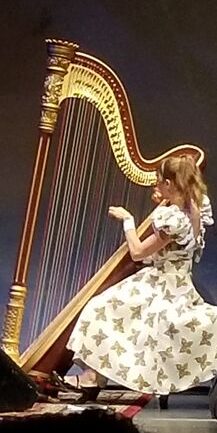
I was glad the first one was a seated, relaxed show of Joanna Newsom playing her harp and piano.  The traffic into Philly was light, until I got into City Center.  I had planned to park on the street (you can find it sometimes), but I wound up driving on a street under construction behind a bus and I watched as the time ticked away.  Finally I grabbed the nearest parking garage and sucked up the $22 fee and then hustled over the theater and managed to get into my seat just as the lights dimmed.  Holy cow.

I had never seen Newsom before, and I suspect that I was quite lucky to see her on this limited run tour because I understand it’s her first solo tour in about 15 years–she’s usually accompanied by… someone else, I guess.  It was also her first tour at all in four years.  She said she was very nervous.  And she did make a few mistakes.  But she was always gracious and self-deprecating about them.  And considering she played about 200,000 notes that night, missing one or two isn’t the end of the world.

She came out to much applause.  I gather that her fan base is pretty intense (the kind who laugh and squeal at any comment the musician makes).  However, unlike other similar fans, these were relatively restrained (it was a rather formal setting after all).  But it was nice to be enveloped in so much mutual love.

The strange thing for me is that I didn’t really know any of her songs before this show.  I knew what she sounded like and I’m sure I’ve heard a song or two somewhere, but I was a Newsom novice.  I just knew it would be an excellent evening.  And so it was.

She came out on stage to thunderous applause.  She had on a beautiful floor-length dress, which–when someone asked her–she said was by California designers Rodarte.  And that they had made four dresses, one for each of her albums. (more…)

Read Full Post »

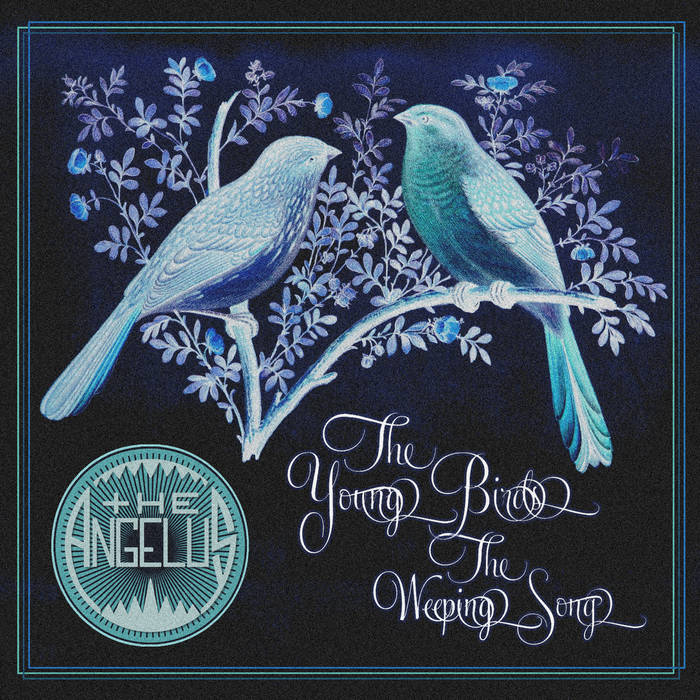
SOUNDTRACK: THE ANGELUS-“The Young Birds” (2019).

Every once in a while I like to check in with Viking’s Choice on NPR’s All Songs Considered.  Lars Gottrich specializes in all of the obscure music that you won’t hear on radio.  For this month, he did a special focus on Patient Sounds. a small label based out of Illinois.

[UPDATE: At the end of 2019, Patient Sounds closed shop. I’m not sure if any of these songs are available outside of Bandcamp].

Lars had this to say about the label

Matthew Sage, who runs the label, knows that dynamic drone, jittery footwork, oddball drone-folk, hypnagogic guitar music and cosmic Americana can exist in the same space.

The second song of the week is by The Angelus.  Lars describes the song:

Redemption often comes at the hands of something bigger than yourself, but as The Angelus’ soul-rattling doom-gaze reminds us, the love of young children will make you humble.

This song starts with crashing heavy chords–cymbals and loud guitars.  But then it settles down to a groovy death riff.  The surprise to me was when the singer began singing.  He has a soft melodic voice which totally changes this from a heavy dark song into a kind of melodic slow heavy song.  The chorus is surprisingly heavy and even ends on a kind of positive mood.

[READ: September 1, 2019] “Class Picture”

This story surprised me because it started

Robert Frost made his visit in November of 1960, just a week after the general election.  It tells you something about our school that the prospect of his arrival cooked up more interest than the contest between Nixon and Kennedy.

If Nixon had been at their school, they would have glued his shoes to the floor.

This is quite a lengthy story and there are a lot of components.  Wolff fleshes out this school very well.  So well, in fact, that I could see this being developed into a novel [It is actually an excerpt from a novel]. Although for the purposes of this story, the plot is dealt with fully.

It also makes me wonder if such a school could actually exist.  Certainly not in 2020, but even in 1960?  Because this school exhibited pride in being a literary institution. Glamorous writers visited three times a year and the English masters carried themselves as if they were intimates of Hemingway.  The teachers of other subjects (math, science) seemed to float around the fringe of the English masters’ circle.

The tradition at the school was that one boy would be chosen to meet the famous author who was coming next.  This year it is Robert Frost.  Each boy would submit an entry (in the case of Frost it would be poetry).  The author himself would select the winner.  And these meetings were a big deal to everyone on campus.

The narrator is very excited but he knows that his poems are subpar–he writes fiction.  He was on the school’s literary magazine board so he was familiar with the other great writers in his class.  There were three.

George Kellogg was a proficient writer of poetry, although the narrator found the boring.

Bill White was the narrator’s roommate.  He’d written most of a novel already and his poems were impressive.

Jeff Purcell was the third.  He was also on the literary magazine and was quick to dismiss others.  Could that translate to his own writing?

The one detour from the poetry angle is about smoking.  The school forbade smoking but a lot of boys did anyway.  The narrator said he loved smoking.  He smoked in storage closets and freezers, steam tunnels and bathrooms.  He even went out for cross-country so he could smoke while running in the woods.

If you were caught smoking you were expelled.  It happened every once in awhile.  A person was sent home just before the Frost Poem deadline.  This made the narrator quit smoking on campus.

The narrator wrote a poem for the occasion but he didn’t think it was good enough.  So he decided to submit an older one on the off chance that Frost liked it.

I won’t spoil the winner, but Frost did come to the school and he read some of his poems aloud.  During the Q&A that followed a master asked a question.  Interestingly he misstated the title of the poem.  He called it “Stopping in Woods” which Frost corrected instantly to “Stopping by Woods on a  Snowy Evening”  The master continued the question asking about iambic lines  Frost says “Good for you, they must be teaching you boys something here.”

The boys all laughed and Frost seemed pleased–had he made a mistake about the master or had he known all along?  The boys were surprised to learn later that Frost was quite funny.

The end of the story shows the winner of the contest questioning the value of his poem.  He felt that Frost mis-read it and that perhaps he won for the wrong reasons.  Should he blow off Robert Frost?  Is he crazy?

I really enjoyed this piece and found myself thoroughly engaged.  If this is part of a novel, I would be very curious to read it.  Turns out it is an excerpt from the novel Old School.

Read Full Post »

« Newer Posts - Older Posts »