Feeds:
Posts
Comments

resistSOUNDTRACK: LUISA MAITA-Tiny Desk Concert #100 (December 26, 2010).

maitaI’ve not heard of Maita.  The NPR write up speaks about the electronic flourishes and deep grooves of her songs.  Felix Contreras worried that their stripped down ensemble (only guitar, bass and fascinating bongos) would have a hard time creating that sound.

And in one way they do.  Except that it’s clear they didn’t even try.  Rather, they play a simple, but engaging kind of mellow Brazilian dance music.  In the first song, “Ai Vem Ele,” the guitar and bass play the same grooves except when they each take some meandering moments.  The percussion keeps a quiet but steady rhythm and Maita sings vocals and accent notes all over the place to keep the song interesting.  I really enjoyed at the end of the song when the bassist played exactly the vamping solo that she was singing.

“Alento” is a much faster song, with quickly sung lyrics.  It allows for rapid guitar playing and more uptempo feel.

They only play two songs (about 8 minutes long), but it really shows the kind of range she is capable of.

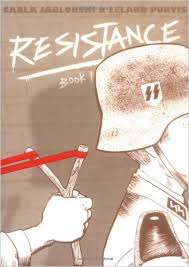
[READ: December 1, 2015] Resistance

This First Second graphic novel is about the Nazi occupation of France.  It’s not exactly light reading and yet Jablonski has taken this incredibly dark story and found an excellent and compelling narrative about one family who works as part of the resistance to fight back against their oppressors.

This is the first book in a trilogy and I am curious to see what the next two books bring as this story was nicely wrapped up but there are so many more stories which could be told.

Jablonski also helpfully sets up the situation in the introduction.  She explains how France was split in two as a result of the armistice agreement.  She gives a very brief but powerful explanation for why they would agree to splitting their country in half.  Paris and the upper portion of France became Occupied while Vichy and the southern part of France were “Free” (but still with a large Nazi presence).

This story is about an average family.  Paul Tessier and his parents and little sister live in the free part of France. Paul is an artist, and I love the way Purvis juxtaposes Paul’s art with what is actually happening (placing Paul’s “drawing” in the middle of the action so we know he is observing everything. Continue Reading »

[LISTENED TO: December 2015] Heck

heckI read this book several years ago.  I remember enjoying it but not loving it.  But when we were looking for an audio book and I saw that this was narrated by Bronson Pinchot, I knew we had to listen to it.  And the kids liked it a lot (although Tabby didn’t love the ending, which is sad, but is more of a set up for volume 2).

The premise of the book is that Heck is where you go when you die if you’re under 18.  They’re not quite sure where you’re going to wind up, so you have to go through Heck, which is basically school, until they can sort out which layer of Hell you’re going to wind up in.  Needless to say Heck is full of bad kids (and bad demons).

Our two bad kids are Milton and Marlo Fauster.  Marlo is a troublemaker from way back.  She is a petty thief and is always up to no good.  Milton is a good kid.  He never did anything bad in his life, and he always gets abuse from Marlo.  As the book opens, Milton and Marlo are sprinting down the corridor of a mall where Marlo has just stolen something. She is planning on wreaking havoc with Grizzly Mall’s centerpiece: The State’s Second-Largest Bear-Themed Marshmallow Statue (that cracked me up).

The kids run to the center of the mall where they are cornered by security.  Marlo is trying to think of an escape plan when Milton notices his classmate Damian.  Damian torments Milton every chance he can get.  And now, he is standing at the top of the marshmallow bear with matches.  Milton also notices a fuse sticking out of the bear.

One explosion later, the kids find themselves no longer attached to their bodies, as they are rapidly sliding down to Heck.  Marlo deserves to be there, she’s a bad egg.  But what about Milton?  It turns out that Marlo had slipped an item into Milton’s backpack, and therefore he technically stole something as well.  A technicality but true nonetheless.

The rest of the book shows the kids in their gender-segregated classes.  The boys learn physical education from Blackbeard the pirate and ethics from Richard Nixon (the Nixon bits were hilarious, and yet I can’t imagine many kids getting the jokes).  The girls, meanwhile, learn home ec from Lizzy Borden (do kids know who that is?) and singing from an angel who is on a teacher exchange program. Continue Reading »

mixeduop[LISTENED TO: December 2015] From the Mixed-Up Files of Mrs. Basil E. Frankweiler 

I was sure that I had read this book.  I have a copy of it and I knew the premise, but clearly, after listening to this audio book (at Sarah’s suggestion) I learned that I had not.  And the book was awesome.  All four of us enjoyed it a lot.

The story was great, but it may have had to do with Jill Clayburgh’s reading.  I don’t really know anything about her and at first I wasn’t convinced that two kids from suburban Connecticut would have such strong New York accents, but they really worked.  Especially when the kids started fighting and she had subtle distinctions between Claudia and Jaime.

Of course, the book itself is masterful.  But there’s some really unusual choices in the book, which made me wonder how good it would be.  It begins with a letter from Mrs Frankweiler to her lawyer, Saxonberg, (a rip-roaring intro to a kids book, eh?).  This introductory device sets up the story in which Mrs Frankweiler tells the story of Claudia and Kincaid’s adventures in New York City.  And it works wonderfully. Continue Reading »

eggnogSOUNDTRACK: THE AMOEBA PEOPLE-“The Night The Hippies Hijacked Christmas” (2010) “Christmas Ferret” (2010) “Robotic Christmas Tree” (2014).
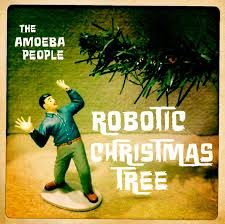
roboticA few years ago I backed The Amoeba People in a Kickstarter campaign.  And they sent me a booklet and CD of The Complicated Saga of Eggnog and Yule Log.  I had been putting off listening to it until the holidays because it seemed perfectly holiday themed.

But as it turns out, the entire collection (four songs) is sort of tangentially Christmassy.  Since they do have three specifically Christmas songs that they have also released, I’ll mention them first.

Of the three, the promisingly titled “The Night The Hippies Hijacked Christmas” is my least favorite.  It’s overly long and uses music to fight music.  But it is “Christmas Ferret” that really steals the show.

When coal isn’t enough for someone who has been naughty at Christmastime, why not send them a present that will bite back. The way the song is sung–in a weird falsetto and staccato delivery (making it almost like a hymn) is fantastic.

The newest song is “Robotic Christmas Tree,” a dancing riotous song about trees attacking people on this festive holiday:

You think your tree
Is perfectly organic
But on Christmas Day
There will be widespread panic!

It’s a fun song, although it doesn’t quite match up to “Christmas Ferret” either.

[READ: December 21, 2015] The Complicated Saga of Eggnog and Yule Log

This collection comes with four songs.  The booklet includes the lyrics to all four songs, but it also includes two extra texts.  One is the diary musings of Uncle Leon for his extra verses to “Omaha.”  But the real treat is the extended story of Yule Log and Egg Nog.

But first the songs:

“Uncle Pat” is a great bouncing song.  It’s about Uncle Pat who claims to be Irish but isn’t (the song has a fun traditional Irish feel to it).  He tells stories about his life which everyone knows to be lies.  It’s really quite funny (we also get Uncle Pat’s recipe for egg nog, both the kid friendly and the super unfriendly versions!)

“Eight Nights of Bowling” is about how three rabbis spend their Hanukkah nights: “ten pins, eight nights you know it’s really out of sight.”  This is an unexpected punk blast.

The final song is sung by Crazy Uncle Leon (who is also mentioned in their earlier song “Cosmology, Your Futon and You”).  There’s a long opening in which Leon talks to his nephews.  He asks them why they have coats on.  And they say it’s 68 degrees in Hollywood, a really cold winter.  He is appalled and then proceeds to sing to them his tales of winters in Omaha.  Well, not tales so much as just a few words and a lot of chorus (Leon can’t think of many words as you can see from his diary entry).

The title song is actually quite short.  Eggnog wants to play, but Yule Log is angry and wants to fight.   But eggnog says “I don’t want to fight him/Like me he’s a seasonal item.”    The song is slow and sweet until it becomes fast and punky (with the same words both times).

But so much is left to wonder about with this song.  Why is Yule Log so mad?  Well, thankfully, the booklet tells us the full story.

In the fuller version,

Tchristmasferrethe logs piled on the rack congratulate the Yule Log on being picked to be used for the Christmas fire.  They say that only one log is given such an honor.   But Yule Log is pragmatic–what does it matter if I’m chosen, we’re all gong to be burned anyway.

The rest of the decorations are appalled by this attitude.  The Christmas Tree shames him saying that everyone plays a part in the Christmas tradition.  And one of the chocolate Santas says that Yule log is lucky that the Santa is stuck in the bowl or he would punch Yule Log.

As they were arguing they had to hush quickly because they head someone coming. But it wasn’t a person it was a fetching yellow carton with skinny legs and arms.   He wishes everyone a happy holiday and says that he is Eggnog.  He wishes everyone good cheer but Yule Log wants nothing to do with it.  He tells Eggnog that he is just going to be drunk tomorrow so what is he so cheerful about?

Eggnog says its better to be drunk than to go sour.  Yule Log is dismissive.

Eggnog then posits that they can fight or they can play holiday games.  The only game Yule Log is interested in is beating up Eggnog.

So what happens on Christmas Day?  Will they meet their fate?  And if so, whose attitude is better?

This is something to ponder while you sit by the fire and enjoy your own Egg nog.  Happy Christmas.


dramaSOUNDTRACK: SHARON JONES AND THE DAP-KINGS-Tiny Desk Concert #497 (December 21, 2015).

sharonTo end out the Tiny Desk Christmas season, I chose this year’s entry.  And for this year’s Christmas show, they went all out.  There’s lights strung around the office, there’s twinkling gold tinsel behind them, presenting a wall of glitter, and a sign that says Dappy Holidays.

I don’t love Sharon Jones and the Dap-Kings (I often feel like I am the only person who doesn’t).  I’m not a big fan of the blues or of soul music, so there is that.  But then I heard her blues version of “Silent Night” and it is a travesty.  “Silent Night” is a beautiful tender song.  If done right, it can make you cry.  But this is just dreadful. You don’t make “calm” a ten syllable word.  You don’t sing “talkin ’bout a Silent Night.”  You don’t make this song fun.  You don’t show off you crooning skills with this song.  You just sing it.  Perfectly.

When she’s not tinkering with classics, though, Jones has some good fun with two originals.  The first is the fun “8 Days of Hanukkah” She sings about all the things they’ll do on each day–spin the dreidel, roll out the latkes, and the best: “we’re cooking up the brisket the kosher butcher sold my uncle Saul,”  It’s a lot of fun (when the horns launch into the dreidel song amid their jamming it’s a good time).  This is the kind of soul that I like–lots of swinging horns and good times.

And Sharon herself seems like a fun person–she asks for help remembering the lyrics to the final song and plays it off in a fun way.

“Big Bulbs” is another original.  It’s also funny with the lyrics, “Baby you got them big bulbs flashing in your windows tonight.”  IT seems like it’s a double entendre but I don’t really think it is, it’s just fun.

Despite my aversion to the first song, she totally won me over with the second two songs, and I’d happily add those to any holiday mix.

[READ: December 10, 2015] Drama

I really enjoyed Telgemeier’s Smile and Sisters.  But I enjoyed Drama even more.

This story is an ode to everyone who works behind the scenes at the drama club.  But it’s also a chance for the stars to shine and the shy kids to come out too.  All done in Telgemeier’s delightfully simple yet effective drawing and storytelling style.

Callie is in love with the drama club.  She works late on sets, she loves seeing things come to completion.  She also knows she has no talent to be on stage.

And things are good.  Until the drama arises.  Greg and Matt are her friends.  Greg is a little older and Callie has a crush on him.  When Greg tells her that his girlfriend Bonnie broke up with him, she is pretty excited.  And they share a kiss.  But from that moment on, not only does Greg avoid her, but Matt is a jerk to her, too.  Not bad for the first few pages. Continue Reading »

books SOUNDTRACK: PRESERVATION HALL JAZZ BAND-Tiny Desk Concert #328 (December 21, 2013).

peshallThis show is tangentially Christmassy.  I mean, it does feature a tuba player in a Santa Claus outfit, after all.  But the music isn’t Christmassy per se (except for one song).

Rather, the Preservation Hall Jazz Band does what it does best–play fun dancey jazz songs.  There’s trumpet (and trumpet solos) and trombone, there’s saxophone and piano and most importantly, there are two, count em, two tubas!

“Sugar Plum” is their instrumental version of a holiday song (about the sugar plum fairy).  It’s a fun bouncy swinging song.  “I Think I Love You” has vocals, and they are fine, but it makes the band swing a little less.

“Happy Holiday” is indeed a Christmas song, and a nice one with sweet lyrics.  It’s also got a lengthy some trade off trombone and saxophone solos.

The final song, “Dear Lord,” sees the Santa tuba player removing his instrument and taking over as lead singer (and commenting that he’s from the South Pole which is why he is so hot).  This final song seems to be a familiar one with people singing and clapping along as he blesses everyone from South Pole to North.

[READ: December 23, 2015] The Haunted Man and the Ghost’s Bargain

This is the final book in the Christmas Books collection. And it does return to the Spirit of Christmas more than the previous stories did.

As I learned from the previous story, the plot is quite simple but its length comes primarily from Dickens’ intense amount of detail (and lots of humor).

The story focuses on Mr. Redlaw.  Redlaw is a chemist and a kind man.  But he is beset upon by sadness at all of the things that have happened to him in his past.  One night he is visited by a spirit (who seems to be something of a version of himself, maybe?).  The spirit tells him that he can help to “forget the sorrow, wrong, and trouble you have known.”  Basically he proposes that he will remove all of the bad memories Redlaw has ever had.  And if he accepts this proposal, he will also be able to do this to everyone else that he meets.

This seems like a good deal–no bad memories!  So he accepts. Continue Reading »

basoonSOUNDTRACK: THE MUSIC TAPES-Tiny Desk Concert #182 (December 20, 2011).

musictaopesJulian Koster released an album in 2008 called The Singing Saw at Christmastime.  It was a complete CD of Christmas songs played on the saw.  That should tell you that Koster is an unusual fellow. But that doesn’t prepare you for what he unleashes during his Tiny Desk Concert with The Music Tapes.

Koster has a very high-pitched voice (I have a recording of him doing “I’ve Got My Love to Keep me Warm,” which is almost unbearable.  His singing is really close to the fine line of unique and bad (and I imagine for many it crosses the line). He’s also got a fascinating way of looking at things and of storytelling.  So this Tiny Desk show winds up being quite long (20 minutes) with quite a lot of different things going on.

First he tells a lengthy story about his great grandpa.  And how his great grandpa told him that baby trees can walk.  But they are tethered to the ground by an umbilical cord. And when we cut them down, we sever the cord.  And a Christmas tree is adorned and worshiped for two weeks and then set free to roam the earth.  It is a warm and strange and delightful.

Then he and a second member of the group play “The First Noel” on two saws.  It’s weird ad wonderful.  At the end of the song he has his saw bow, and Bob says he didn’t know a saw could bow.  Julian says they do and in fact that singing saws sing by themselves but we encourage them by petting them and placing them in our laps.

I don’t enjoy everything Koster does, so the second song “Freeing Song For Reindeer,” a banjo based piece about a tired old reindeer transporting Santa is slow and kind of sad and not my thing.

But then he tells a story of growing up with all kinds of culture and Holiday traditions which leads into a version of Gavin Bryars’ “Jesus Blood.”  I enjoy the original and didn’t know what to expect here.  They begin with a tape loop of an old man singing the song (possibly the one Bryars used, but I don’t know).  And then Koster starts playing the banjo with a bow.  And then a second guy does the same. Then the percussionist stars playing the toy piano and the noises build.  He switches from piano to trumpet and plays along.  Meanwhile the second banjo player switches back to the saw for the end. It’s really quite a lovely performance.

“Takeshi And Elijah” is another slow and keening banjo based song.  It’s pretty long, I don’t really like it, but by the end, as it builds with trumpet and toy piano, he ends the song sith a puppet Santa doing a tap dance as percussion.  It’s a great ending to an okay song.

The final song is “Zat You, Santa Claus?”  It’s played on bowed banjo and sousaphone.  It’s a fun and crazy rendition.   It’s one of the weirdest Tiny Desk shows and certainly the weirdest Christmas set.

[READ: December 5, 2015] The Bassoon King

I really liked Rain Wilson in The Office, but I haven’t seen him in much else (I forgot he was in Six Feet Under and Galaxy Quest) . I wanted to like Backstrom, but it got cancelled before we even watched an episode.

So why did I check out this memoir of an actor I like a little bit?  Well, primarily for the title.  The Bassoon King had an absurd ring that I really gravitated towards.  When I saw there was an introduction by Dwight Kurt Schrute, I knew this would be a good book.

The introduction (by Dwight) is very funny.  I love Dwight and I love thinking to myself “FALSE!” whenever I disagree with someone.  Dwight wondered why anyone would read a biography of a young semi-famous actor.  “Fact. NO. ONE. CARES.”  But then says he doesn’t care either because he is making a lot of dollars per word for this thing.

Rainn begins his memoir by making fun of his big head (especially when he was a baby).  It’s pretty funny.  And then he describes his hippie family and his weird name.  His mom changed her named from Patricia to Shay in 1965.  She wanted to name Rainn “Thucydides.”  But his dad always liked Rainer Maria Rilke.  Now, they lived pretty close to Mt Rainier, so they went for Rainn (“Tack an extra letter on there for no apparent reason”). Continue Reading »

books SOUNDTRACK: MATT WILSON’S CHRISTMAS TREE-O-Tiny Desk Concert #99 (December 20, 2010).

trreoMatt Wilson is a jazz drummer.  And he joined forces with Paul Sikivie on bass and reedman Jeff Lederer on saxophone, clarinet and piccolo.

Wilson is a great drummer and he normally plays standard (if wild) jazz.  But for this group (the name is an indicator of the silliness), they play a spirited and fun set of Christmas songs–some of them crazy and unrecognizable and others simply fun and jazzy.  And despite the fact that Wilson does some amazing things with just a snare and a cymbal, it’s hard not to say that the show belongs to Lederer.

“Hark the Herald Angels Sing” starts out pretty straightforward.  The initial melody is present and then Lederer goes off on a lengthy solo in the middle.  “O Come All You Faithful” is a sing-along in which Lederer plays a very slow staccato line on clarinet for the audience to sing along with.  It’s Sikivie’s steady bass that keeps the crowd in line.  Meanwhile Wilson is playing his brushes on everything–his snare, a desk, anything that comes along.  It’s good fun with everybody really getting into it by the end.  “O Come, O Come, Emmanuel” starts out slow with Lederer’s sax laying down a smooth melody line and then drifting into his own space.  It’s quite pretty if unusual.

“Angels We Have Heard on High” is audio only and it begins with a rattling of jingle bells and Lederer’s skronking sax (I’d actually like to see that part–it seems like the most interesting visual songs are the ones left off the video).  Then he starts playing a sax melody (although nothing like “Angels” normally sounds).  There is some notation of “Angels” by the end, but it’s very minimal.  The most unlikely Christmas song ever (well, until what comes next).

The final song is a version of Handel’s “Hallelujah Chorus” and it is completely unrecognizable.  It opens with skronking sax noise and martial drums.  Aside from a few seconds where the bass plays a part of the familiar melody, the rest is mostly noise.  As the song draws to a close Matt starts playing the four note “ha – leh – lu – jah” on the snare, he then starts hitting that rhythm on everything–the rim, the bookcase, he even grabs a mug off the shelf and plays it on that.  It’s pretty funny and clear that Wilson is having a grand old time.

This nonsense ends when Lederer picks up the piccolo and plays a fun if silly version of “We Wish You A Merry Christmas,” which is very slow despite Matt’s super fast drumming.

It’s a funny, silly good time and an unexpected way to sing Christmas carols.

[READ: December 18, 2015] The Battle of Life

This book is the third of four in the collected Christmas Books.  This book is very tangentially related to Christmas (although he did publish it as a Christmas book) as one section takes place at Christmas time.

The thing that I really caught on to while reading this is that Dickens’ stories were really written for a very different time.  His books unfold slowly.  I find that I like to read fast (as many others do, I suspect), and I think the reason people dislike Dickens is because he really forces you to slow down.  But if you do slow down, you can really appreciate his descriptions and his humor.

This story begins on a battlefield.  And Dickens tells us all about the battle that took place here and all the people who died here.  For several paragraphs he goes on about it.  And then you learn that the battle has nothing to do with the story–except as an underpinning to the attitudes of people who live there.

Rather, the story is set on the battlefield many many many years later (and has nothing to do with the battle).  For this is a love story, after all. Continue Reading »

[LISTENED TO: December 18, 2015] A Christmas Carol

gaimanchristmasJust like two years ago when we saw A Christmas Carol, a few days later I listened to the audio book.  This year, I found a different reading of it by Neil Gaiman.  This one comes from the New York Public Library podcast, and is available on Soundcloud and iTunes.

What makes this reading unique (and now different from Patrick Stewart’s awesome reading and from the McCarter production (which is different from the book as well) is that the version Gaiman read was hand-edited by Dickens for his own performances.  What?

Yes, evidently Dickens performed this story live a few times.  As the NYPL site explians:

Charles Dickens could not only write a crackling good story, he could perform it. And so in 1853, he took his Christmas Carol show on the road, first in Britain and then in the United States. Audiences loved it. Dickens didn’t simply read from his book. He transformed it into a stageworthy script—cutting, pasting together pages of excised passages, adding stage cues for himself, rewriting, then cutting some more…. Indeed, there is only one such copy of A Christmas Carol, created by Dickens himself, and The New York Public Library has it.

Gaiman read the “as the great author intended, following edits and prompts Dickens wrote in his own hand for his unique readings 150 years ago.” Continue Reading »

[ATTENDED: December 18, 2015] Danú

2015-12-18 21.01.52Two years ago we saw Danú play at RVCC.  They came back again this year.  We weren’t sure if we were going to go.  There were other possible plans in the works and should we bring the kids?  Well, S. and I had enjoyed it so much last time that we wanted to go again, and we decided to bring the kids.

It was the last night of their North American tour and while they were selling the same CD we bought last year (and most of that show was similar to the CD), they mixed it up a bit and played a bunch of different material.  And both kids enjoyed it.

Like last time, the six members were the same:

  • Benny McCarthy–button accordion
  • Dónal Clancy–guitar and storyteller (he’s the son of Liam Clancy of the Clancy Brothers and was in the band Solas).
  • Oisín McAuley–fiddle
  • Muireann Nic Amhlaoibh–vocals, flute and whistle.
  • Éamon Doorley–bouzouki
  • Martin O’Neill–bodhran and piano Continue Reading »