Feeds:
Posts
Comments

SOUNDTRACK: NAIA IZUMI-Tiny Desk Concert #742 (May 14, 2018).
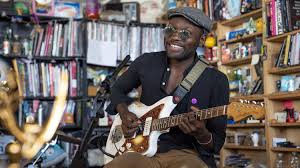
Naia Izumi won the Tiny Desk Contest and here he is with his full Tiny Desk Concert (note to those who submit–you’ll need to have more than one song handy if you win).

He and his band play three songs.

Naia Izumi won us over with his mind-boggling and unique style of guitar playing — a combination of tapping on the fingerboards and soul-filled whammy bar-note bending. And his multi-octave singing range blended so eloquently with his guitar stylings.

Naia is often a one-man band playing on the streets with a drum machine. But for his Tiny Desk Concert he brought bassist Adam Matijasevic and drummer Kynwyn Sterling. He’d met Kynwyn after submitting one of his songs to a math rock Facebook group. And that’s the thing: Naia’s music draws from so many spheres of sound. There’s that punctual, rhythmic, mathematical pulse to what he does, but there’s also a fluid, almost African Kalimba sound in there as well. They’re two sounds I wouldn’t often think of as coexisting.

“Soft Spoken” (the song that won the contest) starts off with him beat boxing and then playing that astonishing finger-tapping riff.  He seems very relaxed and comfortable playing the song in this setting.  And the addition of the bass and guitar really flesh out the sound nicely.  I particularly like the few extra bass fills.  And of course a live drummer is always superior to the machine (even if she looks a little disinterested).   The guitar solo is really pretty, too.

It’s a song, as I hear it, that speaks to the power inherent in the gentle and quieter voices that are often drowned out by the outspoken and boisterous ones. Its title was originally “Soft Spoken Woman” and, as we later learned, Naia had identified as a woman for nearly seven years. More recently, as he said in an interview with Washingtonian Magazine, “I’m not into that anymore because I just want to relax with biology and be comfortable with what I have.”

The other two songs are new to even Contest watchers.  Can he do it two more times? Indeed he can.

“As It Comes” features some very cool guitar seconds (lots of chords with vibrato).  It’s pretty neat to watch his hands fly up and down the neck of his guitar.  He does some more finger-tapping in the middle of the song and what I love about it is that he’s not showing off or trying to impress (although it is impressive).  It’s all in service of the song (especially if he was playing by himself).

But it’s Izumi’s vocals that really deliver on this song.  He sings the bridge with a wonderfully delicate whisper that soars into his high falsetto.

There seems to be a synth on this track although I can’t place it.

The final song is “Soul Gaze” and it sounds huge.  There’s something about the guitar effects that he uses on the chords that make this song explode  with a Jimi Hendrix kind of texture.  And his vocal delivery soars into Jeff Buckley territory.  I love that those two things drew my attention more than the finger-tapping (which also sounds great).

It’s a tremendous song and Izumi seems a more than worthy winner.

[READ: May 8, 2018] “You Never Really Know”

This piece is fairly slightly Eisenberg is always able to pull the funny out of seemingly slight premises.

As the title suggests, Jesse knows a lot about the N.B.A.  And that knowledge does come in handy in unexpected places.

Like with his prospective father-in-law.  The man is unimpressed with Jesse–no stable employment, no car or house as well as being emotionally unavailable,

Jesse doesn’t disagree with the man, in fact he confirms it and notes that this must be how the Detroit Pistons’ manager felt after drafting the disappointing Darko Miličić instead of Carmelo Anthony in 2003.

This catches the father’s interest: “You know the tertiary details of the Darko Miličić saga?”

In a second example, Jesse was speeding –going ninety-one miles an hour in a sixty-five zone.  The difference is 26 mile per hour.

Jesse acknowledges his mistake and points out that 26 is also Kyle Korver’s jersey.

The officer is stunned that this guy knows the jersey number of the rotation player for the Cleveland Cavaliers.  But he explains he’s no savant, he reads about basketball all the time.

He stopped reading novels because it makes him feel competitive with other writers, whereas when he reads about basketball he knows there is no competition.

The office is sorry that he is plagues by this self-doubt and borderline hubris.

Finally, he is talking to the N.B.A Commissioner who wants to offer him a job “as a superstar player.”  Because what matters in a clutch situation?  Not quick reflexes but “an ability to name the assistant coaching staff of the Oklahoma City Thunder.”

Fun fact:

Michael Jordan an Scottie Pippen quizzed each other using flash cards.

Eisenberg always brings a smile to my face.

For ease of searching, I include: Darko Milicic.

SOUNDTRACK BELA FLECK & ABIGAIL WASHBURN-Tiny Desk Concert #741 (May 11, 2018).

I know and like Bela Fleck.  I know and like Abigail Washburn.  I had no idea they were married.

A very pregnant Abigail Washburn points to Bela Fleck at the Tiny Desk and says “and just so you know, this is his fault.” I won’t spoil the video by telling you his response.

Bela Fleck and Abigail Washburn are two American musical treasures. This husband-and-wife banjo duo write original tunes steeped in the roots of folk music. Their playing is sweetly paced with melodies interweaving through their intricate, percussive picking all while Abigail soars above it all with her discerning, yearning voice.

I also had no idea how political they are.

Their first tune, “Over the Divide,” was written at the height of the Syrian Refugee Crisis. They’d read a story about a Jewish, yodeling, Austrian sheep herder who helped Syrians out of Hungary, through the backroads that likely only sheep herders know.

Lyrical content aside, the music is just stunning.  The banjo is oft-mocked for its twang, but these two play such beautiful intertwining lines, it is just magical.   The opening melody is just jaw-droppingly lovely.

They each switch banjos to rather different-looking ones–deeper more resonating sounds

The second tune, “Bloomin’ Rose,” is a response to Standing Rock and the Dakota pipeline that is seen as a threat to water and ancient burial grounds. The intensity and thoughtfulness in Bela Fleck’s and Abigail Washburn’s music is why it will shine for a good long while, the way great folk tunes stay relevant over the ages.

But Abigail isn’t just banjo and vocals,

For the third tune, Abigail waddled over to a clogging board. And before she began her rhythmic patter, told us all that “my doctor said that what I’m about to do is ok! I have compression belts and tights on that you can’t see.” [Bela: so do I].  They then launched into “Take Me To Harlan,” another one of their songs from their 2017 album Echo In The Valley.

She says that they met at a square dance in Nashville, and she loves dancing and movement.  Bela plays and Abigail sings and taps for this jazzy number.  The middle of the song features a call and response with Bela on banjo and Abigail tapping [“Eight month?  No problem.”].

For the final song, “My Home’s Across the Blue Ridge Mountains,” Abigail says it’s usually done in a perky bluegrass country style but they listened to the lyrics and decided it was not perky at all.  So they turned it into a different thing.  It’s a somber song with Bela on a relatively slow banjo (with a slide that he sneaks on near the end) and Abigail singing mournfully (she can really belt out a tune).

Although as Steve Martin pointed out, with a banjo almost everything is upbeat.

The parties at their house must be a hoot.

[READ: January 21, 2018] “Active Metaphors” and “Death By Icicle”

“Active Metaphors” is one of Saunders’ funniest pieces that I’ve read.  And whats strange about that is that it was an essay published in the Guardian newspaper.

There are two headings: “Realistic Fiction” and “Experimental Fiction”

“Realistic Fiction” begins with the narrator in a biker bar.  He overheard two bikers, Duke and StudAss discussing these two types of fiction. –they’d purchased their “hogs” with royalties from their co-written book Feminine Desire in Jane Austen.  There was some verbal sparring during which they threw Saunders out a window “while asking questions about F. Scott Fitzgerald’s fallen American utopia.”

The narrator explained his theory of realism to them–everything happens the way it actually would and then suggests that maybe a central metaphor would help define things.  There’s an impotent farmer and every time he walks past the field, the corn droops.  An active metaphor like this helps the reader sense the deeper meaning of the story.

As they ride off with him on their hog, the bikers use some great professorial language–the end is hilarious. Continue Reading »

SOUNDTRACK: GORDI-Tiny Desk Concert #740 (May 7, 2018).

I had an idea of what Gordi sounded like (a much more rocking band, who was I thinking of?)  Rather, Gordi is Sophie Payten a woman with a piano (and a harmonium and a guitar).  Gordi has a lovely deep voice (dusky and evocative) that is not afraid to break.

The blurb says her voice

usually gets enshrouded somehow: It often sounds like it’s echoing down a stairwell, or else she’s bathed it in vocal effects a la Imogen Heap or Gordi’s occasional tourmate, Justin Vernon of Bon Iver. But Payten’s voice is an expressive and powerful instrument on its own, as her debut appearance behind the Tiny Desk demonstrates.

Aside from a bit of looping — in the strangely infectious notes that open “Heaven I Know,” from last year’s terrific Reservoir — Gordi here keeps her voice both unadorned and centered within warm, cool arrangements that include piano, acoustic guitar, pedal steel, a harmonium named Barbara, a saxophone played by Yellow Ostrich’s Alex Schaaf, and more. The effect here is rawer than on Reservoir, but that’s part of the point: These songs stand up to being stripped down, every time.

“Heaven I Know” is really pretty with a staggering sense of loss.  She met her backing badn while they were playing with The Tallest Man on Earth.  She plays piano, there an electric guitar and some kind of synths in the back.  And the drums (played by Zach Hanson) crescendo as needed.  The song runs a little long but it’s quite pretty.

For “Can We Work It Out” guitarist Alex Schaaf switches to saxophone.  Gordi pulls out the harmonium.  She says she bought the harmonium on the Australian version of Craigslist called Gumtree.  She bought it from an Indian lady named Barbara so the harmonium’s now called Barbara.

For the final song, “On My Side” she’s on guitar and Ben Les switches from keys to pedal steel.  The song is a little faster with some great harmonies from the drummer.

This is really lovely stuff.

[READ: October 10, 2017] Death of the Pugilist

Okay, so this is a boxing story.  That means that there is going to be a fight and the guy he is writing about is either going to win or lose.

That’s the attitude I took when I started this story–I don’t care for sports stories in general and feel that they have to work very hard to be more than just win or lose.

This story is a little different because each section starts with a question.

Who was Burke? His beginnings. Continue Reading »

SOUNDTRACK: DARLINGSIDE-Tiny Desk Concert #739 (May 4, 2018).

I genuinely can’t believe that Darlingside hasn’t done a Tiny Desk Concert before as they are a perfect band for it–four guys playing primarily acoustic instruments, singing gorgeous harmonies around one microphone–perfect..

But here they are for the first time sounding somehow bigger than they do live (must be the small space and the surprisingly loud bass).

If you’re Darlingside and you have three albums out (but two that fans really love) and you can only play three songs, what do you choose? You must choose something from Birds Say, of course, but what?

They chose “The God of Love” one of several gorgeous songs on the album and a showcase for Don Mitchell’s 12 string guitar and Auyon Mukharji’s violin.

I did not know that

“The God of Loss” was inspired by the Arundhati Roy book The God of Small Things, and by the main character’s attempts to preserve humanity in the face of competing forces.

As is standard practice, Harris Paseltiner give the opening introduction.  He speaks of being up since five and drinking decaf and eating a delicious quiche.  Don quips, “don’t worry you only have to hear about Harris’ morning in minute detail, not he rest of us.”

And then it’s time to move on to the new album.  The current single “The Best of the Best of Times” allows them to show off the new electronic gizmo that adds sounds to the album as well as Auyon’s mandolin.  It’s also really catchy, and Don throws in all kinds of unexpected dissonance with that little electronic thingy.

Auyon introduces the band by saying how they are similar to Bob Boilen (I did a little research on the internet).

Don: Tiny Desk Concert is named after a band that Bob was part of (Tiny Desk Unit) with a friend named Michael Barron.  Don has a friend named Michael with whom he plays music (Michael Cohen, different Michael, same idea).

Don: has a friend name Michael who whom he played music.  (Michael Cohen, different Michael, same Idea)

Harris: Bob grew up around Italian people and uses his hands to speak.  So does Harris.

Dave: thinks about the sound of words and how good it feels to say things and Bob’s “stage name” Bob Boilen is very pleasant to say so they probably gave that in common.

Auyon: Bob sometimes wears bolo ties I also sometimes wear bolo ties.

The end the set with Harris on cello and Auyon on violin playing the gorgeous, melancholy “Extra life” which

starts off the album with these lines:

“It’s over now
The flag is sunk
The world has flattened out
Under the under grow
I’ve always found
A level further down
As I begin to lose hold of
The fiery flowerbeds above
Mushroom clouds reset the sky
Extralife”

After the string-filled opening Harris jumps back to guitar and Auyon is back on mandolin while Dave Senft is playing the little electronic gadget this time

The opening is nearly a capella so that when the band kicks in, the full instrumentation on the second verse, it feels huge.

Through these end-of-time lyrics comes deep appreciation for what we have and what’s worth holding on to. And through it all Darlingside’s humor shines, with in-between chatter about quiche and common bonds. Don’t miss this band’s music. This is the perfect introduction to Darlingside, right here.

Every time I’ve heard them they’ve been great.  The only downside to this show is that it’s so short.

[READ: March 30, 2018] “Find the Edges”

This was a very sad, rather short story about death and a family disintegrating.

The central metaphor of putting a puzzle together was really effective without being obvious.

His wife loved jigsaw puzzles.  She always said to find the edges and work your way in. But the kitchen table, which usually held her puzzles was now filled with papers, bills for wreaths and the like.  Also on the table was a pie from the Rendons next store. Continue Reading »

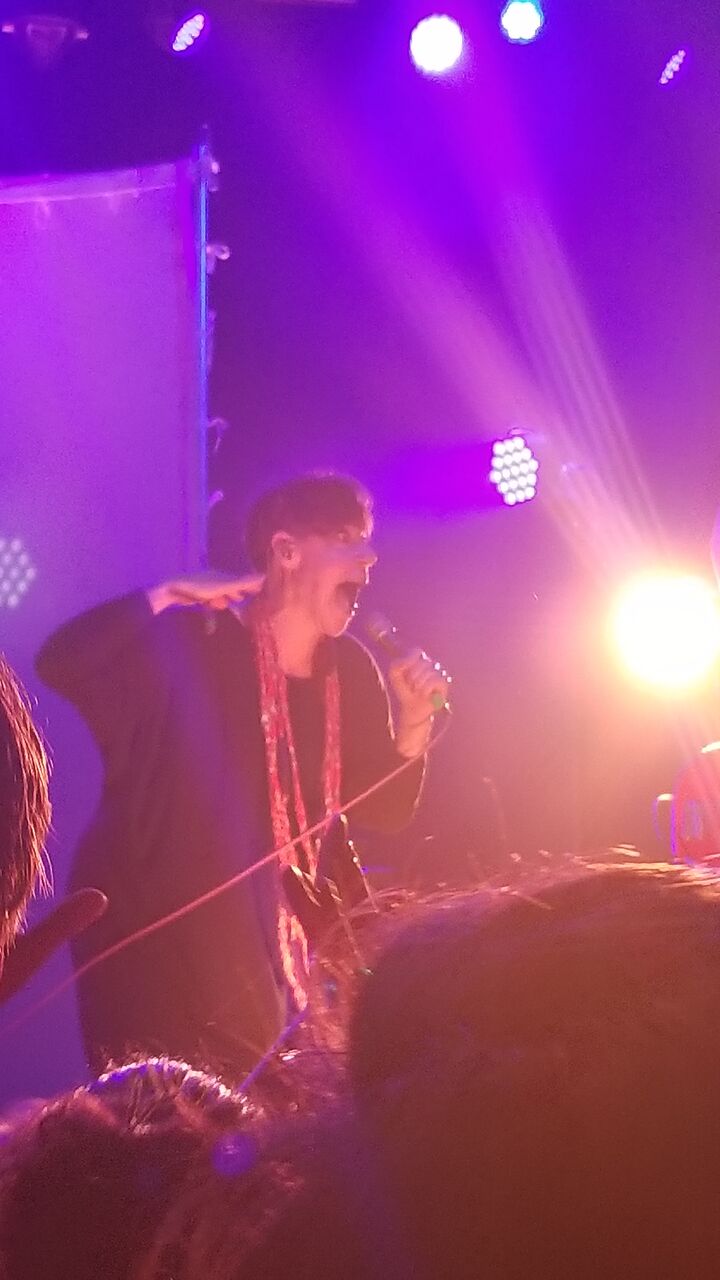
[ATTENDED: May 10, 2018] tUnE-yArDs

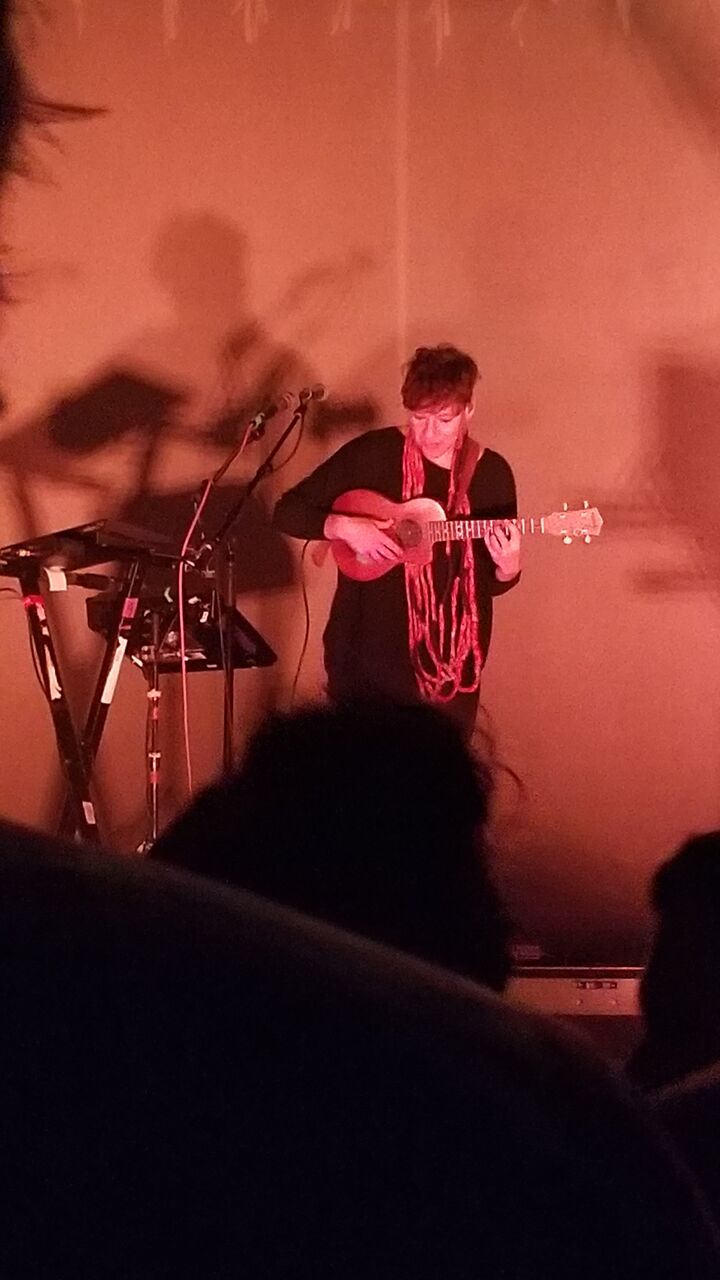
When I first saw tUnE-yArDs on a Tiny Desk I was really impressed by Merrill Garbus’ set up.  I loved that she looped things so much–she may have been my first real exposure to that much looping.

I also loved that she played a kind of modified ukulele.  And I really liked her voice which was so unexpected for someone who looked like she does.  When I first heard them I assumed she was African American.

I loved the album w h o k i l l, but hadn’t really heard that much from them since.  There’s a new song that WXPN has been playing “Look at Your Hands” which I liked, but I didn’t hear anything else from the album.

So based on the Tiny Desk, tUnE-yArDs had been very high on my list of bands to see.  But that was many years earlier.  I still had high expectations and I found myself not exactly disappointed but like something of an outsider at the show.  Because while I didn’t know that much of her new music, the rest of the crowd knew everything and danced accordingly.

I had hoped to get tickets to see her club show at Boot & Saddle.  I don’t know how different that small show was but this show was simultaneously large and small.

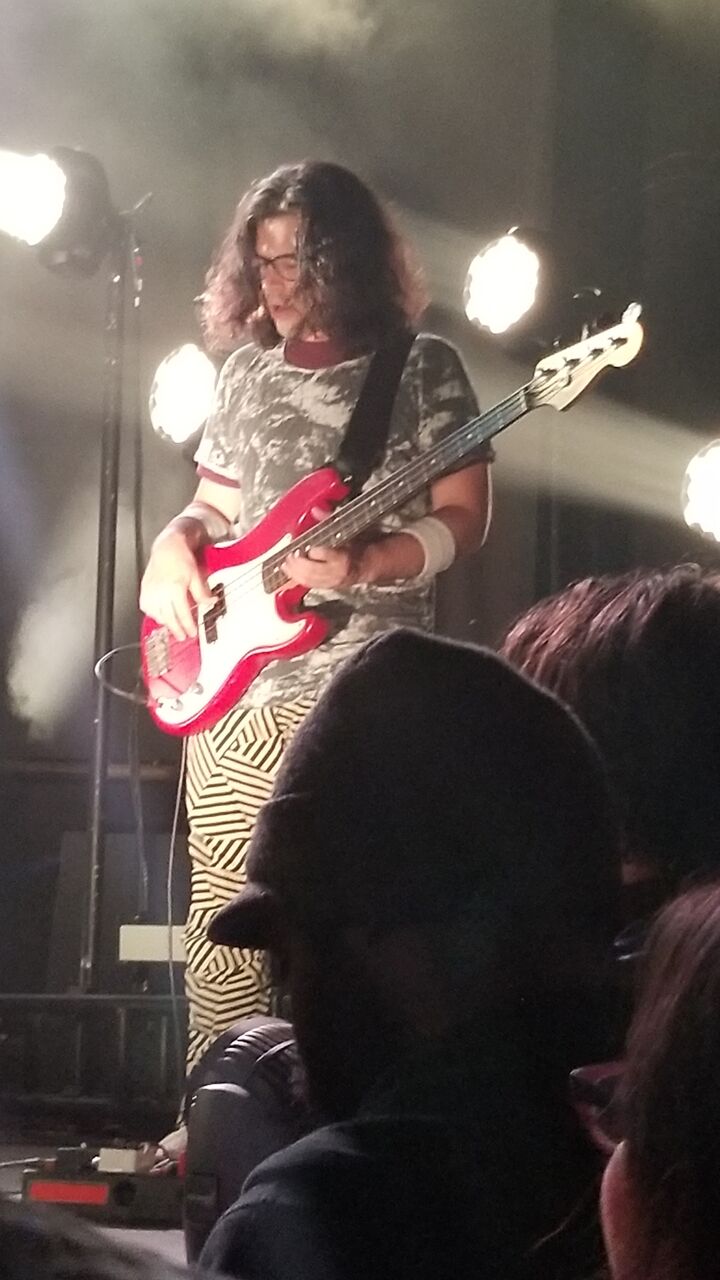
I had heard that there were previously saxophones, background vocalists and percussionists on stage with her.  For this show there was only Hamir Atwal on drums and her musical partner Nate Brenner.

The stage set up was sparse: a big white backdrop and Garbus on a raised platform.  The drums on her right, the bass on her left.

Garbus still loops with abandon.  Indeed, Shara Nova made a comment about Garbus’ feet.  The key to Garbus looping (and there was plenty), is that she does a lot of the work with her feet.  However, there was a monitor in front of her feet so you couldn’t watch what she was doing up there.  That kinda stunk.

But she had a ton of energy.  She played a small drum pad a modified ukulele and those loop pedals.  She danced around on her platform and occasionally, briefly came down to the audience and danced a bit before heading back to her station.

Garbus and crew recreated three songs from the new album.  And everyone around me sang along.

I thought that Nate Brenner’s bass was too loud in the mix, but when he played a high riff it sounded great.

I loved hearing “Look At Your Hands” live where the dynamic was seven more dramatic than on record.

She played only one song from Nicki Nack, the catchy and pointed (like nearly every other songs) “Water Fountain.”

And then it was on to the songs from Who Kill that I was really excited to hear: “Es-So ” and “Powa.”

I had heard a lot about her new album which explores the nature of her relationship to African culture.  I’d always wondered about her voice and her intonations, just how African it sounds.  So in a recent interview in GQ she says:

When I was in college I studied Kiswahili, translating plays from Swahili into English and taking lots of African Studies classes and African American literature classes. I went to Kenya and was just so disgusted by the role of white people in colonial history—and, most importantly, present day postcolonial dynamics—that I just shut down. For years I felt like, “There’s no way I can make the music that I want to, which is all influenced by black music.” Bird-Brains, the first tUnE-yArDs album, was almost called White Guilt. So from the beginning of tUnE-yArDs, I have been grappling really awkwardly with that. The song “Jamaican,” a lot of it was me talking to myself: What’s going on here? Do you have a right [to make this]? Why is this music coming out of me? What will people think?

She grapples with serious issues of white guilt and colonization  (like the song “Colonizer”).  These songs are powerful and thoughtful.  And yet for the most part they are incredibly dancey.

In that interview she said:

I want people to dance. Really. That seems so simplistic an answer, but I really value the ceremony of bringing people together into a specific space and not thinking so much. [laughs] Ironically. I know there’s a lot to think about with this music, but when essentials of music take over… seeing people be literally on the same wavelength? It’s super powerful. I felt like making people dance was the right thing.

The audience enjoyed the show tremendously and there was ample dancing.  and I enjoyed hearing her make the music, but  I never quite felt on the same wavelength as everyone else.  Her appropriations of African culture (even how she danced) made me unconformable.  I knew what she was trying to address, but the music was more in my head than in my body.,

Knowing that she has bona-fides in the area makes things better, but can’t change the way I felt about the show.

Having said that, the encore of “Bizness” was totally killer.

This is a setlist from a few shows earlier, but I think it’s pretty spot on.

  1. Honesty*
  2. Look at Your Hands*
  3. ABC 123*
  4. Water Fountain
  5. Es-So
  6. Powa
  7. Colonizer*
  8. Coast to Coast*
  9. Gangsta
  10. Heart Attack*
  11. Encore
  12. Hammer*
  13. Bizness

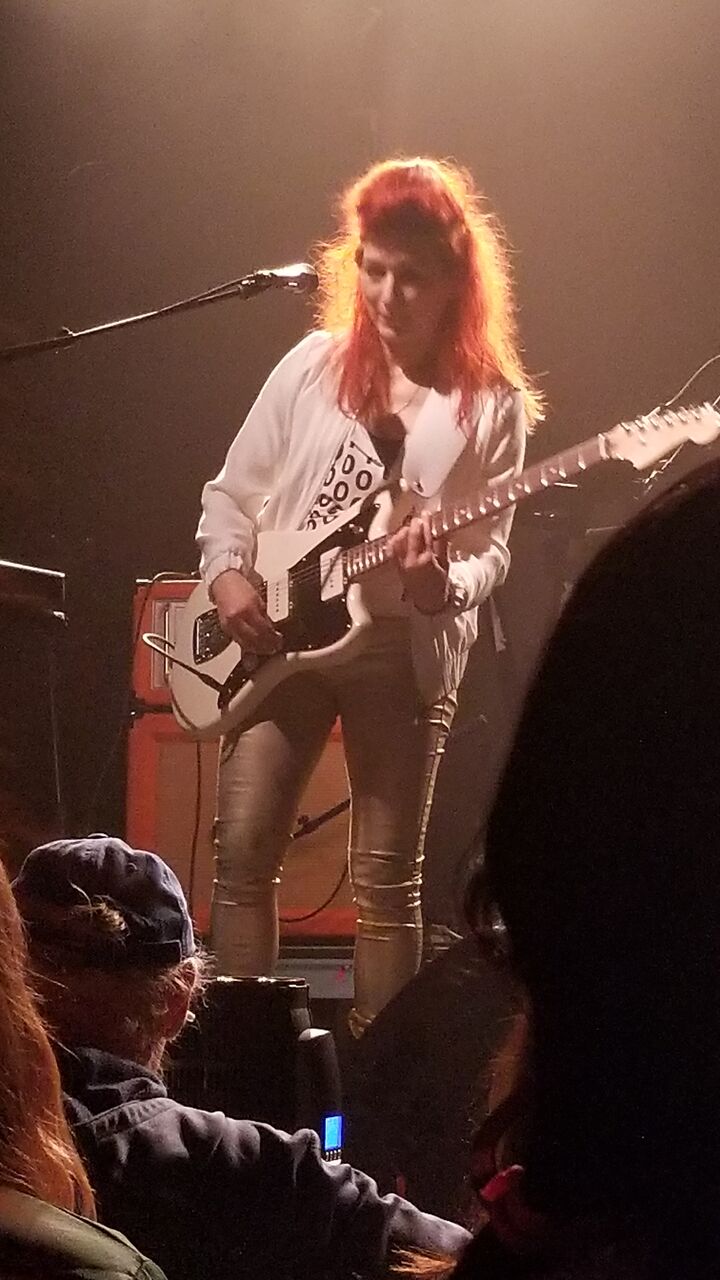
[ATTENDED: May 10, 2018] My Brightest Diamond

I only knew about My Brightest Diamond because Shara Worden sang on The Decemberists’ Hazard of Love album.  She sings some pretty intense stuff on it, so I looked her up.  Well, it turns out that Shara has changed her name to Shara Nova.  But nothing has changed about her voice.

She is dramatic and operatic with amazing power.

I didn’t really know much about the band’s music, so when the lights went down and Aaron Steel sat at the drumkit, I waited for the rest of the band to show up on stage.

Then some synths started and I heard Shara singing.  But she wasn’t on stage.  I was still trying to figure out how close I wanted to get to the stage (experimenting with how close you had to be before the voice started getting lost) when I turned around and there she was singing in the middle of the floor.  Continue Reading »

SOUNDTRACK: GZA & The Soul Rebels-Tiny Desk Concert #738 (May 2, 2018). 

GZA is the latest rapper to come to the Tiny Desk with a live band.  He had a six piece brass band Manuel Perkins (Sousaphone), Julian Gosin (Trumpet), Marcus Hubbard (Trumpet), Erion Williams (Saxophone), Corey Peyton (Trombone), Paul Robertson (Trombone) and two percussionists Lumar LeBlanc and Derrick Moss.

It turns out that on a recent tour The Soul Rebels were actually the headlining band and GZA was a special guest:

This set was recorded when The Soul Rebels were in Washington, D.C. for a performance at the 9:30 Club that featured GZA and Talib Kweli. It was one of just a handful of live concerts GZA has done with the group.

I was surprised to hear than GZA (or frankly anyone from Wu-Tang Clan was “notoriously introverted.”  Also that “Most rap fans would name RZA as the head of the Wu-Tang Clan. But Wu purists know that GZA, or The Genius, is the crew’s unspoken elder statesman.”

Once they stepped behind the desk they got right down to business, opening with the sparkling “Living In The World Today,” from GZA’s 1995 solo album Liquid Swords. These 23-year old lyrics and metaphors felt timeless.

After the song he smiles, “That was cool.”

GZA continued his onslaught of poetic precision with another beauty from Liquid Swords, “Duel of the Iron Mic.” “I ain’t particular,” he spat, starting to break into a sweat behind the desk. “I bang like vehicular/Homicides on July 4th in Bed-Stuy.” At one point, GZA even channeled his cousin, the late great Ol’ Dirty Bastard, who provided the hook on the original version of the track.

By the third and final song at the Tiny Desk, driven by unbridled passion and his command of the room, GZA was soaked in sweat as they broke into the title track of Liquid Swords. The Soul Rebels perfectly recreated the track’s seamless horn hits while adding on a bit of their own flare. The cherry on top arrived when GZA used his final minutes to tell the story of how the hook originally came together. In RZA’s basement, smoking and drinking with fellow Wu lyricist Masta Killa, RZA was sold on a routine he, GZA and ODB used to perform as teens.

I don’t know GZA’s solo stuff.  I don’t really know his flow.  He sounds a bit old and a little rusty, but his delivery is strong (even when he “forgets his own verse” in “Liquid Swords”).   I love the way The Soul Rebels play the eight notes over and over in an almost menacing holding position.

And the tale he tells about the final song is pretty great.


[READ: April 10, 2018] “The Mastiff”

This is one of those stories (translated from the French by Linda Coverdale) that to me just seems endless despite its brevity.

The Master has never seen this thing before.

He releases the howling mastiff.

He follows the dog.

For the rest of the story. Continue Reading »

[ATTENDED: May 9, 2018] Sloan

I have been a fan of Sloan for years.  I had never seen them live until about a year and a half ago.  And it was an excellent show.

So how great was it that they were coming back so soon and with a brand new (and fantastic) album called 12.

This time Sarah said she wanted to come with me, which was super fun. She had never been to Boot & Saddle before and she loved it as much as I do.

There was some construction on the highway so we wound up arriving just a few minutes before the band went on, but it was enough time to get a secure spot not too far back.

At the previous show, I was in front of Jay Ferguson (guitar, vocals and sometimes bass).  This time we were in front of Patrick Pentland (Guitars and vocals).  As last time, Chris Murphy (bass, vocals and drums) was front and center and Andrew Scott was on drums in the back and vocals and guitar (in the front).

The last show was a 20th anniversary of One Chord to Another, but this show was all about the new album (they played 10 of 12 songs) with 26 songs in total spread across two sets. Continue Reading »

SOUNDTRACK: TIMBER TIMBRE-Live at Massey Hall (July 8, 2014).

I’ve known about Timber Timbre for years but I seem to always get them mixed up with someone else .  I think of them as a dark synthy pop band, which is entirely false.  Their sound has been described as having “an aesthetic rooted in swampy, ragged blues” and “beautifully restrained blues from an alternate universe.”

Their music is cinematic and kind of spooky and their’s is the first of the Massey hall videos in which the stage is very dark.  It seems barely lit at all.

Taylor Kirk seems to be the main voice of the band (he sings as well).  He says he used to take the train to Massey Hall.  And says there is something that affords a big audience and intimacy at the same time.  He wonders what the band could possibly do after this.  He thinks it’s impossible that they sold it out.

“Grand Canyon” comes alive with washes of guitars and synths (Mathieu Charbonneau) and thumping drums (Olivier Fairfield) before Kirk speaks the lyrics:

From the Phoenix liftoff
Somewhere over Blackfoot reserve
High above Drumheller
Sky hostess starts to serve
Cloud shadows on the mountain
And our shadow on the mountainside
After Salt Lake City
I have time to close my eyes

The music is a soundscape with washes of atmosphere and some noisy feedbacking guitar from Simon Trotter.

Kirk says, “Welcome to the most exciting night of my entire life.”  He asks “Are you ready for this shit?” as the woozy echoing guitar chords open “Hot Dreams,” with the peculiar lyrics

I wanna dance, I wanna dance
I wanna dance with a black woman
It’s peculiar because it never returns to that idea in any way throughout the song
I wanna still, I wanna still
I wanna still my mind
And I wanna chance, I wanna chance
I want another chance
To distill
To distill that time
And I wanna write, I wanna write
I wanna write to someone so true
I wanna wake, I wanna wake
I wanna wake from hot dreams
Hot dreams of you
Oh hot dreams

There s a kind of Nick Cave vibe in his storytelling singing style the song stays pretty quiet until the guitar solo rings out.

“Bad Ritual” opens with moody guitars, a simple drum beat and noir piano and echoing guitars.  I love the way he sing/speaks the lyrics and the single piano note that echoes throughout the end of the song.

“Creep On Creepin’ On” sounds like an old 50 songs the way it starts, but with a more sinister keyboard spiking moments.  The lyrics are suitably disarming:

Oh, I buried my head in my hands
I buried my heart there in the sand
I was cocked, blocked, cured and charmed
I was ferociously put upon until it was clear
I should not keep on, I’ll just creep on creepin’ on

“Trouble Comes Knocking” ends the show with a slow, menacing riff with echoing synths sitting on top.  That jittery vibrating synth is there through all of the splashes of noise and menace that the echoing guitars provide.

It’s a pretty great set.  The band is really transportive live.

[READ: March 1, 2018] Otherworld

Segel and Miller’s first trilogy, Nightmares!, was terrific.  It was funny and exciting.  Frightening and yet safe enough for kids.  I absolutely loved the audiobook of it (and my daughter listens to it all the time).

I had forgotten that they were writing a new series and then I saw this book at the library.  I was curious if there was an audio book version, but I was so intrigued to read it that I didn’t even bother to look for one.  I also feel that I have Segel’s voice in my head pretty well at this point (and yet I still want to hear what he does with this collection–maybe I’ll listen to this book when the next book comes out).

In an interview with Segel and Miller they said that the biggest difference between writing a kids book and a YA book was that they didn’t have to censor themselves as much. That’s true here.  The language isn’t over the top, but there are a few four letter words thrown in.  The biggest difference is that since the main characters are teenagers, they talk about sex (a little) and the violence they experience is a bit more gruesome.  But otherwise it reads a lot like Nightmares did–a great combination of fast plotting and intriguing ideas mixed with some (dark) humor. Continue Reading »

SOUNDTRACKCŒUR DE PIRATE-Live at Massey Hall (July 8, 2014).

I known of Cœur de Pirate more from reputation than her music.  But everything I’ve heard I’ve enjoyed.  Cœur de Pirate is Beatrice Martin a Francophone singer from Montreal who sings almost entirely in French.  And yet despite that, she sells out to Anglophone audiences because her music is so darn catchy.

In the opening she notes that it’s crazy that she’s a French-speaking artists singing in french selling out a venue like Massey Hall.  She feels special and can’t wait to hear what it sounds like.

The first song is “Le Long du Large.”  She is playing piano with a great band behind her.  The song grooves along smoothly–it has a great catchy chorus with terrific backing vocals.  There’s an acoustic guitar (Renaud Bastien), a lead guitar (Emmanuel Éthier), bass (Alexandre Gauthier) and drums (Julien Blais).

On “Francis” it’s just her on piano.  The song has a very Regina Spektor vibe in her playing style and singing delivery.

“Ensemble” is bouncy and upbeat, just super fun.

Golden Baby” opens with a melody like “Come on Eileen” but as soon as the electric guitar soars over, it is a very different song.   I love that she sounds like she smiling throughout.

It surprised me that she did an encore so soon in the show, but there’s clearly a reason for that.

Before the encore, she plays “Adieu”  our “last song.”  Shes off the piano on this one, only singing.  It’s got a heavy rocking beat and guitar and it’s really great.

When she comes back for the encore she sits at the piano and asks “More songs?”

“Place de la République” starts as solo piano and it sounds lovely.  After a verse or so, they add a bowed bass and strummed acoustic guitar  which builds the songs nicely.  Half way through, drums come in to give it even more power.  It’s a terrific song.

She is quite sweet saying that “it makes no sense that a French Canadian girl could sell out Massey Hall…. just got to hold it together.”

She invites everyone to sing along. If you don’t know French, just pretend.  It works too.  This is the last song.  Make it fun make it magical.  She says that the song, “Comme des enfants” is being taught in French classes.  It was a huge hit and the audience sings part the last verse.  It’s a wonderful moment and always cool to see an artist overwhelmed by her fans base.

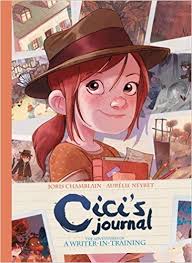
[READ: March 28, 2018] Cici’s Journal

The book (there are two books in this volume) opens with Cici talking about her journal.  We meet Cici and her mom.  We learn that Cici hangs out a lot with the neighbor Mrs Flores, a writer.  Her mom doesn’t love that she hangs out with am older lady, but Mrs Flores is pretty cool.

Cici’s two best friends are Lena and Erica  The pair knew each other since they were babies;  Cici moved to the neighborhood when they were all little.  They have been best friends ever since.

I give Carol Klio Burrell a real thumbs up on this translation. I didn’t realize that it was a translation until well into the second book.  But I didn’t love a few aspects of the story.  The problem here I think comes with the friends.  Lena is sweet and has the soul of an artist.  Meanwhile, Erica “complains constantly, but she has a good heart.”  That’s not a very complex or desirably character trait.  And that aspect of her comes out a lot in the second book, which is kind of annoying. Continue Reading »