Feeds:
Posts
Comments

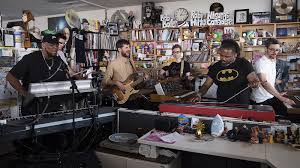
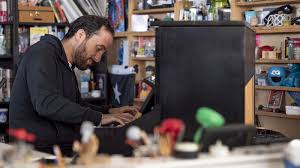
SOUNDTRACK: MEREBA-Tiny Desk Concert #916 (November 27, 2019).

Who the heck is Mereba?

Very few artists get to return to the Tiny Desk, and fewer still return twice in the same year. But after contributing background vocals behind the desk for Dreamville artist Bas in early 2019, we invited Mereba back for a solo set that puts her eclectic, major-label debut The Jungle Is The Only Way Out into sharp focus.

As with many singers I’ve never heard of, I’m not sure if these songs sound like this on the record or if they are more dancey.  I do quite like the simple, organic sounds that accompany these songs.

The stripped-down soundscape Mereba achieves live with her four-piece band is equally dreamlike here, drawing from influences as wide-ranging as the many places she’s called home (Alabama, Philly, North Carolina, Atlanta, Ethiopia). As she pulls from genres as seemingly disparate as folk, rap and spoken word, her set reflects the years she spent perfecting her craft on live stages in Atlanta cafes and clubs, where she attracted the attention of the indie creative collective Spillage Village  before joining them in 2014.

She sings three songs and recites a poem (all on the album).

When “Black Truck” started I thought she sounded exactly like Alanis Morissette.  The way she says “and I said world would you please have some mercy on me” sounds very uncannily like her.  The song is a quiet, mellow piece that starts with a simple bass line (including some harmonics) from Chris James and guitar washes that turn into a nice picked melody from Sam Hoffman.  After a minute or so, Aisha Gaillard plays a simple drum beat and the song kicks into higher gear.

Through all of this, the backing vocals from Olivia Walker were just beautiful.  The end of the song turns into a kind of rap as the guitar and bass fade out.  I say kind of a rap because Mereba is also a poet and she has more of a poet’s delivery than a rapper’s delivery.

For “Stay Tru” the guys switch instruments and the bass takes on a slightly more lead role.  But this song is also very mellow.  Mereba’s vocals sound a bit more Jamaican in his song.  Midway through, James switches to violin and Mereba plays keys which adds a whole new texture.  I didn’t like this song as much because the chorus is kinda lame with a lot of repeating of “cut the bullshit, this time” sung in a sweet voice.  It also seems to drag on for a really long time (although it is very pretty).

“Dodging The Devil” is a poem she wrote when things just didn’t seem to be going right.  After a couple of verses, a quiet guitar line fills in the background.

On the last song, “Kinfolk,” Mereba plays the main guitar line while Sam plays single soaring notes.  The song kicks into gear with a simple guitar riff and some prominent bass.

I really enjoyed this set.  I thought the music was beautifully restrained and her voice distinct enough in each song to show such a range of sounds.  It’s always nice to be surprised by a new musician.

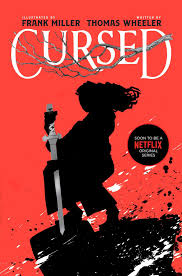
[READ: November 15, 2019] Cursed

I saw this book in the new YA section at the library.  I was attracted by the cover and fascinated by the “soon to be a Netflix Original Series” sticker.

I have known of Frank Miller for years.  I’m sure I’ve read graphic novels by him, although I don’t know if I’ve read Sin City (maybe a long time ago?).  Mostly he drew superhero comics which is not my thing.  Turns out I really don’t like his artistic style in this book (at least for the way he draws the heroine–I rather like the way the bad guys are drawn).  If the series was in any way designed to look like the art in the book I don’t think I’d watch it.

But the story itself is petty darn good.  It took me a while to read it for some reason. I guess maybe the opening was a little slow because there’s so much going on it takes awhile to really get settled in this universe.

But the description of the story is pretty intriguing: Whosoever wields the sword of power shall be the one true king.  But what if the sword has chosen a queen?

For this is a story of Arthurian legend with many many twists.  My knowledge of Arthurian legend is surprisingly minimal.  I love the story and I know the main participants, but there is a lot of information in here that I didn’t know about–or even how much Wheeler is making up. Continue Reading »

SOUNDTRACK: CARLY RAE JEPSEN-Tiny Desk Concert #915 (November 25, 2019).

It has been eight years (!) since Carly Rae’s ubiquitous “Call Me Maybe” took over the airways.  In those eight years I have grown to like the song and think of it fondly.

I also basically didn’t realize that Carly Rae was still making music.  Of course, she’s not all that prolific either–she has put out two albums since the album that featured “Call Me Maybe.”

I don’t know if she still has the same pull as she did back then.  I don’t know if this pop sensation is as big a draw as Taylor Swift was (I expect not).  Although evidently she is still beloved.

In 2012, Jepsen’s No. 1 hit “Call Me Maybe” was inescapable, and her 2015 album, E-MO-TION, made her a critical darling. An extremely high proportion of NPR employees also happen to be fans of the pop star; despite the nonstop impeachment hearing coverage happening just down the hall, Jepsen commanded a considerable and captivated crowd at the Tiny Desk.

The three songs she plays at this Tiny Desk are nowhere near the earworm that “CMM” was.  But there is something very sweet about how happy she is singing these certainly catchy songs..

From the moment Carly Rae Jepsen arrived at NPR HQ for her Tiny Desk concert, she brought an obvious sense of joy. Take, for example, her sound check: Working with her band of longtime collaborators, she seemed downright delighted, beaming at the musicians as she gave notes after each meticulous run-through. It’s that attention to detail that has helped build her a devoted fan base ready to make memes of her every move.

All three songs are from this year’s Dedicated album.

“Now That I Found You” is certainly the catchiest of the three.  There’s a cool, slightly funky guitar riff (from Tavish Crowe).  The whole song has more of a disco vibe (in the bass from Adam Siska) and there is something delightful about her breathy whispered vocals.  She doesn’t do the trills and vocal acrobatics that pop singers are prone to.  Midway through the song, everything drops out except for the piano (from Jared Manierka) and some lovely backing vocals (from Sophi Bairley) then the end takes off as a big dancefloor banger.

Introducing “Want You in My Room” she says, “This is the most direct, to the point song that we’ve ever been a part of performing and I’ve been a part of making.”  I was impressed to learn that her band was made of “longtime collaborators.”  But I also got a kick out of the way she seemed a bit shy describing the song as “a real come hither song.  You’ll see what I mean.”

It’s amusing that she says this is the most direct song that she has written.  It is kind of explicit, and yet compared to the rest of the pop world, it comes across as endearing.  Indeed, even if she does exhibit “Smiling swagger” I’m won over by her apparent innocence.

The song has a fun snare drum opening (from Nik Pešut) and a big “Hey” in the opening.  The chorus sounds a lot like something else but I can’t place it, but it is fun to hear her sing (and get into)

On the bed, on the floor
(I want you in my room)
I don’t care anymore
I wanna do bad things to you
Slide on through my window
(I want you in my room)
Baby don’t you want me too?

The pretty yellow plaid jacket comes off for the final song “The Sound,” a pretty song that starts as a ballad and gets bigger by the end.  This song didn’t leave much of an impression on me.  Perhaps since they were “modulating the album’s sparkling pop-disco vibe to fit our sun-filled office,” the hooks went away on that track.

Amazingly, her set is only 10 minutes long (one of the shortest ones I can think of).  And she doesn’t even do “Call me Maybe”!

It’s also frustrating that with such a short set they don’t even show they little joke at the end that you can hear everyone laugh at.

But I came away from this concert with more respect for her.  I might just have to listen to her critically acclaimed album after all.

[READ: October 21, 2019] Machines Will Make Better Choices Than Humans

When you look up books by Douglas Coupland, you will find all manner of tiny books.  Most of them have content published in similar form elsewhere.  But its not always obvious how edited the pieces are.  And frankly, the things he writes about are often so similar that it’s not always easy to know if this is an essay you’ve read before.

This book, published by V2 in Rotterdam is 37 pages in very large font.

The cover image as well as the texts on pages 13 and 19 come from “Slogans for the 21st Century”

The three are:

  • Machines Will Make Better Choices Than Humans
  • I’m Binge Watching My Data Stream
  • My Data Stream Doesn’t Judge Me

Continue Reading »

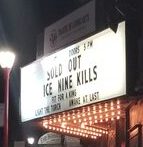
[ATTENDED: November 25, 2019] Ice Nine Kills

I was unfamiliar with Ice Nine Kills until my son started talking about them.  Then his friend invited him to see a show at the Starland Ballroom on May 3 (Ice Nine Kills was not headlining–the lineup was Falling In Reverse, Ice Nine Kills, From Ashes to New and New Years Day).  So I was a little bummed that he didn’t go to his first club show with me, but it’s much cooler that he went with his friend.  He loved the show.

So when they announced that they were playing at TLA and headlining the Octane Accelerator Tour (a Sirius XM thing), I made sure we got tickets (even though it was a Monday night).

The show was (I’m exhausted just thinking about it) FIVE bands and started at 6PM (!).

The lineup was Ice Nine Kills, Fit For A King, Light The Torch, Make Them Suffer, & Awake At Last.

Since it was a Monday night, I knew it would be really hard to get there for the first band, so we decided we would assume we’d miss Awake at Last.  Then on November 5th, Make Them Suffer (who are Australian) announced:

Unfortunately we have had some serious setbacks with immigration, and were unable to secure the visas we needed in time for these shows.

TLA said the show would go on at the same time which was great for us since it meant we would get home about 30 minutes earlier.  I also figured I’d take my son for some good ol’ Philly cheese steaks before the show since Jim’s is just a few doors down.

We enjoyed out cheese steaks quite a lot and as we walked past the theater I asked the guy at the door which band was on.  He said the second band was on and since we had plenty of time, we decided to go to Atomic City Comics (which is a wonderful store).

We headed back to TLA figuring we’d be in the middle of Fit for a King.  But as we walked in, they were between bands.  The woman at the merch table said that ice Nine Kills was up in ten minutes!  We’d missed all of the opening bands! Continue Reading »

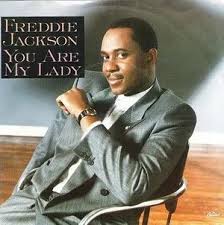
SOUNDTRACK: FREDDIE JACKSON-“You Are My Lady” (1985).

I listened to this song after reading this story.

Somehow I assumed that this song was going to be a big old 60’s or 70’s powerful soul song.

So when I started the video on YouTube and the super cheesy 80s synths began, I thought it was accidentally playing “Endless Love” (1981) instead.

Interesting how this I created an entirely incorrect imagine of Jackson based on this story.

Reading the comments on the video, this song is hugely important to a lot of people.  I honestly can’t get past the production.

But his voice is pretty fine (well, except for that middle part which is the kind of singing I do not care for).

[READ: November 21, 2019] “Arizona”

I really haven’t enjoyed much by Wideman.  I just don’t like his style.  I think in everything I’ve read, I’ve enjoyed what the stories were about, but I didn’t like the way he wrote them.  This story was probably the one I’ve liked best by him, but it felt way too long and digressive.

It opens as a letter to “Mr. Jackson” which begins “Thank you for your music…”

I assumed it was to Michael Jackson.  But it turned out to be to Freddie Jackson, a soul singer who I don’t know.  Jackson is still alive which makes this story an actual letter to him (even if it as never “sent”) which is kind of weird.

The story is (as far as I can tell) largely autobiographical.  The crux of the story concerns Wideman’s son [one of his three children] who was convicted of a murder that he committed while he was a minor and was sentenced to life in prison in Arizona.  This is an unbelievably heartbreaking thing to have read and of course it fully colors the story (and makes me feel bad for saying I didn’t like parts of it).  Continue Reading »
SOUNDTRACK: THE SULTANS OF PING FC-“Wheres Me Jumper?” (1992).

The Sultans of Ping were, of course, named after the Dire Straits song.  They were named when “it was sacrilege to say anything whatsoever funny or nasty about Dire Straits.”

This song (or 30 seconds of it) was used as the opening  to the TV show Moone Boy.

The song was an unexpected, presumably novelty, hit in 1992.  It’s stupidly catchy and amusingly nonsensical and your appreciation for it is pretty much entirely dependent on your appreciation for Niall O’Flaherty’s voice which is comical and rather shrill in this song.  The other songs on the record are somewhat less so, but are still delivered in his speak-singing style.

I get a sense of them being like Ireland’s answer to The Dead Milkmen with a sprinkle of John Lydon on vocals–a fun punk band that flaunted a silly side.  Of course, I wasn’t in Ireland at the time, so perhaps they’re more akin to the Ramones in punk legacy.

The Sultans of Ping (later named The Sultans) were (a subconscious at least) predecessor to bands like Fontaines D.C.

But whereas Fontaines D.C. tackles existential life in Dublin, this song tackles a more urgent and pressing concern:

Dancing in the disco, bumper to bumper
Wait a minute:
“Where’s me jumper?

It’s all right to say things can only get better
If you haven’t just lost your brand new sweater
I know I had it on when I had my tea
And I’m sure I had it on in the lavatory
Dancing in the disco, go go go
Dancing in the disco, oh no, oh no
Dancing in the disco, bumper to bumper
Wait a minute:
Where’s me jumper?…

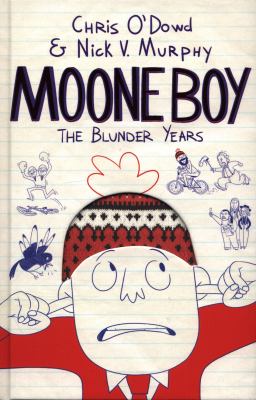
[READ: Summer 2019] Moone Boy

Chris O’Dowd is an Irish actor (we love him from the IT Crowd, and he has since been all over the place).  In 2012, he created Moone Boy as a sitcom based on his own childhood growing up in Boyle, County Roscommon, Ireland.

The show was a hit and they made three six-episode seasons.  This book came out around the time of the second season.

The story focuses on Martin Moone, a 12 year-old boy growing up in Boyle.  His friend Pádraic has an imaginary friend and Pádraic encourages him to get an imaginary friend (IF) of his own.  The rest of the book follows the exploits of Martin and his first (and second) imaginary friend.

But the book begins with some absurdist comedy.  Turns out he book is written from the point of view of the imaginary friend (we don’t really learn that until later) and he starts off with this:

Before we begin, I need to carry out a quick survey,

Are you reading this book because:

A. You have a scientific interest in the moon.
B. You have a scientific interest in the misspelling of the word “moon.”
C. You want to find out how quick and easy it is to obtain an imaginary friend that you’ll cherish for life.
D. You’ll read anything  You’re just like that.

If your answer is A or B, then I’m afraid you’re going to be disappointed.  There’s very little moon action in this story, apart from the brief appearance of a wrestler’s wrinkly bum.

If your answer is C, then you’ll be equally disappointed.  I suggest you pick up a copy of Imaginary Friends – The Quick and Easy Guide to Forever Friendship by a former colleague of mine, Customer Service Representative 263748.

If your answer is D, the good for you!  You’re my kind of reader.  I’m glad we got rid of that other bunch of idiots who picked A, B and C.

Continue Reading »

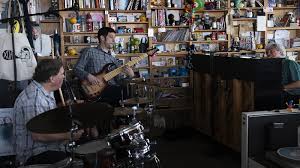
SOUNDTRACK: SNARKY PUPPY-Tiny Desk Concert #913 (November 20, 2019).

I feel like I’ve been hearing a lot about Snarky Puppy lately.  So much so that I assumed they were a new band.  Wrong:

Snarky Puppy has been a force for a while now, earning the ears of millions for more than a decade.  The band started as college friends in the jazz program at the University of North Texas back in 2003. But the formative era came a few years later, after Michael League [bassist and bandleader] became a part of the gospel scene in Dallas and eventually brought the jazz students to church, where music plays a different role than it does in the classroom. In the pulpit, it’s a channel for spiritual healing, a communal experience between players and congregation. As an experiment, League pulled his jazz friends and his gospel bandmates into one ensemble, where the two groups bonded together and established ground-zero for building the sonic identity of Snarky Puppy

I also had an idea that (because the name sounds similar to Skinny Puppy) that they might be a, what, young bratty dark punk band?  Wrong again.

Their secret sauce? A long-simmered recipe of jazz, funk and gospel.  Thirteen albums later, you can still hear these gospel and jazz orbits crashing into each other.

Oh, and one more thing.  They only play instrumentals.

They’re a band whose lyric-less melodies are still yelled (sung back) to them at their concerts around the world, as a shared catharsis for everyone in the room.

I really couldn’t have gotten that more wrong.

The band plays two songs in this lengthy set.

The first is called “Tarova.”  It opens with a wonderful sequence of keyboards.  Shaun Martin plays the keyboards with that talk box thing (made famous by Peter Frampton).  He seems to be having a kind of call and response solo with Bobby Sparks.  Sparks has the most fascinating thing on his keyboard.  A very large whammy bar/lever that he is able to push really far down to bend notes far more than any keyboard I’ve ever heard.  It was so much fun watching him do this, I was very glad he was up front.

During all of this, “JT” Thomas is keeping time on drums.  The song proper jumps in with a fun funky riff with lots of trumpets.  Everybody gets to do something impressive in this song and there’s a bunch of solos as well.

I really like the middle funky section that’s mostly bass and keys.

The song builds to a moment when everyone stops–after a two second pause which makes everyone clap, they resume with a great percussion solo from Nate Werth.

When the song ends, League introduces everyone and says who soloed.  He jokes, “That’s what you;re supposed to do in jazz, right, say who soloed n case anyone was confused that there were solos going on.”

Then he addresses the crowd.  He says that most people there are employees and family and an abundance of interns.  He wants to turn the cameras around for a minute (only one or two turn around) and force you into a musical rhythmic experiment.  Turns out that

Seconds before we hit record, Snarky Puppy’s bandleader, Michael League leaned in to ask if he could “do a little crowd work.” I suspect he waited until the last second on purpose, but it’s been easy to trust this band when they have an idea, judging by the three Grammy Awards they get to dust off at home after every tour run.

What resulted was a Tiny Desk first: League divided the audience into two sections, one side clapping out a 3/4 beat and the other half a 4/4 beat, creating a polyrhythm that I’m sure a handful of coworkers didn’t feel so confident trying to pull off. But this band pulls you in with simple instruction and a little faith.

League says, “we’re going to a polyrhythm because things have to get nerdy and unenjoyable.”  The crowd does admirably well with the two rhythms going on.  They are aided by Nate Werth on percussion who is really amazing (not necessarily here, but in the two songs).  I believe that they are creating 7/4.

The audience is warned that this polyrhythm will be used in the second song “Xavi,” dedicated to their friends in Morocco.

The song opens a funky bass and a lovely flute melody from Chris Bullock.  Then after a short guitar lick by Chris McQueen the whole band jumps in with a really funky melody.  The riff is taken over by two trumpets Justin Stanton (whose trumpet has a mute) and Jay Jennings (no mute) and Chris Bullock who is now on sax.

I was going to say you really don’t hear much of the violin in this set as it gets kind of melded with everything else.  Then mid way through the song, Zach Brock takes a wild and, often, effects-riddled solo in the middle of the song.  It might be my favorite part of a set that has many highlights.

The clapping part is used twice.  In the first one, the band is kind of quiet and the clapping is aided with great percussion from Werth and another lovely flute.

The guitar and bass in this song are fantastic even if they are never entirely prominent.  There’s also a very cool keyboard solo from trumpeter Justin Stanton.

Then the clapping comes around a second time.  During this one, there’s a guitar and keyboard making all kinds of sounds while the drums keep hitting everything, there;s more percussion and a little more flute.

The whole set is tremendous fun.  Totally not what I was expecting and so much better.

[READ: August 15, 2019] The Idiot

I grabbed this book because I had written down the author’s name as someone I wanted to read.  I also got a kick out of the title (and the obvious allusion to Dostoevsky).

I started the book and enjoyed it and then realized that I had read an excerpt from this story already.  And that is why I had written the author’s name down.

This book was written as a kind of response to her first book.  In an essay in The Guardian, she explained that:

In her first book, The Possessed, New Yorker journalist Elif Batuman complained that as an incipient novelist she was always being told to eschew books and focus on life. Literature since Don Quixote had been seen as false and sterile; disconnected from lived experience. After years as a graduate student of Russian literature, she decided to challenge this by writing an account of her own haphazard attempt to live with and through books.

Of the excerpt I wrote quite a lot (and quite a lot that almost gets left behind after the excerpt): Continue Reading »

SOUNDTRACK: IGOR LEVIT-Tiny Desk Concert #914 (November 22, 2019).

Igor Levit is a 32 year-old Russian-born pianist.  I really don’t know anything about him, although the blurb implies that he plays Beethoven and little else.  It says that he

has been playing the German composer’s music for half his life. He recently released a box set of all 32 Beethoven piano sonatas and once again he’ll be performing complete cycles of the sonatas in various cities to mark the 250th anniversary of Beethoven’s birth in 2020.

Most of us know many Beethoven pieces whether we realize it or not.  And, of course most of us know them by their “nickname” rather than their full name.  So when you see “Piano Sonata No. 14 ‘Moonlight,’ I. Adagio sostenuto” it’s easy to forget that that means “Moonlight Sonata,” the beautiful piece that is familiar with the very first notes.

Levit’s “Moonlight” emphasized the mesmerizing qualities in the music, with its oscillating pulse, smoldering low end and tolling bells.

After saying that “Moonlight” seemed like a good beginning to a Tiny Desk, he says he’s about to disrupt the situation as much and as hard as he can with anther sonata–this one a little bit earlier.  This one has no nickname, no title, no marketing gag, nothing.  Just G major sonata (officially “Piano Sonata No. 10, II. Andante”).

Levit says that this it is one of the funniest, wittiest pieces that Beethoven ever wrote. And…wait til the end.

The second piece proved Beethoven wasn’t always the grumpy guy he’s made out to be. His sly sense of humor percolates through the set of variations in a jaunty march rhythm, punctuated with a final, ironic, thundering chord.

After this, he returns to the familiar with “Bagatelle in A minor, ‘Fur Elise'”  Everyone knows ‘Fur Elise’ from the moment it starts.  Levit even jokes about playing it:

Sure, it’s a “total eye-roller,” Levit admits, but he also describes it as “one of the most beautiful treasures in the piano literature.”

He says people argue whether it was Beethoven’s piece–he thinks it is.

His playing is beautiful–I love that you can hear everything so distinctly.  He makes the familiar songs sound vibrant and alive.  And the unfamiliar piece (while not rolling-in-the-aisles funny or anything like that) does have little moments that will induce a smile.  He is also quite subtle in “Für Elise”–not emphasizing the most familiar parts.

Although many people have performed Beethoven over the years, I would absolutely look for his name if I wanted to hear a great performance.

 [READ: August 2019] American Housewife

This book had been sitting around our house for a few years.  I feel like I saw the cover of the woman on the toilet doing her nails every time I went into the spare room.  Then a TV show came out called American Housewife.  I knew that Sarah Dunn, the creator of the show, had written novels, but I had forgotten her name.  So I assumed that this book was the basis for the show.  Whatever the case, this book has nothing to do with the TV show.

This book is a collection of very short pieces and somewhat longer pieces.

Generally speaking, I found the shorter pieces a lot less funny as they seemed more like bullet point lists than actual jokes. Continue Reading »
SOUNDTRACK: THE FOUR LADS-“The Bus Stop Song (A Paper of Pins)” (1956).

Given the content of this book, I thought it might be fun to pick a song that was popular in Canada in, say 1956.

I was pretty fascinated to learn from the Canadian Music Blog:

National charts did not begin in Canada until the launch of RPM Magazine in 1964. Below, from Oh Canada What a Feeling A Musical Odyssey by Martin Melhuish are lists of popular songs in Canada through the 1950s. We have also included big hits by Canadian artists that made the year-end charts of U.S. Billboard Magazine with their year-end positions on the chart.

Some popular artists back then were

Guy Lombardo & His Royal Canadians: Enjoy Yourself, The Third Man Theme, Dearie, Our Little Ranch House, All My Love, Harbour Lights, Tennessee Waltz. (all 1950) If, Because of You (1951) Crazy Heart, Blue Tango, Auf Wiederseh’n Sweetheart, Half as Much (1952) Hernando’s Hideaway (1954)

The Four Lads: Moments to Remember (#17) (1955) My Little Angel, A House with Love In It, The Bus Stop Song (A Paper of Pins) (1956) Who Needs You, I Just Don’t Know, Put a Light in the Window (1957) There’s Only One of You, Enchanted Island, The Mocking Bird (1958)

The Crew-Cuts: Earth Angel, Ko Ko Mo, Don’t Be Angry, Chop Chop Boom, A Story Untold, Gum Drop, Angels in the Sky (1955) Mostly Martha, Seven Days (1956)

Paul Anka Diana (#24) (1957) You Are My Destiny, Crazy Love, Let the Bells Keep Ringing, The Teen Commandments (1958) Lonely Boy (#5) Put Your Head On My Shoulder (#12) My Heart Sings, I Miss You So, It’s Time to Cry (1959)

My dad was really into big band music of this ilk and he had records from Guy Lombardo and The Four Lads.  To me the switch from that kind of sound to the style of Paul Anka in 1957/1958 seems like a pretty big shift.  I feel like my dad didn’t like the kind of crooner-y music that Paul Anka sang.  It’s interesting that The Four Lads never rose above a chart position of 52 after 1958.

I chose this particular song because I know  The Four Tops a little.  But mostly because this song is very perplexing.  I had no idea what a “paper of pins” could be.  Turns out the lyrics are a traditional English children’s song.  A “paper of pins” is a sheet of paper with different size pins for sewing.  Why on earth would you give them as a sign of your love?

In the original, the song is a call and response, with the second verse being the rejection of the first verse.

I’ll give to you a paper of pins
And that’s the way our love begins
If you will marry me, me, me
If you will marry me

[The original verse two is :
I don’t want your paper of pins,
If that’s the way that love begins,
For I won’t marry,
Marry, marry, marry
I won’t marry you.]

[The original next verse is not a feathery bed but:
I’ll give to you a silver spoon,
Feed the baby in the afternoon]

I’ll give to you a feathery bed
With downy pillows for your head
If you will marry me, me, me
If you will marry me

After a few more verses, the Four Lads end:

But you don’t want my paper of pins
And you don’t want my feathery bed
You want my house and money instead
That is plain to see

Well, here they are take everything
My house, my money, my wedding ring
And in the bargain I’ll throw in me
If you will marry me

But in the original ends like this

If you give me the keys of the chest,
And all the money that you possess,
Then I will marry,
Marry, marry, marry,
I will marry you.

Ah ha ha, now I see,
You love my money but you don’t love me,
So I won’t marry,
Marry, marry, marry,
I won’t marry you.

So The Four Lads made this song kind of sweet, but also kind of pathetic.  Weird choices.

And why in the world is it called The Bus Stop Song?

[READ: November 17, 2019] The Canadians

This is a book of 79 photos taken from The Globe and Mail archives.  The are not art, they are not beautiful.  They are documentation.  Documentation of a specific time and place–Canada in the late 1950s and early 60s.

These are pictures of regular folks working, doing chores, meeting politicians.  There’s no posing, there’s no “beauty.”  It’s just grim reality.  I grabbed this book because Douglas Coupland wrote the introduction (I’m not sure who wrote the copy for the pictures–each picture has one line of information about it).  The collection was edited by Roger Hargreaves, Jill Offenbeck and Stefanie Petrilli.

I love Coupland’s take on these picture because he looks at things from such a different vantage point than I’m used to.  Like the way he opens the book.  He says that the Canada depicted here pretty much didn’t exist anymore by the time he was born.  He describes Canada then as “a country in which, it would seem, people were born, became teenagers, and then magically at the age of 21, turned into chain-smoking fifty year-olds with undiagnosed cancers.”

He observes that few people smiled and those that did had teeth riddled with nicotine stains.  This is by and large true.  The photos with politicians seem to have the biggest smiles although the young members of Chelecos and Lancers Motorcycle Club certainly mug for the camera. Continue Reading »

SOUNDTRACK: JOVINO SANTOS NETO-Tiny Desk Concert #904 (October 21, 2019).

Jovino Santos Neto plays piano–and then surprises by playing a lot more.

I have a come and go relationship with jazz.  I like some of it.  I like it sometimes.

But the blurb might explain why I liked this music right away:

Something happens for me when I hear jazz mixing it up with Brazilian rhythms. In the right hands it falls into the realm of magic.  Pianist, multi-instrumentalist and composer Jovino Santos Neto certainly cast a spell over those who gathered for this joyful turn behind the Tiny Desk.

I loved everything about this performance.

The trio rushed right out of the gate with the samba-influenced “Pantopé” that introduces the concept of the trio: seamless interaction between the musicians that make the band sound like one big, melodic rhythm machine.

“Pontapé” opens with slow piano and woodblocks from drummer Jeff Busch.  Then after about thirty seconds, the song takes off with some amazing piano playing and some great five-string bass from Tim Carey.

There’s a really impressive bass solo–Carey has got some really fast fingers.  Then, midway through the song–and a huge surprise if you’re not watching–Santos Neto pulls out a very solid-looking melodica and plays a really impressively fast solo on it.

It’s a solo that’s interspersed with some fun drum fills–cowbell, snare, wooblocks and a little whistle at the end.  It’s a wild and fun track for sure.

He explains that the name”Pontapé” means kick.  People who can play soccer can do amazing things with their feet.  But we do it with the notes instead.

Up next is “Sempre Sim.”  The song

starts with percussionist Jeff Busch riffing on the traditional percussion instrument called berimbau. 

It looks like a giant fishing rod.  Santos Neto says, “don’t be afraid it isn’t a weapon… I mean in the right hands.”  One plays the berimbau by hitting the instrument with a tiny drum stick (and also hits the cymbals with tiny stick).

its ethereal sound creating the perfect intro to the dreamy melody and solo from Santos Neto on piano, while bassist Tim Carey echoes the double beat on the bass drum that drives Brazilian music.

There’s some great piano and amazing bass.  The middle solo is an astonishing amelodic feast.  By then Busch has switched back to sticks and is playing drums.

They finish and Santos Neto seems to think they are done.  There’s a long pause with everyone looking off at someone.  Then he says Okay!  We’re going to play one more to much chuckling.

The final song is “Festa de Erê.”  He says that

Erê represents the spirits of children in the Brazilian Umbanda tradition, which makes “festa de Erê” an appropriate title for the intensely whimsical tune that weaves in and out of the different traditional rhythms performed by all three musicians.

The song starts bouncy and lively.  But they settle down so Santos Neto can play the main piano melodies.

Then midway through the song he surprises once again by playing a lengthy, pretty flute solo–the end of which consists of him playing the flute one-handed while he plays the piano with his right hand.

All the while Carey is tapping out the notes with both hands, but that impressive feat is overshadowed by the incredible stuff going on behind the piano.

Like the sometimes frenetic energy of the music they play, Jovino Santos Neto and his trio are perfect examples of musicians who have so much music coming from within, sometimes one instrument is just not enough.

Perhaps I like jazz best when it’s mixed with Brazilian rhythms too.

[READ: November 16, 2018] “The Trip”

I’ve only read one other story by Weike–a story of a difficult romance.

This story is also of a difficult romance, but in a very different way.

The story begins

In Beijing, he boiled the water.  It was August, so the hottest month of the year.  He put the water into a thermos and carried the thermos on a sling.  He called himself a cowboy because he thought he looked dumb. Other people in the group carried a thermos too, though he wife did not.

The opening is certainly confusing.  It continues to be so.  He and his wife go to the Great Wall.  She sprints along it to show him a particular spot hat her cousin showed her as a teenager.  Her cousin taught her the Chinese word for cool–imagine not knowing that word– shuang–until you were 13.  Can you imagine how that felt?  He says that she knew the word in English, though right?  She made a face and then sprinted on.

The trip had been a gift from her parents who wanted “her first husband to see China and have good memories from there and sample its regional foods and see the warmth of its people and not hate us civilians should our two great nations ever partake in nuclear war.”  At least that’s how she translated it. Continue Reading »
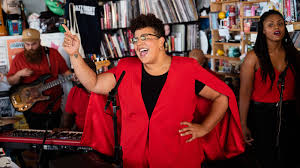
SOUNDTRACK: BRITTANY HOWARD-Tiny Desk Concert #901 (October 15, 2019).

I don’t really like Alabama Shakes because I don’t really like blues rock.

But I have really enjoyed a lot of the Brittany Howard solo songs that I’ve heard (which might make me appreciate the Shakes’ music a bit more).

This Tiny Desk Concert is pretty outstanding and Howard is a terrific frontwoman full of passion and fire.

From the moment Brittany Howard walked into the NPR offices, I could sense her intense commitment and passion. Her eight-piece backing band, all decked out in red and black, played with a soulful subtlety that bolstered Brittany Howard’s tender songs about her family — stories of a mixed-race child growing up in Alabama.

She plays four songs.

All the songs performed at the Tiny Desk come from Jaime, an album Brittany Howard dedicated to her sister who died at the age of 13 from a rare form of eye cancer, the same disease that has left Brittany Howard partially blind in one eye.

I have heard a few songs form this album, but the one I know the best is “Stay High.”  This pretty song starts with Lloyd Buchanan playing a kind of bell melody on the keys.  There’s also gentle acoustic guitars from Alex Chakour (whom she calls the crown jewel).  As the image fades in, some simple bass from Zac Cockrell is added and then some drums from the amazing Nate Smith.  And then it’s all about Brittany.  She lives these songs as she sings them.  When you add in the pretty backing vocals from Shanay Johnson and Karita Law the songs sounds even more amazing than on the record.

On these songs (and in particular at this Tiny Desk Concert), there is more nuance than I’ve heard in Brittany’s past projects, including her work with Alabama Shakes and Thunderbitch.

It’s this more complex music that I find so appealing about these new songs.  But also that Howard seems to be having a really good time singing them.

After the first song she says, To all them people on YouTube I’ll let you know its hot in here.  All the bands about to go on… know to dress light.

Up next is “Georgia.”  The blurb says:

The music has a sense of wonder and playfulness, even when the subject is heavy, as in “Georgia.” She tells the audience that it’s a tale of “a little young, black, gay girl having a crush on an older black girl and not knowing what to say and how I was feeling.”

This is a song where it’s nice that Nate Smith is visible because his playing is dynamic, including the rumbling crashes he adds (electronically) throughout the verses.  Buchanan plays church-sounding organ while washes of keys from Paul Horton (Brittany’s cousin) fill in behind the song.  There’s also a buzzing guitar solo from Brad Allen Williams as the song builds and builds.  This is a powerful song that really brings you right into the words.

Britanny says she’s wanted to write songs like this since she picked up a guitar when she was 11 years old.

Brittany Howard knows how to tell a story, to foster empathy and understanding and, in this intimate setting, the songs feel at home. The connection with the audience felt visceral … even a small child in the arms of their parent screamed at the appropriate moment during the climax of Brittany’s song, “Baby.” It gave us all a good laugh just when the weight of the words felt the heaviest.

She introduces “Baby” as “a love song.  Love.  Doesn’t it just give you chills.  But sometimes love is not 100%.  Sometimes you got that 80/20 split and you’re on the bad side.”  This song starts quietly but builds and builds to a huge moment as Brittany and the backing vocalists sing “Baby!”  The song hits a full pause and you hear a child scream.  She points at the child, smiles and says “Now pick that shit back up” as the band rocks out some more.  As the song nears the end, she says, “Fool me once.  Fool me twice.  Fool three times?  (the band plays two hits) not three times (hit hit) as the song ends.

She says, “Thanks to the little one for hitting the right notes at the right time–I gave him a record before we came out.”

The final song is “Goat Head” a shocking song of growing up as an interracial child.   It’s amazing she can dance to it when there are lyrics like:

See, tomatoes are green
And cotton is white
My heroes are black
So why God got blue eyes?
My daddy, he stayed
My grandmama’s a maid
My mama was brave
To take me outside
‘Cause mama is white
And daddy is black
When I first got made
Guess I made these folks mad
See, I know my colors, see
But what I wanna know is
Who slashed my dad’s tires and put a goat head in the back?
I guess I wasn’t supposed to know that, too bad
I guess I’m not supposed to mind ’cause I’m brown, I’m not black
But who said that?
See, I’m black, I’m not white
But I’m that, nah, nah, I’m this, right?
I’m one drop of three-fifths, right?

But the introductory guitar riff is really catchy.  When the main verse starts the music is menacing and pretty at the same time.

It’s a short song bt very powerful.  And its a fantastic ending to this Concert.

[READ: November 16, 2019] “The Final Frontier”

I haven’t read a lot by Michael Chabon, but what I have read, I have enjoyed.

This is an essay about his dying father and their connection through Star Trek.  Specifically, he tells his father, “I love Mr. Spock because he reminds me of you.”

Although this essay was lovely and heart-felt, perhaps the most mind-blowing (or mind-melding) moment for me was learning that Chabon is a  writer, producer and showrunner of the upcoming Star Trek: Picard.  Since I’m a TNG fan more than an Original Series fan, I’m pretty exited about this.

As a kid Chabon had written stories that were like Sherlock Holmes or Robert E. Howard  or Larry Niven or even Edgar Rice Burroughs.  But never Trek.  He didn’t have the means or the chutzpah to do it until now. Continue Reading »