Feeds:
Posts
Comments

[POSTPONED: May 14, 2021] The Residents [rescheduled from May 1, 2020; moved to September 3, 2021]

index

It seemed like a May date would be safe, but now things are getting pushed back to the middle of the summer and the Fall.  This new date might happen.

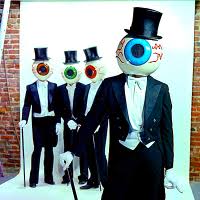
The Residents are one of the most famous obscure bands in the world.  Many people have never heard of them.  Many people who have heard of them know that they wear giant eyeballs on their heads, but don’t know much about their music.  And some of us who own a couple of Residents records have no idea what their full output is like.

They’ve been around since the mid 1970s and have released some sixty albums covering all styles and genres, with the focus on avant garde sounds.  They are also hugely influential to all kinds of musicians.

When they play live, each band member wears a costume (usually the giant eyeball, but not always) and aside from the main composer for the band who died two years ago, no one really knows who is in the band.

I’ve heard their live shows were amazing spectacles, so I thought it might be fun to see them.I didn’t even realize they were still touring, so I was quiet surprised to see them coming to Philly in 2020.  I’ve heard their live shows were amazing spectacles, so I thought it might be fun to see them.  Because they’ve been around forever, I kind of assume they can play a larger venue, but again, no one has heard of them, so it makes sense that they were playing The Foundry.  But how big of a spectacle can you have at t The Foundry?

I suspected that cancelling their show might be the end of the tour for them (If the recently deceased member of the band was nearly 80, how old are the rest of them?  Who knows, they could all be in their 20s).  I’m glad to see the show is postponed, as I might just have to see what they are all about live.

SOUNDTRACK: THE DECEMBERISTS 20th Anniversary Celebration Streaming Shows (April 11, 2021).

Even though I love live shows, I don’t really like streaming shows.  It’s not that there’s anything wrong with them, it’s just that I don’t tend to watch live music much at home.  And, most of the time i tend to forget the show until the stream is over.

But since Sarah and I were supposed to see The Decemberists and our shows were cancelled, I though I’d treat her to these shows for her birthday.

The first show was pretty great–a deep dive into lots of old songs.

As they start, Colin says this is the first time we’ve played….ever together as a live band.

They open this set with Don’t Carry It All from The King is Dead.  Colin plays harmonica and I was really surprised to realize that drummer John Moen is singing the higher backing vocals (I’d always assumed it was keyboardist Jenny Conlee).

They stick with King for “All Arise” where you can really see Jenny’s massive keyboard array!

There’s a little extended jam at the end, which Colin calls “a proper honky tonk.”

They move to What a Terrible World, What a Beautiful World album for “Wrong Year” which Colin says is emblematic of the previous year.  Colin plays the acoustic 12 string and Chris Funk is on the electric 12 string.

Jenny claps: “since there’s no audience we have to support ourselves.  Should we clap for ourselves?”

Colin says the tour (that was recently cancelled) would have been their 20th anniversary tour.  These song would have made up the set list.

This next song is early mid period that John Moen: he was just laying around being a man about town a the time.  “On the Bus Mall” [from Picaresque] sounds great with Nate Query getting a great deep sound on the upright bass.

Colin has as sip of wine and mentions that someone has made a supercut of every time he drinks a sip of wine and goes mmm.  “It’s normal to go mmm after a drink of wine.  it heightens the experience.”  And yet when you put hem all together….

Up next is a song about dead children and this is the first of many.  “Leslie Anne Levine” (from Castaways and Cutouts) sounds great with the 12 string, the accordion and bowed upright bass.

Colin jokes that it wouldn’t be an authentic Decemberists experience without him forgetting lot of words–so far I’m doing alright.

Up next is a glorious “The Crane Wife Parts 1, 2 & 3,” always fun to heae these together.  Nate’s bowed bass sounds deep and resonant but the song gets even bigger when he switches to electric bass.  Jenny is playing organ and glockenspiel.  There’s a seamless transition to part 2 with Chris Funk on pedal steel.  As they switch to Part 3, Jenny keeps the song going on organ while Colin gets an 8 string acoustic guitar.

It’s followed immediately by “The Island” which sounds so good I really hope to see this song live one day.  I love the intensity of Jenny’s keys and the great riffing and they even switch it up in the middle as John takes over keys, Jenny plays accordion, Chris is on pedal steel and Nate’s on the bowed bass.  The end is magnificent.  As they wrap up Colin jokes, “those were some jazz chords you were playing, there, Johnny.”

Colin states that they went through strict COVID protocol so they could do the next song.  “Raincoat Song” is a deep cut==a pretty acoustic song with both of them singing into the same mic.  (“I haven’t been so close to another man in many months.”  “Only harmonize into one microphone with you pod.”)

As they get ready for the next song, Colin says this is an epic jam set, apologies of epic jams are not your thing.  Jenny says that if they were on stage during this delay they’d either jam out or tell dad jokes: Nate: “How do you make an octopus laugh?  Tentickles.”

As Chris starts warming u his new guitar Colin says “John Carpenter on guitar.”  That’s the biggest complement you can give him.

Then we are off to a mystical land with “Rusalka, Rusalka” a new song I don’t know very well.  I really enjoyed the sound of it and need to check out the later cuts on I’ll be Your Girl.  The song has Chris on mandolin and harp samples from Jenny.

Colin gets a guitar but changes his mind as asks for The Reverend instead.  Jenny plays circus/instrument changing music.

The new guitar sounds great, and indeed the whole of “Make You Better” sounds fantastic.

Before introducing the final song, Colin says “Stay safe out there.  We’re nearing the end of this thing.  If you can get your vaccine, get it; mask up, stay socially distanced.”  “Not a very sexy PSA for a rock n roll show.”

But anyhow, this is about people who drowned, so things could be ….worse.

They end with a rocking “Hazard of Love (Part 4)” with Chris Funk on pedal steel.

It was weird hearing these live, quite rocking songs and there being no audience to cheer. Even if I hate noisy crowds, the silence is worse.

[READ: November 20, 2020] “How to Practice”

This was Ann Patchett’s second long form non-fiction essay in six months in the New Yorker.

This one is all about getting rid of your stuff.

In my family, we treasure heirlooms and even things that have only minor sentimental value.  We’re not hoarders but we have a lot of stuff.

Patchett opens this essay by talking about a friend’s father who died.  He had amassed all kinds of things.  Each new stage of his life brought on a new interest or hobby–and the accoutrement that went with it.  Getting rid of things proved to be a burden to his children.

Because Patchett grew up with them and her friend’s father considered her like a daughter, he wanted her to get something meaningful.   For instance, a particular painting.  She liked it but “either you have a place for that sort of thing or you don’t.”

But after allocating the important stuff there was so much more

How had one man acquired so many extension cords, so many batteries and rosary beads? Continue Reading »

 

SOUNDTRACK: PALM-Ostrich Vacation (2015).

Palm has recently reissued this record on cassette.  I don’t like cassettes, so I won’t be getting this.   But it is available streaming so you can check out this early, peculiar release from this peculiar band.

Palm is an unusual band and these four talented musicians (Eve Alpert (gtr/vox), Gerasimos Livitsanos (bass), Kasra Kurt (gtr/vox) and Hugo Stanley (drums)) have found their ideal bandmates because they play off of each others ideas perfectly.

The digital release is treated like a cassette, with two tracks and multiple parts.

Side A is Dime / Drift / Communication / Trust / Small Mouth (11:54).

There’s 30 seconds of a funky bass (that seems like it’s not them) before “Dime” starts.  It’s a slow almost shoegazey song with all kinds of angular chords thrown on top.  And then after a minute and fifteen they do what they do best–dissonant notes played often enough that they become melodic together.

There’s a few seconds of a grooving song on a tape that gets sped up before “Drift” opens with a series of unexpected notes and complex drum pattern–in other words, typical Palm.  Their exploration of atypical melody is really fantastic.

“Communication” opens with the two guitars playing different dissonant sounds–weird angular chords against a three note melody that seems … wrong, like screaming solo notes.  The impressive things are the way the drums and bass ground this exercise in experimentation and that it turns surprisingly danceable by the middle.

“Trust” starts out with some slow chords and echoing voices–it’s all vaguely out of tune sounding and then “Small Mouth” jumps in with a lurching melody and some percussive drumming (nice wood block).  The vocals are soft and shoegazey despite the overall noisiness of the song.  It’s certainly the prettiest track here.  The track ends with 30 seconds of sped up version of a live album.  I suppose it could be determined who the band is if one were so inclined.

Side two is longer with fewer songs: Ostrich Vacation / Is Everything Okay / Tomorrow the World (14:29).

“Ostrich Vacation” opens with a fast single chords that sounds like “Helter Skelter” but it lasts for some 45 seconds before the drums kick in and the song shifts into a different beast.  This song feels fairly conventional despite the odd chords.  Until it gets Palmed at 1:34 when things slow down and the two guitars start throwing around unconventional guitar melodies and noisy chords.  It starts jumping back and forth between these three parts until around 3 minutes when it turns into a total guitar freak out with both guitars making wild noise for twenty seconds until the drums kick in and the song lurches into a new melody.  This new melody is mostly conventional (sounding a bit like some early SST bands).  Then at around 6 minutes it changes again, this time a fast full on melody that lasts all of 30 seconds before the song ends

“Is Everything OK” starts with some jagged chords that ring out while an interesting and unusual bassline runs underneath. The chord stays the same while the bass explores different melodies.  Then the drums kick in with some jazzy almost improvised-sounding beats.  The second guitar stats throwing in weird shapes and feedback, while quiet vocals whisper around the edges and a clarinet (!) squawking around.  After some jamming the song comes to a crashing end with some echoing and looped drum riots.

“Tomorrow the World” is literally two guitars tuning and detuning for five minutes.  It really stretches the boundaries of what a song is–and what someone might want to listen to.

Their later albums are more complicated and supremely cool.

[READ: May 11, 2021] “Something Like Happy”

I rather enjoyed this simple story.

The narrator is a bank teller–it’s her first job and she’s pleased to have it.

Arthur McKechnie came in to deposit a bunch of checks.  He seemed like a nice guy, but he seemed to be living mostly in his own head.  It wasn’t until he signed over the checks that she saw his name McKechnie, and knew who he was.

The McKechnies were bad news, but then narrator knew of them because her sister Marie was dating the worst of them–Stan McKechnie.  Of course the more people told Marie that Stan was no good, the tighter she clung to him.

he always returns to her when he deposits his checks and he seems to be flirting with her–in odd ways.  She didn’t know what to say though and the transactions ended. Continue Reading »

SOUNDTRACK: C. TANGANA-Tiny Desk (Home) Concert #194 (April 20, 2021).

It’s surreal seeing this many people standing so close to each other singing and having a good time. It’s also an incredible reminder of how good it sounds when a lot of people sing together.

The blurb is surprisingly lax about explaining who C. Tangana is–but I gather he must be pretty huge.

From Mexican Regional to Spanish flamenco, C. Tangana is simultaneously coming home and reaching out to bridge Latin music boundaries. He’s building a community of cross-cultural collaboration, rooted in a unifying love of language and tradition, making it clear he’s intent on giving everyone a seat at the table.

The blurb does say that this gathering is Tangana’s extended family (the clinks of salud certainly suggest familia).

After more than 13 months amid a global pandemic, C. Tangana’s extended family basking in the warmth of sobremesa with easy smiles and effortless baile looks otherworldly. (Check his mama and tía vibing in the corner.)

They open the set with

This first live performance of his latest album, El Madrileño (including a global premiere of a fresh single, “Me Maten”) buzzes with communal energy, spotlighting talent from across Latin landscapes.

C. Tangana sings with Antonio Carmona, on “Me Maten” and the whole show gets off to a warm, relaxed feeling.  The backing singers (Lucia Fernada Carmona, Pilar Cerezo, Marina Carmona, África Heredia, María Rubio, Mariola Orellana, Patri Alfaro and Mari Estrada) do an amazing job of fleshing out this and the other songs.

The concert’s star-studded cast of Spanish collaborators, including long-time friends (producers Alizzz and Victor Martínez) and new contributors (rumba legend Kiko Veneno and flamenco-pop icon La Húngara), are each spotlighted for their contributions to the record.

Up next is C. Tangana and Kiko Veneno singing “Los Tontos.”  Kiko plays guitar and opens the song.  When everyone sings along (especially the la na na na) it sounds wonderul.  Then Alizzz, who has been playing the keys, sings the New Order line “Every time I see you falling…” into the vocoder and it fits perfectly.  Kiko ends the song with lovely guitar melodies.

Tangana switches positions for “Demasiadas Mujeres.”  He walks away from the table to a nearby string octet (Pablo Quintanilla, Paula Sanz, Franciso Palazón, Marina Arrufat, Paloma Cueto-Felgueroso, Adrián Vázquez, Irma Bau, Daniel Acebes).  Huberto Morales (I think) plays a martial drumbeat.  Tangana raps this track and it sounds pretty great with the strings–the octet is really into it–rocking and bopping around.  They play a pretty solo as Tanagana heads back to the table.

There’s lots of friendly chatter before “Tú Me Dejaste De Querer.”  Alizzz once again plays keys and sings into the vocoder to introduce this wonderfully catchy simple guitar riff.  I’m not sure who is playing guitar as there are so many guitarists: Victor Martínez, Juan Carmona and Niño De Elch who sings a verse.  He’s also joined by La Húngara whose female voice brings a wonderful change to this great set.

[READ: February 1, 2021] Hasta el Mismísimo

I saw Hasta el Mismísimo which Google translated as “Even the Very” at work.  It was in Spanish but the cover was cute and I was curious what it was about.  The translated title certainly didn’t help.  I flipped through the book and found that it was mostly cartoons.  So it seemed easy enough to translate.

The first text is a big thank you page, the final line of which is Thank you to @glorianietophoto who gave me the brilliant idea of drawing a talking pussy [Google translates that last word a bit more harshly when it is by itself].

So THAT’s what this book is about and what’s on the cover.

The second pages says A los Mismísimos del mundo, !Bienvenido!  which gets translated as “To the themselves of the world, welcome.”  Clearly “Mismísimo” is a hard word to translate inthis context.

The first cartoon shows the talking pussy with a cup full of blood painting on a cave wall: “It seems that a long time ago we painted in the caves, but really today there are still a lot of cavemen.  That’s why it’s easy to finish UP TO THE SAME [Hasta el Mismísimo]. Continue Reading »

SOUNDTRACK: CARM-Tiny Desk (Home) Concert #192 (April 15, 2021).

CJ Camerieri is a co-founder of yMusic, which is how I know him (I saw him perform with Ben Folds).

This is his new project, CARM.  Camerieri is also a member of Paul Simon’s band, a collaborator with Bon Iver and a Tiny Desk alum. (You can hear his French horn with The Tallest Man On Earth from their 2019 Tiny Desk Concert.)

“Soft Night” is the first track and introduces us to what CARM is about.  He plays trumpet while Trever Hagen plays electronics and sets up the melody and drums.  Then Camerieri switches to French horn while Hagen plays some trumpet.  Then in a fun moment, Camerieri picks up the trumpet with his right whole still holding the French horn in his left.  He plays the trumpet melody and then puts down the trumpet and starts on the French horn.  For the rest of this five-minute instrumental, the two jump back and forth playing trumpet riffs and leads as the electronics build satisfyingly.

For CJ Camerieri … home is where the art is. He performed his concert at the Pablo Center in Eau Claire, Wisc., where [he] conceived and recorded all the songs for his 2021 debut solo album, CARM. “This particular community has been a really big part of my musical life for 10 years,” CJ says after playing the calming tune “Soft Night,” “so it seems like the perfect place to be doing this.”

He made “Song of Trouble” with Sufjan Stevens.  They wrote it before the pandemic but the lyrics have taken on new meaning.  S. Carey plays piano and sings.  This is another mellow song with some lovely muted trumpet and simple electronics backing the song.

“Nowhere” is a little stranger.  It opens with jittery trumpet and skittery and loud electronics.  The juxtaposition of the organic horns and the electronic instruments is very cool.

“Slantwise” opens with some rapid and wild drum loops.  Then Camerieri loops the French horn and trumpet giving the song a rather majestic feel.

[READ: May 11, 2021] A Complicated Love Story Set in Space

The librarian in West Windsor recommended this book to my son.  He didn’t read it, but I loved the title and was really interested in reading it.

And wow, did I enjoy it.

I have not read anything by Hutchinson before, so I’m not sure how this compares to his other books, but this was, indeed, a very complicated love story.  In the acknowledgments Hutchinson says that originally the story was called Gays in Space.  And while that is a fun title, I think the final title is wonderfully compelling.

The story opens on Noa.  Noa is a normal teenager from Seattle.  But he has just woken up and he finds himself in a spacesuit, floating outside of a spaceship.  He has no recollection of how he got there.  There’s a note that says “You are in space floating outside a ship called Qriosity.  There is no reason to panic.”

Well, thank goodness for that.

After getting his bearings, a voice speaks to him.  The voice is from a teenaged boy named DJ.  DJ is from Florida and he is aboard the Qriosity.  He also has no idea how he got there.

They are each tasked with a pressing problem and if they don’t fix them immediately, the ship will explode.  Noa panics (as he tends to do) but DJ calms him and talks to him as they work together to fix the ship.  Which they do.  But as Noa is heading to the airlock, his tether is not attached and he is flung from the ship.  He has nowhere near enough oxygen and soon enough, he is dead.

That’s a rough start for the protagonist of the story. Continue Reading »

SOUNDTRACK: DEMI LOVATO-Tiny Desk (Home) Concert #191 (April 14, 2021). 

I’ve never given much thought to Demi Lovato.  All I knew about her was that she also sang a version of “Let It Go” on the Frozen soundtrack and that I liked her version a LOT LESS than the one by Idina Menzel.

But aside from that I didn’t even know if she was all that popular.

Recorded on a sunny spring day in her Los Angeles backyard, Lovato begins with a moving rendition of “Tell Me You Love Me” from her 2017 record of the same name, accompanied by subtle, sparse keys.

Given how over the top “Let It Go” is, I did expect a lot more over-the-topness here.  But it is quite subtle.  Well, musically it’s subtle.  Steven “Styles” Rodriguez plays quiet keys throughout the set.  But Lovato is anything but subtle.

She continues her set with the title tracks from her recently-released studio album, Dancing With The Devil…The Art Of Starting Over. On both tracks, Lovato’s voice feels stabilizing and grounding; there’s a sense of clarity and purpose in its power.

The blurb suggests she’s gone through some rough times, but I don’t know about them.  I do know that she has managed to feed a squirrel from her hand, so that’s something.

Through it all, her voice is something to behold.  Wow, can she ever she hits some really amazing notes–long and lasting and powerful.  I like the deep keys that “Styles” adds to the chorus of “Dancing With The Devil,” it adds some nice drama.

[READ: May 3, 2021] A Wiser Girl

Different things can attract a person to a book.  In this case, it was the author’s name.  I’m not sure why the name Moya Roddy appealed to me, but it did.  I’d never heard of her and this short book seemed like an interesting way to get to know her work.

This is the story of Jo (Josephine) Nowd, a Dublin girl who had to escape Dublin and flee to Italy in 1975.  The reason that she fled Ireland is twofold, although the primary reason is to escape her ex, a man named Eamonn.  The other is because she wants to be an artist and feels that an artistic life is more likely in the land of art than in Dublin.

Jo is a mostly engaging narrator.  She has a pretty strong personality.  Part of it is directed inward–she has some insecurities brought on by growing up as a poor Irish Catholic girl.  But she is also very opinionated, especially about art.  For her art is all about the supernatural–primarily the divine–but mostly she doesn’t like art that represents reality, she wants art to transcend reality.

She also has a (justifiable) hatred of the rich.  She feels that the poor get the shaft while the rich (especially the English rich) are oblivious to all that they have and all they step on while they get it.

And yet, for all of her insecurities, it’s pretty daring to up and leave your country to move to a place where you do not speak the language and have hardly any money. Continue Reading »

SOUNDTRACK: NATHANIEL RATELIFF-Tiny Desk (Home) Concert #190 (April 12, 2021). 

Nathaniel Rateliff treads a fine line between country and rock.  But between this album and his work with the Night sweats, I tend to prefer him to others like him.

The Mercury Café is one of the first places Nathaniel frequented when he moved to Denver in 1998, hearing jazz, dancing, and eventually playing many shows there. For his Tiny Desk (home) concert, he’s assembled a dozen players including a string section, backing singers, and some of his oldest friends: Joseph Pope III on bass, Mark Shusterman on keys, Luke Mossman on guitar and Patrick Meese on drums.

On the opening song and the title track to his 2020 album, And It’s Still Alright, they’re restrained as Nathaniel sings about loss, “I’ll be damned if this old man / Don’t start to counting his losses / But it’s still alright.”

This song is so darned catchy, despite how sad it is.  Mossman plays lead guitar and Shusterman keeps the keys going throughout. The addition of strings (Chris Jusell: violin, Joy Adams: cello, Adrienne Short: violin and Rachel Sliker: viola) add a new component that sounds great.

“All Or Nothing” has an interestingly picked guitar with lots of bouncy bass from Joseph Pope III.  Midway through, the song starts rocking out with two drummers.

But restraint lets loose on the chorus of “Redemption,” a song about breaking free of the past and written for Apple original film Palmer.

“Redemption” is a powerful song that has a simple but big chorus “Just set me free.”  The backing vocals from Larea Edwards, Chrissy Grant and Kinnie Maveryck sound fantastic.

The ender, a tune called “Mavis,” truly is a grand finale, a song that conjures up images of The Band singing Bob Dylan’s “I Shall Be Released” — and what a fabulous release it is.

Half way through the song builds to a really full sound.  Rateliff sounds great and so do his songs.

[READ: May 7, 2021] “The Shape of a Teardrop”

I really love the diversity of style and subject matter that T. Coraghessan Boyle brings to his stories.

This one is told from two different points of view.

We open on Justin, a belligerent person, angry that his parents have kicked him out of his room. It took three final straws–dropping him from the family cell phone plan; putting a lock on the fridge and the final final straw was the eviction notice on his door.

Alternating sections are are supplied by the first narrator’s mother. She says how much they loved their son and tried to give him everything they could.  They had tried so hard to have children, including expensive in vitro.  And then one day their miracle was born.

Their son doesn’t have a car (it’s on blocks in the driveway) and doesn’t have any motivation to get a job.  But he does have very expensive salt water fish and a bar that he likes to go to (he enjoys the bartender whose name is apparently Ti-Gress. Continue Reading »

SOUNDTRACKACID MOTHERS TEMPLE & THE MELTING PARAISO U.F.O.-Cometary Orbital Drive (2008).

Cometary Orbital Drive was one of three albums that AMT released in 2008.

It features the same lineup as the other releases around this time.

  • Tsuyama Atsushi – bass, voice, cosmic joker
  • Higashi Hiroshi – synth, guitar, voice, dancin’ king
  • Shimura Koji – drums, Latino cool
  • Kawabata Makoto – guitar, voice, speed guru.

This album has four songs on it although they are more or less variations of the same song.  They released a similar album in 2013 called Cometary Orbital Drive to 2199 which featured about 70 more minutes of variations on this theme.

“Light My Fire Ball” is thirteen minutes long and opens with slow ringing bowls (I assume).  It’s very serene. Then Tsuyama, adds vocal sounds and squeaks and noises.  The band starts playing a groove and Tsuyama sings in an over the top kind of crooning way.  The middle more mellow psychedelia and then it gets wild again with strange vocals noises and weird synth sounds as it segues into track two.

“Planet Billions Of Light-Years Away” is almost 27 minutes long and it introduces the six note melody that will play in one form or another for the next 50 minutes.   As the guitar plays, the synths soar to the heaves and the drums plays a slow beat with lots of hi hat.  It gets slowly faster and faster and then at 10 minutes Kawabata takes off with the start of an interstellar solo. The bass starts meandering and pumping and by14 minutes, the tone of the six note riff changes, becoming more of a lead riff as the song is now propelling pretty quickly.  By 17 minutes you are totally absorbed in this hypnotic melody and then Kawabata takes off with more soloing.   By 25 minutes the song is just soaring away faster than anything–the songs pummels away until the 26 and a half minute marks when the guitar fades out and the synths start until they resume once more in track 3.

After a 30 second intro, the seventeen minute “Circular System 7777777” resumes that same six note melody.  This time slow and ponderous and echoing.  After a few minutes the new beat enters and it’s got a kind of disco feel to it.  The song starts pumping faster for a bit then it slows and picks up once more.  After ten minutes things pause before resuming again, this time more intensely than before.  With four minutes left things start to slow down again and then the guitars fade out and a synth line (and echoing percussion) segues into the final track.

“Milky Way Star” is only 13:32 and it opens with a thunderous snare drum fill and then the fastest rockingest version of the six note riff yet.  Kawabata solos madly, the bass and drums rock out and that riff repeats throughout the track.  The song zooms along getting faster and faster while Kawabata goes nuts. Somehow around 9 minutes they pick up the tempo even faster until around 11 minute when whole things collapses on itself with some wild noise and a new outro guitar riff buried under the chaos.  The chaos clears and the outro riff shines through until it too fades away leaving only a synth chord to show you the way out.

[READ: May 1, 2021] And Then She Vanished

This book came across my desk at work and I thought it sounded really interesting.

When Joseph Bridgeman was young (pre-teen, I believe), he went to a Fun Fair with his sister, Amy.  She encouraged him to try his luck at the rifle range (she wanted to win the big prize).  While Joseph was shooting (and doing very ell), Amy disappeared.

There was no trace of her.

And it has haunted him for his life these last twenty years or so.

I happened to see on the back of the book that this was listed as Joseph Bridgeman Book One.  This made me a little nervous, because while I don’t mind a series, I didn’t want to read a book that finished on a cliffhanger.

Fortunately, this book does not end on a cliff hanger.  Rather, Book Two is set up as a kind of next stage, which makes the story even more intriguing.

So anyhow, Joseph is an antiques dealer and he has the gift of psychometry, which means that he can discover facts about an event or person by touching inanimate objects associated with them.  That’s a pretty good skill to have for an antiques dealer.

But lately he has no motivation to do any work.  He has been plagued by recurring nightmares about his sister.  His mother is suffering from dementia.  His father is not around.   The only help he has is his father’s friend who agreed to look after him and his business.

The friend also encourages Joseph to go to a hypnotherapist.

Having just read the Bernard O’Shea book where he scoffs at Mindfulness (and then winds up embracing it), I was amused to have Joseph Bridgeman also scoff at Mindfulness and then embrace it.

I have to say, if you have psychometry you should be open to hypnotherapy.

Alexia Finch is the hypnotherapist and she is pretty great at it.  He feels comfortable wit her instantly and for the first time in ages he feels relaxed and rested.  He even feels like he went somewhere else while in her office.

When he gets home, he tries some of her relaxation techniques and discovers that he doesn’t fall sleep.  He time travels.  That’s right.  He was thinking about the day and while he was focusing, he wound up appearing a few hours earlier and watched himself come home.

Obviously he is freaked out about this.  And, of course, he knows not to let his earlier self see him, because that’s bad news. Continue Reading »

SOUNDTRACKACID MOTHERS TEMPLE & THE MELTING PARAISO U.F.O.-Lord of the Underground: Vishnu and the Magic Elixir (2009).

A lot of AMT music sounds vaguely similar with Kawabata’s wild guitar noodling (and because they always play “Pink Lady Lemonade”) but this album really changes things up because Kawabata plays the bouzouki, saz and sitar which adds a Middle Eastern flavor to the proceedings.

There’s three songs on this album, one really short one, one really long one and one really really really long one.  The lineup is the same as other albums from this period, although the instrumentation has changed a bit:

  • Tsuyama Atsushi: monster bass, voice, acoustic guitar, alto recorder, flute, toy trumpet, kazoo, cosmic joker
  • Higashi Hiroshi: synthesizer, dancin’king
  • Shimura Koji: drums, latino cool
  • Kawabata Makoto: electric guitar, bouzouki, saz, sitar, organ, percussion, speed guru

“Eleking the Clay” is fourteen minutes long.  Kawabata plays a simple, fast, rocking riff on the bouzouki while Tsuyama Atsushi sings along.  At around five minutes Kawabata starts a wild solo while the rest of the band continues chugging along.  Near the end the keys take over and the bass starts going predictably wild.  It’s interesting to hear the familiar mixed with the new here.

“Sorcerer’s Stone of the Magi” is a short guitar piece at just under 4 minutes.  Acoustic guitar chords and a lead sitar play a bouncing melody while the singer sings along.  The track is full of bird song and chatter in the background.  A lovely pastoral piece.

“Vishnu and the Magic Elixir” is the monster song on this album at over 25 minutes long.  It starts off slowly with single notes on the sitar but the echoing notes almost give it a Western feel at the same time.  The trippy synth sounds make the song sound like Middle East meets the Old West in outer space.

Tsuyama starts adding in pig snorts and mocking laughter after and around 6 minutes some growling and singing are followed by the kazoo (!).  By around ten minutes the song starts to pick up the tempo with the bass really taking the lead and meandering around.  Kawabata’s solo starts to get intense around this time as well.  Then Tsuyama throws in some toy trumpet.  Things build and build and by 17 minutes it’s a full on wild freak out that lasts almost until the end of the song.  Although by 25 minutes the song stats to fade with echoing notes giving the song a proper ending.

And, yes, I don’t really know the difference between a bouzouki and a saz, so I could be wrong about what he’s playing.

[READ: May 1, 2021] “A Tranquil Star”

This very short story was translated from the Italian by Ann Goldstein.

The story concerns a star and its observer.  The star was a peaceful star and it was very big and very hot.  But words are meaningless on this scale, right?  Australia is very far, an elephant is very big, I can have a hot bath.

The thing was though, that the star was not so tranquil.  It was just hard to observe from earth.   Arab and Chinese astronomers were aware of the star, but Europeans were too busy with earthly pursuits to notice.  The Arab watched it for 30 years and watched how it performed differently at different times.

But when he died, the star took no notice. Continue Reading »

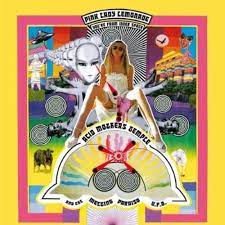
SOUNDTRACK: ACID MOTHERS TEMPLE & THE MELTING PARAISO U.F.O.-Pink Lady Lemonade ~ You’re From Inner Space (2011).

This album is something like the fortieth AMT album and somewhere in the middle of the band’s tenure with this lineup:

Tsuyama Atsushi: monster bass, voice, cosmic joker
Higashi Hiroshi: synthesizer, dancin’ king
Shimura Koji: drums, latino cool
Kawabata Makoto: guitar, guitar synthesizer, speed guru

The album consists of one song, the title track, broken into 4 parts all based around a simple, but rather lovely guitar melody

 “Part 1” is 32 minutes long.  It begins with the opening guitar melody which plays along with some trippy sounds.  Tsuyama is reciting the words (in Japanese?  English?  Gibberish?) and occasionally you hear the words “Pink lady Lemonade.”  At around 12 minutes drums and bass are added.  Once the bass starts meandering through some catchy riffs, Kawabata starts soloing.  It’s pretty far down in the mix (the main melody continues throughout).  Then around 22 minutes Tsuyama starts adding the monster bass–wild riffs that go up and down the fretboard.  With about 5 minutes left Kawabata starts playing s louder solo–louder than the rest of the music–and you can really hear him wailing away.   Part 1 fades out completely before jumping into Part 2.

“Part 2” is only 5 minutes, but it is utter chaos, with everyone making a big pile of noise–keyboard banging, sliding bass, thumping drums and wild, seemingly uncontrollable guitars.  It ends five minutes later with some warbling keys

Then comes “Part 3,” which runs just over the minutes.  It’s a faster chord version of the same guitar intro with slow bass notes and a big guitar solo.  It changes shape and adds some discoey bass lines.  About midway through the synths take over and while there is music in the background the song becomes mostly washes of sounds.

“Part 4” ends the disc at just over 18 minutes.  It picks up with the original guitar melody once more.  This time, it’s only a minute until the drums and bass kick in and the soling begins.  At five and a half minutes the guitar solo gets really loud and takes over.  The soloing is wild for over ten minutes and then around 13 minutes the song grows very quiet with only the lead guitar and the heavily echoed main riff playing.

There’s on online version here that has this entire record but adds six minutes at the end of the last part which is mostly the introductory melody and some washes of keys over the top.  i rather like this extra 6 minutes and it feels like a really nice ending.


[READ: May 1, 2021] “My First Passport”

This essay was translated from the Turkish by Maureen Feely.

Pamuk talks about people travelling from Turkey when he was young.  First it was his father, who left the country when Orhan was seven.  No one heard a word from him for several weeks when he turned up in Paris.  He was writing notebooks and regularly saw John-Paul Sartre.   He had become one of the penniless and miserable Turkish intellectuals who had been walking the streets of Paris.  Initially Orhan’s grandmother sent Orhan’s father money but eventually she stopped subsidizing her bohemian son in Paris.

When he ran out of money he got a job with I.B.M. and was transferred to Geneva.  Soon after Orhan’s mother joined his father but left Orhan and his brother with the grandparents.  They would follow when school was done.

Orhan sat for his first passport photo (included in the essay).  Thirty years later he realized that they had put the wrong eye color down–“a passport is not a document that tells us who were are but a document that shows what other people think of us.” Continue Reading »