Feeds:
Posts
Comments

Archive for the ‘Yuck!’ Category

glorkpizza SOUNDTRACK: NELLIE McKAY-Tiny Desk Concert #117 (April 4, 2011).

nellieNellie McKay is a singer I’d never heard of.  She is a blonde woman in a kind of yellow kimono and looks like she might be a funny folk singer as she plays a ukulele which is cut to look like an electric guitar.  But rather unexpectedly, she and her band burst into a reggae song.

McKay is, according to the blurb, an audacious artist who once devoted an entire album to Doris Day songs.  And now she writes a pretty authentic sounding Caribbean jam.  “Caribbean Time” has all the trappings of an island song–reggae guitars, bongos, and heavily wah-wahed guitars.

Between the songs, she makes some unexpected comments.  Like she says that she decided that a good sketch would be people sitting around a table asking for things and confessing at the same time, “Pass the syrup my father beat e as a child.”

When they start “Beneath the Underdog” the guitarist doesn’t start on time.  He says “Sorry, I forgot where we were for a second.”  She replies, “We’re in Washington D.C. fighting the man.”

“Beneath the Underdog” is a little less reggae influenced but still has a very tropical, light sound.  And her lyrics are wry and amusing, “beneath the underdog, that’s where I’m comfortable.”  It’s poppy and fun.  She even plays a keyboard solo with notes that sound kind of like steel drums.

“The Portal” is a ballad.  It’s much more traditional sounding, although with the same inflections that McKay has used on the other songs.  Her voice is quite distinctive without being unusual.  This is a somber song, but even while singing it she looks like she’s about to laugh.

And she caps off the set with an other weird  moment where she introduces her band and mispronounces her guitarists last name and seems to have a really hard time saying it.  She apologizes, “I was stoned when I met him.”  As the camera dims she says, “Thank you for fighting the good fight.  We are the silent majority but not so silent, we’re just quiet and tasteful.”

I found her to be quite engaging and charming.  I wonder if she’s still making music.

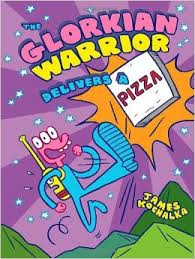
[READ: January 17, 2016] The Glorkian Warrior Delivers a Pizza

I have enjoyed everything I’ve read from John Kochalka.  His drawings are deceptively simple and his books are stupid but ultimately clever (and funny, either way).  His adult books are pretty over the top vulgar (don’t let your kids see them), but his kids books are very funny and perfectly juvenile.

This is his first book for First Second, and the first in a trilogy about the Glorkian Warrior.

Our copy also has an autograph for C.–our Vermont cousins sent it for his birthday (Kochalka is the artist laureate of Vermont, you know).

The premise of this book is painfully simple.  We meet the Glorkian Warrior who is, well, dumb.  His backpack talks to him and tries to get him to be less dumb.  And to be more heroic. (more…)

Read Full Post »

walkerSOUNDTRACK: THE CIVIL WARS-Tiny Desk Concert #137 (June 27, 3011).

civilMany Tiny Desk performances just show the band playing.  But there’s evidently a lot of time before hand where the band sets up and has fun.  I love seeing that, and it’s kind of a shame they cut so much of it out.

As this show starts, Joy Williams is holding the film clacker with Bob.  He tells her to give it a loud clack.  She kind of lets it go on its own accord and then says she didn’t do a good job.  John Paul White then says “I could have done it so much better,” to much laughter.

The Civil Wars are Joy and John Paul and they have terrific chemistry.  The first song is “Barton Hollow,” John Paul plays a loud percussive resonator guitar and the two sing great harmonies.  He sings loudly with her nice harmonies, but the middle part is quieter with her gorgeous voice singing out the lyrics.   I really like the down step chords in the “walking and running” section at the end of the song.

Before “Twenty Years” Bob asks if they ever had a desk job.

Joy says no: daycare, rock climbing.   John Paul says No: forklift driver, seed cleaning, (she asks what that means, but he doesn’t hear her which is a shame as I’d like to know too) cleaning out chicken houses.  He pauses…. I wanted a desk job.

For the song, John Paul switches to a simple acoustic guitar and plays less percussively for this somewhat quieter song.

It’s really fun to watch the two of them play together.  As the blurb notes: “There’s blissful, swooning chemistry as they stare into each other’s eyes and sing magnificently together.”  So it’s a bit of shock that they are not married to each other (they each have spouses, though).  Turns out that they met at a songwriting session at a Nashville studio in 2008.

Before “Poison & Wine” John Paul asks if they are all so quiet and respectful or if Bob rules with an iron fist.

Joy plays the keyboard for this song while John Paul plays a quiet guitar.  This song has wonderful harmonies in the beautiful if puzzling chorus , “I Don’t Love you, I always will.”

I didn’t know The Civil Wars before this set and I am really hooked.

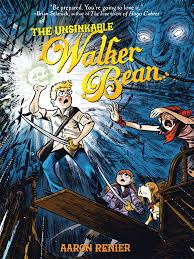
[READ: February 2, 2016] The Unsinkable Walker Bean

This book has some pretty great blurbs attached to its (from Brain Selznick and Jeff Smith) but I found that I couldn’t really get into it.

A lot of the problem was the artwork.  Interestingly, the artwork on the cover (which I assume is also one by Reiner since it looks like his style) is really great.  But the interior art feels like a sloppy version of this cover art.  And while it’s not sloppy, of course, it just doesn’t look as nice as it might.  Couple that with text that is hard to read, a story line that is full of weird little details and twists and it all wound up being a story that felt way too long for what it was.

There was a lot that I did like about it.  I liked the general premise and I liked two of the crew members that Walker Bean befriends, and of course I loved the various gadgets that they created.  I just didn’t enjoy the story all that much. (more…)

Read Full Post »

[ATTENDED: April 3, 2016] David Cross

cross I have enjoyed David Cross since the old days of Mr. Show, and the as Tobias on Arrested Development and even in Alvin and the, well, actually I’m just happy for him that he got a lot of money for it.

When he released his previous stand up album, Bigger and Blackerer, Sarah and I listened to it in the car on a long trip and we had tears in our eyes from laughing so hard.

So when I heard he was touring I thought it would be fun to see him live.  And, yes, it was.

But we ran into a few bumps along the way.  We had to leave very late because our babysitter had car trouble.  She arrived just late enough that we weren’t sure if it was worth still driving the hour to Philly.  We decided if traffic was terrible we would just stop somewhere and have dinner instead.  I even called the Theatre to see if there was an opening act (nope) and if the show really started at 7:30 and not 8 (yup, he would start at exactly 7:30).  Traffic was light and the GPS said we’d get to the garage at 7:35.  I missed the turn for the alley that our garage was on, and then we got slightly lost on the walk from garage to theater and as we got there at 7:40… there were still a whole bunch of people milling about in the lobby.  And then they flashed the lights telling us to get to our seats.  We missed nothing!

And we even got to tsk at people who arrived later than us.  Cross even joked that he would wait to start his joke because “it’s not fucking distracting or anything” when people are being seated.  I was frankly shocked that people seemed to still be arriving around 8PM! (more…)

Read Full Post »

harpnovSOUNDTRACK: BEN SOLLEE-Tiny Desk Concert #141 (July 11, 2011).

solleeI’d never heard of Ben Sollee before this Tiny Desk and I’m a little surprised by that–he seems like the kind of musician I’d have run into somewhere.  For this set (I have no idea what his sets are usually like), they are a trio.

Sollee plays cello  and sings (!), Phoebe Hunt plays violin and sings backing vocals and Jordan Ellis plays drums (in this case one of cool those snare drum boxes).

But despite the strings-dominated sound, the songs feel very rock-oriented.  Although as the blurb says, they are kind of genre defying.  Each song has a very different feel.

On “Hurting” Sollee opens with some great big plucked bass notes from the cello.  Then Sollee switches between plucking and bowing the cello.  And that transition really impacts the overall sound, making it sound like more than a trio.  The violin plays some accented notes and then some big long notes (like the cello).  But it’s the drums (brushes on the box) that add a lot of character to this song.  Sollee has a good strong voice and it fits the song well.

“Captivity” is about being in prison (he wrote it after watching a documentary about a maximum security prison) both physical and metaphorical.  For this song he strums (in an interesting, folky way) the cello.  He plays some bass notes while strumming the rest of the instrument–it’s a great sound.  And I love how different this sounds from the first song.  Once again the percussive sounds add so much.

“The Globe” about the Globe Theatre and how it was burnt down twice.  So he wrote a story about a frustrated loverboy burning it down.  The song names checks some of Shakespeare’s characters and while not comical is kind of funny too.  Musically the song is great with builds and sudden stops.  It’s also quite funky at times, with all kinds of different rhythms from the cello and violin as well as the percussion (which in this case is hand claps).  He says that they’ve been having fun playing it live and that really comes through.  I really like the sounds that Sollee makes from the cello at the end of the song.

“Inclusions” is an a capella song.  He says they’d been working on it in the van on the way down.  I expected a simple song, but they have wonderful harmonies as well.  For percussion, Phoebe is rattling a can of cacao nibs. (There was recently a very funny cacao nibs joke on Brooklyn Nine-Nine, otherwise I’d never have heard of them–I like that Sollee beat Brooklyn by five years though).

This was a wonderful find and I definitely want to hear more from Sollee–I’m curious to see what he gets up to in the studio.

[READ: January 10, 2016] “The Hanged Man”

November was a dark month for stories in Harper’s.  This story along with the one I posted a while back from John Edgar Wideman both deal with suicide.  This is an excerpt from War, So Much, War, and it opens with a man cutting down a sack which was hanging in a tree.

The sack contains a body–“his face was white, his tongue black, his lips purple.”  When he cuts down the sack, the body’s head hits a rock and the protagonist is worried because the body is actually alive and he’s afraid it is now damaged.

The body doesn’t speak for a long time. But when it does it is angry that the man has cut him down. (more…)

Read Full Post »

2292015SOUNDTRACK: AMANDA SHIRES-Tiny Desk Concert #146 (August 3, 2011).

shiresAlthough the blurb suggests that I might know Amanda Shires, in fact I do not.

Shires has a powerful non-vibratoed voice and she plays several different instruments–what looks like a giant ukulele as  well as the fiddle.  She’s accompanied by Rod Picott on the guitar.  He really seems to flesh out her instruments very well.

As to her sound, she explains before the final song, “I do have one happy song, we’re just not going to do it.”

The most remarkable thing about the first song, “Swimmer…” is her excellent whistling of the main melody.  It is piercing and very catchy.  Actually the whole song is quite pretty

Before starting the second song she asks if they are in a fast mood or slow mood.  When the answer is fast, she immediately says they’ll play “Shake the Walls.”  I really liked how the opening notes were plucked and strummed on the violin.  The song is pretty simple and quiet until she plays a noisy violin solo in the middle which really livens things up.

Before the final song she asks if they’d like a song about suicide.  Someone whoops in assent and they laugh.  So she says they’ll play a song about trains. (“when you need a train, it never comes”).  I really like the chord progression in the chorus.

Despite the downer music, the duo clearly had a fin time.  Picott ends by saying “Its hard playing for smart people instead of our usual crowd.”

[READ: March 6, 2015] “Total Solar”

The protagonist of this is a journalist in Afghanistan.  He has been speaking with a researcher from the United Nations Ornithological Department, who keeps introducing conversations with “If you really want something to write about…”

But rather than taking notes, he is drawing pictures of himself committing suicide in various gruesome ways.  This relates to his writing a story about a contractor who’d been executed in a new way–using wire rather than a knife.

Yes the story is pretty brutal. (more…)

Read Full Post »

photoSOUNDTRACK: WILCO-Tiny Desk Concert #509 (February 23, 2016).

wilcoAs far as I can tell, Wilco is the first band to be invited back for a Tiny Desk Concert (there was a stated rule that no one would come back twice, with some people skirting that by coming with another band).  Laura Gibson was invited back since she was the very first attendee, but since Wilco’s newest album has been so successful, it seems somehow fitting that they get invited back.

And perhaps in honor of that, while their last performance was noisy and raucous, this one is decidedly more mellow—with all acoustic instruments.  But that doesn’t mean it’s quiet and calm either.

For the first song “The Joke Explained” from Star Wars, they used banjo, acoustic bass, hollow bodies electric guitar (w/ slide), the ever-present melodica and muted drums (w/shakers).  And it sounded great.

For the second song, the older “Misunderstood” everybody seemed to switch instruments.  Tweedy switched guitars, the acoustic bass became an acoustic guitar, the hollow body became a slide guitar.  Nels Cline’s slide guitar brings so much to the song by doing seemingly so little.  I love how this simple, sweet song has a wild middle section–a crazy breakdown with noisy cymbals and drums–drummer Glenn Kotche is fantastic–and everyone else playing some crazy high-pitched notes until it all settles back down again.

Tweedy has another guitar for the third song “I’m Always In Love” and the melodica is back.  There’s xylophone keeping the melody.  And as with all of these songs, Tweedy sounds great and the backing vocals add wonderful harmonies.  Cline plays a wonderful slide solo, too.

Before the final song and there’s another guitar change for Tweedy, and he says that after this song, “you guys need to get back to work solving this Trump problem. Figure it out! Its weird!”  They play “Shot in the Arm,” another great old song.

The band sounds excellent—a wonderfully full sound even without amplification. I am really excited to see them his summer.

There’s also a nifty video showing “Misunderstood” with two 360 degree cameras so you can see what goes on in the audience during a Tiny Desk Concert.  Check it out.

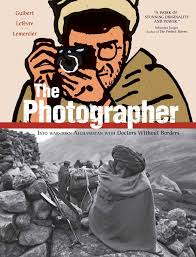
[READ: February 7, 2016] The Photographer

I loved Guibert’s book Alan’s War, in which he took the words of Alan Cope and put them to an amazing graphic novel.  Well, he is back again doing the same thing with the words of famed photograph Didier Lefèvre.

Didier Lefèvre died in 2008, but before he died he left a legacy of amazing photojournalism.  That includes this trip to Afghanistan which he took with the team from Doctors without Borders.

Alexis Siegel translated this book again, and he offers an excellent introduction which not only explains Lefèvre’s life, it also gives context for everything tat these men and women were up against in that war-torn region.

As mentioned Guibert draws out the story that Lefèvre told him.  But this book is different from Alan’s War in that it also uses the photos that Lefèvre took.  Guibert fills in the gaps where Lefèvre, didn’t or couldn’t, shoot.  And there was a lot he couldn’t shoot. (more…)

Read Full Post »

flypanam templarSOUNDTRACK: FLY PAN AM-Fly Pan Am [CST008] (1999).

In the Constellation canon, there were four originators: Godspeed You Black Emperor were orchestral, Do Make Say Think were jazzy, and A Silver Mt Zion had vocals.  But Fly Pan Am was the weirdest one—the played with noise, they broke up their songs, they deconstructed their own work and, especially novel to me, everything was in French on the discs.

Roger Tellier-Craig, the main force behind FPA was in GYBE as well.  So he knows post-rock.

Their debut album is a long affair–an hour’s worth of music (in all of 5 songs) taken from two different recording sessions.  (All translated titles are taken from Wikipedia).

“L’espace au sol est redessiné par d’immenses panneaux bleus…” (“The Floorspace Is Redesigned by Huge Blue Signs…”) is a 13 minute song.   There’s ringing noises as a simple melody is plucked out.  The full instrumentation kicks in adding a repetitive guitar line that seems to fall into the background behind the opening notes that are still playing out.  The guitar lines slowly gets longer and longer, almost like a game of Simon.  By around 6 minutes the song has built up a serious head of steam with the bass and drums moving quickly and the guitar getting really complex. By 7 minutes that pretty guitar has turned into a ringing feedback skronking solo which carries on for a minute or so before fading back. At around 9 minutes the song seems to retreat on itself again. The guitars fade away and the bass seems to get a bit louder with the guitars ringing out. The last minute or so resumes a kind of noisy static sound that tells you the song is over.  That’s a heck of an introduction.

“…Et aussi l’éclairage de plastique au centre de tout ces compartiments latéraux” (“…And Also the Lighting of Plastic in the Center of All Its Lateral Compartments”) is a 9 minute song that opens with more scorching guitars and rumbling bass.  The guitar switches back and forth between a two note melody and a chord (dissonant, of course). The other guitar then plays a different three note melody.  About 2:30 in some noisy feedback and samples start taking over the song.  All the music drops away except for the bass.  By 3:15, all the music had dropped out and its just noisy effects and feedback and then outer space sounds.  After about 4 minutes of that (yes, indeed) the bass comes back in playing a kind of discoey rhythm with the guitar supplying a dancey counterpoint which runs to the end of the song.  It’s their first song where something really catchy is utterly dismantled by noise.

“Dans ses cheveux soixante circuits” (“In Her Hair Are Sixty Circuits”) is 17 minutes long (!) and is one of the most abrasive songs I can recall. The song opens with both guitars each playing a two-note melody which rotates through a round. They sound lovely together as the bass and drums play a slow rhythm. The melody changes a few times and then by around 3 and a half minutes the main guitar line grows faster (6 notes instead of 2) and the background feels a bit more tense.   And then at 5:46, the whole song seems to get stuck on repeat. The bass plays a 2 note rhythm, the drums play the same pattern and the two guitars each play one note over and over.  And over.  Evidently it’s “a half-tone interval.”  And this goes on for 12 minutes.  TWELVE!  The only differences through this whole section come from the digitalia of guest electronic musician Alexandre St-Onge, but they are the most unobtrusive electronics I’ve ever heard and just seem to bubble and prickle gently onto the repetition.  It’s maddening and then trance-like and then maddening all over again.  How can they play the same thing for twelve minutes—and their rhythm remains perfect?

“Bibi à nice, 1921” (“Bibi Nice, 1921”) opens with noises and feedback (which is a nice break from the 12 minutes of repetitiveness. But you soon realize that that’s all you’re getting (aside from some distant rumbling noise in the background). It’s a very silent song. For four minutes (out of ten) and then the full band kicks in for a really rocking section—great guitar lines and propulsive bass and drums. But after two minutes, the sound drops out entirely—pure silence (enough to make you assume the disc froze). It slowly returns after 20 seconds–they are messing with us again.  At 7 minutes a new guitar line comes in—slow and pretty with a slow drum beat.  A solo plays over the top—it is primarily electronic, and sounds pretty cool.   The guitars start playing louder and the song feels like it’s going to build up into something huge, but it soon ends and turns into….

“Nice est en feu!” (“Nice Is on Fire!”) seems like it should be connected to the previous song, but it starts off very different with big bass notes playing a very slow riff.  The guitar starts playing a nice accompanying riff. At 3 minutes in, voices come in singing Ahhs in a nice melody. The liner notes say that Kara Lacy and Norsola Johnson do vocals on “Bibi à nice, 1921” and “Nice est en feu!” but I didn’t hear any vocals on “Bibi.”  At 4:30 the guitar line turns to something else and there’s suddenly a whole bunch of noise flooding the track—sounds of water rushing, maybe—but that goes away and a new melody (slightly dissonant) resumes.  With about a minute left the voices resume—angelic and soaring over the rumbling song.  It ends this weird disc on a very pretty note.

I love the crazy stuff that Fly Pan Am creates, even if some of it is hard to listen to.

[READ: February 23, 2016] Templar

I had actually started to read this graphic novel before Prince of Persia.  But when I saw in the introduction that Mechner talks about Prince of Persia, I decided to grab that one and read it first.  The two have nothing to do with each other, but sometimes it’s nice to get things on order.

Who doesn’t love stories about the Templar knights?  The whole premise of the National Treasure is predicated on them after all.  Not to mention, The Da Vinci Code and the book that he says far surpasses all Templar stories: Foucault’s Pendulum [RIP Umberto Eco].

So Jordan Mechner has done a lot of research (there’s a sizable bibliography at the end of the book) to create the story about a couple of Knights Templar.  He says that “much nonsense has been written about the Knights Templar over the years. I’m proud to say that this book has added to that sum.”  He explains that thousands of knights were indeed killed.  Some knights did escape, but the main plot he constructed probably never happened.   One of the histories he read said that “figures of no importance” did escape, and so that was the basis for Martin, Bernard, Isabelle and their gang–inconsequential Templars and their own story.

He also says (in the preface) that all of the movies about the Knights focus on the treasure, but the Knights’ actual story–their rise and shocking downfall– is even more interesting.  He gives a brief backstory.  Formed during the crusades, the Templars gained fame as the noblest and bravest knights in Christendom.  Their legend grew which increased their numbers.   “They were the Jedi of their time.”  They peaked in the 13th century under the protection of the Catholic Church and The Pope.  Then in October 1307 the king of France ordered the mass arrest of All Templars in his kingdom (15,000 of them).  They were brought before the Inquisition and accused of witchcraft, heresy and sodomy.  Guillaume de Nogaret the king’s chef minister staged a huge show trail.  Prisoners who denied the charges were tortured until they confessed, which made everyone who refused to confess seem like a liar. Despite knowing the truth, the Pope bowed to pressure and Templars were destroyed.  Wow. (more…)

Read Full Post »

persiaSOUNDTRACK: SALTLAND-I Thought It Was Us But It Was All Of Us [CST094] (2013).

Piles of salt mined by local residents sit on the surface of the world's largest salt flats, the Salar de Uyuni, near the village of Colchani November 20, 2007. Bolivian airlines Aerosur and the Canedos family inaugurated this week the first regular flights of its renovated Douglas DC-3S, or Super DC-3, to bring tourists to the Salar, one of the world's natural wonders, in a project that the airline considers a "trip back in time." Picture taken November 20, 2007. REUTERS/David Mercado (BOLIVIA)Becky Foon, who is one of the main creators of Esmerine has another band on Constellation called Saltland.  The big difference with this band is that she sings as well.  And that this album is much more mellow–full of droning sections and a slow, deep bass that keeps the songs moving along.

This disc is very mellow, with lots of slow beats and electronica sprinkled around it.  When Foon sings, she sings in a deliciously slow voice.  So this album is a good one for chilling out.

The disc opens with “Golden Alley” which has some big slow bass notes and strings urging the song along.   When she begins singing, he voice is deep and hushed–an almost whispered sound that feels practically percussive.  There are words, but her voice also works as part of the music.  A bit of a shift in the music occurs near the end that makes it seem like it’s going to be a long song–especially when Colin Stetson starts blowing some saxophone notes–but it actually just signals the end.

“I Thought It Was Us” is an instrumental which features harmonium and cello.  It also has some interesting noises from Stetson.  About a minute and a half in, it shifts to a really catchy melody that runs through much of the rest of the song while the saxophone solo takes off.  It’s a highlight.

“Treehouse Schemes” really stands out as something familiar.  I don’t know if it sounds like something else or if Foon’s voice is so much more distinctive.  But I really like this track a lot.  It has a slow bass line and some stretched out guitars and then Foon sings a simple and lovely melody line.

“Unholy” is a bit more droney with some well used kalimba and Foon’s voice providing mostly wordless notes.  I really like the way at about a minute and a half, fast drums come in and seem to push the song faster, although the tempo never actually changes.  Theres some great tension and then a nice denouement.

“But It Was All of Us” is another slow droning instrumental, with some wordless vocals and some occasional bass notes. It feels almost like Western movie but with a Middle Eastern feel, a Middle Eastern Western?

“Colour the Night Sky” has some quiet, heavily distorted vocals that swirl with the pulsing beat of the drums and bass.   And then about midway through there’s a clean section where the vocals shine through the din, with the words “I have a fairy tale that I read when I’m feeling down.”

“ICA” has some quiet cello swirls and low voices.  And the album ends on a highlight with “Hearts Mind.”  It’s another one with a prominent bass while swirls of sounds float around Foon’s vocals.   It’s the last-minute or so Foon’s multitracked voices create some lovely ascending ooohss.

This album feel s a lot longer than its 38 minutes, possibly because most of the songs are quite long.  It’s definitely a mood creating album, although not as despairing as the album cover hints at.

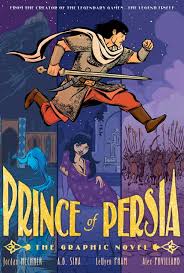
[READ:February 21, 2016] Prince of Persia

The evolution of this graphic novel is pretty fascinating.  And it is one I was completely unfamiliar with since I’m not a gamer.

Back in the 1980s Jordan Mechner created a video game called Prince of Persia.  It was popular and there was a sequel.  And then it kind of went away for a while, but people always loved it so then it came back again as a new series of games.  And a film (released in 2010).  Finally in, 2004 First Second (shoutout to #10yearsof01) contacted Mechner about making a story (not the same story as his games) into a graphic novel.  Mechner has always wanted to make a comic book (he had all the gear before he switches over to video games.  And here it is.

From what I gather, Mechner didn’t really write this story so much as inspire it (and I’m sure he had editorial control or whatever).  The book was written by A.B. Sina.  And it is a new story based on the nebulous ideas of the universe that Mechner had created.

I had actually not even heard of the video game (or the movie) so this was all lost on me. But that’s fine and is not necessary for enjoyment of the book.  Although I admit I found the story a little confusing (not because of not knowing the games), although by the end the way the stories linked up was pretty cool.

This story is set in two different eras (the 9th century and another prince in the 13th century) and has two stories paralleling each other.  The two men of the story are linked by a prophecy.  The story opens with Guiv, a (9th century) prince who had attempted to kill his brother Layth, fleeing the city of Marv after escaping death from Layth’s guards. The story then jumps to a young (13th century) woman, Shirin, who flees the city of Marv in an attempt to escape her father. She soon meets up with Ferdos,

Since Guiv was nearly killed by his brother he leaves the city.  He walks into the mountain where he is accompanied by a spirit animal (a peacock) and is able to fend off lions and boars until he encounters a door.  But inside is a pit made of human skeletons.

I was more interested in the story of Shirin.  She is a rebellious woman who would rather do gymnastic dances than hip shaking ones.  So she cuts her hair and leaves her palace behind.  Frankly her story of learning how rough things are outside of the palace was more interesting than the story of the men.   I guess it is also kind of that we follow her for many pages before she meets Ferdos and then his story takes over.  Not to mention, he seems like he’s just crazy for a while.

Ferdos is full of stories about Layth and Guiv and he imagines that he and Shirin will reprise the roles of these past rulers (Shirin will be Guian, the sister/lover–I’m a little unclear about that).

Eventually we learn that Ferdos has ties to the city of Marv, and that his story is linked to the past in unexpected ways.

The end o the story goes very fast with intense pacing and crossing of stories.  It definitely demands careful reading and maybe even a second reading, to see how the stories line up.

Th one great thing about the book is the way the two story lines are never visually confused–the color palates change depending on the century and the main characters all look different enough (especially Shrin, who looks incredibly sexy with her short hair and different colored eyes).

It’s a really clever and intricate story.   I wonder what fans of the game thought of it.

Read Full Post »
deogrataisSOUNDTRACK: JOSH RITTER-Tiny Desk Concert #119 (April 11, 2011).

ritterNot too many performers mention the actual day that they are performing their Tiny Desk Concert.  But Ritter mentions Valentine’s Day twice during his set so I thought I’d post it on Valentine’s Day even if the actual date of the posting is much later.

I don’t really know Ritter, I’ve heard of him, but I’m not too familiar with him.  Nevertheless, I was quickly won over by him.  He is charming and polite and is certainly having a good time (he even laughs at some lines in his songs).

His first song “The Temptation Of Adam”sounds vaguely familiar.  The melody is very catchy and his voice is strong and excellent.  Lyrically the song is quite interesting.  I especially loved this section: “We passed the time with crosswords that she thought to bring inside/ ‘What five letters spell apocalypse?’ she asked me/ I won her over saying, W.W.I.I.I.’/ She smiled and we both knew that she misjudged me.”

“Lark” is a faster song, but still very folksy and clever.  I love that although the melody is fairly simple, the way he plays it (with very fast fingerpicking) makes the song sound more complicated.  “Rattling Locks” is a dark minor chord song, louder and heavier than the other two.

The site says there is an audio only track called “Pale Blue Eyes,” but I can’t find it.  For the last track, his 2003 song “Kathleen,” he introduces the song by saying, “I think Valentine’s Day is the most awkward self-imposed holiday — even worse than New Year’s — so this is an awkward song.”  It’s a louder song, with Ritter’s voice reaching great intensity.  It’s a great way to end the set.

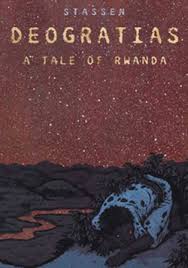
[READ: February 14, 2016] Deogratias

Here’s another story that I would never have read if it were not for First Second’s #10yearsof01 challenge.  The thought of reading a story about the genocide in Rwanda just seems to depressing to undertake.  And yet in the spirit of reading things outside of your comfort area, I decided to read this this weekend.

And I am incredibly glad that I did.

I feared that this story would be one of rampant genocide–struggle and death and mutilation and everything else that I could imagine.  But rather, what Stassen has done is created a story about how the toll of genocide can impact one person.  Yes, it affects him directly and the story is incredibly sad, but it was a very different story than I expected, and it was so personal that it made it more tragic without having the oppressive unreality of millions of dead people in the plot.

The introduction alone is worth reading, as translator Alexis Siegel gives a brief summary of the Rwandan tragedy.  I’ve always found the conflict to be really hard to grasp.  Hutus and Tutsi, a privileged minority, a brutal majority.  The back and forth was so hard to grasp, and the names of the tribes were similar as well.  It is hard for a lazy person to keep straight.

But I found Siegel’s explanation to be succinct and very effective. (more…)

Read Full Post »

aboveSOUNDTRACK: DO MAKE SAY THINK-& Yet & Yet [CST020] (2002).

DmstandyetandyetAfter the previous album, keyboardist Jason McKenzie departed the band.  I’m not entirely sure how this impacted the band, but this album is warmer and a little more delicate feeling.  It’s also their first album that was recorded all in the same place (in band member Justin Small’s house).

The disc opens with static and effects before a jazzy drumbeat comes in.   “Clasic Noodlanding” is mellow with a complex (for them) riff on the guitar and nice washes of keyboards.  It is primarily atmospheric until about two minutes in when it suddenly changes with the introduction of a great bass line.  And then this atmospheric song turns really catchy. The five and a half-minutes feel too short in this song.

“End of Music” opens with jazzy drums and keyboards.  It’s a slow piece that stretches to nearly 7 minutes.  About half way through the song, the drums come crashing in and a brighter, noisier melody takes over.  This end section is really catchy with some great chords and excellent drumming.

“White Light Of” opens with a cool slow bass line and drum pattern.  As the song grows in complexity I like the new bass rumble that is added and the way the guitar lines seem to intertwine. About half way through horns get added to the mix, quietly at first and then they slowly take over the song. About five minutes in the song comes to abrupt halt with some interesting echoed effects on the drums. It resumes again with a stranger version of the song—it feels unsettled and really interesting, with a nice riff interspersed with one that feels off somewhat.

“Chinatown” opens unlike any DMST song.  The bass sounds electronic and skittery with some interesting keyboard sounds over the top (it actually sounds a bit like later period Radiohead).  The song is slow and moody for all of its 5 and half minutes with keyboard washes and skittery guitars.  There are quotes thrown in throughout the song but I can’t tell what they are saying.  This song was features in the film Syriana.

“Reitschule” is one of two songs that are 9 minutes long. It opens with a slow meandering guitar line interspersed with another guitar playing an interesting counterpoint.  A cool bassline comes in around 2:30 which takes the song in a new direction.  Horns propel the song along until about 4 minutes when a jangly guitar takes over the song. It builds with some abrasive guitar chords until everything washes away except the bass.  And then it rebuilds as something else.  Distant horns play in the back as the guitars play overlapping lines.  It’s an epic song that demonstrates how much this band can do.

“Soul and Onward” has a pretty conventional melody line. It’s warm and friendly It also features wordless vocals by Tamara Williamson. I love the little tiny guitar lick that works as a bridge between the two sections.  This is my favorite song on this record.

“Anything for Now” is the other 9 minute song. It is slow and pastoral to start with a beautiful multi-guitar piece with gentle drums. At around 4:30 all the instrument vanish except for a single organ note. It plays for a bout a minute and it seems like the disc will end that way but then the chords build up again from the drone.  An acoustic guitar lick begins around 7 minutes in and runs through the end of the song.

Overall this album is more mellow than their previous discs, and there are some amazingly beautiful sections of music on this album.

[READ: February 8, 2016] Above the Dreamless Dead

I’m continuing with books that I wouldn’t normally read, to celebrate First Second’s #10yearsof01 challenge and to read something out of my comfort range.

This is a collection of poetry about World War I, written before during and just after the war.  Each of the poems is illustrated by a different contemporary artist.

As you can imagine, the book is pretty gloomy.  But the poetry is pretty spectacular and the illustrations were really interesting.  Obviously this book is not going to be a happy one.  But some of the artists do add a more positive spin on the poems (while some are just brutally violent as well). (more…)

Read Full Post »

« Newer Posts - Older Posts »