Feeds:
Posts
Comments

Archive for the ‘Yuck!’ Category

SOUNDTRACK: DEVONTÉ HYNES interviews PHILIP GLASS (Field Recordings, September 21, 2017).

This is the final video under the “Field Recordings” headline [‘When You Gonna Get A Real Job?’: Philip Glass And Devonté Hynes Compare Notes].  Unlike the other videos I have watched, this one is actually an interview, not a song.

I was unfamiliar with Devonté Hynes.  He is a 31-year-old British producer and songwriter who performs under the name Blood Orange,  He has made many hit records with the likes of Carly Rae Jepsen.  And Philip Glass was at the time of this interview, 80 years old (and calls the cast of Hamilton hipster, instead of hip-hop, but he did rave about the show (which Hynes was unable to get tickets to!).

Walk into Hynes’ third floor loft in New York’s Chinatown and you’ll find a photo of Glass on his piano. He discovered Glass’ music by chance as a London teenager, when he bought the 1982 album Glassworks on the strength of its crystalline cover image alone. What he heard after he brought it home transfixed him. Today, he says Glass’ influence “seeps” into his music.

This spring, Hynes invited Glass to his apartment where they sat at a piano, compared chords and traded stories. Ninety minutes later, their wide-ranging conversation had touched on the pulse of New York City, the pains of striking out on your own as a musician, what role the arts play in society today and Hamilton. Plus about a hundred other ideas.

This clip is only 6 minutes, and they don’t touch on all that much.  We learn that Glass grew up in Baltimore and worked in his father’s record store.  His father knew nothing about music but loved it and soon enough young Philip was the store’s record buyer.

Glass moved to New York in 1957.  His mother told him that being a musician would be a terrible life of travel and hotels.  And he thought that sounded wonderful.  He worked day jobs loading trucks and moving furniture–he never took a job he couldn’t get out off if he had the opportunity to play.

He says that Einstein on the Beach was a hit but he knew nothing about money and they actually lost money on the deal.

For his part, Devonté came from London to New York ten years ago.  he says you can hear Glass’ jobs in his music, like the sounds of the city as he drove his taxi around.

Glass concludes, “When bad things happen in the country the artists become the voice.  Without the arts our society would be a prison.”

[READ: January 17, 2018] “Sans Farine”

I really couldn’t believe how long this story felt.  Even with enjoying most of it, it seemed like it was 50 pages not 9.

The narrator, Charles Henri Sanson is an executioner in France around the time of the revolution.  He was a real person.  I didn’t know that while reading this but it doesn’t really impact my take on the story.

His father and his six brothers were also executioners.  There is quite a stigma to the job–most people are not allowed to even communicate with them, much less marry them.  And yet ask any soldier what his profession entails  He’ll answer that he kills men.  No one flees his company for that reason.

There’s a lot of detail about his life, both before and after the revolution,  He and his family have negotiated the revolution well and he still works,no killing the royals,

He talks about Joseph Guillotin reinventing the penal code–a less barbaric, swifter execution for all condemned. (more…)

Read Full Post »

SOUNDTRACK: NELLIE McKAY-Reveals ‘Cavendish’ (Project Song: April 2, 2008).

Project Song was a nifty little show that NPR Music created.  The premise was that NPR would give a musician some prompts and a recording studio.  They then had two days to write and record a song.  I don’t know how much of the process was to be filmed, but presumably most of it. Then it would be edited down to a fifteen minute show.  The results are pretty cool and it’s a shame they only made five of them.

The third one they did was five months after the previous one.  As with the Stephin Merritt project, McKay was solo, but she had a lot of problems and recriminations.

When I invited Nellie McKay to participate in Project Song, I figured she’d write some witty words and hammer something out on the piano. I don’t mean to make it sound so simple, but listen to the music of Nellie McKay, and she’s the one who makes it seem so easy.

McKay came into our studio looking as if she’d just walked off a movie set. In fact, at times in conversation, a young Judy Garland came to mind. She took great care with her curly blonde hair and her beautiful pinstriped suit.

I laid some photographs [all from the Library of Congress] and some words on our makeshift bar for her to consider as jumping-off points for the song she would write over the next few days.

It didn’t take long for McKay to settle on a black-and-white photograph of some men dancing the Charleston out in front of a movie theater. To go with the picture, she chose the word “Bravado.” Those two things would inspire and inform her song.

And then, despite a bit of hemming and hawing, McKay proceeded to sit behind the grand piano and begin drawing musical staff lines on some note paper. She began composing her song.

Although perhaps the consternation and questioning was more of her conscious mind, because it sounds like she was much more confident than she appeared.  “Why couldn’t I have written a song in secret and brought it in and pretended to be confused?”

Here’s what I now know that I didn’t know at the time: In just a few hours of playing at the piano, Nellie McKay wrote her song. I know that now, because I can look at the zoom lens of our video camera and see all the scribbles in her notebook. The words are mostly there, and so is the music.

She pokes out notes on the piano and scribbles in her book.  Then she plays the ukulele (with wah wah).  She hems and haws quite a bit, playing with Bob’s computer to make three distinct drum parts.  She talks with Bob.

“Its hard enough to do a bad pastiche which is what I’m aiming at now.  This is the worst thing, I wrote a complicated bad song.”

She finally asks Bob, the constant cheerleader, “where’s your cynicism, you work for NPR?”

From my perspective in the control room of our studio, what I heard for the better part of our first day was some tinkering, some scribbling, and more tinkering. She’d pick up the ukulele and play more piano, but I couldn’t hear a song emerging.

Then she plays some cello on top.  Then it’s on to some haunting backing vocals.

Bob’s mind is boggled: “to put down the uke part first after what I’ve heard, why not play the piano first?  Her answer: “I’m sick of the piano!”

She says she’s big on secrecy and doesn’t understand how other people did it.  Before revealing that she decides to put down “the thunderclap, perhaps the loon, a little bit of backing vocals, and then I’ll freak out a bit more and then I’ll try to do the main vocals.”

The lyrics, however — and even the title — were a closely kept secret until the final hours of the final day.

Then she reveals the dramatic, multi-faceted, three-part song.  It is stunning that she came up with this.  There’s sound effects, spoken word, Latin rhythms and then a torch song part with horns and falsetto.

And this is it, a song about a London hotel called the Cavendish. A song about some of its guests, like D.H. Lawrence and The Beatles, and of better, simpler times. A wonderful theatrical journey from Nellie McKay — someone who seems connected with the past and unsure of her present.

The Cavendish was a real hotel.  They went through a lot of change.  The hotel has been through two wold wars.  The Latin part is exotic–lovely and yet unsettling.

[READ: January 24, 2018] “The Gulch”

The centerpiece of this story is vile and horrible even to think about.  The story begins with it, it focuses on it but then it also kind of dismisses it at the end.

The story is basically about three juvenile delinquents who have crucified a boy in their class (he did not survive).  It begins with a description of the cross they created with pressure-treated wood and rope from a neighborhood laundry line.

It is written in a kind of casual style from Detective Collard’s point of view.  There’s lots of parenthetical asides “The one who dreamed up the scheme (for lack of a better word).”

One of the boys admitted to digging the hole but then said he wasn’t there in sport or heart. (more…)

Read Full Post »

SOUNDTRACKALEJANDRA RIBERA-Live at Massey Hall (February 5, 2016).

I had never heard of Alejandra Ribera before. She has a beautiful deep voice that can really soar.

I love that she sings in English and Spanish (in the same song) and sometimes, because of her delivery it’s hard to tell which language she is singing.

The show begins with her talking about Massey Hall and how the trajectory from the [working in? a] bar to this moment is unexpectedly fast and natural (because when you’re in it, you’re in it) but it has been overwhelming with ‘pinch me’ moments.

She says, “I used to have a poster on my wall with all of these goals… to get played on the CBC and to play at Massey Hall.”

The band is minimal and they create terrific sounds with just (primarily) an acoustic guitar from Jean-Sebastien Williams and upright bass from Cedric Dind-Lavoie)

The first song “La Boca” has the acoustic guitar and upright bass moving briskly with her voice soaring (but low) on top of it–really mesmerizing.  She sings parts in Spanish.

“Goodnight Persephone” has a muted picked guitar and bowed upright bass (it opens in vaguely Velvet Underground “Heroin” way until the bowing becomes bigger and deeper).  Alejandra sings to Persephone in a wonderful wounded, pleading voice.  The ending build with the refrain “keep this light burning bright for me.”

Before starting the next song, “No Mi Sigas” she tells us (not the audience) that when she was a young girl, she had crushes on girls and at the time she knew it wasn’t okay so she started writing poetry that was metaphorical and laden in imagery so no one would know what she was writing about.  And now she’s older and it doesn’t matter who she is writing about but she has still taken this approach and it’s why all of her love songs are in Spanish because she lives in Canada.

It’s only a shame that they cut off part of this beautiful song so much while she is talking.  She plays guitar as well in this sultry love song while Jean-Sebastien plays some wonderful leads.

“I Want” is an award-winning song and her voice really reaches deep to sing it.  She sounds great in this moody piece.  And the lyrics are very cool too: “There’s so much labor just in breathing lately.”

“Carry Me” is a bit more uptempo and she sings with that great style of hers–I’d never guess she was Canadian, even with the line “all the snow in Montreal couldn’t bury this.”

Turns out she is of Argentine and Scottish descent but was born and raised in Toronto, Ontario, and has been professionally based in Montreal, Quebec.

The bridge of this song is quite compelling with the three of them singing just notes the rise through a scale–strangely compelling.  And then Ribera gives a great whistling solo–which people want to applaud for (and should) but no one does.

In the last segment, she says that before playing music publicly she had gone through a nasty depression.  She had seen that Ron Sexsmith was playing at Massey Hall and she wanted to go see him.  But the depression was too powerful and she checked into St Mike’s across the street.  She had checked in for a time and then one night went to the stairs to smoke and saw the Ron was playing at Massey Hall that night.  That was the pivotal moment–she was so close–and she decided to get on the other side of that door.

Once again, it’s a shame she talks over so much of her song “Led Me To You” which starts quietly but builds to a great powerful ending (with her on guitar again).

This series has been excellent in introducing me to new artists, and Ribera is a great one I hope to explore more.

[READ: January 9, 2017] “Fifty-Seven”

If you were paying attention, you’ll notice that I have been posting these old New Yorker stories on the date that they were published (no matter what the year).  There have been some exceptions (like when there was more than one story in an issue), but I thought it would be a fun thing to keep up).  I am making an exception for this because when I read this story and the one after it I felt like they were connected in some way.  So I’m moving this to July  because there’s a ton of stories to go in November.

I feel like this story was trying to make a point.  And I didn’t like it because of that.  Although I will say that it seems like Kushner really did a lot of work (unless she happens to know this much about the penal system).

This is the story of a murderer.  It is third person but from his point of view. (more…)

Read Full Post »

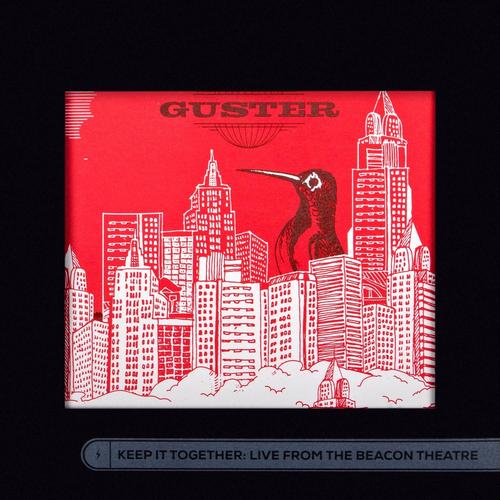
SOUNDTRACK: GUSTER-Keep It Together Live from The Beacon Theatre (2014).

In 2014, Guster released three CDs of them playing their early CDs live in their entirety (excluding for some reason their second disc Goldfly).  This is their fourth CD ‘Keep It Together’ recorded live in concert at The Beacon Theatre on November 30, 2013, ten years after its release.

As the disc opens, Ryan shouts, “Keep It Together starts now.”  This makes me think that they played other songs before it?  It would be great to hear an album in its entirety but not if that’s all they played.

After the first song, “Diane,” Ryan jokes,  “I guess there no real surprises in the setlist from here on out.”

Midway through the show, he comments that as an active band making new music, you want to be careful not to trade in nostalgia.  But he also knows that if one of his favorite bands played one of his favorite albums…it would be magical.

The band sounds great.  And, fortunately, it’s one of those shows where the live recording sounds at times even better than the original.

The only real divergence from the album is that after “Homecoming “King” they play “Chariots of Fire” on piano and strings.  I’m not sure why, but it’s fun.

One of the great moments of any Guster concert is when they play “Come Downstairs and Say Hello” and the Thundergod plays the bongos and smashes the cymbals with his hands.  It’s more fun to see it, but it’s great in this case to hear it.

“Red Oyster Cult” sounds great with the horns as an addition and Ben Kweller comes out and sings lead on the first verse of “I Hope Tomorrow is Like Today” (I had no idea he co-wrote it!).  They even leave a slight pause for the “hidden track” of “Two at a Time.”

This is a great version of this album, and well worth the listen.

[READ: June 2, 2018] “Fungus”

This is a story about carrying on after the unthinkable. But not just carrying on, carrying on with the mundane things that you can’t live without but remind you of exactly what happened.

The story opens with an insurance check and talk of geckos.  But the tone is not lighthearted like Geico commercials.  Andrew has access to Ingrid and Ron’s car, but really, he can only borrow it for so long.  It is time to buy a new one.

So Andrew and his daughter Willa go to the Subaru dealer.

These two scenes are simple enough, but they are fraught with meaning–with the undertone of what happened and how Andrew is allowed and allowing himself to deal with it.   There’s darkly funny thoughts (he’d like a homemade sign around his next that says “I don’t know”).  But the reality is that he has to go on for Willa’s sake, if not his own.

And then there’s this idea which is perfect for the story but works wonders in everyday life: (more…)

Read Full Post »

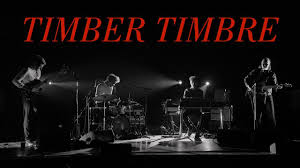
SOUNDTRACK: TIMBER TIMBRE-Live at Massey Hall (July 8, 2014).

I’ve known about Timber Timbre for years but I seem to always get them mixed up with someone else .  I think of them as a dark synthy pop band, which is entirely false.  Their sound has been described as having “an aesthetic rooted in swampy, ragged blues” and “beautifully restrained blues from an alternate universe.”

Their music is cinematic and kind of spooky and their’s is the first of the Massey hall videos in which the stage is very dark.  It seems barely lit at all.

Taylor Kirk seems to be the main voice of the band (he sings as well).  He says he used to take the train to Massey Hall.  And says there is something that affords a big audience and intimacy at the same time.  He wonders what the band could possibly do after this.  He thinks it’s impossible that they sold it out.

“Grand Canyon” comes alive with washes of guitars and synths (Mathieu Charbonneau) and thumping drums (Olivier Fairfield) before Kirk speaks the lyrics:

From the Phoenix liftoff
Somewhere over Blackfoot reserve
High above Drumheller
Sky hostess starts to serve
Cloud shadows on the mountain
And our shadow on the mountainside
After Salt Lake City
I have time to close my eyes

The music is a soundscape with washes of atmosphere and some noisy feedbacking guitar from Simon Trotter.

Kirk says, “Welcome to the most exciting night of my entire life.”  He asks “Are you ready for this shit?” as the woozy echoing guitar chords open “Hot Dreams,” with the peculiar lyrics

I wanna dance, I wanna dance
I wanna dance with a black woman
It’s peculiar because it never returns to that idea in any way throughout the song
I wanna still, I wanna still
I wanna still my mind
And I wanna chance, I wanna chance
I want another chance
To distill
To distill that time
And I wanna write, I wanna write
I wanna write to someone so true
I wanna wake, I wanna wake
I wanna wake from hot dreams
Hot dreams of you
Oh hot dreams

There s a kind of Nick Cave vibe in his storytelling singing style the song stays pretty quiet until the guitar solo rings out.

“Bad Ritual” opens with moody guitars, a simple drum beat and noir piano and echoing guitars.  I love the way he sing/speaks the lyrics and the single piano note that echoes throughout the end of the song.

“Creep On Creepin’ On” sounds like an old 50 songs the way it starts, but with a more sinister keyboard spiking moments.  The lyrics are suitably disarming:

Oh, I buried my head in my hands
I buried my heart there in the sand
I was cocked, blocked, cured and charmed
I was ferociously put upon until it was clear
I should not keep on, I’ll just creep on creepin’ on

“Trouble Comes Knocking” ends the show with a slow, menacing riff with echoing synths sitting on top.  That jittery vibrating synth is there through all of the splashes of noise and menace that the echoing guitars provide.

It’s a pretty great set.  The band is really transportive live.

[READ: March 1, 2018] Otherworld

Segel and Miller’s first trilogy, Nightmares!, was terrific.  It was funny and exciting.  Frightening and yet safe enough for kids.  I absolutely loved the audiobook of it (and my daughter listens to it all the time).

I had forgotten that they were writing a new series and then I saw this book at the library.  I was curious if there was an audio book version, but I was so intrigued to read it that I didn’t even bother to look for one.  I also feel that I have Segel’s voice in my head pretty well at this point (and yet I still want to hear what he does with this collection–maybe I’ll listen to this book when the next book comes out).

In an interview with Segel and Miller they said that the biggest difference between writing a kids book and a YA book was that they didn’t have to censor themselves as much. That’s true here.  The language isn’t over the top, but there are a few four letter words thrown in.  The biggest difference is that since the main characters are teenagers, they talk about sex (a little) and the violence they experience is a bit more gruesome.  But otherwise it reads a lot like Nightmares did–a great combination of fast plotting and intriguing ideas mixed with some (dark) humor. (more…)

Read Full Post »

 SOUNDTRACK: COLD SPECKS-Live at Massey Hall (May 23, 2014).

After enjoying the Rheostatics Live at Massey Hall video, I thought it would be interesting to check out some of the other artists in the series.

The very first artist to play was Cold Specks.  I had never heard of Cold Specks and I was blown away by their set.

So who is Cold Specks:

Cold Specks is the stage name of Canadian singer-songwriter Ladan Hussein, who was previously known as Al Spx. Her music has been described as doom-soul. The name Cold Specks is taken from a line in James Joyce’s Ulysses (“Born all in the dark wormy earth, cold specks of fire, evil, lights shining in the darkness.”).

As the set opens, Al Spx (for that is what she was known as at the time) speaks about Massey Hall, learning about it from Charles Mingus and Neil Young albums.

And then the band comes out and they play “A Broken Promise.”  There’s such a great moodiness to the melody and the sound of the guitar (and bass pedals).  There’s interesting keyboard effects throughout as well as a spare but powerful unconventional drum rhythm.  And then there’s her voice powerful and a little menacing–arresting and gripping.  There’s a Nick Cave vibe to what she does, but with a very different texture because of her voice.

“Bodies at Bay” is a bit more uptempo and rocking with a wonderfully dramatic slow down for the powerful chorus.  I hear a bit of Marianne Faithfull and some of the more out there vocals of Tina Turner in her voice.  But the contrast between her voice and the music is very engaging.  “Living Signs” is a bit more spare–really focusing on her voice.

She describes “Hector” as “an old one” (which means it came from her other album).  Al Spx plays guitar and I love the way her guitar adds a new layer of music.  The melody in the bridge/chorus is fantastic.

“Let Loose the Dogs” starts a capella.  She sings it off mic (I wonder who could hear her) and then the band comes in with a quieter synth sound.  It’s a much less dynamic song, but a nice mellow moment.

She explains that she doesn’t play Toronto very much and yet this is her fourth time at Massey Hall. “I’ve informed my booking agent that shows in Toronto will be strictly limited to Massey Hall.

“Old Knives” is slow and moody but builds really nicely–a great song overall.  The big, crashing middle section is intense.  As the song ends, they let the music ring out as the guys leave.  As they are walking off, she says, “they fucked off before I could introduce them.”  So they are: drums: Loel Cambpell; guitar: Tim D’eon; the magic corner over here, including Marxophone: Jim Anderson.

While they are gone she says she’ll play “a song or two on my own here.”  She plays guitar and sings “Blank Maps.”  It has the same moodiness just unplugged–the guitar melody is simple, but very cool.  I’m glad I watched this, it has made me a fan.

You can watch the footage here.

[READ: March 19, 2018] To Kick a Corpse

At the end of the previous book, the Qwikpick Adventure Society was in trouble.  Lyle (whose parents work at the Qwikpick and the kid who has access to all of the Qwikpick goodies) was seen as bad influence on the other two.  His best friend Dave had been grounded, but that has finally been lifted.  But Marilla, the girl on whom Lyle is massively crushing (and the funnest girl ever), has been banned from ever seeing him (or the Qwikpick) again.  It was so bad that her parents even told the school principal that she was not to be seen talking to or eating lunch with Lyle (somehow Dave was not deemed so guilty).

It’s a pretty sucky couple of months.

One day the local historical group came by with fliers looking to Save Greenhill Plantation, a local farmhouse that belongs to Colonel Shergood.  Dave and Lyle were joking about the terrible speech when they were tapped on the shoulder and given in-school suspension.

But then Marilla, who is a rule follower to the letter and never wants to upset her parents, broke the rules and shouted “Good” when she heard the plantation was being turned into a Kmart. This guaranteed her an in-school suspension as well.  When they asked her why she would do that, she explained that she hates Colonel Shergood and she wants to “go kick his dead *&%!”

Marilla has never said a bad word in her life, and the boys are shocked.

Why is Marilla so upset? (more…)

Read Full Post »

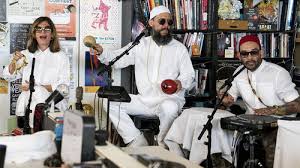
 SOUNDTRACK: ÌFÉ-Tiny Desk Concert #736 (April 29, 2018).

ÌFÉ is from Puerto Rico.  Creator Otura Mun has a fascinating history as to how he wound up creating this band:

Otura Mun started out in the world as Mark Underwood, a Goshen, Ind., native whose parents were Mennonites and who managed to snag a coveted spot on the University of North Texas’ drumline. But that was before a flight mixup landed the percussionist, composer, DJ and producer with a free trip to Puerto Rico. Two years later, he moved permanently to the island, became a Yoruban high priest and began creating electronic music that channeled the African diaspora.

Woah.

So ÌFÉ (pronounced ee-faye) combines traditional Afro-Cuban drumming and chanting with a kind of Jamaican dancehall sound.  Midway through the set, Mun explains that he drilled holes into the traditional acoustic drums and has attached electronics to them, essentially making them triggers, but with the traditional acoustic sound as an overtone.  It’s pretty amazing.

The group’s debut album, IIII+IIII, (pronounced “Edgy-Og-Beh”) is a fresh electronic take on tradition that’s winning over even the most devout practitioners of the western African-based spiritual ceremonies that form the base of their music. That’s hard to do with ritual music.

Although interestingly, for the first song “House of Love (Ogbe Yekun),” they play acoustically.

For their turn behind the Tiny Desk, Otura Mun and his ensemble unplug their drums for their first tune, an acoustic version of their “House of Love (Ogbe Yekun)”.

This acoustic sound is quite compelling in itself.  Yaimir Cabám plays a beautiful acoustic guitar (pretty, simple chords) and sings, I believe wordlessly.  Meanwhile, the rest of the band plays various percussion: simple electronic percussion and shaker and various hand drums.  Anthony Sierra on congas keeps the rhythm.

After a verse, Otura Mun joins in on vocals (with deep backing vocals from Beho Torrens).  It’s a quiet, soothing song with occasional punctuation from the drums.  When the melody finally changes after 4 minutes, it sounds like a massive shift even if it’s just a few notes.

“Prayer for Oduduwa (Para Meceditas)” opens with bells and shakers and some interesting electronic splashes before the massive amounts of electronics take over the song.  I believe Rafael Maya joins them and was not their for song one.

The sound of the second song here is what startled me when I heard the band’s debut CD last year: the parts normally performed on Afro-Cuban bata drums and chekeres are electronically treated for a traditional prayer for the deity Oduduwa.

They sing in a traditional chanting style including an awesome low chant (from Torrens) that sounds otherworldly.

By the last tune, “Bangah (Pico Y Palo),” the electronics have created a sonic playground that plays perfectly against the battery of Afro-Cuban rhythms.   “Bangah,” focuses on a reflection of the Orisha Ogún, the owner of war in the religion, whose main tool is the machete.

Mun says he wanted to play urban music you could improvise and to use percussion as the basis–Cuban rumba combined with Jamaican dancehall.  He demonstrates some sounds and then a deep rumbling bass: “we got your nasty subs that you know from that the stuff that’s nasty.”

The song is a shout out to those struggling against the vestiges of colonialism still prevalent in Puerto Rico.

They begin the song with a “breathe in” [inhale] let it out Ahhh!

I love the way the various voices are processed.  Torrens sound deeper and Cabám’s voice sounds alien and like it is three voices at once.  The various lines are interspersed with interesting vocals sounds: grunts and screams that punctuate the verses.

It’s a very cool set.

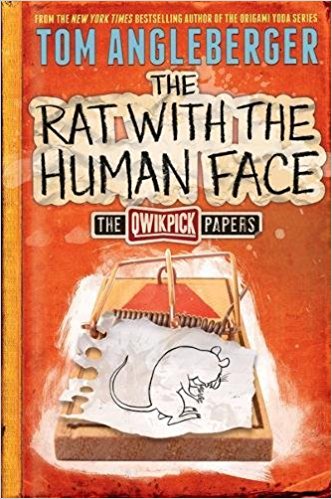
[READ: March 19, 2018] The Rat with the Human Face

In 2014, Angelberger’s first book The Qwikpick Adventure Society was reissued as Poop Fountain.  He then wrote two more books in this trilogy.

This is the second book (written in 2015) and it opens with this

This is the second of three stacks of papers this guy found in a storage room at the old Qwikpick gas station in Crickenburg.  The guy, who asked me not to use his name, called me because one of my old newspaper articles was in the first stack.  (You know I was a reporter before I wrote the Origami Yoda books, right?)

Then he reminds the readers that this book is set in 2000–kids didn’t have iPhones or smartphones.  They didn’t have phones at all and cameras took forever to charge the flash and they drained the batteries fast.

So the entire Qwikpick Adventure Society: Lyle, Marilla and Dave is back, but this story begins with bad tidings–the Qwikpick Adventure Society was disbanded after this adventure.  (more…)

Read Full Post »

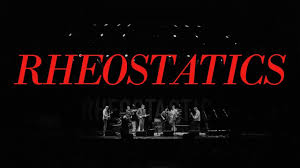
SOUNDTRACK: RHEOSTATICS-Live at Massey Hall (April 29, 2016).

After their farewell concert at Massey Hall in 2007, who would have guessed that some nine years later they’d be back again.

When I heard this show was announced I immediately bought a ticket, not really thinking about how I would logistically manage such a thing.  I was able to get it to a fan who could go, but at least I’ll have my email confirmation:

Live at Massey HallRheostatics
Fri 04/29/2016 8:00 PM
Main Floor Centre Front  Seat I-44   $29.50

This time Martin’s voice is working again.  But in the intervening years he has had something else go on with him.  I don’t know details, but there’s some kind of anxiety present–and it comes out during this show.

Amazingly, for such a big show, there is hardly any evidence of it online.  There’s a few fan videos but no full sets available.

The only performance available that I can find is the official release from (the terrific) Live at Massey Hall series.  The whole series is wonderful–professionally filmed and beautifully recorded.  The only problem is that it’s so short.  I don’t know how long the show was, but the video is only 40 minutes.

The video opens with Martin talking about his laryngitis, “laryngitis taught me to enjoy singing in a lower range.”  There’s Tim talking about seeing Devo (who were walking on treadmills the whole show) at Massey Hall and overheating from wearing a heavy coat in winter.  Dave saw lot so new wave bands who weren’t great live but were great because they were in Massey hall–it’s a forgiving and inspiring place.

Big red letters in the back of the stage spelled out RHEOSTATISC (sic).

The set opens with “King of the Past” Martin plays a lovely solo and gets some applause and the whole thing sounds great.

“Californian Dreamline” opens with some great sound effects from Martin, Hugh Marsh and Kevin Hearn.  But after the “sensamilla” bit, Martin freaks out.  He steps away from the mic and waves everyone off.

Dave jumps in, “this happened in Montreal once. It’s true.  We were opening for Moxy Fruvous, so it’s a kind of curse we’ve got to exorcise.”

The band jams on and them Martin comes back to sing and the crowd gives him a big cheer–there really is no more forgiving crowd than a Rheostatics crowd.

The opening acoustic guitar of “Claire” begins.  That’s Tim on acoustic, Dave on bass and Martin on his gorgeous double neck guitar.  The letters have been rearranged to say SORTA ITCHES and Martin plays a great solo.  Tim sounds perfect, of course.

They start “P.I.N.”  Martin sings the first line and then has an issue.  He steps away again while the band plays on. He catches himself and returns (again to encouraging applause).  Once it gets going it all sounds great.

Dave finally gets a lead vocal song.  The letters spell out SHITCOASTER as they play a flawless “Mumbletypeg.”

Then apparently the entire rest of the show happens and we get the night-ending encore–a wild and raucous “Dope Fiends and Boozehounds.” (The letters finally spell RHEOSTATICS). The song gets off to a pretty good start.  For the middle, Martin and Hugh face each other (Martin always seems comforted by being with Hugh) and then Don Kerr gets a drum solo (with sound effects from Kevin Hearn).

At the end of the song, for the “moon,” there are howls, probably from Kevin, possibly from the audience.  As they slowly fade away, Dave jumps of the drum rise and the end of the song begins.  But this is an extended jam ending.  Hugh and Kevin make some menacing sounds and then Martin plays a solo with a slide.  It’s a weird, very undramatic ending for such a dramatic band.

I have always been sad that I couldn’t go to this show, but it sounds like it would have been a real roller coaster of a night.

Read this review from Radio Free Canuckistan for the perspective of someone who was there.

Over the closing credits, Kevin Hearn’s father read “The Laughing Heart” by Charles Bukowski.  I assume he read that before the band came out (accompanied by Hugh Marsh).

I don’t know much by Bukowski, but this is great for its simple profundity.

The Laughing Heart

your life is your life
don’t let it be clubbed into dank submission.
be on the watch.
there are ways out.
there is light somewhere.
it may not be much light but
it beats the darkness.
be on the watch.
the gods will offer you chances.
know them.
take them.
you can’t beat death but
you can beat death in life, sometimes.
and the more often you learn to do it,
the more light there will be.
your life is your life.
know it while you have it.
you are marvelous
the gods wait to delight
in you.

[READ: March 5, 2018] Head Games

As with some of my favorite books, the story behind the creation is almost as interesting as the book itself.

Craig McDonald is a journalist and he says that he is often frustrated by trying to write the truth: “read five biographies about the same person and you’ll feel like you’ve read about five different people.”  With fiction maybe you can find something bordering truth.

The introduction by McDonald tells us that we will be riding with pulp novelist Hector Lassiter.  Lassiter is the protagonist of a finite arc of ten novels. The last one, Three Chords & The Truth is a sequel to Head Games and appeared in 2016.  Lassiter is a charmer, a rogue, a rake and a crime novelist who lives what he writes and writes what he lives.  Hector was born in Texas in 1/1/1900 and the arc of the novels spans the 20th century.

McDonald says the publishing history of the books is not chronological. Head Games was the first novel published.  The second was set in 1935 and features Hemingway prominently.  Other books hopscotched through the decade. They have recently been reissued and presented in roughly chronological order.

The novels “follow secret histories and underexplored aspects of real events.”  They’re set in real places and use history and real people to drive the plots. (more…)

Read Full Post »

SOUNDTRACK: KING CRIMSON-The Elements Of King Crimson – 2015 Tour Box (2015).

The Elements box set has become a tour staple since the band reformed in 2014.  This is the second set and it contains another fascinating cross section of music from throughout Crimson’s existence.

In addition to the music, these sets contain a booklet that is chock full of pictures and usually an essay that gives context to what you’re about to hear.

It also includes the seven Principles of King Crimson

  1. May King Crimson bring joy to us all. Including me.
  2. If you don’t want to play a part, that’s fine!
  3. Give it to someone else – there’s enough of us.All the music is new, whenever it was written.
  4. If you don’t know your note, hit C#.
  5. If you don’t the time, play in 5. Or 7.
  6. If you don’t know what to play, get more gear.
  7. If you still don’t know what to play, play nothing.

Of the four boxes, I think this is my favorite–although the second disc of 2017 is pretty awesome.  I really enjoy the first half of the first disc.  It’s all instrumental (even tracks that have words are instrumental versions).  It’s a great collection of  sometimes pretty, sometimes not, 70s prog rock.

The eight-minute instrumental version of “Epitaph” (Steven Wilson 2015 instrumental mix) is gorgeous.  Even though I like the words just fine, there’s something really thrilling about removing them on this song.  “Catfood” is (somewhat obviously) a rather goofy lyric, so hearing this complex song without words is also a treat.  “Bolero – The Peacock’s Tale” is listed as a Tony Levin overdub.  I don’t know exactly what that means, as it is taken from the Lizard recording sessions, but the song is lovely.

In addition to longer, complete songs, the Elements sets feature short snippets.  Like the two-minute extract of “Islands” (with oboe).  Or the four-minute jazzy “A Peacemaking Stint Unrolls” which is clearly the foundation for “Lark’s Tongues in Aspic.”

Although the set is largely chronological, there’s an excerpt from the 2014 tour rehearsals in which Fripp discusses how the band knows all of their parts.  They give a mellow example of how he and Jakko will play “Larks’ Tongues in Aspic (Part II)” which is followed by the full 6 minute version from 1974.  It’s followed by an 11 minute live version of “Fracture” from 1974 (the previous box’s version was from 1973).

There’s a “guitar extract” of “One More Red Nightmare” (less than a minute long)  from 1974 followed by a full performance of the song from 2014 which doesn’t feel like a jump of forty years in any way.

The disc jumps to the 1980s era with an extended remix of “Elephant Talk” followed by 1981’s “Absent Lovers.”

1983’s “Larks’ Tongues in Aspic Part III/Sleepless” is staggeringly good.

Disc Two suffers a bit in comparison, which I find surprising as I really like the later era of King Crimson–the more metal sounding stuff is really intense.

I enjoyed the first part–the late 1990s; work.  “Jurassic THRAK” sounds huge, and 2014’s drum solo “The Hell Hounds of Krim” works fine as a connector to the next four songs which highlight the late 90’s abrasive guitars.  It’s about 20 minutes of noisy coolness. “VROOOM,” “Coda: Marine 475” and “ProjeKction” (Performed by ProjeKct Four) all showcase that complicated music really delightfully.

Then things start to slow down somewhat. “Larks’ Tongues in Aspic – Part IV/the construKction of light” suffers in my mind because of the smallness of the band.  With only four members playing, the song doesn’t feel like a huge organism, it feels more like two guitarists playing next to each other.  Mind you, it sounds amazing if you can get away from the fact that it doesn’t feel terribly “full.”  Of course, I may be just spoiled from the great versions of LTIA I’ve seen with the 7-piece band.

Things really slow down and chill out for “Sus-Tayn-Z” (Performed by ProjeKct X), “Power to Believe,” “Ex Uno Patres” and the nine minute exceedingly mellow (with vocals) “The Light of Day.”  I do not love this style of Crimson.  It works as a palette cleanser between heavy songs, but too much is too much.

The “Ba Ba Boom Boom” drum solo and “ATTAKcATHRAK” ramp things up with the kind of noise that segues nicely into the blistering 2014 version of “21st Century Schizoid Man.”

This box set once again demonstrates that King Crimson is a multi-headed beast, liable to go in any direction at any time.

[READ: January 6, 2018] Heroes of the Frontier

Somehow I missed that Eggers had written this book. I saw it in the bookstore recently and immediately grabbed it and devoured it.

I was worried that it was going to be a woman-moves-off-the-grid-and-life-gets-better story, but it’s not that at all.  It’s far more complicated and a bit more unsettling.

Josie is a dentist in Ohio.  But as we meet her, she and her children are riding in a crappy rented RV through the highways of Alaska.

Josie has a large sum of cash with her.  She had been sued by a patient for a sum she could not afford.  Rather than trying to raise th e money to save her practice or giving it over to woman, she sold her practice in total to a dentist friend.  So now, she has the cash and, temporarily, no future.

She was also in a terrible relationship.  Her children’s father, Carl, had taken off on them.  He was always aloof and a loser, but this disappearance to Florida was something else entirely.

She took her kids, Paul (8) and Ana (5) and got outta Dodge.  The children are an interesting pair.  Paul is nurturing and worrying, especially about his sister. He looks after her more closely than their mother ever does.  Ana, meanwhile, is a disaster–she seems to have a natural gift for how to break something–she can find the weak point of any structure or situation and cause havoc wherever she goes–and Paul is happy to fix the situation.

Why Alaska?  Because she has a stepsister (sort of) who lives in Homer.  Sam is independent and successful (which Josie was as well, although she was unhappy). (more…)

Read Full Post »

[LISTENED TO: Summer 2017] Middle School: The Worst Years of My Life

download (50)I might be one of the few people in America to have never read anything by James Patterson.  Well, C. really enjoyed this series (and his other books for young readers) so we decided to listen to this on a car ride. (Both kids had seen the film already, although I hadn’t).

I have to say that right off the bat I was turned off by the introduction of this book because there was this hard rocking guitar that they played through about 3 minutes of opening text.  And it was too loud!  It was really hard to hear the narrator.  I kind of tuned out because I feared that the whole book would feature this (it doesn’t).  And while I won’t say I was confused by what I missed, I did wonder if I’d missed some things that were revealed later (also, some of the main character’s motivation).

Rafe Khatchadorian is starting Hills Village Middle School.  It’s a new school (sixth grade).  Rafe seems to have a hard to succeeding in school in general.  There’s also a lot going on at home.  His mom has been dating a jerk named Bear.  Bear is unemployed, and living with them while Rafe’s mom is working two jobs and is hardly ever home.

The only person who seems to help Rafe cope with things is his friend Leo the Silent.  Leo doesn’t talk much, but he is an awesome artist.  And he also encourages Rafe to do things that maybe he shouldn’t.

When Rafe arrives at school, he is given a rule book with over 100 rules that he must follow.  Given the possibility of hanging out, being good and following the rules or having fun and enjoying school, he and Leo make a choice.  And they come up with “Operation R.A.F.E.” (which stands for Rules Aren’t For Everyone).  The operation is set up like a video game.  Rafe is going to try to break every rule in the handbook. Leo will award him points.  But he will also only have three “lives,” which he will lose if he gets caught or otherwise fails in his quest. (more…)

Read Full Post »

« Newer Posts - Older Posts »