Feeds:
Posts
Comments

Archive for the ‘War’ Category

SOUNDTRACK: PINK FLOYD-Alan’s Psychedelic Christmas (1970).

I’ve always loved Pink Floyd’s Atom Heart Mother.  I have no recollection of how I stumbled upon this live bootleg, but when I saw that it contained one of the few live recordings of “Alan’s Psychedelic Breakfast” I had to give it a listen.

So this show is from 1970 and was recorded in Sheffield just before Christmas (Nick Mason evidently introduced the show while wearing a Santa Claus suit).  The sound quality is pretty good given that it is 40 some years old.  There’s a bunch of hiss, and the quieter talking bits are hard to understand, but the music sounds fine.

So the show opens with “Alan’s Psychedelic Breakfast” and what is so silly (and I assume funny to watch (a little less funny on bootleg) is that the band made and ate breakfast on stage.  As Collectors Music reviews writes: “This is the only known live recording of ‘Alan’s Psychedelic Breakfast’ but also hosts an amazing performance by the band which included them making morning tea on stage which is audible. Just like most of their earlier performances, the performance of “Alan’s Psychedelic Breakfast” slightly differs from the album version due to some nice jamming done by the band, especially Gilmour with his delay pedal.” As I said, some of the audio is static and hard to make out in this song–the band is conversing during their tea, but who knows what they are saying.  And who know what is o the radio.

Then the band gets down to business.  One of things I love about this period Floyd which is so different from their later work is that the played really long spacey jams often with very few lyrics.  So we get a 12-minute version of “The Embryo” (the only available studio version is a very short one on Works which is quite a shame as the song is really good).  A 14-minute workout of “Fat Old Sun” which is usually only about 5 minutes.

There’s a great version of “Careful with that Axe Eugene” and “Set the Controls for the Heart of the Sun” (15 and 12 minutes respectively).

Then in a killer version of “Saucerful of Secrets,” just as they get to the end, there’s a power failure (at least according to the song title).  The band is rocking out just hitting the climax when suddenly all you can hear are un-miked drums.  Ha. After a couple of minutes, power comes back and they pick up from just before where they left off.

Then the band launches into a full 31-minute version of “Atom Heart Mother” complete with horns and choir  of voices.  It sounds quite good (the horns seem a little sketchy but that might be expected with such staccato music).

The set ends and the band needs an encore.  Apparently they couldn’t remember anything else because they just re-do the last few minutes of “Atom Heart Mother” again.

One of the things that cracks me up about these shows in the 70s in England, is that the audience is so polite. Their applause sounds like a classical theater rather than a rock show.  And with a bootleg you know they didn’t try to make the audience sound bigger than they are.

The whole package is a fun trip.

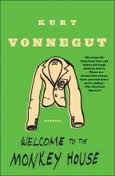
[READ: August 17, 2012] Welcome to the Monkey House

So this book is Vonnegut’s second collection of short stories.  But there’s a twist.  This collection contains all of the short stories from Canary in a Cat House except one. It also contains many of the stories he had written since then as well as stories not collected in Canary.  So you get basically 18 years worth of stories here.  And it’s interesting to see how much he has changed over those years (during which he wrote 5 novels, but not yet Slaughterhouse Five).

Since I read Canary a little while ago (see comments about the stories here), I knew that his 50’s era stories were influenced by WWII.  So it’s interesting to see how his stories from the 690s are not.  They deal more with day to day things and, of course, abstract concepts about humanity, although politics do enter the picture again once Kennedy is elected .

  • Where I Live (1964)

This was a good story to open with because it shows the then-later-period Vonnegut’s mindset and location.  This story is about Barnstable Village on Cape Cod (where I assume Vonnegut lived since there are a number of stories set on the Cape).  This is a very casually written story about an encyclopedia salesman who goes to the local library and sees that their two encyclopedias are from 1910 and 1938.  I enjoyed this line: “He said that many important things had happened since 1938, naming among others, penicillin and Hitler’s invasion of Poland.”  He is told to talk to the library directors who are at the yacht club.  I love the attitude that Vonnegut creates around the village which “has a policy of never accepting anything.  As a happy consequence, it changes about as fast as the rules of chess.” For really, this story is about the Village more than the encyclopedia salesman, and it’s an interesting look at people who move into a new place and want it to never change. (more…)

Read Full Post »

SOUNDTRACK: KISS-Hot in the Shade (1989).

Before this album came out, Paul Stanley did a little club tour.  My friends Matt and Nick and I got to see him in Wilkes Barre, PA. It was a pretty great show, and intimate in a way that Kiss shows can never be.  So we were pretty psyched for this new album.  And yes, this album holds special memories or me because we used to listen to it a lot after the show.

The biggest problem with this album is bloat.  I don’t have any kind of evidence to back this up, but this was the first Kiss album that took advantage of the compact disc’s length.  And so it’s easily twenty minutes longer than most Kiss albums (and the later albums had some filler on the already).  Plus it’s  almost longer than Kiss’ first two albums combined.     That’s just too much.

Even Kiss’ weaker albums usually start with a good song.  Not so much Hot in the Shade.  “Rise to It” is pretty generic even by mid 80s Kiss standards.  They try to make it fun with the Ri–e i-e-i part, but it doesn’t quite make it.  “Betrayed” is a bit more of a rocker and is quite a good song.  Lyrically it’s not so great (it’s funny to think of Gene Simmons trying o be down with the common man), but it rocks pretty hard.  My friend Matt and I liked “Hide Your Heart” quite a bit when it came out.  The chorus: Ah ah ah ah, hey hey hey do do do do do do do do do” is pretty bad though.  “Prisoner of Love” musically sounds like Kiss of old, until the verses come in.  “Read My Body” is really catchy until you realize it sounds just like “Pour Some Sugar on Me.”  That’s embarrassing.  Although the metaphor is well done, at least.  “Slap in the Face” might as well be “Let’s Put the X in Sex” from Thrashes Smashes and Hits.

Then comes the cheesiest ballad in Kiss’ history—actually written by Michael Bolton, yes Michael Bolton.  And man do I love it.  Paul is in full voice, he sounds great, the harmonies are spot on.  It is the cheesiest metal ballad ever, but I never get tired of it.  It even has an acoustic guitar solo—pre-made for Unplugged!  “Silver Spoon” is a good rocker, with a fun chorus.  Although the gospel singers at the end are a bit overkill—it seems silly to have invited them in for 90 seconds of singing.  “Cadillac Dreams” is just a bit too close to a Beatles song for my liking.  “King of Hearts” is a decent song, and “The Street Giveth and the Street Taketh Away” (were Kiss really hard up for money?  what’s up with these lyrics?).  We had an in-joke on my dorm floor, so I can never take this song seriously (that may also be because they steal the “Hey man” right out of David Bowie’s mouth).  Love Me to Hate You” is pretty generic although catchy.  “Somewhere Between Heaven and Hell” is also a decent song.

“Little Caesar” is the first (and only, really) song that Eric Carr sang lead vocals on.  As a singer he’s a really good drummer.  The song is pretty generic too and is unfortunately given the same name as a bad pizza company.  “Boomerang” has a good fast pace (once again, not unlike a Van Halen song).

[READ: August 11, 2012] “The Cryptozoologist”

This is yet another short story broken down into lots of little sections.  What’s neat about the way that this one is done is that because the narrator is a cryptozoologist, each section is headed by a cryptid (animals whose existence has not been proven).  But in addition to discussing these animals, the sections also describe a history of the narrator’s life.  His life in this field started when his grandfather told him about a snake which latched onto the end of its own tail and rolled away from its pursuers (section title: Hoop Snakes).  His grandfather never lied, so it had to be true.

It proceeds through The Mušhuššu (a serpent dragon spoken of in ancient Babylon), through the Jenny Hanivers (jeunes d’Anvers), into The Wolf of Ansbach (believed to be an old Bürgermeister who was transformed into a werewolf), and on to The Batutut, a monkey man in Laos.  Most of these sections describe the origins of the cryptids (and his lack of success at spotting them), but The Batutut section is also about himself and how he was in the war when this particular cryptid entered his life.

Then we move on to The Altamaha-Ha in Southeastern Georgia, while Giglioli’s Whale, which had two dorsal fins dates to 1867.  The Mongolian Death Worm, said to live in the sands of the Gobi desert is a cryptid that he actually experienced in the American desert.  he didn’t see it, but he could feel its presence.  The Madagascar Tree is a killing tree–it looks like a pineapple and eats sacrifices.  This story was told by two adventurers who saw the tree eat a woman.  The best part of is that there is no proof that the two men who are credited with telling the story actually existed themselves. (more…)

Read Full Post »

SOUNDTRACK: RICHARD THOMPSON-Grizzly Man Soundtrack (2005).

This is a largely instrumental soundtrack by Richard Thompson.  It features some wonderful guitar work (no surprise there).  There are several slow acoustic numbers (“Tim & the Bears,” “Foxes”–which is in the style of his old traditional folk ballads) there’s also the slow impassioned electric guitar solo (set over a simple beat) of “Main Title.”  “Ghosts in the Maze ” is a dark piece, the exact opposite of “Glencoe” a traditional-sounding song, both of these are under two minutes long.  “Parents” adds a cello, which means a sombre song.  “Twilight Cowboy” is one of the longer pieces, and it really conveys an openness of nature.

“Treadwell No More” is a slow six-minute dirge type song.  “That’s My Story” has spoken dialogue by Treadwell, over a simple unobtrusive guitar.  But as the title of the record says, Music composed and performed by Richard Thompson.  Which means there are other musicians on the soundtrack too.  “Small Racket” is where things start to get noisy and a little uncomfortable.  There’s some squeaks and slashes of sound, but it’s mostly a tense guitar feel.  Then comes the darker, scarier stuff.  “Bear Fight,” is a series of cello noises and swipes.  “Big Racket” is indeed that, with guitar from Henry Kaiser and noises from Jim O’Rourke.  “Corona for Mr Chocolate” is all Jim O’Rourke, it’s also odd noises and moods.  None of these three songs are terribly off-putting but they reflect a very different tone.

The album ends with “Main Title Revisited,” which is what it says and “Coyotes” by Don Edwards which has some coyote yodels.

It’s a good soundtrack, really conveying what the movie is about, and while not essential Richard Thompson, it is still some great guitar work

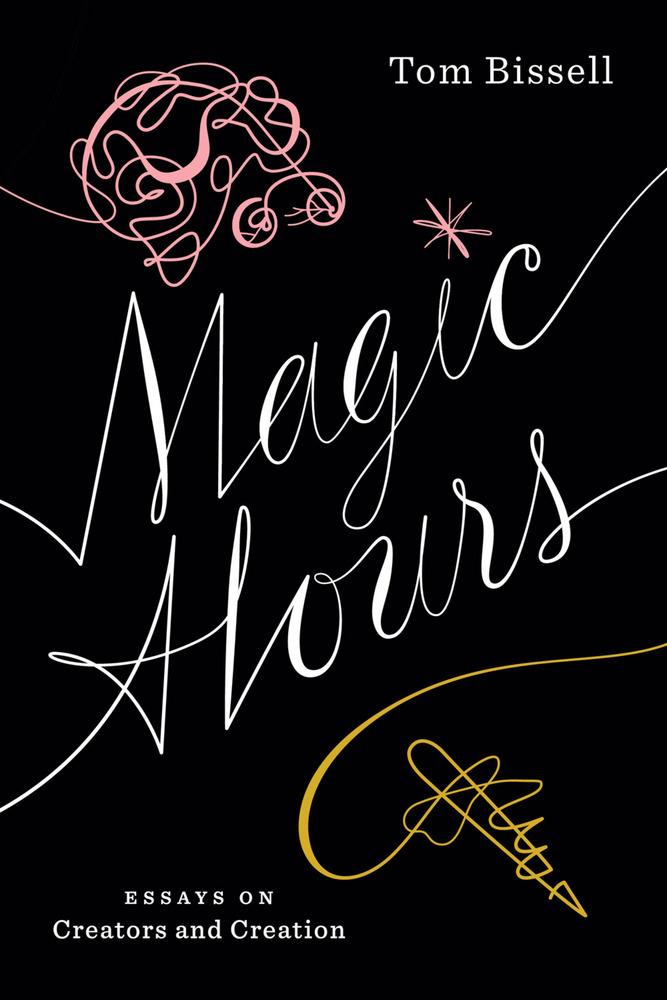
[READ: July 23, 2012] Magic Hours

I thought that I had never heard of Tom Bissell, but I see that I have read three of these articles already (I guess I don’t always pay attention to the author’s name).

This collection of essays comes from the last eleven years (2000-2011).  The articles have appeared in The Believer & The New Yorker (these are the ones I have read) and Boston Review, Harper’s, New York Times Magazine, Virginia Quarterly Review, New York Times Book Review and Outside (which I am starting to think I should really check out more).

Primarily they are articles about writing–he looks at fiction, non-fiction, film or a combination of them.  Bissell is a strong writer and he does not hold back when he sees something he likes or dislikes.  I found his articles (all of which are quite long–about 30 pages each) to be engaging, funny and very persuasive.  I’m really glad I read the book (and was even glad to re-read the articles that I had read before). (more…)

Read Full Post »

SOUNDTRACK: REGINA SPEKTOR-Soviet Kitsch (2004).

After the poppy, polished joy of Far, I went back and decided to check out the one other Regina Spektor album I knew of–Soviet Kitsch.  This album has always stuck with me as an interesting title.  I ordered it from Amazon and was bummed to get a little cardboard sleeve rather than an entire disc (her artwork is really nice).  So I was a little biased against this disc from the start.  The music also doesn’t have any of the polish and sleekness of Far.  So it took a while for me to see the beauty within.

This album is largely simple piano (with strings and other addition), but it’s a much more raw album (akin to something like Tori Amos’ Little Earthquakes).

“Ode to Divorce” is a quiet piano song with some catchy moments.  “Poor Little Rich Boy” has some interesting percussion to accompany the piano.  And in this song you know that she’s in a slightly different territory than Tori Amos, which is good–the feeling is similar but the end result is unique.  Lyrically the album explores different ideas and on this song the repeated refrain of “you’re so young you’re so god damn young” is a little unsettling.  “Carbon Monoxide” introduces a more full sound (bass and drums).  And Regina shows off yet another side of her personality–playful, flirtatious and now almost childish (“C’mon, daddy.”)

“The Flowers” introduces another new aspect to the disc–more aggressive/borderline classical piano playing (rapid, loud notes).  It suits her style quite well and this song is  a definite highlight.  The end of the song has a very Russian-style nonsense syllable sing along which is very fun.   “Us” adds strings to the song and some great sing along parts.  “Sailor Song” is a funny song from a sailors perspective with the sing-along shanty chorus “Mary Anne’s a bitch” (complete with broken glass sounds).

The next song “****” is a whispered little conversation in which a young girl asks Regina when the next song is coming.  It makes the next song, “Your Honor” even more loud.  It really stands out on this disc because it is a full on punk song with screamed vocals and band work from Kill Kenada (who I don’t know anything about).  The song is about getting in a fight to defend a woman’s honor.  The slow piano middle section features the amusing question “gargle with peroxide a steak for your eye but I’m a vegetarian so it’s a frozen pizza pie…you fight for my honor but I just don’t know why.:”

“Ghost of Corporate Future” has a kind of lullaby feel and some amusing lyrics, ” When he gets to the crowded subway platform/He takes off both of his shoes/He steps right into somebody’s fat loogie/And everyone who sees him says “ew”/Everyone who sees him says “ew”/But he doesn’t care/Cause last night he got a visit/From the ghost of corporate future/The ghost said take off both your shoes/Whatever chances you get/Especially when they’re wet.”  It’s all sung in a manic style over a quiet piano melody.

“Chemo Limo” is certainly the highlight of the disc.  It’s 6 minutes long and is quite dramatic.  The basic premise is that dying from cancer sucks, so she’s going to live instead: “I couldn’t afford chemo like I couldn’t afford a limo/And on any given day I’d rather ride a limousine.”  There are several sections in the song–allowing Regina to show off her dynamic and dramatic vocal range (serious falsettos) and very impassioned sections, “Oh my God Barbara she looks just like my mom”  She even does some (very mild) beatboxing at the end of the song.  “Somedays” is a pretty, simple ballad, with some great vocals although it kind of gets lost at the end of the disc.  Although I was not that into this record when I first got it, repeated listens revealed wonderful surprises inside.

[READ: July 15, 2012] Canary in a Cat House

This is Kurt Vonnegut’s first collection of short stories.  It is currently out of print.  That’s not a big deal because almost all of the stories were later collected in Welcome to the Monkeyhouse.  But I thought it would be fun to read them in the original book.  When it came in from the library I was surprised at how tiny it was.  But what was really surprising was how small the print and how small the margins were.  They really crammed stories into collections back then!

These stories were all written in the 1950s and what was also surprising to me was how serious and unfunny some of those first stories were.  I realize that these were some of his first works, but the Vonnegut voice is so distinctive–a misanthropy tempered by jokes and absurdity, that I was surprised that some of these stories were not only serious but seriously emotional as well.  It’s been clear from all of his stories that WWII impacted his life tremendously (as one would expect), but in these early stories he talks very deliberately about violence and the cold war and the aftermath of WWII.  It’s pretty intense.  By the end of the book the more typical Vonnegut voice surfaces–sci-fi kinds of stories with dark humor involved.  It’s quite a collection. (more…)

Read Full Post »

SOUNDTRACK: PINK FLOYD-the final cut: a requiem for the post war dream (1983).

My college experience seems very unlike many people’s (especially the stories I hear from you young kids today).  And I’m just talking musically.  I went to college in the late 80 and early 90s.  And my freshman year, the most popular albums on campus  were Steve Miller’s Greatest Hits, Squeeze’s 45s and Under and Pink Floyd’s The Wall.  My friend John also loved this album.  And I think we listened to it hundreds of times, blasting out of dorm room windows.

It’s kind of strange that college freshmen would embrace an album about (more or less) Roger Waters’ father dying in WWII, especially since none of our fathers had died at all, much less in WWII.  But angst finds its home I suppose.

This album is not a sequel to The Wall, but it has echoes (see what I did there) from that album.  There were touches of WWII in The Wall.  And sonically a lot of this album sounds similar.  The big difference is that Roger Waters wrote pretty much the whole thing, long time keyboardist Richard Wright left the band and David Gilmour, sings on only one song.  So, it’s practically a solo project (and it fees a lot like Waters’ solo album The Pros and Cons of Hitch Hiking).

This album seems to have alienated fans of Floyd. But I happen to like it quite a lot.  And, I it a lot while reading Gravity’s Rainbow.

“The Post War Dream” opens with military sounding horns and funereal organs, as befits an album about the war.  It also has an intriguing assortment of sound effects (I wonder where he gets most of this stuff).  It sounds very Pink Floyd–Roger Waters’ voice is pretty unmistakable).  But “Your Possible Pasts” sounds even more Pink Floyd.  Evidently this album has a number of songs that were cast offs from The Wall.  If that’s true, this is probably one of them, as it sounds like it could easily fit on that album–especially when the keyboards kick in during the second chorus (even if Richard Wright wasn’t on the album).  And the guitar solo is so David Gilmour–that’s what you call a signature sound.

“One of the Few” has something I love from Floyd–whispered vocals (“teach”) and creepy laughing; it works as a nice transition to the louder “The Hero’s Return.”  This track is very complex–all kinds of tonal shifts, echoed vocals and bitter lyrics.  It explodes into “The Gunner’s Dream,” a gentle piano ballad about a soldier being shot down.   It’s a surprisingly tender song (although not really given the topic of the album) and lyrically it is really impressive.  I don’t really care for the saxophone solo–it’s not my thing, but I think it actually works well for the song.  And, again the end sounds like it came from The Wall (Waters is amazing at angsty screams).

“Paranoid Eyes” is a delicate song that works, for me, as lead in to the wonderful “Get Your Filthy Hands Off My Desert” a short, string-filled somewhat goofy song that is very bitter under its seeming jocularity.  It’s followed by “The Fletcher Memorial Home,” a really dark track about old age with a lot of current political commentary thrown in (although the “group of anonymous Latin American meat-packing glitterati” always confused (and amused) me.  So even though it is “about” WWII, there’s plenty of anger at current political climate, right Maggie?.  Boom boom, bang bang, lie down, you’re dead–take it away David…

“Southampton Dock” is another gentle song, more of a story with musical accompaniment.  It segues into “The Final Cut” a fitting piano end to a sad album about death and loss, that also happens to reprise song elements from The Wall.

But that’s actually not the last song.  We get the incongruous “Not Now John.”  It really doesn’t fit with the album at all (I happen to love it, even if it doesn’t).  It’s way over the top, including the how-in-the-hell-did-they-think-this-would-be-a-single? opening lyrics: “fuck all that we gotta get on with this. (fuck all that).”  And yet, single it was, reaching #7 in the US.  Man it rocks.  Oi, where’s the fucking bar, John?

The album ends properly with “two suns in the sunset” a mostly acoustic track that returns the mood to more sombre feelings (except for the rocking section where you drive into an oncoming truck).  Never has futility felt so upbeat.  For an album as personal as this is, it really draws the listener in.  Of course, if you don’t want to be drawn in, it’s easy to resist, as many have.

The reissue (which I don’t have), includes the cool song from The Wall movie, “When the Tigers Broke Free.”  Which I imagine would work quite well contextually.

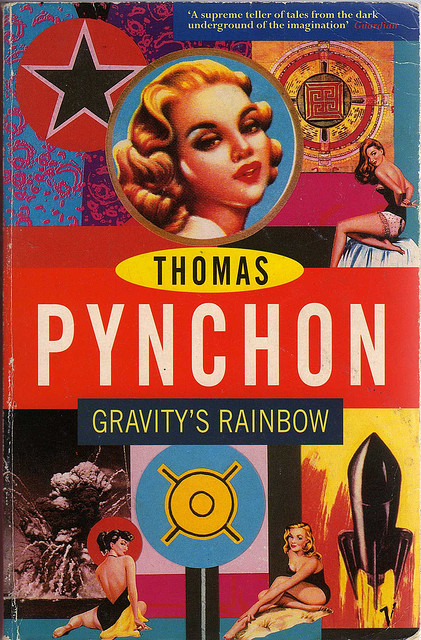
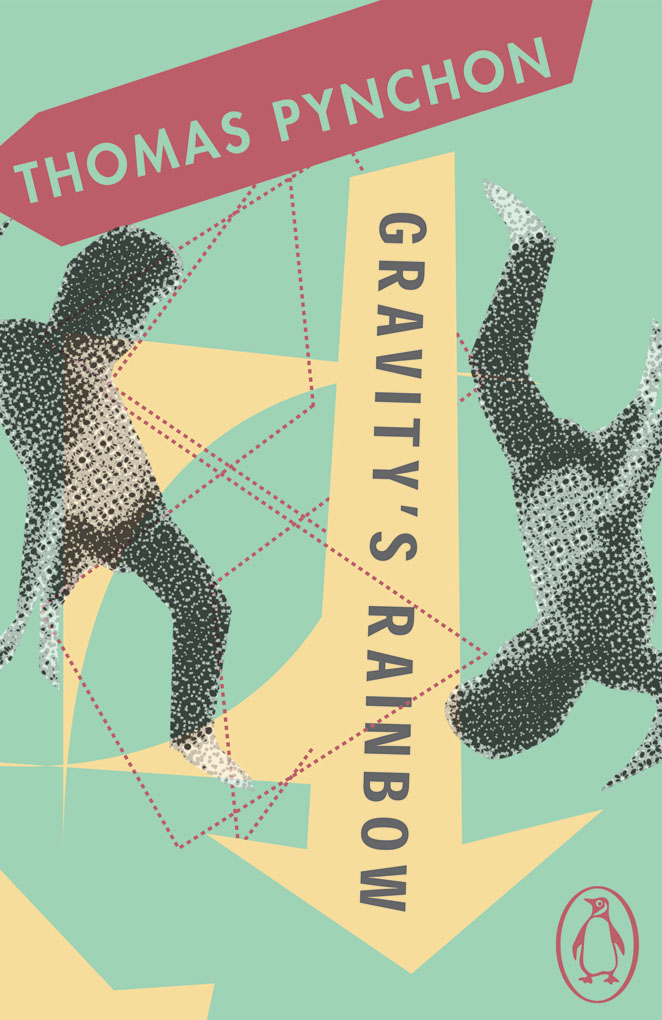
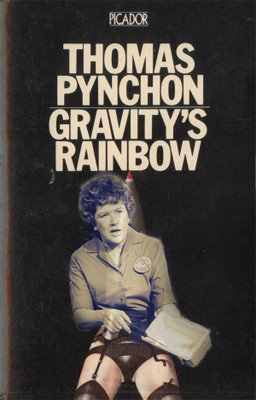
[READ: Week of April 30] Gravity’s Rainbow 4.7-end

And the book ends with a bang and a lot of leftover questions.  My first reaction is that I can’t get over Pynchon spent so much time in the last 60 pages talking about things that had nothing to do with the “plot” per se.  I never really felt like the story was all that hard to follow until the end, when Pynchon let loose the dogs of war on his writing.  There are several pages of stream of consciousness reverie where I was completely at a loss.  Of course, this has been true for much of the book–Pynchon would talk about something and then cycle back into it, filling in the gaps that he left open.  The whole book seemed to have this kind of coiled effect (perhaps a slinky). He would set up a scene as if you had been there all along.  And while you were puzzling over just who the hell he was talking about, he would flashback to whatever you needed to fill in the missing pieces.  And he is still doing that as the story comes to a close.

And although it starts out with a familiar figure, he quickly takes something and has a massive hallucination.  Is this even true? (more…)

Read Full Post »

SOUNDTRACK: PHOEBUS CARTEL-“Difficult,” “Asylum Energy,” “November”

If I had any idea how many bands were named after things in Gravity’s Rainbow, or were perhaps tangentially related to it, like this one, I would have never bothered mentioning bands that I actually know.

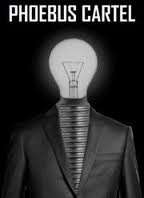
Phoebus Cartel is a heavy metal band based out of Denmark.  And…  well, that’s really all I know about them.  I found this image for them online which linked me to their site on bandbase (if you must, you can also get it in English–although there’s no extra information).

There are three songs here on the site.  They are all sung in English and all have heavy guitars.  The band is clearly heavy metal inspired, but they also classify themselves as “alternativ.”

“difficult” has elements of Marilyn Manson in the singing (and even the melody). It’s a very catchy interesting song and very heavy.  “asylum enemy” has some great heavy chugging guitars. I like the part in the middle where we just get two heavy notes and a pause.  It reminded me a lot of Tool.  “November” has the most normal sounding singing in the bunch–it’s also the least metal sounding–more like heavy alt rock.  Although the break in the middle with slow guitars is nicely atmospheric.

I really enjoyed all three songs.  I’d like to learn more about these guys but I literally can find nothing else about them anywhere.

[READ: Week of April 23] Gravity’s Rainbow 4.1-4.6

Section 4, the final section is here at last.  We are out of The Zone and into The Counterforce.  The epigram here is by Richard M. Nixon.  Hilariously it is simply, “What?”  Unfortunately, I found it to be way too apt for my own feelings while reading this pretty confusing section.  While some sections advanced the “plot,” there were a ton of new characters added and, even more confusingly, a bunch of scenes that were either hallucinations or fantasies  or both.  And none of these do much for you sense of what the hell is going on. (more…)

Read Full Post »

SOUNDTRACK: THE MOUNTAIN GOATS-“Drug Life” from Score! 20 Years of Merge Records: The Covers (2009).

 I could tell this was a Mountain Goats song right from the start–it’s lo fi and yet it sounds clear (especially the vocals). Normally with The Mountain Goats you talk about the lyrics, but since he didn’t write the song, there’s not much to say about them (in this paragraph anyhow).

The original, by East River Pipe is also very lo-fi.  It’s a very catchy song and it’s all about drugs: (“If it comes down to the drugs or you…baby we’re through.”).  The original is guitar and keyboards and Cornog’s straightforward singing.  The cover is simply acoustic guitar.  It’s a little faster (and a little shorter) and because I like The Mountain Goats, I prefer the cover.

Although really, they’re not very different.

[READ: April 16, 2012] “Transatlantic”

This story was out of my comfort zone–it’s about army men and airplanes, that’s not my scene, man.  And after reading the first few paragraphs, I wondered if I should keep reading it.  But McCann wrote a compelling story and I’m really glad I finished it.

The story is basically an account of two men, Teddy Brown and Jack Alcock, as they attempt the first transatlantic flight in their modified bomber called The Vickers Vimy.  Anyone with a working knowledge of the flight, or post WWI history knows that these are two real historical people.  I do not have such a working knowledge, so I had no idea that this was based on a true story.  If you know anything about them (and I swear, Google either of them and you will find all the details that you need) then you know how the story turns out.

I didn’t know how the story turned out and I found it thrilling. In part that’s because it’s an exceptionally exciting moment in history–two former army men modify a bomber and try to fly from Newfoundland, Canada to Ireland.  And really, there’s no way it should work–bombers don’t have enough fuel, they have no radar.  It could take days.   Hell the planes don’t even have a windshield that covers them.  But the excitement is also because of the way that McCann tells the story. (more…)

Read Full Post »

SOUNDTRACK: MERCURY REV-Deserter’s Songs (1998).

Mercury Rev has changed a lot as a band over the years.  They began as a noisy punk outfit who was getting kicked off of airplanes, and by this album (seven years after their debut), they’ve turned into a kind of sweet orchestral pop band (a transformation not unlike The Flaming Lips).  I got into them with their album before this See You on the Other Side with the seriously rocking song “Young Man’s Stride.”  This album came as something of a shock, it is often so delicate.

I used to really love this album a lot and then one day I thought that it was a little irritating sounding, and that has stuck with me ever since.  The irritation comes from a combination of the really high-pitched vocals and the musical saw that seems to accompany most songs.  However, I hadn’t listened to it in quite some time and hearing it now, I found it enjoyable once again.

It opens with “Holes” a five-minute song that layers many different instruments (musical saw, of course, and horns) over Jonathan Donohue’s timid and wavery voice and gentle keyboard washes.   “Tonite It Shows” continues in the pretty vein–a beautiful song that name checks Cole Porter.  “Endlessly” features more unearthly soprano singing (there’s a lot of high-pitched music on this disc).  It has a lovely melody and references “Silent Night” on the flute.

The first highlight has to be “Opus 40” which tempers all of the potential irritants but maximizes the beauty and wondrous songwriting.  It soars to the heavens but stays grounded with a cool retro organ solo.  The other major highlight is “Goddess on a Hiway.”  “Hiway” is even better than opus 40 at blending the wonderful elements of this album.

“Hudson Line” is an anomaly on the disc–raw saxophone solo and low vocals change the pace of the album quite a bit.  “The Funny Bird” actually sounds like a Flaming Lips song circa 2008.  The Flaming Lips comparisons aren’t all that surprising since Donahue played with the Lips back in the early 90s.  And “Delta Sun Bottleneck Stomp” is a pretty raucous song (“stomp” is correct).  It has a traditional feel and ends the disc on an upbeat note.

So, yes, although some of the effects on the disc veer into annoying, it’s still a great disc overall.

[READ: Week of April 16] Gravity’s Rainbow 3.25-3.32

We have finally exited The Zone this week.  The lengthy Section 3 has come to a close with an unceremonious send off to Slothrop, who I assume we’ll see in Section 4, with the reintroduction of old characters and with a chance meeting that made me go wow!

I’m really amazed at the interconnectedness of the book.  While I didn’t think that things would be unrelated, the number of unexpected connections is really tremendous.  And while I missed many of the other characters, seeing the occasional one pop up is pretty exciting.

I’m happy to leave the Zone, not because I didn’t like it (although I admit I Slothrop’s slog from one place to another was getting a little tiring), but because I really want to see how he wraps all this stuff up.  Connections are popping up everywhere, and I feel like he’s doing a whole lot more than I initially thought. (more…)

Read Full Post »

SOUNDTRACK: TEGAN AND SARA-“Alligator” on CDC Kids’ Mamma Yamma (2010).

Tegan and Sara take a slightly different approach than the other artists on Mamma Yamma.  Rather than creating a new song, they took their hit “Alligator” and made new words for it (much like many artists have done on Sesame Street).

The melody is exactly the same (which is good, as it’s a really catchy song). But rather than being about a failed relationship, it’s about alligators.

Old lyrics: Run around on me, I’d sooner die without

New lyrics: Run around a tree, skip and jump about

It’s a cute version and the band sounds very good.

I really enjoy these introductions to interesting musicians on kids shows.  I wonder if kids actually like seeing grown up musicians like this.

You can watch it here:

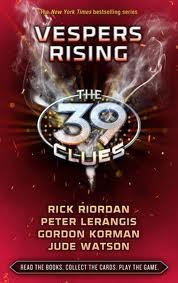
[READ: April 20, 2012] Vespers Rising

I finished The 39 Clues series last year. Or so I thought!  After completing books 1-10, I found out that they were planning a whole new series.  And they began with this transitional book, which they called #11 and which was co-written by four of the prominent authors.

Vespers Rising is actually four short stories that trace the history of the Cahill family and their feud with the Vesper family.  The Vespers were not a part of the first series at all.  In the first series, the 39 Clues were a kind of Amazing Race for Cahill family members.  (I’ll get to some details about the family in a moment).  It was a kind of private race for the prize–which was a life-enhancing serum.  But this book introduces a new villain to the story and explains that the villain has been there all along, just lurking.

Rick Riordan wrote the first story in this book takes us back to the beginning.  In 1507, off the coast of Ireland, Gideon Cahill invented this serum.  He was and alchemist, seeking an antidote for the Black Death which was ravaging Europe.  He was working for Lord Damien Vesper, a man bent on power.  Vesper wasn’t interested in helping people with the Black Death–he had no real value for life–however, he was interested in the results that Gideon might discover. (more…)

Read Full Post »

SOUNDTRACKMOLOTOV-¿Dónde Jugarán las Niñas? (1998).

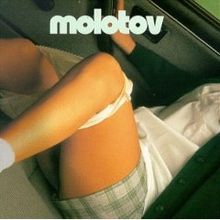
Molotov was the last Rock en Español band that I really bothered to check out.  They were probably most notorious for the cover of the album.  Interestingly, the cover is actually a four sided cover which you can flip to three other far less sexist scenes, so yes, that was pretty much a sales gimmick.  And it certainly attracted attention (and a law suit!).  So they reissued the title with the far less offensive, but very different cover below.

My Spanish is poor at best, but this album is a mix of Spanish and English.  And, of course, I know some bad Spanish words, so I get a sense of what this album is about. But here’s the thing–it rocks really hard and has some really great elements of the metal/rap/funk hybrid genre, regardless of whether you know what they’re talking about (although don’t go singing “Chinga Tu Madre” around the office, capiche?).

The opening song  “Que no te haga bobo Jacobo” has a very Rage Against the Machine vibe–heavy guitars and sound effects with militant rapped lyrics.  The riff is great and the vocals are smoother than Rage’s Zach–“Tito” Fuentes has great flow.  There’s also some good funky bass in the middle section.  “Molotov Cocktail Party” is a mix of English and Spanish, a pretty straightforward rap, not unlike Kid Rock.

“Voto Latino” has a more alt rock vibe in the guitars, although the vocals are pretty straightforward rap style.  The song title means Latino Vote, so perhaps there’s a politics context to it.  And “Gimme Tha Power” is a political song, too.  A rap (in Spanish) over some nice acoustic guitars.

There definitely isn’t in “Chinga Tu Madre” which has more of those cool guitar effects and group chanting, although it’ probably not worth investigating the lyrics much more.  But the chorus is catchy as anything.  “Matata Tete” and “Mas Vale Cholo” return to that Rage Against the Machine style, with vocals that are a bit more cookie monster-y (I’m not sure who sings lead on which songs, actually) although “Mas Vale Cholo” has some fun with the vocal delivery.  And there’s a spirit of early Red Hot Chili Peppers at work, too.

“Use It or Lose It” is rapped in mostly English.  It has a very cool acoutsic-feeling chorus (and a quote of the line, “what cha gonna do rap is not afraid of you.”).  “Puto” is presumably an anti-gay song (I suppose I should find that out before I say so).  “Porque No Te Haces Para Alla?…Al Mas Alla!” has a fun chorus and cool guitar effects once again.  “Cerdo” has a cool 70s vibe, with funky bass and scratchy guitars–it’s got a sexy feel, although the title means “pig,” so who knows.

The final track also rocks very well.  According to Wikipedia, the translated title of “Quitate Que Ma’sturbas (Perro Arrabalera)” is “Stay Away Because You Masturbate (Suburban Bitch)” which seems weird .  But maybe they had nothing better to write about.  Sometimes ignorance of a subject is not a bad thing.

¿Dónde Jugarán las Niñas? is not the classiest album around, but it’s got some really interesting sonics.  And I’m led to believe their later albums are even better.

[READ: Week of April 9] Gravity’s Rainbow 3.16-3.24

Last week ended with sex and this week opens with the way I felt–like a voyeur who can’t look away.  The exhausting orgy was exhausting to read about as well.  And I’m starting to wonder if Pynchon is making a point about sex rather than just enjoying writing about it.

This week’s read also brings back two characters from way way ago.  Well, one from not too long ago, but another from what seems like an eternity.  I assumed we’d see Pirate Prentice again, but I assumed that it wouldn’t be until Section 4. So that was a nice treat, even if it’s a less than happy return for him. (more…)

Read Full Post »

« Newer Posts - Older Posts »