Feeds:
Posts
Comments

Archive for the ‘War’ Category

harperjanSOUNDTRACK: BECK-“Gimme” (2013).

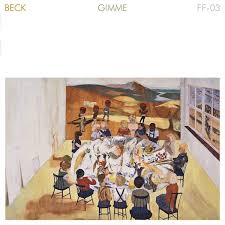
gimmeThis was the final of the three singles that Beck released in 2013.

It is by far the weirdest of the three, and seems the most experimental.

The song is only 2 and a half minutes long.  It starts with vibraphone-like sounds. The vocals are layered and processed with random voices shouting “Gimme” throughout the track.  I have no idea what the lyrics are.

It is noisy and cluttered, although there is a melody under all of that.  And then it ends just as suddenly as it began.  This song may some end of the year lists, but it’s certainly not easy listening.

[READ: April 1, 2014] “Subject to Search”

Sarah recently brought home a copy of Lorrie Moore’s Bark, and I’ve put it on my to-read list (somewhere near the top).  So browsing through this back issue of Harper’s I saw this story and figured it was probably in Bark (it is), but I decided to read it anyhow.

The story begins with an amusing exchange.  A man sits down and says “I have to leave.”  He and the woman are in a restaurant and she wonders if he has time to eat.  He tells her to order lamb couscous and she worries about her pronunciation.  It turns out they are in France and her French is passable at best.  She worries that there is a distinction between lamb to eat and lamb as a pet (like between pork and pig) in French and that she may end up with something totally unacceptable.

When the man returns he explains to her that he has to fly back to the States, and to us that he is in “the intelligence game.”

As the story unfold we learn more about him from the way she has perceived him (she assumed he was a drug runner from his story about driving cars in Holland).  He escaped from Iran just before the hostage situation broke out in the 70s.  And he paid for everything in cash.  But we also learn that she has known him for years. (more…)

Read Full Post »

briefSOUNDTRACK: RHEOSTATICS-Spiral Club, Guelph Ontario (December 18 1997).

spiral This show has an interesting technical glitch that the owner thankfully fixed. It was a soundboard recording (which is awesome), but evidently there was static in the right channel that rendered it unlistenable.  So he simply removed the right channel and mixed it mono.  The sound is actually excellent—one of the best early shows they’ve done.  But since there is only own channel, you miss a lot of what, I think, is Dave’s guitar.  When guest Tyler McPherson plays his solo, I believe you can’t hear it.  Yet despite that, it still sounds great.

I feel like the band was a having a lot of fun on this Thursday night in Guelph (every night in Guelph is a weekend). They mention that their Nightlines episode was aired on the night of Lady Diana’s death (so they feel some kind of weird connection to her).

There’s a few firsts in this set as well.  It’s the first time they plated “Junction Foil Ball” (from Nightlines).  They seem to have finally settled in with “Harmelodia” not “California” in “Easy to Be with You.”  They toss in a bit of “Tubthumping” at the beginning of “Horses,” and a bit of the Monkees, song “Look Out Here Comes Tomorrow)” at the beginning of “Queer.”

Of course there are some flubs as well.  Martin messes up California Dreamline big time and Dave gets lost in the counting of “Four Little Songs” (and then says he never went to school).

But it’s the banter that is the fun part of this show.  They ask the crowd not to shout out requests for a couple of songs.  There’s a very funny sequence in which they try to play a Coors lite anthem.  And Martin says he’s out of his mind.  Dave says he’s a madman and Martin calls him a manatee.  And then someone offers Dave an Islanders jersey which he says he can’t accept—it is too generous, but he’ll always remember it (and now so will we).

Before the end of the set, they offer the crowd some of the food they have backstage (if you like olives). But then they say that $18 was a bit steep of a ticket price for the show (can you imagine?).  So they’re going to play extra long because the ticket price was so high.  Man, how cool is that?

[READ: Summer 2013] Brief Encounters with Che Guevara

Several years ago (long before Billy Lynn’s Long Halftime Walk) I read about Ben Fountain…somewhere.  I was reading an interview with a writer who talked about some new writers that he liked.  Ben Fountain was one of them, and this writer specifically mentioned this collection.  A week or so later I was in a dollar store of all places and saw this book on their piles of books.  I couldn’t believe the serendipity. So I bought it (for a dollar).  And then kind of forgot about it (so much for my theory that if I buy a book I’ll read it).  But I did eventually get around to reading it and now sadly not only do I have no idea who originally introduced me to Fountain, I can’t even find it with online searching (and frankly I could have read it anywhere).  Also, Fountain has since written Billy Lynn which received all kinds of praise (and which I haven’t read), so trying to find specific praise for Fountain from 7 years ago is a lost cause.

And just as I forgot to read it I forgot to write about it until now.  This was his first collection of stories.  There are eight in total.  Even though it has been awhile, most of the stories were so powerful and well constructed that I remember them quite well. (more…)

Read Full Post »

boxersSOUNDTRACK: ANDREW W.K.-Tiny Desk Concert #37 (November 30, 2009).

wkWhen I saw Andrew W.K. on the list of Tiny Desk players I was intrigued to say the least. W.K. is a maniac.  His first album was packed with full throttle, really dumb party anthems.  Later he made an albums of… piano instrumentals.  Then he became a motivational speaker.  He’s done children’s shows and he recently did an anthem for an internet cat.  He even played drums for 24 hours straight–setting a world record.  So who knew what to expect.

Well, I didn’t expect two lengthy piano improvisations (quite pretty, if a little scattered).  Holy cow, does he attack that keyboard!  The improvs are really unexpected–meandering and interesting (mostly), especially at the end where they kind of decay.

Then he plays a keyboard version of “I Get Wet” which sounds almost symphonic especially compared to the pummeling version on the record.

He ends with a faithful cover of “The Moon Is a Harsh Mistress” made famous by Linda Ronstadt.  He sings in a proper voice and if you didn’t know it was Andrew W.K., it would be a pretty normal song.

Nothing like what I expected, this is a most unusual (and slightly awkward–for a motivational speaker, Andrew seems a little distracted) Tiny Desk.

 [READ: February 19, 2014] Boxers & Saints

Gene Luen Yang is a wonderful artist and storyteller.  He has written several books that I’ve enjoyed quite a lot.  This is a two volume set that is meant to be read together (although each story is more or less independent).  I assume that Boxers should be read first since Saints has an epilogue, at least that’s the order I read them.

This story is about the Boxer Rebellion.  I knew literally nothing about the Boxer Rebellion, so for those who don’t, here’s Britannica: (more…)

Read Full Post »

momentSOUNDTRACK: NICK BUZZ-Circo (1996).

nickbuzzNick Buzz is a side project of Rheostatics singer/lead guitarist Martin Tielli.  This album was reissued in 2002, when I bought it  But it came out in 1996, right around the time of the concerts I’ve been posting about.  Martin says that this album is pure pop, and that he is genuinely surprised that people don’t see this.  Of course, when your album has screeching monkeys, cars honking and circus music, pop is not the first thing that comes to mind.  There are certainly pretty songs on here, but it is an album that resists easy entrance.  There are short manic pieces, slow, languorous, almost lounge music pieces, and an improved cover of Joni Mitchell’s “River.” And then there’s the instrumentation: piano, violin, guitar, voice (no drums, although there is percussion on some tracks) and other weird sound effects.

“Step Inside” opens the disc.  It seems like a normal, mellow song (with slightly falsettoed vocals).  But 34 seconds in the circus music starts—a deviant and unsettling circus that pushes its way into the song briefly then vacating and allowing the pretty melody to return.  It’s like a mild form of Mr Bungle (with more actual circus).  It’s unsettling at first but then strangely catchy after a few listens.  There is fanfare as the song ends, interrupted by the sound of a tape speeding up (or going backwards) until song two bursts in.

“That’s What You et for having Fun” is less than three minutes and while weird, it is certainly accessible and funny.  The guitar sounds like he is slapping the strings rather than strumming them.  The refrain of “there’s a monkey in my underwear” gives a sense of the absurdity (especially when the President of Canada (sic) says he has one too).  “Just Because” mellows things out a lot—simple guitar with a kind of lullaby feel (it’s a bout wishing on stars).  It’s so slow after the craziness of the first two songs.  After  3 minutes of a lounge type song, it ends with a distant radio sound of an even more loungey song which melds into the live version of “River.”

The mellow “River” is followed by a raucous bass clarinet solo and wild guitar solo that is interrupted by the long (nearly 6 minutes) “Sane, So Sane.”  This is the most conventional song on the record—a simple piano melody with repeated lyrics (conventional aside from the weird distant music in the background of course).  Although it does gone on a bit long.  “A Hymn to the Situation” is an eerie two-minute wobbly song.

“Fornica Tango” is indeed a tango presumably sung in Italian. This song features a crying baby, an interesting sounding “Italian” chorus and the screeching monkey at the end.  “Love Streams” is a pretty, slow ballad.  “Aliens Break a Heart” is another pretty song.  Although this is the song that ends with traffic sounds.  “The Italian Singer/Just Because I’m Nick the Buzz” has a kind of Kurt Weill atmosphere to it with spoken words and falsettos.

It took me several listens before I could really find purchase with these songs.  I find that I really enjoy most of them now–some of those slow ones are a little too meandering for my liking.  But it seems like a fun outlet for Tielli’s songcraft.

[READ: October & November 2013] A Moment in the Sun

I read this book last year…finished it just before Thanksgiving, in fact (I was proud of my pacing).  But it was so huge that I didn’t want to write about it until I had a good amount of time.  And now here it is four months later and I probably have forgotten more details than I should have and the post will be nowhere near as in depth as I was saving time for in the first place.  Bah.

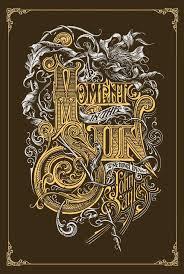
When people see this book, they say, “That’s a big book.”  And it is a big book.  It’s 955 pages (and they are thick pages, so the book itself is nearly three inches thick–see the bottom of this post for an “actual size” photo); it’s got three “books” and dozens of characters whose stories we read about in full.  It is about the United States, racism, The Gold Rush, the assassination of a President, the Spanish American War, a World’s Fair and even the exploration of moving pictures.  This is a fairly comprehensive look at the Unites States from the 1890s to the early 1900s.  And, man was it good.

John Sayles is known more for his movies than his books (18 films directed, nearly as many different ones written and only 4 novels), but the cinematic quality that is clearly in his blood comes through in this book as well. (more…)

Read Full Post »

Pete Seeger [1919-2014]

seegerPete Seeger died last night at the age of 94.  I love his anti-war quote: “Sometimes I think [about] that old saying,’The pen is mightier than the sword.’ Well, my one hope is the guitar is gonna be mightier than the bomb.”

When I was a kid, I knew a few of his songs (and didn’t really like them) because of an organ songbook we had (did everyone have an organ in the 70s?).  I can remember pounding on the wheezing organ and making up silly lyrics to “If I Had a Hammer” and “Where Have All the Flowers Gone?”  It’s amazing to think that these songs, which were written in the sixties, are often seen as eternal classics.  It’s also amazing to think that Seeger wrote “Turn! Turn! Turn!” which I never associated with him.  Indeed, like Woody Guthrie, much of American folk music can be traced to Pete Seeger (even if he adapted much of it himself).

I really started getting into Seeger when I had kids, as I found his music was fun to teach the kids to sing along to–it was designed for singing along to.  In fact, he wrote a ton of children’s music as well. (He released FIFTY-TWO studio albums, along with 22 live albums and 23 compilations).  His first solo album was a collection of traditional folk songs for children (he didn’t write them, which may be why it’s confusing to know which songs were actually his).  And I don’t even know anything about his first band The Weavers, who had hits with “Goodnight Irene,” “On Top of Old Smokey,” “So Long (It’s Been Good to Know You)” and “Wimoweh.”

(more…)

Read Full Post »

bothfleshSOUNDTRACK: SIGUR RÓS-Von brigði [Recycle Bin] (1998).

recycleAfter releasing their first album, Sigur Rós was approached by Icelandic musicians to remix the album. And thus came Recycle Bin.  I realized too late that I really just don’t like remix albums all that much–they’re mostly just faster drums plopped on top of existing songs.  And such is the case here.  Despite the interesting musical pedigrees of the remixers, there’s nothing anywhere near as interesting as on Von itself.  There are ten tracks, but only 5 songs.

”Syndir Guðs” gets two remixes:

Biogen keeps the bass but adds some more drumlike sounds.

Múm removes the bass, adds some wild drums and trippy textures and reduces the 7 minutes to 5.  It is quite pretty but very far from the original.

“Leit að lífi” gets three remixes

Plasmic takes a spacey 3 minute wordless noodle and turns it into a heavy fast dance song with speedy drums, big bass notes and with spacey sounds.

Thor brings in some fast skittery drums and keeps the spacey sounds (which sound sped up).  And of course bigger bass noises.

Sigur Rós recycle their own song into a dance song by adding funky bass and drums.

“Myrkur” gets two remixes.  the original is a fast-paced groovy track.

Ilo begins it as a spacey non-musical sounding piece.  After two minutes they add a beat of very mechanical-sounding drums.  It’s probably the most interesting remix here.

Dirty-Bix adds big, slow drums.  It keeps the same melody and vocals as the original but totally changes the rhythm and texture of the song, (removing the guitar completely).

The remaining three songs get one remix each.

The original “18 Sekúndur Fyrir Sólarupprás” is 18 seconds of silence.  Curver turns it into “180 Sekúndur Fyrir Sólarupprás” and makes a muffled drum beat and some other samples from the album, I think.  It constantly sounds like it is glitching apart until the end where it practically disintegrates–an interesting remix of silence.

“Hún Jörð” 7 min Hassbræður increases the drums and adds a more buzzsaw guitar sound and makes the vocals stand out a bit more.

“Von” has delicate strings and Jónsi voice.  The remix by Gusgus adds low end bass and drums making it a thumping rather than soaring track.

I prefer the original, but I much prefer their next album to the first one.

[READ: end of October to early November 2013]  original articles that comprise Both Flesh and Not

As I mentioned last week, I decided to compare the articles in Both Flesh and Not with the original publications to see what the differences were.  I had done this before with A Supposedly Fun Thing… and that was interesting and enlightening (about the editing process).

This time around the book has a lot more information than the original articles did.  Although as I come to understand it, the original DFW submitted article is likely what is being printed in the book with all of the editing done by the magazine (presumably with DFW’s approval).  So basically, if you had read the original articles and figured you didn’t need the book, this is what you’re missing.

Quite a lot of the changes are word choice changes (this seems to belie the idea that DFW approved the changes as they are often one word changes).  Most of the changes are dropped footnotes (at least in one article) or whole sections chopped out (in others).

For the most part the changes were that the book version added things that were left out or more likely removed from the article.  If the addition in the book is more than a sentence, I only include the first few words as I assume most readers have the book and can find it for themselves.  The way to read the construct below is that most of the time the first quote is from the original article.  The second quote is how it appears in Both Flesh and Not.  At the end of each bullet, I have put in parentheses the page in BFAN where you’ll find it.  I don’t include the page number of the article.  And when I specifically mention a footnote (FN 1, for example), I am referring to the book as many times the articles drop footnotes and they are not always in sync.

Note: I tried most of the time to put quotes around the text, but man is that labor intensive, so if I forgot, it’s not meant to be anything significant. (more…)

Read Full Post »

jan2006 SOUNDTRACK: KURT WAGNER-Tiny Desk Concert #6 (October 8, 2008).

kurtI have never been a big fan of Lambchop.  It’s just not my kind of music—a little too slow for me.  But I really enjoyed Kurt Wagner in this Tiny Desk performance.  His guitar playing I really beautiful (I loved how he hit the high note on Bob Dylan’s  “You’re a Big Girl Now.”  He plays three Lambchop songs and two covers.

Wagner is from Nashville, and he has an air of Southern propriety about him–apologizing for taking up everyone’s time at work.  He sounds great doing the Dylan song, which I suppose is no real surprise.  The first Lambchop song is a pretty ballad called “Slipped Dissolved and Loosed.”

He is a charming and funny guy, joking about a few things (like working in an office) and then discussing about one of his songs, “National Talk Like a Pirate Day” (which is not as funny as the title might suggest).  Another song is titled “Sharing a Gibson with Martin Luther King Jr.” (and Wagner waves a fan of MLK Jr. (from a funeral home-(?)) to start the song.

The final song is a Don Williams song called “I Believe in You.”  I’ve never heard of him (and neither had anyone else in the studio).  It’s a really enjoyable, sweet song, and there’s a funny moment when sirens go past and he comments that at least they are in tune.  I still don’t think I’ll be listening to a lot of Lambchop, but I really liked this Tiny Desk show.

[READ: October 8, 2013] “Improvised, Explosive, & Divisive”

Two years after writing about his trip to Vietnam, Bissell returned to another war zone.  This time going to Iraq to get embedded (I suppose that’s the technical term for what he did) with some Marines at Camp Taqaddum in Iraq (17 miles from Baghdad).  This was during the Iraq war (and the Bush presidency), after Mission Accomplished, when the military was searching for a strategy for what to do in the situation.

This article shows interviews with Marines and makes assessments about our then current plans (such as they were) for how to extricate ourselves from a seemingly hopeless situation.  After Mission Accomplished the war went from a “war” to “stability and support operations against an insurgent element” or what is called MOOTW (military operations other than war).  And Bissell acknowledges that it barely seems like any resembling war in Iraq where the soldiers are headquartered.  They cannot drink alcohol, have sex or view pornography (they are trying to remain respectful of their host country), but at the same time they play softball and go to the gym, wear Co-Ed Naked Camel Watching T-shirts and have a Baskin-Robbins ice cream stand.  Not to mention DVD, video game consoles and Coke for sale in the PX.

Some of the article is technical—a side of the fighting that most readers probably don’t know. Like that the troops must be fully protected (and the vehicles as well) just to travel the relatively short distance between camps. (more…)

Read Full Post »

nov 2013SOUNDTRACK: SERA CAHOONE-Tiny Desk Concert #4 (July 10, 2008).

seraI had never heard of Sera Cahoone before this show.  NPR dude Stephen Thompson is the one who brought her to the Tiny Desk.

Sera used to be a drummer (for Band of Horses and Carissa’s Wierd) but then she picked up a guitar and started writing songs for her 2006 debut album.  Cahoone plays five songs (in about 21 minutes) for this set.  She plays acoustic guitar (and harmonica).

The songs are pretty, folky songs.  Thompson describes them as “hammock music” in that it simulates the sensation of lying in a hammock and sipping an iced tea, possibly while being fanned.  And that’s pretty accurate.  The songs are soothing and gentle, simple chords played in the right order (F/C/G/C).  Her voice is slightly husky, but she still manages high notes. easily.

“Runnin’ Your Way” is a very standard, pretty folk song.  “Couch Song” introduces some mild picking which changes the tone but retains the hammock atmosphere.  “Only As The Day Is Long” is probably my favorite of the five–I like the way she sings the verses and adds an interesting chord progression to the verse.  I’m not thrilled with the harmonica part but it’s fine.  “The Colder the Air” is a minor chord song that adds some tension to the proceedings–it’s really quite good.  “Last Time” is from her first record.  Its a little faster, and I like the change it introduces.

Although Cahoone’s music is similar throughout there’s enough variety for it to be interesting and very enjoyable. This was yet another great Tiny Desk set.

[READ: November 20, 2013] “A Summer Sunday”

This story is an interesting concept–an attempt at the narrator to not tell us something.

I admit that I found the beginning confusing.  I’m not sure when it was written but while before 2001 “two towers” may have referenced Tolkien, in 2013 it can only reference one event.  But after a few paragraphs we learn that the story is not even set in the United States (although the exact location remains a mystery).

In addition to the towers, there is a cemetery.  Near the cemetery is a house which the narrator has visited.  While they were there shells started falling near the General’s Residence, which was not too far away.  It had been a very bad day–lots of people were killed in the gunfire, but for the narrator and his family it was a pleasant Sunday.  Indeed, the whole weekend was nice, even if when he was sitting in a cafe on Saturday a piece of shrapnel landed near him.  He gleefully ran to collect it.  Later that evening he and friends were drinking in a garden when “rockets came screaming overhead.”  Several people dove for cover or huddled in a ball. The next line?  “It was very funny and we laughed a lot.”

Interesting reaction, but that appears to be all because of “that other thing I shouldn’t talk about.” (more…)

Read Full Post »

mccarthySOUNDTRACK: PHISH-Undermind (2004).

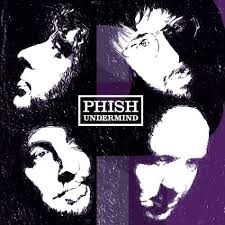
undermindAs I understand it, Phish fans didn’t like Undermind that much and yet I really liked it and still do.  Indeed, “Undermind” is one of my favorite new Phish songs, it’s clever and boppy and just really catchy.  The album has very Beatles vibe to it—a kind of echoey feel on all the songs.  And I have recently read that people interpret the cover design to be a nod to Let It Be (there are other connections made but I’m not going to go too deeply into that).

“Scents and Subtle Sounds” opens the album.  This is a brief intro–the full songs, which sounds different appears later on the disc (it’s 97 second here)).  It leads into “Undermind” which has a loose, slightly funky sound—one of their more fun songs on recent albums.  The album version has some big fat organ sounds on it which make it even cooler.

“The Connection” is another great poppy song—gorgeous harmonies and wonderful melody, and indeed it was their first real hit.  “A Song I Heard the Ocean Sing” is another great song, great backing vocals, an excellent melody and great alternating verse vocals from Mike.  It also has a great middle guitar section—it’s long and wild and reminiscent of Jimi Hendrix’ solos.  “Army of One” is sung by Page.  It is a big soaring song and it’s got a very upbeat sound.  “Crowd Control” is a very Beatleseque song.

“Maggie’s Revenge” is a noisy instrumental, with Trey’s guitars making all kind of squealing noise.  It’s weird and quite refreshing from Phish’s more recent fair.  “Nothing” picks up with the open and poppy sounds of earlier records and has more great harmonies.  It seems to fade out in the middle though—a song that could have been longer!  “Two Versions of Me” is another mid tempo song with great harmonies and  great chorus.  “Access Me” is a brief poppy song that feels a bit like filler, although it has a cool and interesting coda.  “Scents and Subtle Sounds” resumes

“Tomorrow’s Song” has a very African feel to it.  It is a simple repetitive rhythm that lasts for about 3 minutes before it fades out just like it faded in.  “Secret Smile” is a very pretty piano ballad.  It’s a little heavy handed with the strings, and at nearly 7 minutes it’s too long (especially the long coda), but the melody is certainly nice.  The album ends with “Grind,” a barbershop quartet track which shows just what kind of great harmonies they cool do.

Although it’s a mature sound, there’s enough weird stuff to let them show their funky side too.  The CD comes with a DVD called “Specimens of Beauty.”

[READ: October 8, 2013] C

I received a prepub version of this book back in 2010.  The cover and title were weird and I thought I’d like to read it.  And it sat on my shelf for two years.

And then Borders closed (bummer, their chai tea was the best!) and I saw a hardcover copy of the book for $1 so I bought it (I’m enough of a geek to want to see how prepubs and final copies are different.  In this case, the books appear identical except that in the last two dozen or so pages, there’s a section with ellipses.  In the prepub, they are single spaced but in the final book they are double spaced which throws off the line spacing.  So by the end of the book, the lines are about three lines different.  Fascinating huh?).

Anyhow, what on earth is a book called C about?

Well, it is a Bildungsroman or coming-of-age story.  By definition these stories focus on the psychological and moral growth of the protagonist from youth to adulthood.  Our protagonist is Serge Carrefax, even though he is not the first person we meet.  That would be a doctor delivering materials to Serge’s father, Mr. Simeon Carrefax.  Mr Carrefax runs a school for the deaf in which he tells children to stop using sign language and to start speaking properly.  And he has had considerable success with the children, each of whom acting in a play every year.  (The book, by the way, is set in the late 1800s).  His mother is a silkworm farmer, and much of their money comes from this job.

But the main person in Serge’s life is his sister Sophie.  Sophie is a deviously clever girl who is alternately mean to Serge (as only older sisters can be) and then encouraging him to play with her.  She is mad for science and is constantly experimenting with her chemistry set (leading to more than one explosion in the house).  The early sections of the book show Sophie and Serge’s education.  And when Sophie goes off to school, Serge is lost, especially when she returns from school but keeps telling him to leave her alone.  And then one day, Serge discovers her dead in her “lab” and experiment in progress. (more…)

Read Full Post »

dec2004SOUNDTRACK: AWAY-Cities (2013).

awayAway is Michel Langevin, the drummer for metal band Voivod.  But on his first solo album he eschews all conventional music.  Rather, he has created an exercise in found sound and released it on the small label Utech Records.

The album is described as

Strong field recordings capture more than just the sound of an area, they capture a mood and spirit of the place and people. On Cities, local color and nature recordings clash with riots and discord, capturing the full human experience across the world. Literal and metaphorical “found music” appears: the booming stereo of a passing car or distant church bells, as does the rhythmic engine hum of a bus or the chirping of birds. This tour is a fast paced one, rapidly weaving through the geographic locations building a diverse, yet consistently engaging experience. The audio journey captured here perfectly reinforces the fact that, regardless of one’s location, the presence of music is never far, nor should it be.

What we get is a collection that sounds like a tour through the streets of the respective cities (nothing more specific than Europe is given, sadly).  We hear street noise and buskers playing (interestingly just about every type of music I have heard in Boston subways as well).

I only wish more information was given about just what Away was up to.  Where he was and, more importantly, how he recorded these sounds. The recording quality is amazing—the panpipes and harmonicas sound crisp and clean with no other ambient noise.  Did he ask the performers if he could record?  How did he get them so pristine especially since I assume they are in the streets?  And for the Europe ones, was there any given order to the way they were edited?  Is it the progression of their Voivod tour, or is it just random?  The mixing and sequencing is quite good, especially in the shorter pieces which really take you on a journey.  Not knowing what’s happening is maddening and part of the fun as you try to picture (especially if you use headphones) exactly what you are hearing.

“Montreal 2010” opens with the sound of travel until we zoom in on panpipes (for a few seconds).  This switches to a lurching shanty (sung, I suspect in French—it’s a little hard to hear).  Then from the shadows comes the sound of someone playing Leonard Cohen’s “Hallelujah” on the harmonica.

“Europe 2012” opens with someone playing what I suspect is a hammered dulcimer (exactly the kind of thing that buskers play in subway stations), it shifts to a jazz trio (sax, bass, drums) wailing away with traffic noises in the background.  After some busses and an accordion solo, there are delicate chimes.  Finally a bagpipe melody leads us away from the delicate chimes until we hear announcements in what sound like Russian and then French.  The track ends with fans chanting “Voivod Voivod.”

Montreal 2012 returns Away to near his home city.  This time the scene is much nosier—it could be joyous, it could be angry—there are whistles and horns, and by the end it seems like a joyous parade.  The noise diminishes as an operatic voice pierces through briefly until the drums return.  More street noises, including police sirens, French chanting and a train passing by as we return to yet more street drumming.  If this track had more context for the title it would probably be more enjoyable. And yet as the parade (for surely that is what it is ) marches past you feel like you’re there.

“Mexico City 2012” opens with a truck honking and street noise until we hear what sounds like an indigenous band playing, then some more flute music and church bells pealing. Then there are announcements in Spanish (by both a man and woman presumably in the church) and church organ music.  Pan pipes and drums bring us back into the street and what sounds like a market scene which ends with some Mexican music playing.

“Europe 2011” opens with some beautiful guitar or perhaps an Indian stringed instrument playing and some traditional Indian singing.  There’s some more music playing and cheering and then some peace as birds take us out of this short track.

“Montreal 2011” opens with banjo music (!).  And then the more typically French sounding violin moves us along.  More pan pipes and traffic noise progress us through the city.  Then two very different examples of accordion music meld until the noise of the train wipes them out.   The track fades out with a band playing a  jaunty accordion inspired track.

“Chicago 2012” ends the disc with a symphony orchestra tuning up (I presume) for a few minutes.  It’s a shocking cacophony.  Until someone shushes the noises and the birds return, playing us out of this aural tour.

You can stream, download or buy the CD  here.  Buying the CD gets you some of Away’s cool art (although I wish there was more).

[READ: October 8, 2013] “War Wounds”

Since I’ve been enjoying Tom Bissell’s book reviews, I thought I’d see what else he had written in Harper’s.  He seems to have a storied career with the magazine as a traveling journalist.  And this article dates back to 2004.

It is a personal article about himself and his father.  What I found fascinating about this is that his father was a Vietnam veteran, and I don’t know too much in the way of writing that concerns being the child of a Vietnam veteran.  There are a lot of books and films about the Vietnam experience for the soldiers, but not so much about the families that they returned to (as far as I know).  So it was interesting to read Bissell’s account of growing up with his father–who was a hard man and who wasn’t afraid to fight with his children (especially when drunk).

The man that Tom grew up with had a temper and didn’t much approve of Tom’s chosen profession.  But unlike many people of his generation, Tom didn’t feel that he had a particularly estranged relationship with his father.  What on earth possessed him to invite his father on a trip to Vietnam–to visit the sites where he lost friends and was himself wounded, is the stuff of journalism. (more…)

Read Full Post »

« Newer Posts - Older Posts »