Feeds:
Posts
Comments

Archive for the ‘Virginity (Loss of)’ Category

SOUNDTRACK: MARTHA WAINWRIGHT-Live at the 9:30 Club (2006).

This show had Martha Wainwright opening for Neko Case (a nice bunch of Canadians, eh?)  I’m not sure if the set is truncated or not (she claims to be hungover) but it’s only 30 minutes.  I guess that’s not terribly short for an opening act, but it seems on the brief side–although it is 9 songs.

Martha is a bit cranky as the set opens, (or maybe that’s just her speaking voice) but she kind of warms up and is a funny chatterer.  Seven of the songs come from her debut self-titled full length (which I don’t own). One song is new (“So Many Friends” which appears on I Know You’re Married…) and one comes from an EP (“New York, New York, New York”).

Martha has a unique voice that I find hard to describe.  It can easily polarize listeners–some will find it way too exotic.  It comes as a special surprise after she has just bantered with the audience in her low gravelly voice when it busts out with her higher (perhaps nasally) voice. I think once you get used to her voice it brings a special resonance to the lyrics.

She is also not afraid of the four letter word.  The final song, crowd favorite “Bloody Mother Fucking Asshole” is just one of the obscene things that she sings here.  The funny thing is that she never sounds angry when she’s singing these lines.  He voice is charming (and yes odd) but never angry.  It’s a weird mix, but one that I like.

This is a good introduction to her music (and Neko Case on the same page).

[READ: March 18, 2011] “The Smell of Smoke”

Unlike “What He Saw” which was erotically charged but hard to believe, this Walrus story–which is even more erotically charged and, on the surface utterly unlikely–was easier to believe as a story.

Green is a fourteen year old boy.  Maggie is his twenty-one year old neighbor.  As happens in a story like this, she seduces him.  And they spend most of the summer having crazy sex.  This all seems really unlikely, but I’ll throw in the detail that it’s 1968 and her parents are away quite a lot (which also seemed to happen a lot then).

The story is told in third person from Green’ point of view.  And, despite the horny teenage fantasy story that this really is, the writing is tender and sweet and fairly believable.

For me the nice thing about the story was that although it eventually had to end, it never ended because they got caught or had any kind of scandal.  Rather, she went off to college.  But it doesn’t just end there. (more…)

Read Full Post »

SOUNDTRACK: RICHARD THOMPSON-Tiny Desk Concert #107 (February 1, 2011).

This Tiny Desk concert sees Richard Thompson playing three songs from his most recent disc Dream Attic.  I really enjoyed this album, but because it was recorded live, and there’s lots of instrumentation on it, I wasn’t sure how well these songs would translate to a simple acoustic guitar.

I needn’t have worried.  RT is a master songsmith and even stripped down to just him and his guitar the songs swell where they should and haunt when they ought.  “The Money Shuffle” doesn’t need the horns that accompany the original (he supplies the power with his voice), and “Stumble On,” a gorgeous ballad, works fine solo.  I appreciated the introduction he gives to the final song “Demons in Her Dancing Shoes” as I didn’t realize it was about something specific.  He plays all the fast bits (including a brief solo) wonderfully on that acoustic guitar, too.

This is not to say that I think these songs are better solo than with the band.  It’s just to say that RT can play anything and make it sound great.  It’s an excellent (if not brief) set.

[READ: April 4, 2011] “Atria”

I hated this story as I read it.  I felt like it was deliberately trying to manipulate me.  I felt like it was playing some very obvious cards and leading to an obvious conclusion.  By the end I wanted to scream at it, yet it kept surprising me.

The story is about Hazel, a sophomore in high school.  She has not had any kind of experience with sex until one afternoon when circumstances conspire for her to have sex behind a 7-11.  She doesn’t really enjoy it but she didn’t really protest it either.  She was just sort of there.

Soon afterward, she is raped (I know), by a man who is clearly not all there.  The rape occurs behind the church (I know), and once again, she probably could have gotten away, but she was just sort of there.

Now, of course she’s pregnant (I know).  She doesn’t know who the father is obviously, but now she has a scapegoat.  The man is vilified but never found (the police artist was a joke).  The town puts up a bunch of Hazel-inspired alert phones all over town (fat lot of good they do her now).

She is treated with kid gloves in school.  Even the religious girl doesn’t blame her for being raped (I know).  All the time she is pregnant she imagines the kind of animal that will come out of her.  It’s never a baby, just different kinds of animals: birds with beaks pecking at her and having multiple babies themselves–which are crushing each other, even a four-legged beast.  It’s very trippy, and she seems to be as well.

When the baby is finally born she determines that it is a seal.  And she realizes that it needs to be kept wet.

The ending of the story was very, VERY disturbing and I simply couldn’t believe what I was reading.  And yet for all of the obvious (and by contrast highly disturbing) stuff that happened, I didn’t want to stop.  There’s was something strangely compelling about this story.  I will keep an eye out for her in the future.

Read Full Post »

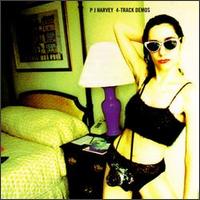
SOUNDTRACK: PJ HARVEY-4-Track Demos (1993).

After the intensity of the Steve Albini produced Rid of Me, Harvey releases this collection of demos.  The amazing thing is that these versions actually seem more intense than the Albini version. Or if not more intense, then certainly more raw.

The songs definitely have an unfinished feel about them, and yet they only vary from the final version in polish (and Albini’s stamp).

“Rid of Me” is just as quiet/loud, and has those high-pitched (and scary) backing vocals.  Speaking of scary vocals, her lead screams in “Legs” are far scarier here than on Rid of Me–like really creepy.  (Which sort of undermines that idea that this was released because Rid of Me was too intense for fans).   “Snake” actually features even creepier vocals–Harvey must have had a field day making these sounds!

I admit that I like the finished version of “50 Ft Queenie” better,”but there’s something about this version of “Yuri-G” that I like better.

The disc also has some tracks unreleased elsewhere.  “Reeling” is an organ-propelled song of female strength with the nice lyric: “Robert DeNiro sit on my face.”  “Hardly Wait” is a slow grinder that is fairly quiet for this time period.  “M-Bike” is a cool angry rocker about a guy and his motorcycle which is one of my favorite tracks on the disc.

It’s a great companion to Rid of Me.

[READ: end of February to early March]  original articles that comprise A Supposedly Fun Thing I’ll Never Do Again

As I mentioned last week, I decided to compare the articles in A Supposedly Fun Thing I’ll Never Do Again with the original publications to see what the differences were.  It quickly became obvious that there were a lot of additions to most of the articles, and it seems rather pointless (well, actually it seems exhausting and really outrageously time-consuming) to mention them all.  But what I did want to note was the things that are in the articles that have been removed from the book.   There’s not a lot but there are a few juicy tidbits (especially in the early articles) that are fun to note for anyone who read only the book and not the original articles.

My process for this was rather unthorough: I read the article and then right afterward I read the book.  If I noticed any changes, I made a note on the article version.  Many of them were surprisingly easy to note as DFW’s writing style (especially his idiosyncratic phrases) really stand out.  This is especially true in the Harper’s articles.  The academic ones were less notable, I believe, and I’m sure I missed a bunch.

I’m not sure in any way how these pieces were dealt with initially by the magazine or DFW.  I assume that DFW handed in the larger article (like we see in the book) and the magazine made suggested edits and DFW edited accordingly.  Then the book copies are probably the originals, bt which have also been updated in some way.

In most cases, it’s not really worth reading the original article, but I’m including links (thanks Howling Fantods), for the curious.

As for length, it’s hard to know exactly what the conversion from magazine article to book is.  The “Tornado Alley” tennis article is 8 pages (more like 4 pages when you take out the ads) and the book is 17.  Perhaps more accurately it seems like one Harper’s column = just under one book page.  I’ll try to figure out what the conversion is if I can.

One last note, whenever I say “article” I mean the original magazine version.  And obviously “book” means ASFTINDA. (more…)

Read Full Post »

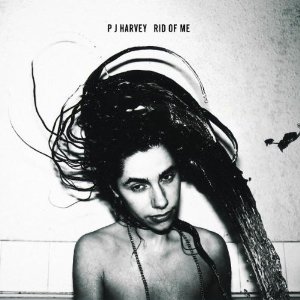
SOUNDTRACK: PJ HARVEY-Rid of Me (1993).

For Rid of Me, PJ Harvey jumped to the big leagues (relatively) by enlisting maniac Steve Albini as a producer.  And he takes the rawness of Dry one step further into a sound that is both raw and sharp.  He really highlights the differences between the highs and lows, the louds and quiets.  And man, when this came out I loved it.

Like NIN’s “March of the Pigs,” the opening of “Rid Of Me” is so quiet that you have to crank up the song really loud.  And then it simply blasts out of the speakers after two quiet verses.

“Legs” turns Harvey’s moan into a voice of distress, really accentuating the hurt in her voice.  And Harvey hasn’t lightened up her attitudes since Dry, especially in the song “Dry” which has the wonderfully disparaging chorus: “You leave me dry.”

“Rub Til It Bleeds” is a simple song that opens with a few guitars and drums but in true Albini fashion it turns into a noisy rocker.  “Man Size Quartet” is a creepy string version of the later song “Man Size” (I’ll bet the two together would sound great).  And the wonderful “Me Jane” is a great mix of rocking guitars and crazy guitar skronk.   Albini really highlights the high-pitched (male) backing vocals, which add an element of creepiness that is very cool.

For me the highlight is “50 Foot Queenie”.  It just absolutely rocks the house from start to finish.  The song is amazing, from the powerful…well…everything including the amazing guitar solo.  “Snake” is a fast rocker (all of 90 seconds long) and “Ecstasy” is a song that feels wrung out, stretched to capacity, like they’ve got nothing left.

It’s not an easy record by any means, but it is very rewarding.  This is a CD that really calls for reamastering.  Because it is too quiet by half, and could really use–not a change in production–just an aural boost.

[READ: end of February and beginning of March] A Supposedly Fun Thing I’ll Never Do Again

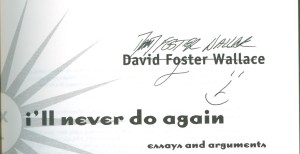
This is a collection of 7 essays that DFW wrote from 1990-1996.  Three were published in Harper’s, two in academic journals, one in Esquire and the last in Premiere.  I devoured this book when it came out (I had adored “Shipping Out” when it was published in Harper’s) and even saw DFW read in Boston (where he signed my copy!).

click to see larger

[Does anyone who was at the reading in Harvard Square…in the Brattle Theater I THINK…remember what excerpts he read?]

The epigram about these articles states: “The following essays have appeared previously (in somewhat different [and sometimes way shorter] forms:)”  It was the “way shorter” that intrigued me enough to check out the originals and compare them to the book versions.  Next week, I’ll be writing a post that compares the two versions, especially focusing on things that are in the articles but NOT in the book (WHA??).

But today I’m just taking about the book itself. (more…)

Read Full Post »

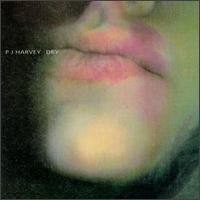
SOUNDTRACK: PJ HARVEY-Dry (1992).

This first PJ Harvey album was a revelation in 1992.  It was angry and loud and awfully disconcerting. And, perhaps most importantly, it showed a strong woman, unafraid to point fingers at foolishness around her. (Yes, I miss the 90s).

It was also raw and abrasive and, at times, scary.  The opening track featured discordant music and vocals that were more than a little uncomfortable.  “O Stella” has more uncomfortable vocals with super cool and slightly off harmonies.  The guitar is a great distorted mass and the bass is low and heavy.  A great track.

“Dress” is one of the least abrasive tracks musically, which really lets the lyrics come to the fore. And her lyrics are wonderful throughout the disc–she attacks conventions of femininity and flips expectations.  And although “Dress” has a very simple chorus–just the line “If you put it on”–it is catchy as anything.

But it’s not all loud songs, either.  The wonderfully titled “Happy and Bleeding” features some intriguing quiet guitar work and whispered verses.  It grows in strength but never wails like the other songs.  For real wailing, “Sheela-na-Gig” is your song. Terrifically rocking and obscene, it’s a funny, clever awesome alt rock song.

Harvey experiments with falsetto (although nothing like she will on Let England Shake) on “Hair,” a cool twist on the Samson and Delilah story.  “Plants and Rags” makes exquisite use of a creepy violin to bring some extra sounds to an already cool song.

It’s a stunning debut and showed that Harvey was a fearless singer.

[READ: February 27, 2011] Misadventure

This is Millard Kaufman’s final novel (after the very cool Bowl of Cherries).  The Afterword (written by Kaufman’s son) seems to suggest that Millard actually wrote this back in the 60s.  There are elements of this book that make me thing that he did write it in the sixties (and then obviously updated particulars to make it contemporary).  It just feels circa the 60s and it feels like the book of a younger man (Kaufman was 92 when he died).

The story opens with a dead body and a real estate agent.  And it quickly develops into a tidy noir fiction with double-crossing and undermining and all kinds of interesting twists.  I don’t read noir or “mysteries” as a rule, so this is kind of a novel novel to me.  Accordingly, I can’t compare it to the genre. (more…)

Read Full Post »

SOUNDTRACK: RHEOSTATICS-Live at the Bathurst Street Theatre, Toronto ON, April 5, 1997 (1997).

This is the second of two nights that The Rheostatics played at The Bathurst Theatre.  It is also available for free on their live site.

This concert also features a lot on their Double Live album.  There are seven tracks that come from this show: “Feed Yourself,” “Shaved Head,” “Dead is the Drunkest You Can Get,” “Bees,” “A Midwinter Night’s Dream” “Stolen Car,” and “Good Canadian.”

This recording is a lot better (sound wise) that the previous night’s and the band seems a lot more “on.”  And, the band interacts with the audience a lot.  “Feed Yourself” is great and “Mid-Winter” is stunning (both understandably picked for the live album).  There’s an amusing “drum solo” during “Legal Age Life.”  It’s a great set.

Some interesting notes: this is the first time the band has played “Stolen Car” live (and it hadn’t been released yet). It’s the same version as on Double Live, but here you hear a lengthy pause in which “Martin left the lyrics in his bag” and Dave has to entertain the crowd.  “Good Canadian” also on Double Live, was a spontaneous little ditty that Martin made up.  Also, during the show, they encourage people to listen to Nightlines, because it is danger of losing its funding.  Fans will know that Nightlines went off the air not too long after that and the Rheos played the final show (and released an album of it).

Of the two shows, this one is definitely preferred.  And even if you have Double Live, it’s worth downloading this entire show..

[READ: February 7, 2010] “Axis”

Alice Munro has another great, subtle story here.  This one mixes things up a little bit in the storytelling, which I found intriguing and more than a little fun.

It opens with Grace and Avie, two farmers daughters who are at university.  They are studying intellectual subjects, with the hope (let’s be honest) of finding intellectual boys to marry eventually.  They are obviously not sorority material (just look at their coats), but they don’t really want boys who like sorority girls anyhow.

After we follow them for a bit, we narrow the focus to just Grace.  Her boyfriend Hugo is on his way to visit her at the farm (and to meet her parents).  He does not make a very good impression, and he is not to fond of them either.  And, worse yet, they won’t leave them any time to be alone.  Until Grace hatches a plan for them to be alone, which, if you’ve read any fiction, you know won’t turn out too well (but that’s not the climax of the story, don’t worry). (more…)

Read Full Post »

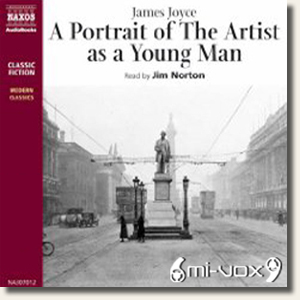
[LISTENED TO: November through December 2010] A Portrait of the Artist as a Young Man

I initially ended this post with: “Even though this audio was unabridged, it felt a bit like hearing an abridged version.  I suspect I shall have to actually read the novel again in 2011 to see what I missed.”  Well, I assumed that the audio was unabridged.  But now I see that there is another recording which is 7 discs as opposed to my copy’s 3 discs.  Gadzooks!  In tiny print on the back of the box, I see now that this is abridged.  NO WONDER I felt like so much was left out of the story.  It actually made me think that the story wasn’t all that coherent.  As such, you can kind of disregard this post until I listen to the unabridged version (which is available free for download here).

So, back to my initial review:

I was listening to this audio book while exercising.  The fact that it took me as long as it did to finish the audio book is more of a testament to my lack of exercising than the book itself.  Although I will say that unlike Dubliners, I found that listening to this book (and again, perhaps it was the distance between listenings) to be somewhat unsatisfying.  And of course, as with all of these Naxos CDs, the vocals are recorded so quietly (except when he starts screaming–the hellfire sermon is so loud it scared my family upstairs) that you really have to try to listen hard to hear the whispers.  The final chapter–Stephen’s diary–is read so quietly it was hard to hear over the exercise machine, even with the sound up all the way.

So this is the story of Stephen Daedalus before Ulysses, when he was, as the title states, a Young Man.  My favorite memory of reading this book was when I read the opening aloud to a sick friend who thought that I was messing with her:

Once upon a time and a very good time it was there was a moocow coming down along the road and this moocow that was down along the road met a nicens little boy named baby tuckoo….

Stephen is of course, baby tuckoo, so this novel is more than just the young man days.   But from this baby story, we quickly jump to Stephen at school and we see an episode that impacted his whole life: boys who were teasing him pushed him into a stagnant pool of water. (more…)

Read Full Post »

SOUNDTRACK: ART BRUT Live from the 9:30 Club, November 29, 2007 (2007).

I’ve really enjoyed Art Brut’s two albums.  They are funny but they are not jokey.  They also rock really hard with wonderful, angular punk.

Sometimes I’ve felt the albums are a little bit…shall we say…perfect.  They are very tight and polished on record (which actually serves the records very well).  But I wondered what a live show would be like for them.

And I’m delighted to say that their live set is more shambolic than their records.  The shambolicness suits them very well, because they are clearly a lot of fun live.  As you might expect from the vocals on the records, Eddie Argos is practically a ringleader on stage.  He has playful funny banter; I love the way he introduces almost every song with “Are you ready Art Brut?”

I was also quite delighted with the way he introduced every band member with a song that he was the first musician on.  It allowed for spreading out the various interruptions of the music and really kept the flow.

Some of the guitar bits sound muddied (and I have to admit the recording level is a little lower than I would like–or maybe that’s the radio I’m playing it out of), but again, that adds to their punkier stylings.  But my favorite song “My Little Brother” sounds like it’s on fire!  The band plays it magnificent and the bass sounds amazing.  I was surprised that my second favorite song “Formed a Band” was more or less tacked on as a segment of the final track, but it works well in that location.

Perhaps the most surprising thing was the “drum solo” at the very end.  I kept expecting Argos to tell him to knock it off.  It’s a great live show.

The end of the show includes an interview with Eddie Argos and the singer from The Hold Steady (Art Brut opened for them on this tour).  The questions are mostly for The Hold Steady, but there’s enough or an Art Brut fan to keep listening all the way through.

[READ: December 15, 2010] “Agreeable”

So this is the final work that I printed out from the New Yorker by Jonathan Franzen.  And this means that I am done reading short Franzen works (actually, there’s one other piece that was available in Harper’s but I’m going wait on that one for a while).  Starting sometime in 2011, (although not right away) I’m going to begin reading his novels.

So, I assume this story is also excerpted from Freedom.  It concerns the same character as in the previous short story, “Good Neighbors” although she is not yet Patty Berglund.  She is still Patty Emerson and is a jock in high school.  Tying this in to yesterday’s story, Patty was an outcast even in her own family.  She was taller than all of her siblings and was much more athletic and aggressive.  Her mother had little time for her (she loved her artsy other daughters) and her father, a defense attorney, was often too busy for her.

The interesting set up of the story comes when we see her as a young girl.  She is, as mentioned, an outcast in her own family, and it seems that her father is quite a joker, often at her expense.  As a defense attorney, her father deals with many clients who are guilty and he is not above mimicking them to his family.  And this carries over when it comes to Patty as well.  He mocks her intellectual gaffes in front of everyone. And it’s unclear whether this is an odd way of showing love or just a nasty thing to do (well, it is nasty, but it’s unclear if it’s a clumsy attempt at affection). (more…)

Read Full Post »

SOUNDTRACK: TIJUANA NO!-Transgresores de la Ley (1994).

In the mid 90s, when I was living in Boston, I discovered MTV Latino, and the Rock en Español resurgence.  Since I’m always interested in new music, I bought a few CDs by these Spanish-singing bands.  For most of my life I’ve thought about the rabid Japanese audiences who loved bands that sand in English.  Did they understand the lyrics?  And did it matter?  Well, here was a test for me.

Tijuana No! was the first band I bought and I really liked it (and still do).

The disc opens with a rollicking ska rocker “Goples Bajos” which features a wonderful horn filled breakdown and ends with a blistering guitar solo.  The title track, “Transgresores de la Ley” opens with a military beat and a military sounding flute before taking off with a heavy verse and, more impressively, a punk/shouty chorus.

My favorite song is “Tu y Yo,” it’s funky all over the place and has a super heavy midsection.  And “Borregos Kamikazes” has a wonderful juxtaposition of speedy, almost loco lyrics in the verses with some great group vocals in the chorus.

The first surprise (for me) comes with “La Esquina del Mundo” because suddenly there’s a female vocalist on lead.  She sounds great (her voice has a cool echo on it) and although she doesn’t quite convey the heaviness of the rest of the track, it’s an interesting juxtaposition.

The second surprise is that the track “Conscience Call” is mostly in English (I got so used to not understanding the lyrics that I was quite surprised to hear words I understood).

The final surprise comes with the penultimate track: an excellent cover of The Clash’s “Spanish Bombs.” Again sung by the female vocalist, her voice works wonderfully with the track.  The chorus, sung in Spanish, is really perfect.

So, in answer to the question, do you need to understand the lyrics to enjoy the music?, I’d say no.  Although it is nice once in a while.

[READ: November 20, 2010] The Savage Detectives

This was the Bolaño novel that I had initially wanted to read because the reviews were so glowing (amusingly enough it turns out to be virtually the last book of his that I read).  And now that I have read almost all of his books, it’s obvious how this book fits into his larger scheme of writing (I wonder what I would have thought if I hadn’t read the other books, too.  In fact, I wonder if I would have liked 2666 more at the time if I had read this one first.  As it is, I think I enjoyed this more having read 2666 first).

[DIGRESSION: When I was reading 2666 I found a fantastic review of 2666/The Savage Detectives by Daniel Zalewski, which reviews 2666 and The Savage Detectives in context of Bolaño’s life].

In a previous post I noted how Bolaño doesn’t really write conventional novels.  And this one is no exception.  Part I is the diary of Juan Garcia Madero, a 17-year-old aspiring poet.  It covers from November to December 31, 1975 .

Garcia Madero talks about his introduction to the visceral realists, a group of Mexican poets whose legacy is more or less unknown to us now (in the book–in reality there was no such group).  The two main visceral realists are Arturo Belano and Ulises Lima, and we will follow or look for these two for the rest of the book.

As with other Bolaño books, there is a massive obsession with sex.  At first Garcia Madero is a virgin and thinks about sex a lot.  Then he finally has sex with first one woman and then many women.  And he writes about them in his diary and spares no details.  (Many entries reveal him having sex with one of his girlfriends 5 or 6 times a night).  And there are of course whores and other deviant sexual individuals (including a guy who carries a large knife by which he measures his penis–we never see this, it’s all hearsay, but it’s in there).

And during this time, he is writing poetry as well–a fully welcomed member of the visceral realists.   (more…)

Read Full Post »

SOUNDTRACK: THE DUCKWORTH-LEWIS METHOD-The Duckworth Lewis Method (2009).

This is a CD released by the combined forces of Neil Hannon of The Divine Comedy and Thomas Walsh of Pugwash.  And if that weren’t enough of a sales pitch, the title of the band is a method of calculating cricket scores!  And even more…in concordance with that, this CD is largely about cricket.  Huzzah!  Buncha sellouts.

I don’t know a thing about cricket, but I know about great orchestral pop, and this disc has it in spades.  Some of the more obvious cricket songs are even understandable to non cricketers (the themes of “Jiggery Pokery” are familiar to anyone who has failed in a sport–and musically it sounds like a silent film soundtrack).

“The Age of Revolution” begins with an olde-fashioned soundtrack as well (jazz swing, including tap dancing) but quickly jumps into a dancey discoey verse (the two soundtracks blend surprisingly well in the chorus).  And the revolution?  Well, it has something to do with cricket.  Next, “Gentlemen and Players” is a wonderfully Divine Comedy-esque track complete with harpsichords.

“The Sweet Spot” is another discoey dancey track with some funky bass work (and innuendo whispered vocals).  And “Rain Stops Play” is a fun musical interlude.

“Mason on the Boundary” is the first track that seems distinctly Pugwash-y.  Hannon and Walsh have similar singing styles, and I find it hard to know who is who sometimes.  But this track is clearly Walsh’s and it’s very nice indeed.  Similarly, “Flatten the Hay” has that distinct Pugwash XTC/Beach Boys vibe and it’s quite good.

“The Nighwatchman” is also a very DC type song (it even sounds a bit like “The Frog Princess” but pulls away before being a repeat of that great single by introducing some very 70s sounding strings).  The rest of the disc follows in this same wonderfully orchestrated pop feel.  This a great record that, as far as obscure bands that get no statewide attention go, is top notch.

Oh, an it’s even more fun with headphones!

[READ: October 9, 2010] Skippy Dies

Wow, there’s a lot going on in this book.  It’s exhausting just trying to think of all the topics covered: boarding school life, failed romance (two big ones), life as a teacher, the appeal of pop singer Bethani, the Catholic priest sex scandal, drugs of all kinds, sneaking into a girls’ school, World War I, institutional cover ups, M-theory–which is pretty much the entire universe, and donuts.

But let’s start at the beginning.  Yes.  Skippy dies.  In the first couple of pages.  And what’s fascinating about this is that we don’t care.  I mean, in the scene where he dies, he’s not even the major character.  But then Skippy turns out to be more or less the glue of the book once the story proper begins.

Skippy resides at Seabrook school in Dublin (the best, most prestigious Christian academy in the country–sorry Gonzaga).   His roommate is Ruprecht (perhaps the strangest major character name I’ve read in a long time).  Ruprecht is a large boy who is incredibly smart (he will single-handedly raise the school’s average on the year’s final exams).  He is a computer geek who is obsessed with aliens and SETI.  And he hopes to be able to communicate with the other world by using techniques suggested in M-Theory.  The book does an admirable job explaining M-theory and string theory.  I’m not going to take up space here, but there’s a fine description at Wikipedia (or, if you don’t like Wikipedia, here’s an academic explanation that is written for the lay person).

Anyhow, Skippy and Ruprecht are two of a few dozen boys who reside full time at the school.  (Most of the other kids are day students).  And they have a cadre of half a dozen friends that they hang out with who make jokes at each other’s expense.  It’s a very realistically written entourage.  Mario is Italian and claims to have had sex with many many women (thanks to his lucky condom which he has had for three years).  Dennis is the ballbreaker.  He’s the abusive one (but by most standards, he’s not a bad guy).  And a few other hangers on.

This story of dorm life is a good one.  The boys are funny, their stories believable, even if they are all eccentric in their own way.  And then, one day, Skippy sees a girl playing frisbee at the girls’ school across the way (Ruprecht has a telescope which he uses for the stars, while eveyrone else uses it for the girls’ school).  And Skippy winds up becoming rather obsessed with the unknown “frisbee girl.”

This girls’ school plays a part in the story in another way too.  Carl and Barry are the Seabrook’s thugs.  When Barry hits upon the idea of selling ADD meds to the locals (as diet pills), it’s the girls’ school that he mostly preys on.  For yes, this story is also about drugs. (more…)

Read Full Post »

« Newer Posts - Older Posts »