Feeds:
Posts
Comments

Archive for the ‘Violence’ Category

SOUNDTRACK: JAMES NEWMAN-“Embers” (England, Eurovision Entry 2021).

.Eurovision 2021 is over and the big news (aside from drug-taking accusations against the winner) is that the entry from England received zero.  Nul points.

This is not unique, but it’s not something that anybody wants.  It’s actually better to not make the finals than to make the finals and get nul points, because no one is going to forget that.

So just how bad was “embers?”

I’m not going to defend the song, because I would never listen to it on purpose–it’s not my thing.  But by the same token I can think of a lot of songs that are much worse than this.

This song is just kind of bland.  It thinks its big and catchy with the horns and the “light up the ROOM!” line.  But really it just doesn’t do much.  I could see this song playing in a club and people would dance to it and then forget it.  No one would ask who it was or request it again.

And maybe that’s worth nothing.

[READ: May 26, 2021] 52 Times Britain was a Bellend

Bellend is such a great insult and it is exclusive to Britain, which is a shame.

Also a shame is just how terrible Britain as a country has been throughout history.

Obviously any global superpower is going to be dickish–you get power by crushing others.  You could write this same book about the United States and cover just the last four years.

But Felton, whom I’ve never heard of before, but who is apparently a huge Twitter presence, narrowed history down to 52 (one a week) examples of Britain being absolutely horrible (and somehow managing to make it funny).

How did he decide on these events?  Well, they are judged by today’s standards (saying “I’m from the past” is no excuse).

What you’ll get here is a good overview of fun and horrifying times when we were cartoonishly evil, from a comedian just as appalled as you are about what shits it turned out we were in the past.

Most of the terrible behavior involves other countries.  Like starting wars with China because they wouldn’t buy British opium.  Or making Zanzibar pay for the bombs that Britain dropped on  them. (more…)

Read Full Post »


SOUNDTRACK: PALM-Ostrich Vacation (2015).

Palm has recently reissued this record on cassette.  I don’t like cassettes, so I won’t be getting this.   But it is available streaming so you can check out this early, peculiar release from this peculiar band.

Palm is an unusual band and these four talented musicians (Eve Alpert (gtr/vox), Gerasimos Livitsanos (bass), Kasra Kurt (gtr/vox) and Hugo Stanley (drums)) have found their ideal bandmates because they play off of each others ideas perfectly.

The digital release is treated like a cassette, with two tracks and multiple parts.

Side A is Dime / Drift / Communication / Trust / Small Mouth (11:54).

There’s 30 seconds of a funky bass (that seems like it’s not them) before “Dime” starts.  It’s a slow almost shoegazey song with all kinds of angular chords thrown on top.  And then after a minute and fifteen they do what they do best–dissonant notes played often enough that they become melodic together.

There’s a few seconds of a grooving song on a tape that gets sped up before “Drift” opens with a series of unexpected notes and complex drum pattern–in other words, typical Palm.  Their exploration of atypical melody is really fantastic.

“Communication” opens with the two guitars playing different dissonant sounds–weird angular chords against a three note melody that seems … wrong, like screaming solo notes.  The impressive things are the way the drums and bass ground this exercise in experimentation and that it turns surprisingly danceable by the middle.

“Trust” starts out with some slow chords and echoing voices–it’s all vaguely out of tune sounding and then “Small Mouth” jumps in with a lurching melody and some percussive drumming (nice wood block).  The vocals are soft and shoegazey despite the overall noisiness of the song.  It’s certainly the prettiest track here.  The track ends with 30 seconds of sped up version of a live album.  I suppose it could be determined who the band is if one were so inclined.

Side two is longer with fewer songs: Ostrich Vacation / Is Everything Okay / Tomorrow the World (14:29).

“Ostrich Vacation” opens with a fast single chords that sounds like “Helter Skelter” but it lasts for some 45 seconds before the drums kick in and the song shifts into a different beast.  This song feels fairly conventional despite the odd chords.  Until it gets Palmed at 1:34 when things slow down and the two guitars start throwing around unconventional guitar melodies and noisy chords.  It starts jumping back and forth between these three parts until around 3 minutes when it turns into a total guitar freak out with both guitars making wild noise for twenty seconds until the drums kick in and the song lurches into a new melody.  This new melody is mostly conventional (sounding a bit like some early SST bands).  Then at around 6 minutes it changes again, this time a fast full on melody that lasts all of 30 seconds before the song ends

“Is Everything OK” starts with some jagged chords that ring out while an interesting and unusual bassline runs underneath. The chord stays the same while the bass explores different melodies.  Then the drums kick in with some jazzy almost improvised-sounding beats.  The second guitar stats throwing in weird shapes and feedback, while quiet vocals whisper around the edges and a clarinet (!) squawking around.  After some jamming the song comes to a crashing end with some echoing and looped drum riots.

“Tomorrow the World” is literally two guitars tuning and detuning for five minutes.  It really stretches the boundaries of what a song is–and what someone might want to listen to.

Their later albums are more complicated and supremely cool.

[READ: May 11, 2021] “Something Like Happy”

I rather enjoyed this simple story.

The narrator is a bank teller–it’s her first job and she’s pleased to have it.

Arthur McKechnie came in to deposit a bunch of checks.  He seemed like a nice guy, but he seemed to be living mostly in his own head.  It wasn’t until he signed over the checks that she saw his name McKechnie, and knew who he was.

The McKechnies were bad news, but then narrator knew of them because her sister Marie was dating the worst of them–Stan McKechnie.  Of course the more people told Marie that Stan was no good, the tighter she clung to him.

he always returns to her when he deposits his checks and he seems to be flirting with her–in odd ways.  She didn’t know what to say though and the transactions ended. (more…)

Read Full Post »

SOUNDTRACK: CARM-Tiny Desk (Home) Concert #192 (April 15, 2021).

CJ Camerieri is a co-founder of yMusic, which is how I know him (I saw him perform with Ben Folds).

This is his new project, CARM.  Camerieri is also a member of Paul Simon’s band, a collaborator with Bon Iver and a Tiny Desk alum. (You can hear his French horn with The Tallest Man On Earth from their 2019 Tiny Desk Concert.)

“Soft Night” is the first track and introduces us to what CARM is about.  He plays trumpet while Trever Hagen plays electronics and sets up the melody and drums.  Then Camerieri switches to French horn while Hagen plays some trumpet.  Then in a fun moment, Camerieri picks up the trumpet with his right whole still holding the French horn in his left.  He plays the trumpet melody and then puts down the trumpet and starts on the French horn.  For the rest of this five-minute instrumental, the two jump back and forth playing trumpet riffs and leads as the electronics build satisfyingly.

For CJ Camerieri … home is where the art is. He performed his concert at the Pablo Center in Eau Claire, Wisc., where [he] conceived and recorded all the songs for his 2021 debut solo album, CARM. “This particular community has been a really big part of my musical life for 10 years,” CJ says after playing the calming tune “Soft Night,” “so it seems like the perfect place to be doing this.”

He made “Song of Trouble” with Sufjan Stevens.  They wrote it before the pandemic but the lyrics have taken on new meaning.  S. Carey plays piano and sings.  This is another mellow song with some lovely muted trumpet and simple electronics backing the song.

“Nowhere” is a little stranger.  It opens with jittery trumpet and skittery and loud electronics.  The juxtaposition of the organic horns and the electronic instruments is very cool.

“Slantwise” opens with some rapid and wild drum loops.  Then Camerieri loops the French horn and trumpet giving the song a rather majestic feel.

[READ: May 11, 2021] A Complicated Love Story Set in Space

The librarian in West Windsor recommended this book to my son.  He didn’t read it, but I loved the title and was really interested in reading it.

And wow, did I enjoy it.

I have not read anything by Hutchinson before, so I’m not sure how this compares to his other books, but this was, indeed, a very complicated love story.  In the acknowledgments Hutchinson says that originally the story was called Gays in Space.  And while that is a fun title, I think the final title is wonderfully compelling.

The story opens on Noa.  Noa is a normal teenager from Seattle.  But he has just woken up and he finds himself in a spacesuit, floating outside of a spaceship.  He has no recollection of how he got there.  There’s a note that says “You are in space floating outside a ship called Qriosity.  There is no reason to panic.”

Well, thank goodness for that.

After getting his bearings, a voice speaks to him.  The voice is from a teenaged boy named DJ.  DJ is from Florida and he is aboard the Qriosity.  He also has no idea how he got there.

They are each tasked with a pressing problem and if they don’t fix them immediately, the ship will explode.  Noa panics (as he tends to do) but DJ calms him and talks to him as they work together to fix the ship.  Which they do.  But as Noa is heading to the airlock, his tether is not attached and he is flung from the ship.  He has nowhere near enough oxygen and soon enough, he is dead.

That’s a rough start for the protagonist of the story. (more…)

Read Full Post »

SOUNDTRACK: CALMA CARMONA-Tiny Desk Meets AFROPUNK: #204/196 (May 2, 2021).

Tiny Desk Meets AFROPUNK was the opening event of AFROPUNK’s “Black Spring” festival. The virtual celebration, hosted by Jorge “Gitoo” Wright, highlighted outstanding talent in Afro-Latin and Afro-Caribbean music across the globe. Our showcase featured four artists who honored their homes and celebrated the art their heritage has inspired.

Calma Carmona got her start in 2013 when the Latin soul singer-songwriter released her first EP and opened for Beyoncé’s The Mrs. Carter Show World Tour in Puerto Rico.

Carmona is mesmerizing as the massive amount of dreadlocks is piled on top of her head.  The setting is fascinating–it looks like an aquarium–a dark hallway with lit windows, but instead of fish there seems to be technology in the windows.  I love how in some scenes, it’s almost totally black–since (almost) everyone is dressed in black as well.

Her music is not dark, though.  Indeed, “When I Was Your Girl” has a kind of reggae feel, at least from the rhythm guitar (which I’m assuming is looped because Pedro “PJ” González is playing lead throughout. Carmona’s voice is quiet and kind of sultry through this song and when she’s supported by her backing singers, Athina Alejandra, Almonte Duluc and Yarinés Salgado, they sound great together.

There’s a lot of drums in these songs, although it’s so dark it’s hard to know who is doing what. Gabriel Oliver plays drums and he, Andres “Kino” Cruz and José “Junny” Elicier all play the barril, a traditional hand drum.

From her hometown of San Juan, Puerto Rico, Calma Carmona delivers a bewitching Tiny Desk performance. Her voice rarely rises above a whisper as she sings over impassioned Afrobeats during her three-song set — but when it does, it’s a gritty, intimidating growl.

That growl is present on “Ella Se Mueve” a darker song with deep bass from Adrián “AJ” Rodríguez and distorted deep keys from J. Rochet.  “PJ” González noodles some guitar solos throughout and you can really hear the barril.  Carmona sang in English on the first song but she switches between English and Spanish here

“Vibra” opens with the three men playing the barril and a slow bass line.  She sings the verses and then throws in a growly rapped verse.  I really enjoy the slinky way the song ends with them singing “and I’ll be on my way.”

And before the send us out, there’s a quick barril serenade.

[READ: May 3, 2021] “How Octavia E. Butler Reimagines Sex and Survival”

Having read three of Octavia E. Butler’s book recently, I was saving this article (what timing) until all three were done.  And considering the opening line of this article mentions Parable of The Sower (the second book of the three that we read) I’m glad I waited.

Although this is really a book review of her new Library of America Collection (she is the sixth science fiction writer to be featured in the series and the the first Black science fiction writer).  The book collects Kindred (1979) Fledgling (2005) and short stories.

He says, as we have noted

It’s often observed that the Parables, already prescient when they were published, now read like prophecy

But I didn’t know that Earthseed had inspired an opera by folksinger Toshi Reagon and that last September Parable of the Sower was back on the best seller list (we’re so trendy).

The article notes that her protagonists often begin as fugitives or captives but emerge as prodigies of survival only to find that adaptation exacts hidden costs. (more…)

Read Full Post »

SOUNDTRACK: LUEDJI LUNA-Tiny Desk Meets AFROPUNK: #203/196 (May 2, 2021).

Tiny Desk Meets AFROPUNK was the opening event of AFROPUNK’s “Black Spring” festival. The virtual celebration, hosted by Jorge “Gitoo” Wright, highlighted outstanding talent in Afro-Latin and Afro-Caribbean music across the globe. Our showcase featured four artists who honored their homes and celebrated the art their heritage has inspired.

I don’t really understand why this is called AFROPUNK, as there is nothing even remotely punk about any of the music here.  I thought maybe it was a typo, but this music isn’t even terribly funky.  This music is very smooth jazzy

It is quite good though and Luna’s voice is understated and pretty as she sings in Portuguese.

Luna performs from her coastal hometown of Bahia in the city of Salvador, Brazil, where African culture flows in abundance. She is a powerhouse, entrancing and elegant, soulful and spiritual, as she uses her platform to discuss individual and systemic forms of anti-Blackness.

“Lençois” opens with some gentle piano from Gabriel Gaiardo and washes of cymbals (struck with mallets by Sergio Machado).  Then Luna starts singing in a kind of raspy, seductive whisper.  After a verse, Weslei Rodrigo (and his spectacular beard) lay down a smooth, anchoring bass line.

After the first song, she introduces the band.  After she introduces guitarist Vinicius Sampaio, he plays a solo and sings along with himself in a particularly jazzy way.

Elements of jazz and blues are infused with African rhythms as Luna uses music to express her ongoing struggles for autonomy as a Black woman.

She says,

“I feel that we are living in a crazy moment in a crazy time and music has been a safe place for me — the only safe place for me,” Luedji Luna says in a low, alluring voice as she explains the purpose of her latest album, Bom Mesmo É Estar Debaixo D’Água.

“Erro” opens with a slightly more rocking sound and a guitar solo intro.  I appreciate how different these songs sound from each other while still maintaining her overall vibe.  “Chororô” is a little funky, at least from Rodrigo’s bass.  But jazz is the overall vibe.

I really like the way the song’s chorus plays a five note and pause refrain to give a dramatic opening for the piano and guitar solo.  It’s also fun watching Luna dance.

[READ: May 3, 2021] Parable of the Talents [end]

I wound up reading this book very quickly.  I finished it before the deadlines of the first week’s read.  I was totally sucked in.  I hated parts of it–the woes of 2033 were unbearable–but I couldn’t stop reading it.

And wow, did Butler mess around with my head.

Contradict the first page of the story late in the book, but have it be a totally justifiable reason!  Check.

Not reveal why one of the character has a book published until almost the very end and have it be a real surprise!  Check.

Make me completely reassess the tone of the book and why Butler was writing it?  Check.

This break was a pretty fortuitous one because this week’s reading starts with a lengthy introduction from Asha Vere.  She began making up her own Dreamasks when she was 12.  When she was discovered he was punished. But that didn’t stop her from writing fictions to escape her own life.

When she was 15, an enemy in her school told her that her mother was a heathen and a whore–Asha punched the girl and broke her jaw.  She was spared detention by her stepfather who mostly just liked to molest her.

Once the diaries resume, we see what Olamina’s dealing with.  She is desperately seeking her daughter and is still trying to build up Earthseed.  Allie has actually been settling down with Justin.  She’s making furniture and instructing younger kids how to make it as well. But Olamina can’t stay in Georgetown.  She has decided to head up north.  Inexplicably she is going to go to Portland to find her brother–the brother who disagrees with everything she stands for and who ran away from her.

Allie has arranged a traveling companion for her–against her wishes.  Her name was Belen Ross but she went by Len.  She was born to a rich family; however, she was born from a surrogate and once the family had a natural birth, they gave the cold shoulder.  At 18 ,she was kidnapped and held for ransom.  But her family never paid it.  Eventually her captors just abandoned her.  When she returned home she found that her parents has moved to Alaska.  She had no other option but to go to Alaska.

So here were two people going in search of those who don’t want them. (more…)

Read Full Post »

SOUNDTRACK: BORIS: Boris at last -Feedbacker- (2003).

Boris’ sixth album is pretty iconic, what with the bloodied head of Wata on the cover and all.

The album contains one song–43 minutes of “Feedbacker.”  But it is broken into five surprisingly discernable parts.

Part 1 (9:38) opens with low feedback and slowly played chords that ring out.  Then single notes pick out a melody that recurs throughout.  Low bass notes and low harmonic frequencies play out through the bulk of the track until it segues into Part 2 (14:54).  That’s when the drum is added.  It’s a slow beat at first with the low feedbacking tones.  Then the guitars start playing a slow chord progression.  Eventually there’s some quiet lead guitar noodling added.  After about 8 minutes, Wata start one of her big slow solos.  Then around 12 minutes, Takeshi starts sings softly.  But after a minute and a half of this, the song shifts gears and gets much louder–big chords, crashing drums and louder vocals.

Part 3 (5:52) opens with serious crashing of cymbals which turns into noisy chaos.  There’s some high-pitched feedback and and then a seriously heavy riff starts up.  The rocking part of the song takes over with heavy distorted guitars and rumbling bass and drums.  A really noisy guitar solo is followed by a buzzy riff after which things slow down for quiet vocals once again.  The drums are still heavy but the guitars are quietly echoing.  The end gets louder again with roaring and chanted vocals.  (I have no idea what they are saying but it’s easy to sing along to).

Part 4 (9:52) is basically a wall of noise and feedback with echoing distorted cymbals and crackling sounds.  Near the end, noisy piercing feedback soars through until it segues into Part 5 (3:34).  As the feedback fades, the song resumes part 2, with soft drums and slow guitar chords and a quiet feedback floating over everything.

It’s a pretty monumental record.  Not as abrasive as the cover would suggest, but with enough heavy parts so that it’s not just a pretty drone record.

[READ: April 30, 2021] “The Rivals”

I feel like I tend to read stories that are written in a convoluted way.  Either with multiple time lines, or multiple threads that eventually come together.  So it was nice to get a story that was pretty straightforward.

Sure, it started in the middle, but it flashed back, got to the opening scene, and continued along in a pretty straight line.  And it was very enjoyable.

The story is set in Madagascar.  Floristella, a plump Italian man, sees his former friend Pianon, a skinny Italian man, and jumps out at him, hitting him with a walking stick.  It takes a bunch of servants to pull these older men apart.

The narrator then fills us in on what’s going on.  Pianon and Floristella were at one time very good friends.  Pianon is from Verona.  He is a widower who always dresses nicely. He is the bookkeeper and rental manager at the Red House.  Floristella is from Sicily. He comes from a small fortune and acts like it, even if his money is mostly gone now. His house is next to the Red House.

Floristella’s wife was bored of Madagascar, so she returned home, allowing Floristella to enjoy the beach and all of its perks. Like Noelline.  She was his secretary and then his mistress.  She was no longer young, but she was voluptuous and stylish.  She also flouted all conventions on the island.

Each morning she came to his place, did work for him, had sex with him and then went home.

Most of the women on the island hated her. (more…)

Read Full Post »

SOUNDTRACKDUCKWRTH-Tiny Desk (Home) Concert Meets SXSW: #189 (April 5, 2021).

Every year, NPR Music participates in the SXSW music festival, whether it’s curating a stage or simply attending hundreds of shows at the annual event in Austin, Texas. Last year, the festival was canceled due to the pandemic, but it returned this March as an online festival. We programmed a ‘stage’ of Tiny Desk (home) concerts and presented them on the final day of the festival. Now, we present to you Tiny Desk Meets SXSW: four videos filmed in various locations, all of them full of surprises.

DUCKWRTH decided to do something special for Tiny Desk Meets SXSW: brand new music. The dynamic R&B singer proceeded to debut two exclusives: a slow jam titled “make u go,” which he dedicates to the “lovers and freaks,” and the upbeat “Birthday Suit,” which KCRW astutely compared to Estelle’s “American Boy.”

The new material wasn’t the only thing that made this Tiny Desk such a treat. For this funky and flamboyant performance, DUCKWRTH dressed his backing band entirely in white and switched up the lighting for each song so that the hue matched the mood he was laying down.

“Kiss U Right Now” [red lights] opens with a muted guitar line from Justin “Jhawk” Hawkins.  After a  soft “Okay” from DUCKWRTH, a kind of sci-fi warbly keyboard comes in from Devin Smith.  And then with a slide on the bass from Solomon “Solo” Smith the song bounces to a start.  DUCKWRTH has a soft croon that he intermixes with rapping verses.   It’s quite inviting and not given to histrionics.

Before “make u go”  [purple lights] he says “Welcome to my Tiny Desk,” he says. “We are gonna play some new songs for y’all if that’s OK. Y’all ain’t got no choice!”  This is mostly gentle keys and then backing vocalists Olivia Walker and Amber Olivia Kiner start by singing the chorus.

He says “Birthday Suit” [white lights] is morning music.  With this amusing line “Meet me in my birthday suit / This ain’t Gucci, it’s way more cute.”  Amber Olivia Kiner sings the lead lines.  The song ends with this refrain:

we look better naked / better in the nude / bend it over baby while in public / we may end up on the news.

“Super Good” [blue lights] is a slow jam with an interesting drum pattern from Darryl Staves Jr.  I really enjoy the simple but synchronized dance steps at the end of the song.

[READ: April 19, 2021] Parable of the Talents [2035]

When this book started I thought that it was an interesting idea to have Lauren’s child go wholly against her.  I even wondered if it was Butler’s rethinking about Earthseed.   Larkin’s attitude about her mother doesn’t exactly change over these chapters, but it does morph a bit.  So much so that by the time chapter seventeen rolls around, Larkin comes across as a bit more of a petulant, jealous person than a critical thinker.

I wonder what my life would have been life if my mother had found me.  I don’t doubt that she would have stolen me from the Alexanders–or died trying.  But then what?  How long would it have been before she put me aside for Earthseed, her other kid?  I was her weakness.  Earthseed was her strength.  No wonder it was her favorite. (265)

2033 was a terrible time and, frankly, a painful read.  The chapter of 2035 tells us that all of Olamina’s diaries from 2034 are lost.  Which is just as well for me since 2034 was a year of the same torture and hellishness and I’m just as happy to not have to read it.

Larkin writes that she met some people who were at Camp Christian (we don’t know how yet) and spoke to a woman named Cody Smith who told her about the attempted uprising by Day Turner and his people–an uprising that failed and that caused a massive increase in suffering for everyone there.

Larkin tells us that everything that was done at Camp Christian was illegal–despite what Jarret tried to make legal. The one thing that seems to have been made legal was the removal of children from their families at the Mexican border because of vagrancy laws. (more…)

Read Full Post »

SOUNDTRACK: CLIPPING-Tiny Desk (Home) Concert Meets SXSW: #190 (April 5, 2021).

Every year, NPR Music participates in the SXSW music festival, whether it’s curating a stage or simply attending hundreds of shows at the annual event in Austin, Texas. Last year, the festival was canceled due to the pandemic, but it returned this March as an online festival. We programmed a ‘stage’ of Tiny Desk (home) concerts and presented them on the final day of the festival. Now, we present to you Tiny Desk Meets SXSW: four videos filmed in various locations, all of them full of surprises.

clipping. is an intense band.  I had the pleasure of seeing them live opening for the Flaming Lips.  I was hoping to see them again before the pandemic hit.  This Tiny Desk doesn’t in any way replicate a live show because they play a little visual trick on the viewer–and they keep it up for the whole set.

Leave it to clipping. to innovate around the central notion of the Tiny Desk; to take the series’ emphasis on close-up intimacy and transport it to new heights of, well, tininess.

clipping is a dark, violent band

Producers William Hutson and Jonathan Snipes craft a bed of hip-hop, industrial music and noisy experimentalism, then set loose rapper Daveed Diggs, whose violent imagery summons ’90s horrorcore and a thousand bloody movies. The band’s last two album titles — There Existed an Addiction to Blood and Visions of Bodies Being Burned — offer up a sense of the vibe, but Diggs’ gift for rapid-fire wordplay also acts as a leavening agent.

That’s right, Daveed Diggs.

The guy won a Tony Award for playing Thomas Jefferson and the Marquis de Lafayette in Hamilton, and he still knows how to sell every word that leaves his lips.

So it’s especially amusing to see them have a lot of fun with the Tiny Desk (Home) Concert.  The video opens with a few scenes of tables and gear.  But when the show starts, Daveed Diggs picks up a microphone that’s about the size of a toothpick and starts rapping into it.

  And when William Hutson and Jonathan Snipes come in they are playing laptops and other gear that’s barely an inch in length. I have to assume that this stuff doesn’t actually work and yet they are taking their job very seriously–touching and sliding and tapping and looping on these preposterous toys.

“Something Underneath” starts quietly and then Diggs shows off some of is incredibly fast rapping skills.  Then the guy on the right (I’m not sure who is who) comes into the cameras and starts messing with his tiny gear.  After about 2 minutes the guy on the left comes in and starts making all kinds of distorted beats.  It starts getting louder and louder and louder until the noise fades out and its just Diggs’ voice looping “morning” as he moves the camera and he starts the slower track

The only movement in the video is Diggs moving his camera around to different angles for each song.

“Bout That” is fairly quite until a few minutes in when the song launches off.

Diggs shifts his camera and is finally fully on screen before they start the creepy “Check the Lock.”  It’s got clanking and scratching and pulsing noises for the line

something in this room didn’t used to be / he ain’t ever scared tough / but he check the lock every time we walks by the door.

Midway through the guy on the left starts cranking a tiny music box and he plays it through the next two songs.

It segues into “Shooter” [is there a name for this style of rapping–each line has a pause and a punchline–I really like it].

The music box continues into “The Show” which starts to build louder and louder, getting more an more chaotic.  It fades and builds noisier and chaotic once more until it reduces to a simple beat.  And the guy on the right drinks from his can of BEER.

Noisy squealing introduces “Nothing Is Safe.”  Daveed is pretty intense as he raps “death comes for everyone” pause and then full on sound as he resumes.

clipping is not for everyone–certainly not for people who want to see the guy from Hamilton (he was doing clipping before Hamilton, by the way).  But it creates an intense mood.

The blurb says that Chukwudi Hodge plays drums, but I didn’t see or hear any so i assume that’s a mistake.

[READ: April 21, 2021] Better Than Life

I don’t recall when I started watching Red Dwarf–some time in the 90s, I suspect.  I don’t even know of the show was ever very poplar here in the States, so it’s kind of a surprise that these two Red Dwarf novels even had a U.S. release.  But they did. And I bought them sometime when they came out.

So Grant Naylor is the cleverly combined names of Rob Grant and Doug Naylor–back when they were working together (I’m not sure why one of them left).   They penned two Red Dwarf books together, then they each wrote a Red Dwarf book separately.

This second book picks up from where the events of the previous book cliffhangered us.  There is a TV episode called “Better Than Life” and this book is kind of an super- mega-hyper-expanded version of that episode.  Except that the things that happened in the episode don’t even really happen in the book, either.

The basics of the episode are that Better Than Life is a video game that allows your deepest subconscious fantasies to come true.  And since everything is your fantasy, this game is indeed Better Than Life.  It’s easy to leave the game.  All you have to do is want to.  But who would want to leave a game when everything in it is better than what you’d be leaving it for?

As such, your body stars to wither and decay because you don’t eat, you don’t move, you just exist.  It’s a deadly game.

Rimmer’s fantasy at the end of the first book was that he had married a supermodel–a gorgeous babe whom every man wanted.  Except that she wouldn’t let him touch her for insurance reasons.  Rimmer has a problem or thirty with his self image.  But he was still super wealthy and women everywhere adored him. However as this book opens, he has divorced his babe and married a boring woman who also doesn’t want to have sex with him.  As thing move along, he loses his fortune and, ultimately his hologrammatic body.  He becomes just a voice.  Through a serious of hilarious mistakes, he winds up in the body of a woman.

One of the nice aspects of this book is that Grant Naylor have Rimmer see what a douchey sexist man he’s been all this time–believing all women were either his mother or a sex bomb.

The Cat’s scenario is pretty much all libido–Valkyrie warriors serving him and he gets to do pretty much whatever he wants–his clock doesn’t have times, it has activities: nap, sex, eat, nap, sleep, etc.

The one difference is that Kryten is there with him.  Kryten’s deepest fantasy is leaning, and so he keeps finding new things to clean in Cat’s world.

There’s another wonderful bit of anti-religion in this book (there’s always some anti-religion aspect in these stories).  In this one they talk about Silicon Heaven.

The best way to keep the robots subdued was to give them religion. … almost everything with a hint of artificial intelligence was programmed to believe that Silicon Heaven was he electronic afterlife….

If machines served their human masters with diligence and dedication, they would attain everlasting life in mechanical paradise when their components finally ran down.

At last they had solace. They were every bit as exploited as they’d always been, but now they believed there was some kind of justice at the end of it.

Lister’s fantasy is the same as it was before.  He’s living in the city from It’s a Wonderful Life and he’s married to Kristine Kochanski and he has two boys.  As the book opens there’s  a wonderfully touching moment with his family and his kids.

But it is abruptly demolished when a woman driving a tractor trailer crashes the truck in to Bedford Falls.  Literally all of Bedford Falls–every building is demolished or caught on fire.  There’s virtually nothing left.  And when the woman gets out of the truck dressed as  a prostitute and claims to know Lister, well, Kristine takes their boys and leaves him.  He has nothing.

It should come as no surprise that the woman is actually Rimmer.

What about Holly, the ship’s computer with an IQ of 6,000?  Can’t he save them?  Well, no.  He can’t get into the game, plus, he’s going a little crazy from being alone for so long.  So crazy in fact that he decides to start talking to Talkie Toaster, a gag gift that Lister bought for $19.99.

The sequence with the toaster is hilarious on the show (it only wants to talk about bready products!) and it translates perfectly to the book as well.  Essentially, Talkie Toaster encourages Holy to increase his IQ (which has been slowly leaking away) at the risk of shortening his life span.  Unfortunately, things go a little awry and Holly’s IQ eclipses 12,000. But his run time is cut to a number if minutes.

So he need to turn everything off if he wants to stay alive. (more…)

Read Full Post »

SOUNDTRACK: VOIVOD-Lost Society (2020).

Voivod have been around for over 30 years.  In that time, they’ve releases only four lives albums.  The first one was from the period when their original and current singer had departed, so that doesn’t really count.  In 2011 they released Warriors of Ice, a live album that featured the reunited original lineup minus deceased guitarist Piggy.  The third was a limited release from the 2011 Roadburn Festival.

Thus, we have this new release to acknowledge the excellence of their 2018 album The Wake.  This show was recorded at Quebec City Summer Fest on July 13, 2019.  I saw them on this tour on April 5, 2019.  The setlist was largely the same, although they played more in their hometown (and I would have loved to see “Astronomy Domine”).

Being in front of a hometown crowd has the band fully energized.  It also allows Snake to speak French to the audience, which is fun.

Most of Voivod’s music is really complicated and difficult (the chords that Piggy and now Chewy came up with are pretty hard to imagine).  And yet they play everything perfectly.  There’s not a lot of room for jamming when the songs are this tight and complex, but it’s clear the band are enjoying themselves anyway.

Since this is touring their new album, the majority of songs (4) are from it with two more songs from their 2016 EP Post Society.  The rest of the set is pretty much a song from each of the albums prior to 1993 (excluding the album with the best name: Rrröööaaarrr).

They interfile the new songs with the older ones, and it feels really seamless.  This shows how much of a student of Piggy new guitarist Chewy turned out to be.

The few times that Snake speaks in English, he says that Angel Rat’s “The Prow” is “time to dance time to party have fun” something one wouldn’t expect to do at a Voivod show, but compared to their other songs, it is pretty dancey.

My favorite Voivod album (aside from The Wake, which is really outstanding) is Nothingface, so I was really excited to hear “Into My Hypercube” and to hear that Rocky’s bass sounded just right.

Their older stuff is a little less complex and proggy so a song like 1987’s “Overreaction” is a bit heavier and straight ahead.

One of the more entertaining moments is during the opening of “The Lost Machine” where Snake stands between Chewy and Rocky and waves his arms to strum the chords first guitar, then bass, then guitar then bass, etc.

It is strange to think that this is only one-half of the classic line up.  In fact, drummer Away is the only person to have never left the band.  I assumed that when Piggy died, there was no point in continuing, but these replacements were really great.

And, Snake makes sure we never forget Piggy.  They end every show with the song that has the same name as the band.  And before they play it, he starts a chant “Piggy! Piggy!”  In this live recording, you can hear the audience screaming along to “voivod,” a nonsensical word that remains strong thirty-five years on.

The setlist for the album is at the bottom of the post.  I sure hope they tour around here again someday.

[READ: April 20, 2021] Infinity Welcomes Careful Drivers

I don’t recall when I started watching Red Dwarf–some time in the 90s, I suspect.  I don’t even know if the show was ever very poplar here in the States, so it’s kind of a surprise that these two Red Dwarf novels even had a U.S. release.  But they did. And I bought them (and read them, I think, although it’s all new to me 30 years later) sometime when they came out.

So Grant Naylor is the cleverly combined names of Rob Grant and Doug Naylor–back when they were working together (I’m not sure why one of them left).   They penned two Red Dwarf books together, then they each wrote a Red Dwarf book separately.

This first one is basically an expanded version of some of the episodes from the first and second season.

Most of the jokes from the episodes are present here–so it’s easy to picture the characters saying the lines.  But there’s also a ton of new stuff.  Much of it fleshes out things that happened in the show, but still other things are brand new.

The book starts with the death of a Red Dwarf crew member.  He is now a hologram and rather than being excited about being alive, he is horrified to think of all the things his wife will get up to now that he is dead but aware of what is happening.  We also meet another man who is about to die–this time by suicide.  He is in debt for a lot of money and decided it was better than being beaten to death by the men he owed money to.

Turns out, this man outranked the first man and since the Red Dwarf mining ship could only support one hologram, this man was brought back at the expense of the first one.  A lot of ground is covered in these first two chapters and we haven’t even met any of the main characters of the show yet.

Dave Lister comes along in Chapter 3.  For those unfamiliar with the show, Dave Lister is the main character and also the last human being alive.  In the show he is three million years into deep space.  But he had been in stasis so he is only 27 when he is brought out and told the news that everyone is dead.

But as the book starts, Lister is miserable on a planet Mimas.  He got really drunk at his birthday party in Liverpool and, by the end of the night, he was on a planet very far from home with no money to get back. (more…)

Read Full Post »

SOUNDTRACKBARTEES STRANGE-Tiny Desk (Home) Concert #172 (February 22, 2021). 

WXPN has been playing the song “Boomer” a lot.  I really like it–it’s super catchy and fun.  I hadn’t heard anything else by him, so I was delighted to see he had a Tiny Desk Concert.

Bartees Strange and his band are in a basement, surrounded by electrical wiring and DIY sound-proofing, but also green plants that no doubt have names. In Falls Church, Va., the indie rocker is a stone’s throw from the much-missed Tiny Desk space in D.C., yet offers a set just as cozy and crammed.

And he starts it right off with “Boomer” which is just so catchy, with that slinky bass line from John Daise and that outrageously catchy chorus.  Dan Kleederman plays the guitar leads throughout while keyboardist Graham Richman plays rhythm.

The rest of his set proves that musically he is open to anything:

hip-hop bombast meets sprawling indie-rock riffs and mind-numbing electronic beats. “Sonically it doesn’t make sense,” Bartees Strange told NPR Music, “but it makes sense because it’s me and I think that’s like an important part of music – the person.”

For “Mustang” Richman hands Bartees his guitar and plays keyboard instead.  He says that Mustang is about where he grew up–Mustang, Oklahoma.  This time Bartees plays the pretty guitar riffs and Kleeederman adds slide guitar.

For his Tiny Desk, Bartees Strange keeps the bluesy rock and roll bravado of “Boomer” and the loping smooveness of “Mustang,” stripping down the drum kit to include a sheet music stand as an extra cymbal.

He answers the question of what has inspired him this year by saying he has been trying not not to pay too much attention to the transition, so he’s been focusing on music.  He loves Yves Tumor’s Heaven for a Tortured Mind. And Aaron Dessner for being the Indie rock Michael Jordan.

It’s in the back half where Bartees Strange does the switch-up, as “In A Cab” flows seamlessly into “Flagey God.” On record, these are louder and noisier songs that explore very different sides of his 20-sided die, but here, they become laid-back jazz club jams, deceptive in their ease, but beautifully ornate as the arrangements open up to his world.

“In A Cab” opens with a quiet but cool drum pattern from Carter Zumtobel and a sweet combination of guitar lines.  It segues quietly into “Flagey God” a more mellow song that has a great catchy guitar riff.

I’m going to have to check out the whole album.

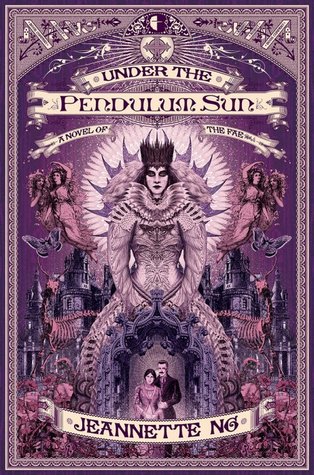
[READ: April 15, 2021] Under the Pendulum Sun

I’m not sure how I heard about this book, but I saw a rave review and it inspired me to actually buy the book, sight unseen.  I didn’t realize the book was put out by Angry Robot, a publisher I have been recently introduced to and which publishes esoteric and unusual fiction, that seems to have a religious aspect.

So this fit right in.

This is a long book and it is written in an old style–slightly formal with lots of biblical components.  The writing at times felt stiff, but not unreadable.  And, this is the weirdest part, I simultaneously felt like the book was moving too slow and yet I felt like I was flying through the chapters.

Each chapter opens with an epigram.  Most of them are fictitious but there are some from real authors and these may or may not be real quotes.

The book opens with Catherine Helstone talking about how she and her brother Laon (how in the heck do you say that?  It plagued me for the whole book) grew up fantasizing about new worlds.  But neither one of the ever fantasized about Arcadia, the land of the Fae.

Now that they are older, her brother has left for Arcadia to become a Christian missionary–to convert the souls of the Fae–if they can even be converted.  Several years later, Catherine has now set off to find him.  She has a ship and his compass in hand. But the key to reaching Arcadia is to get hopelessly lost and then the entrance will appear.

Neat. (more…)

Read Full Post »

« Newer Posts - Older Posts »