Feeds:
Posts
Comments

Archive for the ‘Unlikable main character’ Category

CV1_TNY_01_28_13Colombo.indd

SOUNDTRACK: VAMPIRE WEEKEND-“Arms” (Live) (2013).

TVampire-Weekend-608x287his track is a bootleg-quality live recording of a new Vampire Weekend song which may or may not be on the new album.  The sound quality is lousy, but you can hear all of the elements of the song.

It sounds like Vampire Weekend, but a bit slower than I’m used to.  I love Vampire Weekend more than I should, and while I’m open to them changing, I’ll be bummed if they turn into a different band (as their version of  “Unbelievers” on Jimmy Kimmel suggested).

Every VW album deserves a ballad, but I hope it’s not all slow songs–VW gives you pep!

You can hear it here.

[READ: January 23, 2013] “Mayfly”

This story opens with a beautiful and sad image–thousands of butterflies flying across a street on their annual migration to Mexico.  And hundreds of them getting hit by cars–smashing into windshields and grilles.

James, the driver of the car is not happy about it, but hi co-pilot (in the car and soon in life) Molly is distraught.  She demands he pull over.  Which he does, only to see that tractor trailers and other cars are not pulling over and are similarly smashing into the butterflies.  Finally James says there’s nothing they can do, so they continue on through the carnage.

They arrive at their destination–James’ old friend Sam and his wife Jenny’s house.  Sam and Jenny have three kids, including a new baby.  And they weren’t expecting James until the next day, but they welcome James and Molly warmly.  They have dinner and drinks and a nice time catching up.  James has a business trip to Denver the next morning, but he’ll be back that night.  They agree that Molly can accompany him since she wanted to visit a friend in Denver.  James and Jenny stay home. (more…)

Read Full Post »

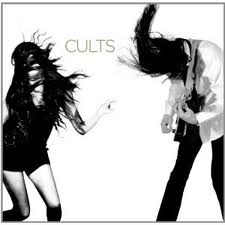
buddySOUNDTRACK: CULTS-Cults (2011).

cultsThis album was on many year end lists in 2011.  But it’s really tough for me.  I really really want to like it.  The cover alone is very cool.  And in fact, I do like it quite a bit.  The songs are simple and catchy and after just one or two listens they are very easy to sing along to.  So what’s the problem?  The album sounds an awful lot like the girl group/Phil Spector sound of the 6os which I really do not like.  I have never enjoyed that era of music–and I think it is mostly something to do with those singer’s voices.

Cults singer Madeline Follin has a delivery that reminds me a lot of that sort of Ronettes vibe.  Even though the music is not like that–Cults is much more 90s indie sounding (although the drum beats are often the same) I’m conflicted about how much I enjoy the record.

When I can just lighten up and bop along it’s wonderful. Indeed, some of the album embraces other styles.  I hear the mood of  Twin Peaks on “You Know What I Mean”  And songs like “Never Hear Myself” sound more contemporary which takes that girl group edge off.  “Never Saw the Point” has a strange Japanese quality to it that makes it stand out from the rest of the tracks.

I found that after listening a few times I could get past the parts I don’t like and enjoy that punky fun.  Although I don’t imagine that I would get another Cults album after this.  But you never know.

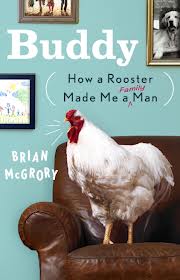
[READ: January 20, 2013] Buddy

I rarely get a book that I don’t like.  So I rarely get a book that I don’t finish.  This book seriously had me considering not finishing it.  In fact, I even said I wasn’t going to finish it.  But I plugged on, got the minor amount of redemption I expected and am now done with it.

So what was so bad about this book?  Well, first, the title suggests that this will be a book about a rooster.  Perhaps I should have wondered how McGrory was going to write 300 pages (yes) about a rooster.  And then answer is, he isn’t.  He’s going to write 300 pages about McGrory.  I had no idea who he was when I checked out the book.  He is a columnist for the Boston Globe and, God help us, a novelist.  And I should have known that, since it was in the biography section that it would be all about him, but again, I was charmed by the cover and the title.

So the book opens with a brief bit about Buddy, a rooster who lives, sometimes, in their house.  And whom McGrory clearly does not like.  McGrory lives in the Boston suburbs, although with a house with nearly an acre of property I’m not sure exactly how suburban that is.  My family lives in NJ we have almost two acres and we aren’t really in the suburbs of any big cities.  We also have chickens–a lot of chickens and a few roosters.  And this is why I wanted to read the book–see how this guy adapts to a rooster in his life.

After that first chapter, the next 120 some pages have nothing to do with Buddy.  They are all about McGrory and his dog, Harry.  As any dog owner, McGrory thinks that his dog is the best, smartest, coolest etc dog in the world.  And that’s fine, although I didn’t need over 100 pages to be told that.  What I also learned in those 120 pages is that McGrory is a smug, entitled jackass.  He somehow believes that he is a regular guy although he is going to a vet on Newbury Street (I lived in Boston, that’s a swanky street…  I can’t even imagine what a vet charges there) and because of his reporting job, he has access to all kinds of fancy places to eat, people to meet, sports teams to see etc.  He also, and let’s make this very clear, things that the suburbs are a vast wasteland, that kids are overindulged and, well, every other cliche that rich, cranky, white men complain about (some of which I agree with mind you, but he seems so bitter about it all). (more…)

Read Full Post »

dtmaxSOUNDTRACK: TOM WAITS & KEITH RICHARDS-“Shenandoah” (2013).

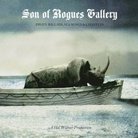
roguesgallery-f8be47f3887d51de57ea842a129f0a722e53ef74-s1This tune comes from the album Son Of Rogues Gallery.  The album is, of all things, a sequel to the album Rogues Gallery.  The full title is Son Of Rogues Gallery: Pirate Ballads, Sea Songs & Chanteys.  The first album was a kind of novelty–I can’t even say novelty hit as I don;t know if it was.  But it must have had some success because here’s a second one (and there’s no Pirates of the Caribbean movie to tie it to).

The album has 36 songs (!) by a delightful collection of artists, including: Shane MacGowan, Nick Cave, Macy Gray, Broken Social Scene, Richard Thompson, Michael Gira and Mary Margaret O’Hara (among many others).  I enjoyed the first one, but I think the line up on this one is even better.

“Shenandoah” is not a song that I particulalry like.  Because it is traditional, I have a few people doing versions of it, but I don’t gravitate twoards it–it’s a little slow and meandering (like the river I guess) for me. And this version is not much different.  What it does have going for it is Waits’ crazed warbling along with even crazier backing viclas from Keith Richards (there;s no guitar on the track).

[READ: January 7, 2012] Every Love Story is a Ghost Story

I had mixed feelings about reading this biography.  I’m a huge fan of David Foster Wallace, but I often find it simply disappointing to read about people you like.  And yet, DFW was such an interesting mind, that it seemed worthwhile to find out more about him. Plus, I’ve read everything by the guy, and a lot of things about him…realistically it’s not like I wasn’t going to read this.  I think I was afraid of being seriously bummed out.  So Sarah got me this for Christmas and I really really enjoyed reading it.

Now I didn’t know a ton about DFW going into this book–I knew basics and I had read a ton of interviews, but he never talked a lot about himself, it was predominantly about his work.  So if I say that Max is correct and did his research, I say it from the point of someone full of ignorance and because it seems comprehensive.  I’m not claiming that he was right just that he was convincing.  And Max is very convincing.  And he really did his research.

It’s also convenient that DFW wrote a lot of letters–Max has a ton of letters to quote from.  And DFW wrote to all kinds of people–friends, fellow authors  girlfriends, colleagues….  Aside from old friends, his two main correspondents were Don DeLillo, whom he thought of as a kind of mentor, and Jonathan Franzen, whom he considered one of his best friends and rivals.  I guess we can also be thankful that these recipients held on to the letters. (more…)

Read Full Post »

SOUNDTRACK: RA RA RIOT-“Is It Too Much” (2013).

raraI loved the first Ra Ra Riot album The Rhumb Line.  This song expands on some of the ideas from that album, but I fear that it goes in the one direction I would have preferred they not go.  The album had strings, nice harmonies and a great singer all melded into an interesting rock structure.

This song retains all of the elements that were interesting, but it removes it from the rock structure, making it  sound much more lightweight.  It’s pushing too far into easy-listening.  And do I hear autotune on the vocals?  The instrumental middle section is the most interesting part of the song.  But Ra Ra Riot seems to have removed the riot part of their sound.  If this is the direction of the album, I’m afraid I won’t be following.

[READ: January 8, 2013] “Consider the Writer”

I just finished the D.T. Max biography of David Foster Wallace.  I was curious what kind of reception it received.  And lo, here’s a review by Rivka Galchen (something I would have read anyhow since I enjoy her so much).

Galchen opens with two main points–the biography is gripping (and it is, I’ll be saying more about that tomorrow, too).  She writes: “In writing a chronologically narrated, thoroughly researched, objective-as-­imaginable biography, Max has created a page turner.”

The second idea is that you keep thinking “that you just don’t find Wallace all that nice”  (which I also thought).  But then she wonders if it is fair to be worried about that.  We should not judge others after all.  Especially since, as she points out, “We don’t always find ourselves asking whether a writer is nice. I’ve never heard anyone wonder this at length about, say, Haruki Murakami or Jennifer Egan.”  So why is that a concern about Wallace?  Because niceness is what Wallace wrote about, tried to encourage.  And perhaps “One understandably slips from reading something concerned with how to be a good person to expecting the writer to have been more naturally kind himself.”  But that is not necessarily the case–people strive for things that they cannot achieve.   I like her example “the co-founder of A.A., Bill W., is a guru of sobriety precisely because sobriety was so difficult for him.”   And her conclusion: “Wallace’s fiction is, in its attentiveness and labor and genuine love and play, very nice. But what is achieved on the page, if it is achieved, may not hold stable in real life.”

And Galchen talks a bit abut DFW himself (the book is a biography after all).  How he wore the bandana because he sweated so much–how self conscious he was about that and by extension nearly everything he did.  This mitigates his not-niceness somewhat.  It also ties in to his alcoholism  drug use and depression.  And his competitiveness, which is obvious in the biography.  She enjoys the pleasure of Wallace’s correspondences, “especially with his close friend and combatant Jonathan Franzen, but also with just about every white male writer he might ever have viewed as a rival or mentor. Aggressive self-abasement, grandstanding, veiled abuse, genuine thoughtfulness, thin-skinned pandering — it’s all there.”  I rather wished that the authors’ own reactions were included (of course it’s not biographies of them, and they are still alive), just to see if they sparred back with Wallace or if they were put off by yet indulgent of his needs. (more…)

Read Full Post »

SOUNDTRACK: SUNN O)))-Flight of the Behemoth (2002).

I hadn’t really heard Sunn O))) until this record (which may not be typical as they collaborated with Merzbow on this one).  I knew that Sunn O))) played loud droney “music.”  And so it is here.  On “Mocking Solemnity” (9 minutes) and “Death Becomes You” (13 minutes) (which meld into each other seamlessly), the songs are mostly slow drones on electric guitar.  The chords are heavy and heavily distorted and they ring out for a few bars–not until the chords die naturally, there is a kind of pacing involved, but for a few bars until the chords are played again (often the same chord).  This is for those who thought Metal Machine Music was too complicated.

On paper this sounds unimpressive (or downright awful, depending) but in reality it is a very physical experience (if played loud enough).

The staticy noise of “Death” melds into track 3 “O))) Bow 1” which adds what sounds like radically modified piano playing a kind of melody.  It’s about 6 minutes and it really changes the tone of the record to suddenly add an atonal racket to the almost calming drone of the bass.  But by the middle of the song, the piano becomes what sounds like a chainsaw.  Merzbow mixed that track and  “O))) Bow 2” which is 13 minutes of the same slow pulsating noise.  It’s not exactly soothing.

The final track is “F.W.T.B.T.” a “remake” of “Metallica’s “For Whom the Bell Tolls.”  I can’t hear a thing that sounds like the original, but that’s what makes a cover interesting.  Although admittedly around the four and a half minute mark there’s some faster chords (for this band anyhow) that could be Metallica-like.  There are also drums (and vocals, although I have no idea what they are saying) on this ten-minute workout.

Not for the faint of heart (or fans of melody).

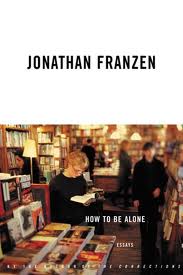
[READ: November 17, 2012] How to Be Alone

I read most of the articles in this book already.  But I read them over two years ago, so I thought it would be safe to wade into the world of Franzen again.  What I find most interesting about the title of this book is just how many of these articles are about being alone, wanting to be alone or feeling like you are alone.  Obviously that is by design but it seems surprising just how apt the title proved to be, especially given the variety of subjects  his father’s brain, being a novelist, the US Postal Service, New York City.

I’m not going to go into major detail about each article this time, although I am providing a link to the earlier review–my feelings didn’t really change about the pieces (except that from time to time I got a bit exhausted at his…whininess?  No, not that exactly…maybe his persecution complex.  But I will give a line summary about each one just to keep everyone up to speed.  The four pieces that I hadn’t read before I will give a few more words about.

One overall feeling is that when Franzen isn’t writing about the state of the novel (which he is very passionate about) his articles are well researched well documented which is kind of surprising given the state of panic he seems to be in the novel articles.  It’s also kind of funny how out of touch these articles seem (some are almost 20 years old and are kind of laughably outdated), but it’s also funny to see how poorly his predictions panned out.  The death of the novel is rather overrated (just see the success of his own Freedom.

So the book contains: (more…)

Read Full Post »

SOUNDTRACK: DAN DEACON-“Guilford Avenue Bridge” (2012).

I only know Dan Deacon from his “cover” of “Call me Maybe” (in which he layered the song on top of itself 147 times).  Deacon has a new proper album out and while it’s not quite as outlandish as the “Call Me Maybe” cover, it’s still pretty out there.

This is the opening track–a noisy barrage of sound set to a really catchy drum beat and bassline.  But you almost have to listen hard for that beat because it is just a wall of noise that goes on for 90 seconds until the song completely stops and is replaced by a manipulated banjo solo (I think).  This slowly morphs into pianos and then waves of delicate keyboards (all of which I’m sure is some kind of manipulated sound).  With about 30 seconds left the noise comes back and the songs ends much like it started.  Although it ends with a very happy chord.

This is definitely not for most, but the experimental nature is quite fun, and it’s definitely not something you’re going to hear on the radio very often.

[READ: August 22, 2012] “The College Borough”

I hadn’t read any Joshua Cohen before this story (he wrote the 800+ page buzz book Witz, but is NOT the author of a book called Leverage which Sarah reacted very strongly to–that would be Joshua C. Cohen, this one is Joshua A Cohen).  Also, I put it off because it was long.

Before I summarize, I want to state that this story is flipped on its own head by the final line.  The final few words completely changed how I felt about this story.  And I have to wonder what the risk is for a writer to do something like this.  For the entire story we don’t know why the narrator acts the way he does (in the present).  The flashback that the story provided is very thorough and detailed but it does not answer our pressing question.  Even when we return to the present, and the past comes to meet them, it still doesn’t explain it. It is literally the last few words that justify everything.  That’s audacious.

I’ll say more about this at the end.

It also begins with an audacious statement: “I helped build the Flatiron Building though I’ve never been to New York.”  Indeed, it seems that the narrator never wanted to go to New York.  But ow that his daughter, a junior in high school, wants to go to college in Manhattan (they hope she’ll stay in-state), he agrees for them all to go to New York City.

The narrator met his wife, Dem, in college (at in-state college).  They were both in the writing program and they’d had some classes together before they enrolled in Professor Greener’s seminar.

The beginning of the story is mostly the narrator’s complaints about New York.  I especially enjoyed this line: “I know no city can contain all the amenities you’d find at a place like our alma mater.”  Back home they have more pools, more StairMasters and their very own Flatiron Building (dubbed the Fauxiron).

Then the story pulls back so we can figure out what the hell this guy is talking about. (more…)

Read Full Post »

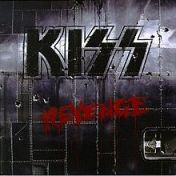
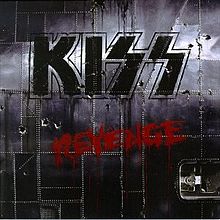
SOUNDTRACK: KISS-Revenge (1992).

Having not learned from Creatures of the Night, this time when I blew off Kiss for a few years, they came out with Revenge, a very heavy, very aggressive album.  It’s certainly one of their best post-70s albums.  I didn’t pick it up until many years later, so I never got to appreciate it to its fullest extent.  And I really like it.  But in typical Kiss fashion it is marred by a few truly ghastly songs.  Ghastly in and of themselves, but also ghastly because they do not belong anywhere near this album.

The band was having a hard time by 1992.  Eric Carr died in 1991, and that had to be pretty rough (even for the businessmen of Kiss).  Nevertheless, they regrouped with a new drummer, Eric Singer (who is blond, for god’s sake!) and came up with an album that fit in more with the aggressive alt sound of the early 90s.  It opens with “Unholy” a heavy dark song, very much like early Kiss (and interestingly co written with Vinnie Vincent, although he doesn’t play on the record).  This is the kind of aggressive song that Gene is meant to sing.  “Take It Off” is a cheesy song about going to strip clubs.  Kiss seems to live in the world of metaphor, so this very explicit song is quite shocking from them—even if the content is no surprise at all.  And Paul’s voice doesn’t seem to work with the music very well.  Although in a rare twist for Kiss, the slow middle section is actually pretty good.  “Tough Love” sounds like a very different style of Kiss–it’s all minor key and menacing.  This is especially odd for a Paul song.  It’s a respectable change of style.

“Spit” is another really weird Kiss song.  The guitar is very rough and raw—almost industrial.  But having Gene sing “It don’t mean spit to me” seems like a total cop out.  Of course, when the bridge comes in and Paul actually sings “the bigger the cushion the better the pushing” which is literally a Spinal Tap lyric (and given all the groupie photos I’ve ever seen, completely untrue) the song hits rock bottom.  The chorus “I need a whole lotta woman” actually makes it worse.  Although the odd solo section in which Gene scat-sings along with the solo is pretty wild.

“God Gave Rock and Roll to You II” may be an anthem and may have been Kiss’ biggest hit in years, but I think it’s pretty awful.  Kiss doesn’t need yet another song about rock n roll being awesome.  Although they sound very good in the little Beatles-esque breakdown near the end.

“Domino” is a popular song still, and it’s got that old school swagger.  I happen to dislike Gene’s lascivious opening and frankly, the lyrics are really, really gross.  I mean, sure, he wants to sleep with young girls, but you’re 43 and she “ain’t old enough to vote.”  Couldn’t you just make her 22 and make us all feel a lot less queasy?  I mean in “Goin’ Blind,” you were 93 and she was 16, but somehow that doesn’t seem as gross.  “Heart of Chrome” (also co written by Vinnie Vincent) is a fast rocker—another odd one for Paul (this whole album feels like it should be sung by Gene), but Paul works it very well.  “Thou Shalt Not” is mildly blasphemous and kind of interesting (Gene was born in the promised land!).

“Every Time I Look at You” is the obligatory ballad.  It sounds so crazily out of place on this heavy disc.  And it’s a pretty typical metal ballad of the time.  “Paralyzed” is an example of how Kulick’s wild soloing fits with the heavy sound of the album—it’s noisy and rough like the songs themselves. Of course the actual song, a near the end of the album track by gene, is pretty much filler.  But it’s good filler.

The end of the album has the stupid, but fun “I Just Wanna.”  I hate that the vocal melody is ripped straight out of “Summertime Blues.”  And it’s got a “naughty” chorus straight out of 7th grade—”I just wanna Fuh I just wanna Fuh I just wanna Forget you.” Okay, it is kind of fun to sing that part.  “Carr Jam 1981” is an instrumental jam that is dominated by Eric Carr’s drum solo.  It’s nice tribute to Eric (even if they did have Bruce record over Ace’s original guitar work).

I hadn’t really listened to this album all that much, but I found that when I listened to it again recently (aside from those three or four bad songs) it was a really good, rocking album.

[READ: August 13, 2012] “After Ellen”

This is a story about an asshole.  And that is deliberate.

The title is “After Ellen” and the first 8 or so paragraphs are all about what a cowardly shit Scott is.  He doesn’t want to get too serious with Ellen.  They have already picked up stakes from Long Island and moved to Portland together.  But he knew an evil seed was planted when they got there.  And so, on the day after they talked about adopting a dog, he packed all of his things into their shared car and just left.  While she was at work.  Giving her no warning.  And now, leaving her with no ride home.

How is it possible that one would want to read any more about this guy?  Perhaps to see if he gets a comeuppance or to see if he changes his mind (although one hopes that Ellen would never take him back after that).  But Taylor is a good writer and I want to read on.

He heads south to stay with his sister in Los Angeles–unannounced of course.  But he stops in San Francisco to rest for the night.  He checks his phone for the first time in two days.  Ellen called 16 times and has gone from pleading to rage. There’s also messages from his parents (who are going to cut him off if he doesn’t call) and from Andy, a college friend from Portland who says he is a shit for taking the car–how is Ellen supposed to get to work?  He texts Alan who immediate writes back and says to never even think about Ellen again.

After he settles in, he had deliberately avoided checking his past life, but when he finally logs into Facebook he sees that Ellen has not unfriended him (she was always a lazy Facebooker).  And her most recent post is Fffrrryyydddaaayyy (and five people “like It).  But Andy has unfriended him and Andy’s new profile picture is of him and Ellen.

And here’s where I say the asshole part of the story is deliberate.  (more…)

Read Full Post »

SOUNDTRACK: BILL CALLAHAN-“Santa Maria” from Score! 20 Years of Merge Records: The Covers(2009).

I don’t often listen to songs that are as simple and straightforward as this one.  It’s an acoustic guitar with occasional piano and Callahan’s deep voice.  The melody is enjoyable and the vocals are crystal clear.  (Callahan is from Smog, a band I know of, but whom I don’t really know).

The original of this song is by Versus on their Afterglow EP.  I’ve liked Versus for a long time–their mix of male/female vocals and rockin’ guitars is always exciting.  But I didn’t remember this song at all.  It turns out that it’s kind of a slow, brooding number, something I probably wouldn’t have paid a ton of attention to back when I was rocking out more.

I prefer the Versus version as there’s more interesting tricks afoot, although Callahan does some cool subtleties by the end of the song that really bring out some interesting twists to the song.

[READ: April 16, 2012] “Our Raccoon Year”

I’ve read a few pieces from Paul Theroux, and I’ll say that this piece really surprised me.  While I wouldn’t try to categorize all of Theroux’s writing, I would say that a domestic story about raccoons is one that I would not have expected.

The story opens with the narrator, a young boy, telling us that his Ma decided to go away.  Their Pa explained that she was where she wanted to be “with her friend.”  Given the circumstances, and the fact that Pa was a well-respected citizen (and attorney), Pa was given custody of the narrator and his brother. He was the first man to be given custody of children after a divorce in their region and it only upped people’s opinions of him.

That’s a neat conceit for a story.  So it’s surpising when he says that it also began their “raccoon year” which means it was their year of dealing with raccoons. (more…)

Read Full Post »

SOUNDTRACK: CLOUD NOTHINGS-“Stay Useless” (2012).

This was the song of the day on NPR on March 14th.  While NPR describes it as like 90s indie rock, I find it to be much more like early 2000s indie rock (think The Strokes or Arctic Monkeys).  True, those bands were playing in the spirit of 90s rock, but they had a slightly different take on things–cleaner, perhaps.

So, while the guitars are buzzy and distorted, the vocals are up front and clear (even if the words aren’t entirely understandable–a neat trick that).  The song is under three minutes and has a catchy, powerful chorus.  I’ll bet it’s a lot of fun to hear live, although honestly I don’t think it’s anything all that special.

[READ: March 9, 2012] “Ever Since”

I’ve enjoyed many of Antrim’s stories in the past.  And, I rather enjoyed this one as well.

This was a fairly simple story of a man who has not let go of the woman who broke up with him a year earlier.  And how she haunts him and his current relationship still.

The opening of the story is really quite wonderful.  It didn’t really have an impact on me at first but when I reread it, I realized it’s a wonderful precis of the story:

Ever since his wife had left him–but she wasn’t his wife, was she? he’d only thought of her that way, had begun to think of her that way, since her abrupt departure, the year before, with Richard Bishop [I’m interrupting to say wow, has he packed a lot into a dependent clause.  And then he continues with the rest of the powerful descriptor]–Jonathan had taken up a new side of his personality, and become the sort of lurking man who, say at work or at a party, mainly hovers on the outskirts of other people’s conversations, leaning close but not too close, listening in while gazing out vaguely over their heads in order to seem distracted and inattentive waiting for the conversation to wind down, so that he can weigh in gloomily and summarize whatever has just been said.

Now, THAT, dear readers, is a SENTENCE!

To make him even more pathetic, when he summarizes an idea he often claims that his ex-wife felt a certain way about it…and then explaining that she wasn’t really his ex-wife.

The crazy thing is that Jonathan has a new love in his life: Sarah, the kind of woman who  appears by his side at a party (a work party for her) and says, “Hey Buster, lets’ go fuck in the bathroom.”  It’s unclear whether she was joking, which makes it even more fun. (more…)

Read Full Post »

SOUNDTRACK: STEREOLAB-Chemical Chords (2008).

You never really know what you’re going to get with Stereolab. Well, that’s not entirely true, you know you’re going to get some unusual sounding loungey keyboard songs with lyrics that are either in French or in highly accented English.  But beyond that each Stereolab album tends to go in its own direction.

Chemical Chords creates its own poppy bouncy bliss, making it one of their most approachable albums.  “Neon Beanbag” even features the chorus: “there’s nothing to be sad about” over a set of the bounciest keyboard riffs around.  “Three Women” has a brisk pace and some bright horns.   “One Finger Symphony” has a minor key and as lightly sinister tone (but it’s only 2 minutes long).

The title track has some cool echoed vocals and a wonderful break in the song that allows a sweet little string section to sneak through.  “The Ecstatic Static” is another pulsing song that seems alive somehow and “Valley Hi!” is a short darker piece with cool sound effects.

“Silver Sands” is a wonderfully bubbly pop song–the kind that Stereolab does so well, with vocals that seem like they might belong to another song.  “Pop Molecule” is a great minor key instrumental, which is a nice introduction to the super pop of “Self Portrait with ‘Electric Brain'” another bubbly song with a cool break in it.  “Nous Vous Demandons Pardon” opens with a martial beat before it settles down into a groovy song with French lyrics.

“Daisy Click Clack” shows off Stereolab’s totally unexpected lyrics:  “Snap snap snap snap with your fingers/Off beat on time make it linger/Enriching the rhythm/Do away with skepticism/Come and join the hymn, tap/Sensing the symbiotic force.”  From nonsense to the sublime in just a few short lines.

The final song “Vortial Phonotheque” reminds me of “I am the Walrus” in the music, but the gentle lyrics change the tone completely.  It’s a wonderful disc full of all of the bright sounds Stereolab does so well.  This would be their second to last disc before they went on a hiatus.

[READ: February 28, 2012] “How I Met My Daughter”

Two baby stories in a row!

Those following closely think that I was done with Max Barry last week.  But there was one final piece for me to read.  Technically this doesn’t make the last post wrong because although this story was on his website, it was also published in a magazine called The Bulletin.

If I thought that last week’s “Cement” story was dark, it’s nothing compared to this one!  Barry, while a somewhat violent writer (his last book was all about surgical procedures), is usually quite funny as well.  But this story eschews all humor for a walk through the dark side of man’s nature.

It opens with this incredibly dark couple of sentences:

They dragged this bloody, howling thing from my wife’s abdomen, its limbs twitching and clawing, its face like an angry pumpkin, and asked me, “Do you want to take a photo?”

Yes. I want to take a photo, so I can look back on the end of my life.

This story explores the feeling that men apparently have when their baby is born–jealousy at the lack of attention they will now receive.  I didn’t experience this at all and frankly it seems like a fictional thing to me, because I don’t know of any men who felt real jealousy of their babies.  But it makes for an interesting story. (more…)

Read Full Post »

« Newer Posts - Older Posts »