Feeds:
Posts
Comments

Archive for the ‘Translators’ Category

oct13SOUNDTRACK: PRIMUS-The Brown Album (1997).

brownThis is the first Primus album to not feature Tim Alexander on drums.  Brain has taken over.  And while the difference isn’t that substantial, the overall feel of the band has shifted, to a less progressive, more heavy, loud band.  Brain evidently brought super-sized, very tall bass drums which added a big whomping sound.  And while for the most part his is a simpler style, he doesn’t shy away from fills and noise when necessary.

I haven’t listened to this album as much as many of their others but after revisiting it lately I’ve decided that it has a lot more really good songs than I remembered.

“The Return of Sathington Willoughby” is a great introduction–a far richer and more complex song than I remembered.  It begins with some ominous drum and bass with Les’ spoken word proclamations from Willoughby.  But I love the way the fast part of the song jumps in and features a really fast funky bass and some great squeaking guitars–which absolutely make the song.  “Fisticuffs” is a really deep heavy song (the drums are really loud).  It’s a classic story song from Les, with great stomping bass and cool guitars from Ler.

The riff from “Golden Boy” is quite good–complex and interesting.  One of the nice things about most of these songs is that they are largely shorter.  This song for instance would have suffered if it were 5 or 6 minutes, but at 3 minutes, it’s a tidy little fast number.  “Over the Falls” is one of their slower singles, a story song that’s under three minutes.  Not super catchy, but interesting.  “Shake Hands with Beef” was the first single–it’s a big stomping song with a group chorus–something unusual for Primus.  It’s no less weird than some of their other singles, but I feel like it’s missing something–maybe guitars?

The next few songs are kind of muddy and not terribly memorable.  “Camelback Cinema” is a sludgy kind of song without a lot of interesting components.  On the other side of the spectrum is “Hats Off,” a short honky-stomping song that feels like a country number.  It’s not terribly interesting but it does break up the album nicely.  “Puddin’ Taine” has a kind of classic Primus stomp, although it’s a little muddier.

After those middle songs, I love “Bob’s Party Time Lounge” which switches between slow verses and a super chorus that has a great bass riff and some nice big guitars.  It’s a simple song, but really effective and fun.  It’s one of may favorite late period Primus songs.  I also like “Duchess and the Proverbial Mind Spread” for the fun riff and style of the song.

“Restin’ Bones” actually has a lead guitar riff (!)  It’s nice to hear a lead guitar but the song is only so so and a little too long.

But I do love “Coddington” which is another of my favorite later period songs.  It features the (really fast) bowed bass and a thumping drum.  This song whips by and is amazingly catchy.  I also really like “Kalazmaoo” both for the great guitar riff and because he references “I’ve Got a Gal in Kalamazoo” with the same alphabetical introduction.

I like “The Chastising of Renegade” for the nice big drum openings.  The guitar and bass riffs are also really cool and the switch to the reggae guitar strumming is quite a surprise.  It feels a tad long, but it’s overall a good one.  The final song, “Arnie” opens with big loud distorted drums.  It has a groovy bass and simple but cool guitars.  I feel like this should have been an instrumental, as the lyrics aren’t that interesting.

So overall this one is a bit of a mixed bag.  There are definitely some great songs that I would absolutely have out on a greatest hits record.

[READ: January 10, 2015] “Scheherazade”  Ted Goossen

I really enjoyed this story.  As with a lot of Murakami, I feel like he has an interesting perspective and tells stories that are unlike anyone else’s.

This story is interesting for the layers that he puts into it.  It opens “Each time they has sex, she told Habara a strange and gripping story afterward.”  Okay, simple set up.  He thinks of her as Queen Scheherazade from A Thousand and One Nights (although he had no plans to chop off her head).

Habara keeps a journal and he keeps track of her visits, using a secret code–her name and a one word summary of whatever she talked about that day.  He didn’t know if her stories were true or not and he didn’t care–he just enjoyed them, usually more than the sex.

Then details of their relationship emerge–she is a housewife with two children and he is a housebound man–he never leaves.  She was sent to him as part of his situation (which is never explained–is this a common thing in Japan?).  She brings him food and books and DVDs two or three times a week, although he cooks for himself. He simply never leaves the house.  She also has sex with him–he’s unclear if this is supposed to be part of the deal or if it is her own impetus.  The sex is not passionate, but it is enjoyable.  And yet as the story shows, it is the stories that she tells afterwards that he enjoys more. (more…)

Read Full Post »

CV1_TNY_08_11_14Mattotti.indd SOUNDTRACK: PRIMUS-Sailing the Seas of Cheese (1991).

cheeseHere they come, here comes the bastards again.  Sailing the Seas of Cheese was the band’s major label debut, and they were given a lot of freedom to do whatever they wanted.  Which they did.

The first two songs sort of ease you into the chaos that is “Sgt Baker” a noisy stomp that mocks the military. It’s followed by “American life” a relatively quiet song that is rather sad.  Although I like Ler’s solo at the end (which is rather conventional for him).

But the album really takes of with “Jerry Was a Racecar Driver”, Primus’ first real hit.  Which is amazing in and of itself given how weird a song it is and how noisy (and moshy) the middle section is.  Fun drumming opens “Eleven,” a rocking song done in 11/4 time–count it, its crazy!  I just love the lunacy of “Is It Luck?”–the bass is fast and so bizarre while Ler’s guitars are playing one simple dissonant note for much of the song.  “You wanna get lucky little boy?”

“Grandad’s Little Ditty” is basically Les singing in the shower (and one of the few songs I know of which use the word “flatus”).  It leads into the new recording of “Tommy the Cat.”  This time the role of Tommy is played by Tom Waits, which make a slot of sense.  The Primus book has a funny story about Waits singing this (he sent them a version without having heard the song and he sang it through a megaphone).  The bass in the middle of the song is just incredible.

“Sathington Waltz” continues the adventure of Sathington Willoughby, although this is a scattered instrumental with banjos and loud drums (and lots of guests).  “Those Damn Blue Collar Tweekers” is a stomping song with a great riff.  I never knew exactly what it was about (not that its hard to figure out), but the book explains exactly who Les was talking about.

“Fish On” is a 7 minute song (most of the songs on this record are shorter than on Frizzle Fry) with a lengthy intro and outro.  The disc ends with “Los Bastardos” a reprise of the opening bastard music with some samples from The Young Ones and all kinds of friends playing along.  It’s a really fun record with some absolutely classic songs on it.

Shut up you bastards!

[READ: January 5, 2015] “Picasso”

The ever prolific César Aira had a new short story in The New Yorker (he usually writes novella length pieces, but this appears to be an actual short story (3 pages)) which is a little different.

In the story, the narrator says he was in the Picasso museum enjoying the artwork when a genie came out of his bottle of Miracle Milk and offered him a choice: Would he rather have a Picasso or be Picasso.  I enjoyed this twist on the typical three-wishes genie (he even mention how most people are prepared to ask for more wishes), and that this was totally unexpected.

To me, the answer was obvious from the start, Picasso was a pretty unhappy guy, why would I want to be him?  Of court, as the narrator goes through the options, he says that if you were Picasso you would automatically have all the Picassos.  Plus, he says that he himself has a pretty unhappy life, so Picasso would be a step up.

The narrator reviews Picasso’s life and output, but ultimately he decides that owning a Picasso would give him the financial security to allow himself to write his novels.

As soon as he thinks that, a painting appears on the table in front of him.  It is clearly a Picasso.  He spends the next few paragraphs describing the painting and then comes upon a “meaning” for it.  It’s an interesting look at a Spanish fable or joke.  The fable involves a queen who is lame and her servants who want to tell her without actually telling her.  The punchline of the joke comes down to “Su Majestad, escoja” which translates as “Your Majesty, choose” or if the last word is broken up (into es coja) “Your Majesty is lame.”  It’s a pretty elaborate painting or what amounts to a joke (and I have no idea if this is a real painting or not).

As the story comes to an end, the final paragraph introduces a whole new aspect of the story which was hilarious and unepxetced.  It was a great twist.  I do have to wonder if this is part of a bigger story because although it feels complete, I could easily see him following this character further.

This was translated by Chris Andrews.

For ease of searching I include: Cesar Aira

Read Full Post »

barbariabnsSOUNDTRACK: ULTRA LOUNGE: CHRISTMAS COCKTAILS Part Three: Yule Tide Cheer Through the Year (2005).

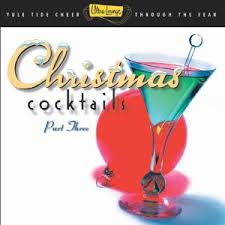
xmastails3The final part of the Ultra Lounge Christmas set certainly sees them running out of steam.  There’s far fewer songs and the total running time is nearly 20 minutes shorter.  But that doesn’t mean there aren’t some great tracks here.

CARMEN McRAE-“Baby It’s Cold Outside” a fun opening with some talking before the song between Carmen and Sammy Davis Jr.  Davis is really silly through the song (and she seems to be laughing him).  BING CROSBY-“Frosty The Snowman” wonderful.  LENA HORNE-“Santa Claus Is Comin’ To Town” a trippy opening in which Horne was “in the milky way.” Then the song kicks in—a fun version overall. Strangely she switches “bad or good” into “good or bad.”  JOHNNY MERCER-“Jingle Bells” a fun hopping version with plenty of swing.  There’s even extra lines (“there’s nothing new about jingle bells”).

WAYNE NEWTON-“Let It Snow! Let It Snow! Let It Snow!” Female vocalists again (I thought Newton was a singer?), but nevertheless, it’s a fun version.  NANCY WILSON-“That’s What I Want For Christmas” a pretty song, that I didn’t know before.  I really dig Nancy Wilson.  DEAN MARTIN-“Winter Wonderland” delightful, I do love the Deano.  BILLY MAY-“Do You Believe In Santa Claus?” – Billy May’s deep dark rather scary voice presents this weird song.  It’s funny and a little spooky what  with the crazy way it ends.

PEGGY LEE-“White Christmas” this version is too for me.  AL MARTINO-“Rudolph, The Red-Nosed Reindeer” this is a nice version, though.  RAY ANTHONY-“A Marshmallow World” a lovely version of this fun song.  LOU RAWLS-“Have Yourself A Merry Little Christmas” Rawls has finally won me over.  I like this song by him.  JULIE LONDON-“I’ve Got My Love To Keep Me Warm” slow and jazzy but too slow for me.  NAT KING COLE-“Buon Natale (Means Merry Christmas To You)” a fun song quaint and cute and one you don’t hear very often.  JUNE CHRISTY-“Sorry To See You Go” I don’t know this song, it’s more of a New Year’s song. Swet and bouncy. Although not my favorite ending to the discs.

So that’s the Ultra Lounge mixes, easily my favorite way to spend a holly day.

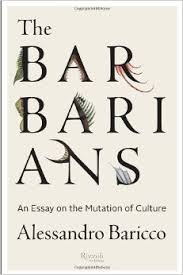
[READ: December 24, 2014] The Barbarians

This was the final Baricco book I planned to read this year and it’s a good way to end the year–reflecting on the past but planning to move forward.

It’s nonfiction so I didn’t really know what to expect.  But I certainly didn’t expect the story in the beginning of the book.  Baricco explains that he really wanted this book to be translated into English (especially for the American market where he felt it would be particularly on target) but he couldn’t find anyone to publish it.  And he didn’t want to go self publishing.  He ultimately found a friend in New York, owner of Eataly who agreed to foot the cost.  They did the work and then Random House distributed it.

So Stephen Sartarelli translated it.  The book is a fun and interesting look at the barbarians who are ruining our culture and destroying our soul.  But Baricco is very careful to point out that just because they are ruining things, it doesn’t mean that they are making things worse or doing it maliciously.  He uses several specific instances in which the barbarians have changed something held sacred and made it, if not better, then different and often more enjoyable.

This book was originally written as a series of newspaper articles in 2006 (not sure exactly when).  He says it was fun to see feedback as he was writing each installment (each “chapter” is about four pages). (more…)

Read Full Post »

gogolSOUNDTRACK: ANDY WILLIAMS-Merry Christmas (1965).

awxmasMan, I love some Andy Williams at Christmastime.  I don’t really know much about him at other times of the year and I imagine that I would never listen to him, but he is one of the voices of Christmas. I like his voice so much even if I don’t love all the songs on this record.

His “Sleigh Ride” is the essential version–boppy and fun–you can imagine zipping along on a sleigh with jingle bells bouncing along.

“Have Yourself a Merry Little Christmas” is a bit slow, but “Winter Wonderland” sounds great.  His “Let It Snow! Let It Snow! Let It Snow!” is fun–he can really belt out those notes and “Silver Bells” is also a highlight.

The choice of “My Favorite Things” (from The Sound of Music) is unexpected, as it has nothing to do with Christmas, but his rendition is wonderful.  “Christmas Holiday” is a song I don’t know but Williams belts it out as well.  “Do You Hear What I Hear” is also great.

“Some Children See Him” is a fascinating song that I haven’t heard too much (although Rivers Cuomo does a cover of it(!)).  It’s all about how children from different countries see Jesus a different way (a rather progressive idea).

“Little Altar Boy” is a slow and somewhat ponderous song that I’m unfamiliar with.  The final two songs “Mary’s Little Boy Child” and “The Bells of St. Mary” are pretty but not fun (as you would assume from the titles).

So I love about half the disc and like most of the rest.  Williams has an earlier Christmas album as well.  I think I’d like to pick and choose between the two discs for a great Williams collection.

[READ: December 23, 2014] The Night Before Christmas

I had intended to read all Dickens stories this week.  And then my latest New Directions Pearl arrived and it was this one: The Night Before Christmas (also translated as Christmas Eve) by Nikolai Gogol.  Well, that put a change in my plans.

I don’t know much about Gogol, although apparently he wrote only short stories (no novels).  My book has a quote from Dostoevsky that says, “We all came out of Gogol’s overcoat.”  So imagine my surprise when this night before Christmas is actually about witches and the devil and affairs with beautiful women!

The story is set in Dikanka, Ukraine.  It is Christmas Eve and, according to legend, that is the night in which the devil is free to perform tricks and torment people.  Before the devil comes, we see a witch flying around the sky collecting stars.  The devil decides that he is going to steal the moon–this will make it very dark so he can create even more mischief.  The moon proves to be very hot, and he winds up juggling it a few times until he gets it into his pocket.

The devil decides to get back at Vakula, the village blacksmith.  In addition to being the blacksmith, he is also an artist and he has painted some really cruel pictures of the devil on the side of the church.  And the devil is pretty miffed about this.  So he sets an elaborate plan in motion. (more…)

Read Full Post »

profSOUNDTRACK: THE BLUE HAWAIIANS-Christmas on Big Island (1995).

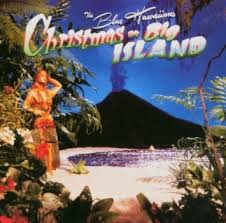
blue ha I was to get this disc used because I already knew one of their songs and I thought that a surfing Christmas album would be fun.

So I was pleased to add this to our collection.  But upon listening to it, I learned that while I enjoy surf guitar instrumentals, I do not enjoy the Hawaiian style of music popularized by Elvis.  This album features both of these types of songs.

The songs that I like include these instrumental surf guitar renditions: “Christmas Time is Here” (the Peanuts song); “White Christmas,” “Jingle Bells” (the guitar is a little too untamed for my liking in this version).  “Have Yourself a Merry Little Christmas” is a good instrumental, but there’s a very lengthy middle section that makes the song too long.  “We Four Kings (Little Drummer Boy)” is my favorite track on the album and the one that made me look into more from them.  It’s a great surf guitar rendition of “We Three Kings” with some excellent tribal drumming as a segue into a surf version of “Little Drummer Boy.”

The vocal songs are fine, they’re just not my style.  “Jingle Jangle” and “Blue Christmas” are just way too Elvis-y for my liking (we actually just watched some of Blue Hawaii so it’s in my head).  “Big Island” stars with Hawaiian style drums which I like, then it turns into a kind of blues song.  “Mele Kalikamak” is my favorite song with vocals, probably because of its nontraditional nature (to me).  It ends with about 20 seconds of waves breaking.

“Enchanted Xmas” ends the disc with some Western sounding guitars and some cool wordless backing vocals.  It gives the whole thing an eerier (or enchanted) feel.  Pretty cool.

So something of a mixed bag, but a great album to select tracks for a fun Christmas mix.

[READ: December 15, 2014] The Professor’s Daughter

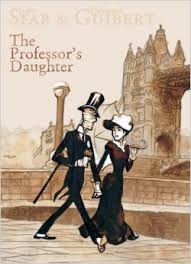
From the team who brought us Sardine comes this very different kind of story.  Interestingly, in this book, it is Sfar who wrote it and Guibert who drew it.  And I have to say I like it a lot more than the Sardine books (both in content and drawing style).

The story is quite unexpected.  As it opens, a young lady (in Victorian times) is seen stepping out with, well, with a mummy.  It turns out that he is Imhotep IV and she has taken him from his holding spot and is going about town with him.  (And no, it isn’t all a dream.  At least I don’t think it is).

They go out for tea (which makes him tipsy).  He causes all manner of mayhem, including offending someone who slaps his face and challenges him to a duel.  Later when the police come, the professor’s daughter takes matters into her own hands (which only makes the situation worse!).  A man is killed and the mummy is the suspect (which leads to a few very funny scenes). (more…)

Read Full Post »

novocSOUNDTRACK: BUKKENE BRUSE-The Loveliest Rose (2002).

bruseI’m not entirely sure how I came to own this disc.  But I’m so glad I do.  This is a Christmas album from one of Norway’s traditional ensembles (pronounced: BUH-kayna BREW-sah).  They have been around since the 1990s and have toured extensively around the world.  This is their only Christmas album.  It was recorded in an Oslo church.

The album features four players on some great traditional instruments: Arve Moen Bergset – vocals, violin & Hardingfele; Annbjørg Lien – Hardingfele & nyckelharpa; Steinar Ofsdal – flute; Bjørn Ole Rasch – pipe organ.

The album is a wonderful collection of music.  I prefer the instrumentals, although Bergset does have a lovely singing voice.  What I found most interesting is that the sound of the music conveyed many non-Norwegian feelings.  I heard some Irish sounding traditional music and even some Native American (the flute in the final song).

The pipe organ sounds amazing and the fiddle, especially on “Father Fiddled on Christmas Eve” is fantastic.

Nine of the songs are traditional, the rest are written by the band, aside from St. Sunniva, the opening of which comes from ELP’s “Karn Evil 9, 3rd impression (I kid you not–it is quite stripped down here).

I really love this non-traditional traditional Christmas album.  I’m including the track listing mostly because I wanted to have all of this Norwegian in a post.

  1.   A Child Is Born in Bethlehem «Eit barn er født i Betlehem» (3:18) [great flute and a surprisingly catchy hallelujah]
  2.   Lullaby for Julie «Lullámus» (3:15) [great sound of the Hardanger fiddle which has two drone strings]
  3.   Spirit of the Grove «Haugebonden» (5:14) [a gorgeous melody]
  4.   Christmas Eve «Juleftan» (3:38) [unusual fiddle sounds and an unusual and captivating melody]
  5.   My Heart is with Jesus «Mit Hjerte Altid Vanker» (6:32) [the pipe organ really elevates this song]
  6.   St. Sunniva «St. Sunniva» (3:44) [organ and fiddle together in this Irish sounding song]
  7.   A Little Child So Pleasant/In the Sweet Christmas Time «Et lidet barn saa lystelig / I denne søde juletid» (7:20) [beautiful flute and solo violin]
  8.  Father Fiddled on Christmas Eve «Så spela far juleftan» (3:02) [that cool, unusual fiddle is back]
  9.  The Loveliest Rose has Been Found «Den fagraste rosa er funni» (2:35) [the voice is really great on this one]
  10.  Christmas Gangar «Romjulsgangar» (3:22) [beautiful fiddle and flute dance with some unusual sounds from both instruments]
  11. For Such Generous Gifts «For saadan’ mildheds gaver» (2:53) [a New Year’s tune that is rather haunting, I must say]

[READ: December 14, 2014] Novocento

In continuing with my obsessive reading of all things Baricco, I had to interlibrary loan this book from Johns Hopkins.

Novocento is confusingly titled because that is the Italian title as well and although it is a number (which could be translated) in this book it actually refers to a person, which would not get translated–so look carefully for the English edition (done by Oberon) and wonderfully translated by Ann Goldtsein).  It was designed as a play (and this edition is the play).  However, it is a one man monologue (with music ion the performance), so it doesn’t “read” like a play.

The book is 56 pages long.  They have also made a movie out of it (called The Legend of 1900, not just 1900 which is a different movie).  Amazingly the movie is 170 minutes (Italian version) and 120 minutes (international).  That must be a lot of music.

The story is simple, Novocento, as he is called, was born on a ship–an ocean liner that transported people primarily from Europe to America in the early 20th century.  His parents were undoubtedly lower class and left him on the piano aboard the boat (we don’t hear their story at all).  One of the crew finds him and names him Danny Boodman T.D. Lemon Novocento.  Danny Boodman is the man who found him, T.D. Lemon was on the side of the box he was left in and Novocento was the year. (more…)

Read Full Post »

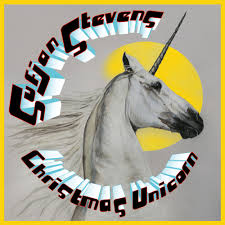
bolano SOUNDTRACK: SUFJAN STEVENS Christmas Unicorn: Songs for Christmas, Vol. X (2010).

sufjan 10This is the final disc in the second Sufjan Steven Christmas box set.  It is comprised of mostly shorter songs except for the final one which is 13 minutes long.

Interspersed in the disc are three short instrumentals (under a minute each).  “It Came Upon A Midnight Clear” “Angels We Have Heard On High” and “We Three Kings” are all pretty with flutes and minimal electronics.

The more traditional songs are “Have Yourself A Merry Little Christmas” which sounds very much like a Sufjan song with some fun electronic sounds and orchestration and some unusual vocals.  “Up on the Housetop” features lots of drums and layered vocals. It is the standard version but tinkered with with in fun ways.  “We Need a Little Christmas” is a fun and traditional version with choral vocals.

The other three tracks are originals from Sufjan.  “Happy Karma Christmas” a slow track of mostly drums and echoed vocals. It reminds me of Beck’s discoey electronic moments.  “Justice Delivers Its Death” is based on the lyrics of “Silver and Gold” (from Rudolph) but it is a much darker song (obviously, given the title) and sounds nothing like it.

The final track is “Christmas Unicorn.”  It’s a sweet song with funny/thoughtful lyrics.  After three minutes it turns into a nice instrumental.  At the four minute mark a new refrain begins. It sounds like the song is going to fade to end, but it doesn’t. At 6:30, drums come back in and the song takes off with more singers and a fugue style of interweaving vocals.  At 7:36 a new melody is introduced which is, Joy Divisions’ “Love will Tear Us Apart.” They incorporate that into the fugue vocals and it works very well.  It’s a strange song and very unChristmassey, but it’s very cool and quite catchy by the end.

I don’t enjoy this second box set as much as the first, since it is so unChristmassey, but it has some really interesting songs on it.

[READ: December 13, 2014] Bolaño: A Biography in Conversations

I don’t often read biographies about authors I like, but once in a while one will catch my eye.  I knew Maristain’s name from Bolaño’s last published interview, so I was curious what she would do with this collection.  It was translated by Kit Maude, and I am also curious about some of the words that Maude chose to use (the word savage/savages comes up an awful lot when not referring to The Savage Detectives).  But overall it was an easy, quick read.

As the subtitle suggests, Maristain has compiled a loose biography of Bolaño based on interviews with others.  Some are interviews that she has conducted and others are previously existing interviews that she has cobbled together.  The people interviewed are primarily his family and his fellow poets/novelists/friends.

Bolaño was born April 28 1953 in Santiago de Chile.  Soon after, they moved to Valparaiso, and then other smaller towns in Chile. In 1968 they moved to the Mexico City because of his mother’s asthma (although he never set foot in Sonora, the scene of the crimes in 2666). They lived close to the Olympic park and were within walking distance of the Olympic torch during the 1968 Olympics.

He had a difficult upbringing, with his parents splitting up and his mother moving out and taking his sister with her.  Roberto, meanwhile, stayed with his father.  They eventually had a falling out and Roberto went twenty years without seeing him.  His father was a boxer and an opinionated man, and there are lots of quotes from him in the book.

In 1977 Bolaño left Mexico for Spain (and never went back) and that’s when we start getting into his publishing history. (more…)

Read Full Post »

tibSOUNDTRACK: INDIGO GIRLS-Holly Happy Days (2010).

hollyhappyI know I bought this for Sarah for Christmas a few years ago (I like that it looks like a present).  Sarah and I have both been fans of the Indigo Girls (and we’ve both seen them, but at different events).  This seemed like an obvious fun record for the holidays.  But we both felt a little let down by it.

I’m not exactly sure what’s not quite right, but after listening  again, I think the record is just too much of a downer for Christmas.  I mean even the Indigo Girls’ more serious songs counterbalance with lively singing, but much of this album feels very dirge-like to me.

The main unexpected thing for me is that the record is largely bluegrass-inflected–not something I expect from the Indigo Girls–or Christmas music.

But that’s just how it opens–banjos and fiddle and whooping on “I Feel the Christmas Spirit” a song I didn’t know before.  It’s fun, just unexpected.  “It Really is (a Wonderful Life)” reminds of Barenaked Ladies for some reason (not their voices obviously). It’s folky and is another a song I didn’t know.  I like it–it’s fun having new Christmas songs.
“O Holy Night” has a very weird quality to it.  I usually love this song, but I don’t really care for the way they did this one–it feels flat or something.  Or maybe it’s the violins and folk trappings?  Actually, the middle part (with their great harmonies) sounds really good–I guess it’s just the opening I don’t like.

“Your Holiday Song” sounds more like  a”real” Indigo Girls song–great harmonies, cool chord progressions.  (This one was written by Emily Saliers, so that makes sense).  It’s the first song I really like on the disc.

It’s the middle of the disc that really loses any steam it had.  “I’ll be Home for Christmas” is certainly a sad kind of song, but their version is practically suicidal.  Oh it’s such a downer with that slow violin solo.  Who would want to listen to this version of this song?
“Mistletoe” is an Amy Ray original.  Coming right after the downer of “I’ll be Home” this one is also slow and a downer.  I find that Ray’s voice also sounds really different on this song–I would never have guessed this was her.
“Peace Child” is the third downer in a row, and you just want to give up on your festive mood after this one.

But it picks up with a rollicking bluegrass “The Wonder Song” (written by Amy Ray).  It’s the most fun song on the disc and while it doesn’t scream Christmas, it is a holiday song.

Obviously no one is making “In the Bleak Midwinter” into an upbeat poppy song.  Their version is quite pretty, and their harmonies are wonderful.

Perhaps the strangest song is their cover of Woody Guthrie’s “Happy Joyous Hanukkah.”  It feels very Guthrie, which means it should be done in a folk style (which it is).  The surprise is the full bluegrass rendition of a Hanukkah song (how many Hanukkah songs have whooping in them?  It’s fun, though.

“Angels We Have Heard on High” sounds great with their harmonies.  Although the mandolin solo kind of brings the song down to earth in a weird way.

The disc ends as it middled, with a slow, mournful song,”There’s Still My Joy.”  While I know that not everyone is happy at Christmastime, this record goes a bit too far into the darkness for my liking.

[READ: December 2, 2014] Tib and Tum Tum

Here is another translated comic.  It is done with great flair by Carol Klio Burrel who also did Nola’s World.  This story is aimed more at kids though (but is not existential at all–see yesterday’;s post about translated stories).  The biggest surprise for me with this is that it is actually a series of one page strips rather than a long graphic novel (I think).  Well, there is a long story arc, but every page seems to have a “punchline” as if the story was sequential rather than continuous.

It’s a very simple premise. The book is set in caveman days.  Tib is a small boy with a giant birthmark on his face.  The other kids make fun of him for this.  His mother is overprotective (the joke about him always being safe is very funny) and his father is an oblivious storyteller (whoppers of tales, I must say).  In that first strip, Tib runs into Tum Tum, a baby dinosaur.  He is adorable (and a little scary too, of course).  And Tib decides that this red guy is pretty cool.  Tum Tum spends most of his time chasing (an eating) butterflies.

When Tib tells the elders about the dinosaur they tell him of course that dinosaurs are extinct.  (I love that the story is set in caveman times but that they talk in a more or less contemporary way (no grunting) and are knowledgeable (there’s a sewing joke which is very funny).  When he tries to show Tum Tum to them, the dinosaur hides so no one can see him.  Eventually his mom thinks he has an imaginary friend. (more…)

Read Full Post »

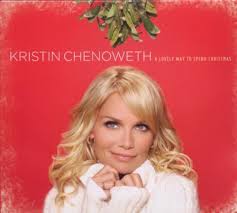
aamaSOUNDTRACK: KRISTIN CHENOWETH-A Lovely Way to Spend Christmas (2008).

chenoLast year I thought about doing a Christmas CD every day in December as my soundtrack.  But I forgot until a week or so in.  But this year I remembered.  Yuletide joy!

Since Sarah and I have a lot of Christmas CDs from over the years, I decided to just pick some at random this year.  And we start with this one which I got for Sarah I thought last year, but if it’s from 2008, perhaps I got it earlier?

I knew Chenoweth from her great role on Pushing Daisies.   I didn’t know she was a singer then.  She has since done some amazing runs in various roles and her voice is great.  This disc features a mix of traditional songs, a few more religious songs and a number of unexpected “mashups.”  It works pretty well, although it tends to cross the line into cheese a bit too much for me.

“I’ll Be Home for Christmas” has her in great voice.  Although I hate the cheesey sax solo.
“Christmas Island” is a new favorite song for me.  Her version is fun (although the original Hawaiian version is much more fun).
“The Christmas Waltz” is a song I don’t know.  It is probably best song on the disc.
“Do You See What I See” also suits her voice very well.  It’s the first song to mash in another song (“Angels We Have Heard on High“) which is quite pretty
“Sleigh Ride/Marshmallow World” I like her part, I’m not sure about the blend.  I don’t know who John Pizzarelli is, but he sings it too clean.  The original of “Marshmallow World” is sung in an almost drunken fashion which makes the weird lyrics better.   Nevertheless, the two of them have a good vocal chemistry.  And there’s some goofy fun at the end.
“Sing” (you know, sing, sing a song).  It’s a really weird inclusion here.  But she sounds great.
“Silver Bells” also sounds great.
“Come On Ring Those Bells” is another song I don’t know.  This version is way too pop country for my liking.
“What Child is This” is also perfect for her voice.
“Home on Christmas Day” is another song I don’t know (who knew there were so many unfamiliar Christmas songs?), and it works well “Born on Christmas Day” is a rather dull more religious song, which seems somehow out of place.
“Sleep Well Little Children/What a Wonderful World” is another mash up. It works pretty well and I kind of get why she chose it to end the album, but it’s another weird non-Christmas related song.

So overall this is a decent Christmas album. There’s some lovely traditional songs, some odd choices, and a few clunkers.  But her voice is really fantastic throughout.

[READ: November 29, 2014] Aama

I’m surprised and delighted with how many unusual, translated graphic novels are being published in the States these days.  There’s always something about the art that screams “not American.”  So when I get books like this (especially if the author’s last name is Peeters), I immediately look for the translator to confirm my suspicions.  This book was translated by Edward Gauvin.

While translated childrens book often seem slightly weird to my family (fun, but always slightly askew), the graphic novels don’t usually seem as weird to me.  (Maybe the childrens authors just expect more existential thought from their kids).

Having said all of that, I found that I really couldn’t get into this story.  There were some great elements to it, in both storytelling and character creation, but, and maybe more will be explained in future books, but the main plot was a little too vague to me.

But I loved the way it was constructed.  We open on a man face down.  As he comes to, he realizes that he has no idea who he is.  While he tries to get himself together, a weird looking ape comes up and calls him Verloc.  The ape has no hair on his legs (so they look human).  The ape is named Churchill and he is a custom built robot.  As Verloc tries to come to grips with what’s happening, Churchill gives him his “memoirs” to read.  The book is “real paper” which Verloc appreciates.  And they started just a week ago.

Pretty cool opening. (more…)

Read Full Post »

harpjuneSOUNDTRACK: FATHER JOHN MISTY-“Bored in the U.S.A.” (2014).

 boredNot a cover of the Clash song (“I’m So Bored with the U.S.A”) this is a piano dirge about the materialism of American culture.

I loved Father John Misty’s debut, and the way it addressed serious topics but with beautiful songs and Misty’s wonderful voice.  But this song is a dark and dreary tale of life in contemporary America.  Father John laments about, well, just about everything:

I’ve got all morning to obsessively accrue
A small nation of meaningful objects
And they’ve got to represent me too

or

Now I’ve got a lifetime to consider all the ways
I’ve grown more disappointing to you
As my beauty warps and fades

with the staggering next line

I suspect you feel the same

Te melody is pretty, but solemn (there’s no ironic poppy chord structure for this lament).  Rather, it’s a slow minor key piano melody with Misty’s beautiful aching voice drifting over the chords: “Save me white Jesus.”

By the next verse, while the melody and singing stay at the same pace, he adds a laugh track to his life: “They gave me a useless education / A subprime loan, Craftsman home / Keep my prescriptions filled / Now I can’t get off, but I can kind of deal / Oh, with being Bored in the USA.”

If this is the single, what can the album have in store?

 Save me President Jesus.

[READ: November 17, 2014] “Long in the Tooth”

This is a Czech story (translated by Stacey Knecht) written by Hrabal (who died in 1997).  I don’t know anything about him except that he wrote “many novels.”

But this story I find quite puzzling.  It’s not hard or complicated, indeed, it is quite a straightforward piece.  I’m just puzzled by why he wrote it (unless the conceit of false teeth was so novel that it needed to be written down).

In this story, the main character (who is a woman although that isn’t revealed until quite late in the story) is marveling at how she (and her husband) have aged without them realizing it.  She says that suddenly she was sixty and then sixty-five when she contracted paradentosis (which can cause massive tooth loss). (more…)

Read Full Post »

« Newer Posts - Older Posts »