Feeds:
Posts
Comments

Archive for the ‘The Future’ Category

SOUNDTRACK: PINK FLOYD-“Several Species of Small Furry Animals Gathered Together in a Cave and Grooving with a Pict” (1969).

I‘ve mentioned this song a few times here so I figured I’d talk about it itself.  This bizarre song comes from PinkFloyd’s bizarre album Ummagumma.  Back in high school we ranked albums by a very specific content rating and this one received the highest: SDI-seriously drug induced.
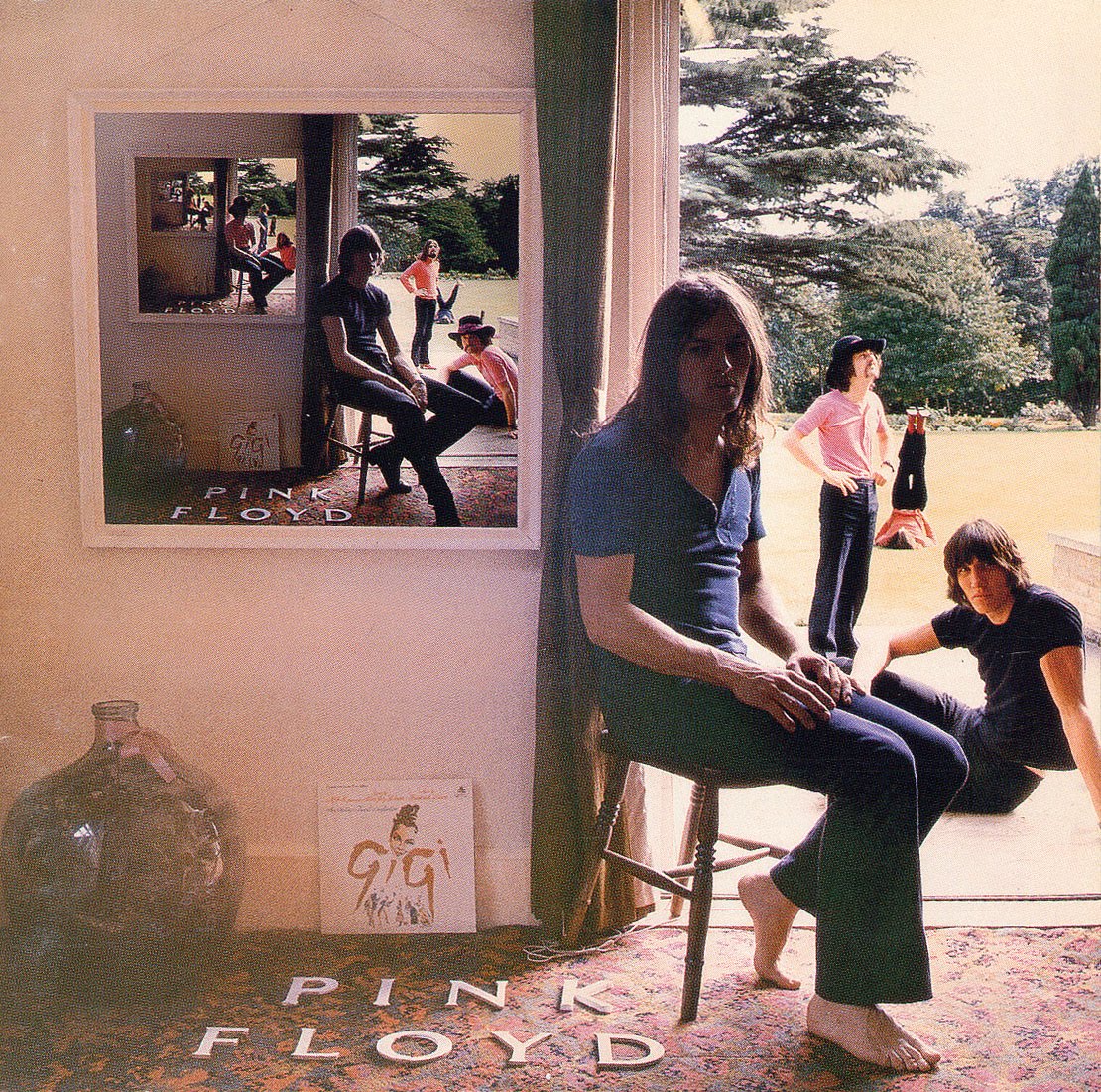
Disc One is a live album but disc two contains compositions by each of the band members.  They each received about thirteen minutes of time to do what they wanted.  And they really seemed to go to town.

Roger Waters created this track, and it is very, very weird.  I’ve always loved it, probably because it is so audacious.  Wikipedia gives us this:

The track consists of several minutes of noises resembling rodents and birds simulated by Waters’ voice and other techniques, such as tapping the microphone played at different speeds, followed by Waters providing a few stanzas of spoken word in an exaggerated Scottish burr.

The Picts were the indigenous people of what is now Scotland who merged with the Scots.

You can hear it in all its glory (and then marvel that the guy who made it later when on to make some of the most famous music ever released) in this video.

I also love that someone liked this bizarre thing enough to put it on a Pink Floyd compilation (Works) as well.

And the wind cried Mary.

[READ: January 25, 2012] “Terminator: Attack of the Drone”

I found a link to this story somewhere, I can’t recall where, now.  It was mentioned with excited breath that Moshin Hamid, who I don’t know, had written this exclusive short story for The Guardian.  Hamid has been shortlisted for the Man Booker prize and has written two novels: The Reluctant Fundamentalist (2007) and Moth Smoke (2000).

This story was not quite what I expected from the brief biography I’d read.  Because of the ominous title, I assumed it might have something to do with Iraq (I realize that this came out before the recent downing of the U.S. drone in Iraq, but it still seemed plausible).  Rather, what we get is a bit of sci-fi about smart machine that are on a murderous rampage.

The story is not really as sci-fi as all that, except that what I wrote is true. But it’s more about two boys as they try to deal with this new world of death, machines and heroism.

It begins with the note that “the machines are huntin’ tonight.”  (There’s an interesting dialect in the story, especially from someone who lives in Lahore, New York and London.  We get lines like “Sky’s light enough so’s we’d maybe see the machine but all’s quiet and it ain’t about,” which I register as Southern American.  And yet the characters are named Omar and Yousuf.  I can’t decide if that’s an attempt to show a future world of total integration or just a total disconnect.)

There aren’t many humans left–his Pa is dead, his ma got her leg blown off by a landmine.   But at least his sisters are still alive–that’s more than most people have.

The machines come thundering through, crushing everything in their sight.  They also fly–you can’t see them, but you can hear them.  No one has ever killed a machine. (more…)

Read Full Post »

SOUNDTRACK: LEMONHEADS-Varshons (2009).

This is a Lemonheads covers album.  The amazing thing about this covers album is that mot of the originals are quite unknown (heck I didn’t even recognize some of the artists).  But he manages to put a good Lemonheads spin on most of them (the  later country/folk Lemonheads style) and it makes for an enjoyable listen.  ALthough truth be told, most of the songs aren’t as catchy as a good Lemonheads song.

“I Just Cant Take it Anymore” and “Fragile” are folky/country songs, not too far out of line with the Lemonheads sound.  “Living with Linda” is a strange choice on the disc.  It’s a cover of a song by G.G, Allen, a performer who I know a lot about (he’s infamous) but who I have never heard.  I assume that the original is a brutal punk song (it’s about killing an ex girlfriend, after all) but Dando turns it into something of a Johnny Cash type song (using his best deep voice).

“Waiting Around to Die” is a dark song, another good country ballad.  “Green Fuz” has a cool backwards guitar solo.  “Yesterlove” is a long, slow builder of a song that, intriguingly seems to move seamlessly from one section to another.  I really like it.  “Dandelion Seeds” is a trippy weird song  that works quite well in the Lemonheads universe.

“Dirty Robot” is the really big surprise on the disc. After all of the folky country music, this song is a totally electronic song (and a very simple one at that). In addition to the electronic surprise is the fact that the lead vocals are supplied by Kate Moss (Dando has a robot-processed spoken verse).

The only song I knew here was the cover of Leonard Cohen’s “Hey That’s No Way to Say Goodbye.”  This is a fine but very quiet version which features a duet by Liv Tyler (!?).  (It would be impossible to screw up this song).  The final song is probably my favorite.  It’s a cover of Christina Aguilara’s “Beautiful.”  I’ve always liked the song (it’s quite touching) but I must say I like Dando’s version better.  It’s very understated (and he changes the words to “I am Beautiful” instead of “You are beautiful”–interesting change or egotism?).

So this is a strange covers album, quite atypical for the world of covers.  It’s not often that a covers record introduces yo to a whole bunch of new material.

[READ: December 30, 2011] “Succeeding in Business Through Marketing Fads”

I am running dangerously close to not having anything to post about in 2012.  Not for the entire year, but on a daily basis.  I have effectively caught up to all of the posts that I had planned to write.  I have read all of the New Yorker and Harper’s stories that I had lying around and because of my new job it’s taking me considerably longer to read books.

I was seriously planning on having this post be about how I wouldn’t be able to have any more daily posts in 2012.

Enter Max Barry.

I’ve read all three of Barry’s previous books (indeed I read his first book years and years ago and didn’t even tie it into his other ones until his bio did it for me).  I’ve enjoyed them all.  He has a new book out that I am currently enjoying called Machine Man.  Anyhow, reading this book made me want to see about his short stories and the like.  Well, his website has a few short pieces on it.  Enough to get me through the next week anyhow.

For you, dear reader, that means you’ll get a whole week’s worth of Max Barry before you can get to whatever else I manage to finish next year. (more…)

Read Full Post »

I have been getting The Washington Spectator for years and years.  I was delighted with it in the beginning when the editor had the wonderful name of Ben Franklin.  I am delighted now that publisher’s name is Hamilton Fish.  But aside from these two fascinating details, I have always enjoyed the content.  It was thoroughly researched and detailed.  And the little 4 page leaflet always looked like a newspaper in design and style, and it gave it a kind of gravitas–no flashy colors or pictures.

Well, here it is, Vol 37, Issue No 21 and they have finally changed the format.  And not only that, they have created a website and have a Facebook presence!  Welcome to the 20th century!

I say that jokingly because despite these changes (which look great by the way), The Spectator has not abandoned its old school journalism practice.  21st century news is pretty much all flash and brash–style over substance–quick reporting with no concern for accuracy and very little attention brought to retractions (can anyone say “climategate” (I wish they wouldn’t call it that)).  But The Spectator is exactly the opposite, and I am delighted to say that although they are now a lot more accessible, they have not lost any of their tenacity or thoroughness.

The redesign is quite nice.  There’s an image on the front page and now there are pull quotes in red, which stand out nicely on the pale paper.  Although I always liked the pull quote box in the middle off the front page, this new format allows for a couple of different pull quotes as well as an opportunity to mix things up a bit.  (more…)

Read Full Post »

SOUNDTRACK: OKX: A Tribute to Ok Computer (2010).

OK Computer is one of the best records of the 90s.  Every time I listen to it I hear something new and interesting.  So, why on earth would anyone want to cover the whole thing?  And how could you possibly do justice to this multi-layered masterpiece?

I can’t answer the first question, but the second question is more or less answered by this tribute which was orchestrated by Stereogum.

The answer is by stripping down the music to its bare essentials.  When I first listened to the songs I was really puzzled by how you could take a such a complex album and make Doveman’s version of “Airbag,” which is sort of drums and pianos.  Or gosh, where would you even begin to tackle “Paranoid Android?”  Well Slaraffenland create a bizarre symphonic version that excises many things–in fact half of the lyrics are missing–and yet keeps elements that touch on the original.  But it’s an interesting version of the song and shows  a bizarre sense of creativity.  And that is more or less what this tribute does–it makes new versions of these songs.

Mobius Band make a kind of Police-sounding version of “Subterranean Homesick Alien.”  Again, it radically changes the song, making it a fast and driving song (although I don’t care for the repeated “Uptights” and “Outsides” during the verses).

Vampire Weekend, one of the few bands that I actually knew in this collection (and whom I really like) do a very interesting, stripped down version of “Exit Music, for a Film.  The “film” they make is a haunted one, with eerie keyboards.  Again, it is clearly that song, but it sounds very different (and quite different from what Vampire Weekend usually sound like).

“Let Down” (by David Bazan’s Black Cloud) and “Karma Police” (by John Vanderslice) work on a similar principle: more vocals and less music.  The music is very stripped down, but the vocals harmonize interestingly.  Perhaps the only track that is more interesting than the original is “Fitter Happier” by Samson Delonga.  The original is a processed computer voice, but this version is a real person, intoning the directives in a fun, impassioned way.  There’s also good sound effects.

Cold War Kids take the riotous “Electioneering” and simplify it, with drums and vocals only to start.  It’s hard to listen to this song without the utter noise of the original.  “Climbing Up the Walls” is one of the more manic songs on this collection, with some interesting vocals from The Twilight Sad.

There are two versions of “No Surprises” in this collection.  Interestingly, they are both by women-fronted bands, and both treat the song as a very delicate ballad.  Both versions are rather successful.  Marissa Nadler’s version (the one included in sequence) is a little slower and more yearning, while Northern State’s version (which is listed as a B-Side) is a little fuller and I think better for it.  My Brightest Diamond cover “Lucky.”  They do an interesting orchestral version–very spooky.

Flash Hawk Parlor Ensemble (a side project of Chris Funk from The Decemberists) do a very weird electronic version of the song (with almost no lyrics).  It’s very processed and rather creepy (and the accompanying notes make it even more intriguing when you know what’s he doing).

The final B-side is “Polyethylene (Part 1 & 2),”  It’s a track from the Airbag single and it’s done by Chris Walla.  I don’t know this song very well (since it’s not on OK Computer), but it’s a weird one, that’s for sure.  This version is probably the most traditional sounding song of this collection: full guitars, normal sounding drums and only a slightly clipped singing voice (I don’t know what Walla normally sounds like).

So, In many ways this is a successful tribute album.  Nobody tries to duplicate the original and really no one tries to out-do it either.  These are all new versions taking aspects of the songs and running with them.  Obviously, I like the original better, but these are interesting covers.

[READ: November 5, 2011]  McSweeney’s #8

I had been reading all of the McSweeney’s issue starting from the beginning, but I had to take a breather.  I just resumed (and I have about ten left to go before I’ve read all of them).  This issue feels, retroactively like the final issue before McSweeney’s changed–one is tempted to say it has something to do with September 11th, but again, this is all retroactive speculation.  Of course, the introduction states that most of the work on this Issue was done between April and June of 2001, so  even though the publication date is 2002, it does stand as a pre 9/11 document.

But this issue is a wild creation–full of hoaxes and fakery and discussions of hoaxes and fakery but also with some seriousness thrown in–which makes for a fairly confusing issue and one that is rife with a kind of insider humor.

But there’s also a lot of non-fiction and interviews.  (The Believer’s first issue came out in March 2003, so it seems like maybe this was the last time they wanted to really inundate their books with anything other than fiction (Issue #9 has some non-fiction, but it’s by fiction writers).

This issue was also guest edited by Paul Maliszewski.  He offers a brief(ish) note to open the book, talking about his editing process and selection and about his black polydactyl cat.  Then he mentions finding a coupon in the phonebook for a painting class  which advertised “Learn to Paint Like the Old Masters” and he wonders which Old Masters people ask to be able to paint like–and there’s a fun little internal monologue about that.

The introduction then goes on to list the 100 stores that are the best places to find McSweeney’s.  There are many stores that I have heard of (I wonder what percentage still exist).  Sadly none were in New Jersey.

This issue also features lots of little cartoons from Marcel Dzama, of Canada. (more…)

Read Full Post »

SOUNDTRACK: ADELE-“Someone Like You” (2011).

I’ve been hearing this song in unlikely places–like on a radio station that plays The Foo Fighters and the Butthole Surfers.  So I thought I’d actually listen to it and see what the fuss was about.  It has been selected as one of 2011’s Best Songs (So Far) on NPR  (where you can hear it in full). 

It’s a sparse piano song, a pretty, desolate melody .  But the real selling point is Adele’s voice.  I had heard her described as a kind of Amy Winehouse (who I don’t like) or a sort of R&B siren,(which I wouldn’t like).  But she has a kind of husky voice that belies its power.  In some ways she reminds me of a more mature Fiona Apple.

On this song at least, it’s just her and her piano–no pretensions to genre or style, just an honest emotionally naked song.

The melody isn’t obvious–it’s not an immediate grab you by the lapels hit.  But it is haunting and her voice supplies the bulk of the tune.  She can carry the whole thing with ease.

I’m not sure if it fits on that radio station, but it is certainly a wonderful song.  I wonder what the rest of the album sounds like.

[READ: October 31, 2011] “One Year: Storyteller-in-Chief”

I am posting this review today because it is Election Day (in New Jersey, anyhow).  One can only hope we get some of the awful incumbents out of town, but we’ll see.  I’m also posting this now because I feel the need to vent about our current Presidential Candidates.  Not the men and woman themselves (who are all barely qualified to be in charge of their own car keys, much less the country).  What I’m venting about is the fact that we know these men and women are candidates at all.  Or the fact that so many prospective candidates have already dropped out.

The election is a year away.  A YEAR.  It’s bad enough that the media talks about everything the President does in terms of how it will affect his chances for re-election (again, A YEAR away) but that we have all of these bozos running around talking about what a bad job the President is doing as well is just dreadful.  And basically, instead of actually doing something about being President, he must do triage on the damage these loose cannons are causing.  True, Obama appears to be somewhat less than concerned with what they say about him, but the fact that everything that happens in Washington is foreshadowing the next election, it sure makes it hard for anything to get done.

Anyhow, in other countries, the citizens have a few months at most to decide who their candidates will be.  And a few months in our country would translate to much less expensive candidacies, much more opportunities for fringe candidates to be heard (for better or worse) and less candidate exhaustion (both them and us).  Why in the hell does it take eighteen months to run for President?  In what way are we served by having all of these people running for office for over a year?  And things are only going to get worse now that so many states have moved their primaries up so far (January 3, Iowa?  Really?  You want to narrow down the presidential choices ten months before the election?).

I know that my opinion won’t even cast a ripple in Washington, but come on.  I propose that people aren’t even allowed to declare their candidacy until the May before the election.  That gives them six months, which should be ample time to run an election campaign.  Have the primaries in August and September and then the general election in November.  That gives two months early in the season for primary debates and it gives a month and change after the primaries for general election debates.  This way the President isn’t distracted with running a reelection campaign and the populace (and the media) isn’t distracted for 18 months with candidates running or not running.  And seriously, if you can’t be organized enough to win an election in 6 months, you don’t deserve to be President.  How can I get this policy enacted?

This article from Diaz is a very good one.  It criticizes President Obama for not being a good storyteller.  He was an excellent storyteller before he became President (both as a campaigner and an author-Diaz cites Dreams from My Father in particular).  But since he has taken office his storytelling has lapsed. (more…)

Read Full Post »

SOUNDTRACK: RA RA RIOT-Live at the Black Cat, Washington DC,  October 12, 2008 (2008).

I really like Ra Ra Riot’s album The Rhumb Line, and this concert is basically a showcase for that album.  There’ s an interview at the end of the show (all downloadable from NPR), in which the  band says that critics raved about their live show as much as their album.

I don’t really hear that the show is more energetic than the album (maybe visually they are wild), but it did sound fantastic.  It’s amazing to hear a rock band that is dominated by strings–the cello and violin are often louder than the guitar (but not in a competing/drown you out kind of way,  more of a strings do the melodies and the guitar adds bulk to the sound).

I always enjoy hearing a band that is grateful to their audience for showing up (this is most evident in young bands, who seem so much more genuine about their love of the audience) and Ra Ra Riot are certainly that .  They seem genuinely surprised at the turn out, and they play a great set accordingly.

There are two songs that aren’t on the album here “A Manner to Act” and the encore “Everest.”  They both feel like they came off the album, which bodes well for their second album, Orchard, which just came out in May.  Ra Ra Riot also do a great cover of the obscure Kate Bush song “Suspended in Gaffa.”  At the end of the show they tack on a cover of “Hounds of Love.”  Lead singer Wesley Miles has a wonderfully strong voice and he can reach some pretty high notes–not soprano or anything like that, just strong enough to be able to pull off a Kate Bush cover.

This is a great show.  And when you read about the tragedy they suffered just as they were starting to take off, their obsession with death may not be so surprising.  I’m looking forward to Orchard.

[READ: 1995 and August 18, 2011] Microserfs

After reading Life After God and thinking about Microserfs, I looked up Coupland’s bibliography and saw that indeed Microserfs came next.  And I was really excited to read it.  I have recently watched the JPod TV show and I knew that JPod was a kind of follow-up to Microserfs, so I wanted to see how much of it rang true.  And I’ve got to say that I really rather enjoyed this book.

While I was reading this, I started taking notes about what was happening in the book.  Not the plot, which is fairly straightforward, but about the zeitgeisty elements in the book.  And, since I’m a big fan of David Foster Wallace, I was also noting how many zeitgeisty things this book had in common with Infinite Jest.  I’m thinking of tying it all together in a separate post, maybe next week.  But I’ll mention a few things here.

My son also loved the cover of this book because it has a Lego dude on it and he has been really getting into Lego lately.

So Microserfs is the story of a bunch of underpaid, overworked coders who work for Microsoft.  The book is written as the journal of Daniel Underwood (Coupland still hadn’t really branched out of the first person narrative style, but the journal does allow for some interesting insights).  The story begins in Fall 1993.  I felt compelled to look up some ancient history to see what was happening in the computer world circa 1993 just for context.  In 1991, Apple released System 7.   In 1993, Windows introduced Windows NT, Intel released the first Pentium chip, Myst was released and Wired magazine launched.  In 1994, Al Gore coined the term Information Superhighway.  Yahoo is created.  The Netscape browser is introduced.  So we’re still in computer infancy here.  It’s pretty far-seeing of DC to write about this.

Daniel works at Microsoft with several friends.  Daniel is a bug tester, Michael (who has an office, not a cube) is a coder, Todd (a bodybuilder) is a bug tester.  There’s also Susan (smart and independent), Abe (secret millionaire) and Bug Barbecue (an old man–he’s like 35).  The five of them live in a house on “campus.”  There’s also Karla (a type A bossyboots who doesn’t like seeing time wasted) who works with them but lives up the street.

As the story opens, Michael has just received a flame email from Bill Gates himself and has locked himself in his office.  This leads to a very funny scene and ongoing joke in which the office mates feed slide two-dimensional food under his door and he vows to eat only things that are flat. (more…)

Read Full Post »

SOUNDTRACK: RUSH-“Garden Road” (1974).

So the bootleg that I mentioned yesterday was in fact incomplete.  On the Up the Downstair site, the track list includes “What You’re Doing” and “Garden Road.”  When I wrote to the cool host of Up the Downstair, he said that these two songs were available on You Tube and that he’d try to find them and add them to the site.

So in the meantime, I got to listen to the song on YouTube.  This is a song that the band wrote but which they never recorded (same is true for “Fancy Dancer”).  I have to imagine that they wrote these songs for their second album (along with “In the End” which they kept) around the time that Neil Peart joined the band.  Once they realized that Neil could write better lyrics, they scrapped these two heavy rockers.  Both songs have great riffs, even if lyrically they’re pretty poor.

The song rocks pretty well, although the solo seems to have been put to better use in “Working Man.”  I enjoy how the song breaks for the shouts of the Garden Road chorus (kind of like “Bad Boy”–perhaps it was a “thing” for them).  I rather like this song, and I think I like it better than a couple of the songs on Rush.

Check it out.

Maybe it’s time to release these old chestnuts for the fans?

[READ: August 10, 2011] Life After God

After the success of Shampoo Planet, Douglas Coupland wrote several short books (which were really short stories).  They were compiled in Life After God.  To me this book also stands out as another odd one from DC, because it is very tiny.  Not in length, but in height.  It’s a small book, about the size of a mass market paperback.  But it makes sense that it was made this short because it is written with lots of short paragraphs that lead to page breaks (kind of like Vonnegut).

For instance, the first story contains at most two paragraphs per “chapter” about–16 lines of text and then a page break.  At the top of each page is a drawing from DC himself which illustrates to a small degree the information on the page.  It leads to incredibly fast reading and even though the book is 360 pages, you can polish it off pretty quickly.

But what’s it about?  Well, mostly the stories seem autobiographical (even though they are classified as fiction.  And actually, I don’t know anything about DC’s personal life so I don’t know if they are based on anything real, although I do know he doesn’t have any kids, so those can’t be true at any rate).  There are eight stories.  They are all told from the first person and are more or less directed at “you.”  They all seem to deal with existential crises of some sort.  They are honest and emotional.  To my ear, sometimes they seem a little forced, maybe it’s contextual, but it’s hard to write this kind of massively introspective piece and have it sound “real.”  (But maybe I’m not very introspective about things like this myself). (more…)

Read Full Post »

SOUNDTRACK: RUSH-The Fifth Order of Angels (bootleg from the Agora Ballroom,Cleveland, 26 August 1974) (1974).

I have mentioned this concert before, but I played it again today, and was struck by a couple of things.

1) According to the liner notes, Neil Peart had been in the band about two weeks.  How did they decide that their new drummer was going to be doing a drum solo during the show?  I mean, by now, everyone knows that the solo is its own song.  But, he’s been in the band two weeks.  It’s obvious he’s a good drummer, better than their original drummer, but a drum solo?  Is that just what rock bands did back then?

2) I’m struck by how much this show sounds like early Kiss.  I never really thought that  their first album sounded like Kiss, but in this live setting, a number of the songs, or perhaps just  the way they are recorded make me think of early Kiss.  In particular, during the crazy “one, two, three, FOUR!” of “In the End,” when the guitars kick back in, it sounds like a Kiss show from circa Alive!.

3) It’s amazing how guitar-centric the band was back then.  The mix is a little rough so it’s not entirely clear how insane Geddy is on the bass (when he gets a few solo notes, the bass sounds really tinny).  But the concert is like a showcase for Alex’s solos.  True, the whole first album really demonstrates what a great soloist he is, but it’s really evident here that Alex was the star.

4) Their earlier songs are really not very good.   I mean, every Rush fan knows that the first album is almost not even a real Rush album, but it’s shocking how pedestrian these songs are compared to even what would show up on Fly By Night.  Still, circa 1974 I’ll bet this show kicked ass.

It’s available here.

UPDATE: The missing content has been added!

[READ: August 9, 2011] Zone One

After reading the excerpt from Zone One in Harper’s I decided it was time to read the book (which is due to be published in October).

I admit I haven’t read Whitehead’s other works, but I have read excerpts, and I thought I knew the kind of things he wrote.  So it came as a huge surprise when the excerpt ended the way it did. I didn’t want to spoil anything when I wrote the review of the excerpt, but since the entire book is set in the dystopian future and since it explain what has happened right on the back, I can say that Zone One is set in the aftermath of a kind of zombie apocalyptic plague.  And I can’t help but wonder if the rousing success of McCarthy’s The Road has more or less opened up the field of literature to more post apocalyptic, dare I say, zombie fiction.  [I haven’t read The Road, so there will be no comparisons here].

Actually there will be one.  Sarah read The Road and complained that you never learned just what the hell started the end of the world.  Indeed, in this book you don’t either.  There is an event called Last Night, and after that, there’s simply the current state of affairs.  I suppose you don’t really need to know, and since the story is all about dealing with the zombies, I guess it doesn’t really matter how it all started, but I think we’d all like to know.

Now what makes this story different from the typical zombie story is that for the most part there aren’t all that many zombies (or whatever these undead people are called) in the story.  There are some of course, and they are inconvenient to the main characters, but unlike a story like Zombieland, (which was awesome) or the more obvious Night of the Living Dead, the story isn’t really about fighting zombies, it’s more about the rebuilding of the country in a post-zombie world. (more…)

Read Full Post »

SOUNDTRACK: MOGWAI: GovernmentCommissions: BBC Sessions 1996-2003 (2005).

It’s unlikely that Mogwai will ever release a greatest hits (well, someone probably will, but the band themselves don’t seem likely to do so).  As such, this compilation of BBC Recordings will certainly work well as one.

As I’ve mentioned many times, the BBC recordings are universally superb.  The quality of the recordings is unmatched.  And, typically the band takes the sessions very seriously.  The major different between these sessions and the official studio release is that the band is playing these songs live.  They are mixed well and sound great but they are live, so you can catch occasional subtle differences.

Mogwai, despite their seemingly improvised sound (all those noises and such) can recreate everything they do perfectly, and their live shows are tight and deliberate (except for the occasional moments where they really let loose).

The ten songs here span their career and are not played in chronological order.  This allows all of these wonderful songs to play off the tensions of each other.  And it shows that their later songs, which are less intense than their earlier ones, are still quite awesome and in a live setting don’t really lack for intensity after all.

The highlight of this disc is the scorching eighteen minute version of “Like Herod.”  The original is intense and amazing, and this live version allows them to play with the original in small ways, including allowing the quietness to really stretch out before they blow the speakers off the wall with the noise section of the track.

Even though I’m a fan of Mogwai, I don’t hear a radical difference between these versions and the originals.  Or should I say, it’s obvious which song they are playing.  There are some obvious subtleties and differences as befitting a live album, but unlike some live discs you don’t immediately notice that this version is “live.”

And that works well for both fans of the band (because as you listen and you hear the subtleties) and for newcomers–(because you’re not listening to weird, poorly recorded versions or versions that are for fans only).  And so, you get ten great Mogwai tracks.  Just enough to make you want to get some more.

[READ: June 11, 2011] The Burned Children of America

I found this book when I was looking for other publications by Zadie Smith.  This book kept cropping up in searches, but I could never really narrow down exactly what it was.  As best as I can tell, it is a British version of a collection of American authors that was originally published in Italy (!).  Editors Marco Cassini and Martina Testa work for minimum fax, an Italian independent publisher.  In 2001, they somehow managed to collect stories from these young, fresh American authors into an Italian anthology (I can’t tell if the stories were translated into Italian or not).

Then, Hamish Hamilton (publisher of Five Dials) decided to release a British version of the book.  They got Zadie Smith to write the introduction (and apparently appended a story by Jonathan Safran Foer (which was not in the original, but which is in the Italian re-publication).  This led to the new rather unwieldy title.  It was not published in America, (all of the stories have appeared in some form–magazine or anthology–in America), but it’s cool to have them all in one place.

The title must come from the David Foster Wallace story contained within: “Incarnations of Burned Children,” which is one of his most horrific stories, but it sets a kind of tone for the work that’s included within (something which Zadie addresses in her introduction): why are these young successful American writers so sad?  So be prepared, this is not a feel good anthology (although the stories are very good).
Oh, and if you care about this kind of thing, the male to female ratio is actually quite good (for an anthology like this): 11 men and 8 women.

ZADIE SMITH-Introduction
Zadie Smith was a fan of David Foster Wallace (she wrote a  lengthy review of the ten-year anniversary of Brief Interviews with Hideous Men which is republished in her book Changing My Mind), so she is an ideal choice to introduce this book.  Especially when she provides a quote from DFW’s interview in 1995 about how living in America in the late 90s has a kind of “lostness” to it.  With this in mind, she sets out the concerns of this collection of great stories: fear of death and advertising.

Zadie gives some wonderful insight into each of these stories. The introduction was designed to be read after the book, and I’m glad I waited because while she doesn’t exactly spoil anything, she provides a wonderful perspective on each piece and also offers some ideas about the stories that I hadn’t considered.  And it’s funny, too. (more…)

Read Full Post »

SOUNDTRACK: LIZ PHAIR-Exile in Guyville Live October 6, 2008 (2008).

Like all indie rock hipsters I loved Exile in Guyville when it came out.  And like all indie rock hipsters, I hated that Liz Phair later made an album that is had the top cover below.  I didn’t even care anymore when she made the album with the second cover below.

The irony of course is that Liz made Guyville because she was sick of the hipster boys who were living in Chicago at the time.  And now it was the same hipster boys (only older) who were dismissing her for selling out.  (At least, that’s what I get from the interview that’s attached to the end of the concert and this separate interview from around the same time).

But regardless of my hipster cred (and subsequent loss of same) I really didn’t like Liz’s new pop style (but good for her for still being hot, right?).  In fact, I hadn’t even really listened to her since 2000 anyhow so when she came out with her pop albums I just kind of shrugged.

So, what’s up with this return to Guyville?  Well, the interviews mention her needing some closure on the rough time in her life when she made the record.  And also feeling that since could actually play her guitar now, it was worth giving fans (and herself) the experience of actually enjoying playing the album live.  So, good vibes and happy feelings all around (and sex and sex and more sex).

The concert is the entire Guyville album, played start to finish, with occasional banter in between.  And she is quite faithful to the original (she even has a special guest sing the “Every time I see your face, I get all wet between my legs” line on “Flower.”  The main flaw with the concert is that the bassist hits a number of flat notes and also on at least two songs is either out of tune or just mixed too loud or something.

The other flaw is directly related to Liz saying how much better she is at performing.  Because as the set opens, her voice sounds really off on the first couple of songs.  In the interview, she says that she still feels uncomfortable on stage until about the fourth song. And maybe that’s what’s happening on 6′ 1″ or, quite possibly, she can’t hit those notes anymore (her voice is considerably higher on her newer songs and 6′ 1″ is a low register, almost flat singing style and she just doesn’t seem comfortable doing it).  Indeed, by the fourth or fifth song, she seems more comfortable and seems to be having more fun and the set moves pretty smoothly from there.

She has a good rapport with the audience.  Humility was never her strong suit, and it shows, which makes me her a little less likable, but she still has good banter.

When the album is over she comes back for a brief encore.  She plays two songs solo (which are okay).  And then the band comes back for two of her other hits: “Supernova” and “Polyester Bride” which both sound fantastic.

Listening to Exile in Guyville again was great, the songs hold up really well.  I’ll have to pull her old CDs out and listen to the originals again (the concert is mixed a little low, but–good on NPR–all of the bad words are left in!).  The NPR page also said that Guyville had gone out of print until it was reissued recently.  Is it really possible that Matador let it go out of print?

[READ: April 22, 2011] Five Dials Number 4

The conceit behind this issue is “Eleven writers tell us Exactly What Happened …Days Before It Happened.”  And the authors tell us in past tense what happened on the fateful night of the election between Obama nad McCain.  (even though they are written some time before it has happened).

This issue is short again (all of 14 pages), but with such a tidy topic, the fourteen pages are packed with information.  There are eleven authors who write about the election.  Most are just a couple of paragraphs, so I’m not going to try to summarize them.  I’m going to say their predictions for what happened and (in one case) the uncanny accuracy.

CRAIG TAYLOR-A Letter from the Editor “On Elections and Chomsky”
He lays out what the point of this speculation fiction is: “We’ve become tired of the uncertainty and of the waiting.  It’s time someone told us exactly how this election ends.”   And also, Chomsky is almost 80, and he’s still vibrant. (more…)

Read Full Post »

« Newer Posts - Older Posts »