Feeds:
Posts
Comments

Archive for the ‘Suicide’ Category

SOUNDTRACK: STEREOLAB-“Everybody’s Weird Except Me” (2010).
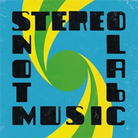
I was able to listen to another track from the upcoming Stereolab album Not Music.  This song is just fantastic.  It’s a faster, uptempo track.   Laetitia’s voice is backed by some other female singers (I wonder who they are, is it just Laetitia multitracked?).  And the propulsive beat is infectious.  The backing track of the music sounds like their earlier experiments with “space age” sounds.  Yet the guitar over the top is warm and inviting.

The song drops out at about the 90 second mark and offers a very cool respite from the bopping around that the song is doing.  After the break, the song seems to jump back and forth between this new mellow bit and the bouncy earlier part.  It’s a great track and a welcome opening to their last CD before going on hiatus.  Because, yes, according to the information on the NPR page, Stereolab is going on hiatus.

This CD is full of songs that were created around the time of their previous disc Chemical Chords, and it’s also packed with mixes, remixes and seemingly alternate version of some of those songs.  I haven’t heard the whole disc but it sounds like they’re going out with a winner.

[READ: November 15, 2010] “A Good Death: Exit Strategies”

I’ve mentioned before about my reader-relationship with Vollmann–I feel that I ought to read a lot more of him, yet I haven’t brought myself to do it (those books are huge!).  Nevertheless, I’ll keep reading the new pieces that I stumble upon.

So this piece is a nonfiction essay.  I’m tempted to say it’s more personal than the other pieces that I’ve read because it concerns the death of his father.  Yet from the little Vollmann I have read, it feels like he takes all of his writings very personally and invests himself pretty much bodily into them.

So, this piece, as I said, is sort of about the death of his father.  He died just a few months ago and Vollmann wants to find out a number of answers about death: should he be afraid of it, will he suffer, what should he expect?  So he interviews several “experts” in different fields:  coroners, funeral directors and many religious people of different faiths (Vollmann and his companion/translator are agnostic).  He’s given a vast array of answers, some of which are comforting to him and others just kind of piss him off. (more…)

Read Full Post »

[LISTENED TO: End of October 2010] Brief Interviews with Hideous Men

There are three options for listening to Brief Interviews.

The first version is the original audio cassette which is read entirely by DFW (1999).  It’s out of print but you can download the audio for free at the David Foster Wallace Audio Project. The second version is the newly released audio book that coincides with John Krasinski’s film (2009).  This CD features some of the readings by DFW although most of the actual interviews are read by the actors from the film (see below for all details).  The third option is a collection of staged readings which were created by The Howling Fantods Brief Interviews Project.  They are available at the site and at the David Foster Wallace Audio Project.  [UPDATE Nov. 8: For the sake of accuracy, I wanted to state that George Carr is responsible for all of the work down for these recordings.  The Howling Fantods site simply hosted the results].

None of these recordings include all of the stories from the book.  Although the stories that they do include are unedited (this is officially listed as “unedited selections from the book”).  The stories that are not included in any of these recordings are:  creepy organ music

  • “The Depressed Person”  [this would have been a tour de force to read]
  • “The Devil Is a Busy Man”
  • “Think”
  • “Signifying Nothing”
  • Datum Centurio” [I can’t imagine trying to read this out loud]
  • “Octet”
  • “Adult World (I)”
  • “Adult World (II)” [I would have liked to hear how these were handled]
  • “The Devil Is a Busy Man”
  • “Church Not Made with Hands”
  • “Yet Another Example of the Porousness of Certain Borders (XI)”
  • “Tri-Stan: I Sold Sissee Nar to Ecko” [this is my least favorite bit of DFW work and I would have really liked to have heard it read aloud to see if I could get anything more out of it].
  • “On His Deathbed, Holding Your Hand, the Acclaimed New Young Off-Broadway Playwright’s Father Begs a Boon” (more…)

Read Full Post »

SOUNDTRACK: SUPERCHUNK Hello Hawk (1999).

Hello Hawk is another of my favorite Superchunk songs (and it’s vastly different from “Hyper Enough”).  It opens with some really interesting guitar noodling.  And then after a bridge that promises a noisy chorus, the chorus backs down into another gentle section (followed by the loud and heavy post chorus…a neat trick).  This song is also laden with strings (!).  And it’s catchy as heck.

The second song, “Sexy Ankles” sounds (recording style-wise) like early 60s rock and roll.  It’s quite odd for Superchunk, although it rocks nicely at the end.

The final three tracks are acoustic version of songs from the Come Pick Me Up album.  The paradox: as the original songs grow less heavy and rocking, these acoustic versions become less dramatic as interpretations of them.  And yet, since the originals are growing more complex, these acoustic versions sound even better than previous acoustic versions of their older songs.

[READ: October 10, 2010] “Party of One”

Antonya Nelson is another of the 1999 New Yorker 20 Under 40 writers.  I’d never heard of her before seeing this story, but I enjoyed it enough to want to check out more of her stuff.  This is the story of a broken love affair.  And yet it has so many different angles, and so many wonderful observations (and disarming frankness), that it struck me as a wonderfully original and enjoyable story.  Even the way she used the title was clever.

First the breakup.  It is not the main character who is breaking up, but rather her sister.  The main character is meeting her sister’s lover, who is married.   He is getting cold feet and her sister is despondent.  What is wonderfully twisted about the story is that the sister has a had a previous affair with a married man and when that affair ended, she tried to kill herself.  I hate to reveal this tasty piece of information, but it really highlights the interesting angles of this story–the affair was with her the narrator’s husband.  [Woah]. (more…)

Read Full Post »

SOUNDTRACK: PETER, BJORN & JOHN-Living Thing (2009).

After the raging (relative) success of Writer’s Block, with their crazily catchy whistling song, “Young Folks”, PB&J could have gone in any direction.

And I was quite surprised when the opening song of this follow up (actually, there’s an instrumental disc in between) opened with single note and drum sounds and virtually a capella vocals.  But unlike a typical a capella song, the thudding notes were kind of dissonant and unpleasant.  And there wasn’t much more to the song than that.

Even the second song starts out starkly.  A single piano note plays a simple riff.  The verse kicks in with some simple electronic drums (and again minimal accompaniment).  And this sparseness is the main musical theme on the disc.

And I have to say it took almost a half a dozen listen before I really enjoyed what they were doing.  They are eschewing the pop structure that won them popularity and they’re shifting their melodies to the vocal lines rather than the instruments (I guess).  It’s a risky proposition, but it pays off.

Take “Nothing to Worry About.”   It opens with what sounds like a distorted children’s choir singing the chorus at full volume.  But then it settles down into, again, a simple drum and vocals song with just a hint of instrumentation.  (Did they get all their music out on the instrumental?  I don’t know I’ve not heard it).  Even the title track is sparse guitar noises and clicked drums.  But, man, is it catchy (it reminds me in a weird way of Paul Simon).

And then, continuing my contention that the best and catchiest songs always have curses in them, “Lay It Down” with the chorus, “Hey, shut the fuck up boy, you’re starting to piss me off” will stick in your head for days.

The end of the disc (the last three songs) are considerably mellower.  They’re less catchy, but they use the starkness very well.

Initially I really didn’t like this album.  It had none of the immediacy of the previous disc.  But I found myself really enjoying it.  I wouldn’t want all of their albums to sound like this, but it was an enjoyable twist on a good formula.

[READ: October 7, 2010] Garden State

I mentioned the other day that I just found out about this book when looking up information about Rick Moody.  I was so excited to read a book set in Haledon (two towns from where I grew up) that I checked it out and begin it immediately (it’s only 200 pages, so that helped too).  But I have to say I was really disappointed with the book (even if it did win the Editor’s Book Award).

My first gripe is about the supposed setting in New Jersey.  I have no problem with fictionalizing an area.  Writers do it all the time.  But Moody fictionalizes the area in two ways to suit his thesis, and as a lover of New Jersey and a former resident of the region, I found the lack of reality to be very upsetting.

The first minor, and I have to say really weird thing is that despite the real towns included (Haledon, Paterson, Paramus) he makes up towns nearby–Fleece, Tyre– and he makes up a river–The Dern River.  He also plays around with the names of the highways that run through the state, constantly referring to the non-existent Garden State Thruway.  Now, again, there’s no problem with making things up, but nobody in the story ever goes to Fleece or Tyre, the Dern River doesn’t come into play aside from being a river that people refer to (it’s not a renamed Passaic river, because that’s included in the story, too).  So, why make up random town names?  Why say that you drive from Haledon to the edge of Paterson near Boonton, when that is not geographically correct (or relevant to the story)?  It just seems like he didn’t have access to a map. (more…)

Read Full Post »

[LISTENED TO: October 19, 2010] David Foster Wallace Eulogies

There are some really nice eulogies done for when DFW died.  The official (written) memorial service eulogies (from Jonathan Franzen, Zadie Smith, George Saunders and others) are available here (from an outstanding online journal called Five Dials).  They’re all beautiful (I was amused that the second longest one comes from DFW’s editor!).

The audio eulogies are available at The David Foster Wallace Audio Project.  They include two very long full length ceremonies and several news (NPR mostly) reports.  And there’s a lengthy interview with David’s sister, Amy, which is by far the most moving one.

The first of the lengthy pieces is the ceremony from Amherst.  It consists of colleagues, friends and students all telling stories about DFW.  And their collective memories join together to create a great portrait of the man; things that you’d never know about him (except you kind of would) from reading his work.  The thing that really struck me from this memorial was just how many friends he had.  This seems like an insult but it isn’t meant to be; rather, the impression I had was that he was quite a solitary man, holing up with his dogs and his pens.  But the stories and love from his friends during his college years especially are really quite nice to hear, and showcase a side of him that he left out of his work (except, of course, really he didn’t). (more…)

Read Full Post »

[LISTENED TO: Week of October 10, 2010] David Foster Wallace interviews

There will soon be a group read of Consider David Foster Wallace, a book of essays about, yes, David Foster Wallace.  In a sort of preparation for the group read, I decided to immerse myself in the available audio files online.

The David Foster Wallace Audio Project hosts quite a vast collection of audio files, including interviews, readings and eulogies.  Even the Howling Fantods points to it.

I started with the interviews.  They cover the period from Infinite Jest to Consider the Lobster.  For the most part, the interviews took place on various NPR stations.  There are not a lot of details given about the items on the site (which is the only flaw that I can see with the site), but you can more or less tell from the titles given what book is the cause for the interview.

I know that DFW was not a fan of interviews, yet I can’t help but be surprised at how few interviews actually seem to be extant (or at least preserved online).  You can see a list of all of the interviews on the site.  I’m listing and giving very brief notations for some of the longer interviews, but I just don’t have the time/inclination to go into great detail. (more…)

Read Full Post »

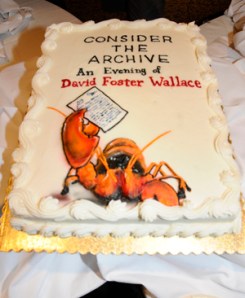
[LISTENED TO: September 27, 2010] Consider the Archive

On September 14, 2010, The Harry Ransom Center at the University of Texas commemorated David Foster Wallace through an evening of his readings and (I love this) Wallace-themed refreshments.  It was also the opening of the Wallace archives at the Center.

[UPDATE: November 8, 2010: The research archives have gone online, details are available here.]

There was a live videocast of the evening, which included excerpts from several of his books. I didn’t get to watch it, but I was able to get an audio copy of the event.

The evening’s readers were:

  • Molly Schwartzburg –Introduction
  • Wayne Allen Brenner, L.B. Deyo, Kurt Hildebrand, Shannon McCormack–The Broom of the System (Grand Ohio Dessert excerpt)
  • Doug Dorst, L.B. Deyo–Correspondence with Don DeLillo
  • Owen Egerton —Infinite Jest (1960, Jim’s Dad)
  • Jake Silvertstein and Kurt Hildebrand–A Supposedly Fun Thing (skeet shooting excerpt)
  • Elizabeth Crane–Infinite Jest: (Avril & Mario)
  • Chris Gibson–Commencement Speech (This is Water) (more…)

Read Full Post »

SOUNDTRACK: STORMTROOPERS OF DEATH-Speak English or Die (1985).

S.O.D. was a side project of Anthrax.  It was an over the top (and hilariously un-PC) collection of super fast (and super short) punk songs.  A lot of the “mosh” sound that Anthrax was experimenting with around this time is in place here (“Milano Mosh” for instance).  So it’s an interesting mix of speed metal and punk.

The lyrics were, as they say, designed to piss everyone off.  And they do.  Song titles like “Speak English or Die,” “Pre-Menstrual Princess Blues,” “Pussy Whipped,” “Fuck the Middle East” and “Douche Crew” pretty much give you a taste of the music.

And yet, Anthrax are silly.  So you know that the band is a parody (even if people took them seriously).  And the best way to tell about the serious intentions of the band are by other songs (and their duration): “Anti-Procrastination Song” – 0:06, “Hey Gordy!” – 0:07, “Ballad of Jimi Hendrix” – 0:05 (entire lyrics: “He’s dead”) and of course “Diamonds and Rust” (Extended Version) – 0:05.  There’s also a song about “Milk” which laments the fact that all of the milk in the fridge has been drunk.

My favorite track is “What’s That Noise.”  The band plays the opening chords of a song and this static crackles in.  Billy Milano slowly goes absolutely insane screaming about the noise, yelling at the band to stop playing.  It still makes me laugh, 25 years later.

[READ: Week of August 20, 2010] Letters of Insurgents [Last Letters]

Yarostan’s final letter is a long one, but it is justifiably long. And in some ways it makes up for all the weird incest stuff that I had to read.   Although really nothing could make up for that.

The beginning of the letter is taken up with Mirna and Yara’s “prank” at Jasna & Titus’ engagement party. There so many details to include that I’m just going to summarize. (more…)

Read Full Post »

SOUNDTRACK: PHISH-Joy (2009).

This is basically Phish’s reunion disc (after a 5 year hiatus).  It opens with one of their poppiest songs, “Backwards Down the Number Line” a song that picks up where their least disc left off: with a feeling of driving down a country lane with nowhere to go, windows opens, just happy to be alive.  The second track, “Stealing Time from the Faulty Plan” is a delightful rocker with a supremely catchy chorus “got a blank space where my mind should be….”
The third track, “Joy” starts as a simple piano ballad, but quickly morphs into one of the prettiest songs I’ve heard in ages, an outrageously happy upbeat tender song: “We want you to be happy, cause this is your song, too.”

“Sugar Shack” is a delightfully funky song, recognizable at once as one of Mike’s songs.  It’s a simple, pleasant enough track, but somehow Mike’s voice sounds weaker than usual.

“Ocelot” is a silly track (and one of my favorites) while “Kill Devil Falls” is a bluesy number that will easily be a lengthy jam live.  It’s my least favorite track on the disc, but it is followed by a more upbeat future-jam called “Light” which features delightful multi part harmonies.

The highlights of the disc are the final two songs: the 13 minute “Time Turns Elastic” and the five-minute “Twenty Years Later.”  “Elastic” is a wonderful non-jam, a thoughtfully constructed epic with many parts (although not an elaborate prog rock track or anything).  It’s catchy and moving with sweeping grandeur and easy to sing parts.  And it melds wonderfully into the delicate multipart gorgeous final track.

This is a really strong, mature disc from Phish. There’s not a lot of silliness or nonsense, just some great uplifting gentle rock songs.  It’s quite wonderful.

[READ: Week of April 19, 2010]  2666 [pg 766-830]

This penultimate section of 2666 (the end is nigh!) settles down into an almost pasotral recollection of Archimboldi (the man formerly known as Reiter) as a writer (yes the pronunciation of his name is not lost on me, although I assume it doesn’t have the same connotation in German).  And while it is not all happiness, there is more joy in these 60 some pages than in most of the rest of the book combined.

But before we get there, we have one final moment with a war criminal.

(more…)

Read Full Post »

SOUNDTRACK: ALANIS MORISETTE-Jagged Little Pill (1995).

In this book, DFW considers himself to be absolutely useless when it comes to music.  He doesn’t know anything at all.  He says he listens to Bloomington country radio stations until he can’t take it anymore and then he switches over to the alt rock station.  He’d never even heard of Nirvana until after Cobain’s suicide.

And so, the soundtrack for the book is R.E.M., Bush (two songs) and Alanis.  In fact, there’s a surprisingly long section devoted to Alanis in the book, including DFW’s admittance that he would love to have a date with her for tea.  He admits that she is pretty much manufactured angst and yet there’s something about her that he finds irresistible.

At this stage (2010), the whole Alanis thing seems almost adorable in it’s “controversy” or “hype” or whatever.  It’s still hard for me to be objective about the quality of Jagged Little Pill (I mean, Flea plays bass on it so it must be good, right?).  I really enjoyed it at the time, perhaps because of its rawness or its honesty (which was pretty novel at the time, especially from a woman), all packed in a clean production of course.  There’s also something weirdly appealing to me about her (really not very good) voice.  She seems just off enough for all of this to be really sincere.

And of course, the nastiness of “You Oughta Know” was pretty astonishing for pop radio at the time.  True, there’s songs on here that make me cringe now (there’s a lot about her that makes me cringe) and yet there’s still some really enjoyable stuff here.  Even the perennially mocked “Ironic” for all of its flaws has a stellar chorus.

Now that the “women in rock” phase of alternative music has passed, there’s very little music like this being made anymore.  So it’s kind of fun to reminisce about this stage of my musical life, warts and all.

Oh, and by the way, I also grew up watching Alanis on “You Can’t Do That on Television,” so it was pretty exciting to see a child star that I knew make it big.

I never liked Bush though.

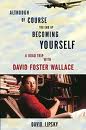
[READ:April 21, 2010] Although of Course You End Up Becoming Yourself

As I mentioned, I was super excited to get this book and I treated it like the artifact it is: trying to read it in one sitting (impossible) or at least in as compressed a time as possible to preserve the stream of consciousness attitude of the book.

For, as the subtitle doesn’t quite state, this is five-day conversation between David Lipsky and David Foster Wallace.  The tape recorder was running for most of these five days and what we get is a literal transcript of the conversation (with much of Lipsky’s parts excised).  It is an all-access pass to the mind of the man who wrote Infinite Jest as the hype of the book was really taking off and as his brief promotional tour for the book was winding down.

Lipsky was (is) a reporter for Rolling Stone. DFW’s Infinite Jest was the huge media hit (#15 on the bestseller list) and the hype was outrageous.  DFW had begun a (sold out) reading tour which actually began the day before the book came out, so he rightfully notes that no one could have actually read the book by then, they were just there because of the hype.  And Lipsky himself is part of this hype.

Lipsky was sent to do a profile of the wunderkind, literature’s next great hope (RS hadn’t (hasn’t?) covered a young author like this in a decade at least).  The idea was that Lipsky would tag along with DFW, go to the last readings on the tour, an NPR interview, and spend most of their time together: planes, rental cars, hotel rooms, etc generally just hanging out with tape recorder running. (more…)

Read Full Post »

« Newer Posts - Older Posts »