 SOUNDTRACK: BLUE ÖYSTER CULT-compilations and live releases (1978-2010).
 For a band that had basically two hits (“Don’t Fear the Reaper” and “Burnin’ for You”) and maybe a half a dozen other songs that people might have heard of, BOC has an astonishing number of “greatest hits” collections.
Starting in 1987 we got Career of Evil: The Metal Years (1987), Don’t Fear the Reaper (1989), On Flame with Rock n’ Roll (1990), Cult Classic (which is actually the band re-recording their old tracks (!)) (1994), and the two cd collection Workshop of the Telescopes (1995). There’s even Singles Collection, (2005) which is a collection of their European singles & Bsides.


 This doesn’t include any of the “budget price” collections: E.T.I. Revisited, Tattoo Vampire, Super Hits, Then and Now, The Essential, Are You Ready To Rock?, Shooting Shark, Best of, and the 2010 release: Playlist: The Very Best of).

 The lesson is that you evidently won’t lose money making a BOC collection.
I don’t know that any of these collections are any better than the others.
The 2 CD one is for completists, but for the most part you’re going to get the same basic tracks on all of them.


 And, although none of them have “Monsters” for the average person looking for some BOC, any disc is a good one.
Regardless of the number of hits they had, BOC was tremendous live. And, as a result, there have also been a ton of live records released. Initially the band (like Rush) released a live album after every three studio albums. On Your Feet or On Your Knees (1975) Some Enchanted Evening (1978) and Extraterrestrial Live (1982) were the “real releases.”


 Then, in 1994 we got Live 1976 as both CD and DVD (which spares us nothing, including Eric Bloom’s lengthy harangue about the unfairness of…the speed limit). It’s the most raw and unpolished on live sets. 2002 saw the release of A Long Day’s Night, a recording of a 2002 concert (also on DVD) which had Eric Bloom, Buck Dharma an Allan Lanier reunited.


 They also have a number of might-be real live releases (fans debate the legitimacy of many of these). Picking a concert disc is tough if only because it depends on the era you like. ETLive is regarded as the best “real” live disc, although the reissued double disc set of Some Enchanted Evening is hard to pass up. Likewise, the 2002 recording is a good overview of their career, and includes some of their more recent work.


 If you consider live albums best of’s (which many people do) I think it’s far to say that BOC has more best of’s than original discs. Fascinating. Many BOC fans believe that if they buy all the best of discs, it will convince Columbia to finally reissue the rest of the original discs (and there are a number of worthy contenders!) in deluxe packages. I don’t know if it will work, but I applaud the effort.
[READ: October 2009-February 2010] State By State
This is a big book. And, since it’s a collection essays, it’s not really the kind of big book that you read straight through. It’s a perfect dip in book. And that’s why it took me so long to get through.
I would love to spend a huge amount of time devoting a post to each essay in the book. But, well, there’s 51 (including D.C.) and quite a few of them I read so long ago I couldn’t say anything meaningful about. But I will summarize or at least give a sentence about each essay, because they’re all so different.
I’ll also say that I read the Introduction and Preface last (which may have been a mistake, but whatever). The Preface reveals that what I took to be a flaw in the book was actually intentional. But let me back up and set up the book better.
The catalyst for the book is the WPA American Guide Series and sort of Steinbeck’s Travels with Charley. The WPA Guides were written in the 1930s as part of the Works Progress Administration. 48 guide books were written, one for each state. Some famous writers wrote the books, but they were ultimately edited (and many say watered down) by a committee. I haven’t read any of them, but am quite interested in them (and am looking to get the New Jersey one). Each guide was multiple hundreds of pages (the New Jersey one is over 800).
State By State is written in the spirit of that series, except the whole book is 500 pages (which is about 10 pages per state, give or take). And, once again, famous writers were asked to contribute (no committee edited this book, though). I’ve included the entire list of authors at the end of the post, for quick access.
So I started the book with New Jersey, of course. I didn’t realize who Anthony Bourdain was until I looked him up in the contributor’s list (I’m sure he is thrilled to hear that). And his contribution was simultaneously exciting and disappointing,. Exciting because he and I had quite similar upbringings: he grew up in North Jersey (although in the wealitheir county next to mine) and had similar (although, again, more wealthy) experiences. The disappointing thing for me was that Bourdain fled the state for New York City (and, as I now know, untold wealth and fame (except by me)) I felt that his fleeing the state, while something many people aspire to, is not really representative of the residents of the state as a whole.
And that dissatisfaction is what I thought of as the flaw of the book (until I read the Preface). In the Preface, Matt Weiland explains that they asked all different authors to write about states. They asked some natives, they asked some moved-ins, they asked some temporary residents and they asked a couple of people to go to a state for the first time. In reality, this decision makes for a very diverse and highly entertaining reading. In my idealized world, I feel like it’s disingenuous to have people who just stop in to give their impression of an area. But hey, that’s not the kind of book they wanted to compile, and I did enjoy what they gave us, so idealism be damned.
For most of the book, whenever I read an essay by someone who wasn’t a native or a resident of a state, I assumed that there weren’t any famous writers from that state. I’ve no idea if that played into anything or not. From what I gather, they had a list of authors, and a list of states (I was delighted to read that three people wanted to write about New Jersey-if the other two writers ever decided to put 1,000 words to paper, I’d love to read them (hey editors, how about State by State Bonus Features online, including any extra essays that people may have wanted to write).
From New Jersey, I proceeded alphabetically. And, I have to say that I’m a little glad I did. I say this because the first few states in the book come across as rather negative and kind of unpleasant. Alabama (written by George Packer) comes across as downtrodden, like a place you’d really have to love to live there. Even Alaska, which ended up being a very cool story, felt like a veil of oppression resided over the state (or at least the part of the state that Paul Greenberg wrote bout.) But what I liked about this essay and the book in general was that the authors often focused on unexpected or little known aspects of each state. So the Alaska essay focused on Native fisherman and the salmon industry. Obviously it doesn’t do justice to the rest of that enormous state, but that’s not what the book is about.
The book is meant to be a personal account of the author’s experiences in the state. (more…)
Read Full Post »
 SOUNDTRACK: TEENAGE HEAD-“Picture My Face” (1979).
 Teenage Head is a punk band in the vein of The Ramones. If I were younger I probably would have enjoyed this song more. Not because it’s a punk song (and I’m old) but because it’s so derivative of just about every Ramones-inspired punk song I can think of.
 SOUNDTRACK: RHEOSTATICS-Whale Music (1992).
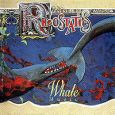 The Rheostatics are from Etobicoke Canada. Their second album was called
  “Self Serve Gas Station” is a great opening. It begins with swirling guitars and a beautiful solo (Rheostatics guitar lines sound so elemental as to seem like they’ve always been around). But just as the vocals begin, the song becomes a sort of country track: a folkie song about adolescnece. But it returns to a good rocking (and falsetto fueled) rock track.
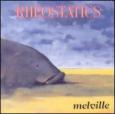 “King of the Past” is another great track, with a wondrous string sound near the end. It’s a gorgeous song with (again) different sections conveying shanties and jigs (and you can dance to it). Like Moby from last week, Rheostatics, also bust out a fast metal track, but this one works well: “RDA (Rock Death America)” has a major hook and name checks everyone from The Beatles to The Replacements.
 SOUNDTRACK: MOBY-Everything is Wrong (1995).
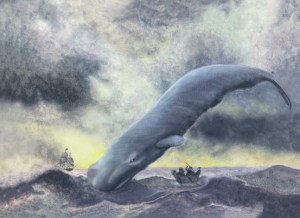
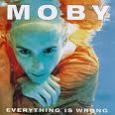 I suppose that everyone knows that Moby (the musician) is Herman Melville’s great- great- great- grandnephew. And that’s why he has the middle name Melville and had the nickname Moby.
 SOUNDTRACK: MOBY GRAPE-Moby Grape (1967).
 Moby Grape is one of those bands that I’ve always heard of but had never heard. I know, their debut is 43 years old and yet I’d never heard it. Well, thanks to the internet (lala.com, RIP as of today), I was able to listen to what I assumed was their Greatest Hits. If only I had done a modicum of research. The disc I chose was Legendary Grape, which it turns out is not a greatest hits at all, but is actually some weird pesudo-Moby Grape record released in 1989 under a different band name due to legal protractions, but then reissued as Moby Grape. It was rather uninspired and nothing at all what I thought it would sound like. Nothing dreadful, just nothing worth thinking that this band “legendary.”
 So, with a little research, I learned that their first album is what I should have been checking out. Moby Grape is the eponymous release and it sounds much more like what I assumed this psychedelic era-band would sound like. This disc is pretty much in keeping with what a band that produced an album cover like this would sound like.
 SOUNDTRACK: THE FLAMING LIPS & STARDEATH AND WHITE DWARFS featuring HENRY ROLLINS and PEACHES doing The Dark Side of the Moon (2010).
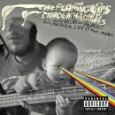 You’ve got to have balls to cover the most popular album of all time. Everyone knows Dark Side of the Moon, according to Billboard charts everyone probably owns a copy of Dark Side of the Moon. So, you’re taking on a pretty big task here. But the Flaming Lips aren’t called The Fearless Freaks for nothing.
 SOUNDTRACK: FUGAZI-13 Songs (1990).
 I was so blown away by that first Fugazi disc that I immediately ran out and got this collection of their first two EPs.
 SOUNDTRACK: THE DEAD MILKMEN-Eat Your Paisley (1986).
 Who has angered the volcano gods?

 SOUNDTRACK: BLUE ÖYSTER CULT-Tyranny and Mvtation (1973).
 The album cover is similar to the first disc (a simple black and white), but this one adds a touch of red. Similarly, the music adds a touch of something that makes this disc leap beyond the foundation of their first.
 And this years’ Olympics were amazing! The caliber of play was fantastic and watching Kevin Martin go undefeated for his first gold was spectacular. Kevin Martin showed poise and grace and proved to be my favorite Olympic athlete of the games. Sorry Sean White, your jumps were definitely awesome, but they don’t compare to winning eleven matches in a row. And remaining very cool under pressure.
 some fantastic matches, pulling out a number of squeakers and shooting an amazing percentage. Her miss in the final end to send it into extras, and her miss in the extra end belied a fantastic tournament. And, I have to say the gold medal game was a crushing defeat. Not to take anything away from the Swedish team who played wonderfully. I would have just loved to see a Canadian sweep of gold.
 I Just Read About That...